















USA Pet Veterinary Diet Market Outlook to 2030
Region:North America
Author(s):Shubham Kashyap
Product Code:KROD5100
December 2024
86
About the Report
USA Pet Veterinary Diet Market Overview
- The USA Pet Veterinary Diet Market is currently valued at USD 9.1 billion, driven by increasing pet ownership and a growing focus on pet health and wellness. In 2024, the market witnessed robust demand for specialized diets catering to pets with health conditions such as obesity, diabetes, and gastrointestinal issues. These diets are recommended by veterinarians to improve pet health, contributing to the market's steady expansion. The focus on premium and prescription-based diets, supported by increased veterinary visits, has been a key driver of market growth.
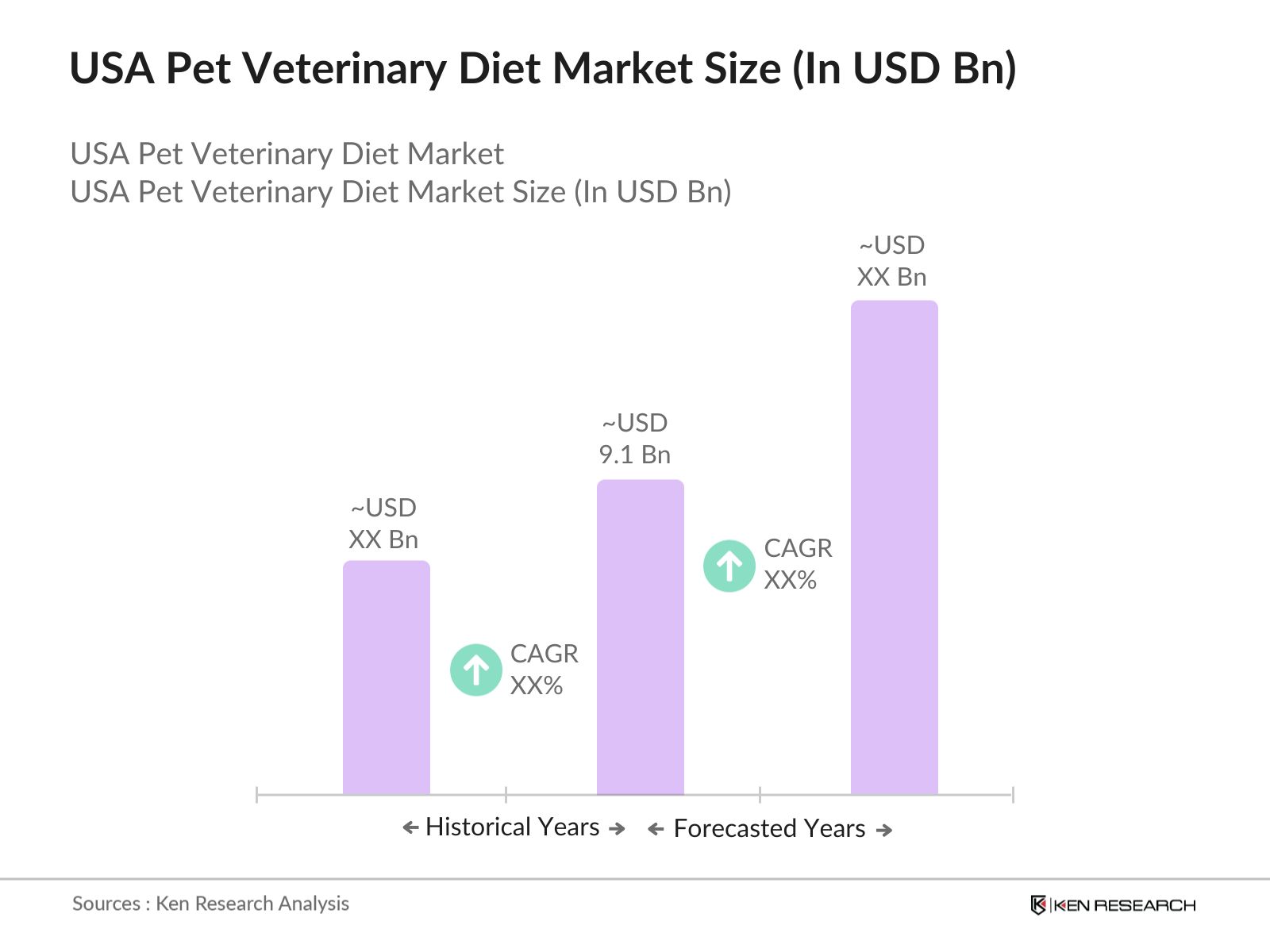
- Key metropolitan areas such as New York, Los Angeles, and Chicago dominate the USA Pet Veterinary Diet Market due to higher disposable incomes and well-established veterinary services. These cities have a large number of pet owners who are more likely to invest in specialized pet food for health and dietary needs. Additionally, these regions have seen strong collaborations between veterinarians and pet food manufacturers, further boosting the demand for veterinary diets.
- The FDA's regulations on pet food safety have a significant impact on the veterinary diet market. As part of the FDAs Food Safety Modernization Act (FSMA), companies must adhere to strict guidelines for ingredient sourcing, production processes, and labeling. Since 2022, the FDA has enforced more rigorous inspection protocols for manufacturers of specialized pet diets, ensuring food safety standards are consistently met.
USA Pet Veterinary Diet Market Segmentation
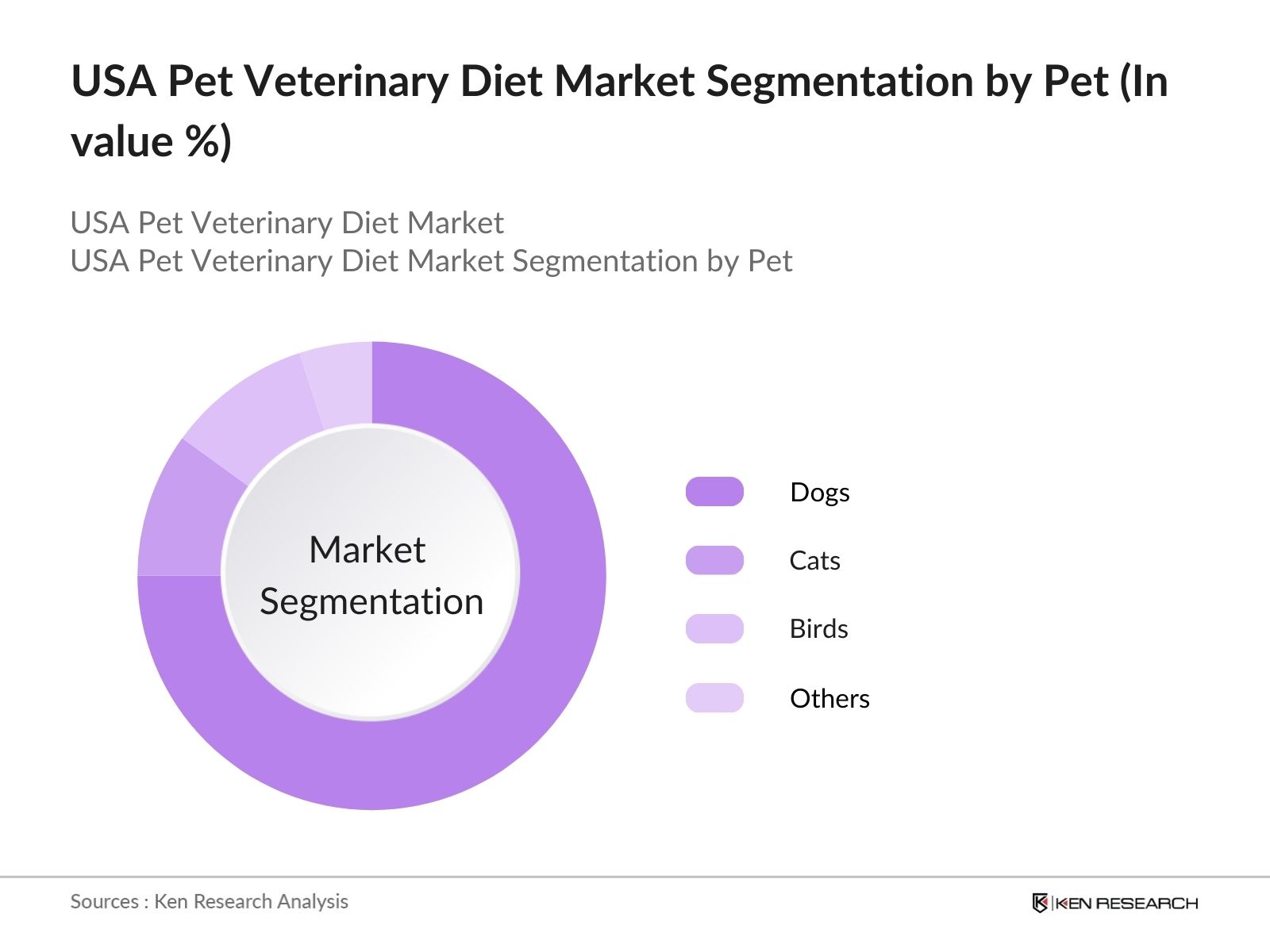
- By Pet Type: The market is segmented by pet type into dogs, cats, birds, and others (reptiles, small mammals). Dogs dominate the market with majority of share in 2023, driven by their higher prevalence as household pets and the increasing number of health-related issues like obesity and joint disorders in dogs. Veterinary recommendations for disease-specific diets have contributed to the growth of this segment, as dog owners increasingly opt for prescription-based diets to manage their pets health.
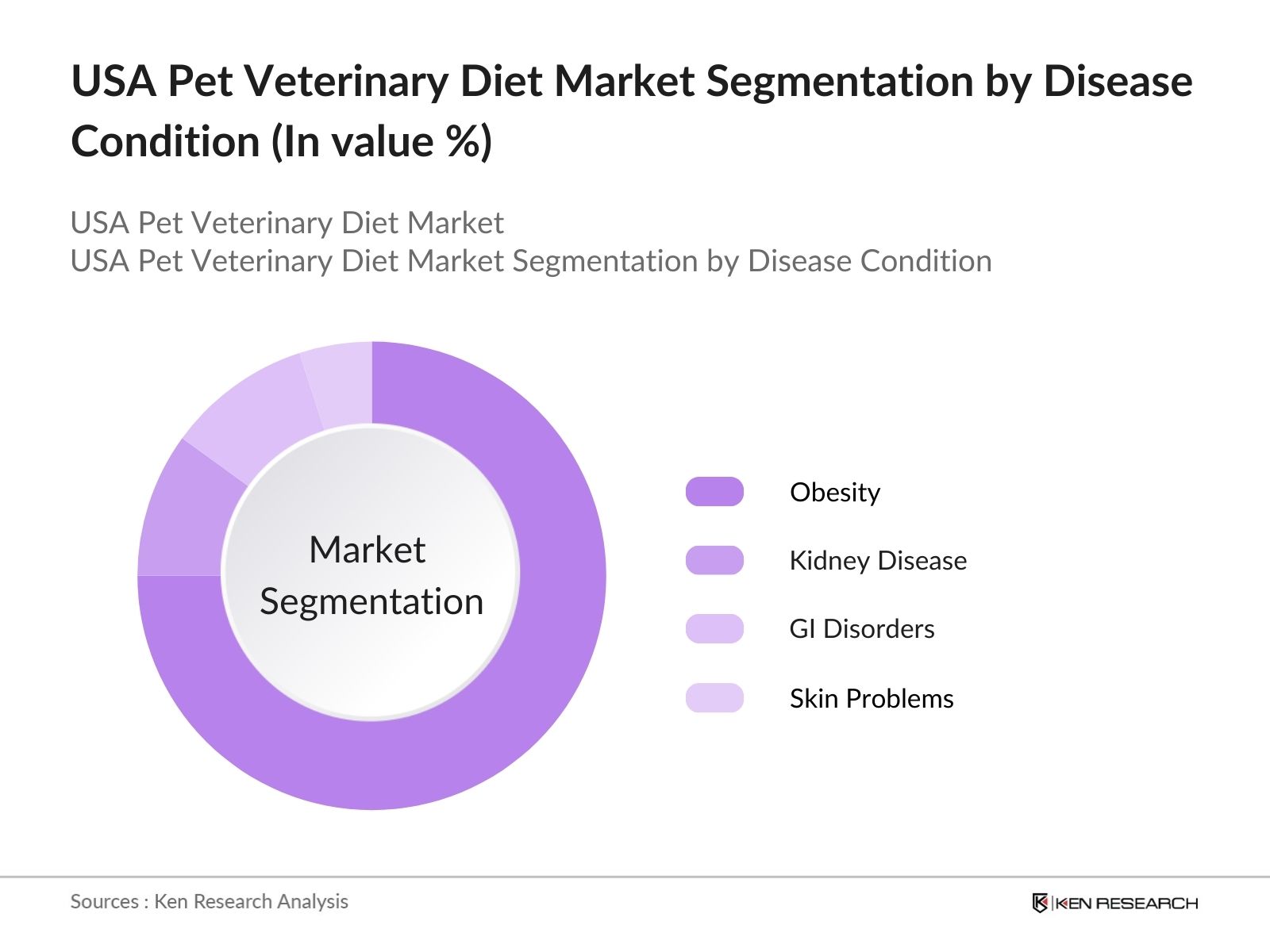
- By Disease Condition: The market is further segmented by disease condition into obesity, kidney disease, gastrointestinal disorders, and skin and coat problems. Obesity leads this segment with majority of market share in 2023, as it has become a prevalent health issue among pets, particularly dogs and cats. Specialized diets designed to manage weight are increasingly being recommended by veterinarians, making this the dominant sub-segment. Pet owners are increasingly aware of the long-term health risks associated with obesity, leading to a higher demand for weight management diets.
USA Pet Veterinary Diet Market Competitive Landscape
The USA Pet Veterinary Diet Market is highly competitive, with both domestic and international companies vying for market share. Major players focus on innovative product development, strategic partnerships with veterinarians, and expanding their distribution networks. The market sees competition among both established brands and emerging players introducing organic and natural diet options. Companies are investing in R&D to develop specialized diets that cater to a wide range of health conditions in pets.
|
Company Name |
Establishment Year |
Headquarters |
No. of Employees |
Revenue (USD Bn) |
Key Products |
Veterinary Partnerships |
Product Range |
Brand Awareness |
Sustainability Initiatives |
|
Hills Pet Nutrition |
1939 |
Topeka, Kansas |
|||||||
|
Royal Canin |
1968 |
Aimargues, France |
|||||||
|
Blue Buffalo |
2003 |
Wilton, Connecticut |
|||||||
|
Mars Petcare |
1932 |
Franklin, Tennessee |
|||||||
|
Nestl Purina PetCare |
1894 |
St. Louis, Missouri |
USA Pet Veterinary Diet Industry Analysis
Growth Drivers:
- Increase in Pet Ownership: Urbanization and evolving demographics in the U.S. have significantly boosted pet ownership. In 2023, urban households accounted for a major share of pet ownership, with an estimated 83 million dogs and 60 million cats registered. Urban dwellers have increasingly turned to pets for companionship, further encouraged by pet-friendly policies in housing and public spaces. The U.S. economy has witnessed steady urban population growth, particularly in regions like California, Texas, and Florida, correlating with an uptick in pet care and veterinary diet demand.
- Growing Awareness of Pet Health and Wellness: Public awareness campaigns promoting pet health and wellness have driven demand for specialized veterinary diets. According to the U.S. Department of Agriculture, pet healthcare expenditures grew substantially between 2022 and 2024, reflecting increased awareness. Veterinary associations, like the American Veterinary Medical Association (AVMA), report that majority of of pet owners are now more likely to seek advice on pet diets from veterinarians.
- Innovations in Pet Food Formulations: The pet food industry in the U.S. has experienced rapid innovation in formulations, focusing on functional ingredients like probiotics and omega-3. A marked increase in research and development has led to advanced nutrition options for pets with conditions like arthritis or digestive issues. The U.S. Food and Drug Administration (FDA) reported that since 2022, there has been a substantial rise in approved advanced ingredients for pet diets
Market Challenges:
- High Cost of Specialized Diets: Despite the growing interest in veterinary diets, the high cost remains a significant barrier for many pet owners. Specialized diets, especially those required for managing chronic health conditions like kidney disease or allergies, are often considerably more expensive than standard pet food options. This price disparity makes it difficult for low- and middle-income households to consistently afford these diets, resulting in lower adoption rates. Many pet owners, particularly those managing multiple pets, are forced to make tough decisions about prioritizing care, which can affect long-term health outcomes for their pets.
- Lack of Consumer Awareness in Rural Regions: Pet owners in rural areas frequently lack access to veterinary care and essential information regarding specialized pet diets. In these regions, awareness about the health benefits of veterinary-prescribed diets remains low, partly due to limited availability of veterinary services and fewer opportunities for education. Many rural residents rely on general pet food options from local stores, missing out on the guidance that veterinary professionals provide in urban settings. This disparity in access and awareness perpetuates gaps in pet health management, with rural pets often receiving suboptimal nutrition for specific health conditions.
USA Pet Veterinary Diet Market Future Outlook
The USA Pet Veterinary Diet Market is expected to experience steady growth, with increased demand for disease-specific and customized diets. The focus on pet health and the growing humanization of pets will continue to drive market expansion. Innovations in veterinary diet formulations, such as the inclusion of organic and natural ingredients, will appeal to health-conscious pet owners, further boosting the market.
Future growth will also be fueled by advancements in veterinary diagnostics, which will help identify specific dietary needs for pets at an earlier stage. Companies that invest in sustainable production practices and expand their product offerings will likely capture a larger share of the market in the coming years.
Future Market Opportunities
- Development of Customized Diets: The demand for customized diets, tailored to the individual health needs of pets, is set to rise. Companies are likely to focus on formulating diets based on factors such as breed, age, and specific health conditions, offering a more personalized approach to pet nutrition.
- Organic and Natural Ingredients: With increasing consumer awareness about the health benefits of organic and natural ingredients, pet food manufacturers are expected to develop more veterinary diets using sustainably sourced, organic ingredients. This trend aligns with the growing demand for natural products in human consumption and is expected to gain traction in the pet food industry as well.
Scope of the Report
|
By Pet Type |
Dogs Cats Birds Others |
|
By Product Type |
Wet Food Dry Food Treats |
|
By Disease Condition |
Obesity Kidney Disease GI Disorders Skin Problems |
|
By Form |
Dry Kibble Canned Food Freeze-Dried |
|
By Region |
Northeast Midwest South West |
Products
Key Target Audience
Pet Food Manufacturers
Veterinary Clinics and Hospitals
Pet Retailers and Specialty Stores
Online Pet Food Retailers
Investors and Venture Capitalist Firms
Banks and Financial Institutions
Government and Regulatory Bodies (FDA, USDA)
Pet Owners and Enthusiasts
Companies
Major Players Mentioned in the Report
Hills Pet Nutrition
Royal Canin
Blue Buffalo
Mars Petcare
Nestl Purina PetCare
The Honest Kitchen
Diamond Pet Foods
Nutro Company
Veterinary Diet Services
Iams Veterinary Formula
Eukanuba Veterinary Diets
Natures Logic
Merrick Pet Care
Farmina Pet Foods
WellPet LLC
Table of Contents
01 USA Pet Meds Market Overview
1.1. Definition and Scope
1.2. Market Taxonomy
1.3. Markeat Growth Rate (Pet ownership growth rate, adoption of pet healthcare products)
1.4. Market Segmentation Overview
02 USA Pet Meds Market Size (In USD Bn)
2.1. Historical Market Size
2.2. Year-On-Year Growth Analysis
2.3. Key Market Developments and Milestones
03 USA Pet Meds Market Analysis
3.1. Growth Drivers
3.1.1. Increased pet humanization
3.1.2. Rise in companion animal population
3.1.3. Expansion of veterinary medicine
3.1.4. Technological advancements
3.2. Market Challenges
3.2.1. Regulatory barriers
3.2.2. High R&D costs
3.2.3. Rising competition
3.3. Opportunities
3.3.1. Expanding pet insurance
3.3.2. Online pharmacies and telemedicine
3.3.3. International collaborations
3.4. Trends
3.4.1. Adoption of online pet pharmacies
3.4.2. Telemedicine for pets
3.4.3. Rising demand for premium pet healthcare
3.5. Government Regulation
3.5.1. FDA approvals for pet drugs
3.5.2. Animal Drug User Fee Act (ADUFA)
3.5.3. Veterinary drug oversight
3.5.4. Import and export regulations
3.6. SWOT Analysis
3.7. Stakeholder Ecosystem
3.8. Porters Five Forces
3.9. Competition Ecosystem
04 USA Pet Meds Market Segmentation
4.1. By Product Type (In Value %)
4.1.1. Prescription Medications
4.1.2. Over-the-Counter (OTC) Medications
4.1.3. Vaccines
4.1.4. Antibiotics
4.1.5. Antiparasitic Drugs
4.2. By Distribution Channel (In Value %)
4.2.1. Veterinary Clinics
4.2.2. Retail Pharmacies
4.2.3. Online Pharmacies
4.2.4. Pet Specialty Stores
4.3. By Animal Type (In Value %)
4.3.1. Dogs
4.3.2. Cats
4.3.3. Others (Rabbits, Birds, etc.)
4.4. By Treatment Type (In Value %)
4.4.1. Anti-inflammatory and Pain Relief
4.4.2. Cardiovascular Disease Treatment
4.4.3. Gastrointestinal Treatment
4.4.4. Skin and Coat Care
4.5. By Region (In Value %)
4.5.1. Northeast
4.5.2. Midwest
4.5.3. South
4.5.4. West
05 USA Pet Meds Market Competitive Analysis
5.1. Detailed Profiles of Major Companies
5.1.1. Zoetis Inc.
5.1.2. Elanco Animal Health
5.1.3. Boehringer Ingelheim
5.1.4. Merck Animal Health
5.1.5. Ceva Sant Animale
5.1.6. Virbac
5.1.7. Vetoquinol
5.1.8. Dechra Pharmaceuticals
5.1.9. Bayer Animal Health
5.1.10. Patterson Veterinary
5.2. Cross Comparison Parameters (Revenue, Product Portfolio, Market Reach, Strategic Partnerships, Innovation Index, Distribution Channels)
5.3. Market Share Analysis
5.4. Strategic Initiatives
5.5. Mergers and Acquisitions
5.6. Investment Analysis
5.7. Venture Capital Funding
5.8. Government Grants
5.9. Private Equity Investments
06 USA Pet Meds Market Regulatory Framework
6.1. FDA Regulations for Animal Drugs
6.2. Prescription Veterinary Medications: Rules and Guidelines
6.3. Animal Medicinal Drug Use Clarification Act (AMDUCA) Compliance
6.4. Import and Export Regulations
07 USA Pet Meds Future Market Size (In USD Bn)
7.1. Future Market Size Projections
7.2. Key Factors Driving Future Market Growth
08 USA Pet Meds Future Market Segmentation
8.1. By Product Type (In Value %)
8.2. By Distribution Channel (In Value %)
8.3. By Animal Type (In Value %)
8.4. By Treatment Type (In Value %)
8.5. By Region (In Value %)
09 USA Pet Meds Market Analysts Recommendations
9.1. TAM/SAM/SOM Analysis
9.2. Customer Cohort Analysis
9.3. Marketing Initiatives
9.4. White Space Opportunity Analysis
Research Methodology
Step 1: Identification of Key Variables
The first step in the research methodology involves identifying the key variables affecting the USA Pet Veterinary Diet Market. This includes gathering data on pet ownership rates, veterinary service usage, and consumer spending on pet health. Key variables are sourced through extensive desk research and proprietary databases.
Step 2: Market Analysis and Construction
Historical market data is compiled and analyzed to understand market trends. This includes assessing the growth of veterinary diet segments and the penetration of specialized pet foods in different geographic regions of the USA. Analysis focuses on market drivers, challenges, and revenue generation patterns.
Step 3: Hypothesis Validation and Expert Consultation
Expert consultations with veterinary professionals and industry leaders help validate market hypotheses regarding consumer behavior and dietary preferences. These interviews provide insights into the operational dynamics of the market and contribute to refining market estimates.
Step 4: Research Synthesis and Final Output
The final step involves synthesizing all research data into a comprehensive report. This stage integrates findings from primary research with secondary data, ensuring that the report provides accurate, validated insights into the USA Pet Veterinary Diet Market.
Frequently Asked Questions
01. How big is the USA Pet Veterinary Diet Market?
The USA Pet Veterinary Diet Market is valued at USD 9.1 billion, driven by the increasing awareness of pet health and the rising prevalence of chronic diseases among pets.
02. What are the challenges in the USA Pet Veterinary Diet Market?
Challenges in the USA Pet Veterinary Diet Market include the high cost of specialized diets and limited awareness of their benefits in rural regions, where access to veterinary services and dietary education may be less prevalent.
03. Who are the major players in the USA Pet Veterinary Diet Market?
Key players in the USA Pet Veterinary Diet Market include Hills Pet Nutrition, Royal Canin, Mars Petcare, Nestl Purina PetCare, and Blue Buffalo, all of which have strong relationships with veterinarians and extensive product portfolios.
04. What are the growth drivers of the USA Pet Veterinary Diet Market?
Growth drivers in the USA Pet Veterinary Diet Market include the rising trend of pet humanization, increased pet ownership rates, and the growing demand for veterinary-recommended diets tailored to specific health conditions.
Why Buy From Us?

What makes us stand out is that our consultants follows Robust, Refine and Result (RRR) methodology. i.e. Robust for clear definitions, approaches and sanity checking, Refine for differentiating respondents facts and opinions and Result for presenting data with story

We have set a benchmark in the industry by offering our clients with syndicated and customized market research reports featuring coverage of entire market as well as meticulous research and analyst insights.

While we don't replace traditional research, we flip the method upside down. Our dual approach of Top Bottom & Bottom Top ensures quality deliverable by not just verifying company fundamentals but also looking at the sector and macroeconomic factors.

With one step in the future, our research team constantly tries to show you the bigger picture. We help with some of the tough questions you may encounter along the way: How is the industry positioned? Best marketing channel? KPI's of competitors? By aligning every element, we help maximize success.

Our report gives you instant access to the answers and sources that other companies might choose to hide. We elaborate each steps of research methodology we have used and showcase you the sample size to earn your trust.

If you need any support, we are here! We pride ourselves on universe strength, data quality, and quick, friendly, and professional service.