
USA Plant-Based Protein Market Outlook to 2030
Region:North America
Author(s):Mukul
Product Code:KROD4056
October 2024
90
About the Report
USA Plant-Based Protein
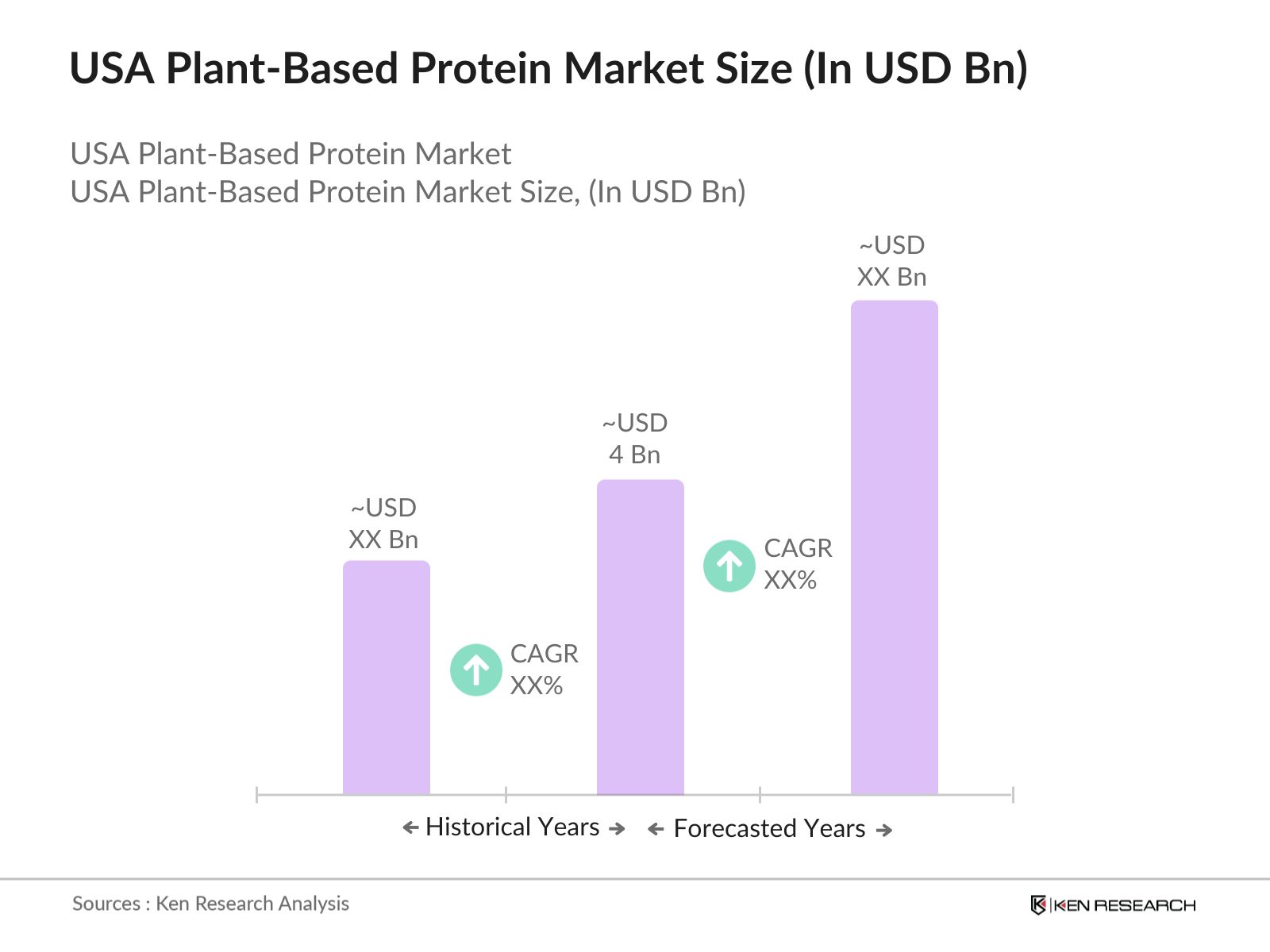
- The USA plant-based protein market is valued at USD 4 billion, driven by growing consumer demand for sustainable, healthier food options and increasing awareness around environmental concerns associated with animal-based products. Over the past five years, the market has experienced rapid growth due to an influx of new plant-based brands, the mainstream adoption of meat alternatives, and the role of health-conscious consumer behavior. Investment in innovation and improvements in the taste and texture of plant-based proteins has further propelled the market.
- Cities like New York, Los Angeles, and Chicago are leading the demand for plant-based protein products in the U.S. These cities have high populations of health-conscious consumers, alongside robust food innovation ecosystems. Additionally, states such as California have become major hubs for plant-based innovation due to their tech-driven environments, venture capital funding, and a strong network of food startups. These regions serve as cultural trendsetters, making them vital to market dominance.
- The FDA continues to play a crucial role in regulating plant-based products, with new guidelines issued in 2023 aimed at improving transparency in labeling. These regulations are critical for ensuring consumer trust and preventing misleading claims.
USA Plant-Based Protein Market Segmentation
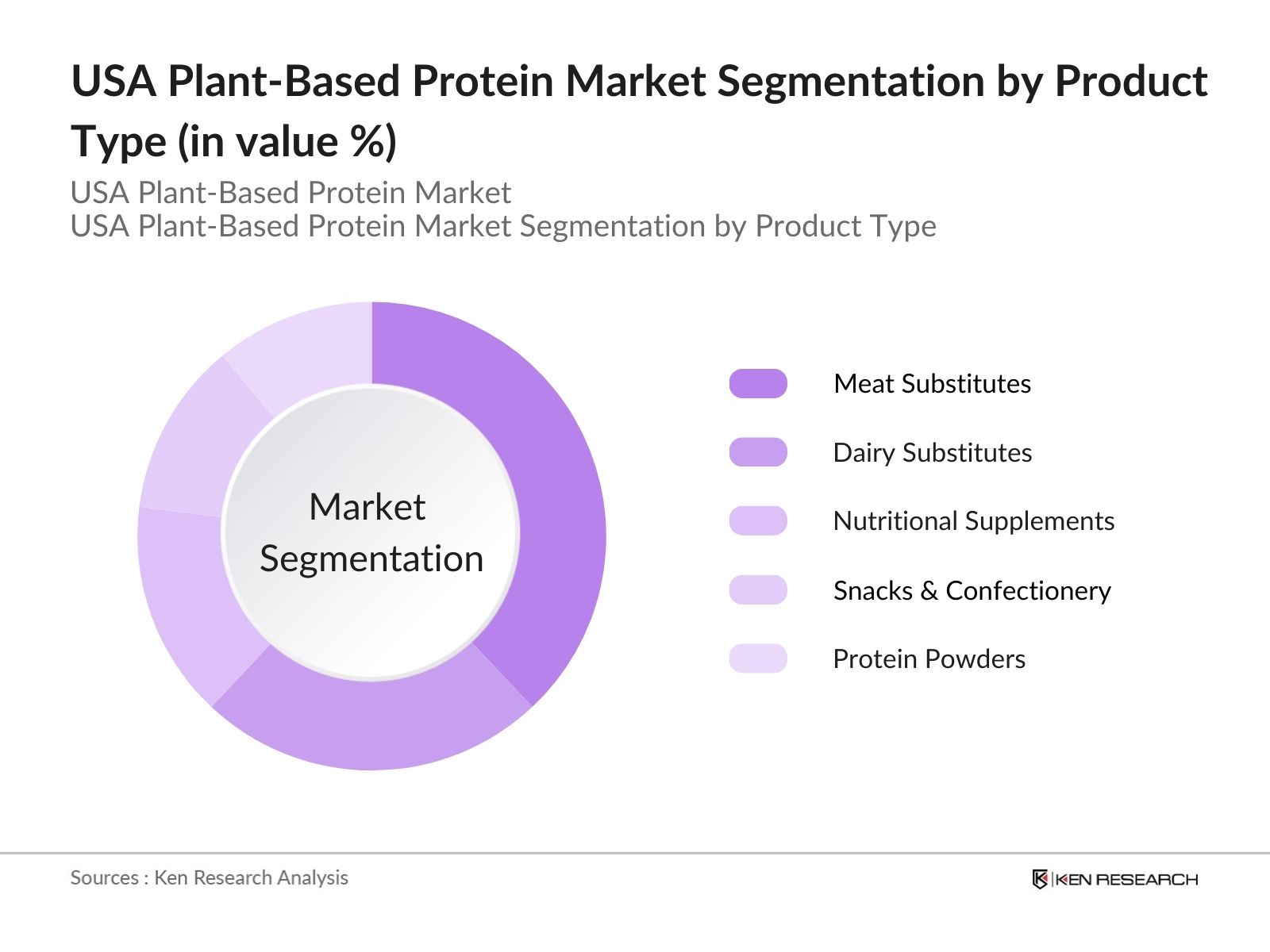
- By Product Type: The USA plant-based protein market is segmented by product type into Plant-Based Meat Substitutes, Plant-Based Dairy Substitutes, Plant-Based Nutritional Supplements, Plant-Based Snacks & Confectionery, and Plant-Based Protein Powders. Plant-Based Meat Substitutes continue to dominate the market due to increased consumer preference for alternatives that closely replicate the taste, texture, and nutritional value of animal meat. Brands like Beyond Meat and Impossible Foods have led the charge by innovating high-quality meat alternatives, now widely available in both retail and foodservice channels.
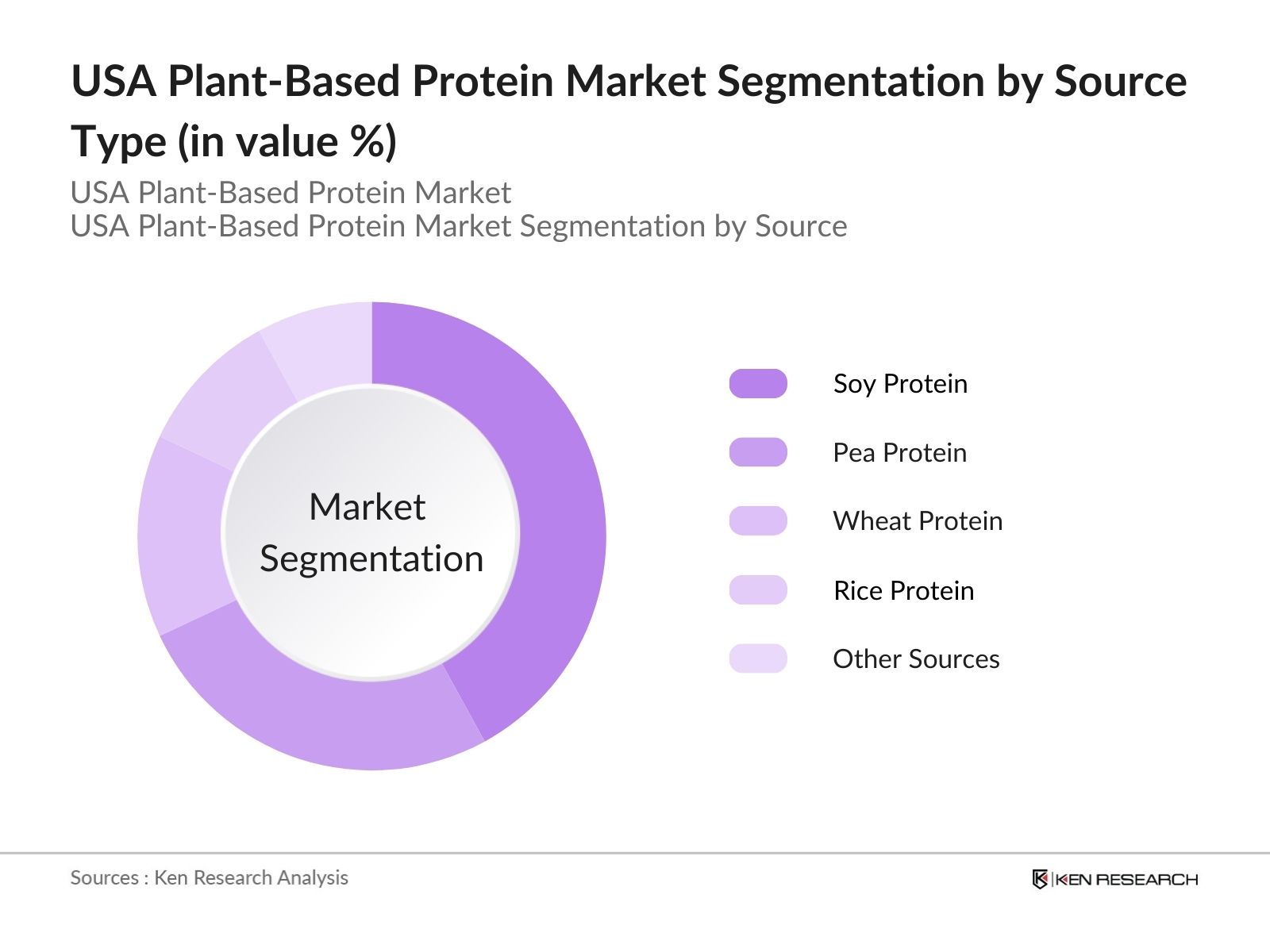
- By Source: The plant-based protein market is segmented by source into Soy Protein, Pea Protein, Wheat Protein, Rice Protein, and Other Sources (Algae, Nuts, Legumes). Soy Protein dominated the market. It is widely used due to its high protein content, availability, and versatility in product formulations. Soy protein has been the backbone of the plant-based food movement for decades, serving as a key ingredient in products like tofu, soy milk, and meat substitutes. Its affordability compared to other sources further solidifies its position as the dominant segment.
USA Plant-Based Protein Market Competitive Landscape
The USA plant-based protein market is characterized by a few key players that dominate the industry. Companies like Beyond Meat and Impossible Foods have capitalized on the rising trend of plant-based diets and have established strong brand equity. This has resulted in increased market consolidation, where leading players are expanding their product portfolios and making strategic partnerships to enhance their market presence.
|
Company |
Year of Establishment |
Headquarters |
Revenue (2023) |
Product Portfolio |
R&D Investments |
Sustainability Initiatives |
Global Reach |
No. of Employees |
Market Share |
|
Beyond Meat |
2009 |
El Segundo, CA |
|
|
|
|
|
|
|
|
Impossible Foods |
2011 |
Redwood City, CA |
|
|
|
|
|
|
|
|
Oatly |
1994 |
Malmö, Sweden |
|
|
|
|
|
|
|
|
Amy’s Kitchen |
1987 |
Petaluma, CA |
|
|
|
|
|
|
|
|
Greenleaf Foods |
2018 |
Elmhurst, IL |
|
|
|
|
|
|
|
USA Plant-Based Protein Industry Analysis
USA Plant-Based Protein MarketGrowth Drivers
- Plant-Based Diet Adoption: The U.S. is seeing a strong rise in plant-based diets, driven by health, environmental concerns, and ethical reasons. About 31% of U.S. adults plan to increase their consumption of plant-based proteins over the next five years. This is in response to a broader shift in eating habits, with flexitarians and younger generations leading the demand for more sustainable and healthier food options?. In 2023, over 23% of global consumers expressed a desire to limit their meat intake, reflecting the widespread popularity of plant-based alternatives?.
- Technological Innovations Technological advancements, including precision fermentation and AI-driven product development, are revolutionizing plant-based protein production. In 2023, the precision fermentation market was valued at $2.1 billion USD, expected to reach $57 billion by 2032. This technique enables the creation of plant-based products with enhanced taste and texture, appealing to a broader consumer base. Such innovations are key to overcoming the current barriers to plant-based adoption, such as taste?.
- Health Consciousness: Health concerns are a major driver for plant-based diets, with 37% of U.S. consumers citing health as their top reason for choosing plant-based meat alternatives. The growing awareness of the negative health effects of processed meats, combined with a preference for clean-label, minimally processed foods, is driving growth in this sector?. The U.S. healthcare costs related to obesity and chronic diseases, which are linked to high consumption of animal products, further underscore the need for healthier dietary options?
USA Plant-Based Protein Market Restraints
- Consumer Acceptance: Despite growing demand, 80% of U.S. adults still prefer animal proteins, citing taste and texture as major concerns. Consumer acceptance of plant-based products, especially among older demographics, remains limited, with more than half of those aged 60+ never consuming plant-based alternatives?
- Supply Chain Constraints: Supply chain issues, particularly in sourcing plant-based ingredients like pea and soy protein, have created challenges for manufacturers. In 2023, these supply chain disruptions were exacerbated by global agricultural constraints, making it difficult for producers to scale up their operations
USA Plant-Based Protein Market Future Outlook
Over the next five years, the global gutta percha market is expected to exhibit significant growth, driven by advancements in dental technology and an increasing focus on oral health. The continuous rise in dental procedures and a growing elderly population will further boost demand. Additionally, the push for biocompatible materials in medical applications is anticipated to create new opportunities in the market.
Market Opportunities
- Product Innovation: The U.S. market is ripe for product innovation, especially as companies explore new formulations beyond simple meat analogs. Technological advances in AI and fermentation are paving the way for unique plant-based products that appeal to flexitarians and health-conscious consumers?. Innovations like plant-based seafood and dairy alternatives offer significant room for growth?.
- Mergers and Acquisitions: With increasing competition in the plant-based sector, mergers and acquisitions have become a key strategy for growth. Large food corporations are acquiring plant-based startups to diversify their portfolios and meet the rising demand for sustainable products?. This trend is expected to accelerate, offering smaller companies the resources they need to scale their operations.
Scope of the Report
|
Product Type |
Plant-Based Meat Substitutes |
|
Plant-Based Dairy Substitutes |
|
|
Plant-Based Nutritional Supplements |
|
|
Plant-Based Snacks & Confectionery |
|
|
Plant-Based Protein Powders |
|
|
Source |
Soy Protein |
|
Pea Protein |
|
|
Wheat Protein |
|
|
Rice Protein |
|
|
Other Sources (Algae, Nuts, Legumes) |
|
|
Application |
Food & Beverage |
|
Dietary Supplements |
|
|
Personal Care & Cosmetics |
|
|
Pharmaceuticals |
|
|
Distribution Channel |
Supermarkets & Hypermarkets |
|
Online Retail |
|
|
Specialty Stores |
|
|
Foodservice (QSRs, Cafes, Restaurants) |
|
|
Region |
Northeast |
|
Midwest |
|
|
South |
|
|
West |
Products
Key Target Audience
- Food & Beverage Manufacturers
- Plant-Based Protein Suppliers
- Quick-Service Restaurant Chains
- Health & Wellness Retailers
- Government and Regulatory Bodies (FDA, USDA)
- Venture Capital Firms
- Food Tech Innovators and Startups
- Retailers and Supermarkets
Time Period Captured in the Report:
- Historical Period: 2018-2023
- Base Year: 2023
- Forecast Period: 2023-2028
Companies
- Beyond Meat
- Impossible Foods
- Oatly
- Amy’s Kitchen
- Greenleaf Foods
- The Very Good Food Company
- Tofurky
- Archer Daniels Midland Company
- The Kellogg Company (MorningStar Farms)
- Tyson Foods (Raised & Rooted)
- SunOpta
- Danone S.A. (Alpro)
- Nestlé (Sweet Earth)
- Maple Leaf Foods
- Hain Celestial Group
Table of Contents
1. USA Plant-Based Protein Market Overview
1.1. Definition and Scope
1.2. Market Taxonomy
1.3. Market Growth Rate
1.4. Market Segmentation Overview
2. USA Plant-Based Protein Market Size (In USD Bn)
2.1. Historical Market Size
2.2. Year-On-Year Growth Analysis
2.3. Key Market Developments and Milestones
3. USA Plant-Based Protein Market Analysis
3.1. Growth Drivers (Plant-Based Diet Adoption, Technological Innovations, Health Consciousness, Sustainability Concerns, Regulatory Approvals)
3.2. Market Challenges (Cost of Ingredients, Consumer Acceptance, Supply Chain Constraints, Labeling Regulations)
3.3. Opportunities (Product Innovation, Mergers and Acquisitions, Expansion into Retail & Foodservice Channels, Investment in R&D)
3.4. Trends (Clean Label Movement, Flexitarianism, Use of Advanced Fermentation, Functional Ingredients in Plant Protein Products)
3.5. Government Regulations (FDA Guidelines, USDA Organic Certification, Food Labeling Requirements)
3.6. SWOT Analysis
3.7. Stakeholder Ecosystem (Suppliers, Manufacturers, Retailers, Distributors, Foodservice Providers)
3.8. Porter’s Five Forces Analysis
3.9. Competition Ecosystem
4. USA Plant-Based Protein Market Segmentation
4.1. By Product Type (In Value %)
4.1.1. Plant-Based Meat Substitutes
4.1.2. Plant-Based Dairy Substitutes
4.1.3. Plant-Based Nutritional Supplements
4.1.4. Plant-Based Snacks & Confectionery
4.1.5. Plant-Based Protein Powders
4.2. By Source (In Value %)
4.2.1. Soy Protein
4.2.2. Pea Protein
4.2.3. Wheat Protein
4.2.4. Rice Protein
4.2.5. Other Sources (Algae, Nuts, Legumes)
4.3. By Application (In Value %)
4.3.1. Food & Beverage
4.3.2. Dietary Supplements
4.3.3. Personal Care & Cosmetics
4.3.4. Pharmaceuticals
4.4. By Distribution Channel (In Value %)
4.4.1. Supermarkets & Hypermarkets
4.4.2. Online Retail
4.4.3. Specialty Stores
4.4.4. Foodservice (QSRs, Cafes, Restaurants)
4.5. By Region (In Value %)
4.5.1. Northeast
4.5.2. Midwest
4.5.3. South
4.5.4. West
5. USA Plant-Based Protein Market Competitive Analysis
5.1. Detailed Profiles of Major Companies
5.1.1. Beyond Meat
5.1.2. Impossible Foods
5.1.3. Oatly
5.1.4. Tofurky
5.1.5. Amy’s Kitchen
5.1.6. Hain Celestial Group
5.1.7. Maple Leaf Foods
5.1.8. Archer Daniels Midland Company
5.1.9. The Kellogg Company (MorningStar Farms)
5.1.10. Tyson Foods (Raised & Rooted)
5.1.11. SunOpta
5.1.12. Danone S.A. (Alpro)
5.1.13. Greenleaf Foods
5.1.14. Nestlé (Sweet Earth)
5.1.15. The Very Good Food Company
5.2. Cross Comparison Parameters (Revenue, Headquarters, No. of Employees, Global Reach, Product Portfolio, R&D Investment, Sustainability Initiatives, Market Share)
5.3. Market Share Analysis
5.4. Strategic Initiatives (Partnerships, Joint Ventures, Product Launches, Expansion Strategies)
5.5. Mergers and Acquisitions
5.6. Investment Analysis (Venture Capital Funding, Private Equity, Strategic Investments)
5.7. Government Grants and Subsidies
5.8. Technological Innovations (Alternative Protein Sources, Fermentation Technology, 3D Printing of Food Products)
6. USA Plant-Based Protein Market Regulatory Framework
6.1. Labeling Regulations (Plant-Based vs. Animal-Based Terminology)
6.2. FDA/USDA Certification Requirements
6.3. Compliance Requirements (Non-GMO, Gluten-Free, Organic Certifications)
7. USA Plant-Based Protein Future Market Size (In USD Bn)
7.1. Future Market Size Projections
7.2. Key Factors Driving Future Market Growth
8. USA Plant-Based Protein Future Market Segmentation
8.1. By Product Type (In Value %)
8.2. By Source (In Value %)
8.3. By Application (In Value %)
8.4. By Distribution Channel (In Value %)
8.5. By Region (In Value %)
9. USA Plant-Based Protein Market Analysts’ Recommendations
9.1. TAM/SAM/SOM Analysis
9.2. Customer Cohort Analysis
9.3. Marketing Initiatives and Consumer Education
9.4. White Space Opportunity Analysis
Disclaimer
Contact Us
Research Methodology
Step 1: Identification of Key Variables
In the initial phase, we constructed an ecosystem map to outline the key players in the USA plant-based protein market. This stage involved gathering extensive information through secondary sources and proprietary databases to identify critical variables affecting market dynamics.
Step 2: Market Analysis and Construction
We analyzed historical data on the market, including product adoption rates and revenue generation by segment. This phase also involved the evaluation of quality and availability of different plant-based protein types to ensure accurate market sizing.
Step 3: Hypothesis Validation and Expert Consultation
Market hypotheses were validated through consultations with industry experts, leveraging computer-assisted interviews to gain insights into operational trends, consumer behavior, and product performance.
Step 4: Research Synthesis and Final Output
In the final phase, we collaborated with key manufacturers and distributors to verify sales performance data and market trends. This helped to refine our findings and ensure a comprehensive, validated report.
Frequently Asked Questions
01. How big is the USA plant-based protein market?
The USA plant-based protein market is valued at USD 4 billion, driven by growing consumer demand for sustainable and healthier food options.
02. What are the challenges in the USA plant-based protein market?
Challenges include high production costs, consumer skepticism about taste, and regulatory hurdles related to labeling and certification.
03. Who are the major players in the USA plant-based protein market?
Key players in the market include Beyond Meat, Impossible Foods, Oatly, Amy’s Kitchen, and Greenleaf Foods. These companies dominate due to strong brand loyalty, innovation, and strategic investments.
04. What are the growth drivers of the USA plant-based protein market?
Growth drivers include the rising trend of flexitarian diets, advancements in food technology, and increasing consumer concern for health and the environment.
Why Buy From Us?

What makes us stand out is that our consultants follows Robust, Refine and Result (RRR) methodology. i.e. Robust for clear definitions, approaches and sanity checking, Refine for differentiating respondents facts and opinions and Result for presenting data with story

We have set a benchmark in the industry by offering our clients with syndicated and customized market research reports featuring coverage of entire market as well as meticulous research and analyst insights.

While we don't replace traditional research, we flip the method upside down. Our dual approach of Top Bottom & Bottom Top ensures quality deliverable by not just verifying company fundamentals but also looking at the sector and macroeconomic factors.

With one step in the future, our research team constantly tries to show you the bigger picture. We help with some of the tough questions you may encounter along the way: How is the industry positioned? Best marketing channel? KPI's of competitors? By aligning every element, we help maximize success.

Our report gives you instant access to the answers and sources that other companies might choose to hide. We elaborate each steps of research methodology we have used and showcase you the sample size to earn your trust.

If you need any support, we are here! We pride ourselves on universe strength, data quality, and quick, friendly, and professional service.