















USA Polyurethane Market Outlook to 2030
Region:North America
Author(s):Vijay Kumar
Product Code:KROD3957
December 2024
89
About the Report
USA Polyurethane Market Overview
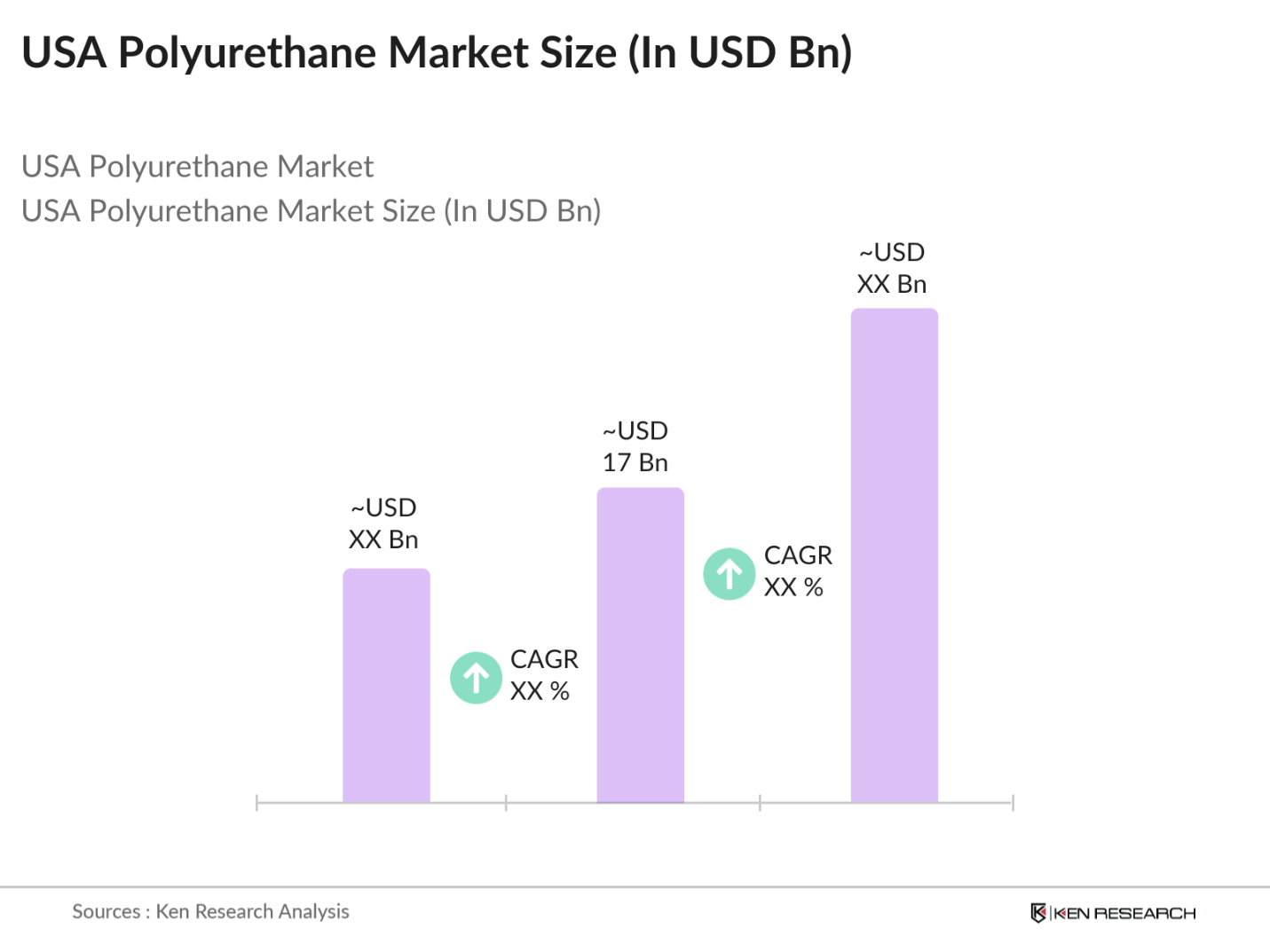
- The USA Polyurethane Market is valued at USD 17 billion, based on a five-year historical analysis. This market is primarily driven by the rising demand across multiple end-use industries, including automotive, construction, and electronics. The automotive industry is a key driver due to the increasing use of lightweight polyurethane materials for vehicle weight reduction, which helps improve fuel efficiency. Additionally, the construction industrys adoption of polyurethane insulation materials contributes to energy savings and structural durability, enhancing its demand in building and infrastructure projects.
- Major cities and states like California, Texas, and New York dominate the polyurethane market in the U.S. due to their high industrial output and substantial investments in infrastructure development. The presence of numerous automotive manufacturing facilities in these regions, combined with strong regulatory frameworks supporting energy-efficient construction practices, also boosts the demand for polyurethane products. As a result, these states play a pivotal role in the overall market dynamics.
- The U.S. government has implemented stringent standards to control VOC emissions and reduce GHG levels. These regulations have prompted manufacturers to adopt low-emission polyurethane formulations. The EPAs guidelines, updated in 2023, focus on reducing the environmental impact of chemical production, directly influencing the polyurethane industry to innovate and comply with these standards.
USA Polyurethane Market Segmentation
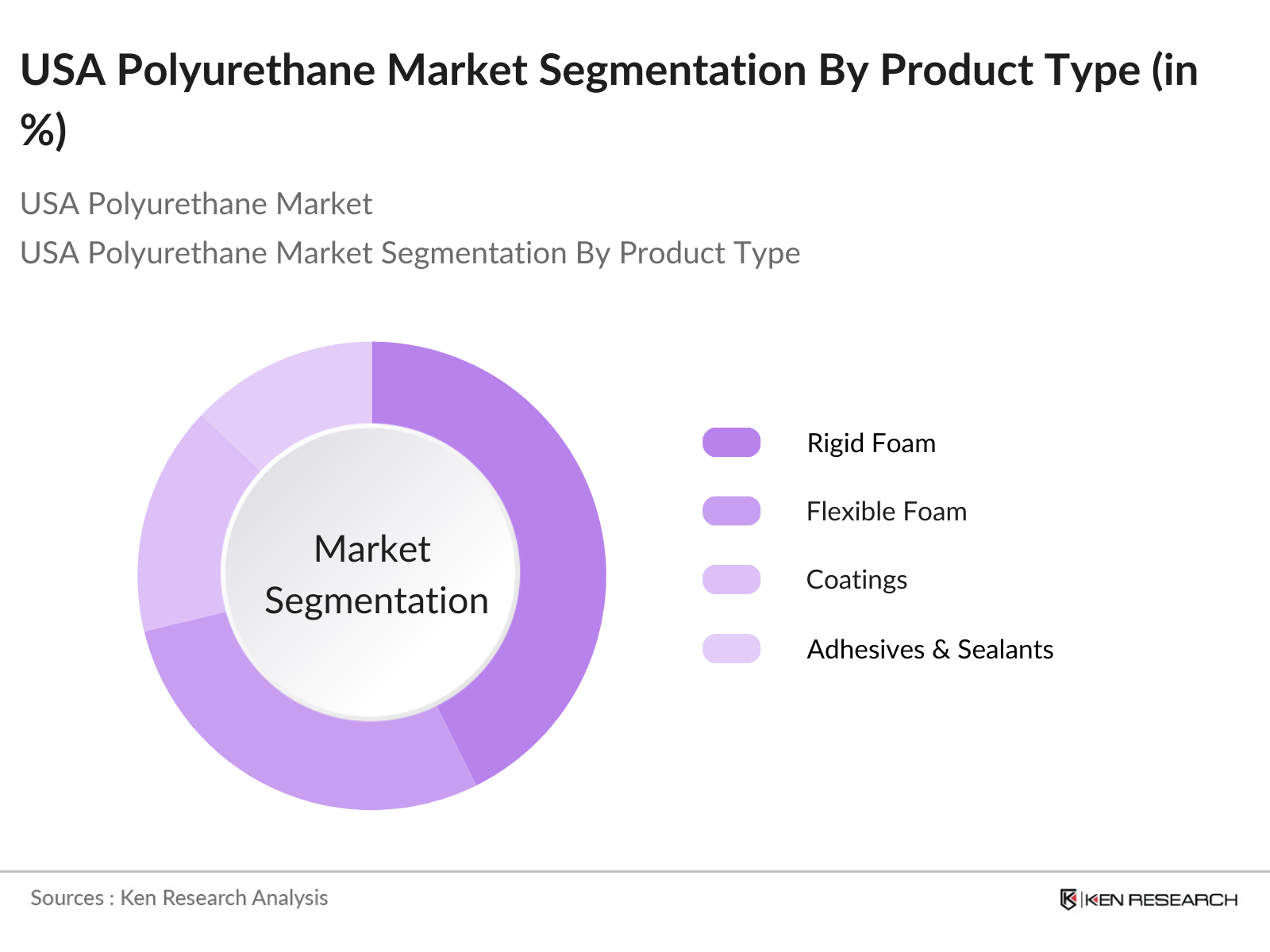
By Product Type: The market is segmented by product type into rigid foam, flexible foam, coatings, adhesives & sealants, and elastomers. Among these, rigid foam holds the dominant market share. This dominance is primarily due to its superior thermal insulation properties, making it an ideal material for applications in the construction industry, including roofing and wall insulation. Furthermore, rigid foams are extensively used in refrigeration and cold storage solutions, driven by increasing energy efficiency standards and sustainable construction trends.
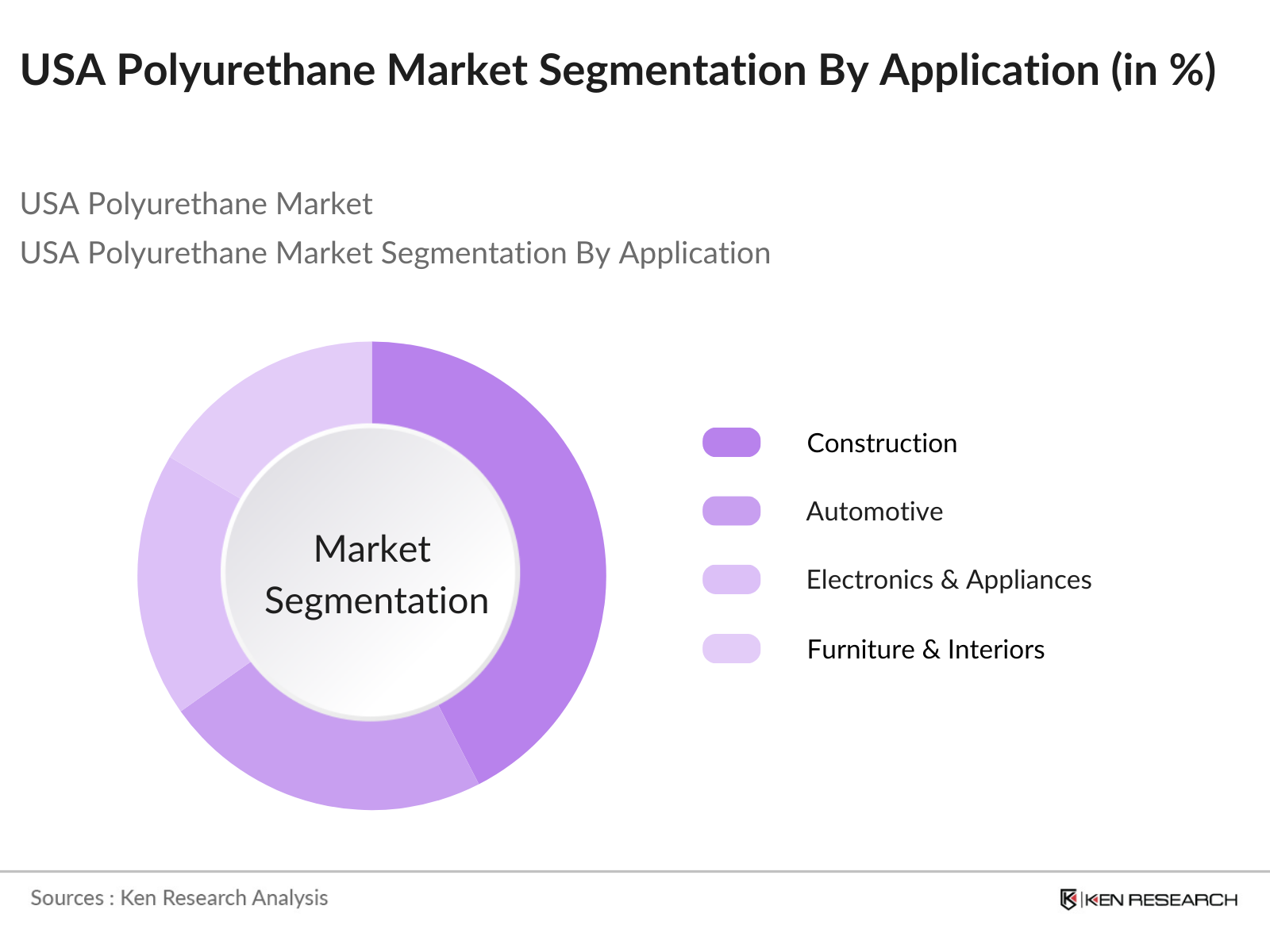
By Application: The market is segmented by application into construction, automotive, electronics & appliances, furniture & interiors, and packaging. The construction segment leads the market, owing to polyurethane's role in providing superior insulation, reducing energy consumption, and enhancing the structural stability of buildings. As more states enforce stricter building codes and energy efficiency regulations, the adoption of polyurethane-based insulation and sealants in residential and commercial projects is expected to increase, solidifying its position in the construction sector.
USA Polyurethane Market Competitive Landscape
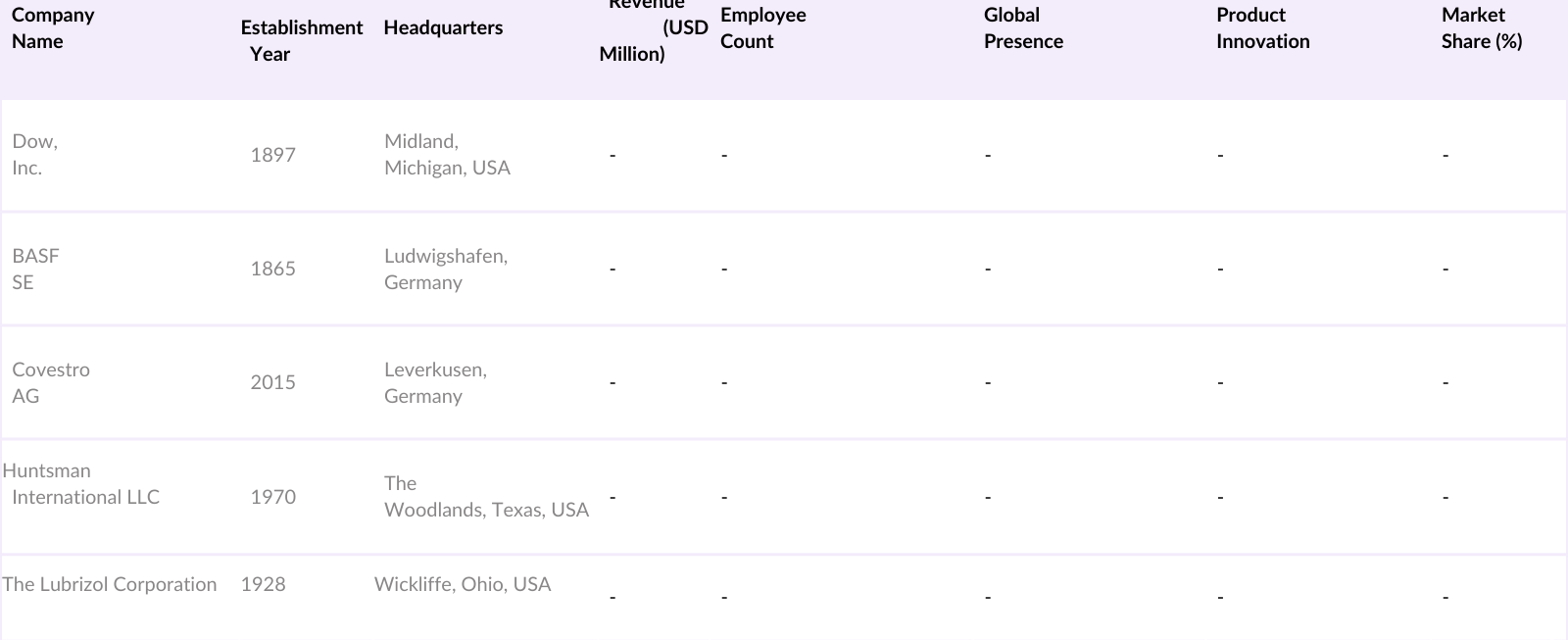
The USA Polyurethane market is dominated by a few key players, which include multinational corporations with extensive product portfolios and a strong presence across various end-use sectors. The competitive landscape is characterized by strategic collaborations, continuous product innovation, and significant investments in R&D to enhance product performance and sustainability.
USA Polyurethane Industry Analysis
Growth Drivers
- Increasing Demand in Automotive Sector (e.g., Vehicle Weight Reduction): The automotive sector is a key driver for polyurethane demand in the U.S., as vehicle manufacturers are increasingly using this material to reduce vehicle weight and improve fuel efficiency. In 2023, the U.S. automotive industry contributed around $1.5 trillion to the national GDP, with polyurethane playing a pivotal role in the production of lightweight components like seats and insulation panels.
- Rising Adoption in Construction Industry (Insulation, Durability): Polyurethane is widely used in construction for insulation, roofing, and flooring applications due to its durability and energy-efficient properties. The U.S. construction sector experienced a 6.9% growth in goods-producing industries in Q2 2024, driven by increased investments in residential and non-residential buildings. This growth is supported by government initiatives promoting energy-efficient building materials, making polyurethane an essential component for achieving high insulation standards.
- Expanding Use in Consumer Goods (Furniture, Bedding, Textiles): Polyurethane has found extensive use in consumer goods like furniture, bedding, and textiles, driven by demand for flexible and durable materials. As of 2024, the U.S. consumer spending on durable goods, including furniture and bedding, was valued at $1.34 trillion. The materials versatility, combined with its ability to provide comfort and durability, has made it a preferred choice for manufacturers looking to meet evolving consumer preferences.
Market Challenges
- Volatile Raw Material Prices: The polyurethane market faces challenges due to fluctuations in raw material costs, such as isocyanates and polyols, which are petroleum-based products. These fluctuations are linked to the volatile nature of crude oil prices, which averaged $70.4 billion in trade deficits in August 2024. Such volatility makes cost management difficult for polyurethane manufacturers, impacting their profit margins and pricing strategies.
- Regulatory and Environmental Concerns: The use of polyurethane is regulated due to concerns over Volatile Organic Compounds (VOCs) emissions and greenhouse gas (GHG) contributions during production. Compliance with environmental standards such as the U.S. Environmental Protection Agency (EPA) guidelines and the REACH regulation has increased operational costs. In 2024, personal income and expenditures data reflect a growing awareness and spending on environmentally-friendly products, indicating a shift in market preferences towards sustainable alternatives.
USA Polyurethane Market Future Outlook
Over the next few years, the USA Polyurethane Market is expected to grow significantly, driven by an increase in demand for energy-efficient buildings, advancements in polyurethane chemistry, and the expansion of end-use industries like automotive and electronics. Moreover, the adoption of sustainable and bio-based polyurethane products is anticipated to play a critical role in shaping the future of this market. Key growth factors include continued innovation in lightweight materials for automotive applications and increased investment in residential construction projects.
Market Opportunities
- Development of Bio-based and Green Polyurethane: The growing emphasis on sustainability is driving opportunities for bio-based and green polyurethane products. In 2023, government initiatives provided $57.4 billion in funding for green technology development, creating a favorable environment for the commercialization of bio-based polyurethane. This shift is expected to attract new investments in R&D and expand the use of polyurethane in environmentally-conscious applications.
- Expanding End-Use Industries (Footwear, Electronics): The U.S. footwear and electronics industries are expanding, providing new avenues for polyurethane applications. Personal consumption expenditures on goods like footwear and electronics amounted to $47.2 billion in August 2024, creating a high potential for polyurethane use in innovative designs and functional components. The materials flexibility and durability make it an ideal choice for these sectors.
Scope of the Report
|
Raw Material |
Toluene Di-isocyanate (TDI) Methylene Diphenyl Di-isocyanate (MDI) Polyols Others |
|
Product Type |
Rigid Foam Flexible Foam Coatings Adhesives & Sealants Elastomers Others |
|
Application |
Construction Automotive Furniture & Interiors Electronics & Appliances Footwear Packaging Others |
|
Region |
North America (U.S., Canada, Mexico) Europe (Germany, France, U.K., Italy, Spain) Asia Pacific (China, India, Japan, South Korea) Middle East & Africa (Saudi Arabia, UAE, South Africa) Central & South America (Brazil, Argentina) |
Products
Key Target Audience
Polyurethane Manufacturers
Automotive Component Manufacturers
Construction Material Suppliers
Electronics & Appliances Manufacturers
Packaging Companies
Investments and Venture Capitalist Firms
Government and Regulatory Bodies (EPA, OSHA)
Research and Development Institutions
Companies
Players Mentioned in the Report
Dow, Inc.
BASF SE
Covestro AG
Huntsman International LLC
Eastman Chemical Company
Mitsui & Co. Plastics Ltd.
Mitsubishi Chemical Corporation
Recitel NV/SA
Woodbridge
DIC Corporation
Table of Contents
1. Market Overview
1.1. Definition and Scope
1.2. Market Taxonomy
1.3. Market Growth Rate
1.4. Market Segmentation Overview
2. USA Polyurethane Market Size (USD Million)
2.1. Historical Market Size
2.2. Year-On-Year Growth Analysis
2.3. Key Market Developments and Milestones
3. USA Polyurethane Market Analysis
3.1. Growth Drivers
3.1.1. Increasing Demand in Automotive Sector (e.g., Vehicle Weight Reduction)
3.1.2. Rising Adoption in Construction Industry (Insulation, Durability)
3.1.3. Expanding Use in Consumer Goods (Furniture, Bedding, Textiles)
3.1.4. Technological Advancements (Bio-based Polyurethane)
3.2. Market Challenges
3.2.1. Volatile Raw Material Prices
3.2.2. Regulatory and Environmental Concerns
3.2.3. Supply Chain Disruptions
3.3. Opportunities
3.3.1. Development of Bio-based and Green Polyurethane
3.3.2. Expanding End-Use Industries (Footwear, Electronics)
3.3.3. Rising Infrastructure Investments
3.4. Trends
3.4.1. Lightweight and High-Performance Polyurethane Materials
3.4.2. Increasing Use in Flexible and Rigid Foam Applications
3.4.3. Adoption in Smart and Green Buildings
3.5. Government Regulations
3.5.1. Environmental Standards (VOC Emissions, GHG Reductions)
3.5.2. Compliance Requirements (REACH, EPA)
3.5.3. Certifications and Sustainability Initiatives
3.6. SWOT Analysis
3.7. Stakeholder Ecosystem
3.8. Porters Five Forces
3.9. Competition Ecosystem
4. USA Polyurethane Market Segmentation
4.1. By Raw Material (Volume, Revenue)
4.1.1. Toluene Di-isocyanate (TDI)
4.1.2. Methylene Diphenyl Di-isocyanate (MDI)
4.1.3. Polyols
4.1.4. Others
4.2. By Product Type (In Value, Volume %)
4.2.1. Rigid Foam
4.2.2. Flexible Foam
4.2.3. Coatings
4.2.4. Adhesives & Sealants
4.2.5. Elastomers
4.3. By Application (In Value, Volume %)
4.3.1. Construction
4.3.2. Automotive
4.3.3. Furniture & Interiors
4.3.4. Electronics & Appliances
4.3.5. Footwear
4.3.6. Packaging
4.4. By Region (In Value, Volume %)
4.4.1. North America
4.4.2. Europe
4.4.3. Asia Pacific
4.4.4. Middle East & Africa
4.4.5. Central & South America
5. Competitive Analysis
5.1. Detailed Profiles of Major Companies
5.1.1. Dow, Inc.
5.1.2. BASF SE
5.1.3. Covestro AG
5.1.4. Huntsman International LLC
5.1.5. Eastman Chemical Company
5.1.6. Mitsui & Co. Plastics Ltd.
5.1.7. Mitsubishi Chemical Corporation
5.1.8. Recitel NV/SA
5.1.9. Woodbridge
5.1.10. DIC Corporation
5.1.11. RTP Company
5.1.12. The Lubrizol Corporation
5.1.13. RAMPF Holding GmbH & Co. KG
5.1.14. Tosoh Corporation
5.2. Cross Comparison Parameters (Revenue, Market Share, Production Capacity, R&D Investments, Regional Presence, Product Portfolio, Strategic Initiatives, Customer Base)
5.3. Market Share Analysis
5.4. Strategic Initiatives (Product Launches, Collaborations, Mergers & Acquisitions)
5.5. Investment Analysis
5.6. Government Grants
5.7. Private Equity Investments
6. USA Polyurethane Market Regulatory Framework
6.1. Environmental Standards
6.2. Compliance Requirements
6.3. Certification Processes
7. USA Polyurethane Market Future Size
7.1. Market Size Projections (USD Million, CAGR)
7.2. Key Factors Driving Future Market Growth
8. USA Polyurethane Future Market Segmentation
8.1. By Raw Material
8.2. By Product Type
8.3. By Application
8.4. By Region
9. Market Analysts Recommendations
9.1. TAM/SAM/SOM Analysis
9.2. Customer Cohort Analysis
9.3. Marketing Initiatives
9.4. White Space Opportunity Analysis
Research Methodology
Step 1: Identification of Key Variables
The initial phase involves constructing a comprehensive market framework by mapping all major stakeholders in the USA Polyurethane Market. This step includes extensive desk research and data analysis to identify critical variables affecting market growth.
Step 2: Market Analysis and Construction
This phase involves the collection and analysis of historical data to understand market trends. Market segmentation is conducted to identify revenue generation sources and analyze the demand-supply dynamics in the USA Polyurethane Market.
Step 3: Hypothesis Validation and Expert Consultation
Market assumptions are developed and validated through consultations with industry experts. In-depth interviews and surveys are conducted to validate data and incorporate industry-specific insights.
Step 4: Research Synthesis and Final Output
The final stage involves the integration of primary and secondary research findings to develop a detailed market report. This includes the construction of comprehensive market models and final validation through peer reviews.
Frequently Asked Questions
01. How big is the USA Polyurethane Market?
The USA Polyurethane Market is valued at USD 17 billion, based on a five-year historical analysis. This market is primarily driven by the rising demand across multiple end-use industries, including automotive, construction, and electronics.
02. What are the challenges in the USA Polyurethane Market?
The primary challenges include fluctuating raw material prices, environmental concerns regarding the use of certain chemicals, and supply chain disruptions. Additionally, regulatory hurdles and compliance requirements are major barriers for market players.
03. Who are the major players in the USA Polyurethane Market?
Key players in the market include Dow, Inc., BASF SE, Covestro AG, Huntsman International LLC, and The Lubrizol Corporation. These companies dominate the market due to their extensive product portfolios, strong global presence, and ongoing investments in R&D.
04. What are the growth drivers of the USA Polyurethane Market?
The market is driven by increasing demand for energy-efficient buildings, advancements in bio-based polyurethane, and the rising adoption of lightweight materials in automotive applications. The push for sustainable and eco-friendly polyurethane products is also a key factor driving growth.
Why Buy From Us?

What makes us stand out is that our consultants follows Robust, Refine and Result (RRR) methodology. i.e. Robust for clear definitions, approaches and sanity checking, Refine for differentiating respondents facts and opinions and Result for presenting data with story

We have set a benchmark in the industry by offering our clients with syndicated and customized market research reports featuring coverage of entire market as well as meticulous research and analyst insights.

While we don't replace traditional research, we flip the method upside down. Our dual approach of Top Bottom & Bottom Top ensures quality deliverable by not just verifying company fundamentals but also looking at the sector and macroeconomic factors.

With one step in the future, our research team constantly tries to show you the bigger picture. We help with some of the tough questions you may encounter along the way: How is the industry positioned? Best marketing channel? KPI's of competitors? By aligning every element, we help maximize success.

Our report gives you instant access to the answers and sources that other companies might choose to hide. We elaborate each steps of research methodology we have used and showcase you the sample size to earn your trust.

If you need any support, we are here! We pride ourselves on universe strength, data quality, and quick, friendly, and professional service.