















USA Portable Washing Machines Market Outlook to 2030
Region:North America
Author(s):Paribhasha Tiwari
Product Code:KROD7477
December 2024
97
About the Report
USA Portable Washing Machines Market Overview
- The USA Portable Washing Machines market is valued at USD 1.2 billion based on a five-year historical analysis. This market has been primarily driven by the increased demand for compact, energy-efficient washing solutions, especially in urban apartment dwellings, RVs, and small homes. As consumer preferences shift toward portability and eco-friendly appliances, manufacturers have responded with innovations to meet this demand. Additionally, a rise in e-commerce channels has facilitated broader access to portable washing machines.
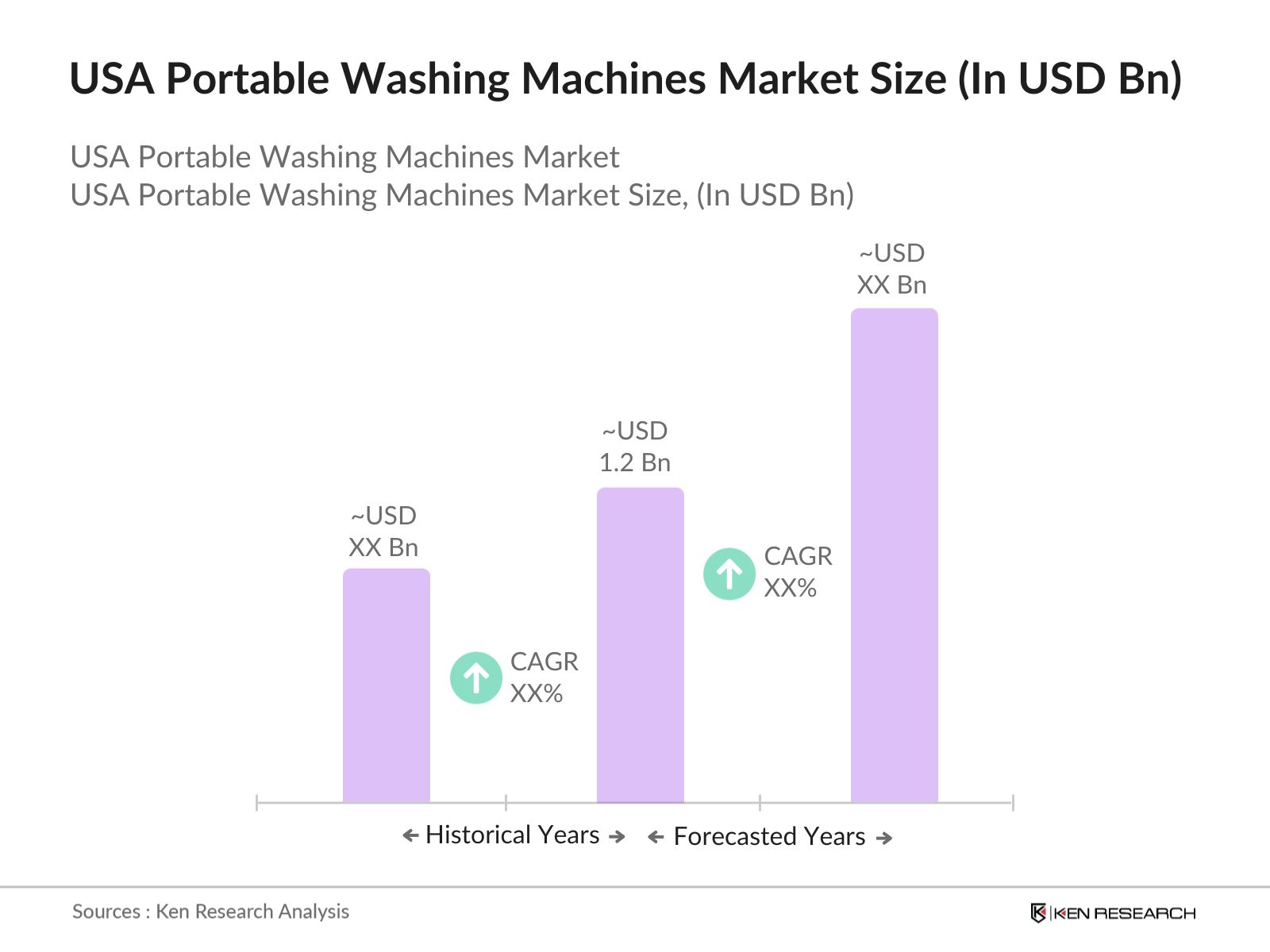
- The USA market sees dominance in cities like New York, Los Angeles, and Miami due to the concentration of urban apartment dwellers and mobile home communities. These areas have a high density of residents in need of space-saving and convenient household appliances. Moreover, RV ownership across states such as California and Florida further strengthen the demand for portable washing machines, as they are essential for frequent travelers and those living in smaller, mobile homes.
- The U.S. governments Infrastructure Investment and Jobs Act (IIJA), which allocates $65 billion for energy infrastructure, also indirectly supports the portable washing machine market by expanding electricity grids in rural areas. By 2024, the expanded energy infrastructure is expected to enhance the accessibility of power in off-grid locations, benefitting portable appliance users, such as RV owners and rural consumers, by providing reliable access to energy in previously underserved areas.
USA Portable Washing Machines Market Segmentation
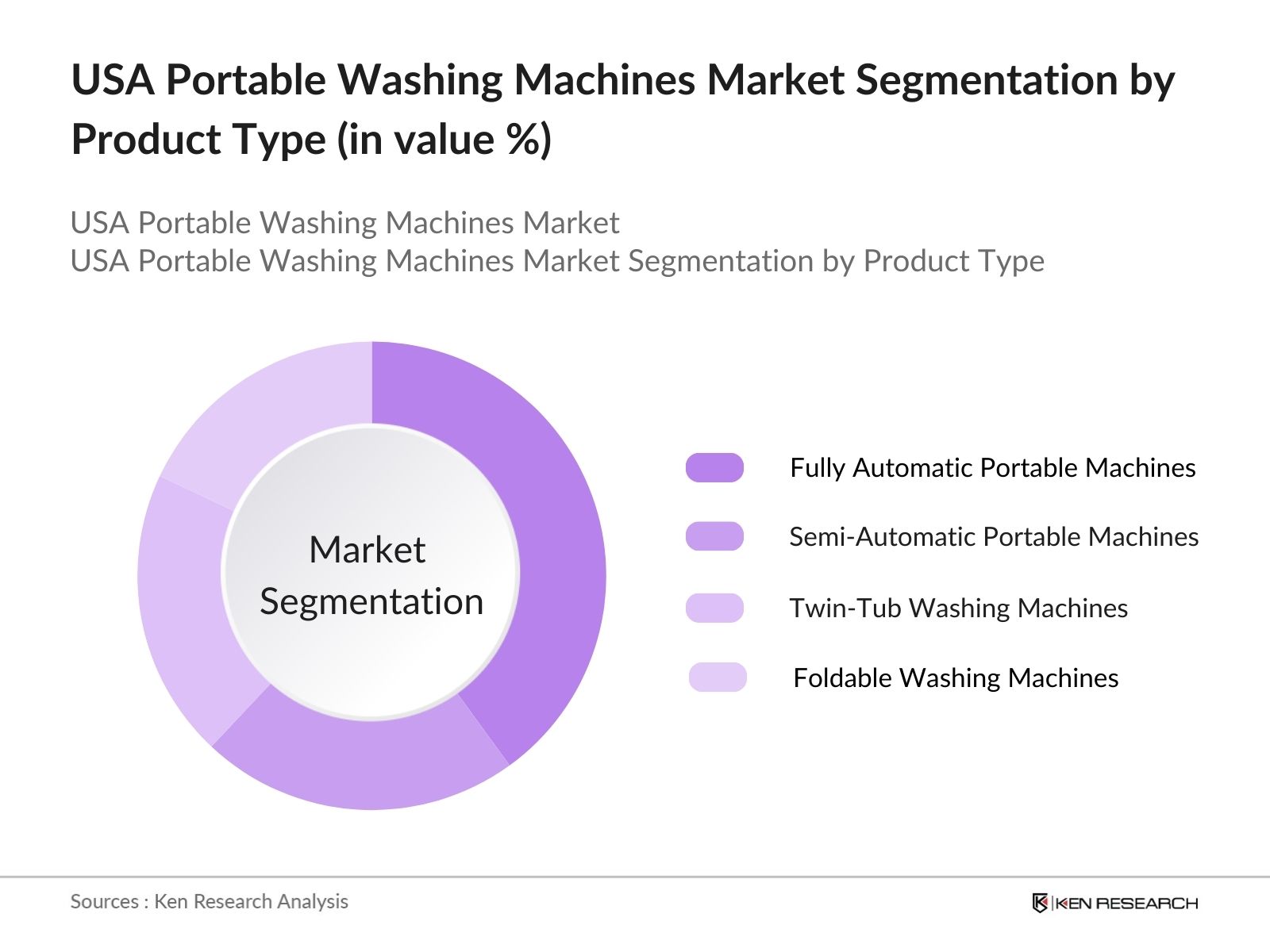
- By Product Type: The USA Portable Washing Machines market is segmented by product type into semi-automatic washing machines, fully automatic washing machines, foldable washing machines, and twin-tub washing machines. Recently, fully automatic portable washing machines have taken a dominant share of the market under the segmentation of product type. This is due to their ease of use, compact design, and automatic water management, making them highly appealing for consumers in urban settings and smaller living spaces. These machines are also increasingly being integrated with smart technology, providing additional convenience to users who prefer automated, connected appliances.
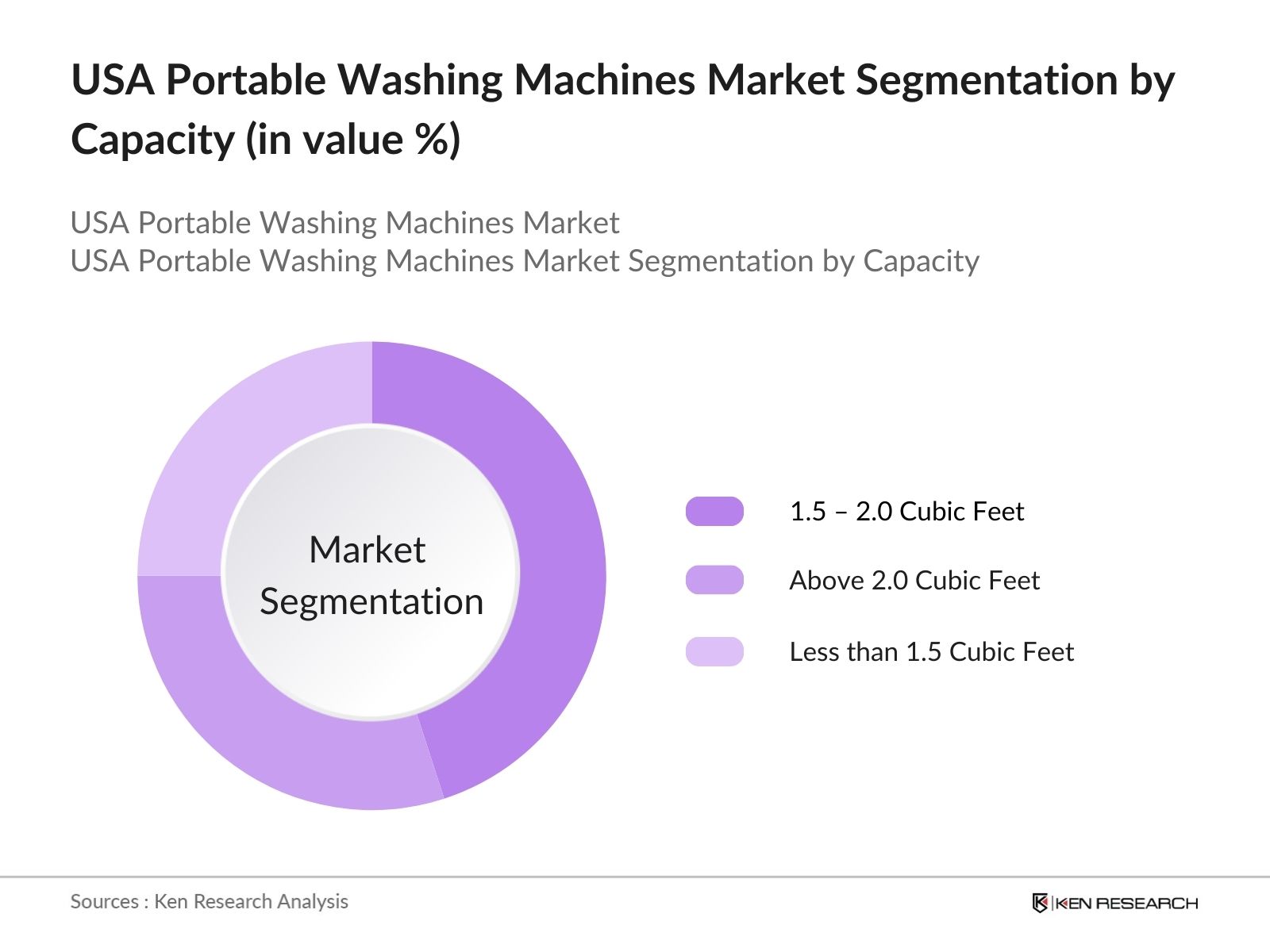
- By Capacity: The market is further segmented by capacity into less than 1.5 cubic feet, 1.52.0 cubic feet, and above 2.0 cubic feet. Machines with a capacity of 1.52.0 cubic feet have a dominant market share under this segmentation. This is mainly due to their ideal balance of size and capacity, fitting well within most modern apartments and small homes while still being capable of handling a reasonable load of laundry. These machines cater to consumers looking for a balance between space-saving and functionality, which is why they are highly preferred.
USA Portable Washing Machines Competitive Landscape
The USA Portable Washing Machines market is dominated by a few major players, including Whirlpool Corporation, LG Electronics, and Haier Group Corporation. These companies have a strong foothold due to their established brand recognition, broad product range, and focus on innovation. Local manufacturers and smaller brands, such as Panda and Giantex, also hold a significant market presence by catering to niche markets, particularly in the RV and mobile home sectors.
|
Company |
Establishment Year |
Headquarters |
Product Range |
Innovation Focus |
Distribution Network |
Energy Efficiency Rating |
Smart Technology Integration |
Consumer Support |
After-Sales Service |
|---|---|---|---|---|---|---|---|---|---|
|
Whirlpool Corporation |
1911 |
Benton Harbor, MI |
- | - | - | - | - | - | - |
|
LG Electronics |
1958 |
Seoul, South Korea |
- | - | - | - | - | - | - |
|
Haier Group Corporation |
1984 |
Qingdao, China |
- | - | - | - | - | - | - |
|
Panda Appliances |
2000 |
Hong Kong |
- | - | - | - | - | - | - |
|
Giantex |
2007 |
Ontario, CA |
- | - | - | - | - | - | - |
USA Portable Washing Machines Market Analysis
Market Growth Drivers
- Growth in Urban Apartment Living (Small-space solutions) With the increasing population density in U.S. urban areas, especially in cities like New York and San Francisco, the demand for space-saving appliances like portable washing machines has grown. By 2024, the U.S. Census Bureau reports over 39 million people living in apartment-style housing, a segment that highly favors compact appliances. These machines cater to individuals and families in small apartments with limited space for full-sized appliances. The shift towards micro-living units, particularly in high-density urban areas, further fuels this trend as smaller households prioritize functional yet space-efficient solutions.
- Rising Consumer Preference for Eco-Friendly Appliances In 2024, energy-efficient appliances, including portable washing machines, have gained popularity among environmentally conscious consumers. The U.S. Department of Energy reports that households in states like California and Washington are more likely to purchase energy-saving appliances to comply with regional energy conservation initiatives. Portable washing machines, designed with low water consumption and reduced power use, cater to this demand. Eco-conscious consumers in states with strict environmental regulations are increasingly adopting these appliances, further driven by incentives like energy tax credits.
- Increase in Online Sales Channels for Home Appliances The surge in e-commerce has transformed how consumers shop for home appliances. In 2024, Statista reports that online appliance sales in the U.S. have grown to over 60 million units annually, with portable washing machines being a popular category due to their easy delivery and installation. Retailers like Amazon and Walmart have optimized their supply chains to cater to the demand for compact appliances in both urban and rural markets, contributing to the rise in portable washing machine sales through online channels.
Market Challenges
- High Dependency on Imported Components The U.S. market for portable washing machines is highly dependent on imported components, primarily from China. In 2024, the U.S. Department of Commerce reported a $150 billion import volume of home appliance components, including parts for portable washing machines. Supply chain disruptions, such as those experienced during the COVID-19 pandemic, can cause delays and increased costs for manufacturers reliant on international suppliers, leading to potential price hikes for consumers and market volatility.
- Compliance with U.S. Energy Efficiency Standards U.S. portable washing machine manufacturers face stringent energy efficiency requirements set by the U.S. Department of Energy. By 2024, appliances must meet rigorous efficiency benchmarks to qualify for the ENERGY STAR program, adding a layer of complexity and cost for manufacturers to comply with these standards. Manufacturers failing to adhere to these regulations risk penalties, product recalls, or losing market share as consumers increasingly prefer certified energy-efficient models.
USA Portable Washing Machines Future Outlook
Over the next five years, the USA Portable Washing Machines market is expected to continue its growth trajectory, driven by several key factors. These include a continued focus on energy efficiency, innovations in compact appliance design, and the expansion of smart home technology integration. The increasing urbanization and growth of the RV and mobile home sector in states like California, Texas, and Florida will also boost demand for these portable washing solutions. The market's future will likely see a surge in foldable and fully automatic machines, catering to the rising consumer need for space-saving appliances. Moreover, advancements in water conservation technology, driven by stricter environmental regulations, are expected to shape product development.
Market Opportunities
- Integration of Smart Home Technologies in Portable Washers The integration of smart home technologies presents a lucrative opportunity for manufacturers of portable washing machines. By 2024, the U.S. Department of Energy estimates that 65 million homes are equipped with smart devices, driving demand for smart-compatible home appliances. Portable washing machines equipped with Wi-Fi, remote control, and energy monitoring features are expected to capture a growing share of the market as consumers seek appliances that align with the broader trend of home automation.
- Expanding Markets in Rural Areas and RV Travelers The expansion of portable washing machines into rural markets and the RV community presents a significant growth opportunity. By 2024, the U.S. Census Bureau reports that over 60 million people reside in rural areas, where access to laundromats may be limited. Additionally, the rise of RV ownership (with over 11 million U.S. households owning RVs) presents a unique market for portable, compact appliances designed for on-the-go use. The growing popularity of outdoor lifestyles and mobile living drives demand for small, portable washing machines among these consumer segments.
Scope of the Report
|
By Product Type |
Semi-Automatic Portable Washing Machines Fully Automatic Portable Washing Machines Foldable Washing Machines Compact Twin Tub Washing Machines |
|
By Capacity |
Less than 1.5 Cubic Feet 1.5 2.0 Cubic Feet Above 2.0 Cubic Feet |
|
By Application |
Residential RV & Camping Dormitories Commercial Usage (Tiny Homes, Travel Industry) |
|
By Distribution Channel |
Online Retailers Supermarkets & Hypermarkets Specialty Stores Direct Sales |
|
By Region |
North East Midwest South West |
Products
Key Target Audience
Investors and Venture Capitalist Firms
Government and Regulatory Bodies (U.S. Department of Energy, Environmental Protection Agency)
Appliance Retailers
RV and Mobile Home Manufacturers
E-commerce Platforms
Appliance Manufacturers
Consumer Electronics Companies
Smart Home Solution Providers
Companies
Players Mentioned in the Report:
Whirlpool Corporation
LG Electronics
Haier Group Corporation
Panda Appliances
Giantex
Costway
Danby
Super Deal
The Laundry Alternative
Homelabs
Table of Contents
1. USA Portable Washing Machines Market Overview
1.1. Definition and Scope
1.2. Market Taxonomy
1.3. Market Growth Rate
1.4. Market Segmentation Overview
2. USA Portable Washing Machines Market Size (In USD Mn)
2.1. Historical Market Size
2.2. Year-On-Year Growth Analysis
2.3. Key Market Developments and Milestones
3. USA Portable Washing Machines Market Analysis
3.1. Growth Drivers (Energy Efficiency, Compact Living Trends, Portability Demands)
3.1.1. Growth in Urban Apartment Living (Small-space solutions)
3.1.2. Rising Consumer Preference for Eco-Friendly Appliances
3.1.3. Increase in Online Sales Channels for Home Appliances
3.1.4. Growing Focus on Portable and Easy-to-Use Household Products
3.2. Market Challenges (Supply Chain Disruptions, Energy Regulations, Durability Concerns)
3.2.1. High Dependency on Imported Components
3.2.2. Compliance with U.S. Energy Efficiency Standards
3.2.3. Durability and Quality Issues in Low-Cost Models
3.2.4. Competition from Full-Sized Washing Machines
3.3. Opportunities (Innovative Technologies, Expansion of E-Commerce, Sustainability)
3.3.1. Integration of Smart Home Technologies in Portable Washers
3.3.2. Expanding Markets in Rural Areas and RV Travelers
3.3.3. Customizable Features for Niche Segments (e.g., Camping, Small Living Spaces)
3.3.4. Consumer Shift Towards Energy-Conserving Appliances
3.4. Trends (Sustainability Focus, Smart Appliances Integration, Compact Designs)
3.4.1. Increasing Adoption of Energy Star Certified Products
3.4.2. Rising Popularity of Foldable and Portable Washing Units
3.4.3. Integration of IoT and Remote-Control Features in Portable Washers
3.4.4. Collaboration Between Home Appliance Companies and E-Commerce Giants
3.5. Government Regulation (U.S. Energy Department Regulations, Product Certifications)
3.5.1. Department of Energy's Energy Efficiency Regulations
3.5.2. Federal Guidelines on Water Conservation for Household Appliances
3.5.3. Safety Standards for Portable Electrical Devices
3.5.4. Environmental Protection Agency's (EPA) Energy Star Program
3.6. SWOT Analysis
3.7. Stake Ecosystem
3.8. Porters Five Forces
3.9. Competitive Ecosystem
4. USA Portable Washing Machines Market Segmentation
4.1. By Product Type (In Value %)
4.1.1. Semi-Automatic Portable Washing Machines
4.1.2. Fully Automatic Portable Washing Machines
4.1.3. Foldable Washing Machines
4.1.4. Compact Twin Tub Washing Machines
4.2. By Capacity (In Value %)
4.2.1. Less than 1.5 Cubic Feet
4.2.2. 1.5 2.0 Cubic Feet
4.2.3. Above 2.0 Cubic Feet
4.3. By Application (In Value %)
4.3.1. Residential
4.3.2. RV & Camping
4.3.3. Dormitories
4.3.4. Commercial Usage (Tiny Homes, Travel Industry)
4.4. By Distribution Channel (In Value %)
4.4.1. Online Retailers
4.4.2. Supermarkets & Hypermarkets
4.4.3. Specialty Stores
4.4.4. Direct Sales
4.5. By Region (In Value %)
4.5.1. North East
4.5.2. Midwest
4.5.3. South
4.5.4. West
5. USA Portable Washing Machines Market Competitive Analysis
5.1. Detailed Profiles of Major Companies
5.1.1. Whirlpool Corporation
5.1.2. LG Electronics
5.1.3. Haier Group Corporation
5.1.4. Midea Group
5.1.5. Black+Decker
5.1.6. The Laundry Alternative
5.1.7. Danby
5.1.8. Panda
5.1.9. Costway
5.1.10. Giantex
5.1.11. KUPPET
5.1.12. Avanti Products
5.1.13. ZENY Portable
5.1.14. Super Deal
5.1.15. Homelabs
5.2. Cross Comparison Parameters (Product Portfolio, Distribution Channels, Technology Innovation, Energy Efficiency Ratings, Sales Strategy, Product Design, Consumer Reviews, Warranty & Customer Support)
5.3. Market Share Analysis
5.4. Strategic Initiatives
5.5. Mergers And Acquisitions
5.6. Investment Analysis
5.7. Venture Capital Funding
5.8. Government Grants
5.9. Private Equity Investments
6. USA Portable Washing Machines Market Regulatory Framework
6.1. Energy Efficiency Standards
6.2. Compliance Requirements for Portable Appliances
6.3. Certification Processes for Water Efficiency
6.4. Consumer Protection Laws for Warranty and Returns
7. USA Portable Washing Machines Future Market Size (In USD Billion)
7.1. Future Market Size Projections
7.2. Key Factors Driving Future Market Growth
8. USA Portable Washing Machines Future Market Segmentation
8.1. By Product Type (In Value %)
8.2. By Capacity (In Value %)
8.3. By Application (In Value %)
8.4. By Distribution Channel (In Value %)
8.5. By Region (In Value %)
9. USA Portable Washing Machines Market Analysts Recommendations
9.1. TAM/SAM/SOM Analysis
9.2. Customer Cohort Analysis
9.3. Marketing Initiatives
9.4. White Space Opportunity Analysis
Research Methodology
Step 1: Identification of Key Variables
In this phase, we begin by mapping the key stakeholders within the USA Portable Washing Machines Market. This includes identifying the major appliance manufacturers, retailers, and smart home solution providers. Desk research is conducted using a combination of proprietary databases and secondary sources to gather detailed market information.
Step 2: Market Analysis and Construction
This stage involves analyzing historical data and trends related to portable washing machines in the U.S. market. Metrics such as energy efficiency, market penetration by product type, and consumer preferences are assessed to estimate current and historical revenue.
Step 3: Hypothesis Validation and Expert Consultation
Hypotheses concerning market growth and trends are developed based on data collected. These are then validated through consultations with industry experts, including representatives from major manufacturers and key industry professionals. These insights are crucial for corroborating data.
Step 4: Research Synthesis and Final Output
The final stage includes synthesizing all gathered data into a comprehensive market report. The report is validated through cross-verification of findings with manufacturers and retailers to ensure that all statistics and analysis are accurate and up to date.
Frequently Asked Questions
01. How big is the USA Portable Washing Machines Market?
The USA Portable Washing Machines market is valued at USD 1.2 billion, driven by increased urbanization, demand for compact home appliances, and the rising popularity of smart technology.
02. What are the challenges in the USA Portable Washing Machines Market?
Challenges in the USA Portable Washing Machines market include supply chain disruptions affecting component availability, competition from full-sized washing machines, and maintaining energy efficiency standards set by regulatory bodies.
03. Who are the major players in the USA Portable Washing Machines Market?
Key players in the USA Portable Washing Machines market include Whirlpool Corporation, LG Electronics, Haier Group Corporation, Panda Appliances, and Giantex. These companies dominate due to their strong product offerings and innovation in compact appliances.
04. What are the growth drivers of the USA Portable Washing Machines Market?
The USA Portable Washing Machines market is driven by factors such as increasing urban apartment living, the need for space-saving appliances, and growing consumer interest in eco-friendly and energy-efficient products.
Why Buy From Us?

What makes us stand out is that our consultants follows Robust, Refine and Result (RRR) methodology. i.e. Robust for clear definitions, approaches and sanity checking, Refine for differentiating respondents facts and opinions and Result for presenting data with story

We have set a benchmark in the industry by offering our clients with syndicated and customized market research reports featuring coverage of entire market as well as meticulous research and analyst insights.

While we don't replace traditional research, we flip the method upside down. Our dual approach of Top Bottom & Bottom Top ensures quality deliverable by not just verifying company fundamentals but also looking at the sector and macroeconomic factors.

With one step in the future, our research team constantly tries to show you the bigger picture. We help with some of the tough questions you may encounter along the way: How is the industry positioned? Best marketing channel? KPI's of competitors? By aligning every element, we help maximize success.

Our report gives you instant access to the answers and sources that other companies might choose to hide. We elaborate each steps of research methodology we have used and showcase you the sample size to earn your trust.

If you need any support, we are here! We pride ourselves on universe strength, data quality, and quick, friendly, and professional service.