
USA Residential Construction Market Outlook to 2030
Region:United States
Author(s):Vijay Kumar
Product Code:KROD8160
Region:United States
Author(s):Vijay Kumar
Product Code:KROD8160
November 2024
93
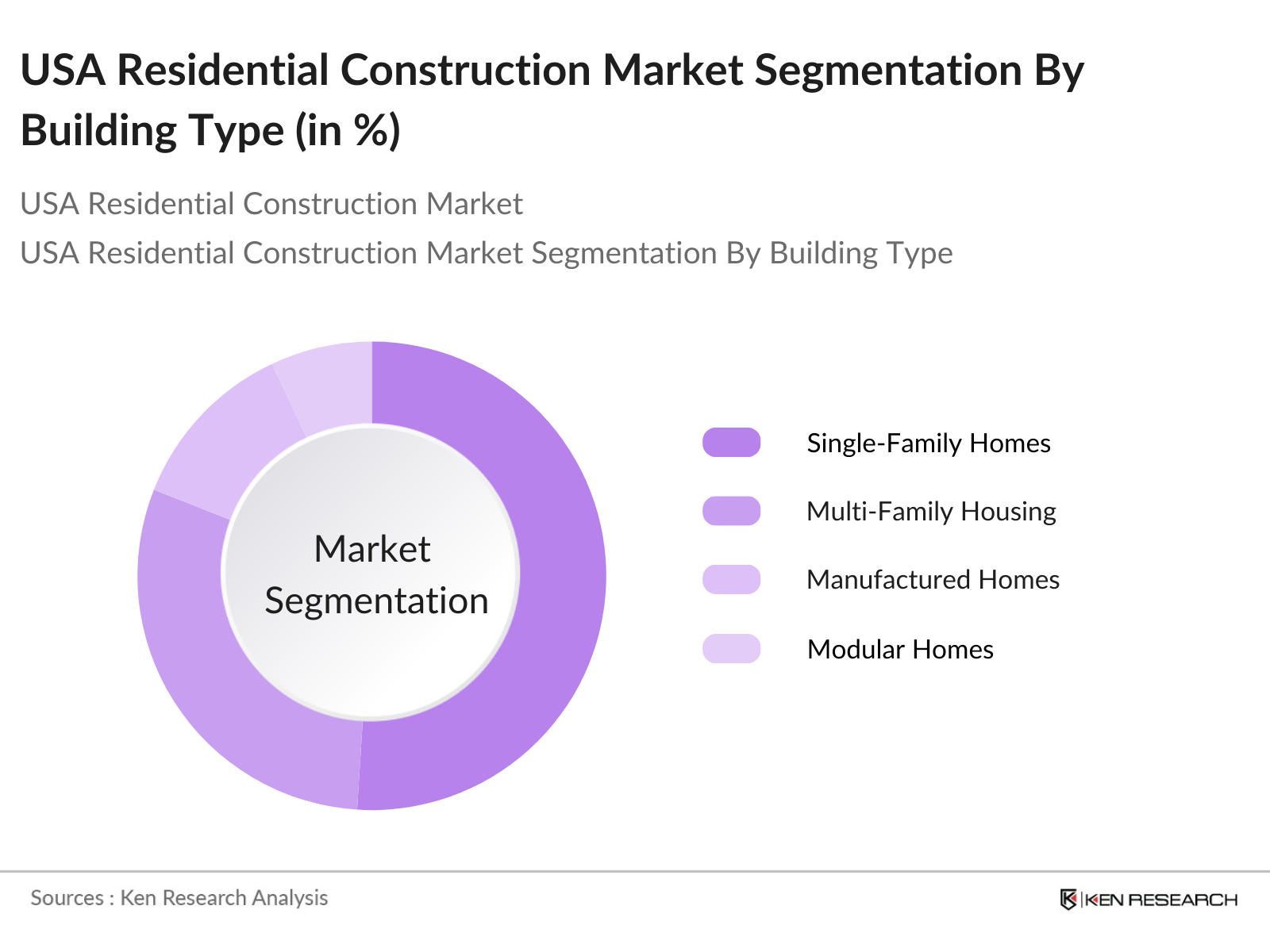
By Building Type: The market is segmented by building type into single-family homes, multi-family housing, manufactured homes, modular homes, and tiny homes. Recently, single-family homes have held a dominant market share under the building type segmentation. This dominance is due to the strong demand for private home ownership across various income brackets, especially as mortgage interest rates remain favorable.
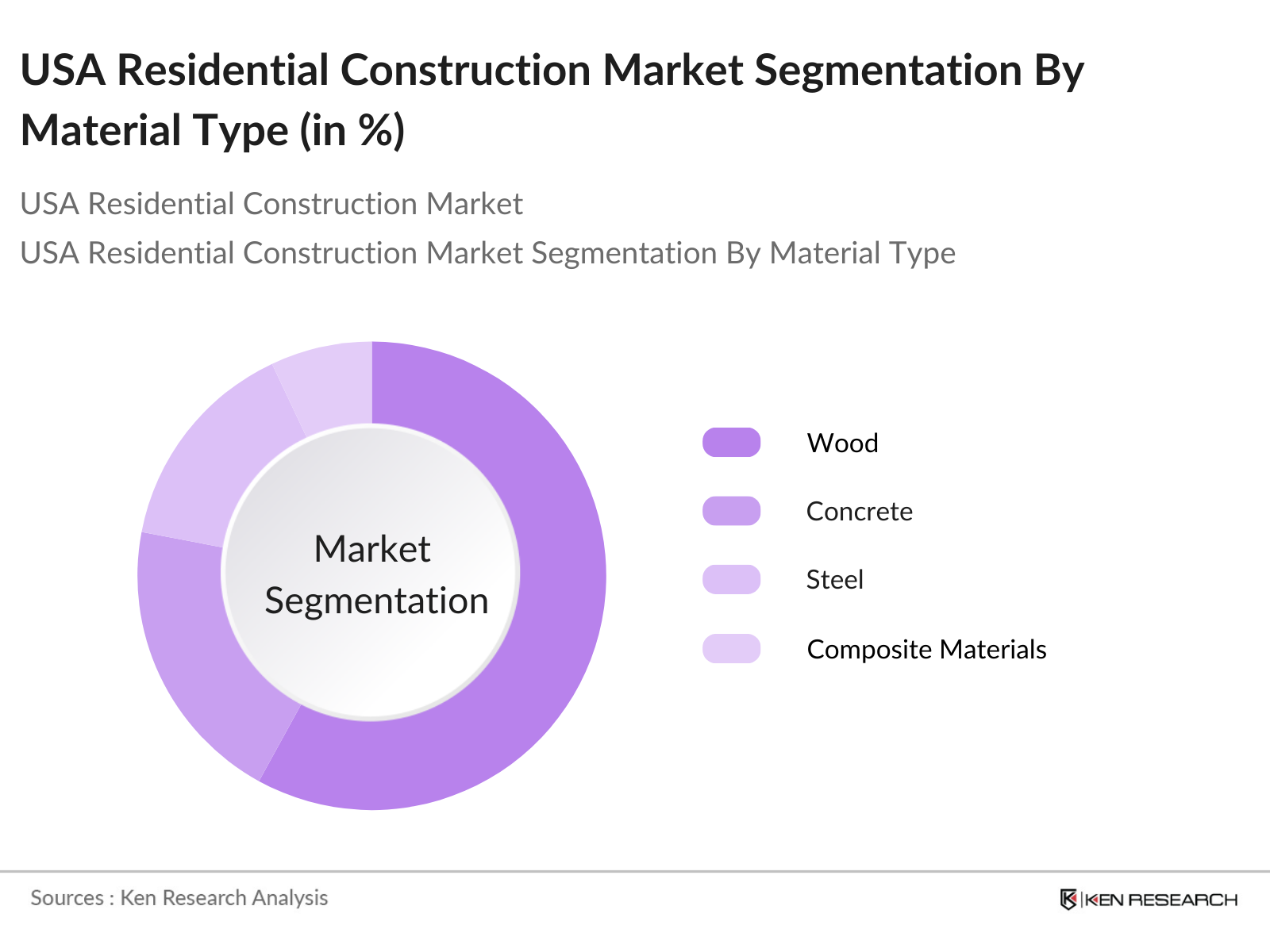
By Material Type: The market is further segmented by material type into wood, concrete, steel, composite materials, and recycled materials. Wood has remained the dominant material type in residential construction due to its affordability, ease of use, and sustainable attributes, especially in regions with a strong timber industry presence. The appeal of wood also lies in its compatibility with a wide range of architectural styles, supporting customization that aligns with homebuyers' preferences for unique, eco-friendly designs.
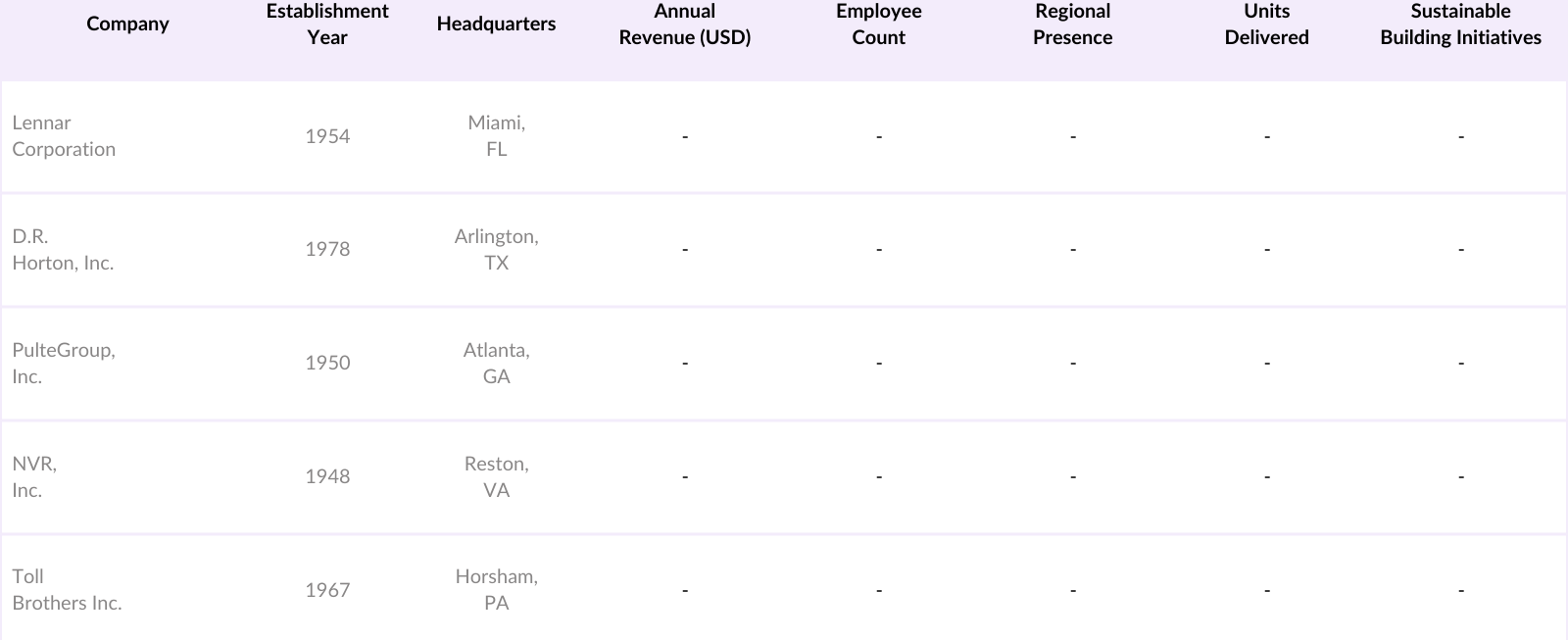
The USA Residential Construction Market is led by key players who have leveraged economies of scale, established brand presence, and extensive distribution networks across regions. The USA Residential Construction Market shows consolidation among a few major players, including Lennar Corporation and D.R. Horton, which dominate through extensive service offerings and investments in sustainable and smart building solutions.
Over the next five years, the USA Residential Construction Market is expected to see robust growth propelled by rising housing demand, advancements in modular construction, and an increasing consumer preference for energy-efficient homes. Sustainability will continue to be a driving factor, with more builders adopting green building certifications and eco-friendly materials. Expansion into rural and suburban areas is also anticipated to meet affordable housing demands, especially as urban land prices surge.
|
Building Type |
Single-Family Homes Multi-Family Housing Manufactured Homes Modular Homes Tiny Homes |
|
Construction Type |
New Construction Renovation and Remodeling Additions |
|
Material Type |
Wood Concrete Steel Composite Materials Recycled Materials |
|
Home Feature |
Smart Homes Energy-Efficient Homes Green Building Certifications Modular Homes Connected Living Solutions |
|
Region |
Northeast Midwest South West |
1.1 Definition and Scope
1.2 Market Taxonomy
1.3 Market Growth Rate
1.4 Market Segmentation Overview
2.1 Historical Market Size
2.2 Year-On-Year Growth Analysis
2.3 Key Market Developments and Milestones
2.4 Industry Investment Landscape
3.1 Growth Drivers
3.1.1 Population Growth and Urbanization
3.1.2 Mortgage Rates (Housing Affordability)
3.1.3 Government Incentives and Housing Policies
3.1.4 Increasing Demand for Sustainable Homes
3.2 Market Challenges
3.2.1 High Material Costs (Lumber, Steel)
3.2.2 Labor Shortages
3.2.3 Regulatory Hurdles (Local Permits and Zoning Laws)
3.2.4 Rising Interest Rates
3.3 Opportunities
3.3.1 Advancements in Green Building Technologies
3.3.2 Growth of Modular and Prefabricated Housing
3.3.3 Expansion of Home Renovation Market
3.4 Trends
3.4.1 Adoption of Smart Home Technologies
3.4.2 Increasing Multi-Family Housing Projects
3.4.3 Design Shift Towards Open and Flexible Floor Plans
3.5 Regulatory Impact
3.5.1 State and Federal Building Codes
3.5.2 Energy-Efficiency Standards
3.5.3 Tax Credits for Renewable Energy Use
3.5.4 Green Building Certifications (LEED, ENERGY STAR)
3.6 SWOT Analysis
3.7 Stakeholder Ecosystem
3.8 Porters Five Forces Analysis
3.9 Competitive Landscape and Ecosystem
4.1 By Building Type (In Value %)
4.1.1 Single-Family Homes
4.1.2 Multi-Family Housing
4.1.3 Manufactured Homes
4.1.4 Modular Homes
4.1.5 Tiny Homes
4.2 By Construction Type (In Value %)
4.2.1 New Construction
4.2.2 Renovation and Remodelling
4.2.3 Additions
4.3 By Material Type (In Value %)
4.3.1 Wood
4.3.2 Concrete
4.3.3 Steel
4.3.4 Composite Materials
4.3.5 Recycled Materials
4.4 By Home Feature (In Value %)
4.4.1 Smart Homes
4.4.2 Energy-Efficient Homes
4.4.3 Green Building Certifications
4.4.4 Modular Homes
4.4.5 Connected Living Solutions
4.5 By Region (In Value %)
4.5.1 Northeast
4.5.2 Midwest
4.5.3 South
4.5.4 West
5.1 Profiles of Major Companies
5.1.1 Lennar Corporation
5.1.2 D.R. Horton, Inc.
5.1.3 PulteGroup, Inc.
5.1.4 NVR, Inc.
5.1.5 Toll Brothers Inc.
5.1.6 KB Home
5.1.7 Taylor Morrison Home Corporation
5.1.8 Meritage Homes Corporation
5.1.9 Beazer Homes USA, Inc.
5.1.10 LGI Homes, Inc.
5.1.11 Clayton Homes
5.1.12 Hovnanian Enterprises, Inc.
5.1.13 Tri Pointe Homes, Inc.
5.1.14 Brookfield Residential
5.1.15 William Lyon Homes
5.2 Cross Comparison Parameters (Annual Revenue, Employee Count, Home Closings, Market Cap, Units Delivered, Construction Capabilities, Revenue from Sustainable Building, Regional Presence)
5.3 Market Share Analysis
5.4 Strategic Initiatives (Sustainability, Smart Technology Integration)
5.5 Mergers and Acquisitions
5.6 Investment and Funding Analysis
5.7 Venture Capital Interest
5.8 Government Grants and Incentives
5.9 Private Equity Investments
6.1 Environmental and Energy Standards
6.2 Safety Compliance and Zoning Codes
6.3 Certification Processes (LEED, Green Globes)
6.4 Mortgage and Lending Regulations
7.1 Future Market Size Projections
7.2 Key Drivers for Future Market Growth
8.1 By Building Type (In Value %)
8.2 By Construction Type (In Value %)
8.3 By Material Type (In Value %)
8.4 By Home Feature (In Value %)
8.5 By Region (In Value %)
9.1 Total Addressable Market (TAM), Serviceable Available Market (SAM), Serviceable Obtainable Market (SOM) Analysis
9.2 Customer Segmentation Analysis
9.3 Marketing Strategy Recommendations
9.4 Identification of White Space Opportunities
Disclaimer Contact UsIn this initial phase, an ecosystem map is created, identifying all key stakeholders in the USA Residential Construction Market. The primary objective is to identify market-influencing factors, utilizing data from credible secondary and proprietary databases.
Historical data is compiled and analyzed, covering market size, growth rate, and key trends in material usage and residential construction types. Quality statistics from government and industry sources ensure data reliability and accuracy.
Market hypotheses are validated through interviews with industry experts and surveys. These consultations provide firsthand insights from key market players, contributing to a well-rounded analysis.
Direct engagement with construction firms and material suppliers provides additional insights into consumer preferences, home features, and market-specific trends. This approach ensures an accurate and comprehensive analysis of the USA Residential Construction Market.
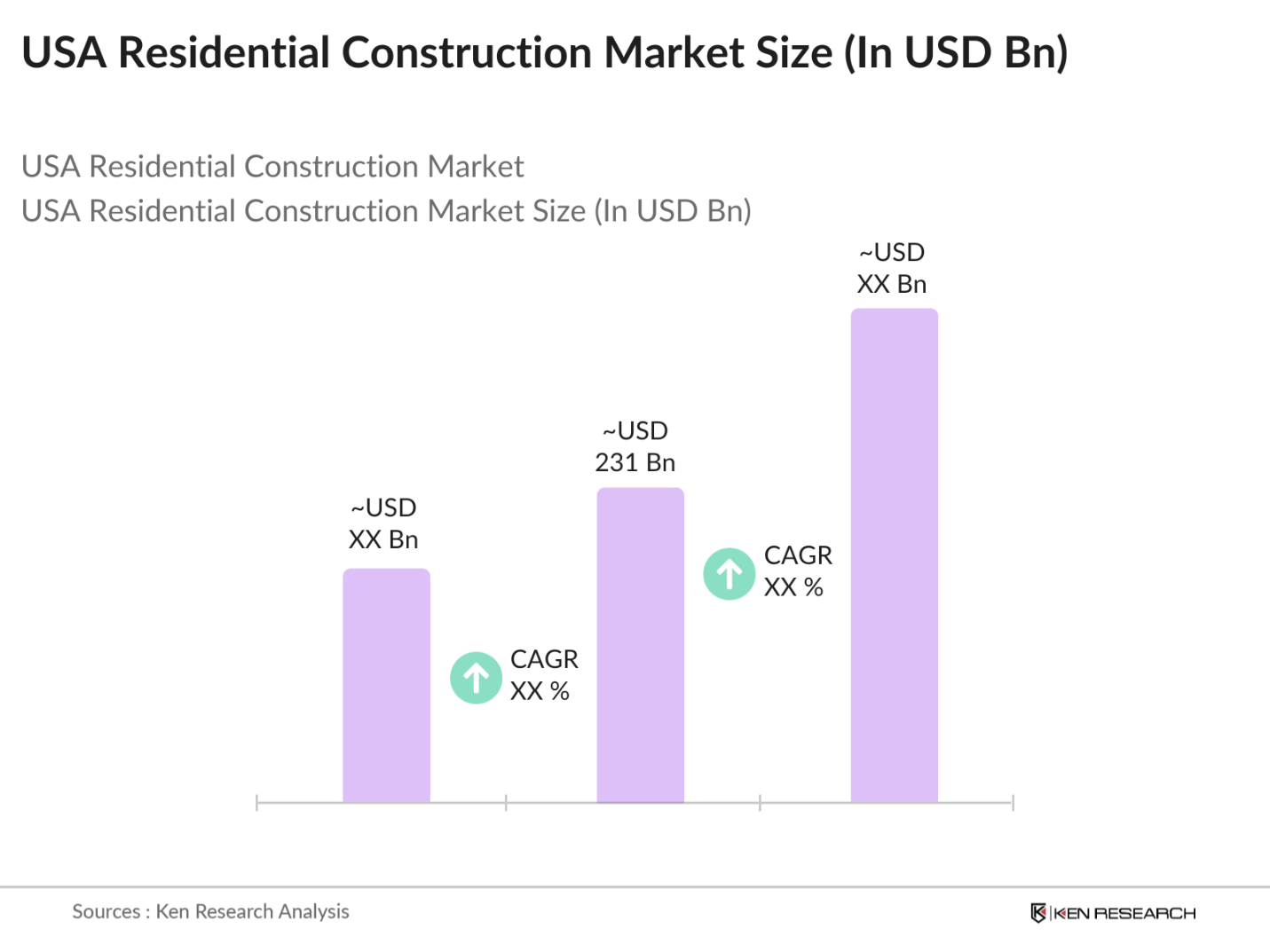
The USA Residential Construction Market, valued at USD 231 billion based on a five-year historical analysis, continues to expand due to increasing housing demand, urbanization, and low mortgage interest rates.
Key growth drivers include increasing urbanization, sustainable housing demand, and advancements in smart home technology. Government incentives for green building and energy efficiency also play a significant role.
California, Texas, and Florida lead due to high population growth, favorable climate, and supportive housing policies. These states also prioritize sustainable practices in response to growing environmental concerns.
Prominent players include Lennar Corporation, D.R. Horton, PulteGroup, and NVR, which maintain market leadership through brand reputation, extensive networks, and investments in green building.

What makes us stand out is that our consultants follows Robust, Refine and Result (RRR) methodology. i.e. Robust for clear definitions, approaches and sanity checking, Refine for differentiating respondents facts and opinions and Result for presenting data with story

We have set a benchmark in the industry by offering our clients with syndicated and customized market research reports featuring coverage of entire market as well as meticulous research and analyst insights.

While we don't replace traditional research, we flip the method upside down. Our dual approach of Top Bottom & Bottom Top ensures quality deliverable by not just verifying company fundamentals but also looking at the sector and macroeconomic factors.

With one step in the future, our research team constantly tries to show you the bigger picture. We help with some of the tough questions you may encounter along the way: How is the industry positioned? Best marketing channel? KPI's of competitors? By aligning every element, we help maximize success.

Our report gives you instant access to the answers and sources that other companies might choose to hide. We elaborate each steps of research methodology we have used and showcase you the sample size to earn your trust.

If you need any support, we are here! We pride ourselves on universe strength, data quality, and quick, friendly, and professional service.