















USA Robo-Advisors Market Outlook to 2030
Region:North America
Author(s):Shubham Kashyap
Product Code:KROD6455
December 2024
98
About the Report
USA Robo-Advisors Market Overview
- The USA Robo-Advisors Market, valued at USD 1.5 billion, is rapidly expanding, driven by advancements in financial technology and the growing demand for accessible and cost-effective investment solutions. Automation in investment management allows for personalized, low-fee advisory services, making robo-advisors appealing to a diverse range of investors, including high-net-worth individuals (HNWIs) and younger, tech-savvy consumers. The rise in digital platforms using AI and machine learning contributes to the efficiency and scalability of robo-advisors, further fueling market growth.
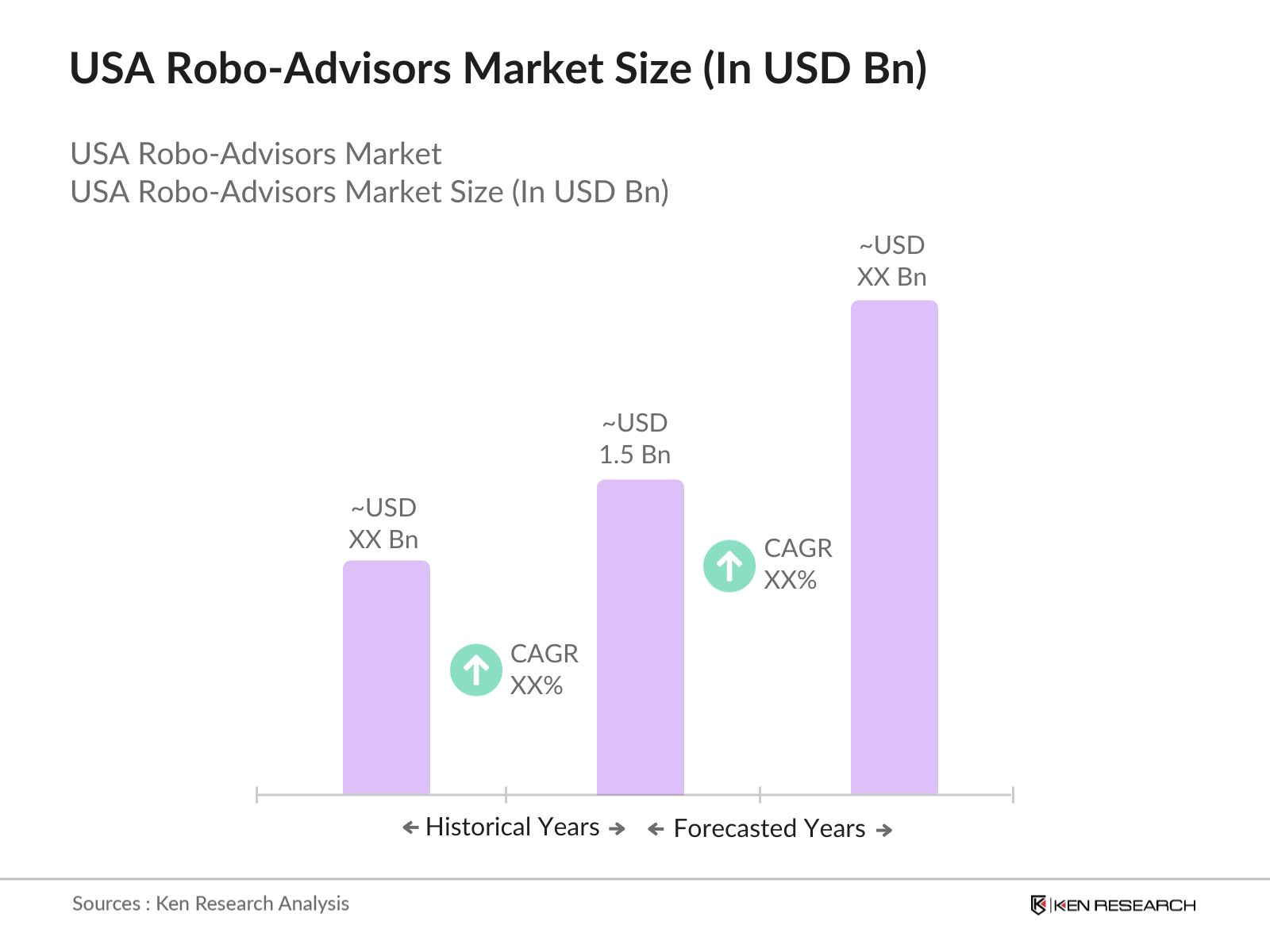
- Key regions, particularly New York, San Francisco, and Chicago, dominate the USA Robo-Advisors Market. These cities offer a robust financial infrastructure, high concentration of fintech startups, and significant demand from HNWIs. The presence of established financial institutions and progressive tech ecosystems supports continued innovation and adoption of robo-advisory solutions, catering to a wide demographic of investors seeking digital advisory options.
- Regulatory bodies such as the Securities and Exchange Commission (SEC) and the Financial Industry Regulatory Authority (FINRA) play an essential role in shaping the robo-advisors market. Guidelines issued by the SEC emphasize fiduciary responsibility and transparency, setting compliance standards that ensure investor protection. Additionally, the Federal Reserves policies on financial data privacy influence how robo-advisors manage and secure client data, establishing a framework for market participation while reinforcing consumer trust.
USA Robo-Advisors Market Segmentation
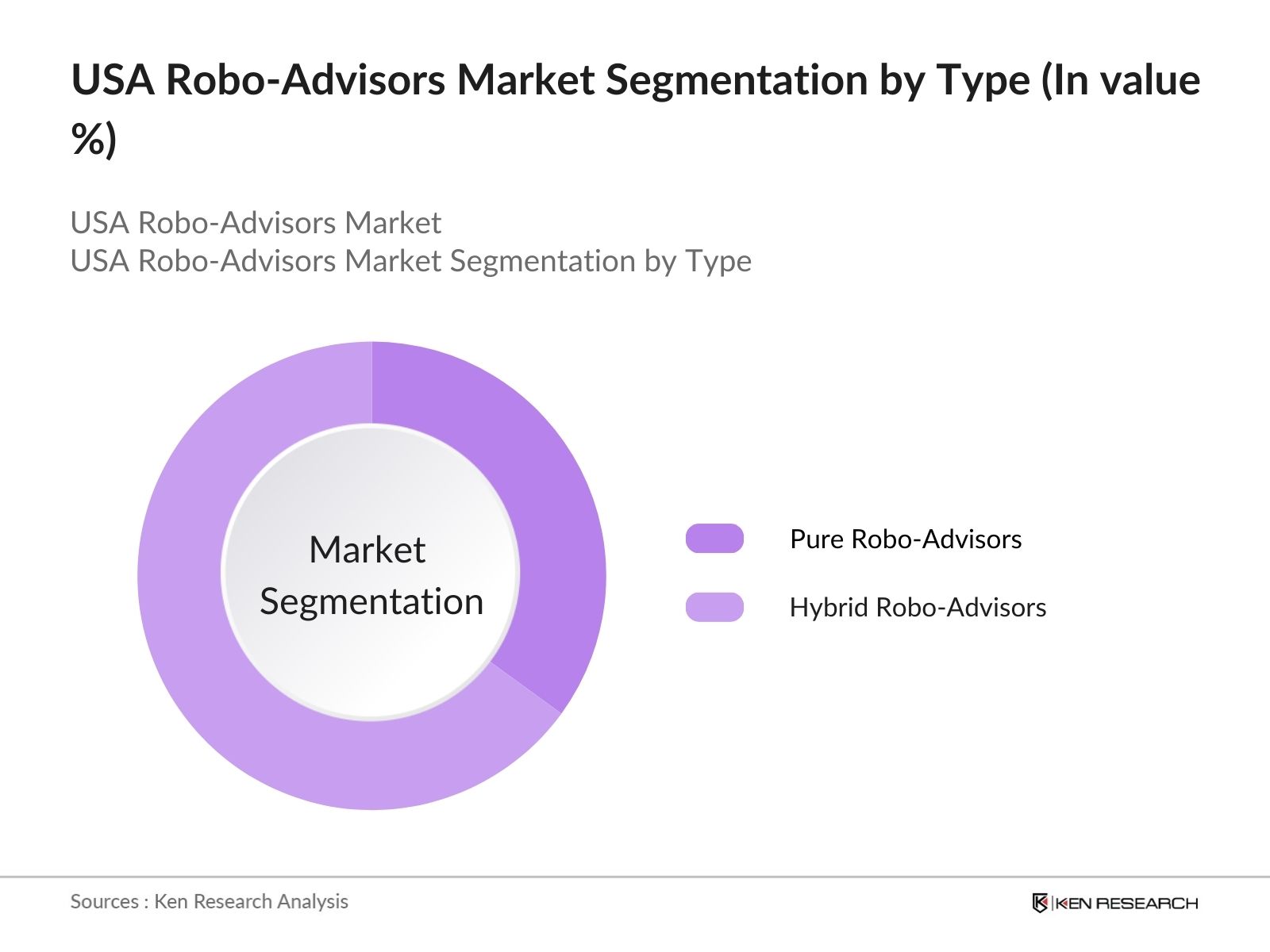
- By Type of Robo-Advisor: The market is segmented by type into Pure Robo-Advisors and Hybrid Robo-Advisors. Hybrid Robo-Advisors currently hold a dominant market share under this segmentation, offering a balance of algorithmic precision and personalized human advice. This model caters to investors with complex financial goals, making it a preferred option in the USA market. The combination of AI-driven recommendations and advisor input provides a valuable middle ground for users who appreciate the efficiency of automation but also seek expert guidance.
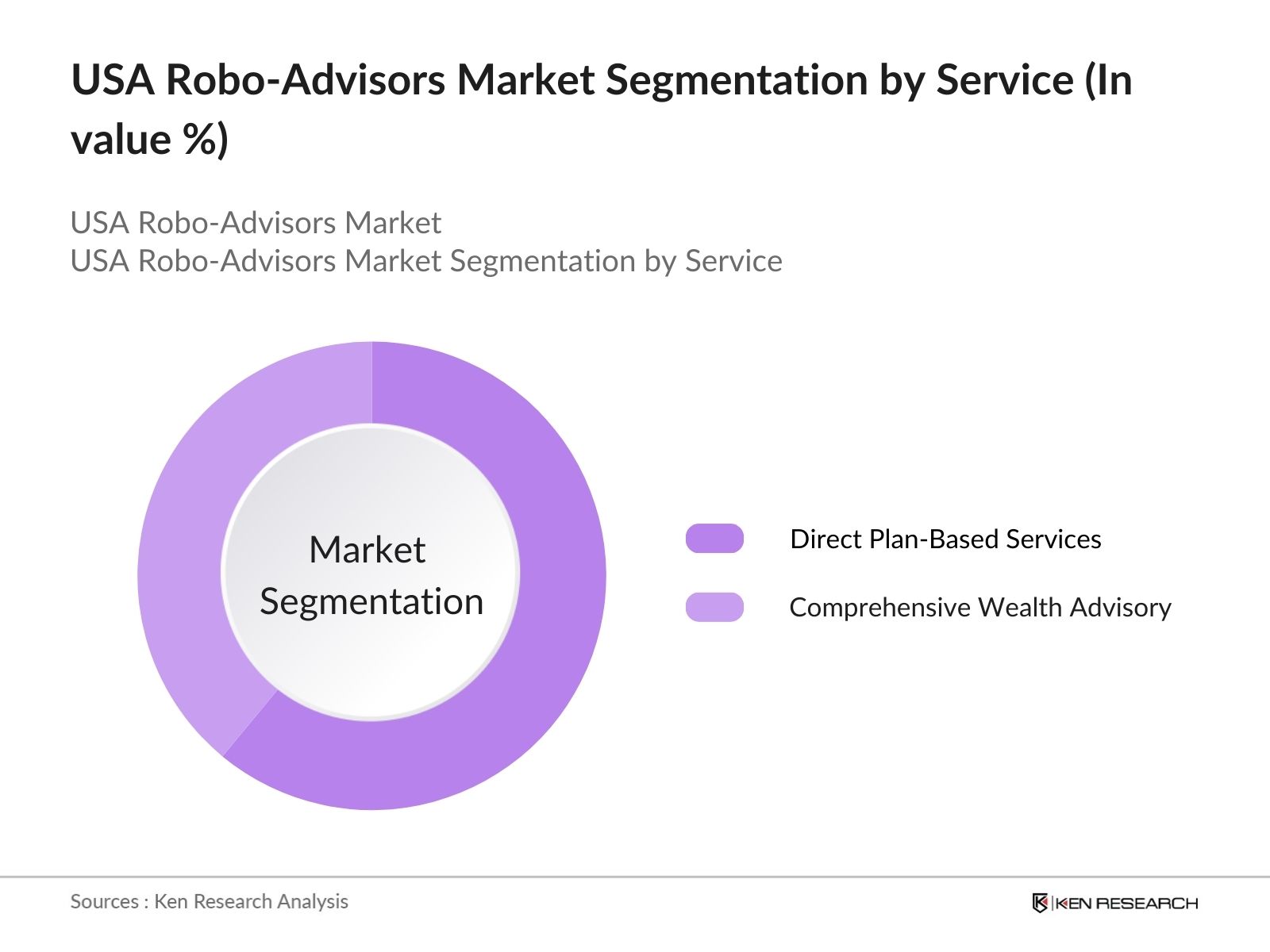
- By Service Type: The market is also segmented by service type into Direct Plan-Based/Goal-Based Services and Comprehensive Wealth Advisory. Direct Plan-Based Services dominate due to their low fees and focus on specific financial goals, aligning with the priorities of retail investors seeking streamlined, affordable options. These services are popular for targeted financial planning needs such as retirement or education funds, allowing clients to achieve clear outcomes with efficient, personalized portfolios.
USA Robo-Advisors Market Competitive Landscape
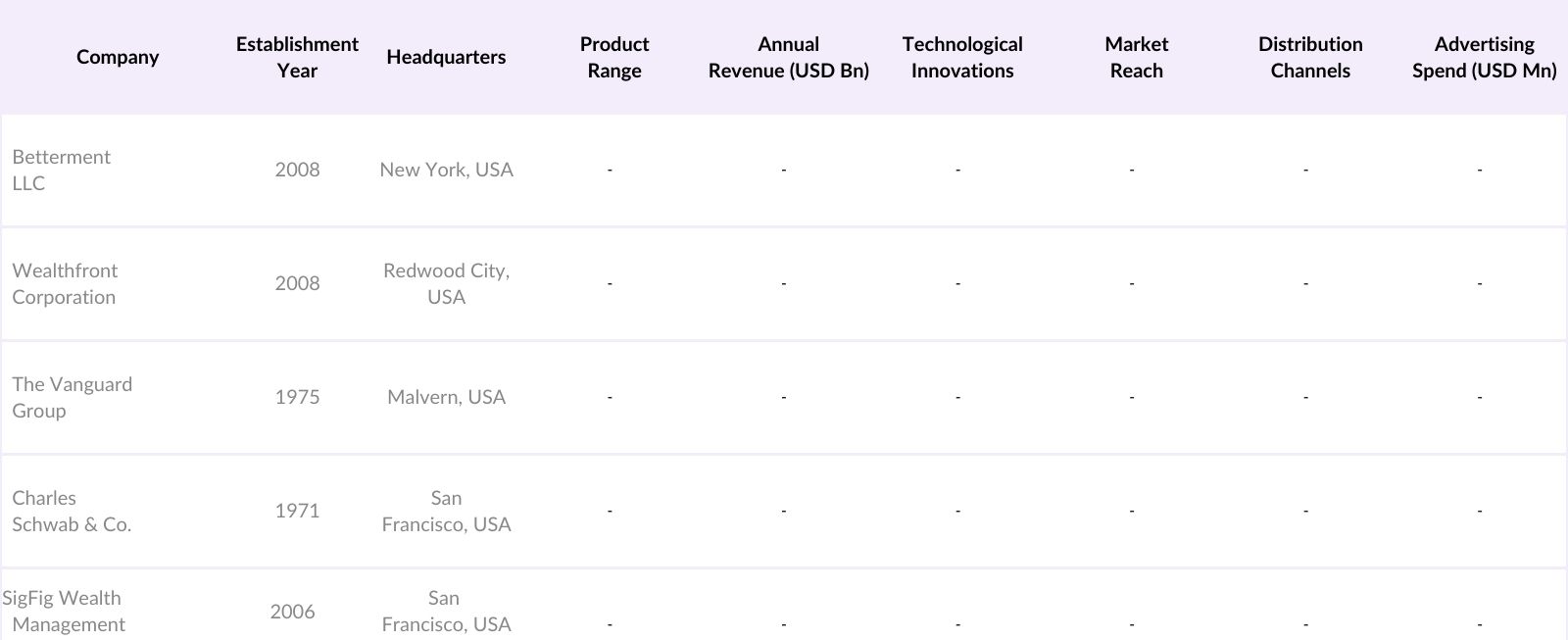
The USA Robo-Advisors Market is highly competitive, with key players like Betterment, Wealthfront, and Vanguard leading through technology and innovation. The market sees fierce competition centered around AI integration, service personalization, and partnerships with traditional financial institutions.
USA Robo-Advisors Market Analysis
Growth Drivers
- Financial Technology Advancements: Financial technology advancements significantly contribute to the growth of the robo-advisors market. In 2022, the global fintech sector witnessed notable growth, reflecting the rapid digital transformation in financial services. This advancement includes enhanced algorithmic trading and sophisticated investment strategies that robo-advisors employ. For instance, the integration of machine learning allows robo-advisors to optimize portfolios more effectively, responding to market changes in real time. The growing use of mobile platforms for managing investments also facilitates user engagement and accessibility, crucial for attracting younger investors.
- Rise in Digital Financial Inclusion: The rise in digital financial inclusion plays a pivotal role in the increasing adoption of robo-advisors. As of 2022, 1.4 billion adults globally remained unbanked, but the trend toward digital banking is steadily changing this. In the USA, the percentage of adults with a bank account increased to 94% in 2021, with digital platforms making financial services more accessible. This trend is further supported by the increasing internet penetration, which stood at 92% in the USA in 2023. Enhanced access to financial services through digital channels encourages individuals to explore robo-advisory options for wealth management.
- Advancements in AI and Machine Learning: Technology advancements, particularly in artificial intelligence (AI) and machine learning, have significantly transformed the capabilities of robo-advisors, allowing them to deliver highly sophisticated financial services. These innovations have enhanced critical functions such as risk assessment, portfolio rebalancing, and tax optimization. By leveraging AI algorithms, robo-advisors can analyze vast datasets to assess individual risk profiles more accurately, enabling tailored investment strategies that align with clients' financial goals. Additionally, machine learning facilitates real-time portfolio rebalancing based on market fluctuations and individual performance metrics, ensuring optimal asset allocation.
Challenges
- Regulatory Compliance and Data Privacy: Regulatory compliance poses a significant challenge for robo-advisors, particularly concerning SEC regulations. The SEC mandates that investment advisors adhere to fiduciary standards, requiring transparency and accountability in their operations. Compliance costs for financial firms, including robo-advisors, have increased as they strive to meet these regulatory requirements. The complexity of adhering to these regulations may deter smaller firms from entering the market or expanding their services, ultimately impacting overall market growth.
- Lack of Human Interaction:The lack of human interaction in robo-advisory services is a notable challenge that affects client satisfaction and retention. Many investors still prefer speaking to a human advisor for complex financial decisions. This gap highlights a critical aspect of client trust and relationship-building that automated services struggle to replicate. As technology advances, firms are increasingly compelled to find a balance between automation and personalized service to retain clients while navigating this challenge.
USA Robo-Advisors Market Future Outlook
The USA Robo-Advisors Market is projected to experience substantial growth through for the next five year, propelled by a shift toward digital financial services, the rise of AI-driven solutions, and a growing preference for low-cost investment management options. Increasing adoption across demographics, including HNWIs and tech-savvy young investors, will likely sustain this growth, supported by technological advancements in AI, personalized advisory services, and new investment opportunities.
Future Market Opportunities
- Expansion in High Net Worth Individual (HNWIs) Segment: The expansion into the High Net Worth Individual (HNWIs) segment presents a lucrative opportunity for robo-advisors. As of 2023, there are 9.0 million HNWIs in the USA, representing significant investable assets. The demand for tailored investment strategies that cater to their unique financial goals is increasing. Robo-advisors can leverage technology to offer customized services, such as tax optimization and estate planning, to attract and serve this affluent client base effectively. The current trend towards personalized wealth management solutions aligns well with the preferences of HNWIs.
- Adoption of AI in Wealth Management: The adoption of artificial intelligence (AI) in wealth management is reshaping the robo-advisory landscape. Currently, majority of financial firms are using AI technologies to enhance client service and portfolio management. This includes predictive analytics to identify market trends and automate trading decisions. The infusion of AI not only enhances efficiency but also improves decision-making, making robo-advisory services more attractive to a broader audience. As the technology matures, its integration into wealth management practices will likely continue to grow, paving the way for innovative solutions in the market.
Scope of the Report
|
By Type of Robo-Advisor |
Pure Hybrid |
|
By Provider Type |
Fintech Banks Traditional Managers |
|
By Service Type |
Direct Plan-Based Wealth Advisory |
|
By User Segment |
HNWIs Retail Investors SMEs |
|
By Region |
North America Europe Asia-Pacific Latin America Africa |
Products
Key Target Audience
Banks and Financial Institutions
Investment Management Firms
High Net-Worth Individuals (HNWIs)
Retail Investors
Investors and Venture Capitalist Firms
Government and Regulatory Bodies (SEC, FINRA)
Tech-Savvy Consumers
Digital Financial Service Providers
Companies
Players Mentioned in the Report
Betterment LLC
Wealthfront Corporation
The Vanguard Group, Inc.
Charles Schwab & Co., Inc.
BlackRock, Inc. (FutureAdvisor)
Acorns Grow Incorporated
Social Finance, Inc. (SoFi)
SigFig Wealth Management, LLC
Ellevest, Inc.
AdvisorEngine
Fidelity Go (Fidelity Investments)
E*TRADE Core Portfolios
StashAway
Scalable Capital GmbH
Merrill Edge Guided Investing
Table of Contents
01 USA Robo-Advisors Market Overview
1.1. Definition and Scope
1.2. Market Taxonomy
1.3. Market Attractiveness
1.4. Market Segmentation Overview
02 USA Robo-Advisors Market Size (In USD Bn)
2.1. Historical Market Size
2.2. Growth Analysis (YoY)
2.3. Key Market Developments and Milestones
03 USA Robo-Advisors Market Analysis
3.1. Growth Drivers
3.1.1. Financial Technology Advancements
3.1.2. Rise in Digital Financial Inclusion
3.1.3. Cost Efficiency of Digital Platforms
3.2. Market Challenges
3.2.1. Regulatory Compliance (SEC Regulations)
3.2.2. Lack of Human Interaction
3.2.3. Security and Data Privacy Concerns
3.3. Opportunities
3.3.1. Expansion in High Net Worth Individual (HNWIs) Segment
3.3.2. Adoption of AI in Wealth Management
3.3.3. Integration with Traditional Financial Institutions
3.4. Key Market Trends
3.4.1. Shift to Hybrid Robo-Advisory Models
3.4.2. Tax Optimization and Portfolio Rebalancing
3.4.3. Increased Focus on Goal-Based Investment Platforms
3.5. Regulatory Landscape
3.5.1. SEC Regulations on Digital Investment
3.5.2. Fiduciary Responsibility Standards
3.6. SWOT Analysis
3.7. Stakeholder Ecosystem
3.8. Porter's Five Forces Analysis
3.9. Competitive Ecosystem
04 USA Robo-Advisors Market Segmentation
4.1. By Type of Robo-Advisor (Market Share %)
4.1.1. Pure Robo-Advisors
4.1.2. Hybrid Robo-Advisors
4.2. By Provider Type (Market Share %)
4.2.1. Fintech Robo-Advisors
4.2.2. Banks
4.2.3. Traditional Wealth Managers
4.3. By Service Type (Market Share %)
4.3.1. Direct Plan-Based/Goal-Based
4.3.2. Comprehensive Wealth Advisory
4.4. By User Segment (Market Share %)
4.4.1. High Net Worth Individuals (HNWIs)
4.4.2. Retail Investors
4.4.3. Small & Medium Enterprises
4.5. By Region (Market Share %)
4.5.1. North America
4.5.2. Europe
4.5.3. Asia-Pacific
4.5.4. Africa
05 USA Robo-Advisors Market Competitive Analysis
5.1 Detailed Profiles of Major Companies
5.1.1. Betterment LLC
5.1.2. Wealthfront Corporation
5.1.3. The Vanguard Group, Inc.
5.1.4. Charles Schwab & Co., Inc.
5.1.5. BlackRock, Inc. (FutureAdvisor)
5.1.6. Acorns Grow Incorporated
5.1.7. Social Finance, Inc. (SoFi)
5.1.8. SigFig Wealth Management, LLC
5.1.9. Ellevest, Inc.
5.1.10. AdvisorEngine
5.1.11. Fidelity Go (Fidelity Investments)
5.1.12. E*TRADE Core Portfolios
5.1.13. StashAway
5.1.14. Scalable Capital GmbH
5.1.15. Merrill Edge Guided Investing
5.2 Cross Comparison Parameters (Employee Count, Revenue, Market Share, Service Type, Technology Usage, Geographic Reach, Client Retention, Digitalization Level)
5.3 Market Share Analysis
5.4 Strategic Initiatives
5.5 Mergers & Acquisitions
5.6 Venture Capital and Investment Analysis
5.7 Private Equity Funding
5.8 Partnerships and Collaborations
06 USA Robo-Advisors Market Regulatory Framework
6.1 SEC Compliance and Standards
6.2 Fiduciary Responsibilities for Robo-Advisors
6.3 Certification and Licensing Requirements
07 USA Robo-Advisors Future Market Size (In USD Bn)
7.1 Forecasted Market Size Projections
7.2 Key Factors for Future Market Growth
08 USA Robo-Advisors Future Market Segmentation
8.1 By Type of Robo-Advisor (Market Share %)
8.2 By Provider Type (Market Share %)
8.3 By Service Type (Market Share %)
8.4 By User Segment (Market Share %)
8.5 By Region (Market Share %)
09 USA Robo-Advisors Market Analysts Recommendations
9.1 Total Addressable Market (TAM) Analysis
9.2 Strategic Investment Opportunities
9.3 Customer Cohort Analysis
9.4 Marketing and Brand Differentiation Initiatives
Disclaimer Contact UsResearch Methodology
Step 1: Identification of Key Variables
This stage involves a comprehensive review of stakeholder needs within the USA Robo-Advisors Market. Desk research includes extensive data analysis from trusted sources to identify primary market drivers, trends, and barriers.
Step 2: Market Analysis and Construction
Historical data is analyzed to assess penetration rates, service model efficiencies, and profitability indicators across diverse demographics. This analysis establishes a baseline for evaluating current market trends.
Step 3: Hypothesis Validation and Expert Consultation
Market assumptions are validated through direct consultations with industry experts and fintech stakeholders. These insights refine the analytical model and ensure data reliability.
Step 4: Research Synthesis and Final Output
Detailed interviews with financial service providers inform the final synthesis, ensuring accuracy across investment metrics, consumer preferences, and technology adoption rates, resulting in a validated report.
Frequently Asked Questions
01 How big is the USA Robo-Advisors Market?
The USA Robo-Advisors Market is valued at USD 1.5 billion, backed by technological advancements and growing demand for accessible financial advisory solutions.
02 What are the key challenges in the USA Robo-Advisors Market?
Key challenges include regulatory compliance requirements, data privacy concerns, and the need for strong brand trust to build consumer confidence in automated financial management.
03 Who are the major players in the USA Robo-Advisors Market?
Major players include Betterment LLC, Wealthfront Corporation, Vanguard, and Charles Schwab & Co., known for their advanced AI platforms and customer-centric services.
04 What factors drive the growth of the USA Robo-Advisors Market?
Growth drivers include rising demand for affordable financial advisory services, technological advancements in AI, and increasing financial literacy among tech-savvy demographics.
Why Buy From Us?

What makes us stand out is that our consultants follows Robust, Refine and Result (RRR) methodology. i.e. Robust for clear definitions, approaches and sanity checking, Refine for differentiating respondents facts and opinions and Result for presenting data with story

We have set a benchmark in the industry by offering our clients with syndicated and customized market research reports featuring coverage of entire market as well as meticulous research and analyst insights.

While we don't replace traditional research, we flip the method upside down. Our dual approach of Top Bottom & Bottom Top ensures quality deliverable by not just verifying company fundamentals but also looking at the sector and macroeconomic factors.

With one step in the future, our research team constantly tries to show you the bigger picture. We help with some of the tough questions you may encounter along the way: How is the industry positioned? Best marketing channel? KPI's of competitors? By aligning every element, we help maximize success.

Our report gives you instant access to the answers and sources that other companies might choose to hide. We elaborate each steps of research methodology we have used and showcase you the sample size to earn your trust.

If you need any support, we are here! We pride ourselves on universe strength, data quality, and quick, friendly, and professional service.