















USA Self-Storage Market Outlook to 2030
Region:North America
Author(s):Vijay Kumar
Product Code:KROD8552
November 2024
100
About the Report
USA Self-Storage Market Overview
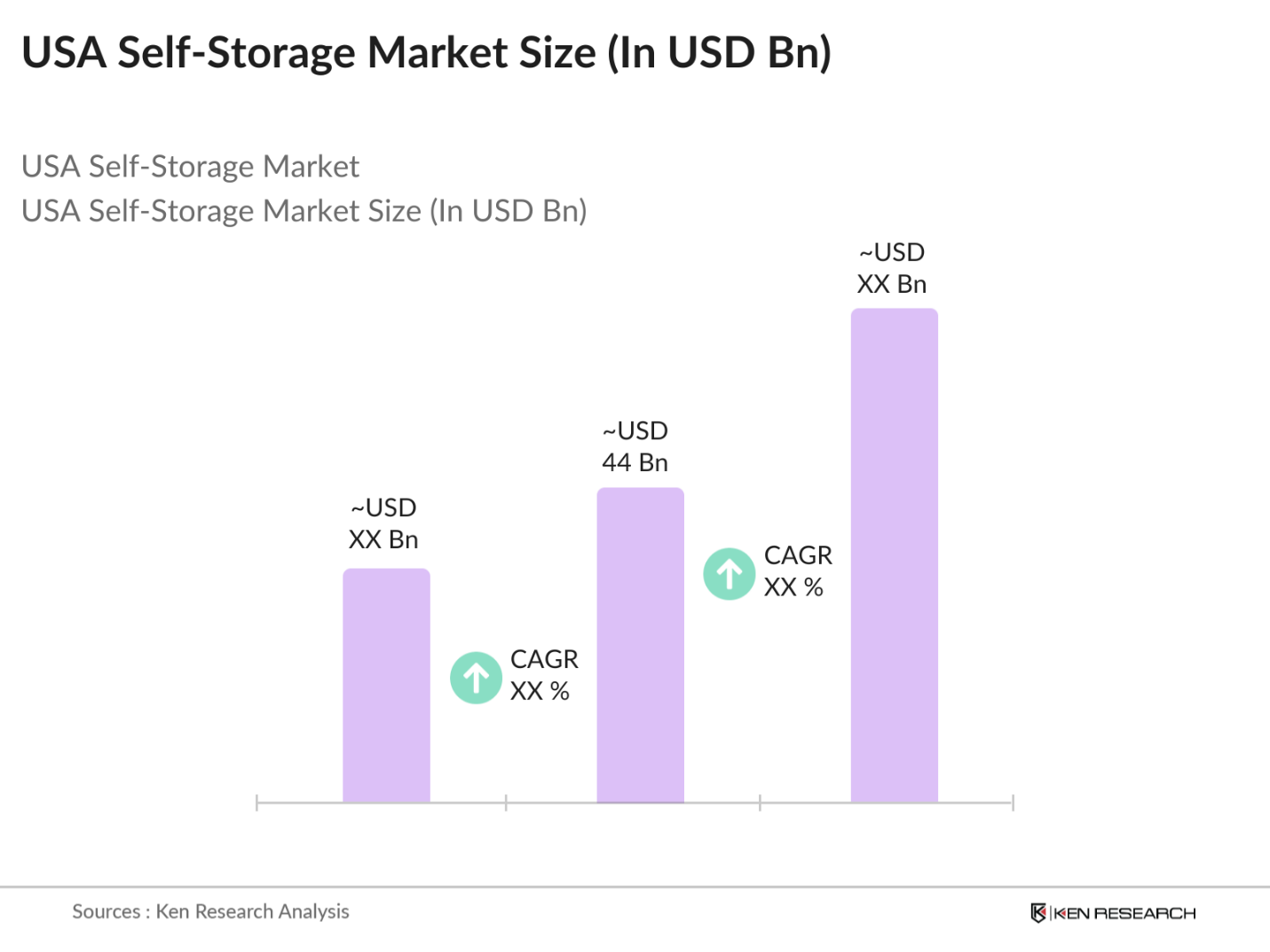
- The USA self-storage market is valued at USD 44 billion, based on a five-year historical analysis. This market is primarily driven by rising urban population density, lifestyle changes leading to downsized living spaces, and the growing need for both personal and business storage solutions. With the e-commerce sector expanding rapidly, more businesses require additional storage for inventory management, further bolstering the demand for self-storage facilities. Urban centers like New York, Los Angeles, and Chicago are experiencing particularly high demand due to limited residential space and increasing commercial storage needs.
- Major metropolitan areas like New York City, Los Angeles, and Chicago dominate the self-storage market. The high population density and limited residential space in these cities create a heightened demand for storage units. Additionally, the presence of numerous businesses in these urban centers contributes to the increased need for commercial storage solutions.
- Zoning laws vary widely across municipalities, affecting where self-storage facilities can be built. In 2024, the USA Department of Housing and Urban Development (HUD) updated zoning requirements for urban areas, imposing restrictions on new commercial constructions in residential zones. These regulations pose challenges for developers, particularly in high-demand urban areas, where available land is scarce. Compliance with zoning laws is crucial for expansion but often adds complexity and costs to the development process.
USA Self-Storage Market Segmentation
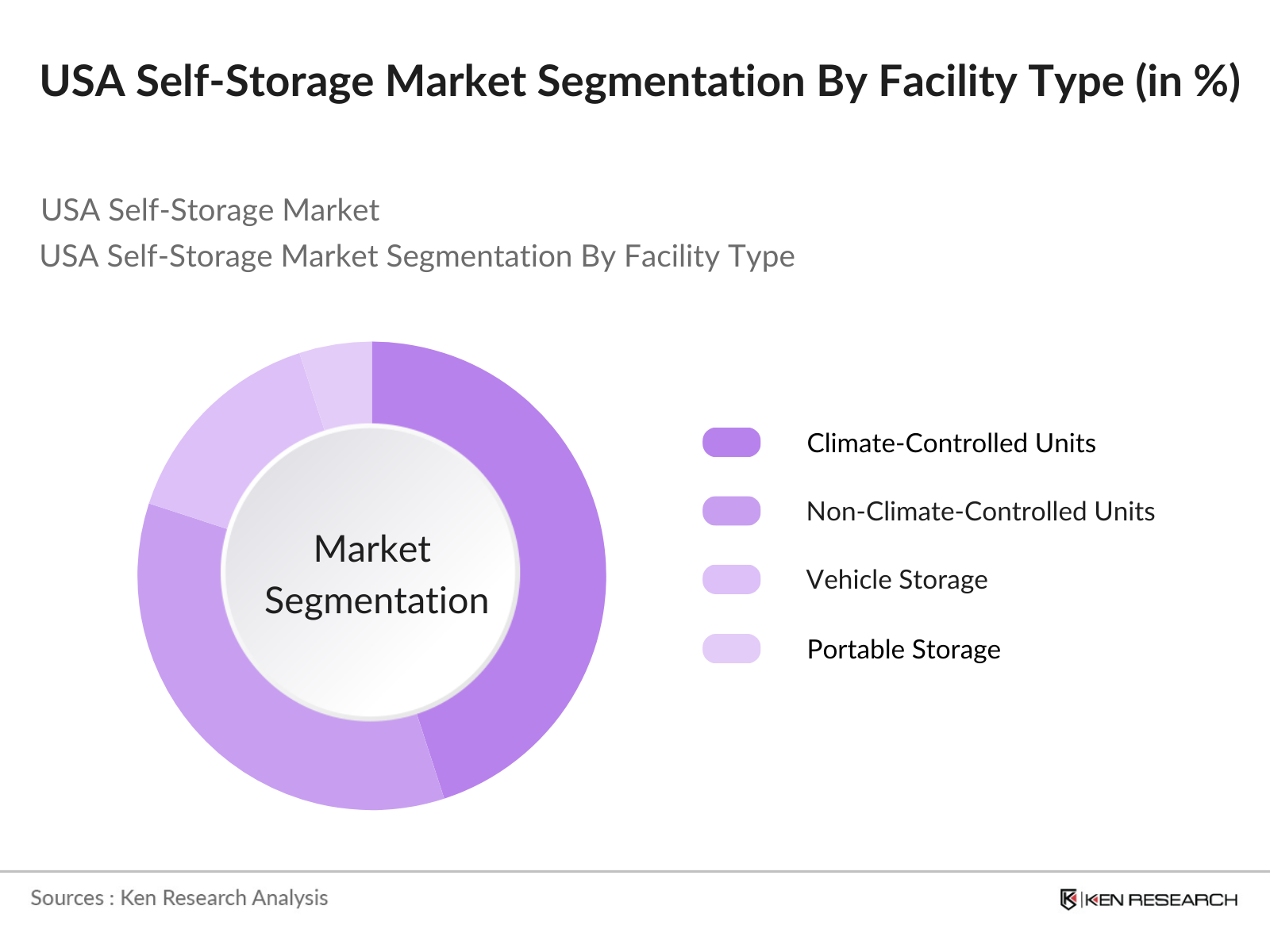
By Facility Type: The USA self-storage market is segmented by facility type into climate-controlled units, non-climate-controlled units, vehicle storage, and portable storage. Climate-controlled units hold a dominant market share due to their ability to protect sensitive items from extreme temperatures and humidity. This feature is particularly appealing to customers storing electronics, documents, and antiques, leading to higher demand for such units.
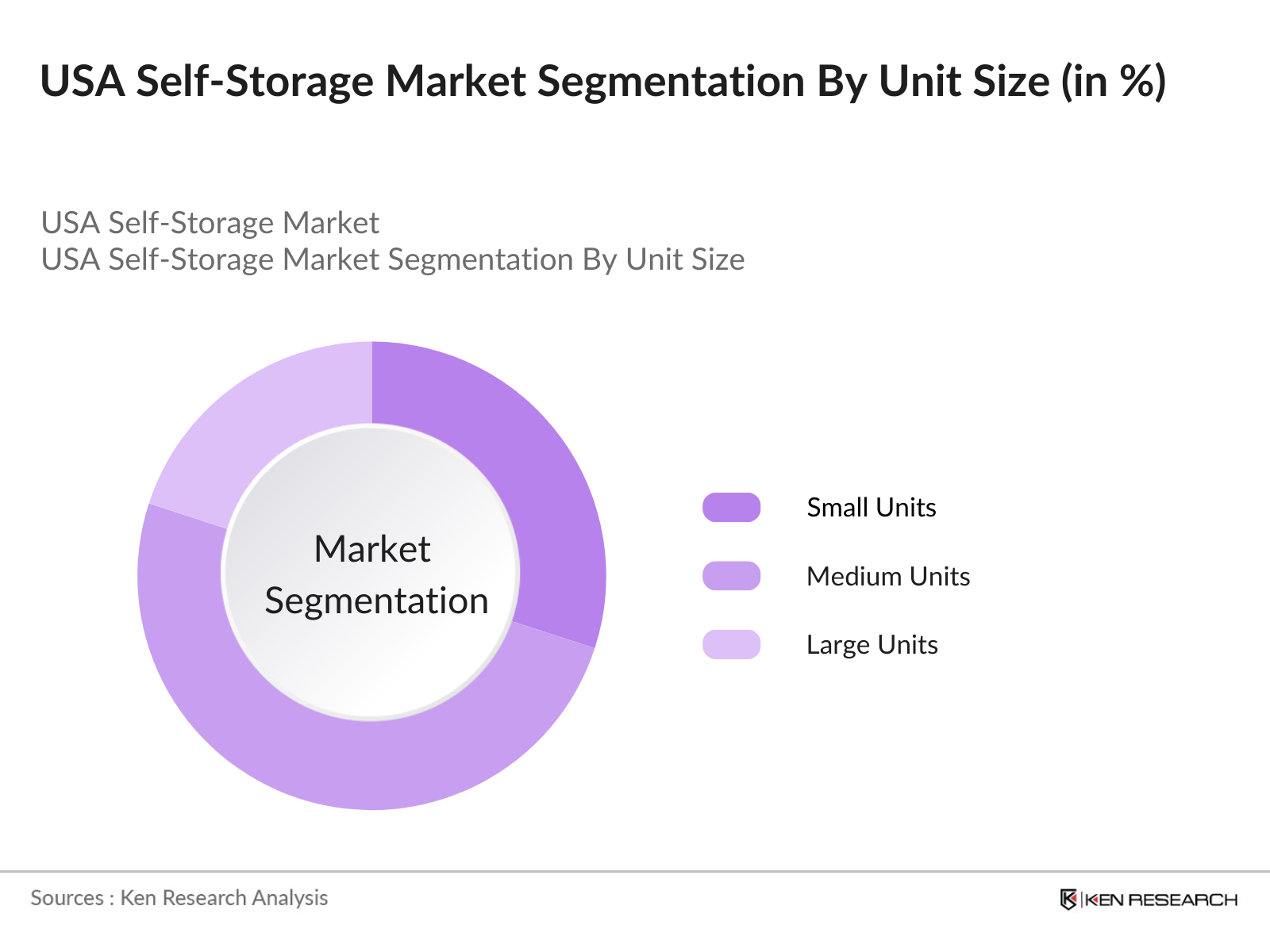
By Unit Size: The market is also segmented by unit size into small units (55, 510), medium units (1010, 1015), and large units (1020 and above). Medium units are the most popular among consumers, as they offer a balance between space and cost, accommodating the storage needs of both individuals and small businesses.
USA Self-Storage Market Competitive Landscape
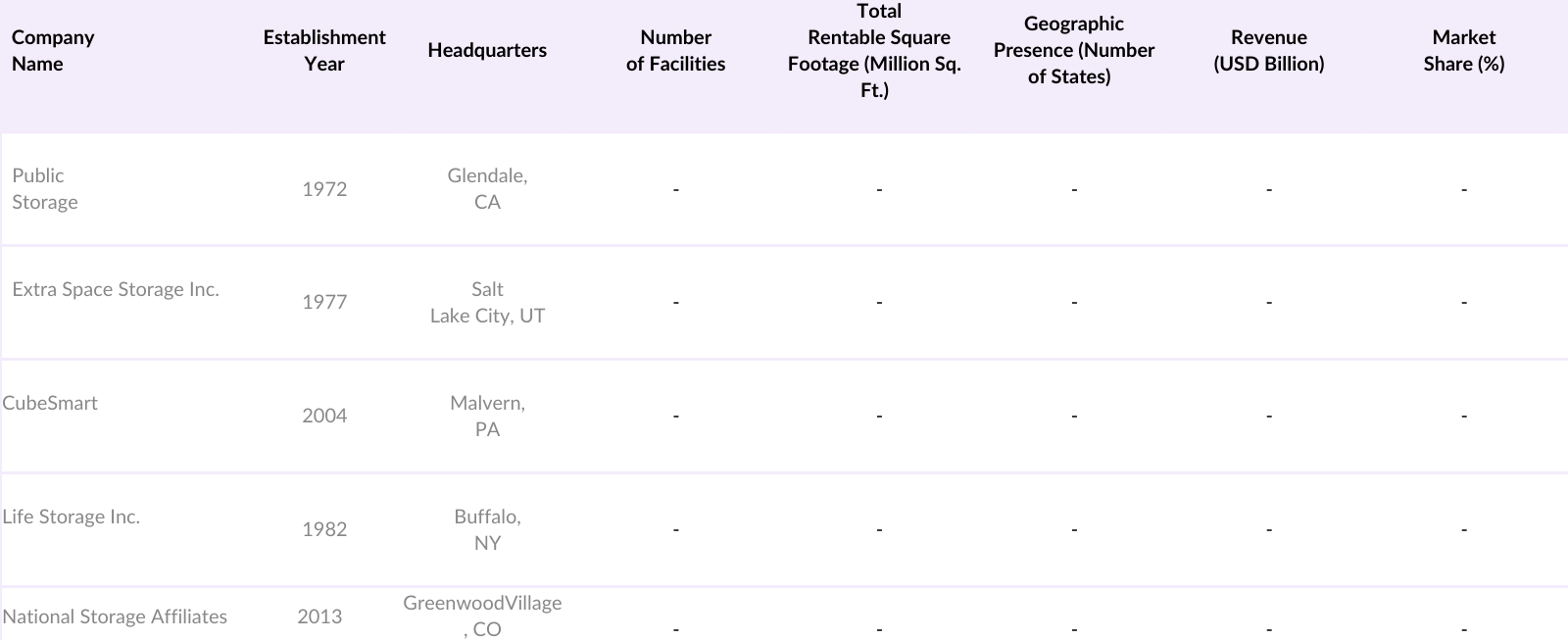
The USA self-storage market is characterized by the presence of several key players who have established significant market positions through extensive facility networks and diverse service offerings. This competitive landscape underscores the importance of strategic expansion and customer-centric services in maintaining market leadership.
USA Self-Storage Industry Analysis
Growth Drivers
- Urbanization and Population Density: With over 83% of the USA population residing in urban areas as of 2024, urbanization is driving the demand for self-storage. According to the USA Census Bureau, urban populations are projected to see continual growth in major cities like New York, Los Angeles, and Chicago, where limited living space and high housing costs prompt individuals to seek external storage. The average urban household size of 2.5 persons contributes to limited space per resident, intensifying the need for external storage options.
- E-commerce Expansion: The e-commerce sector's expansion fuels the need for storage solutions as online retailers and small businesses increasingly require storage space for inventory. With an estimated 5 million online small businesses operating in the USA by 2024, many rely on external storage for inventory management. According to the USA Small Business Administration (SBA), the growth of small online businesses, coupled with high warehouse leasing costs, has pushed demand for storage units as a cost-effective alternative to warehouse leasing.
- Lifestyle Changes and Downsizing: Changing lifestyle trends, including increased mobility and downsizing among retirees, have led to higher demand for storage. The National Association of Realtors reports that over 9.6 million households downsized in 2023, and among them, the aging population segment, particularly those 65 and older, contributes significantly to this shift. Additionally, the trend of remote work has motivated many to move into smaller apartments in cities, reducing home storage space and increasing the necessity for offsite storage.
Market Challenges
- Zoning and Regulatory Constraints: Zoning laws, particularly in densely populated urban areas, present significant challenges to the self-storage industry. For instance, cities like New York and San Francisco impose strict zoning laws, limiting where self-storage facilities can be established. According to the USA Department of Housing and Urban Development (HUD), zoning regulations in over 200 USA cities impact land use for commercial storage, restricting new construction. These regulations can delay project timelines and increase operational costs for developers looking to expand in urban markets.
- Rising Real Estate Costs: The increasing cost of real estate is a significant hurdle for self-storage facility operators. According to the Federal Housing Finance Agency (FHFA), property values in urban areas have consistently increased, with some cities like San Francisco and New York experiencing higher-than-average land costs, which inflate the cost of constructing new storage facilities. These high real estate prices can reduce profit margins and deter new investments in the sector.
USA Self-Storage Market Future Outlook
Over the next five years, the USA self-storage market is expected to experience steady growth, driven by ongoing urbanization, the proliferation of e-commerce, and lifestyle changes that necessitate additional storage solutions. Advancements in technology, such as the integration of smart access systems and enhanced security features, are anticipated to attract a broader customer base. Additionally, the expansion into underserved rural areas presents new opportunities for market players.
Market Opportunities
- Technological Advancements in Security: Advancements in security technologies, such as biometric access and digital monitoring, are creating opportunities for self-storage facilities to enhance customer trust and increase demand. According to the USA Bureau of Justice Statistics, property crimes decreased by 4% in 2023, reflecting increased reliance on advanced security solutions. Self-storage facilities can capitalize on these technologies to offer enhanced security, meeting customer preferences for safer storage options.
- Climate-Controlled Units Demand: Demand for climate-controlled units is growing as customers seek protection for temperature-sensitive items. The National Oceanic and Atmospheric Administration (NOAA) reports that the USA experienced 18 severe weather events in 2023, including heatwaves, which led to increased awareness of temperature-sensitive storage needs. Climate-controlled storage provides a solution for individuals and businesses needing consistent temperatures to protect belongings, such as electronics, documents, and furniture.
Scope of the Report
|
Facility Type |
Climate-Controlled Units |
|
Unit Size |
Small Units (55, 510) |
|
Service Type |
Full-Service Storage |
|
End-User |
Personal |
|
Region |
Northeast |
Products
Key Target Audience
Real Estate Investment Trusts (REITs)
Property Management Companies
Construction Firms
Storage Unit Manufacturers
Logistics and Distribution Companies
E-commerce Businesses
Government and Regulatory Bodies (e.g., USA Department of Housing and Urban Development)
Investment and Venture Capitalist Firms
Companies
Players Mentioned in the Report
Public Storage
Extra Space Storage Inc.
CubeSmart
Life Storage Inc.
National Storage Affiliates
U-Haul International Inc.
Simply Self Storage
Metro Storage LLC
StorageMart
Prime Storage Group
Table of Contents
1. USA Self-Storage Market Overview
1.1. Definition and Scope
1.2. Market Taxonomy
1.3. Market Growth Rate
1.4. Market Segmentation Overview
2. USA Self-Storage Market Size (In USD Billion)
2.1. Historical Market Size
2.2. Year-On-Year Growth Analysis
2.3. Key Market Developments and Milestones
3. USA Self-Storage Market Analysis
3.1. Growth Drivers
3.1.1. Urbanization and Population Density
3.1.2. E-commerce Expansion
3.1.3. Lifestyle Changes and Downsizing
3.1.4. Business Inventory Needs
3.2. Market Challenges
3.2.1. Zoning and Regulatory Constraints
3.2.2. Rising Real Estate Costs
3.2.3. Seasonal Demand Fluctuations
3.3. Opportunities
3.3.1. Technological Advancements in Security
3.3.2. Climate-Controlled Units Demand
3.3.3. Expansion into Underserved Markets
3.4. Trends
3.4.1. Adoption of Smart Storage Solutions
3.4.2. Integration with Moving Services
3.4.3. Sustainable and Eco-friendly Facilities
3.5. Government Regulations
3.5.1. Local Zoning Laws
3.5.2. Environmental Compliance Standards
3.5.3. Consumer Protection Laws
3.6. SWOT Analysis
3.7. Stakeholder Ecosystem
3.8. Porters Five Forces Analysis
3.9. Competitive Landscape
4. USA Self-Storage Market Segmentation
4.1. By Facility Type (In Value %)
4.1.1. Climate-Controlled Units
4.1.2. Non-Climate-Controlled Units
4.1.3. Vehicle Storage
4.1.4. Portable Storage
4.2. By Unit Size (In Value %)
4.2.1. Small Units (55, 510)
4.2.2. Medium Units (1010, 1015)
4.2.3. Large Units (1020 and above)
4.3. By Service Type (In Value %)
4.3.1. Full-Service Storage
4.3.2. Self-Service Storage
4.4. By End-User (In Value %)
4.4.1. Personal
4.4.2. Business
4.5. By Region (In Value %)
4.5.1. Northeast
4.5.2. Midwest
4.5.3. South
4.5.4. West
5. USA Self-Storage Market Competitive Analysis
5.1. Detailed Profiles of Major Companies
5.1.1. Public Storage
5.1.2. Extra Space Storage Inc.
5.1.3. CubeSmart
5.1.4. Life Storage Inc.
5.1.5. National Storage Affiliates Trust
5.1.6. U-Haul International Inc.
5.1.7. Simply Self Storage
5.1.8. Metro Storage LLC
5.1.9. StorageMart
5.1.10. Prime Storage Group
5.1.11. Safeguard Self Storage
5.1.12. SmartStop Self Storage
5.1.13. Storage Post
5.1.14. StorQuest Self Storage
5.1.15. 1-800-Self-Storage.com
5.2. Cross Comparison Parameters (Number of Facilities, Total Rentable Square Footage, Geographic Presence, Revenue, Market Share, Facility Occupancy Rates, Average Rental Rates, Customer Satisfaction Ratings)
5.3. Market Share Analysis
5.4. Strategic Initiatives
5.5. Mergers and Acquisitions
5.6. Investment Analysis
5.6.1. Venture Capital Funding
5.6.2. Real Estate Investment Trusts (REITs) Investments
5.6.3. Private Equity Investments
6. USA Self-Storage Market Regulatory Framework
6.1. Licensing Requirements
6.2. Health and Safety Standards
6.3. Data Protection and Privacy Laws
7. USA Self-Storage Future Market Size (In USD Billion)
7.1. Future Market Size Projections
7.2. Key Factors Driving Future Market Growth
8. USA Self-Storage Future Market Segmentation
8.1. By Facility Type (In Value %)
8.2. By Unit Size (In Value %)
8.3. By Service Type (In Value %)
8.4. By End-User (In Value %)
8.5. By Region (In Value %)
9. USA Self-Storage Market Analysts Recommendations
9.1. Total Addressable Market (TAM), Serviceable Available Market (SAM), Serviceable Obtainable Market (SOM) Analysis
9.2. Customer Segmentation and Targeting Strategies
9.3. Marketing and Branding Initiatives
9.4. Identification of Untapped Market Opportunities
Disclaimer Contact UsResearch Methodology
Step 1: Identification of Key Variables
The initial phase involves constructing an ecosystem map encompassing all major stakeholders within the USA self-storage market. This step is underpinned by extensive desk research, utilizing a combination of secondary and proprietary databases to gather comprehensive industry-level information. The primary objective is to identify and define the critical variables that influence market dynamics.
Step 2: Market Analysis and Construction
In this phase, we compile and analyze historical data pertaining to the USA self-storage market. This includes assessing market penetration, the ratio of facilities to service providers, and the resultant revenue generation. Furthermore, an evaluation of service quality statistics is conducted to ensure the reliability and accuracy of the revenue estimates.
Step 3: Hypothesis Validation and Expert Consultation
Market hypotheses are developed and subsequently validated through computer-assisted telephone interviews (CATIs) with industry experts representing a diverse array of companies. These consultations provide valuable operational and financial insights directly from industry practitioners, which are instrumental in refining and corroborating the market data.
Step 4: Research Synthesis and Final Output
The final phase involves direct engagement with multiple self-storage facility operators to acquire detailed insights into product segments, sales performance, consumer preferences, and other pertinent factors. This interaction serves to verify and complement the statistics derived from the bottom-up approach, thereby ensuring a comprehensive, accurate, and validated analysis of the USA self-storage market.
Frequently Asked Questions
1. How big is the USA self-storage market?
The USA self-storage market is valued at USD 44 billion, based on a five-year historical analysis. This market is primarily driven by rising urban population density, lifestyle changes leading to downsized living spaces, and the growing need for both personal and business storage solutions.
2. What are the challenges in the USA self-storage market?
Key challenges include zoning and regulatory constraints, seasonal demand fluctuations, and rising real estate costs in major urban areas, which impact new facility development.
3. Who are the major players in the USA self-storage market?
Major players in the market include Public Storage, Extra Space Storage Inc., Cube Smart, Life Storage Inc., and National Storage Affiliates, all known for their extensive networks and customer-centric service offerings.
4. What are the growth drivers of the USA self-storage market?
The market is driven by increasing urbanization, lifestyle changes, and the growth of e-commerce, which creates additional demand for both personal and business storage solutions.
Why Buy From Us?

What makes us stand out is that our consultants follows Robust, Refine and Result (RRR) methodology. i.e. Robust for clear definitions, approaches and sanity checking, Refine for differentiating respondents facts and opinions and Result for presenting data with story

We have set a benchmark in the industry by offering our clients with syndicated and customized market research reports featuring coverage of entire market as well as meticulous research and analyst insights.

While we don't replace traditional research, we flip the method upside down. Our dual approach of Top Bottom & Bottom Top ensures quality deliverable by not just verifying company fundamentals but also looking at the sector and macroeconomic factors.

With one step in the future, our research team constantly tries to show you the bigger picture. We help with some of the tough questions you may encounter along the way: How is the industry positioned? Best marketing channel? KPI's of competitors? By aligning every element, we help maximize success.

Our report gives you instant access to the answers and sources that other companies might choose to hide. We elaborate each steps of research methodology we have used and showcase you the sample size to earn your trust.

If you need any support, we are here! We pride ourselves on universe strength, data quality, and quick, friendly, and professional service.