















USA Sex Reassignment Surgery Market Outlook to 2030
Region:North America
Author(s):Shubham
Product Code:KROD4775
October 2024
91
About the Report
USA Sex Reassignment Surgery Market Overview
- The USA sex reassignment surgery market was valued at USD 2.5 billion, driven by growing demand for gender-affirming procedures and increasing social acceptance. Key factors include improved healthcare coverage, particularly after healthcare reforms, and technological advancements in surgical techniques. As more individuals seek medical support for gender transition, demand for procedures like vaginoplasty, phalloplasty, and breast augmentation continues to grow. These surgeries not only help individuals align with their gender identity but also provide a sense of completeness and mental well-being.
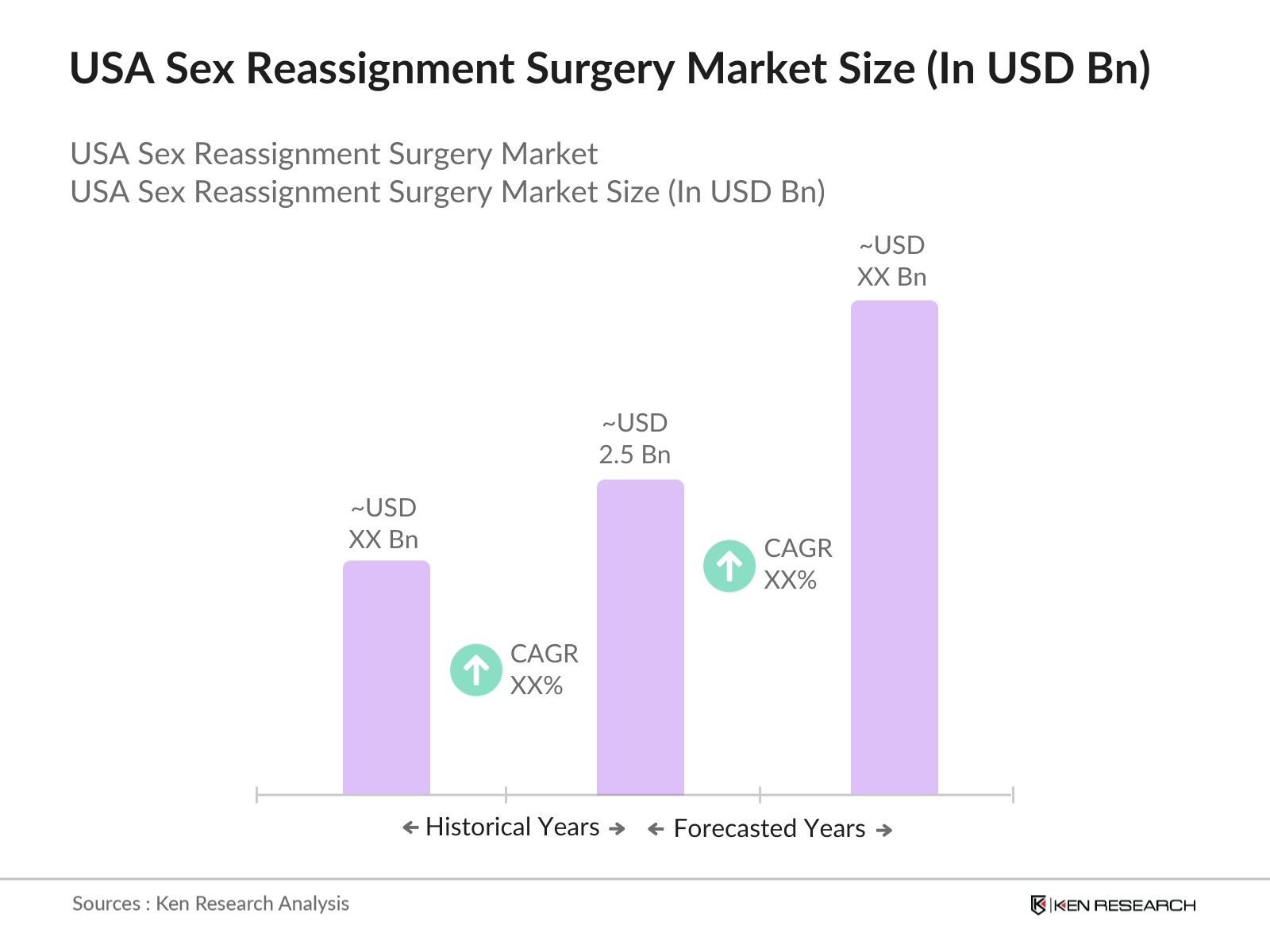
- Major metropolitan areas such as San Francisco, New York City, and Los Angeles are key hubs for gender reassignment surgeries due to their established healthcare facilities, specialized surgeons, and progressive social environments. Insurance coverage for sex reassignment surgeries has improved, particularly following the Affordable Care Act (ACA) mandates, which have contributed to a rise in the number of individuals pursuing gender-affirming surgeries.
- The market is further shaped by policy regulations, particularly the involvement of the American Medical Association (AMA) and the World Professional Association for Transgender Health (WPATH). These organizations have developed guidelines that ensure safe, ethical, and comprehensive treatment for transgender individuals. The endorsement of gender-affirming care by these bodies has promoted increased demand for surgeries in the USA.
USA Sex Reassignment Surgery Market Segmentation
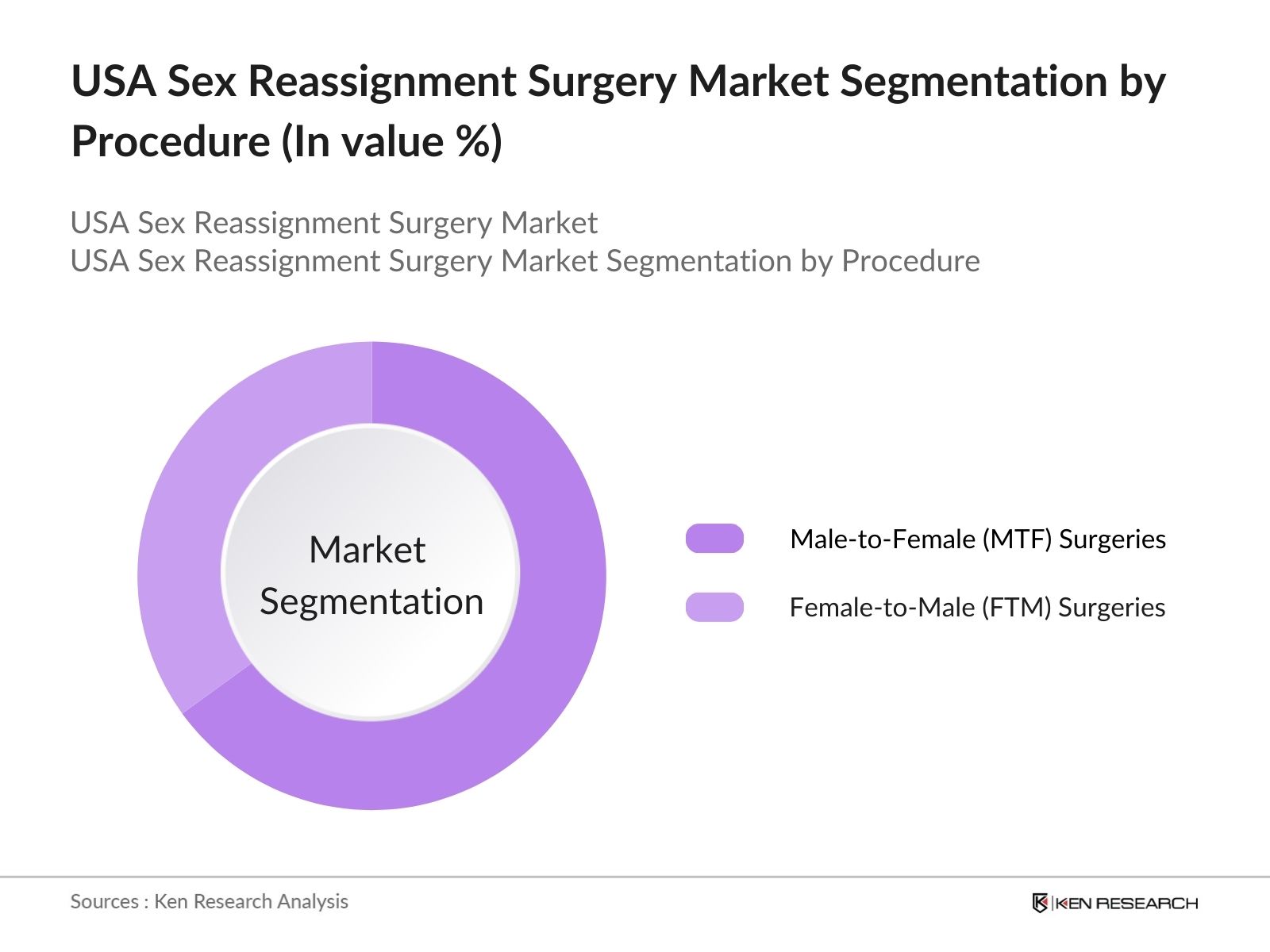
- By Procedure Type: The market is segmented by procedure type into male-to-female (MTF) and female-to-male (FTM) surgeries. MTF surgeries dominate the market, primarily due to the complex nature of procedures such as vaginoplasty, breast augmentation, and facial feminization surgery. Vaginoplasty, in particular, is considered a vital component of gender-affirming care for many transgender women. The increasing demand for breast augmentation in MTF surgeries is also contributing to the dominance of this sub-segment. The development of more refined surgical techniques has improved outcomes and reduced complications, further fueling the growth of this segment.
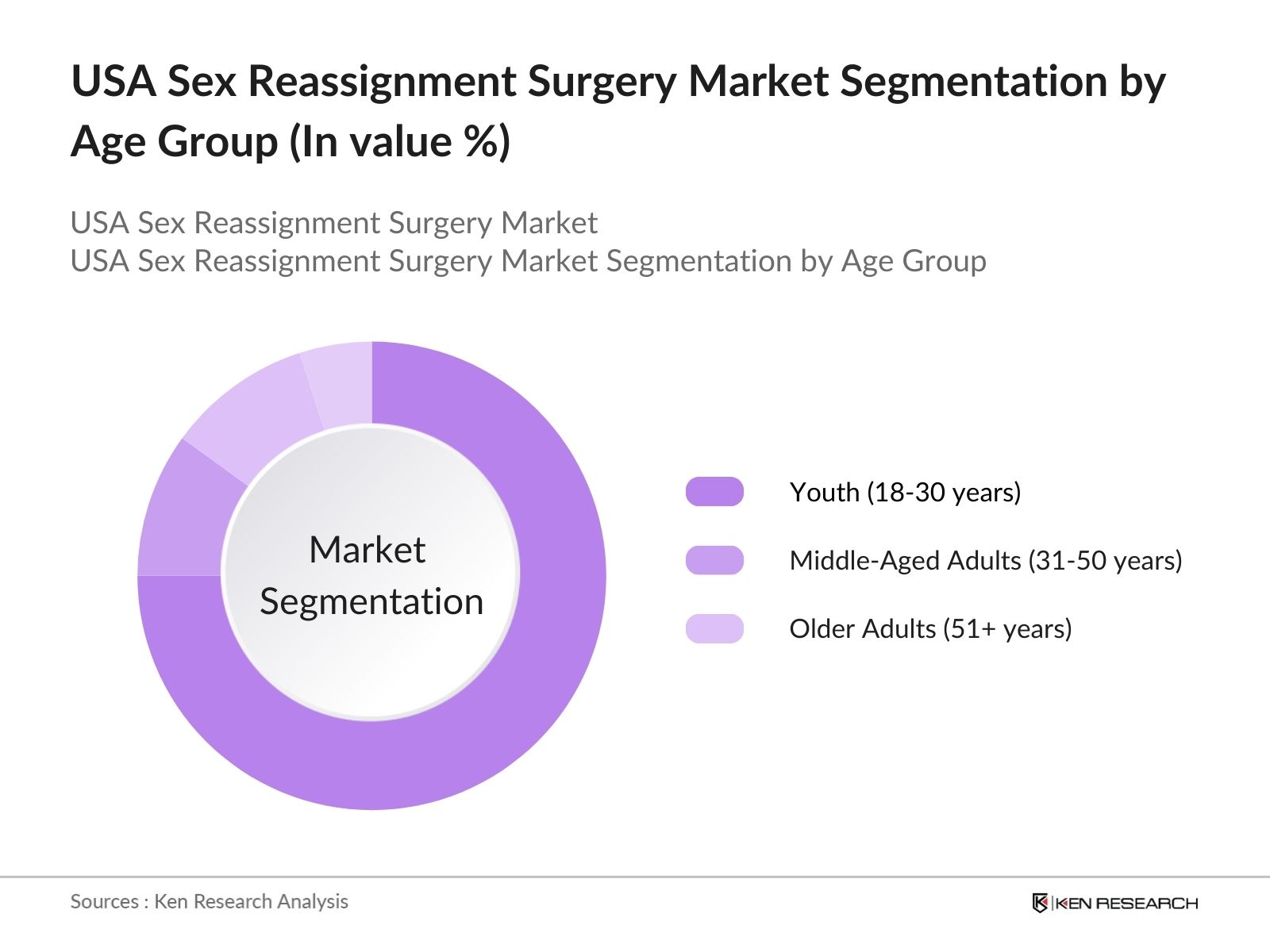
- By Age Group: The market is segmented by age group into youth (18-30 years), middle-aged adults (31-50 years), and older adults (51 years and above). The youth segment (18-30 years) holds the dominant market share, as younger individuals are more likely to undergo gender-affirming surgeries early in their transition process. With increased awareness, societal acceptance, and better access to healthcare, younger individuals are seeking these procedures as part of their transition at an earlier stage. Middle-aged adults also represent a growing portion of the market, driven by delayed transitions due to social or economic barriers faced earlier in life.
USA Sex Reassignment Surgery Market Competitive Landscape
The USA sex reassignment surgery market is competitive, with specialized clinics and hospitals offering gender-affirming procedures. Leading medical centers such as the Mount Sinai Center for Transgender Medicine and Surgery, Cedars-Sinai Medical Center, and the Cleveland Clinic are prominent in this field, focusing on patient-centered care, surgical innovation, and comprehensive post-operative support.
|
Company |
Establishment Year |
Headquarters |
No. of Surgeries (2023) |
Key Procedures |
Patient Support Programs |
Insurance Coverage |
Surgeon Specialization |
Technological Innovations |
|
Mount Sinai Center for Transgender Medicine |
2016 |
New York, NY |
||||||
|
Cedars-Sinai Medical Center |
1902 |
Los Angeles, CA |
||||||
|
Cleveland Clinic |
1921 |
Cleveland, OH |
||||||
|
University of California San Francisco (UCSF) |
1868 |
San Francisco, CA |
||||||
|
Boston Medical Center |
1855 |
Boston, MA |
USA Sex Reassignment Surgery Industry Analysis
Growth Drivers
- Increasing Insurance Coverage for Gender-Affirming Surgeries: In the USA, insurance coverage for gender-affirming surgeries has seen significant expansion. As of 2024, over 90% of state Medicaid programs and private insurers offer coverage for at least some types of gender-affirming procedures, driven by legal mandates. States like California and New York have particularly strong healthcare policies ensuring comprehensive coverage. Additionally, national healthcare bodies like the Centers for Medicare & Medicaid Services (CMS) have enforced policies supporting gender-affirming care, enabling a rise in the number of surgeries performed each year.
- Rising Social Awareness and Transgender Rights Advocacy: The increasing advocacy for transgender rights has fueled a higher demand for sex reassignment surgeries in the U.S. In 2024, the Human Rights Campaign reported that over 37 transgender rights bills were introduced across various states, promoting greater social acceptance. This societal shift has led to a noticeable rise in people seeking surgical procedures for gender transition. The number of gender-affirming surgeries nearly tripled from 4,552 in 2016 to 13,011 in 2019, followed by a slight decline during the pandemic in 2020, facilitated by improved legal frameworks and stronger social support.
- Technological Advancements in Surgical Techniques: Innovations in surgical technologies have greatly improved outcomes and recovery times for gender-affirming procedures. As of 2024, advancements such as robotic-assisted surgery and laparoscopic methods are increasingly employed in procedures like phalloplasty and vaginoplasty. These techniques have reduced the average recovery time by substantially, according to data from the American Society of Plastic Surgeons. The adoption of cutting-edge technology also improves precision, reducing post-operative complications and enhancing patient satisfaction
Market Challenges
- High Surgery Costs: Despite increased insurance coverage, the cost of gender-affirming surgeries remains high, with prices varying based on the complexity of the procedure. Many patients still face significant out-of-pocket expenses due to the lack of universal coverage. Gender-affirming surgery continues to be a major financial barrier for individuals, as the overall cost burden includes not just the surgery but also aftercare and potential follow-up procedures.
- Limited Availability of Specialized Surgeons: The availability of surgeons specializing in gender-affirming procedures is limited across the U.S. The shortage of qualified professionals has led to long waiting periods for individuals seeking these surgeries. Popular clinics in states like California and Massachusetts experience extended wait times for complex procedures, making it difficult for patients to access timely care. This shortage presents a significant challenge in meeting the growing demand for gender-affirming surgeries.
USA Sex Reassignment Surgery Market Future Outlook
The USA sex reassignment surgery market is projected to grow steadily, driven by further social acceptance, policy support, and advancements in medical technology. Clinics and hospitals are expected to invest in expanding their transgender healthcare services, including post-operative care and mental health support. Innovations in surgical techniques, such as bioengineered tissue for genital reconstruction, will likely improve patient outcomes and enhance the safety of these procedures.
Future Market Opportunities
- Expansion of Gender-Affirming Care Across Rural Regions: Expanding access to gender-affirming surgeries in rural U.S. areas represents a significant opportunity. According to the U.S. Census Bureau, over 19 million people live in rural regions, where specialized healthcare services, including gender-affirming procedures, are limited. The introduction of mobile healthcare units and telemedicine consultations in 2023 helped bridge this gap, allowing for initial consultations and follow-ups to be conducted remotely. This expansion could significantly increase access to care for underserved populations.
- Growing Focus on Non-Surgical and Minimally Invasive Alternatives: There is a growing interest in non-surgical and minimally invasive gender-affirming treatments, such as hormone therapies and facial feminization procedures. In 2024, the U.S. market saw a substantial increase in demand for non-surgical options, according to data from the National Institute of Health. These alternatives provide options for individuals seeking less invasive transitions, expanding the market for gender-affirming care beyond traditional surgeries
Scope of the Report
|
Procedure Type |
Male-to-Female (MTF) Surgeries |
|
Age Group |
Youth (18-30 years) |
|
Gender Identity |
Transgender Male |
|
Healthcare Provider Type |
Specialized Gender Clinics |
|
Region |
Northeast |
Products
Key Target Audience
Transgender and LGBTQ+ Advocacy Groups
Healthcare Providers
Specialized Transgender Healthcare Surgeons
Insurance Companies
Government and Regulatory Bodies (American Medical Association, WPATH)
Investors and Venture Capitalist Firms
Medical Device Manufacturers
Banks and Financial Institutions
Companies
Players Mentioned in the Report
Mount Sinai Center for Transgender Medicine
Cedars-Sinai Medical Center
Cleveland Clinic
University of California San Francisco (UCSF)
Boston Medical Center
NYU Langone Health
Northwestern Medicine Gender Pathways Program
Oregon Health & Science University (OHSU) Transgender Health Program
Michigan Medicine Comprehensive Gender Services Program
The Johns Hopkins Center for Transgender Health
Stanford Medicine Transgender Surgery Program
Temple University Hospital
University of Miami Health System
Washington University Transgender Center
Legacy Community Health Services
Table of Contents
1. USA Sex Reassignment Surgery Market Overview
1.1. Definition and Scope
1.2. Market Taxonomy
1.3. Market Growth Rate (Gender Transitioning Procedures, Hormone Therapies, Surgical Developments)
1.4. Market Segmentation Overview (Procedures, Age Group, Gender Identity, Healthcare Provider Type, Region)
2. USA Sex Reassignment Surgery Market Size (In USD Bn)
2.1. Historical Market Size (Value and Volume)
2.2. Year-On-Year Growth Analysis (Insurance Coverage, Technological Advancements, Social Awareness)
2.3. Key Market Developments and Milestones (Policy Changes, Healthcare System Adaptations)
3. USA Sex Reassignment Surgery Market Analysis
3.1. Growth Drivers
3.1.1. Increasing Insurance Coverage for Gender-Affirming Surgeries
3.1.2. Rising Social Awareness and Transgender Rights Advocacy
3.1.3. Technological Advancements in Surgical Techniques
3.1.4. Growing Demand for Non-Binary and Partial Gender-Affirming Procedures
3.2. Market Challenges
3.2.1. High Surgery Costs
3.2.2. Limited Availability of Specialized Surgeons
3.2.3. Long Waiting Times for Procedures
3.2.4. Post-Operative Complications and Aftercare Challenges
3.3. Opportunities
3.3.1. Expansion of Gender-Affirming Care Across Rural Regions
3.3.2. Growing Focus on Non-Surgical and Minimally Invasive Alternatives
3.3.3. Increased Adoption of Telemedicine for Pre and Post-Operative Consultations
3.3.4. Development of Tissue Engineering Solutions for Gender-Affirming Surgeries
3.4. Trends
3.4.1. Rise in Gender-Affirming Procedures Among Non-Binary Individuals
3.4.2. Integration of Robotic-Assisted Surgery in Gender Reassignment Procedures
3.4.3. Increasing Focus on Mental Health Services Post-Surgery
3.4.4. Gender-Affirming Care in Corporate Health Plans
3.5. Government Regulation
3.5.1. Healthcare Coverage Mandates for Gender-Affirming Surgeries
3.5.2. AMA and WPATH Guidelines for Transgender Health
3.5.3. Policies Supporting Youth Gender Reassignment Access
3.5.4. Regulatory Approval Processes for New Surgical Technologies
3.6. SWOT Analysis
3.7. Stakeholder Ecosystem (Surgeons, Hospitals, Insurance Providers, Advocacy Groups)
3.8. Porters Five Forces
3.9. Competition Ecosystem
4. USA Sex Reassignment Surgery Market Segmentation
4.1. By Procedure Type (In Value %)
4.1.1. Male-to-Female (MTF) Surgeries
4.1.2. Female-to-Male (FTM) Surgeries
4.1.3. Non-Binary and Partial Procedures
4.2. By Age Group (In Value %)
4.2.1. Youth (18-30 years)
4.2.2. Middle-Aged Adults (31-50 years)
4.2.3. Older Adults (51 years and above)
4.3. By Gender Identity (In Value %)
4.3.1. Transgender Male
4.3.2. Transgender Female
4.3.3. Non-Binary
4.4. By Healthcare Provider Type (In Value %)
4.4.1. Specialized Gender Clinics
4.4.2. General Hospitals and Healthcare Centers
4.4.3. Telemedicine Providers
4.5. By Region (In Value %)
4.5.1. Northeast
4.5.2. Midwest
4.5.3. West
4.5.4. South
5. USA Sex Reassignment Surgery Market Competitive Analysis
5.1 Detailed Profiles of Major Companies
5.1.1. Mount Sinai Center for Transgender Medicine and Surgery
5.1.2. Cedars-Sinai Medical Center
5.1.3. Cleveland Clinic
5.1.4. University of California San Francisco (UCSF) Transgender Care Center
5.1.5. Boston Medical Center
5.1.6. NYU Langone Health
5.1.7. Northwestern Medicine Gender Pathways Program
5.1.8. Oregon Health & Science University (OHSU) Transgender Health Program
5.1.9. Michigan Medicine Comprehensive Gender Services Program
5.1.10. The Johns Hopkins Center for Transgender Health
5.1.11. Stanford Medicine Transgender Surgery Program
5.1.12. Temple University Hospital
5.1.13. University of Miami Health System
5.1.14. Washington University Transgender Center
5.1.15. Legacy Community Health Services
5.2 Cross Comparison Parameters (No. of Surgeries, Headquarters, Inception Year, Insurance Coverage, Revenue, Key Procedures, Patient Support Programs, Number of Surgeons)
5.3 Market Share Analysis
5.4 Strategic Initiatives
5.5 Mergers and Acquisitions
5.6 Investment Analysis
5.7 Venture Capital Funding
5.8 Government Grants
5.9 Private Equity Investments
6. USA Sex Reassignment Surgery Market Regulatory Framework
6.1 Healthcare Coverage Mandates (State-Level and Federal)
6.2 Compliance Requirements for Surgeons and Clinics
6.3 Certification and Accreditation Processes
6.4 Patient Protection Laws
7. USA Sex Reassignment Surgery Future Market Size (In USD Bn)
7.1 Future Market Size Projections
7.2 Key Factors Driving Future Market Growth
8. USA Sex Reassignment Surgery Future Market Segmentation
8.1 By Procedure Type (In Value %)
8.2 By Age Group (In Value %)
8.3 By Gender Identity (In Value %)
8.4 By Healthcare Provider Type (In Value %)
8.5 By Region (In Value %)
9. USA Sex Reassignment Surgery Market Analysts Recommendations
9.1 TAM/SAM/SOM Analysis
9.2 Customer Cohort Analysis
9.3 Marketing Initiatives
9.4 White Space Opportunity Analysis
Research Methodology
Step 1: Identification of Key Variables
The initial phase involved identifying all key stakeholders in the USA sex reassignment surgery market. Through extensive desk research, major influences on market dynamics, such as insurance coverage, surgical innovations, and healthcare policies, were pinpointed to establish a robust market framework.
Step 2: Market Analysis and Construction
Historical data on gender-affirming surgeries were analyzed to identify growth trends, with focus placed on market demand by procedure type, age group, and geographic distribution. The assessment included analyzing patient outcomes, insurance claims, and procedure waiting times to ensure accurate market representation.
Step 3: Hypothesis Validation and Expert Consultation
Key market assumptions were validated through consultations with transgender healthcare professionals and surgeons specializing in gender-affirming procedures. These discussions provided direct insights into market challenges, technological advancements, and future growth areas, strengthening the reliability of market data.
Step 4: Research Synthesis and Final Output
In this final phase, collaboration with healthcare institutions provided in-depth data on procedure volumes, patient demographics, and post-operative care trends. This validated the bottom-up market approach, ensuring that the final market report reflected a comprehensive and accurate picture of the USA sex reassignment surgery market.
Frequently Asked Questions
01. How big is the USA sex reassignment surgery market?
The USA sex reassignment surgery market was valued at USD 2.5 billion, driven by growing demand for gender-affirming procedures and improvements in healthcare insurance coverage.
02. What are the challenges in the USA sex reassignment surgery market?
Challenges in the USA sex reassignment surgery market include high surgery costs, limited availability of specialized surgeons, and post-operative care complications. Additionally, long waiting times for surgeries can be a barrier for individuals seeking timely care.
03. Who are the major players in the USA sex reassignment surgery market?
Key players in the USA sex reassignment surgery market include Mount Sinai Center for Transgender Medicine, Cedars-Sinai Medical Center, Cleveland Clinic, and the University of California San Francisco (UCSF). These institutions lead due to their advanced surgical capabilities and comprehensive transgender healthcare programs.
04. What are the growth drivers of the USA sex reassignment surgery market?
The USA sex reassignment surgery market is driven by increased insurance coverage for gender-affirming surgeries, growing societal acceptance of transgender individuals, and advancements in surgical techniques that improve patient outcomes and recovery times.
Why Buy From Us?

What makes us stand out is that our consultants follows Robust, Refine and Result (RRR) methodology. i.e. Robust for clear definitions, approaches and sanity checking, Refine for differentiating respondents facts and opinions and Result for presenting data with story

We have set a benchmark in the industry by offering our clients with syndicated and customized market research reports featuring coverage of entire market as well as meticulous research and analyst insights.

While we don't replace traditional research, we flip the method upside down. Our dual approach of Top Bottom & Bottom Top ensures quality deliverable by not just verifying company fundamentals but also looking at the sector and macroeconomic factors.

With one step in the future, our research team constantly tries to show you the bigger picture. We help with some of the tough questions you may encounter along the way: How is the industry positioned? Best marketing channel? KPI's of competitors? By aligning every element, we help maximize success.

Our report gives you instant access to the answers and sources that other companies might choose to hide. We elaborate each steps of research methodology we have used and showcase you the sample size to earn your trust.

If you need any support, we are here! We pride ourselves on universe strength, data quality, and quick, friendly, and professional service.