
USA Shooting Range Market Outlook to 2030
Region:United States
Author(s):Shreya Garg
Product Code:KROD6289
Region:United States
Author(s):Shreya Garg
Product Code:KROD6289
December 2024
86
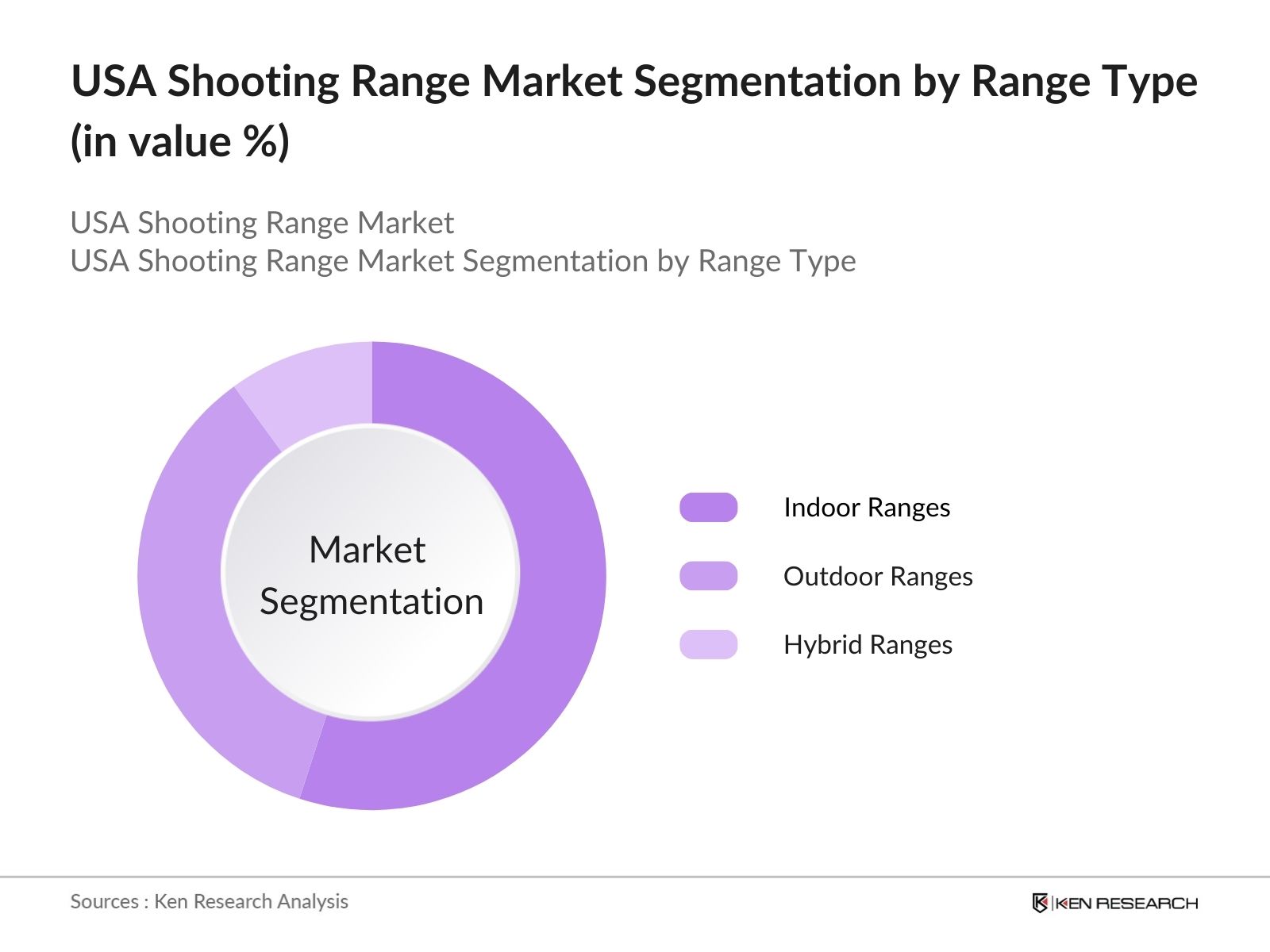
USA Shooting Range Market Segmentation
By Range Type: The Market is segmented by range type into Indoor Ranges, Outdoor Ranges, and Hybrid Ranges. Currently, Indoor Ranges hold a dominant market share due to their ability to operate year-round, regardless of weather conditions, and their growing presence in urban areas. These ranges are particularly popular among recreational users and law enforcement agencies, as they offer controlled environments for training and practice. The availability of advanced air filtration systems and noise-reduction technologies also makes indoor ranges more appealing to those in densely populated areas.
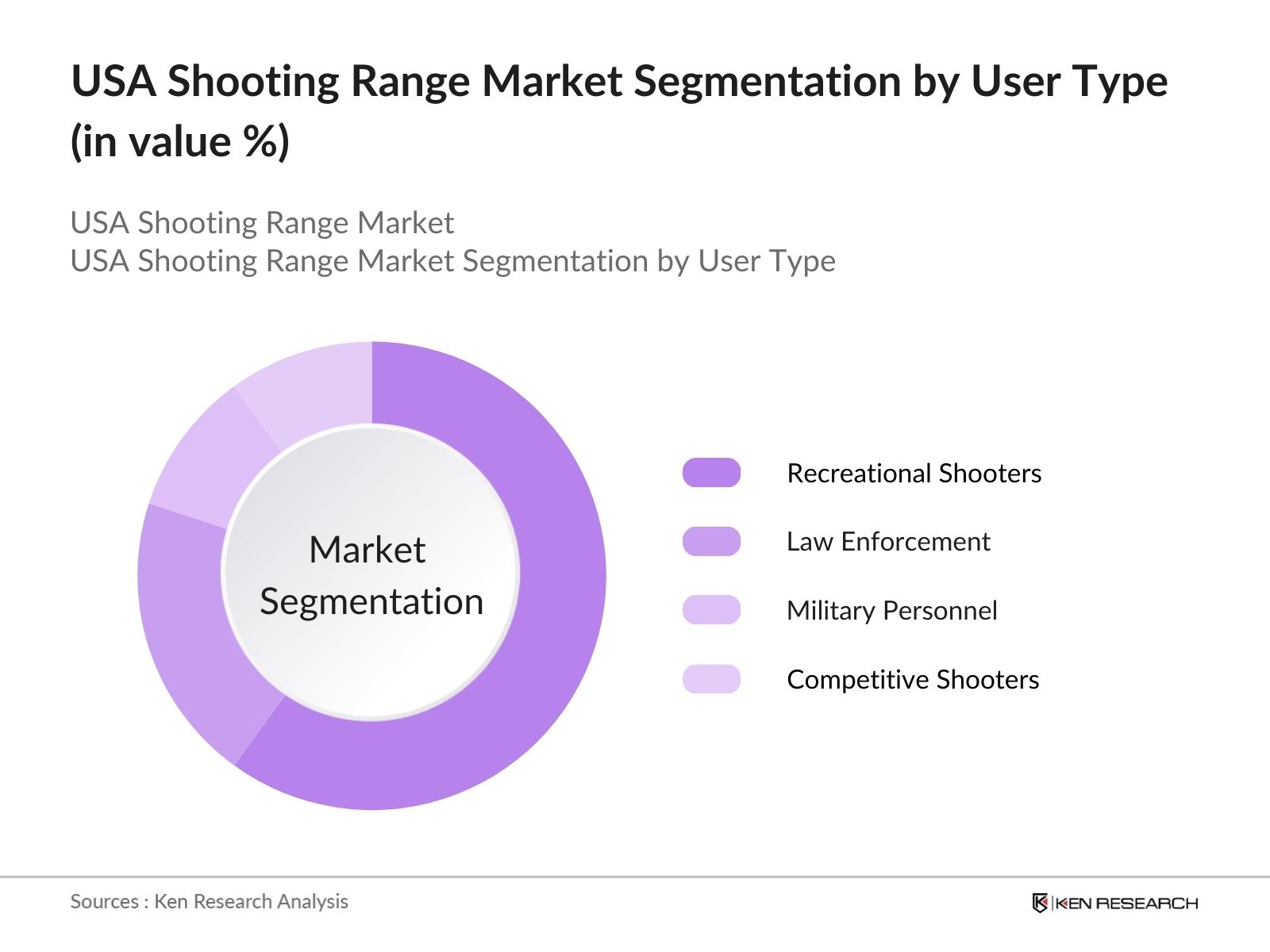
By User Type: The Market is also segmented by user type into Recreational Shooters, Law Enforcement, Military Personnel, and Competitive Shooters. Recreational Shooters dominate the market due to the growing interest in shooting as a leisure activity, coupled with the increasing number of shooting clubs and private memberships across the country. The rise of firearm ownership for personal safety and hobby shooting has further accelerated the growth of this segment, especially in states with permissive gun laws.
The USA Shooting Range Market is dominated by a mix of local and national players, ranging from private shooting range operators to equipment manufacturers. The landscape is highly fragmented, with key players offering a range of services, from high-tech indoor ranges to expansive outdoor facilities. Additionally, partnerships with law enforcement agencies and military institutions give some companies a competitive edge.
|
Company Name |
Establishment Year |
Headquarters |
Market Segment Focus |
No. of Ranges |
Key Technologies |
Revenue (USD Bn) |
Geographic Reach |
Equipment Offerings |
R&D Expenditure |
|
Action Target Inc. |
1986 |
Provo, Utah |
|||||||
|
Range Systems Inc. |
1994 |
Minneapolis, MN |
|||||||
|
Savage Range Systems |
1991 |
Westfield, MA |
|||||||
|
Meggitt Training Systems |
1920 |
Suwanee, GA |
|||||||
|
Shoot Point Blank |
2012 |
Cincinnati, OH |
Over the next five years, the USA Shooting Range Market is expected to show steady growth driven by increasing consumer demand for recreational shooting, advancements in range safety technology, and strong government support for law enforcement and military training programs. The expansion of virtual and augmented reality-based shooting simulators is likely to further enhance user experiences and attract more customers. Additionally, rising awareness of firearm safety and the importance of professional training will continue to drive demand for both indoor and outdoor ranges.
|
Range Type |
Indoor Ranges Outdoor Ranges Hybrid Ranges |
|
User Type |
Recreational Shooters Law Enforcement Military Personnel Competitive Shooters |
|
Equipment |
Firearms Targets & Target Systems Range Safety Equipment Ammunition |
|
Technology |
Electronic Target Systems Simulation-Based Training Mobile App Integration Range Management Systems |
|
Region |
West Coast Midwest East Coast South Southwest |
1.1. Definition and Scope (Shooting Range Types, Indoor & Outdoor Ranges)
1.2. Market Taxonomy (Recreational, Military, Law Enforcement, Competitive Shooting)
1.3. Market Growth Rate (Expansion of Training Programs, Rising Recreational Users)
1.4. Market Segmentation Overview (By User Type, Range Type, Equipment, Technology)
2.1. Historical Market Size (Training, Recreation, Professional Use)
2.2. Year-On-Year Growth Analysis (Customer Demographics, Safety Regulations)
2.3. Key Market Developments and Milestones (Advancements in Target Systems, New Regulations)
3.1. Growth Drivers
3.1.1. Increased Demand for Training Facilities
3.1.2. Rising Popularity of Competitive Shooting Sports
3.1.3. Growth in Self-Defense and Safety Courses
3.1.4. Government and Military Spending on Shooting Ranges
3.2. Market Challenges
3.2.1. Stringent Environmental Regulations (Lead Pollution, Noise Control)
3.2.2. High Cost of Setup and Maintenance
3.2.3. Liability and Safety Concerns
3.2.4. Regional Disparities in Accessibility
3.3. Opportunities
3.3.1. Integration of Smart Technologies (Simulators, Remote Targeting)
3.3.2. Growth in Outdoor Range Infrastructure
3.3.3. Partnerships with Law Enforcement and Military
3.3.4. Expansion of Membership-Based Shooting Ranges
3.4. Trends
3.4.1. Use of Virtual Reality (VR) and Augmented Reality (AR) in Training
3.4.2. Adoption of Environmentally Friendly Range Designs
3.4.3. Increase in Female and Youth Participation
3.4.4. Customizable Range Targets and Experiences
3.5. Government Regulations
3.5.1. Federal Firearms Laws and Range Safety Requirements
3.5.2. Environmental Standards for Shooting Ranges (Lead Mitigation, Noise)
3.5.3. Local Zoning and Facility Construction Rules
3.5.4. Grant and Support Programs for Range Development
3.6. SWOT Analysis
3.7. Stake Ecosystem
3.7.1. Shooting Range Operators
3.7.2. Equipment Suppliers
3.7.3. Law Enforcement and Military Partners
3.7.4. Environmental Compliance Agencies
3.8. Porters Five Forces Analysis
3.9. Competition Ecosystem (Competitor Differentiation, Range Features, Pricing)
4.1. By Range Type (In Value %)
4.1.1. Indoor Ranges
4.1.2. Outdoor Ranges
4.1.3. Hybrid Ranges
4.2. By User Type (In Value %)
4.2.1. Recreational Shooters
4.2.2. Law Enforcement
4.2.3. Military Personnel
4.2.4. Competitive Shooters
4.3. By Equipment (In Value %)
4.3.1. Firearms
4.3.2. Targets & Target Systems
4.3.3. Range Safety Equipment
4.3.4. Ammunition
4.4. By Technology (In Value %)
4.4.1. Electronic Target Systems
4.4.2. Simulation-Based Training
4.4.3. Mobile App Integration
4.4.4. Range Management Systems
4.5. By Region (In Value %)
4.5.1. West Coast
4.5.2. Midwest
4.5.3. East Coast
4.5.4. South
4.5.5. Southwest
5.1 Detailed Profiles of Major Companies
5.1.1. Action Target Inc.
5.1.2. Range Systems Inc.
5.1.3. Savage Range Systems
5.1.4. Meggitt Training Systems
5.1.5. The Target Barn
5.1.6. Shoot Point Blank
5.1.7. Range USA
5.1.8. U.S. Shooting Academy
5.1.9. Winchester Safes
5.1.10. Xpert Range Systems
5.1.11. Rogue Shooting Targets
5.1.12. Kriss USA
5.1.13. Simunition
5.1.14. Black Rifle Range
5.1.15. Delta Defense
5.2 Cross Comparison Parameters (Revenue, Range Capacity, No. of Employees, Equipment Offerings, R&D Investment, Technology Integration, Geographic Coverage, Safety Standards)
5.3. Market Share Analysis
5.4. Strategic Initiatives
5.5. Mergers and Acquisitions
5.6. Investment Analysis
5.7 Venture Capital Funding
5.8 Government Grants
5.9 Private Equity Investments
6.1. Federal Safety Standards
6.2. Environmental Compliance
6.3. Firearm Use and Handling Laws
7.1. Future Market Size Projections
7.2. Key Factors Driving Future Market Growth
8.1. By Range Type (In Value %)
8.2. By User Type (In Value %)
8.3. By Equipment (In Value %)
8.4. By Technology (In Value %)
8.5. By Region (In Value %)
9.1. TAM/SAM/SOM Analysis
9.2. Customer Cohort Analysis
9.3. Marketing Initiatives
9.4. White Space Opportunity Analysis
Disclaimer Contact UsThe initial phase involves constructing an ecosystem map encompassing all major stakeholders within the USA Shooting Range Market. This step is underpinned by extensive desk research, utilizing a combination of secondary and proprietary databases to gather comprehensive industry-level information. The primary objective is to identify and define the critical variables that influence market dynamics.
In this phase, we compile and analyze historical data pertaining to the USA Shooting Range Market. This includes assessing market penetration, range utilization rates, and revenue generation. Furthermore, an evaluation of equipment quality and safety statistics is conducted to ensure the reliability and accuracy of revenue estimates.
Market hypotheses are developed and subsequently validated through interviews with industry experts representing a diverse array of companies. These consultations provide valuable operational and financial insights directly from industry practitioners, which will be instrumental in refining and corroborating the market data.
The final phase involves direct engagement with multiple range operators and equipment suppliers to acquire detailed insights into product segments, sales performance, and consumer preferences. This interaction verifies and complements the statistics derived from the bottom-up approach, thereby ensuring a comprehensive, accurate, and validated analysis of the USA Shooting Range Market.
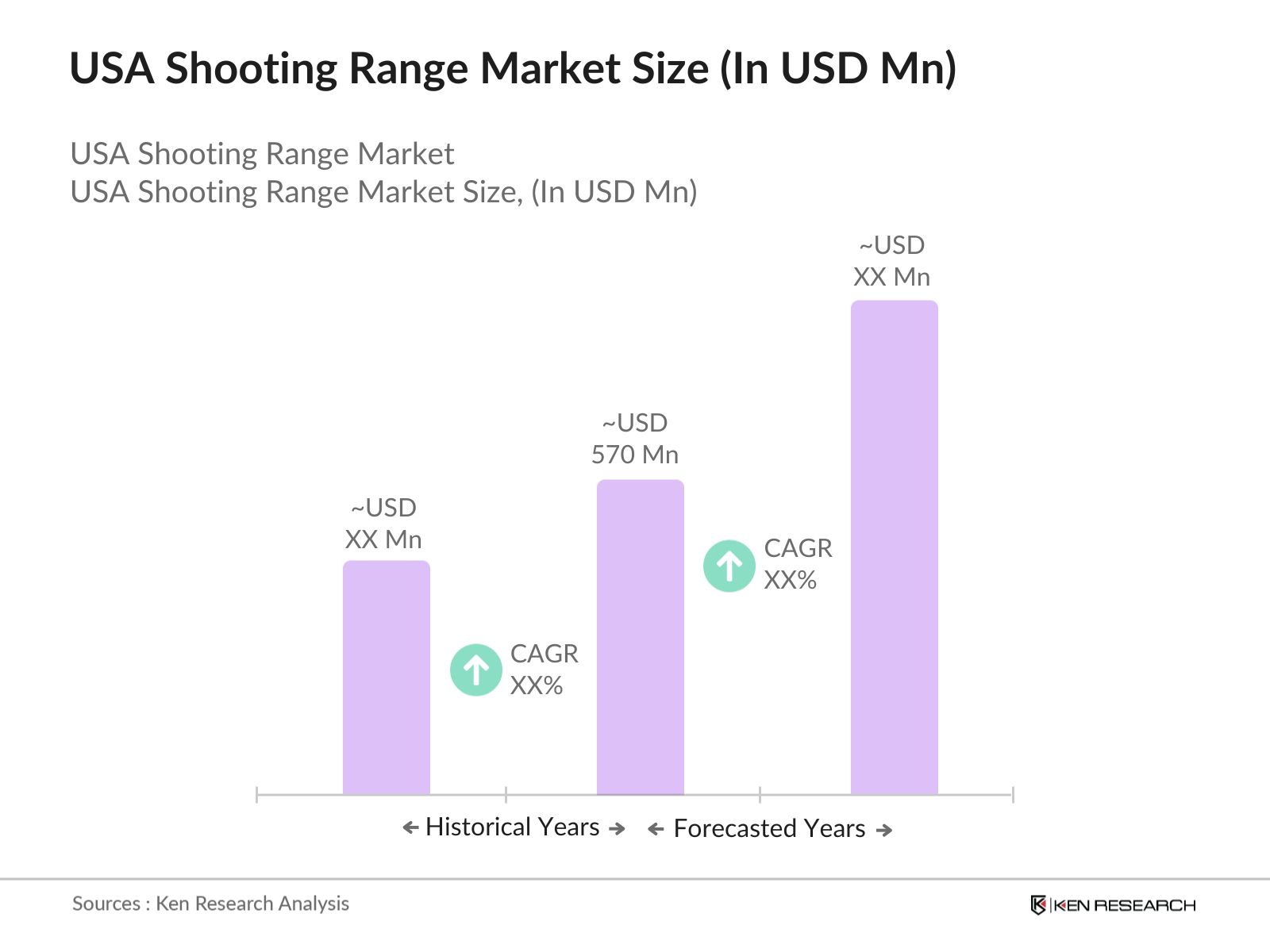
The USA Shooting Range Market is valued at USD 570 million, driven by rising interest in recreational shooting and increased demand from law enforcement and military institutions.
Challenges in the USA Shooting Range Market include stringent environmental regulations, high maintenance costs, and safety concerns related to liability. Noise control and lead pollution mitigation also present regulatory hurdles.
Key players in the USA Shooting Range Market include Action Target Inc., Range Systems Inc., Savage Range Systems, Meggitt Training Systems, and Shoot Point Blank. These companies dominate due to their technological advancements and partnerships with law enforcement and military institutions.
Growth drivers in the USA Shooting Range Market include the increasing popularity of recreational shooting, the expansion of competitive shooting events, and growing investments in law enforcement and military training facilities. Technological advancements such as virtual training systems also play a significant role.
The government plays a key role through regulations enforced by agencies such as the ATF and by providing grants for the development of new shooting ranges. Additionally, government-funded law enforcement and military training programs heavily utilize shooting ranges in the USA Shooting Range Market.

What makes us stand out is that our consultants follows Robust, Refine and Result (RRR) methodology. i.e. Robust for clear definitions, approaches and sanity checking, Refine for differentiating respondents facts and opinions and Result for presenting data with story

We have set a benchmark in the industry by offering our clients with syndicated and customized market research reports featuring coverage of entire market as well as meticulous research and analyst insights.

While we don't replace traditional research, we flip the method upside down. Our dual approach of Top Bottom & Bottom Top ensures quality deliverable by not just verifying company fundamentals but also looking at the sector and macroeconomic factors.

With one step in the future, our research team constantly tries to show you the bigger picture. We help with some of the tough questions you may encounter along the way: How is the industry positioned? Best marketing channel? KPI's of competitors? By aligning every element, we help maximize success.

Our report gives you instant access to the answers and sources that other companies might choose to hide. We elaborate each steps of research methodology we have used and showcase you the sample size to earn your trust.

If you need any support, we are here! We pride ourselves on universe strength, data quality, and quick, friendly, and professional service.