
USA Smart Appliances Market Outlook to 2030
Region:United States
Author(s):Meenakshi Bisht
Product Code:KROD2362
Region:United States
Author(s):Meenakshi Bisht
Product Code:KROD2362
December 2024
98
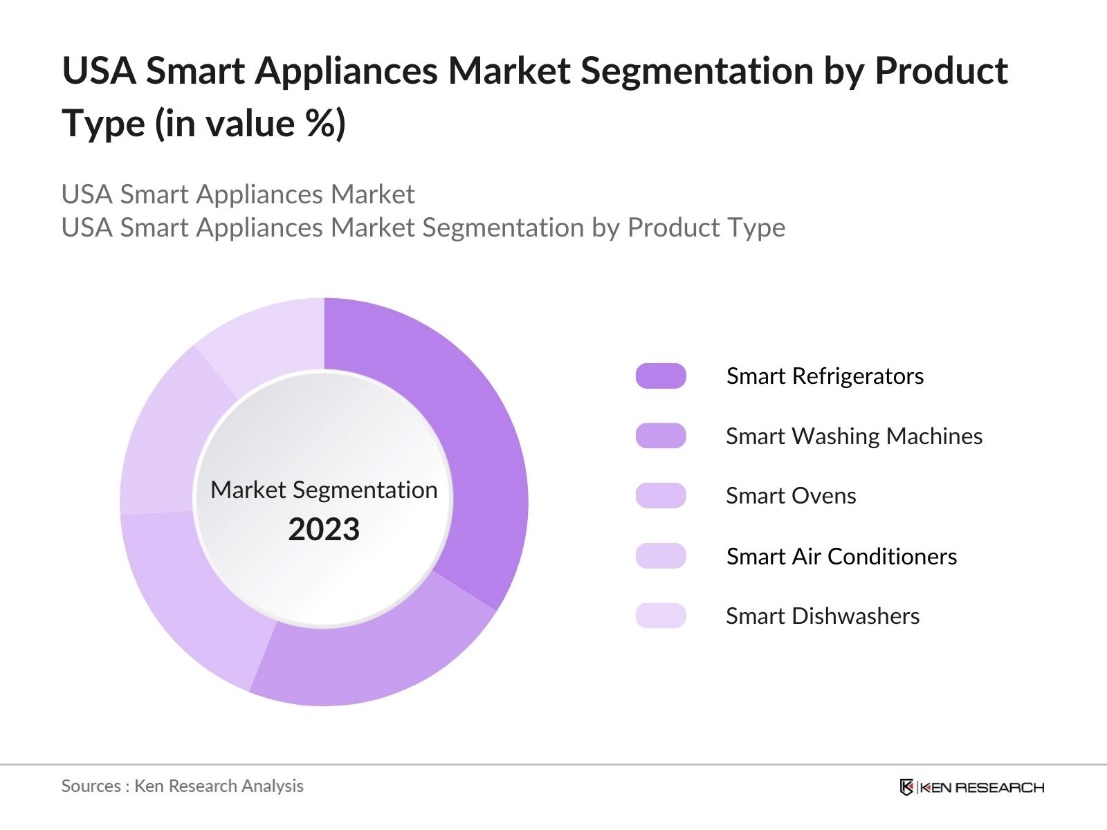
By Product Type: The USA Smart Appliances market is segmented by product type into smart refrigerators, smart washing machines, smart ovens, smart air conditioners, and smart dishwashers. The smart refrigerators have held a dominant market share within this segmentation due to their widespread adoption in both households and commercial establishments. These refrigerators offer advanced features such as temperature regulation, energy consumption monitoring, and voice control integration. Companies like LG and Samsung have significantly invested in AI-based refrigerators that provide seamless connectivity and user-friendly interfaces, making this sub-segment particularly attractive to consumers seeking both convenience and innovation.
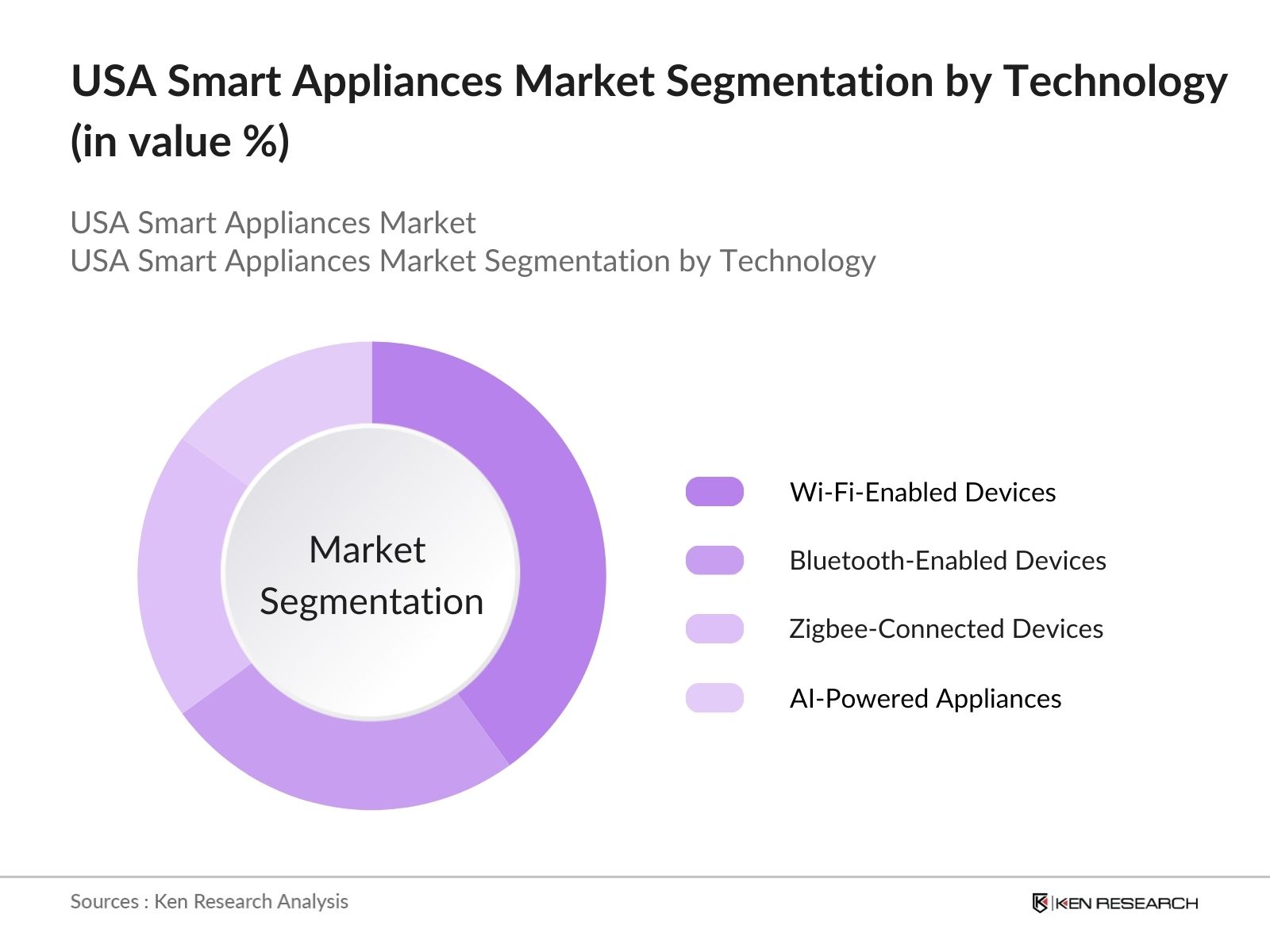
By Technology: The USA Smart Appliances market is segmented by technology into Wi-Fi-enabled appliances, Bluetooth-enabled appliances, Zigbee-connected devices, and AI-powered appliances. The Wi-Fi-enabled appliances dominate the market, accounting for the largest share of connected smart devices in U.S. households. The reason behind this dominance is their widespread availability and compatibility with existing smart home systems, such as Amazon Alexa and Google Home. Consumers find Wi-Fi connectivity essential for remote monitoring, energy efficiency management, and seamless integration with other smart home devices, which has contributed to the growing market share of this sub-segment.
The market is dominated by a few major global and local players who leverage their established distribution networks and technological expertise to capture a significant share of the market. These companies are at the forefront of innovation, integrating AI, voice control, and energy-saving technologies into their product lines, catering to the rising consumer demand for intelligent home solutions.
|
Company Name |
Establishment Year |
Headquarters |
Product Portfolio |
No. of Employees |
Revenue (2023) |
Global Presence |
Strategic Alliances |
R&D Investment |
Sustainability Initiatives |
|---|---|---|---|---|---|---|---|---|---|
|
Whirlpool Corporation |
1911 |
Benton Harbor, MI |
|||||||
|
LG Electronics |
1958 |
Seoul, South Korea |
|||||||
|
Samsung Electronics |
1938 |
Suwon, South Korea |
|||||||
|
GE Appliances |
1907 |
Louisville, KY |
|||||||
|
Bosch Home Appliances |
1886 |
Gerlingen, Germany |
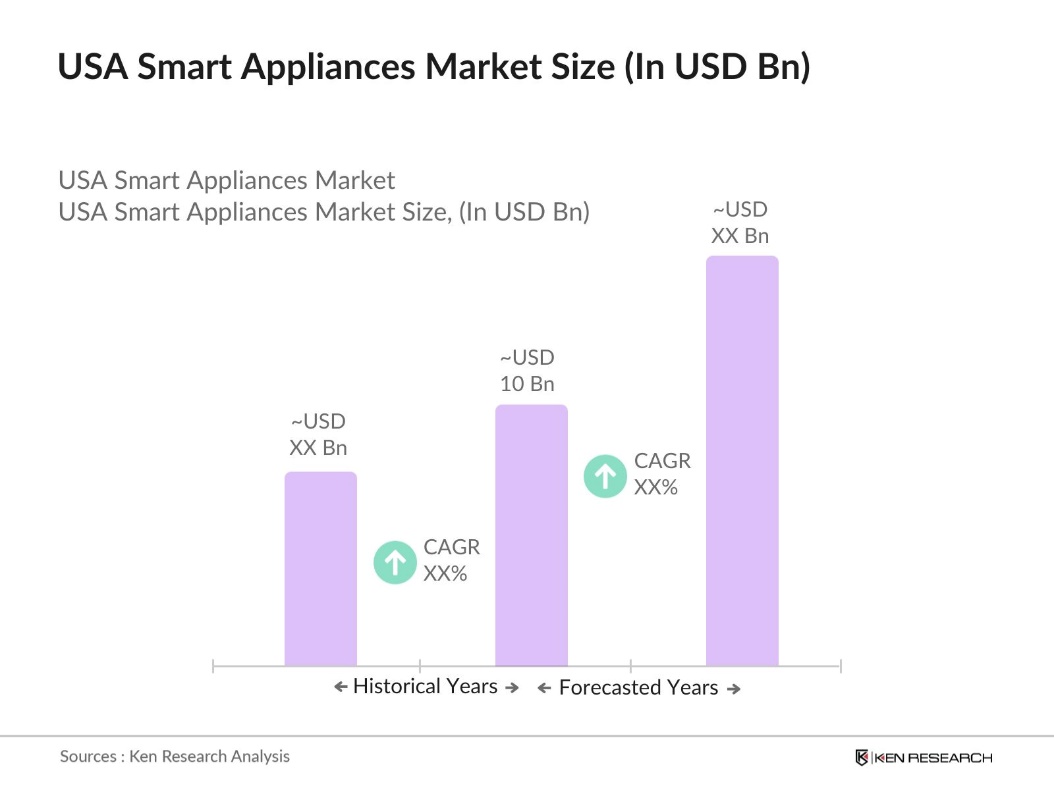
Over the next five years, the USA Smart Appliances market is expected to experience significant growth, driven by technological advancements in the IoT sector, the increasing trend of smart homes, and greater consumer demand for automated and energy-efficient home appliances. With ongoing innovations in AI and machine learning, smart appliances will become more intuitive, offering customized solutions to consumers. The integration of renewable energy systems into smart appliances is likely to emerge as a key trend, contributing to sustainable development in the market.
|
By Product Type |
Smart Refrigerators Smart Washing Machines Smart Air Conditioners Smart Ovens Smart Dishwashers |
|
By Technology |
Wi-Fi Enabled Appliances Bluetooth-Enabled Appliances Zigbee and Z-Wave Connected Devices AI-Based Appliances |
|
By Distribution Channel |
Online Retail Offline Retail B2B Sales |
|
By Application |
Residential Commercial Industrial |
|
By Region |
Northeast Midwest Southern Western |
1.1. Definition and Scope
1.2. Market Taxonomy
1.3. Market Growth Rate
1.4. Smart Appliances Ecosystem Overview
2.1. Historical Market Size
2.2. Year-On-Year Growth Analysis
2.3. Key Developments and Milestones in Smart Appliances
3.1. Growth Drivers
3.1.1. Rising Consumer Preference for Connected Devices
3.1.2. Technological Advancements in IoT Integration
3.1.3. Government Incentives for Energy-Efficient Appliances
3.1.4. Shift Toward Smart Homes
3.2. Market Challenges
3.2.1. High Initial Costs and Maintenance
3.2.2. Consumer Privacy Concerns (data security and privacy issues)
3.2.3. Compatibility Issues Between Devices
3.3. Opportunities
3.3.1. Increasing Adoption of AI-Powered Appliances
3.3.2. Growth in Subscription-Based Models (servitization)
3.3.3. Integration with Renewable Energy Systems
3.4. Trends
3.4.1. Voice Control and Smart Assistants Integration
3.4.2. Demand for Smart Kitchen and Laundry Appliances
3.4.3. Sustainability and Green Technologies in Smart Appliances
3.5. Government Regulation
3.5.1. Energy Star Certifications and Standards
3.5.2. Data Protection Laws for Smart Devices
3.5.3. Federal Incentives for Smart Energy Solutions
3.6. Stakeholder Ecosystem
3.7. Porters Five Forces Analysis
3.8. USA Smart Appliances Competition Ecosystem
4.1. By Product Type (In Value %)
4.1.1. Smart Refrigerators
4.1.2. Smart Washing Machines
4.1.3. Smart Air Conditioners
4.1.4. Smart Ovens
4.1.5. Smart Dishwashers
4.2. By Technology (In Value %)
4.2.1. Wi-Fi Enabled Appliances
4.2.2. Bluetooth-Enabled Appliances
4.2.3. Zigbee and Z-Wave Connected Devices
4.2.4. AI-Based Appliances
4.3. By Distribution Channel (In Value %)
4.3.1. Online Retail
4.3.2. Offline Retail
4.3.3. B2B Sales
4.4. By Application (In Value %)
4.4.1. Residential
4.4.2. Commercial
4.4.3. Industrial
4.5. By Region (In Value %)
4.5.1. Northeast USA
4.5.2. Midwest USA
4.5.3. Southern USA
4.5.4. Western USA
5.1. Detailed Profiles of Major Companies
5.1.1. Whirlpool Corporation
5.1.2. LG Electronics
5.1.3. Samsung Electronics
5.1.4. GE Appliances (Haier)
5.1.5. Electrolux AB
5.1.6. Bosch Home Appliances
5.1.7. Miele
5.1.8. Panasonic Corporation
5.1.9. Honeywell International Inc.
5.1.10. Amazon (Alexa Smart Home Integration)
5.1.11. Google LLC (Nest Smart Devices)
5.1.12. BSH Home Appliances Corporation
5.1.13. Philips Electronics
5.1.14. Xiaomi Corporation
5.1.15. Sharp Corporation
5.2. Cross Comparison Parameters (No. of Employees, Headquarters, Inception Year, Revenue, Market Share, Product Portfolio, Technological Expertise, Sustainability Initiatives)
5.3. Market Share Analysis
5.4. Strategic Initiatives (Partnerships, Collaborations, Product Launches)
5.5. Mergers and Acquisitions
5.6. Investment Analysis
5.7. Venture Capital and Private Equity Funding
5.8. Government Grants and Funding for Smart Appliances
6.1. Compliance with Energy Star Guidelines
6.2. Data Privacy and Protection Regulations (GDPR, CCPA)
6.3. Product Certification Requirements (UL Certification, FCC Compliance)
7.1. Future Market Size Projections
7.2. Key Factors Driving Future Market Growth
8.1. By Product Type (In Value %)
8.2. By Technology (In Value %)
8.3. By Distribution Channel (In Value %)
8.4. By Application (In Value %)
8.5. By Region (In Value %)
9.1. TAM/SAM/SOM Analysis
9.2. Customer Cohort Analysis (Demographic and Psychographic Profiling)
9.3. Marketing Strategies and Channels
9.4. White Space Opportunity Analysis
The initial stage involves identifying the major stakeholders within the USA Smart Appliances market. Using a combination of secondary and proprietary databases, the primary variables influencing market dynamics, including technological adoption, consumer trends, and product innovations, are identified.
This phase focuses on analyzing historical market data, assessing the penetration of smart appliances, and the influence of technological advancements on revenue generation. The goal is to ensure that market projections are aligned with historical performance metrics and current market dynamics.
Through extensive consultation with industry experts using CATIS, we validate our research hypotheses and gather insights into operational challenges and financial strategies. These consultations are critical for refining market projections and understanding competitive positioning.
The final step integrates inputs from multiple stakeholders, including manufacturers, retailers, and consumers. The data collected through this bottom-up approach is synthesized into a comprehensive and accurate analysis of the USA Smart Appliances market.
Key challenges in USA Smart Appliances Market include high costs of smart appliances, consumer privacy concerns related to data sharing, and compatibility issues between devices from different manufacturers.
Key challenges in USA Smart Appliances Market include high costs of smart appliances, consumer privacy concerns related to data sharing, and compatibility issues between devices from different manufacturers.
Major players in USA Smart Appliances Market include Whirlpool Corporation, LG Electronics, Samsung Electronics, GE Appliances, and Bosch Home Appliances. These companies dominate due to their vast product portfolios, global presence, and continuous investments in R&D.
The USA Smart Appliances Market is propelled by advancements in IoT integration, increasing consumer preference for energy-efficient appliances, and technological innovations such as voice control and AI-powered devices.

What makes us stand out is that our consultants follows Robust, Refine and Result (RRR) methodology. i.e. Robust for clear definitions, approaches and sanity checking, Refine for differentiating respondents facts and opinions and Result for presenting data with story

We have set a benchmark in the industry by offering our clients with syndicated and customized market research reports featuring coverage of entire market as well as meticulous research and analyst insights.

While we don't replace traditional research, we flip the method upside down. Our dual approach of Top Bottom & Bottom Top ensures quality deliverable by not just verifying company fundamentals but also looking at the sector and macroeconomic factors.

With one step in the future, our research team constantly tries to show you the bigger picture. We help with some of the tough questions you may encounter along the way: How is the industry positioned? Best marketing channel? KPI's of competitors? By aligning every element, we help maximize success.

Our report gives you instant access to the answers and sources that other companies might choose to hide. We elaborate each steps of research methodology we have used and showcase you the sample size to earn your trust.

If you need any support, we are here! We pride ourselves on universe strength, data quality, and quick, friendly, and professional service.