USA Smart Finance Market Outlook to 2030

Region:North America

Author(s):Mukul

Product Code:KROD9209

Published On

October 2024

Total pages

87

About the Report

USA Smart Finance Market Overview

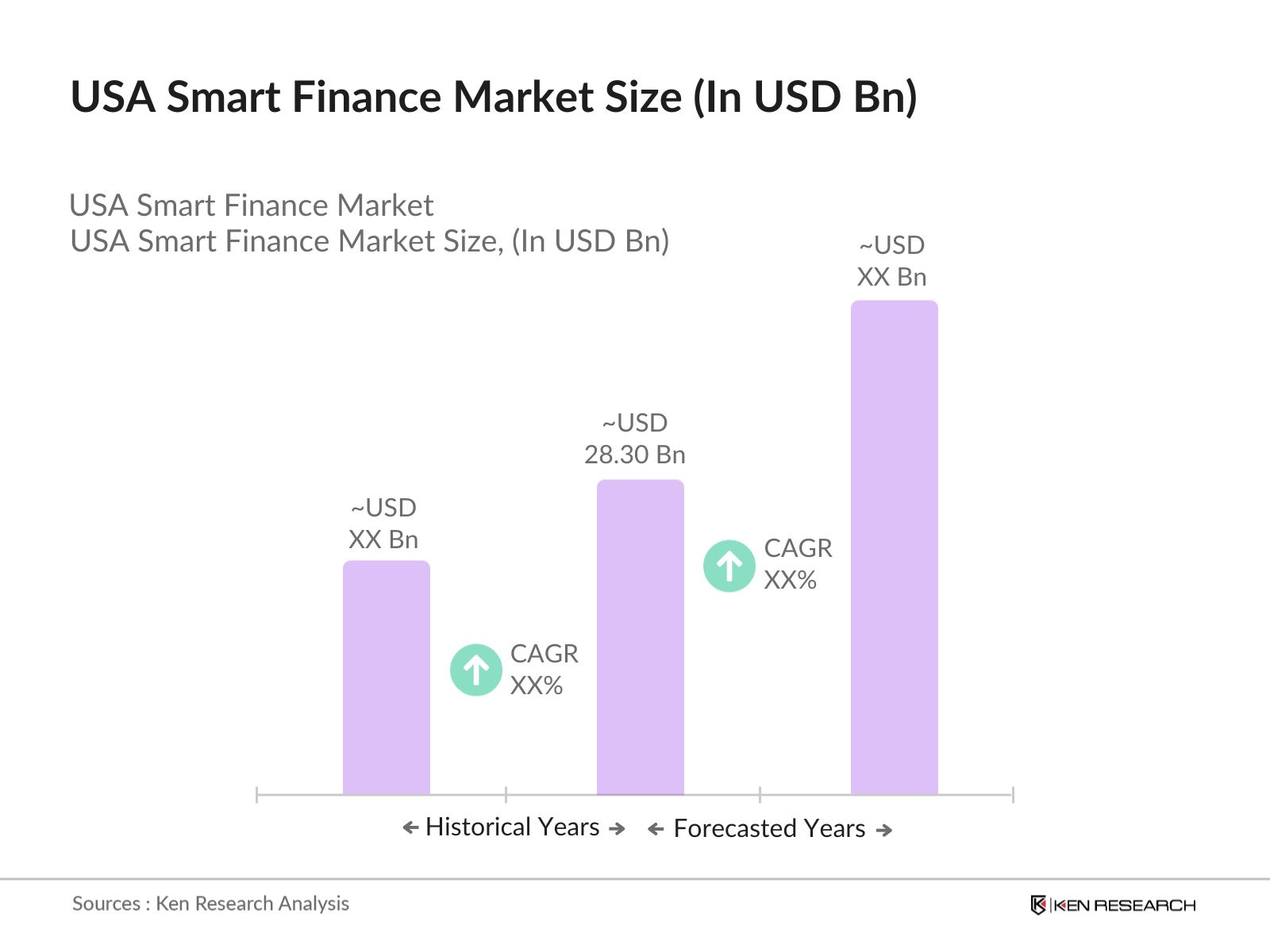
  • The USA Smart Finance Market is valued at USD 28.30 billion, based on a five-year historical analysis, driven by the rapid digitization of financial services and increasing adoption of mobile banking and digital payment platforms. The markets growth is attributed to consumer preferences for seamless, secure, and user-friendly financial solutions. Major factors include advances in AI, blockchain integration, and a significant shift toward cashless economies.
  • Cities such as New York and San Francisco dominate the USA Smart Finance Market due to their status as financial hubs and innovation centers. These cities host major FinTech companies and technology innovators, benefiting from high investment inflows and access to skilled talent, which positions them as leaders in driving the smart finance ecosystem forward.
  • The Federal Reserves guidelines on digital currency have been a focal point in shaping the future of smart finance. In 2023, the Federal Reserve introduced a pilot program exploring the implementation of a central bank digital currency (CBDC), which could transform payment systems by reducing transaction times and costs. The guidelines outline the necessary infrastructure and regulatory measures required to support this shift, emphasizing security, privacy, and accessibility for all users.

market overviews

USA Smart Finance MarketSegmentation
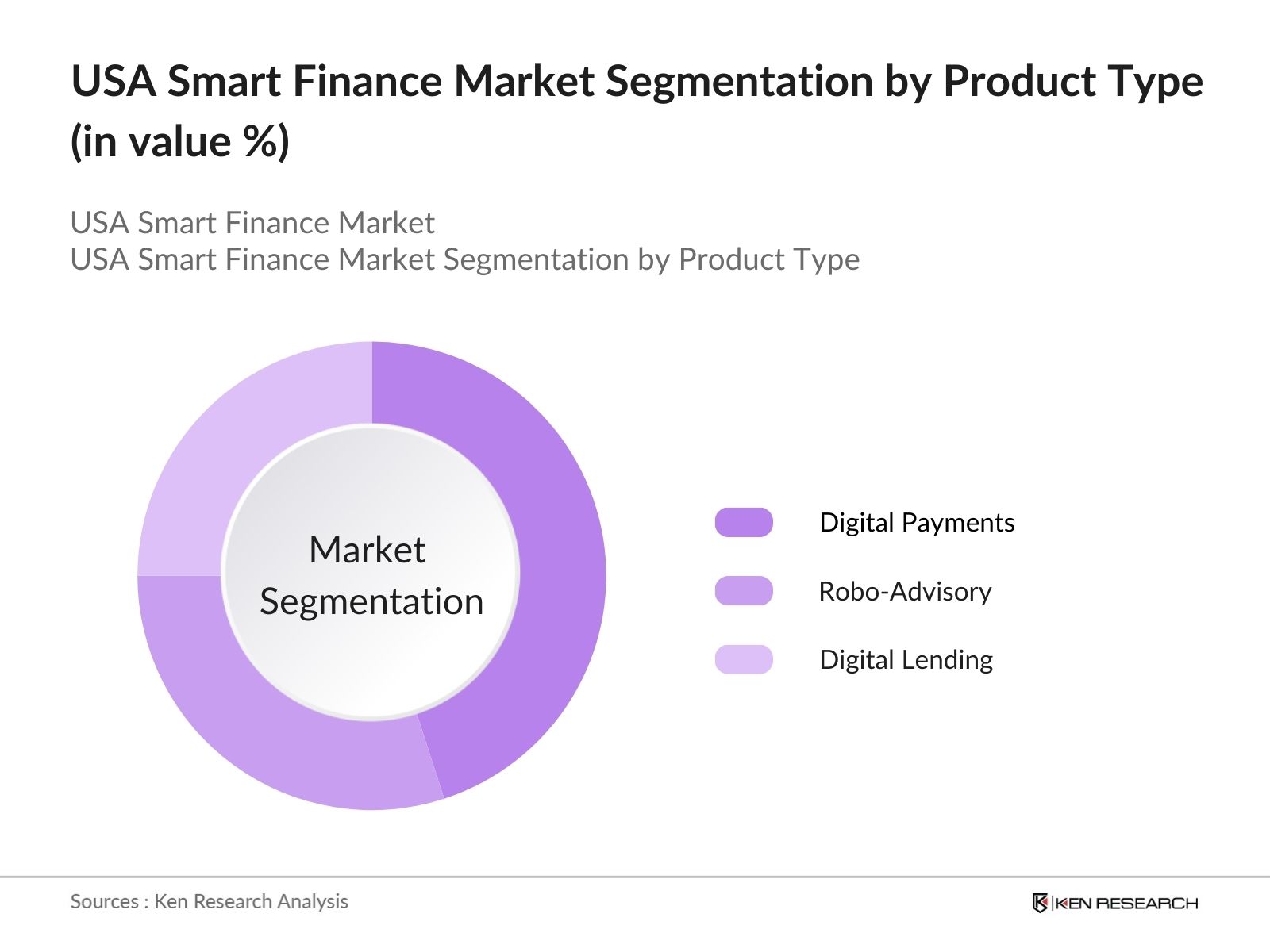
  • By Product Type: The USA Smart Finance Market is segmented by product type into digital payments, robo-advisory services, and digital lending platforms. Recently, digital payments hold a dominant market share in the USA, driven by consumer demand for contactless transactions and the integration of mobile wallets with existing financial ecosystems. Companies like PayPal, Apple Pay, and Google Wallet have significantly contributed to the dominance of this sub-segment.

market overviews

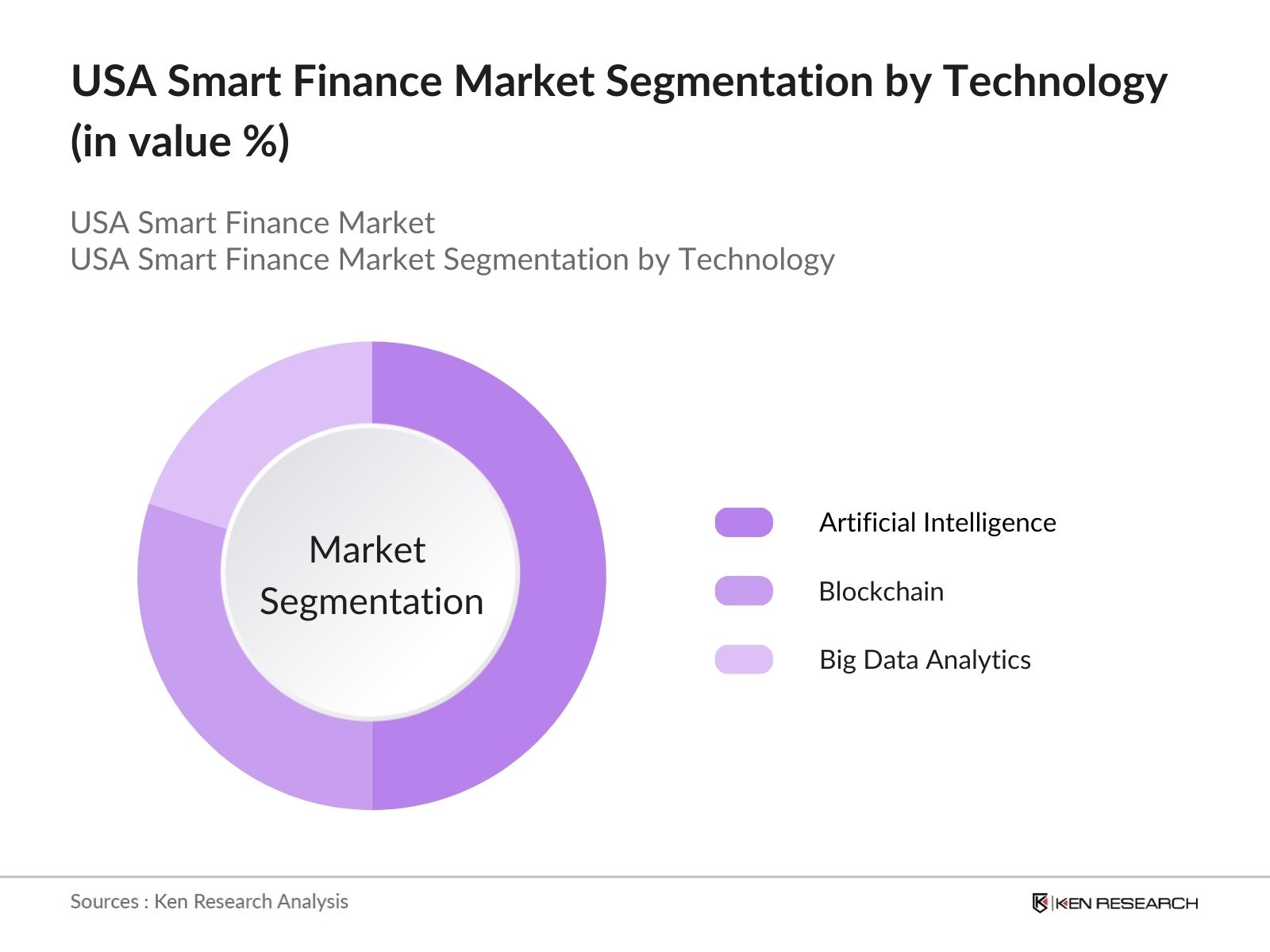
  • By Technology: The market is segmented by technology into artificial intelligence, blockchain, and big data analytics. Artificial intelligence leads the market share within the technology segmentation, primarily due to its role in enhancing customer service through chatbots, fraud detection, and personalized financial services. The increasing use of AI by financial institutions to optimize decision-making and provide a better customer experience explains its dominance.

market overviews

USA Smart Finance Market Competitive Landscape

The USA Smart Finance Market is highly competitive, with both established financial institutions and innovative FinTech startups playing crucial roles. Major players such as JPMorgan Chase and PayPal have leveraged their strong financial bases and technological advancements to maintain a competitive edge. Meanwhile, new entrants such as SoFi and Robinhood have gained prominence by offering tailored financial products to tech-savvy customers.

Company Name

Established

Headquarters

Revenue (USD Bn)

Number of Employees

Technology Stack

Major Product Offering

Recent Acquisition

Innovation Index

Partnerships

JPMorgan Chase

1799

New York, USA


PayPal Holdings

1998

San Jose, USA


Robinhood Markets

2013

Menlo Park, USA


SoFi Technologies

2011

San Francisco, USA


Stripe Inc.

2010

San Francisco, USA


USA Smart Finance Industry Analysis

Growth Drivers

  • Digital Payment Adoption: The rise in digital payments in the USA has been significant, driven by both consumer convenience and business efficiency. As of 2023, the total number of digital payment transactions in the country exceeded 52 billion, supported by a robust digital infrastructure and increasing internet penetration (92% of the population). The growth of contactless payments, fueled by smartphone usage, accounts for a substantial portion of this figure, with over 50% of all transactions happening via mobile wallets. Data from the U.S. Federal Reserve shows an increasing trend in real-time payments facilitated by services like Zelle and Venmo, which recorded over 5 billion transactions in 2023 .
  • AI Integration in Financial Services: The financial services sector in the USA has embraced artificial intelligence (AI) for streamlining operations and enhancing customer experiences. According to data from the U.S. Bureau of Economic Analysis, by 2023, over 75% of U.S. banks were utilizing AI technologies, ranging from customer support chatbots to complex fraud detection systems. In 2023 alone, the banking sector reported an 18% reduction in operational costs due to AI implementation, equating to nearly $13 billion saved across major institutions. This integration also contributed to higher consumer satisfaction, with reports from the Federal Reserve highlighting improved transaction security through AI-based systems .
  • Increased Smartphone Penetration: Smartphone usage in the USA has reached nearly 92% of adults, driving the adoption of mobile-based financial services. According to the Pew Research Center, over 250 million Americans actively use smartphones for banking and payment transactions. This surge has catalyzed the growth of mobile banking apps, with a notable 45% increase in mobile banking transactions from 2022 to 2023, per the U.S. Federal Communications Commission. This extensive smartphone penetration has been pivotal in promoting fintech innovations and enhancing user access to digital financial services .

Market Restraints

  • Cybersecurity Threats: The U.S. financial sector faces persistent cybersecurity threats despite advancements in technology. In 2023, the Financial Crimes Enforcement Network (FinCEN) reported a total of 1.4 million cases of suspicious activity related to cybercrime, leading to a loss of approximately $3.5 billion across various financial institutions. Additionally, ransomware attacks specifically targeting banks increased by 25%, indicating the growing sophistication of cybercriminals. These security breaches not only threaten the financial safety of institutions but also erode consumer confidence in digital financial systems .
  • Regulatory Barriers: Regulatory complexities continue to challenge the U.S. smart finance market, particularly with evolving policies at the federal and state levels. According to the U.S. Government Accountability Office (GAO), financial firms spent approximately $9 billion in 2023 on compliance with federal regulations such as the Dodd-Frank Act and Consumer Financial Protection Bureau (CFPB) guidelines. These costs disproportionately affect smaller fintech startups, limiting their ability to scale operations. Additionally, state-by-state discrepancies in digital currency regulations further complicate market expansion efforts .

USA Smart Finance Market Future Outlook

Over the next five years, the USA Smart Finance Market is expected to show significant growth, driven by continuous advancements in financial technology, increasing adoption of AI-driven platforms, and the rise of blockchain in financial applications. The future of smart finance will see further integration of machine learning in risk management, while open banking will expand collaboration between traditional banks and FinTechs.

Market Opportunities

  • Blockchain Adoption: The adoption of blockchain technology in the U.S. financial services sector is creating new opportunities for transparency and security. In 2023, blockchain-based transactions in the U.S. reached over $300 billion, as reported by the U.S. Department of the Treasury. Financial institutions are leveraging blockchain for secure cross-border payments, significantly reducing transaction times from several days to mere minutes. This has not only enhanced operational efficiency but also opened new avenues for the development of decentralized finance (DeFi) platforms, which are expected to see increased institutional participation in the coming years .
  • Expansion of Robo-Advisory Services: Robo-advisory services in the U.S. saw significant growth, with over 25 million users actively engaging in automated financial advisory platforms by the end of 2023, according to data from the Federal Reserve. These platforms manage approximately $2 trillion in assets, offering personalized investment advice with lower fees than traditional advisors. This trend is driven by growing demand for cost-effective and accessible financial planning solutions. The U.S. Securities and Exchange Commission (SEC) anticipates that robo-advisors will further integrate AI technologies, enhancing customization and user experience .


Scope of the Report


Product Type

Digital Payments, Robo-Advisory, Digital Lending, Wealth Management Platforms

End-User

Individual Consumers, Small & Medium Enterprises (SMEs), Large Enterprises

Technology

Artificial Intelligence, Blockchain, Cloud Computing, Big Data Analytics

Application

Payment Processing, Lending & Borrowing, Investment & Wealth Management, Insurance

Region

Northeast, Midwest, South, West

Products

Key Target Audience

  • Financial Institutions

  • FinTech Startups

  • Venture Capital and Investor Firms

  • Government Regulatory Bodies (Federal Reserve, Consumer Financial Protection Bureau)

  • Digital Payment Service Providers

  • Insurance Companies

  • Blockchain Development Firms

  • AI and Data Analytics Firms

Companies

Players Mentioned in the Report:

  • JPMorgan Chase & Co.

  • PayPal Holdings Inc.

  • Robinhood Markets Inc.

  • SoFi Technologies Inc.

  • Stripe Inc.

  • Square Inc.

  • Vanguard Group

  • Charles Schwab Corporation

  • LendingClub Corporation

  • Intuit Inc.

  • Plaid Inc.

  • Affirm Holdings Inc.

  • Betterment LLC

  • Chime Financial Inc.

  • Wealthfront Corporation

Table of Contents


1. USA Smart Finance Market Overview

1.1. Definition and Scope
1.2. Market Taxonomy
1.3. Market Growth Rate
1.4. Market Segmentation Overview


2. USA Smart Finance Market Size (In USD Bn)

2.1. Historical Market Size
2.2. Year-On-Year Growth Analysis
2.3. Key Market Developments and Milestones


3. USA Smart Finance Market Analysis

3.1. Growth Drivers (Digital Payment Adoption, AI Integration in Financial Services, Increased Smartphone Penetration, Rising Consumer Trust in Online Transactions)
3.2. Market Challenges (Cybersecurity Threats, Regulatory Barriers, Lack of Financial Literacy, Technology Integration Costs)
3.3. Opportunities (Blockchain Adoption, Expansion of Robo-Advisory Services, Open Banking Opportunities, Growth in FinTech Startups)
3.4. Trends (Rise of Embedded Finance, AI-Powered Fraud Detection, Sustainable Finance Solutions, Personalization through Data Analytics)
3.5. Government Regulations (Dodd-Frank Act Impact, Data Privacy Regulations, Federal Reserve Guidelines on Digital Currency, Anti-Money Laundering Compliance)
3.6. SWOT Analysis
3.7. Stake Ecosystem
3.8. Porters Five Forces
3.9. Competition Ecosystem


4. USA Smart Finance Market Segmentation

4.1. By Product Type (In Value %)
4.1.1. Digital Payments
4.1.2. Robo-Advisory
4.1.3. Digital Lending
4.1.4. Wealth Management Platforms
4.2. By End-User (In Value %)
4.2.1. Individual Consumers
4.2.2. Small & Medium Enterprises (SMEs)
4.2.3. Large Enterprises
4.3. By Technology (In Value %)
4.3.1. Artificial Intelligence
4.3.2. Blockchain
4.3.3. Cloud Computing
4.3.4. Big Data Analytics
4.4. By Application (In Value %)
4.4.1. Payment Processing
4.4.2. Lending & Borrowing
4.4.3. Investment & Wealth Management
4.4.4. Insurance
4.5. By Region (In Value %)
4.5.1. Northeast
4.5.2. Midwest
4.5.3. South
4.5.4. West


5. USA Smart Finance Market Competitive Analysis

5.1. Detailed Profiles of Major Companies
5.1.1. PayPal Holdings Inc.
5.1.2. Square Inc.
5.1.3. JPMorgan Chase & Co.
5.1.4. Intuit Inc.
5.1.5. Stripe Inc.
5.1.6. Robinhood Markets Inc.
5.1.7. Betterment LLC
5.1.8. SoFi Technologies Inc.
5.1.9. LendingClub Corporation
5.1.10. Plaid Inc.
5.1.11. Affirm Holdings Inc.
5.1.12. Wealthfront Corporation
5.1.13. Chime Financial Inc.
5.1.14. Vanguard Group
5.1.15. Charles Schwab Corporation
5.2. Cross Comparison Parameters (Revenue, No. of Employees, Market Share, Technology Stack, Customer Base, Partnerships, Innovation Index, Product Diversification)
5.3. Market Share Analysis
5.4. Strategic Initiatives
5.5. Mergers and Acquisitions
5.6. Investment Analysis
5.7. Venture Capital Funding
5.8. Government Grants
5.9. Private Equity Investments


6. USA Smart Finance Market Regulatory Framework

6.1. Financial Stability Oversight Council
6.2. Consumer Financial Protection Bureau (CFPB) Regulations
6.3. Bank Secrecy Act Compliance
6.4. FinTech Licensing Requirements


7. USA Smart Finance Future Market Size (In USD Bn)

7.1. Future Market Size Projections
7.2. Key Factors Driving Future Market Growth


8. USA Smart Finance Future Market Segmentation

8.1. By Product Type (In Value %)
8.2. By End-User (In Value %)
8.3. By Technology (In Value %)
8.4. By Application (In Value %)
8.5. By Region (In Value %)


9. USA Smart Finance Market Analysts Recommendations

9.1. TAM/SAM/SOM Analysis
9.2. Customer Cohort Analysis
9.3. Marketing Initiatives
9.4. White Space Opportunity Analysis

Disclaimer Contact Us


Research Methodology

Step 1: Identification of Key Variables

The initial phase involves constructing an ecosystem map encompassing all major stakeholders within the USA Smart Finance Market. This step is underpinned by extensive desk research, utilizing secondary and proprietary databases to gather comprehensive industry-level information. The primary objective is to identify and define the critical variables that influence market dynamics.

Step 2: Market Analysis and Construction

In this phase, we compile and analyze historical data on the USA Smart Finance Market. This includes assessing market penetration, the ratio of marketplaces to service providers, and the resultant revenue generation. An evaluation of service quality statistics ensures the reliability and accuracy of the revenue estimates.

Step 3: Hypothesis Validation and Expert Consultation

Market hypotheses are developed and subsequently validated through computer-assisted telephone interviews (CATIs) with industry experts representing diverse companies. These consultations provide valuable operational and financial insights directly from industry practitioners, refining and corroborating the market data.

Step 4: Research Synthesis and Final Output

The final phase involves engaging multiple smart finance technology providers to acquire detailed insights into product segments, sales performance, consumer preferences, and other relevant factors. This interaction helps verify and complement the bottom-up approach statistics, ensuring a comprehensive and validated analysis of the USA Smart Finance Market.

Frequently Asked Questions

1 How big is the USA Smart Finance Market?

The USA Smart Finance Market was valued at USD 28.30 billion, driven by advancements in digital payment platforms, AI integration, and blockchain technology across financial services.

2 What are the challenges in the USA Smart Finance Market?

Challenges include regulatory hurdles, cybersecurity threats, and high integration costs for emerging technologies, making it difficult for small players to compete with established financial institutions.

3 Who are the major players in the USA Smart Finance Market?

Key players include JPMorgan Chase, PayPal, SoFi, Robinhood, and Stripe. These companies have established themselves by leveraging advanced technology and offering innovative financial products to consumers.

4 What are the growth drivers of the USA Smart Finance Market?

The market is propelled by the increasing adoption of digital payment methods, the rise of AI in customer service and fraud detection, and the growing use of blockchain for secure transactions.

Why Buy From Us?

RRR
Refine Robust Result (RRR) Framework

What makes us stand out is that our consultants follows Robust, Refine and Result (RRR) methodology. i.e. Robust for clear definitions, approaches and sanity checking, Refine for differentiating respondents facts and opinions and Result for presenting data with story

Our Reach Is Unmatched

We have set a benchmark in the industry by offering our clients with syndicated and customized market research reports featuring coverage of entire market as well as meticulous research and analyst insights.

Research
Shifting the Research Paradigm

While we don't replace traditional research, we flip the method upside down. Our dual approach of Top Bottom & Bottom Top ensures quality deliverable by not just verifying company fundamentals but also looking at the sector and macroeconomic factors.

Insite
More Insights-Better Decisions

With one step in the future, our research team constantly tries to show you the bigger picture. We help with some of the tough questions you may encounter along the way: How is the industry positioned? Best marketing channel? KPI's of competitors? By aligning every element, we help maximize success.

Trust
Transparency and Trust

Our report gives you instant access to the answers and sources that other companies might choose to hide. We elaborate each steps of research methodology we have used and showcase you the sample size to earn your trust.

support
Round the Clock Support

If you need any support, we are here! We pride ourselves on universe strength, data quality, and quick, friendly, and professional service.

Why Client Choose Us?

400000+ Reports in repository
150+ Consulting project a year
100+ Analysts
8000+ Client Queries in 2022