
USA Smart Label Market Outlook to 2030
Region:North America
Author(s):Yogita Sahu
Product Code:KROD7640
Region:North America
Author(s):Yogita Sahu
Product Code:KROD7640
November 2024
90
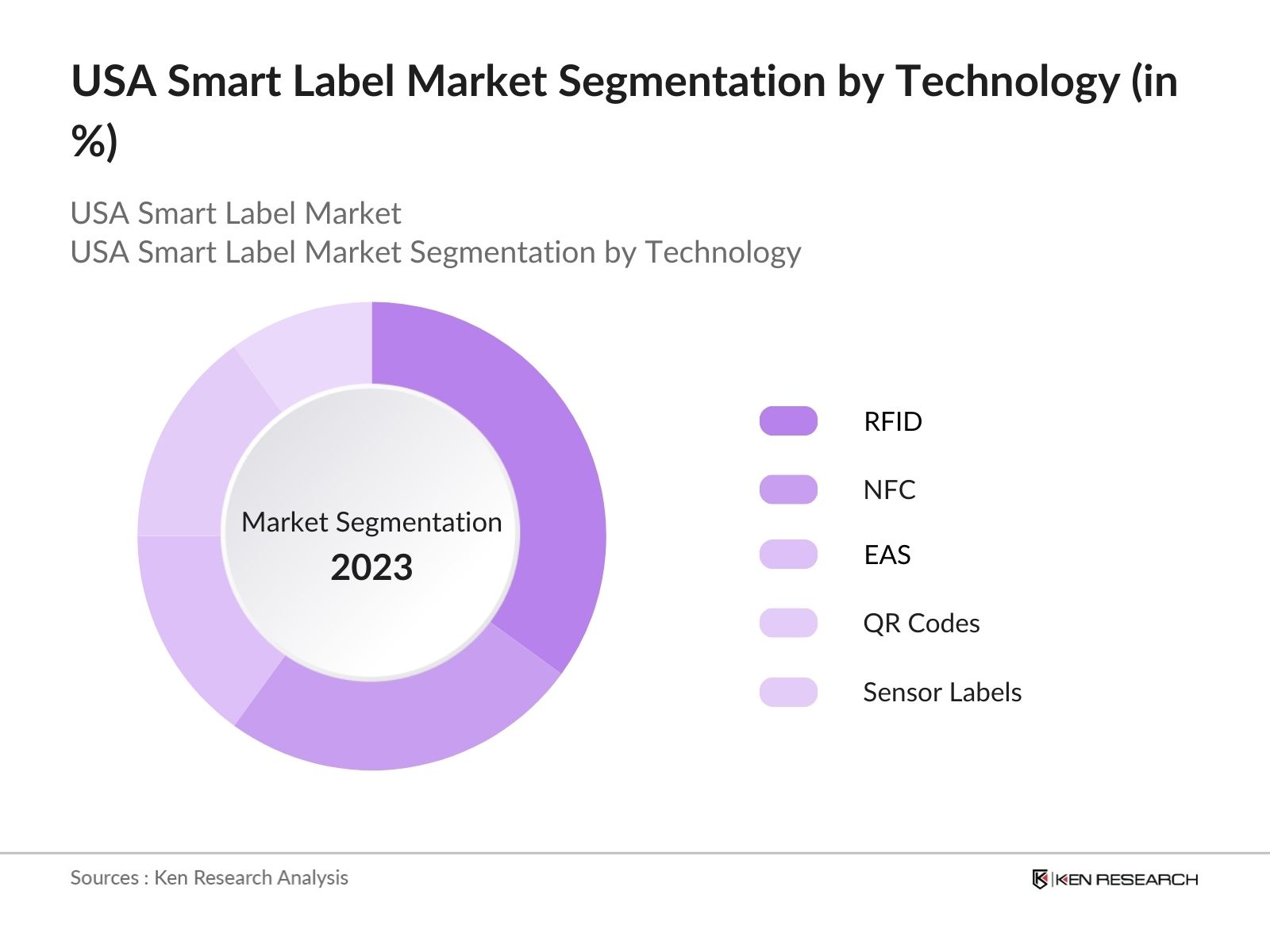
By Technology: The market is segmented by technology into RFID, NFC, EAS (Electronic Article Surveillance), QR Codes, and Sensor Labels. Among these, RFID technology holds a dominant market share due to its widespread adoption in supply chain management and retail industries. RFID technology enables efficient real-time tracking and inventory management, reducing human error and increasing operational efficiency. Large retailers like Walmart and Amazon have integrated RFID into their logistics and warehouse operations, contributing to its dominance in the market.
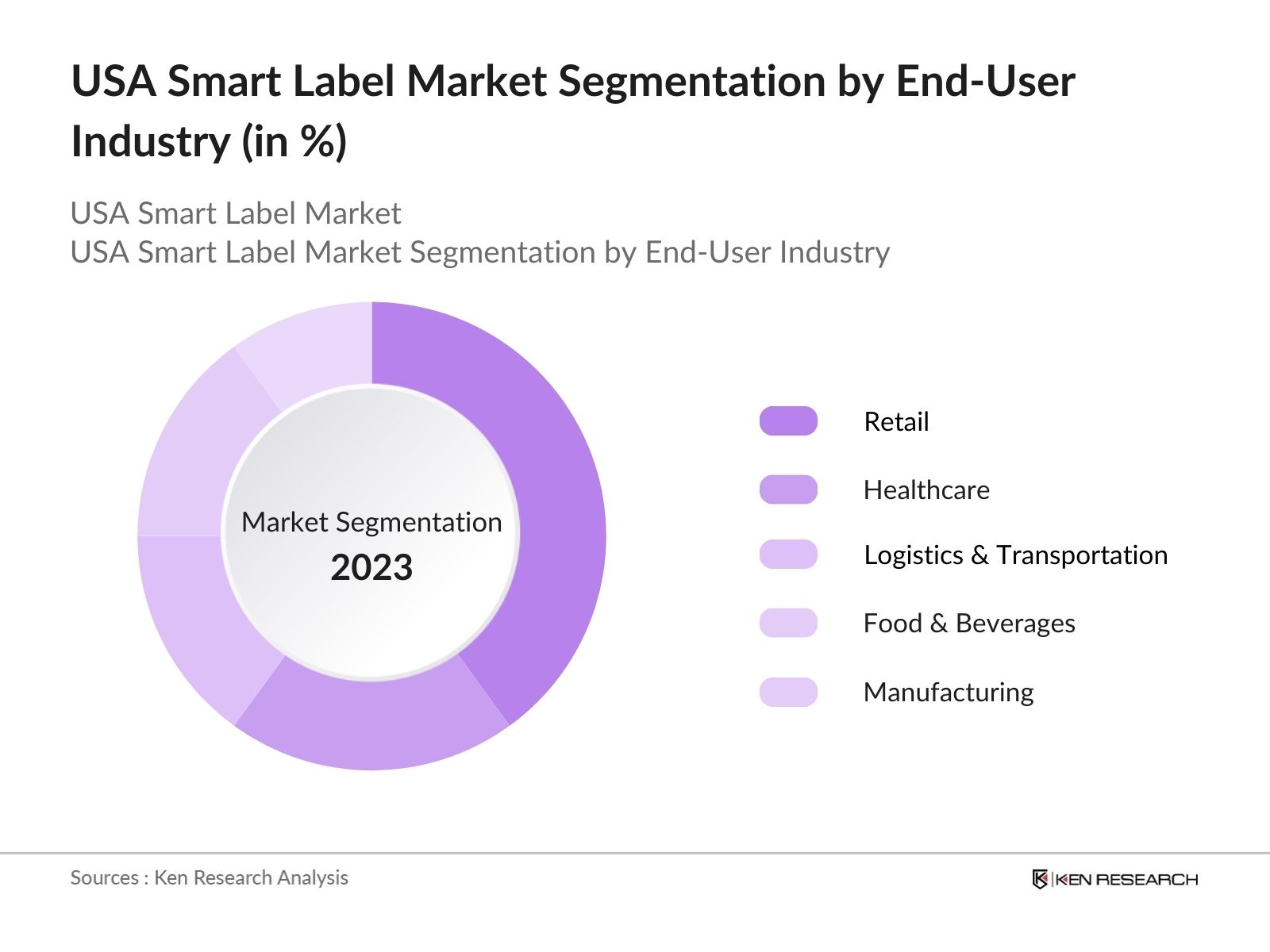
By End-User Industry: The market is further segmented by end-user industries, including Retail, Healthcare, Logistics & Transportation, Food & Beverages, and Manufacturing. The retail sector dominates the market due to its reliance on smart labeling for efficient inventory management, product authentication, and enhanced customer experience. The growth of e-commerce has also driven the retail industry's demand for smart labels, particularly in tracking shipments and ensuring product authenticity.
The market is characterized by several key players who dominate through innovation, strategic partnerships, and technological advancements. Companies like Avery Dennison and Zebra Technologies have set a high standard for product quality and operational efficiency, making them key influencers in the market.
|
Company Name |
Established |
Headquarters |
Technology Focus |
Market Revenue (USD Bn) |
Number of Employees |
Global Presence |
Strategic Partnerships |
R&D Focus |
Customer Segments |
|
Avery Dennison Corporation |
1935 |
California, USA |
|||||||
|
Zebra Technologies |
1969 |
Illinois, USA |
|||||||
|
Smartrac N.V. |
2000 |
Amsterdam, Netherlands |
|||||||
|
Thin Film Electronics ASA |
2005 |
Oslo, Norway |
|||||||
|
Honeywell International |
1906 |
North Carolina, USA |
Over the next five years, the USA Smart Label industry is expected to witness growth driven by advancements in IoT technologies, increased demand for supply chain transparency, and the rise of sustainable labeling solutions.
|
By Technology |
RFID NFC EAS QR Codes Sensor Labels |
|
By End-User Industry |
Retail Healthcare Logistics & Transportation Food & Beverages Manufacturing |
|
By Product Type |
Passive Smart Labels Active Smart Labels |
|
By Application |
Asset Tracking Product Authentication Real-Time Inventory Management Supply Chain Monitoring |
|
By Region |
North East West South |
1.1 Definition and Scope
1.2 Market Taxonomy
1.3 Market Growth Rate
1.4 Market Segmentation Overview
2.1 Historical Market Size
2.2 Year-On-Year Growth Analysis
2.3 Key Market Developments and Milestones
3.1 Growth Drivers (Advanced Supply Chain Management, Increased RFID Adoption, Real-Time Tracking Solutions, Inventory Management Efficiency)
3.2 Market Challenges (High Initial Costs, Security Concerns, Data Privacy, Lack of Standardization)
3.3 Opportunities (Smart Retail Solutions, Integration with IoT, E-commerce Expansion, Sustainability Initiatives)
3.4 Trends (Increased Use of NFC Labels, Augmented Reality Integration, Blockchain Integration for Product Authenticity, Shift Towards Sustainable Smart Labels)
3.5 Government Regulations (Smart Labeling Regulations, RFID Privacy Laws, Environmental Labeling Compliance, Data Security Mandates)
3.6 SWOT Analysis
3.7 Stakeholder Ecosystem (Manufacturers, Retailers, Technology Providers, Regulatory Bodies)
3.8 Porters Five Forces
3.9 Competition Ecosystem
4.1 By Technology (In Value %)
4.1.1 RFID
4.1.2 NFC
4.1.3 EAS (Electronic Article Surveillance)
4.1.4 QR Codes
4.1.5 Sensor Labels
4.2 By End-User Industry (In Value %)
4.2.1 Retail
4.2.2 Healthcare
4.2.3 Logistics & Transportation
4.2.4 Food & Beverages
4.2.5 Manufacturing
4.3 By Product Type (In Value %)
4.3.1 Passive Smart Labels
4.3.2 Active Smart Labels
4.4 By Application (In Value %)
4.4.1 Asset Tracking
4.4.2 Product Authentication
4.4.3 Real-Time Inventory Management
4.4.4 Supply Chain Monitoring
4.5 By Region (In Value %)
4.5.1 North East
4.5.2 Midwest
4.5.3 West
4.5.4 South
5.1 Detailed Profiles of Major Companies
5.1.1 Avery Dennison Corporation
5.1.2 Zebra Technologies Corporation
5.1.3 Sato Holdings Corporation
5.1.4 Checkpoint Systems Inc.
5.1.5 Smartrac N.V.
5.1.6 Thin Film Electronics ASA
5.1.7 Alien Technology
5.1.8 CCL Industries Inc.
5.1.9 Honeywell International Inc.
5.1.10 William Frick & Company
5.1.11 Invengo Information Technology Co. Ltd.
5.1.12 Barcodes Inc.
5.1.13 Rako Security-Label GmbH
5.1.14 Tadbik Ltd.
5.1.15 Confidex Ltd.
5.2 Cross Comparison Parameters (Number of Employees, Headquarters, Inception Year, Revenue, Technology Focus, Market Share, Partnerships, Global Footprint)
5.3 Market Share Analysis
5.4 Strategic Initiatives (New Product Launches, Partnerships, Mergers & Acquisitions, Technological Innovations)
5.5 Investment Analysis
5.6 Government Grants and Subsidies
5.7 Private Equity and Venture Capital Funding
5.8 Research & Development Focus
6.1 RFID Labeling Regulations
6.2 Data Privacy Regulations
6.3 Compliance Standards for Food & Beverage Labeling
6.4 Environmental Standards for Smart Labels
7.1 Future Market Size Projections
7.2 Key Factors Driving Future Market Growth
8.1 By Technology (In Value %)
8.2 By End-User Industry (In Value %)
8.3 By Product Type (In Value %)
8.4 By Application (In Value %)
8.5 By Region (In Value %)
9.1 TAM/SAM/SOM Analysis
9.2 Consumer Behavior Analysis
9.3 Go-to-Market Strategies
9.4 White Space Opportunity Analysis
The initial phase involves identifying the critical factors influencing the USA Smart Label Market. Extensive desk research was conducted, using both secondary data and proprietary databases to gather industry-level information. Key variables such as technology adoption rates, regulatory factors, and consumer demand were identified as primary drivers.
In this step, historical data for the USA Smart Label market was compiled and analyzed, including penetration rates in various industries, technological trends, and revenue data. The analysis focused on understanding the market's growth trajectory, identifying key drivers and challenges, and constructing an accurate market model.
Market hypotheses were validated through interviews with industry experts, including RFID manufacturers, retail executives, and healthcare professionals. These consultations provided critical insights into operational efficiencies and market trends, helping to refine the market data and projections.
The final step involved synthesizing the research findings and engaging with multiple stakeholders, including retailers and healthcare providers, to validate the data. This approach ensured that the market analysis is comprehensive, reliable, and accurately reflects the current market conditions.
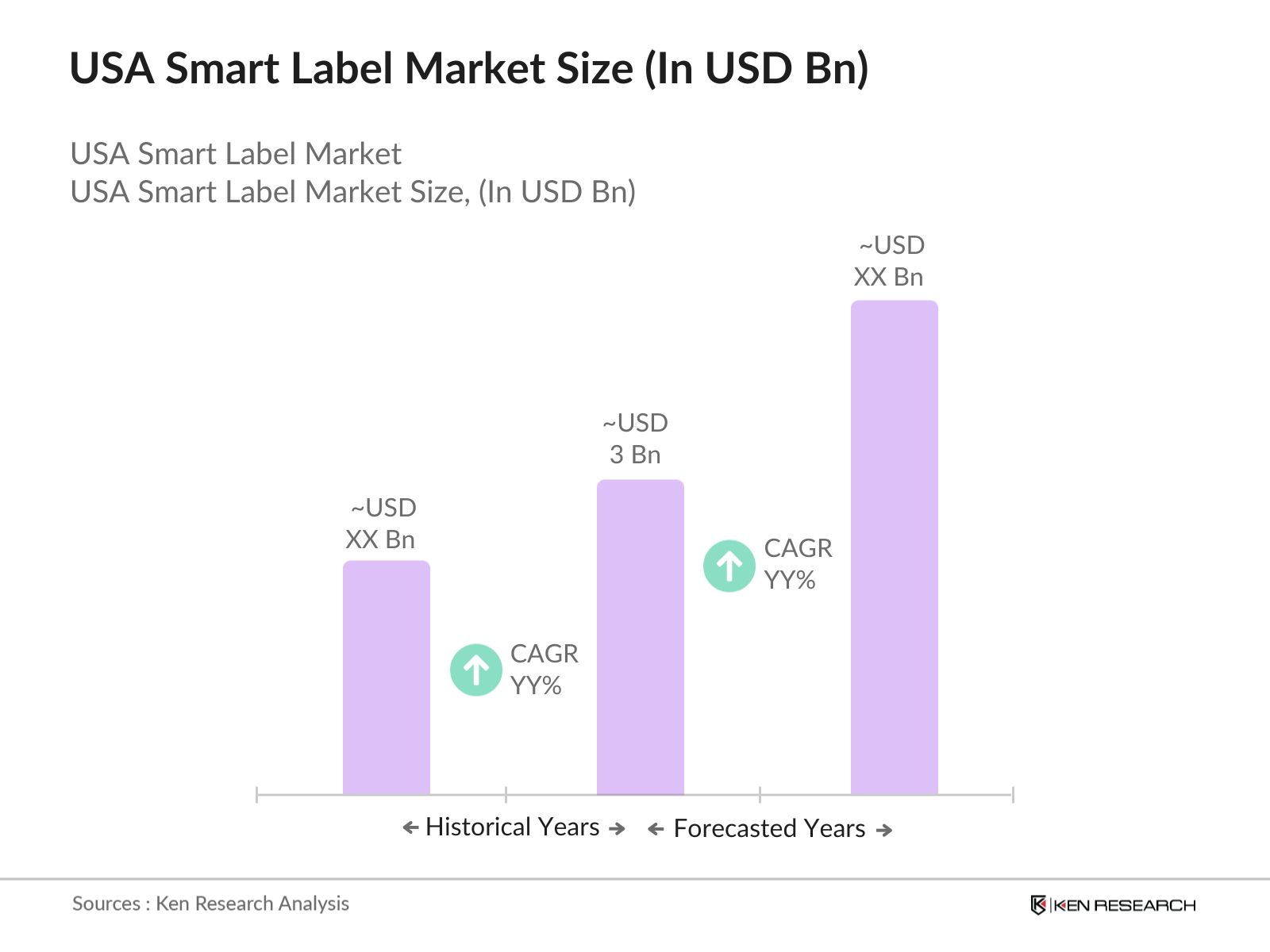
The USA Smart Label market is valued at USD 3 billion, driven by increased adoption of RFID technology and demand for real-time tracking solutions in sectors like retail and logistics.
Challenges in the USA Smart Label market include the high initial cost of implementing smart label technologies, concerns over data privacy, and the need for standardized regulations across industries.
Key players in the USA Smart Label market include Avery Dennison, Zebra Technologies, Smartrac N.V., Thin Film Electronics, and Honeywell International, all of whom dominate through technological innovation and strategic partnerships.
Growth drivers in the USA Smart Label market include advancements in IoT technologies, increasing consumer demand for product transparency, and the need for efficient inventory management in e-commerce and retail sectors.
The retail industry holds a dominant position due to the widespread use of smart labels for inventory management and product authentication. The healthcare and logistics industries are also significant contributors to market demand.

What makes us stand out is that our consultants follows Robust, Refine and Result (RRR) methodology. i.e. Robust for clear definitions, approaches and sanity checking, Refine for differentiating respondents facts and opinions and Result for presenting data with story

We have set a benchmark in the industry by offering our clients with syndicated and customized market research reports featuring coverage of entire market as well as meticulous research and analyst insights.

While we don't replace traditional research, we flip the method upside down. Our dual approach of Top Bottom & Bottom Top ensures quality deliverable by not just verifying company fundamentals but also looking at the sector and macroeconomic factors.

With one step in the future, our research team constantly tries to show you the bigger picture. We help with some of the tough questions you may encounter along the way: How is the industry positioned? Best marketing channel? KPI's of competitors? By aligning every element, we help maximize success.

Our report gives you instant access to the answers and sources that other companies might choose to hide. We elaborate each steps of research methodology we have used and showcase you the sample size to earn your trust.

If you need any support, we are here! We pride ourselves on universe strength, data quality, and quick, friendly, and professional service.