
USA Sneakers Market Outlook to 2030
Region:United States
Author(s):Yogita Sahu
Product Code:KROD8562
Region:United States
Author(s):Yogita Sahu
Product Code:KROD8562
December 2024
82
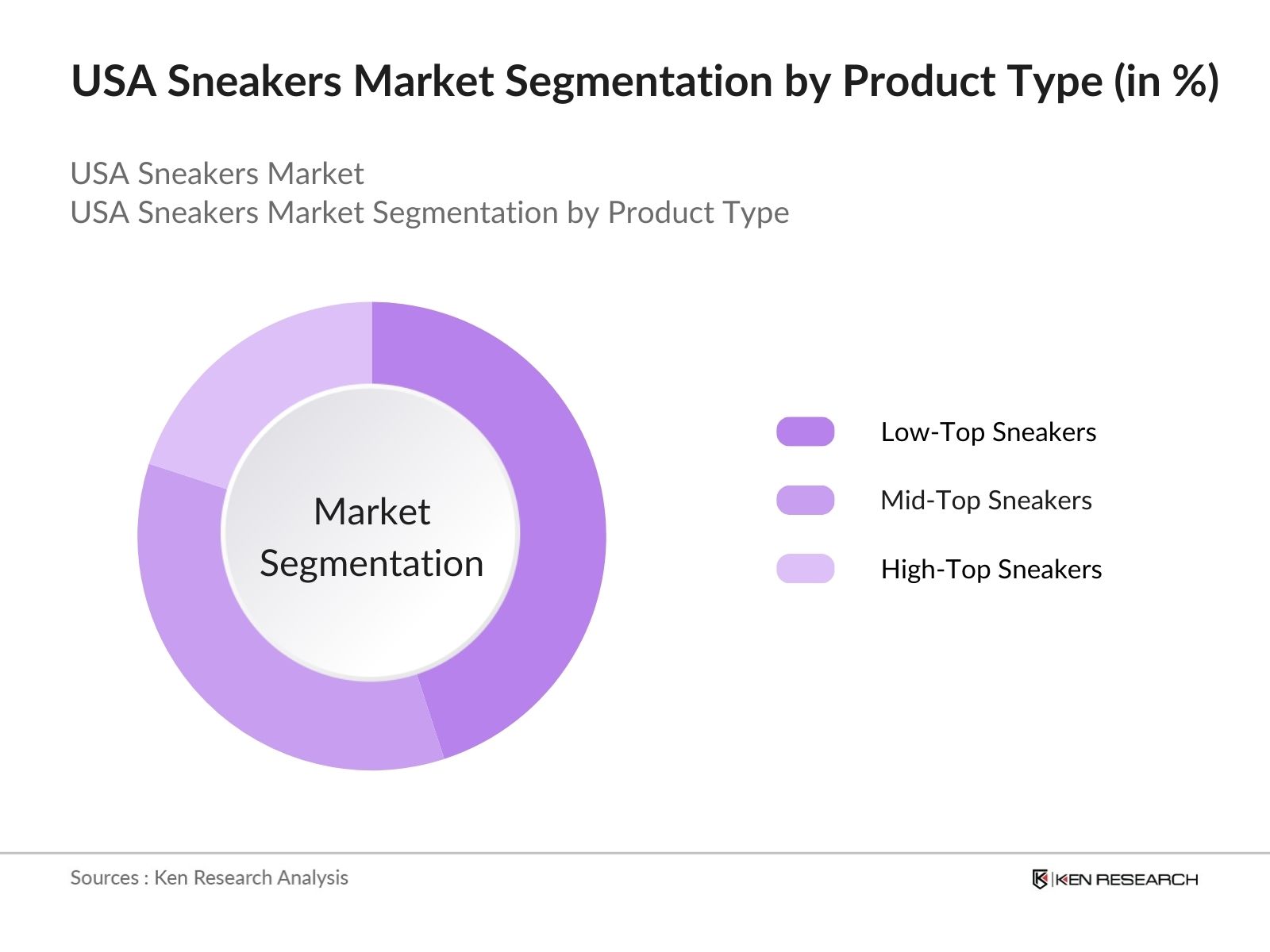
By Product Type: The market is segmented by product type into low-top sneakers, mid-top sneakers, and high-top sneakers. Recently, low-top sneakers have a dominant market share under the segmentation by product type. This is due to their versatility, lightweight design, and comfort, which cater to both fashion and functionality. The demand is especially high among basketball players and athletes, as the design allows for enhanced mobility and flexibility.
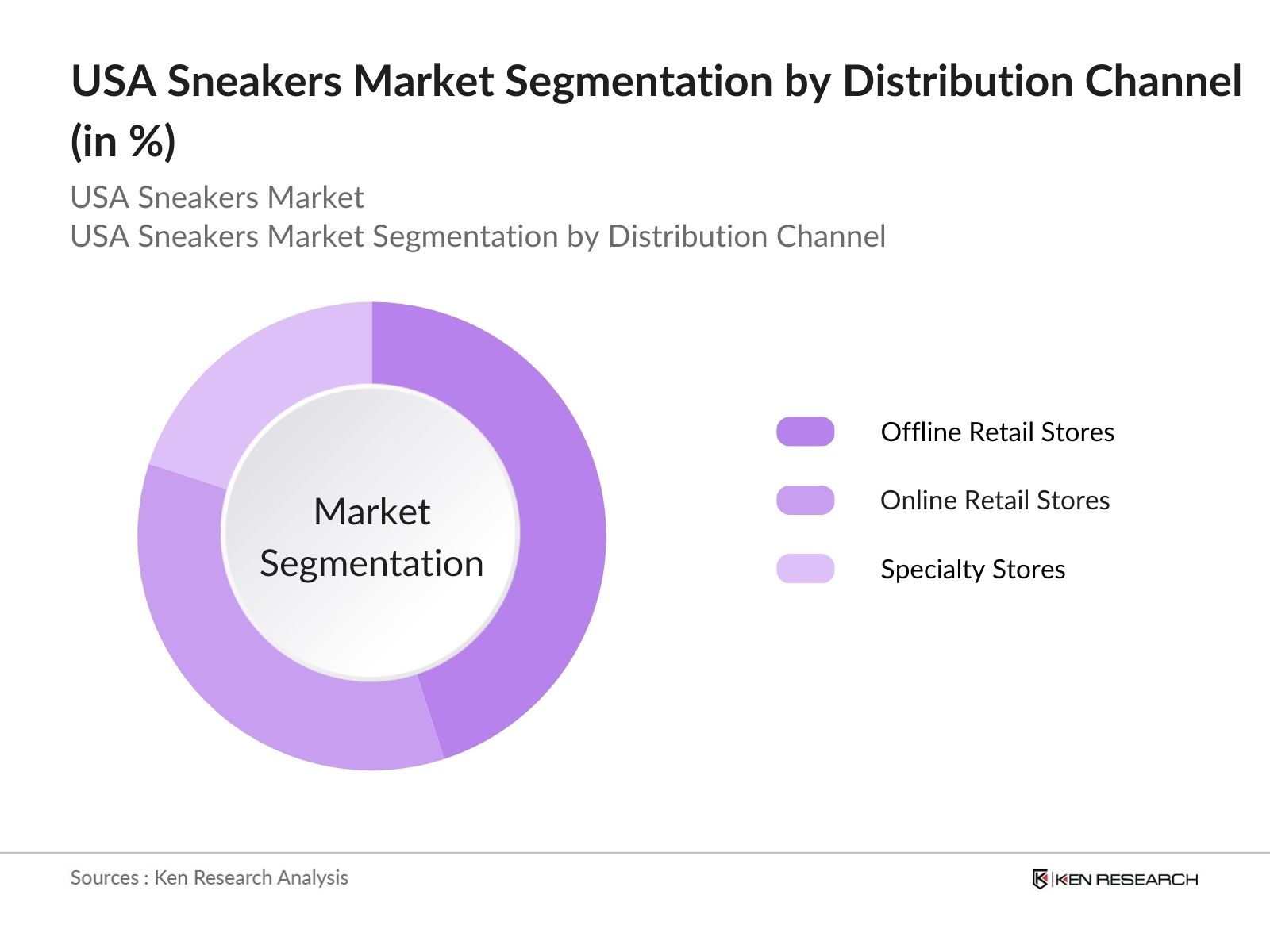
By Distribution Channel: The market is segmented by distribution channel into offline retail stores, online retail stores, and specialty stores. Offline retail stores continue to dominate the market share due to the tactile shopping experience they offer, allowing customers to try on and compare different sneakers. Additionally, physical stores often provide exclusive in-store promotions and brand displays, attracting more consumers. However, online retail is catching up, driven by convenience and exclusive online offers.
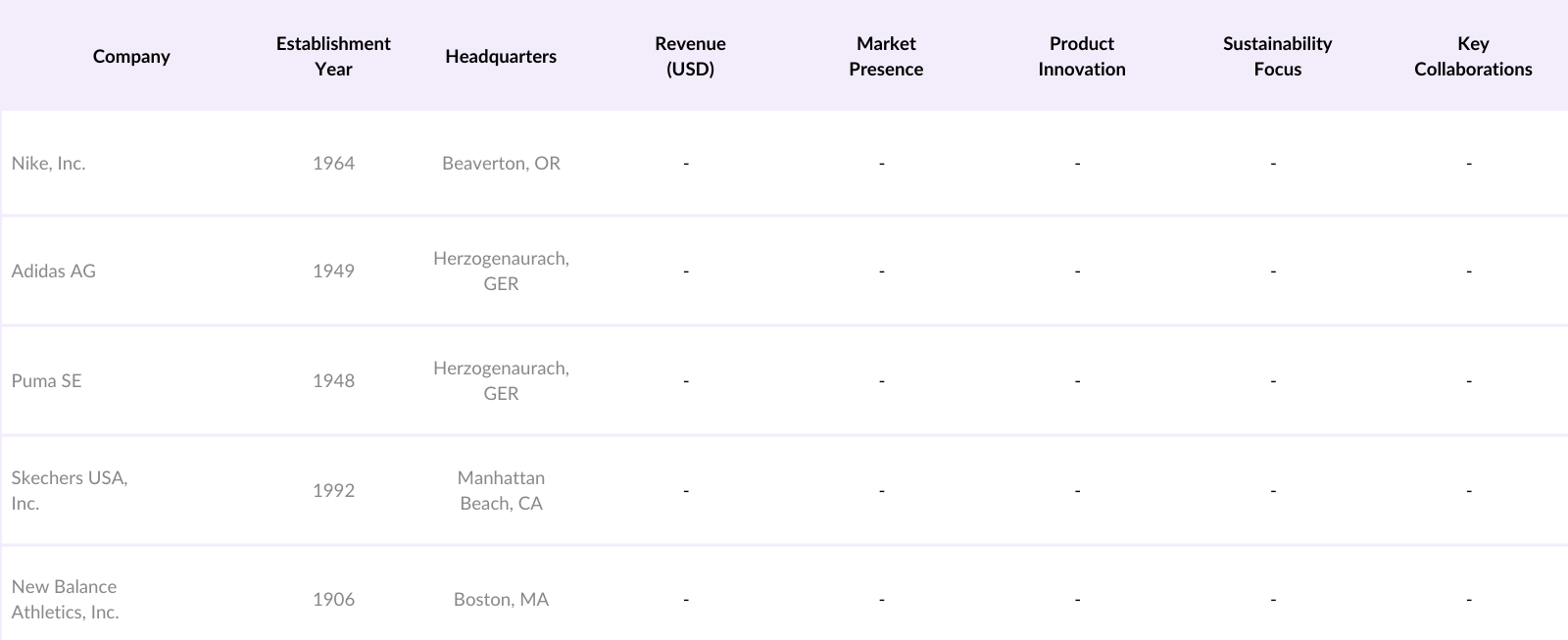
The market is dominated by global giants, with key players investing heavily in research and development, sustainability initiatives, and collaborations with influencers. The market is highly competitive, with each player aiming to capture market share through innovation and strategic partnerships.
Over the next five years, the USA sneakers industry is expected to show growth, driven by increasing demand for sustainable and technologically advanced footwear. Key trends such as customization, smart sneakers, and eco-friendly materials are likely to dominate the market.
|
By Product Type |
Low-Top Sneakers |
|
High-Top Sneakers |
|
|
Performance Sneakers |
|
|
By End-User |
Men |
|
Women |
|
|
Kids |
|
|
By Pricing |
Mass |
|
Premium |
|
|
By Distribution Channel |
Offline Retail |
|
Online Retail |
|
|
Specialty Stores |
|
|
By Region |
North |
|
East |
|
|
West |
|
|
South |
1.1. Definition and Scope
1.2. Market Taxonomy
1.3. Market Growth Rate
1.4. Market Segmentation Overview
2.1. Historical Market Size
2.2. Year-On-Year Growth Analysis
2.3. Key Market Developments and Milestones
3.1. Growth Drivers (Product Innovation, Premiumization, E-commerce Penetration, Environmental Sustainability)
3.2. Market Challenges (Supply Chain Constraints, Regulatory Compliance, Consumer Price Sensitivity)
3.3. Opportunities (Technological Advancements, Fashion Influences, Celebrity Collaborations)
3.4. Trends (Customization, Smart Sneakers, Sustainable Materials)
3.5. Regulatory Framework (Health and Safety Standards, Environmental Regulations, Trade Policies)
3.6. SWOT Analysis
3.7. Stakeholder Ecosystem (Manufacturers, Distributors, Retailers, Influencers)
3.8. Porters Five Forces (Competitive Rivalry, Buyer Power, Supplier Power, Threat of Substitutes, Barriers to Entry)
3.9. Competition Ecosystem (Online vs. Offline Retailers, Direct-to-Consumer Brands)
4.1. By Product Type (Low-Top Sneakers, High-Top Sneakers, Performance Sneakers)
4.2. By End-User (Men, Women, Kids)
4.3. By Pricing (Mass, Premium)
4.4. By Distribution Channel (Offline Retail, Online Retail, Specialty Stores)
4.5. By Region (North,East,West,South)
5.1. Detailed Profiles of Major Companies
5.1.1. Nike, Inc.
5.1.2. Adidas AG
5.1.3. PUMA SE
5.1.4. New Balance Athletics, Inc.
5.1.5. ASICS Corporation
5.1.6. Skechers U.S.A., Inc.
5.1.7. Under Armour, Inc.
5.1.8. FILA Luxembourg, S.a.r.l.
5.1.9. Reebok International Limited
5.1.10. Converse (Nike)
5.1.11. Vans (VF Corporation)
5.1.12. K-Swiss
5.1.13. Merrell (Wolverine Worldwide)
5.1.14. KEEN Footwear
5.1.15. Vibram
5.2. Cross Comparison Parameters (No. of Employees, Headquarters, Revenue, Inception Year, Product Innovation, Market Reach, Sustainability Initiatives, Collaborations)
5.3. Market Share Analysis
5.4. Strategic Initiatives (Sustainability Efforts, Collaborations with Influencers)
5.5. Mergers and Acquisitions
5.6. Investment Analysis (Venture Capital, Private Equity, R&D Funding)
5.7. Government Grants and Subsidies
6.1. Environmental Standards (Sustainability, Carbon Footprint)
6.2. Trade and Import Compliance (Tariffs, Trade Wars)
6.3. Safety Standards (Material Quality, Health Regulations)
7.1. Future Market Size Projections
7.2. Key Factors Driving Future Market Growth
8.1. By Product Type (Sustainable Sneakers, Smart Sneakers)
8.2. By End-User (Fashion-Driven, Performance-Driven)
8.3. By Distribution Channel (Direct-to-Consumer, Hybrid Retailing)
8.4. By Pricing (Ultra-Premium, Affordable Sustainability)
8.5. By Region (North, East, West, South)
9.1. TAM/SAM/SOM Analysis
9.2. Customer Cohort Analysis (Sports Enthusiasts, Fashion-Forward Consumers)
9.3. Marketing Initiatives (Targeted Digital Campaigns, Influencer Partnerships)
9.4. White Space Opportunity Analysis (Sustainable Fashion, Emerging Materials)
Disclaimer Contact UsThe first step involves mapping the entire ecosystem of stakeholders within the USA Sneakers Market. Comprehensive desk research and analysis of proprietary databases help in identifying the most critical variables impacting market dynamics.
This step compiles and analyzes historical data regarding product demand, market penetration, and revenue generation. Key metrics such as market penetration ratios and brand visibility are evaluated to construct an accurate market landscape.
Expert consultations with major sneaker manufacturers and retailers help validate market hypotheses and provide operational insights. These interviews are critical for refining market data and ensuring its accuracy.
The final step involves synthesizing the insights collected from multiple stakeholders to provide a cohesive and validated analysis of the USA Sneakers Market, delivering a comprehensive report backed by reliable data sources.
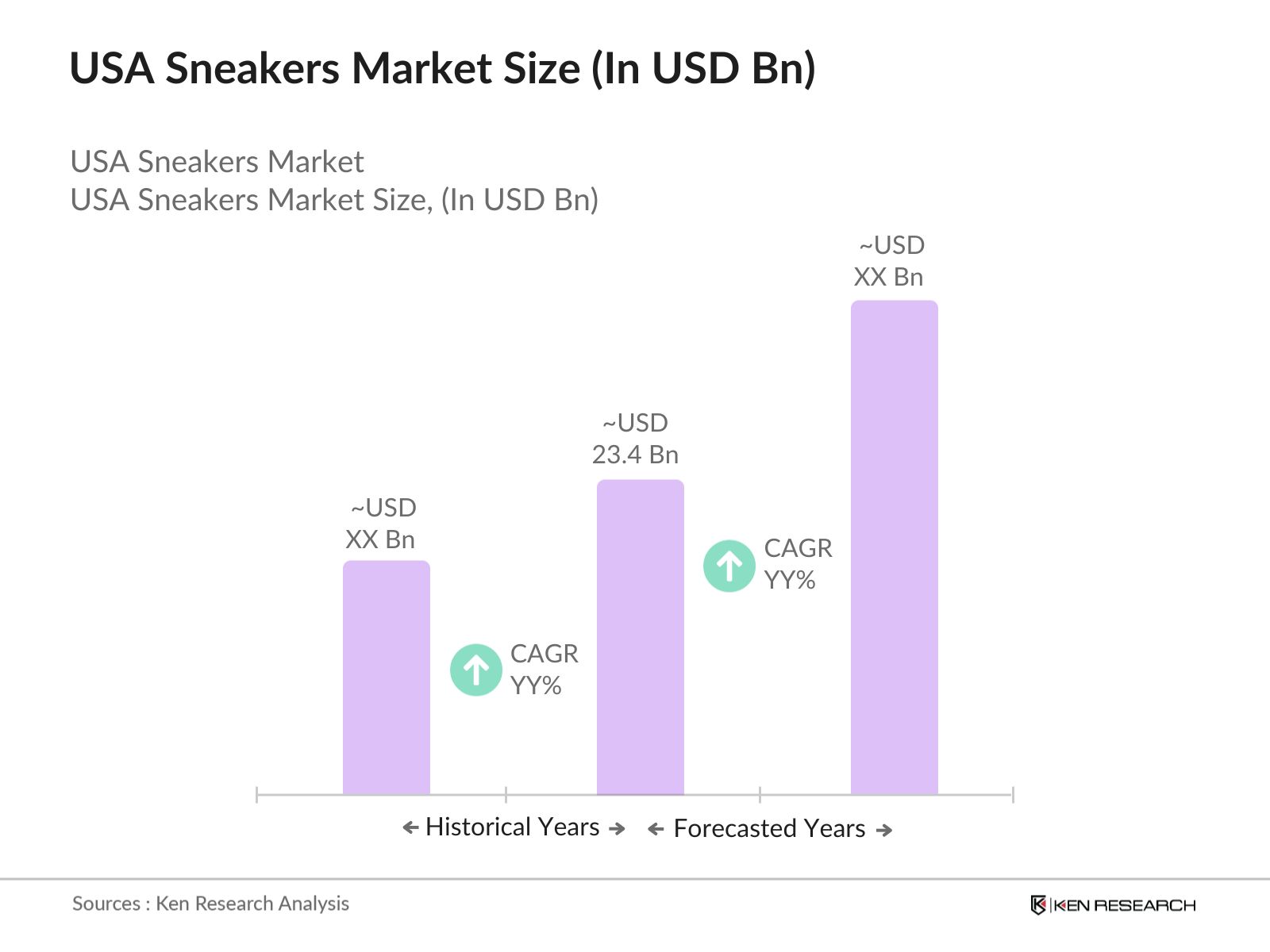
The USA sneakers market is valued at USD 23.4 billion, primarily driven by the increasing consumer demand for athletic and casual footwear with innovative features.
The major challenges in the USA sneakers market include supply chain constraints, rising raw material costs, and competition from counterfeit products, which impact profitability and brand integrity.
The key players in the USA sneakers market dominating the market include Nike, Adidas, Puma, New Balance, and Skechers, all leveraging their strong distribution networks and innovation capabilities.
The USA sneakers market is driven by fashion trends, technological innovations in footwear, increasing consumer interest in sustainability, and celebrity endorsements, which boost brand visibility.
Cities like New York, Los Angeles, and Miami dominate the USA sneakers market due to their large population, fashion-forward consumers, and robust retail infrastructure, making them key hubs for sneaker culture.

What makes us stand out is that our consultants follows Robust, Refine and Result (RRR) methodology. i.e. Robust for clear definitions, approaches and sanity checking, Refine for differentiating respondents facts and opinions and Result for presenting data with story

We have set a benchmark in the industry by offering our clients with syndicated and customized market research reports featuring coverage of entire market as well as meticulous research and analyst insights.

While we don't replace traditional research, we flip the method upside down. Our dual approach of Top Bottom & Bottom Top ensures quality deliverable by not just verifying company fundamentals but also looking at the sector and macroeconomic factors.

With one step in the future, our research team constantly tries to show you the bigger picture. We help with some of the tough questions you may encounter along the way: How is the industry positioned? Best marketing channel? KPI's of competitors? By aligning every element, we help maximize success.

Our report gives you instant access to the answers and sources that other companies might choose to hide. We elaborate each steps of research methodology we have used and showcase you the sample size to earn your trust.

If you need any support, we are here! We pride ourselves on universe strength, data quality, and quick, friendly, and professional service.