
USA Social and Emotional Learning Market Outlook to 2030
Region:North America
Author(s):Vijay Kumar
Product Code:KROD3633
October 2024
98
About the Report
USA Social and Emotional Learning (SEL) Market Overview
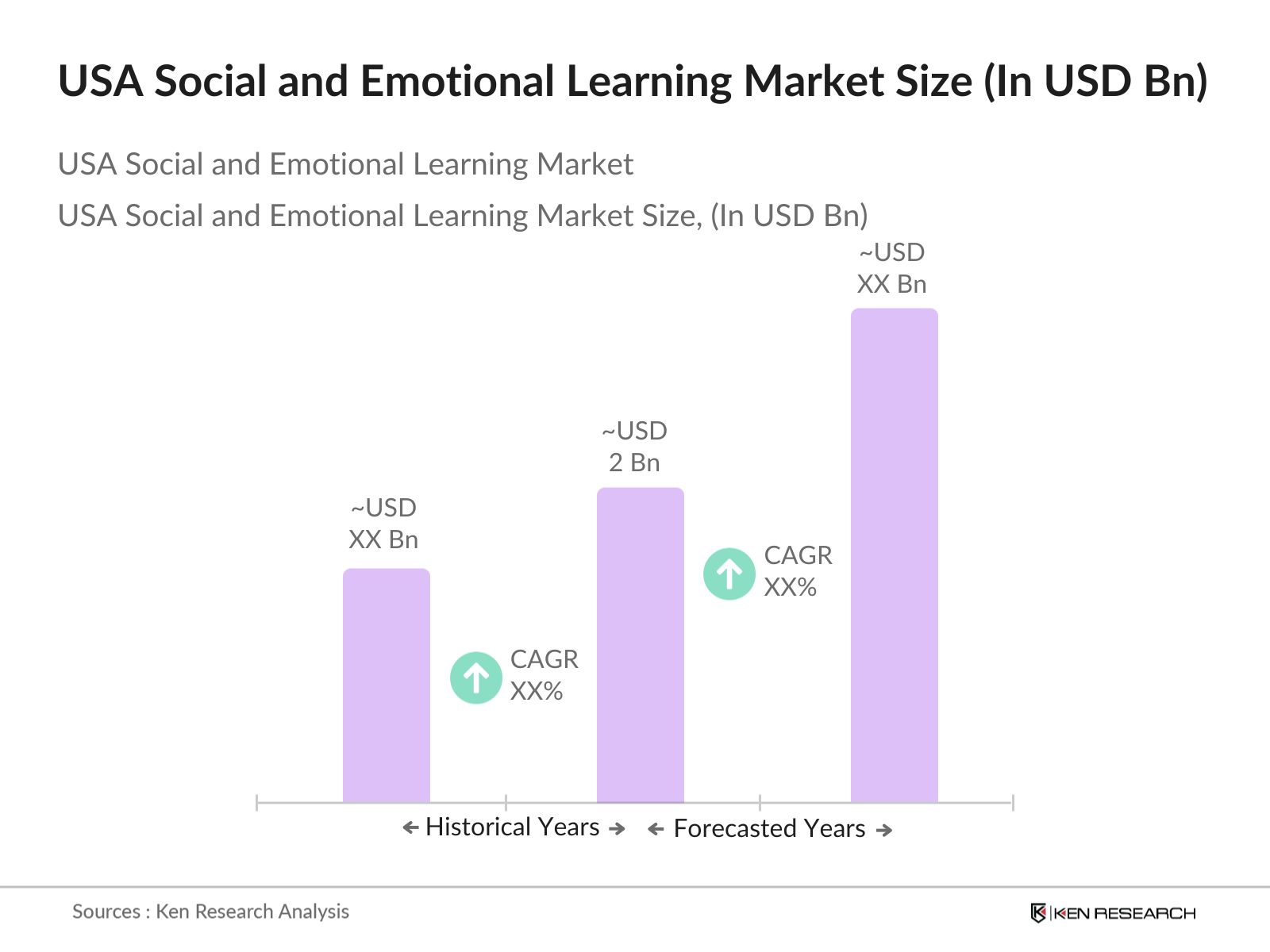
- The USA Social and Emotional Learning (SEL) market is valued at USD 2 billion, reflecting strong growth over the past few years driven by increased focus on mental health and well-being among students, as well as federal and state-level funding to support SEL programs. The demand for SEL tools has surged due to the growing recognition of SEL's impact on academic performance, emotional development, and behavioral outcomes in students. Additionally, advancements in digital platforms and hybrid learning models have further facilitated the adoption of SEL solutions across the country.
- Dominant regions in the USA SEL market include California, New York, and Texas, primarily due to their large student populations, progressive educational policies, and higher availability of funding for SEL initiatives. These states have established comprehensive SEL standards and frameworks, making them ideal locations for widespread implementation. The presence of key SEL organizations such as CASEL and partnerships with educational institutions in these states further solidifies their position as leaders in the market.
- Several states have developed specific SEL competencies and benchmarks aligned with ESSA guidelines. States such as Illinois, New York, and Massachusetts have introduced SEL standards for K-12 education, focusing on areas like self-awareness, social awareness, and responsible decision-making. These standards guide curriculum development and teacher training, ensuring a structured approach to SEL integration. As of 2024, more than 20 states have established SEL benchmarks, with ongoing efforts to standardize these frameworks nationwide.
USA Social and Emotional Learning (SEL) Market Segmentation
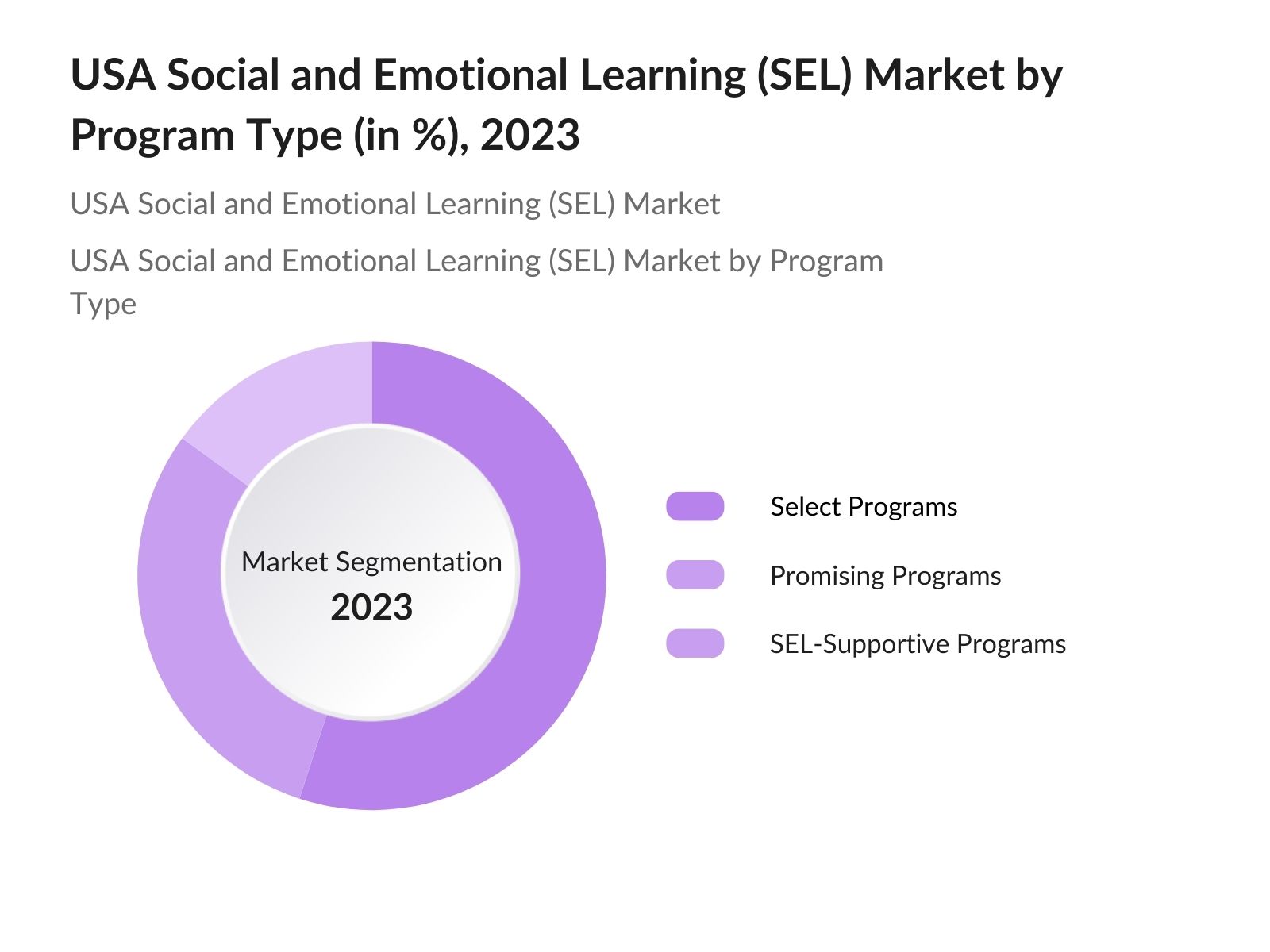
By Program Type: The market is segmented by program type into Select Programs, Promising Programs, and SEL-Supportive Programs. Select Programs dominate this segment due to their comprehensive nature, robust evidence base, and high adoption rates by schools seeking proven outcomes. These programs, which meet or exceed all criteria set by CASEL, are preferred by educational institutions looking for sustainable solutions with long-term impact on student development.
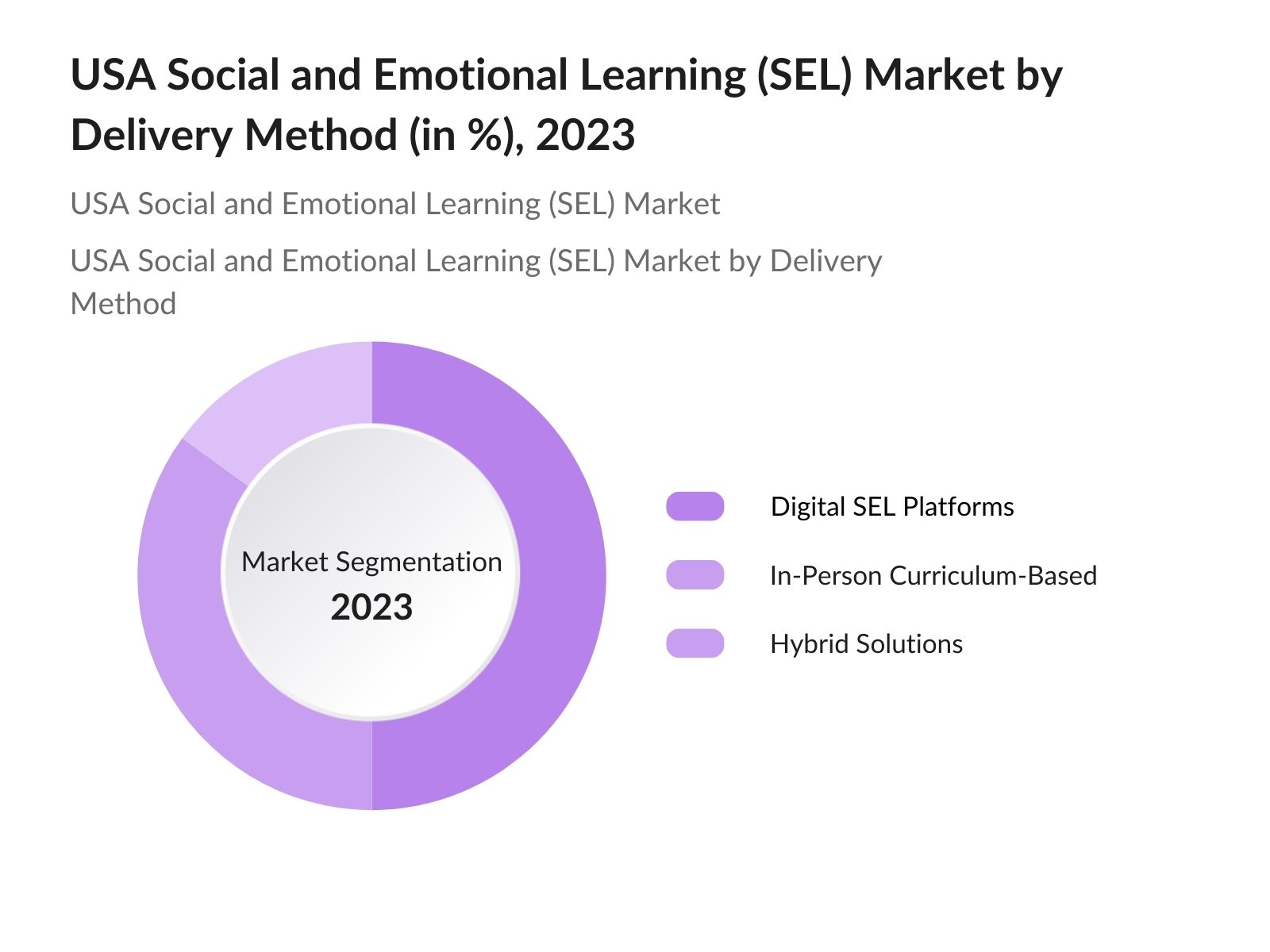
By Delivery Method: The market is segmented by delivery method into Digital SEL Platforms, In-Person Curriculum-Based Programs, and Hybrid Solutions. Digital SEL Platforms are currently the dominant sub-segment due to the shift towards online and hybrid learning models during and post-pandemic. The flexibility offered by digital platforms allows for integration into various learning environments, making them the preferred choice for many schools and districts.
USA Social and Emotional Learning (SEL) Market Competitive Landscape
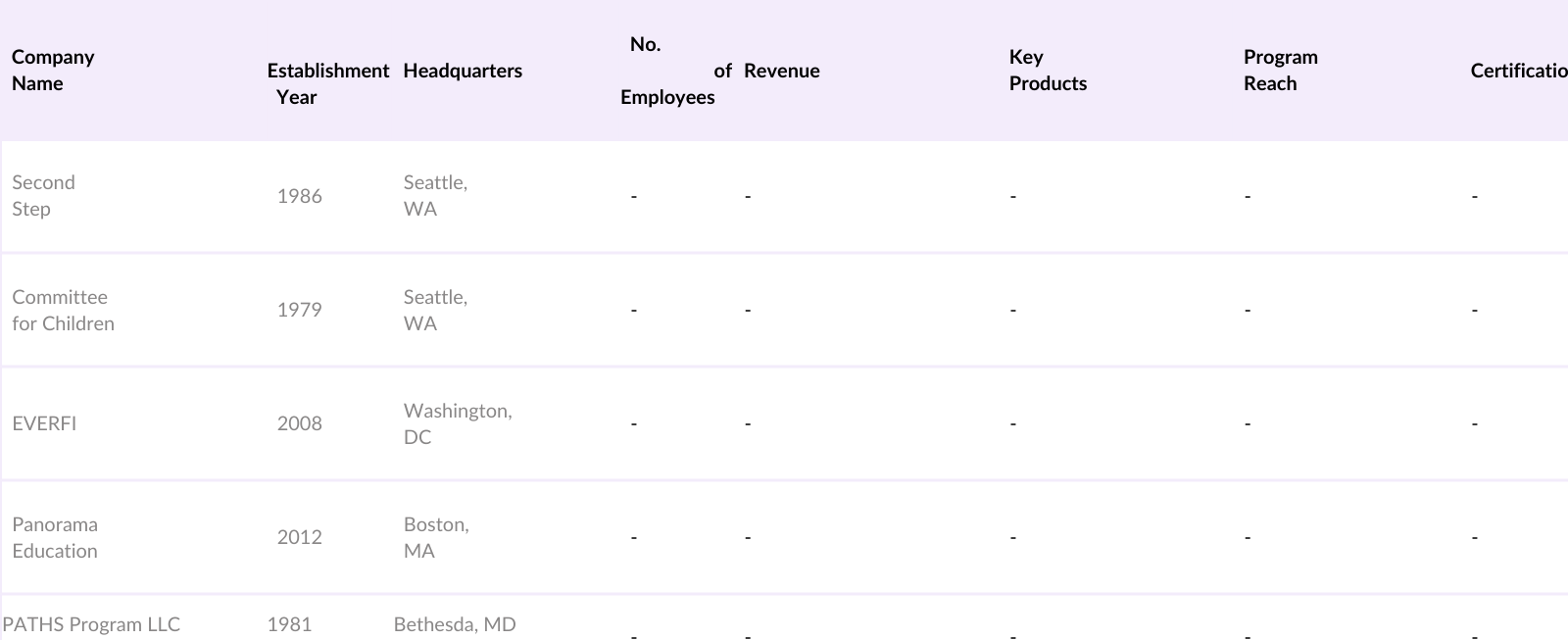
The USA Social and Emotional Learning market is characterized by a mix of established players and emerging companies focusing on innovative solutions. Major players include Second Step, Committee for Children, and Panorama Education. These companies have maintained their competitive edge through strong brand presence, extensive research-backed programs, and partnerships with educational institutions across the country.
USA Social and Emotional Learning (SEL) Industry Analysis
Growth Drivers
- Adoption of SEL in K-12 Curriculum: The adoption of social and emotional learning (SEL) in the K-12 curriculum has gained traction across the United States. SEL is now a part of the official curriculum in over 20 states, influencing around 23 million students nationwide. State-level mandates and district-wide initiatives have contributed to this expansion. For example, Illinois was the first state to implement comprehensive SEL standards, followed by others like New York and Massachusetts.
- Increased Emphasis on Mental Health and Trauma-Sensitive Learning: The USA Department of Education has noted a growing emphasis on mental health and trauma-sensitive learning within the K-12 system. As of 2024, federal and state funding has allocated over $2 billion to integrate mental health services into schools, with a focus on addressing the impacts of trauma and promoting emotional well-being. This includes expanding mental health professionals in schools and increasing support for programs that incorporate trauma-sensitive learning approaches.
- Growing Demand for Teacher Professional Development: There is an increasing demand for professional development among educators to effectively implement SEL in classrooms. According to recent data, more than 70% of teachers have expressed a need for additional training in SEL competencies. States like Texas and Ohio have responded by allocating specific funding for SEL professional development, which includes workshops, coaching, and certification programs.
Market Challenges
- Policy Resistance and Regulatory Barriers: Despite growing support, SEL programs face policy resistance in several states due to concerns over curriculum content and parental opposition. As of 2024, legislative measures in states like Florida and Texas have restricted the incorporation of SEL topics perceived to be outside traditional academic subjects. Approximately 15 states have passed or proposed bills that limit or scrutinize SEL curriculum implementation, creating fragmented adoption across the nation.
- Implementation Complexity Across Districts: The implementation of SEL varies significantly across school districts, influenced by factors such as district size, demographic diversity, and local policy support. Larger districts, serving over 500,000 students, report challenges in standardizing SEL practices, with implementation costs and training being cited as primary barriers. Additionally, rural districts, which serve about 30% of K-12 students, often struggle with resource allocation and lack of trained personnel for effective SEL integration.
USA Social and Emotional Learning (SEL) Market Future Outlook
Over the next five years, the USA Social and Emotional Learning market is expected to continue its growth trajectory, driven by increased investment in educational programs, expanded SEL standards across states, and rising awareness of SEL's role in holistic student development. Key factors contributing to this growth include further digitalization of SEL tools, integration with personalized learning models, and enhanced focus on adult SEL competencies.
Market Opportunities
- Expansion into Underserved Districts: With nearly 15,000 underserved districts in the USA, there is a substantial opportunity for SEL program expansion. Federal grants and partnerships with philanthropic organizations have been directed toward these districts, supporting the introduction of SEL into low-income and rural areas. Targeted initiatives like the USA Department of Educations Project Prevent are expected to extend SEL access to an additional 2 million students in these districts.
- Growing Focus on Equity and Inclusion: There is a rising focus on equity and inclusion within SEL programs. Approximately 60% of new SEL programs introduced in 2023-2024 include specific components addressing diversity, equity, and inclusion (DEI). These programs are designed to create a more inclusive learning environment and address disparities in social-emotional outcomes among students of different racial and socioeconomic backgrounds.
Scope of the Report
|
Program Type |
Select Programs Promising Programs SEL-Supportive Programs |
|
Delivery Method |
Digital SEL Platforms In-Person Curriculum-Based Hybrid Solutions |
|
End-User Segment |
PreK-Elementary School Middle School High School Higher Education Institutions Community Programs and Non-Profit Organizations |
|
Application |
Academic Integration Behavioral Interventions Emotional Well-being Programs Workforce Readiness |
|
Region |
Northeast Midwest South West |
Products
Key Target Audience
Educational Institutions (Schools, Districts)
Government and Regulatory Bodies (USA Department of Education, State Education Departments)
SEL Program Developers
Non-Profit Organizations
Community-Based Organizations
Technology Providers
Investments and Venture Capitalist Firms
Teacher Training Organizations
Companies
Players Mentioned in the Report
Second Step
Committee for Children
EVERFI
Panorama Education
PATHS Program LLC
Rethink Ed
Move This World
Harmony SEL
SEL4US
Aperture Education
Table of Contents
1. USA Social and Emotional Learning (SEL) Market Overview
1.1. Definition and Scope
1.2. Market Taxonomy
1.3. Market Growth Rate (CAGR, Y-o-Y Analysis)
1.4. Market Segmentation Overview
2. USA Social and Emotional Learning Market Size (In USD Billion)
2.1. Historical Market Size
2.2. Year-On-Year Growth Analysis
2.3. Key Market Developments and Milestones
3. USA Social and Emotional Learning Market Analysis
3.1. Growth Drivers
3.1.1. Adoption of SEL in K-12 Curriculum
3.1.2. Increased Emphasis on Mental Health and Trauma-Sensitive Learning
3.1.3. Federal and State Funding Initiatives
3.1.4. Growing Demand for Teacher Professional Development
Market Challenges
3.2.1. Policy Resistance and Regulatory Barriers
3.2.2. Implementation Complexity Across Districts
3.2.3. Insufficient Evidence Base for Some SEL Programs
3.2.4. Limited Resources in Low-Income Districts
Opportunities
3.3.1. Expansion into Underserved Districts
3.3.2. Integration with Digital Learning Platforms
3.3.3. Growing Focus on Equity and Inclusion
3.3.4. Partnerships with Community-Based Organizations
Trends
3.4.1. Personalized SEL Solutions and Digitalization
3.4.2. Emphasis on Adult SEL Competency Development
3.4.3. Use of Data Analytics for SEL Impact Measurement
3.4.4. Integration with Workforce Readiness Programs
Government Regulations and Policies
3.5.1. Every Student Succeeds Act (ESSA) Standards
3.5.2. State-Level SEL Competencies and Benchmarks
3.5.3. Federal Grants and Incentive Programs
3.5.4. Public-Private Partnerships and Collaborations
SWOT Analysis
3.7. Stakeholder Ecosystem
3.8. Porters Five Forces Analysis
3.9. Competitive Landscape and Ecosystem
4. USA Social and Emotional Learning Market Segmentation
(In Value %)
(In Value %)
(In Value %)
(In Value %)
(In Value %)
5. USA Social and Emotional Learning Market Competitive Analysis
Detailed Profiles of Major Companies
5.1.1. Second Step
5.1.2. Committee for Children
5.1.3. EVERFI
5.1.4. Panorama Education
5.1.5. PATHS Program LLC
5.1.6. Rethink Ed
5.1.7. Move This World
5.1.8. Harmony SEL
5.1.9. SEL4US
5.1.10. Aperture Education
5.1.11. BASE Education
5.1.12. Empowering Education
5.1.13. Playworks
5.1.14. Open Circle
5.1.15. Purpose Prep
(No. of Employees, Headquarters, Inception Year, Revenue, Program Reach, Impact Metrics, Implementation Support, Cultural Adaptation)
6. USA Social and Emotional Learning Market Regulatory Framework
6.1. Educational Standards and Competencies
6.2. Compliance Requirements
6.3. Certification Processes
6.4. Guidelines for Evidence-Based Program Selection
7. USA Social and Emotional Learning Future Market Size (In USD Billion)
7.1. Future Market Size Projections
7.2. Key Factors Driving Future Market Growth
8. USA Social and Emotional Learning Future Market Segmentation
8.1. By Program Type (In Value %)
8.2. By Delivery Method (In Value %)
8.3. By End-User Segment (In Value %)
8.4. By Application (In Value %)
8.5. By Region (In Value %)
9. USA Social and Emotional Learning Market Analysts Recommendations
9.1. TAM/SAM/SOM Analysis
9.2. Customer Cohort Analysis
9.3. Marketing Initiatives
9.4. White Space Opportunity Analysis
Research Methodology
Step 1: Identification of Key Variables
The initial step involves constructing an ecosystem map encompassing all major stakeholders within the USA Social and Emotional Learning market. This step is underpinned by extensive desk research using secondary sources and proprietary databases to gather industry-level information, focusing on market structure and key program criteria.
Step 2: Market Analysis and Construction
In this phase, historical data on SEL market size, program adoption rates, and geographic distribution is compiled and analyzed. This includes assessing market penetration and program effectiveness across different regions, ensuring a reliable estimate of market dynamics.
Step 3: Hypothesis Validation and Expert Consultation
Market hypotheses are validated through direct consultation with industry experts using Computer-Assisted Telephone Interviews (CATIs). This step provides operational insights and helps refine the data gathered in previous steps, ensuring a well-rounded market analysis.
Step 4: Research Synthesis and Final Output
The final step involves synthesizing research findings to produce an accurate and comprehensive analysis of the USA SEL market. This step ensures that the data derived from bottom-up approaches is verified, validated, and aligned with industry trends.
Frequently Asked Questions
01. How big is the USA Social and Emotional Learning Market?
The USA Social and Emotional Learning market is valued at USD 2 billion, driven by increased investment in student well-being programs and support from federal and state-level funding.
02. What are the challenges in the USA Social and Emotional Learning Market?
The USA Social and Emotional Learning market challenges in the market include regulatory barriers, varying standards across states, and the complexity of implementing SEL programs uniformly across diverse educational districts.
03. Who are the major players in the USA Social and Emotional Learning Market?
The USA Social and Emotional Learning market key players in the market include Second Step, Committee for Children, EVERFI, Panorama Education, and PATHS Program LLC, all of which dominate due to their strong research-backed programs and partnerships with educational institutions.
04. What are the growth drivers of the USA Social and Emotional Learning Market?
The USA Social and Emotional Learning market growth drivers include increased emphasis on mental health, a focus on equity and inclusion, integration of SEL with digital learning tools, and the rising adoption of SEL standards across states.
Why Buy From Us?

What makes us stand out is that our consultants follows Robust, Refine and Result (RRR) methodology. i.e. Robust for clear definitions, approaches and sanity checking, Refine for differentiating respondents facts and opinions and Result for presenting data with story

We have set a benchmark in the industry by offering our clients with syndicated and customized market research reports featuring coverage of entire market as well as meticulous research and analyst insights.

While we don't replace traditional research, we flip the method upside down. Our dual approach of Top Bottom & Bottom Top ensures quality deliverable by not just verifying company fundamentals but also looking at the sector and macroeconomic factors.

With one step in the future, our research team constantly tries to show you the bigger picture. We help with some of the tough questions you may encounter along the way: How is the industry positioned? Best marketing channel? KPI's of competitors? By aligning every element, we help maximize success.

Our report gives you instant access to the answers and sources that other companies might choose to hide. We elaborate each steps of research methodology we have used and showcase you the sample size to earn your trust.

If you need any support, we are here! We pride ourselves on universe strength, data quality, and quick, friendly, and professional service.