
USA Soups Market Outlook to 2030
Region:United States
Author(s):Yogita Sahu
Product Code:KROD9229
Region:United States
Author(s):Yogita Sahu
Product Code:KROD9229
November 2024
85

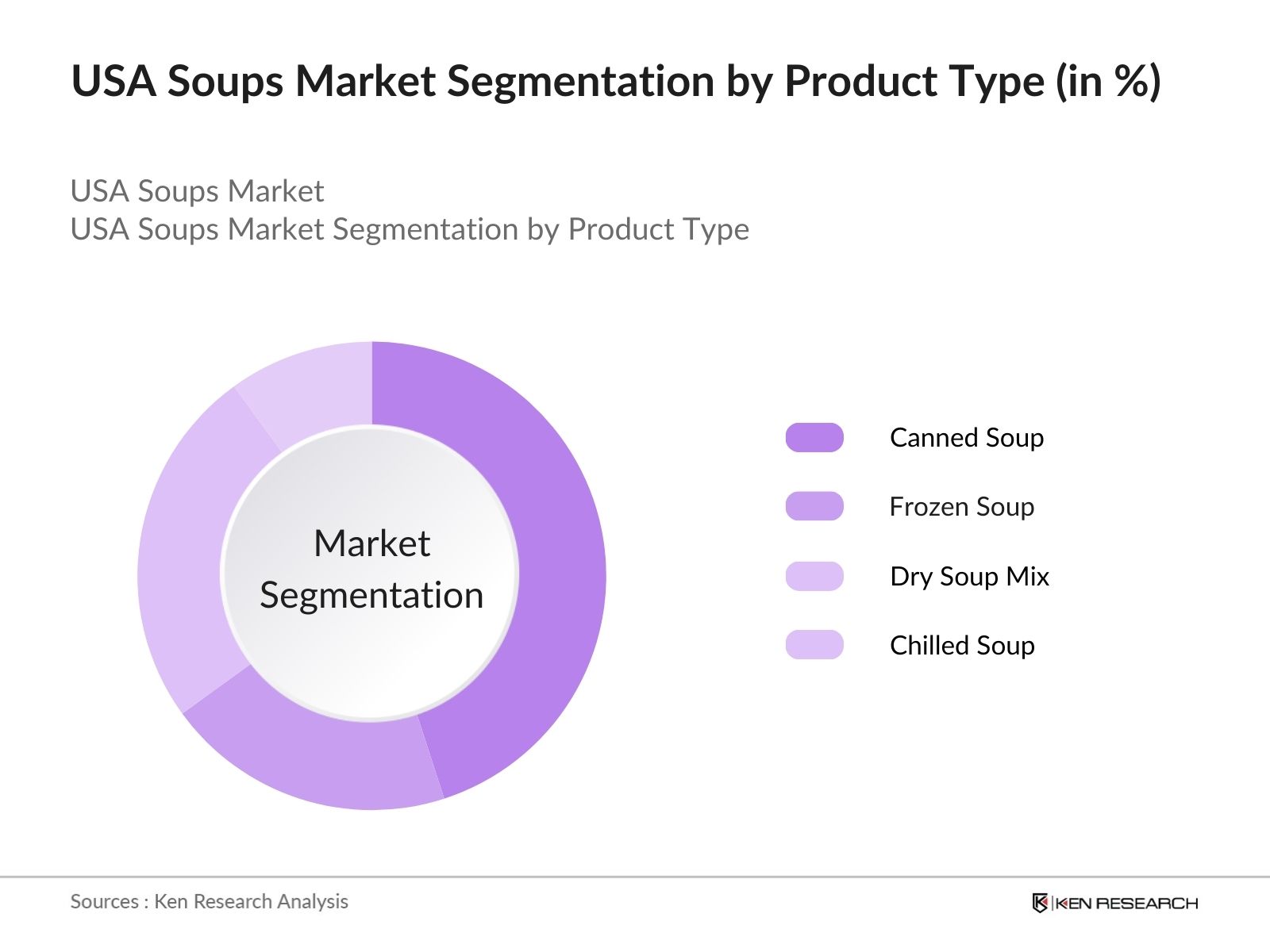
By Product Type: The market is segmented by product type into canned soup, frozen soup, dry soup mix, and chilled soup. Currently, canned soup holds a dominant market share due to its extended shelf life and extensive distribution in both physical stores and online channels. Iconic brands like Campbells and Progresso have built strong consumer loyalty, particularly for canned soups, which are viewed as reliable, long-lasting pantry staples across the USA.
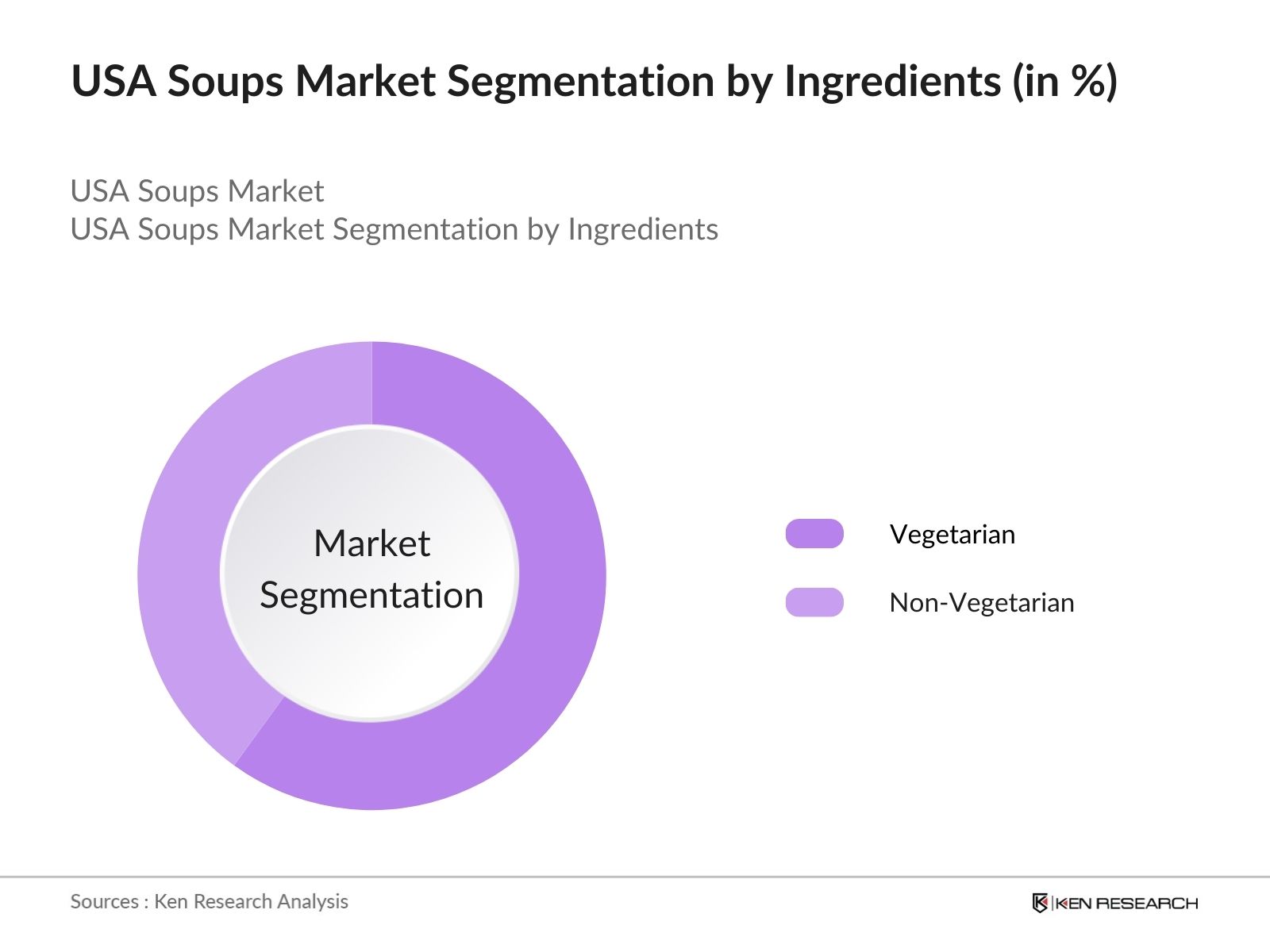
By Ingredients: The market is further segmented by ingredients into vegetarian and non-vegetarian soups. Vegetarian soups hold a significant share, largely due to the rise of plant-based diets and an increasing inclination toward meat-free meal options. Brands like Amys Kitchen and Pacific Foods cater to this demand by offering a wide variety of vegetarian and vegan soups, aligning with consumers' dietary preferences for more sustainable and cruelty-free products.
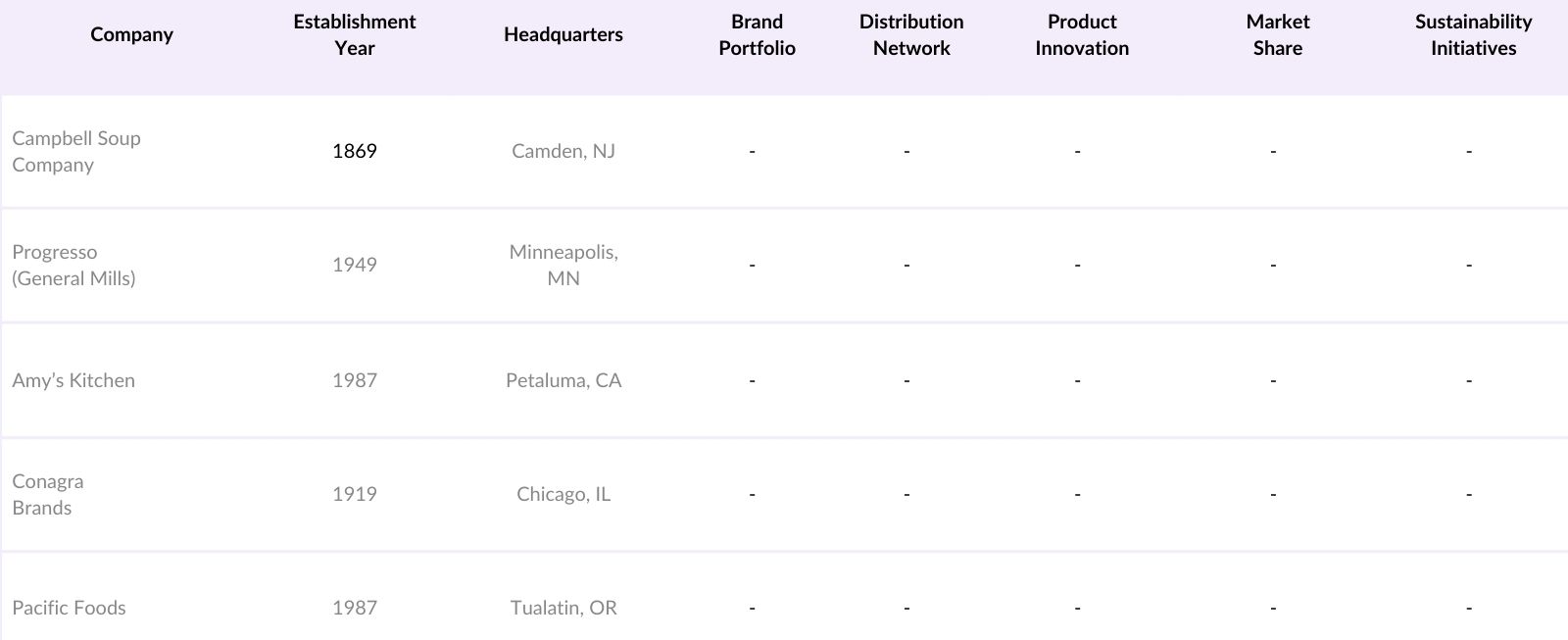
The market is dominated by a few major players, including well-established names like Campbell Soup Company and Progresso, alongside growing brands like Amys Kitchen. This competitive landscape is shaped by the diversity of offerings, innovation in flavors, and strong distribution networks, with each company continuously evolving to cater to consumer demands for healthier, convenient options.
Over the next five years, the USA Soups industry is expected to exhibit sustained growth, fueled by increased consumer awareness of health benefits and continuous innovation in product ingredients. Demand for plant-based and organic soup varieties is anticipated to rise, driven by a shift toward healthier lifestyles.
|
Type |
Canned Soup Frozen Soup Dry Soup Mix Chilled Soup |
|
Ingredients |
Vegetarian Non-Vegetarian |
|
Distribution Channel |
Supermarkets & Hypermarkets Convenience Stores Online Retail Specialty Stores |
|
Consumer Group |
Household Consumers Institutional Buyers On-the-Go Consumers |
|
Packaging Type |
Cans Cartons Plastic Pouches Glass Containers |
|
Region |
North East West South |
1.1 Definition and Scope
1.2 Market Taxonomy
1.3 Market Growth Rate Analysis
1.4 Market Segmentation Overview
2.1 Historical Market Size
2.2 Year-On-Year Growth Analysis
2.3 Key Market Developments and Milestones
3.1 Growth Drivers
3.1.1 Rising Consumer Preference for Ready-to-Eat Meals
3.1.2 Expansion in Retail Channels (supermarkets, online platforms)
3.1.3 Innovation in Flavors and Ingredients
3.2 Market Challenges
3.2.1 Health Concerns around Processed Foods
3.2.2 Intense Competition from Local and Imported Brands
3.2.3 Regulatory Compliance on Food Safety
3.3 Opportunities
3.3.1 Demand for Organic and Health-Oriented Soups
3.3.2 Expansion into Emerging Markets
3.3.3 Growth in Plant-Based Soup Offerings
3.4 Trends
3.4.1 Premiumization of Soup Products
3.4.2 Increasing Demand for Sustainable Packaging
3.4.3 Rise of Clean Label and Non-GMO Options
3.5 Regulatory Environment
3.5.1 USDA and FDA Compliance
3.5.2 Labeling and Packaging Standards
3.5.3 Food Safety Modernization Act Implications
3.6 SWOT Analysis
3.7 Industry Value Chain Analysis
3.8 Porters Five Forces Analysis
3.9 Competitive Landscape Overview
4.1 By Type (In Value %)
4.1.1 Canned Soup
4.1.2 Frozen Soup
4.1.3 Dry Soup Mix
4.1.4 Chilled Soup
4.2 By Ingredients (In Value %)
4.2.1 Vegetarian
4.2.2 Non-Vegetarian
4.3 By Distribution Channel (In Value %)
4.3.1 Supermarkets & Hypermarkets
4.3.2 Convenience Stores
4.3.3 Online Retail
4.3.4 Specialty Stores
4.4 By Consumer Group (In Value %)
4.4.1 Household Consumers
4.4.2 Institutional Buyers (restaurants, hospitals)
4.4.3 On-the-Go Consumers
4.5 By Packaging Type (In Value %)
4.5.1 Cans
4.5.2 Cartons
4.5.3 Plastic Pouches
4.5.4 Glass Containers
4.6 By Region (In Value %)
4.6.1 North
4.6.2 East
4.6.3 West
4.6.4 South
5.1 Profiles of Major Companies
5.1.1 Campbell Soup Company
5.1.2 Progresso (General Mills)
5.1.3 Amy's Kitchen
5.1.4 Conagra Brands (Healthy Choice)
5.1.5 Nestl (Maggi)
5.1.6 Heinz (Kraft Heinz)
5.1.7 Pacific Foods
5.1.8 Knorr (Unilever)
5.1.9 Wolfgang Puck Soups
5.1.10 Imagine Foods
5.1.11 Trader Joe's Soups
5.1.12 Kroger Private Label
5.1.13 Walmart Great Value
5.1.14 Whole Foods 365
5.1.15 Lipton (PepsiCo)
5.2 Cross Comparison Parameters (Market Share, Product Range, Brand Reputation, Supply Chain Network, Innovation Capacity, Sustainability Initiatives, Customer Satisfaction, Pricing Strategies)
5.3 Market Share Analysis
5.4 Strategic Initiatives
5.5 Mergers & Acquisitions
5.6 Investment Analysis
5.7 Venture Capital and Private Equity Investments
5.8 Funding in Product Development
6.1 Food Labeling Regulations
6.2 Safety and Quality Standards
6.3 Health Claims and Nutritional Guidelines
7.1 Forecasted Market Size Projections
7.2 Key Drivers for Future Market Growth
8.1 By Type (Projected Value %)
8.2 By Ingredients (Projected Value %)
8.3 By Distribution Channel (Projected Value %)
8.4 By Consumer Group (Projected Value %)
8.5 By Packaging Type (Projected Value %)
8.5 By Region (Projected Value %)
9.1 Total Addressable Market (TAM) Analysis
9.2 Serviceable Addressable Market (SAM) Analysis
9.3 Product Innovation and Marketing Strategies
9.4 Identifying White Space Opportunities
This step involves defining the primary stakeholders in the USA Soups Market through comprehensive desk research, using secondary databases and industry sources. Critical variables, including product type, ingredients, and regional demand patterns, are identified to frame the market dynamics.
In this phase, historical market data is collected and analyzed, focusing on production volumes, distribution trends, and consumer behavior. A detailed examination of market drivers and restraints is conducted to ensure accurate revenue estimates and segment growth analysis.
Hypotheses concerning growth potential, dominant segments, and future trends are formulated and validated through interviews with industry experts and company representatives. This step ensures data accuracy and offers insight into market trends from professionals within the sector.
The final step synthesizes insights from all prior stages, integrating expert feedback and market trends to develop a validated, comprehensive analysis of the USA Soups Market. Final output includes segment-wise projections, competitive analysis, and a future outlook, presenting a reliable market overview.
The USA Soups Market is valued at USD 3.2 billion, driven by increasing consumer demand for convenience foods and a shift towards healthier, organic options.
Challenges in the USA Soups Market include stringent regulatory standards on food safety, growing competition, and the need for continuous innovation to meet consumer preferences for low-sodium and organic products.
Key players in the USA Soups Market include Campbell Soup Company, Progresso (General Mills), Amys Kitchen, Heinz (Kraft Heinz), and Pacific Foods, which lead due to their wide product ranges and strong market presence.
Growth in the USA Soups Market is driven by factors like the demand for ready-to-eat meals, a rise in plant-based and organic options, and product innovation catering to health-conscious consumers.

What makes us stand out is that our consultants follows Robust, Refine and Result (RRR) methodology. i.e. Robust for clear definitions, approaches and sanity checking, Refine for differentiating respondents facts and opinions and Result for presenting data with story

We have set a benchmark in the industry by offering our clients with syndicated and customized market research reports featuring coverage of entire market as well as meticulous research and analyst insights.

While we don't replace traditional research, we flip the method upside down. Our dual approach of Top Bottom & Bottom Top ensures quality deliverable by not just verifying company fundamentals but also looking at the sector and macroeconomic factors.

With one step in the future, our research team constantly tries to show you the bigger picture. We help with some of the tough questions you may encounter along the way: How is the industry positioned? Best marketing channel? KPI's of competitors? By aligning every element, we help maximize success.

Our report gives you instant access to the answers and sources that other companies might choose to hide. We elaborate each steps of research methodology we have used and showcase you the sample size to earn your trust.

If you need any support, we are here! We pride ourselves on universe strength, data quality, and quick, friendly, and professional service.