















USA SPF Clothing Market Outlook to 2030
Region:North America
Author(s):Shubham
Product Code:KROD4761
November 2024
85
About the Report
USA SPF Clothing Market Overview
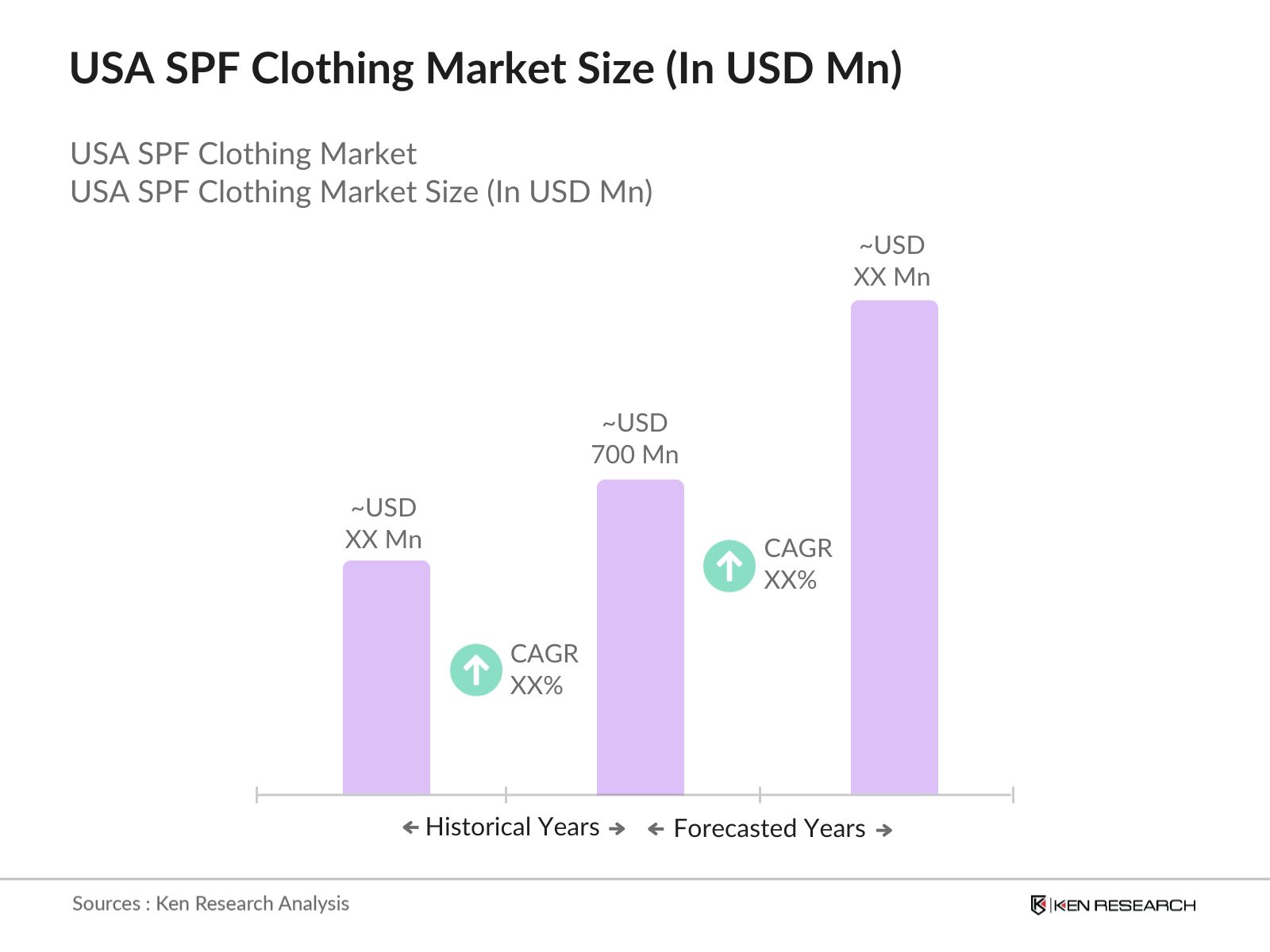
- The USA SPF (Sun Protection Factor) clothing market has been witnessing increased growth, currently valued at USD 700 Mn, due to rising awareness about skin cancer and other sun-related health risks. The market is driven by the demand for protective clothing designed to shield the skin from harmful ultraviolet (UV) radiation. This clothing includes various garments like long-sleeved shirts, pants, hats, and swimwear, which are embedded with UV-blocking properties, offering SPF ratings typically ranging from 30 to 50+. In 2024, the market is estimated to grow at a steady pace as more consumers become conscious of the long-term benefits of sun protection, particularly in sunbelt states like Florida, Arizona, and California.
- Dominant regions like California, Arizona, and Florida lead the USA SPF clothing market due to their high levels of UV radiation throughout the year and the prevalence of outdoor recreational activities. These regions not only have sunny climates but also boast vibrant outdoor cultures, which push the demand for SPF clothing across various segments like swimwear and sportswear. Additionally, increasing public awareness programs about skin cancer and UV protection in these areas contribute to their dominance.
- The EPA plays a key role in promoting sustainable practices in the textile industry, including the SPF clothing market. In 2023, the EPA established guidelines for textile recycling, encouraging manufacturers to adopt eco-friendly production methods. These guidelines focus on reducing environmental impact through the use of recycled fabrics and sustainable manufacturing processes. The EPAs regulatory framework is designed to minimize textile waste, which accounted for 16 million tons annually in the U.S. This initiative aligns with broader environmental goals and supports the market for sustainable SPF clothing.
USA SPF Clothing Market Segmentation
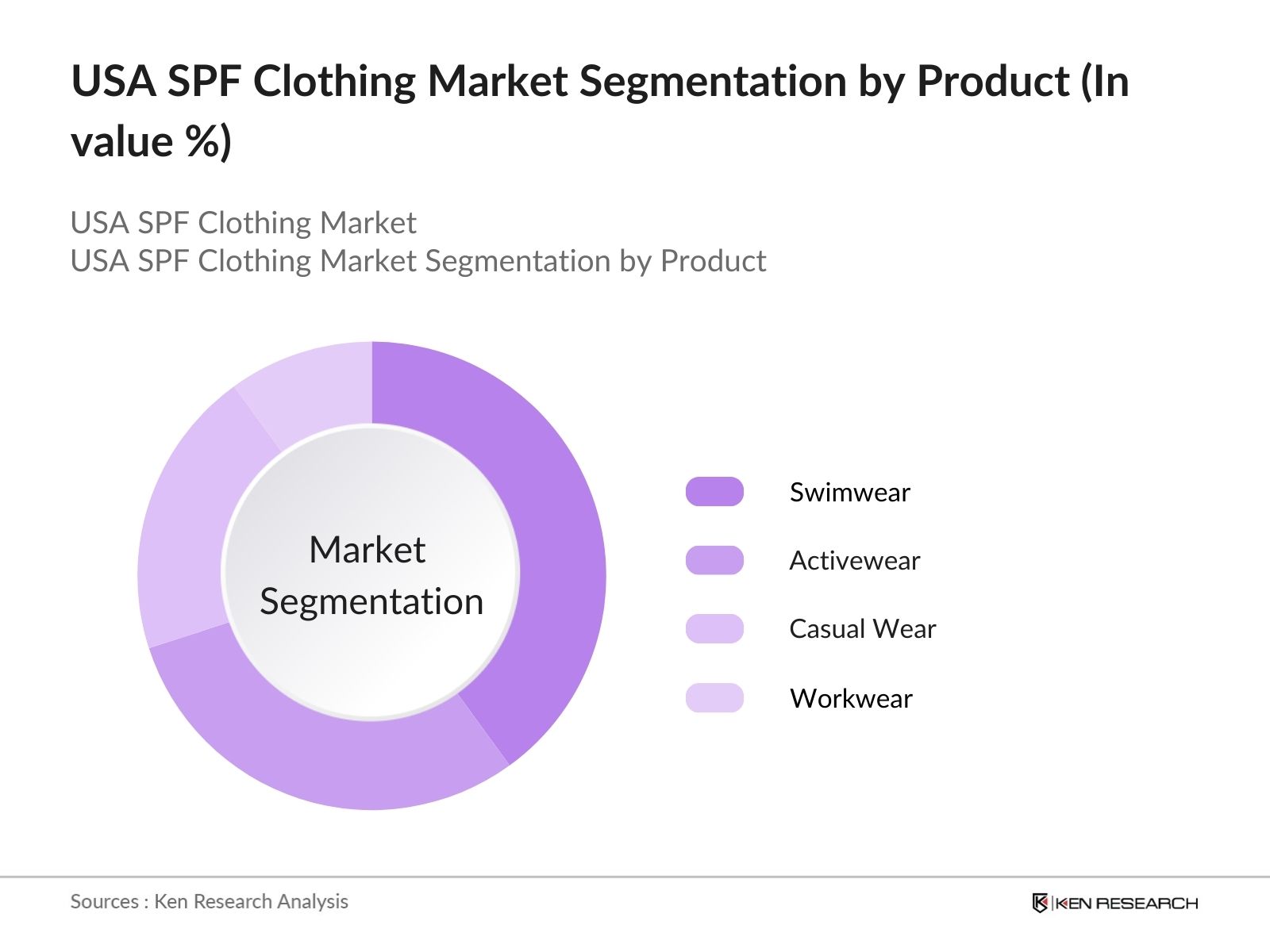
- By Product: The market is segmented into swimwear, activewear, and casual wear. Swimwear holds a dominant position due to its high demand in water-based activities where prolonged sun exposure is common. Activewear follows closely, as consumers seek SPF clothing for outdoor sports and fitness activities. Casual wear, including long-sleeved shirts and pants, is also gaining popularity, especially in sun-prone states, as everyday apparel for those with sun sensitivity or heightened concern about UV exposure.
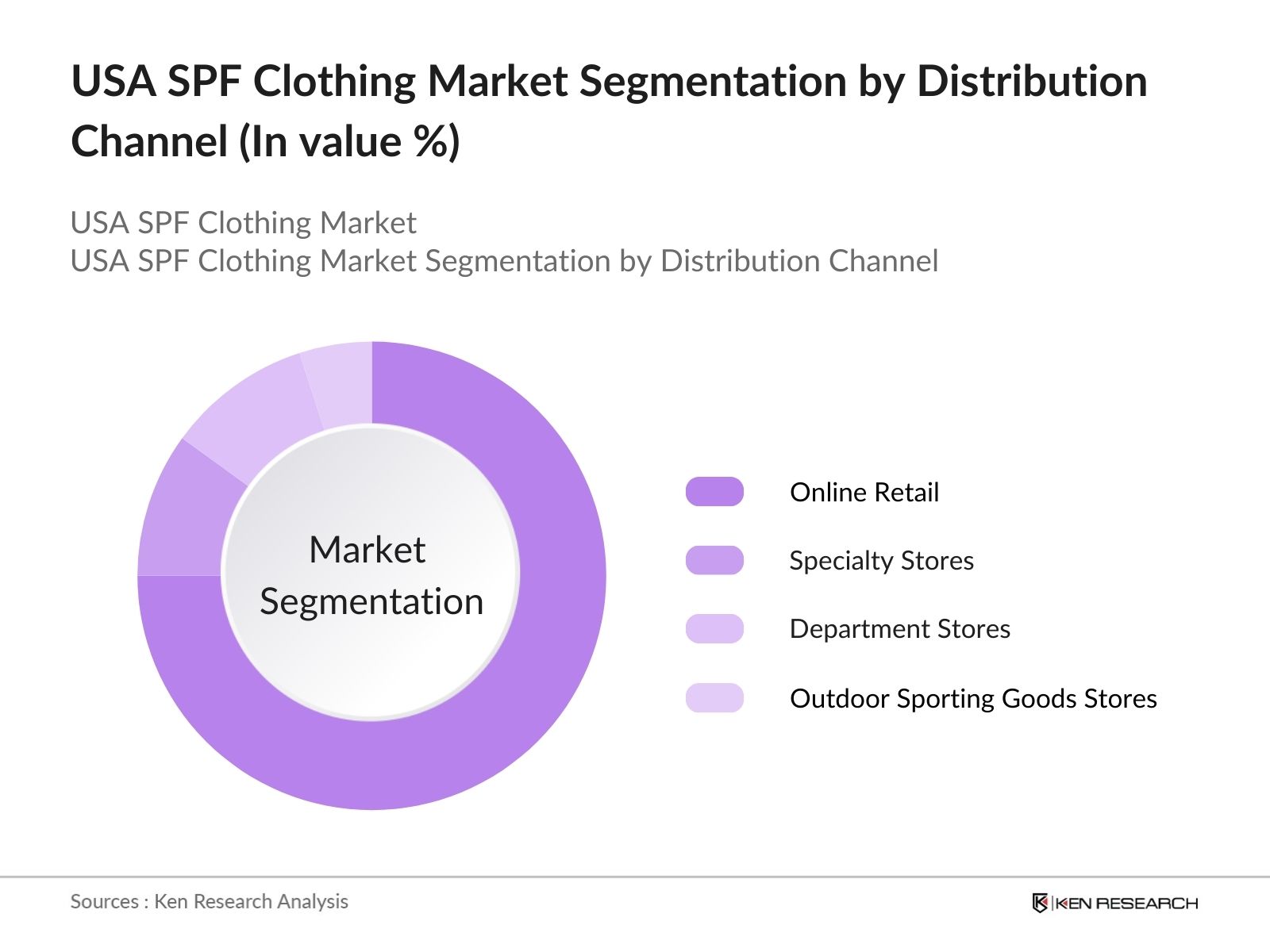
- By Distribution Channel: The market is segmented by distribution channels, including online retailers, specialty stores, and department stores. Online retailers lead the segment, driven by the convenience of e-commerce and the availability of a wide range of SPF clothing options. Specialty stores also capture a significant share, offering curated sun-protective clothing from well-known brands, often endorsed by dermatologists or the Skin Cancer Foundation. Department stores offer a blend of casual and high-performance SPF clothing options, catering to a broad consumer base.
USA SPF Clothing Market Competitive Landscape
The USA SPF clothing market is competitive, with key players investing in product innovation and branding to attract sun-conscious consumers. Major companies like Coolibar, Columbia Sportswear, and Solbari dominate the market, leveraging their expertise in outdoor and sun-protective apparel. Sustainability initiatives and eco-friendly material use have become focal points, with brands incorporating recycled fabrics and non-toxic UV-blocking treatments in their product lines.
|
Company |
Establishment Year |
Headquarters |
Revenue (USD Mn) |
No. of Employees |
UV Technology |
Sustainability Initiatives |
Market Penetration |
Key Product Range |
|
Coolibar |
2001 |
Minneapolis, MN |
||||||
|
Columbia Sportswear |
1938 |
Portland, OR |
||||||
|
Solbari |
2016 |
Melbourne, AUS |
||||||
|
L.L. Bean |
1912 |
Freeport, ME |
||||||
|
Patagonia |
1973 |
Ventura, CA |
USA SPF Clothing Industry Analysis
Growth Drivers
- Increased Awareness of Skin Cancer: With over 5 million skin cancer cases diagnosed annually in the U.S., public health initiatives promoting sun protection are on the rise. The American Academy of Dermatology reports that nearly 95,00 skin cancer cases are detected every day. As a response, SPF clothing has seen increasing demand. Public health programs and dermatological associations recommend SPF-rated clothing as an additional protective layer against harmful UV rays, reinforcing its market growth. The U.S. Department of Health and Human Services continues to allocate funding to public awareness campaigns, amplifying skin cancer prevention efforts.
- Expansion of Outdoor Recreation Industry: The U.S. outdoor recreation economy generated over USD 1.1 trillion in 2022, with millions of people participating in outdoor activities such as hiking, cycling, and water sports. The growing involvement in these activities has boosted the demand for SPF clothing as outdoor enthusiasts seek better protection against UV rays. Reports from the U.S. Bureau of Economic Analysis indicate an increase in spending on outdoor gear and apparel, contributing significantly to the expansion of the SPF clothing sector.
- Technological Innovations in UV Protection Fabrics: Advancements in UV-protective fabric technologies have strengthened the SPF clothing market. New innovations include nano-particle coatings, enhancing UV-blocking capabilities. The U.S. textile industry reported USD 65 billion in shipments in 2023, with a growing portion dedicated to advanced protective clothing. Smart wearable integration, such as UV-sensing fabrics, is also becoming a trend, offering real-time sun exposure data. Increased R&D spending from both public and private sectors has driven these developments, supported by government-backed innovation grants and initiatives.
Market Challenges
- Cost of Production and Pricing Pressures: The production of SPF clothing involves advanced textile processes, including specialized weaving techniques and the incorporation of UV-blocking materials. The need for specialized equipment and raw materials significantly increases manufacturing costs. These higher production costs are often passed on to consumers, which can limit broader adoption in price-sensitive segments. Domestic producers also face competition from lower-cost international manufacturers, particularly in countries with lower labor and operational costs. This creates additional pressure for U.S. manufacturers, affecting pricing strategies and market penetration.
- Consumer Skepticism on Efficacy: While the demand for SPF clothing is growing, some consumers remain skeptical about its efficacy. Many question whether SPF clothing provides sufficient sun protection compared to traditional methods like sunscreen. This skepticism is amplified by the lack of uniform industry standards for labeling UV-blocking fabrics. Although FDA regulations exist, consumer awareness of these standards remains low, particularly in certain demographic segments. Educational campaigns and clear labeling practices are necessary to address misconceptions and build trust in SPF clothing as an effective sun protection method.
USA SPF Clothing Market Future Outlook
The USA SPF clothing market is expected to continue growing steadily, driven by rising awareness about skin health and the harmful effects of UV exposure. Technological advancements in textile production will further improve the durability and comfort of SPF clothing, ensuring long-term protection against sun damage. The increasing popularity of sustainable and eco-friendly apparel is also anticipated to play a key role, with brands emphasizing the use of recycled and organic materials in their sun-protective clothing lines.
Future Market Opportunities
- Customization and Personalization in SPF Clothing: Customization is a growing trend in the SPF clothing market, with made-to-order services offering personalized UV protection garments. In 2023, U.S. consumers spent billions on personalized clothing, reflecting a growing demand for products that meet individual needs, including custom sizing and design preferences. SPF clothing brands are capitalizing on this by offering size-inclusive options, catering to diverse body types. This trend aligns with broader consumer preferences for personalized, well-fitting clothing that combines functionality with style.
- Multi-functional Clothing: Consumers are increasingly seeking multi-functional garments that provide more than just UV protection. In 2023, U.S. sales of moisture-wicking fabrics reached all-time high, as consumers embraced clothing that keeps them cool and dry while protecting against the sun. The integration of features like moisture-wicking, breathable fabrics, and all-weather wear into SPF clothing has driven market innovation. Such multifunctionality appeals to a broad audience, particularly outdoor enthusiasts and athletes looking for versatile apparel options.
Scope of the Report
|
By Product Type |
Swimwear Activewear Casual Wear Workwear |
|
By Consumer Group |
Men Women Children |
|
By Distribution Channel |
Online Retail |
|
Specialty Stores |
|
|
Department Stores |
|
|
Outdoor Sporting Goods Stores |
|
|
By Fabric Type |
Polyester Nylon Cotton Bamboo Fabric |
|
By Region |
West Coast Midwest Northeast South |
Products
Key Target Audience
Apparel Manufacturers
Textile Suppliers
Outdoor Recreation Brands
Sports Retailers
Dermatologists
Skin Cancer Awareness Organizations
Government and Regulatory Bodies (FDA, EPA)
Investors and Venture Capitalist Firms
Banks and Financial Institutions
Companies
Players Mentioned in the Report
Coolibar
Columbia Sportswear
Solbari
Patagonia
L.L. Bean
The North Face
Under Armour
Nike
Adidas
Marmot
REI Co-op
Prana
Roxy
Speedo USA
Mountain Hardwear
Table of Contents
1. USA SPF Clothing Market Overview
1.1. Definition and Scope
1.2. Market Taxonomy (Performance Fabrics, UV-blocking Textiles, UV Protection Levels)
1.3. Market Growth Rate
1.4. Market Segmentation Overview (Product Type, Consumer Group, Distribution Channel, Fabric Type, UV Protection Factor)
2. USA SPF Clothing Market Size (In USD Mn)
2.1. Historical Market Size
2.2. Year-On-Year Growth Analysis
2.3. Key Market Developments and Milestones (Market Expansions, Consumer Awareness Programs, Technological Advances)
3. USA SPF Clothing Market Analysis
3.1. Growth Drivers
3.1.1. Increasing Skin Cancer Awareness (Public Health Initiatives, Dermatological Recommendations)
3.1.2. Outdoor Recreation Growth (Rising Participation in Outdoor Activities, Sports Industry Influence)
3.1.3. Technological Innovations in UV Protection Fabrics (New Fabric Technologies, Smart Wearable Integration)
3.1.4. Favorable Government Regulations (FDA Guidelines, Industry Standards on UV Protection)
3.2. Market Challenges
3.2.1. High Production Costs (Advanced Textile Processing, UV-blocking Fabric Cost)
3.2.2. Consumer Skepticism on Efficacy (Education Barriers, Lack of Uniform Standards)
3.2.3. Competition from Traditional Sun Protection (Sunscreen Dominance, Substitution Risk)
3.2.4. Regulatory Complexity (Compliance with Health and Safety Standards)
3.3. Opportunities
3.3.1. Expansion into Childrens SPF Clothing Market (Increasing Parental Concern, Schools Mandates)
3.3.2. Eco-friendly SPF Clothing Demand (Sustainable Materials, Recycled Fabrics)
3.3.3. Collaborations with Outdoor Sports Brands (Brand Partnerships, Sports Sponsorships)
3.3.4. Online Retail Growth (E-commerce Expansion, Direct-to-Consumer Sales)
3.4. Trends
3.4.1. Customization and Personalization in SPF Clothing (Made-to-Order Services, Size Inclusivity)
3.4.2. Multi-functional Clothing (UV Protection and Moisture-Wicking, All-Weather Clothing)
3.4.3. Rise of Athleisure with SPF Functionality (Crossover Fashion, Activewear Influence)
3.4.4. Sustainable Fabric Innovation (Bio-based Fabrics, Low Environmental Impact)
3.5. Government Regulation
3.5.1. FDA Regulation on UV Clothing Standards (SPF Labeling Guidelines, UV Protection Standards)
3.5.2. U.S. Environmental Protection Agency (EPA) Guidelines (Textile Recycling, Environmental Impact Regulations)
3.5.3. Tax Incentives for Sustainable Textile Manufacturing (Green Manufacturing Incentives)
3.5.4. State-Level UV Protection Policies (Californias UV Safety Laws, Educational Programs)
3.6. SWOT Analysis
3.7. Stakeholder Ecosystem
3.8. Porters Five Forces
3.9. Competitive Ecosystem
4. USA SPF Clothing Market Segmentation
4.1. By Product Type (In Value %)
4.1.1. Swimwear
4.1.2. Activewear
4.1.3. Casual Wear
4.1.4. Workwear
4.2. By Consumer Group (In Value %)
4.2.1. Men
4.2.2. Women
4.2.3. Children
4.3. By Distribution Channel (In Value %)
4.3.1. Online Retail
4.3.2. Specialty Stores
4.3.3. Department Stores
4.3.4. Outdoor Sporting Goods Stores
4.4. By Fabric Type (In Value %)
4.4.1. Polyester
4.4.2. Nylon
4.4.3. Cotton
4.4.4. Bamboo Fabric
4.5. By Region (In Value %)
4.5.1. West Coast
4.5.2. Midwest
4.5.3. Northeast
4.5.4 South
5. USA SPF Clothing Market Competitive Analysis
5.1 Detailed Profiles of Major Companies
5.1.1. Coolibar
5.1.2. Columbia Sportswear
5.1.3. Solbari
5.1.4. Patagonia
5.1.5. REI Co-op
5.1.6. The North Face
5.1.7. L.L. Bean
5.1.8. Mountain Hardwear
5.1.9. Nike
5.1.10. Adidas
5.1.11. Under Armour
5.1.12. Marmot
5.1.13. Roxy
5.1.14. Speedo USA
5.1.15. Prana
5.2 Cross Comparison Parameters
5.2.1. Revenue
5.2.2. Headquarters
5.2.3. Number of Employees
5.2.4. UV Protection Technology Used
5.2.5. Sustainability Initiatives
5.2.6. Market Penetration (Domestic vs International)
5.2.7. Distribution Channel Mix
5.2.8. Product Innovation Index
5.3 Market Share Analysis
5.4 Strategic Initiatives
5.5 Mergers And Acquisitions
5.6 Investment Analysis
5.7 Government Grants
5.8 Private Equity Investments
6. USA SPF Clothing Market Regulatory Framework
6.1. Environmental Standards (Textile Manufacturing Guidelines, Biodegradable Materials)
6.2. Compliance Requirements (FDA UV Clothing Labeling)
6.3. Certification Processes (Skin Cancer Foundation Certification, ISO Certifications)
7. USA SPF Clothing Future Market Size (In USD Mn)
7.1. Future Market Size Projections
7.2. Key Factors Driving Future Market Growth
8. USA SPF Clothing Future Market Segmentation
8.1. By Product Type (In Value %)
8.2. By Consumer Group (In Value %)
8.3. By Distribution Channel (In Value %)
8.4. By Fabric Type (In Value %)
8.5. By Region (In Value %)
9. USA SPF Clothing Market Analysts Recommendations
9.1. TAM/SAM/SOM Analysis
9.2. Consumer Cohort Analysis
9.3. White Space Opportunity Analysis
9.4. Go-to-Market Strategy Recommendations
Research Methodology
Step 1: Identification of Key Variables
The initial phase focuses on identifying key market drivers and challenges through extensive desk research. Variables such as UV protection standards, fabric innovations, and regulatory factors are evaluated from credible industry reports and databases to construct a market ecosystem.
Step 2: Market Analysis and Construction
This phase involves gathering historical data on sales, revenue, and consumer preferences in the USA SPF clothing market. Statistical modeling is employed to estimate the current market dynamics and validate trends. Revenue estimations are cross-referenced with major manufacturers' financial reports.
Step 3: Hypothesis Validation and Expert Consultation
Expert interviews are conducted with senior executives from leading SPF clothing brands and dermatologists to validate the key findings. These consultations help refine hypotheses around market growth, product innovation, and consumer demand.
Step 4: Research Synthesis and Final Output
Data synthesis is completed by cross-verifying secondary research findings with industry insights from expert consultations. The final market report is prepared with validated data on key segments, future outlook, and competitive landscape for the USA SPF clothing market.
Frequently Asked Questions
01. How big is the USA SPF Clothing Market?
The USA SPF clothing market is valued at USD 700 million, driven by increasing consumer awareness about skin cancer and the harmful effects of UV radiation.
02. What are the challenges in the USA SPF Clothing Market?
Key challenges in the USA SPF clothing market include high production costs associated with advanced textile treatments and consumer skepticism about the efficacy of SPF clothing compared to traditional sunscreens.
03. Who are the major players in the USA SPF Clothing Market?
Major players in the USA SPF clothing market include Coolibar, Columbia Sportswear, Solbari, Patagonia, and L.L. Bean, known for their high-performance UV-protective fabrics and sustainability initiatives.
04. What are the growth drivers of the USA SPF Clothing Market?
The USA SPF clothing market is driven by increasing awareness of skin cancer prevention, growth in outdoor recreational activities, and advancements in UV-protective textile technology.
Why Buy From Us?

What makes us stand out is that our consultants follows Robust, Refine and Result (RRR) methodology. i.e. Robust for clear definitions, approaches and sanity checking, Refine for differentiating respondents facts and opinions and Result for presenting data with story

We have set a benchmark in the industry by offering our clients with syndicated and customized market research reports featuring coverage of entire market as well as meticulous research and analyst insights.

While we don't replace traditional research, we flip the method upside down. Our dual approach of Top Bottom & Bottom Top ensures quality deliverable by not just verifying company fundamentals but also looking at the sector and macroeconomic factors.

With one step in the future, our research team constantly tries to show you the bigger picture. We help with some of the tough questions you may encounter along the way: How is the industry positioned? Best marketing channel? KPI's of competitors? By aligning every element, we help maximize success.

Our report gives you instant access to the answers and sources that other companies might choose to hide. We elaborate each steps of research methodology we have used and showcase you the sample size to earn your trust.

If you need any support, we are here! We pride ourselves on universe strength, data quality, and quick, friendly, and professional service.