
USA Stroller Market Outlook to 2030
Region:North America
Author(s):Shreya Garg
Product Code:KROD9680
Region:North America
Author(s):Shreya Garg
Product Code:KROD9680
December 2024
88
By Product Type: The market is segmented by product type into standard strollers, lightweight strollers, jogging strollers, travel systems, and double & triple strollers. Travel systems hold the largest market share due to their convenience and versatility. They appeal to parents who seek an all-in-one solution for travel and mobility, combining a stroller and a compatible car seat. Travel systems are highly favored by urban parents with active lifestyles, who prioritize portability and ease of use. 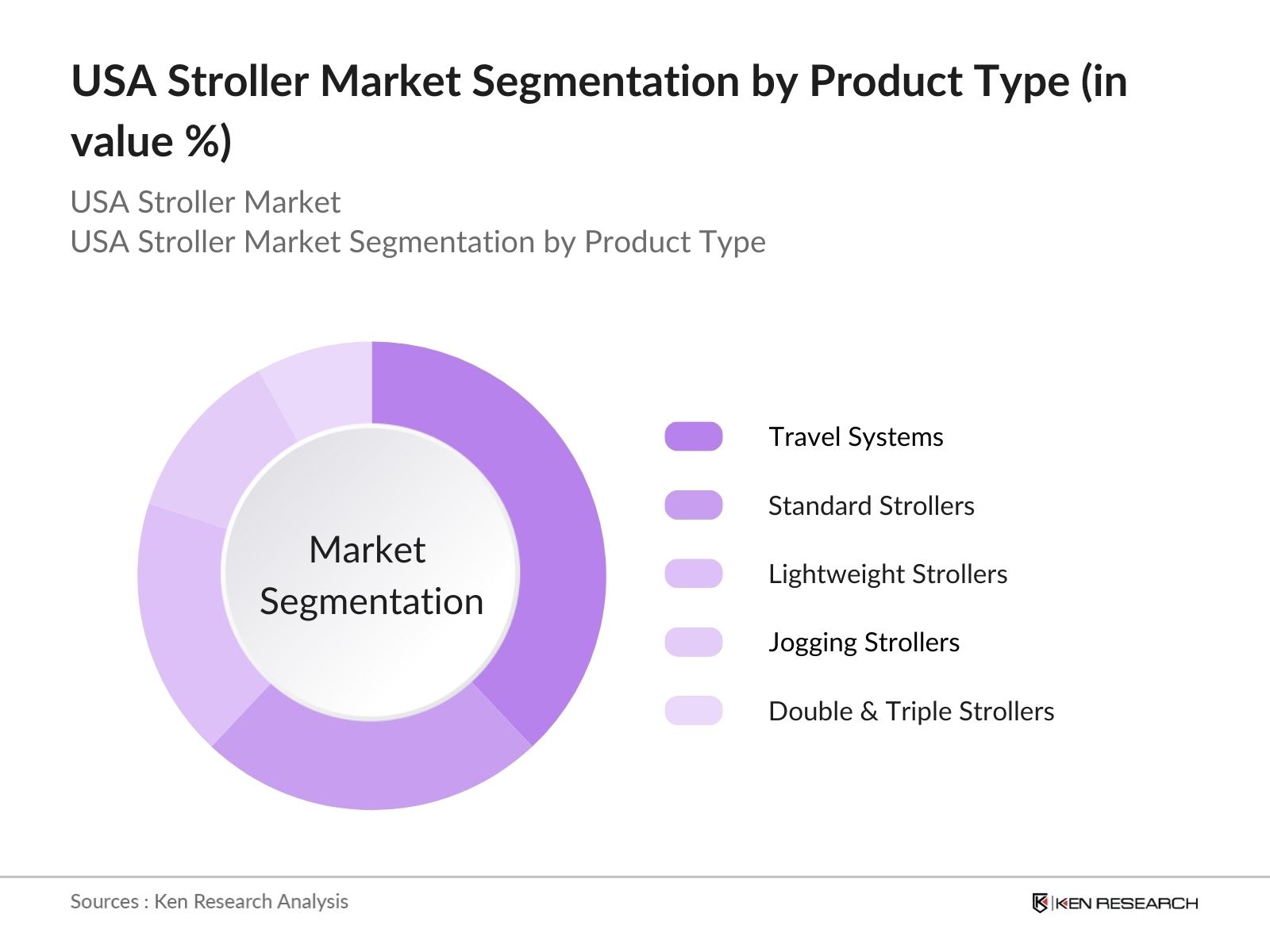
By Application: In the market, applications are categorized into residential and commercial segments. The residential segment commands a dominant share due to the high number of nuclear families in urban and suburban areas. These households prioritize comfort and safety when choosing strollers, driving the adoption of products with advanced features like one-hand folding, shock absorption, and ergonomic designs. 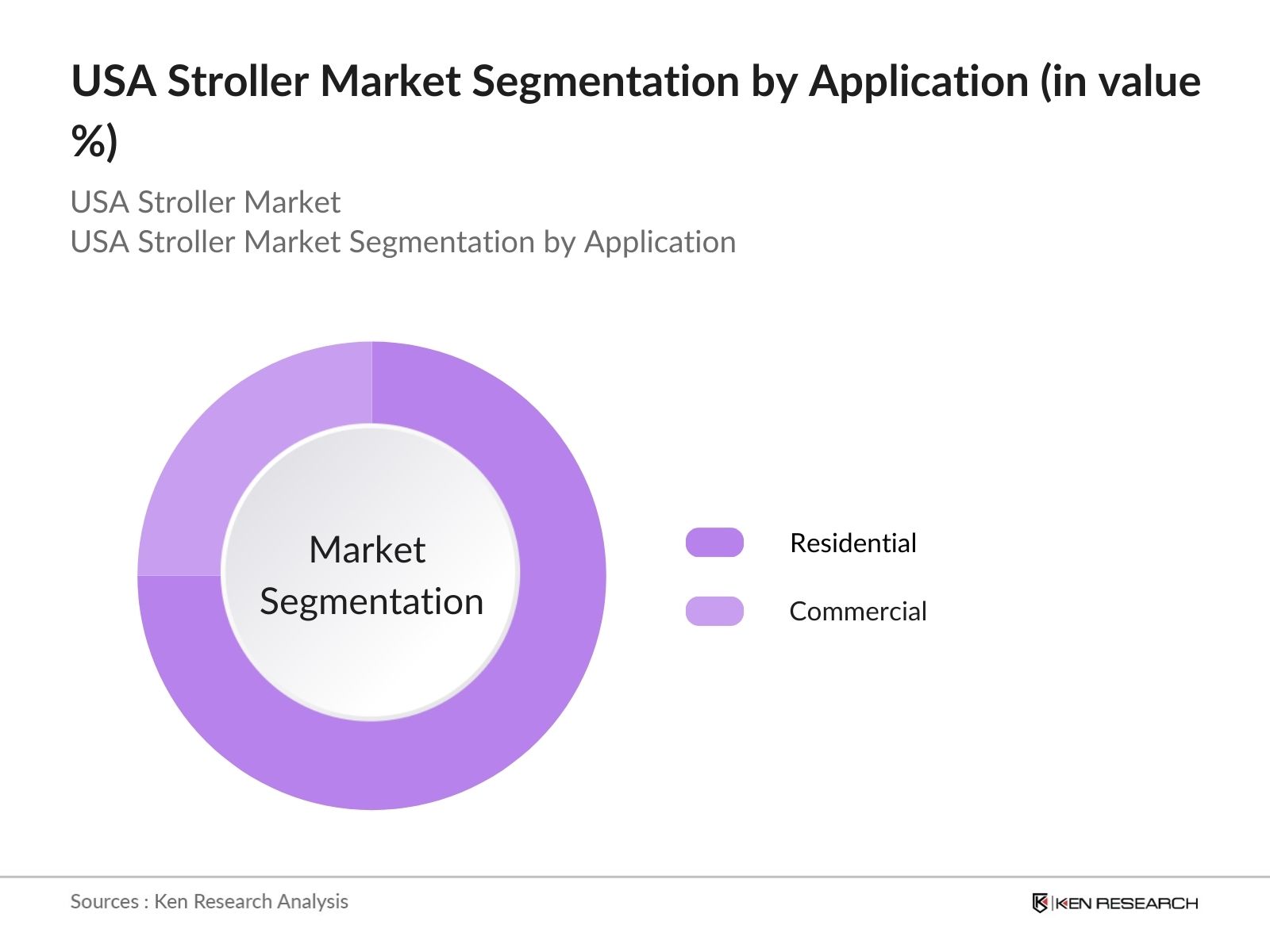
The USA stroller market is characterized by the presence of several global and regional players. These companies focus on innovation, product design, and functionality to gain a competitive edge. Key brands such as Graco and UPPAbaby have maintained a stronghold in the market due to their wide distribution networks, quality products, and brand recognition. The market is dominated by a few major players who control a large share of the market. These companies include UPPAbaby, Graco, and Chicco USA, which are known for their premium stroller models.
|
Company Name |
Establishment Year |
Headquarters |
Revenue (USD mn) |
Employees |
Product Range |
Distribution Network |
R&D Investment (%) |
Eco-friendly Initiatives |
Manufacturing Units |
|
Graco |
1942 |
USA |
|||||||
|
UPPAbaby |
2006 |
USA |
|||||||
|
Chicco USA |
1958 |
Italy/USA |
|||||||
|
Evenflo |
1920 |
USA |
|||||||
|
Baby Jogger |
1984 |
USA |
The USA stroller market is expected to witness steady growth over the next few years, driven by rising consumer awareness about child safety and a growing preference for multifunctional products. The increasing number of working parents, coupled with higher disposable income, is projected to sustain the demand for premium and smart strollers. Additionally, sustainability trends are pushing manufacturers to adopt eco-friendly materials and processes in stroller production.
|
By Product Type |
Standard Strollers Lightweight Strollers Jogging Strollers Travel Systems Double & Triple Strollers |
|
By Application |
Residential Commercial (Daycares, Nurseries) |
|
By Distribution Channel |
Online Retail Offline Retail (Supermarkets, Specialty Stores) |
|
By Material Type |
Aluminum Plastic Steel |
|
By Region |
North East West Midwest South |
1.1. Definition and Scope
1.2. Market Taxonomy
1.3. Market Growth Rate
1.4. Market Segmentation Overview
2.1. Historical Market Size
2.2. Year-On-Year Growth Analysis
2.3. Key Market Developments and Milestones
3.1. Growth Drivers
3.1.1. Increasing Urbanization
3.1.2. Rising Birth Rates (birth rate trends)
3.1.3. Growing Disposable Income (household income levels)
3.1.4. Demand for Premium Strollers (consumer spending on luxury goods)
3.2. Market Challenges
3.2.1. High Cost of Premium Strollers
3.2.2. Supply Chain Disruptions (import/export dynamics)
3.2.3. Competition from Local Manufacturers (price sensitivity)
3.3. Opportunities
3.3.1. Expanding E-commerce (online purchasing behavior)
3.3.2. Technological Advancements (smart strollers, sensor integration)
3.3.3. Sustainable Strollers (demand for eco-friendly products)
3.4. Trends
3.4.1. Lightweight and Compact Designs
3.4.2. Travel System Integration (stroller and car seat combinations)
3.4.3. Customizable Features (color, material preferences)
3.5. Government Regulations
3.5.1. Safety Standards for Childcare Products (ASTM F833, CPSIA)
3.5.2. Import Tariffs on Childcare Products
3.5.3. Local Manufacturing Incentives
3.6. SWOT Analysis
3.7. Stakeholder Ecosystem (manufacturers, distributors, retailers)
3.8. Porters Five Forces Analysis
3.9. Competitive Landscape
4.1. By Product Type (In Value %)
4.1.1. Standard Strollers
4.1.2. Lightweight Strollers
4.1.3. Jogging Strollers
4.1.4. Travel Systems
4.1.5. Double & Triple Strollers
4.2. By Application (In Value %)
4.2.1. Residential
4.2.2. Commercial (Daycares, Nurseries)
4.3. By Distribution Channel (In Value %)
4.3.1. Online Retail
4.3.2. Offline Retail (Supermarkets, Specialty Stores)
4.4. By Material Type (In Value %)
4.4.1. Aluminum
4.4.2. Plastic
4.4.3. Steel
4.5. By Region (In Value %)
4.5.1. North East
4.5.2. West
4.5.3. Midwest
4.5.4. South
5.1 Detailed Profiles of Major Competitors
5.1.1. Graco
5.1.2. Baby Jogger
5.1.3. Evenflo
5.1.4. Chicco USA
5.1.5. UPPAbaby
5.1.6. Nuna Baby Essentials
5.1.7. Peg Perego USA
5.1.8. Britax
5.1.9. Thule
5.1.10. BOB Gear
5.1.11. Bugaboo
5.1.12. Stokke
5.1.13. Joovy
5.1.14. Cybex
5.1.15. Mountain Buggy
5.2 Cross Comparison Parameters
5.2.1. No. of Employees
5.2.2. Headquarters
5.2.3. Inception Year
5.2.4. Revenue
5.2.5. Market Share (%)
5.2.6. Product Portfolio
5.2.7. R&D Investment (%)
5.2.8. Manufacturing Footprint
5.3 Market Share Analysis
5.4 Strategic Initiatives
5.5 Mergers And Acquisitions
5.6 Investment Analysis
5.7 Venture Capital Funding
5.8 Private Equity Investments
6.1 Child Safety Regulations
6.2 Product Certification Requirements (ASTM, CPSC)
6.3 Environmental Compliance Standards
7.1 Future Market Size Projections
7.2 Key Factors Driving Future Market Growth
8.1 By Product Type (In Value %)
8.2 By Application (In Value %)
8.3 By Distribution Channel (In Value %)
8.4 By Material Type (In Value %)
8.5 By Region (In Value %)
9.1 TAM/SAM/SOM Analysis
9.2 Customer Cohort Analysis
9.3 White Space Opportunity Analysis
9.4 Marketing Initiatives
We begin by mapping the stroller market ecosystem, identifying all stakeholders such as manufacturers, distributors, and retailers. Using secondary research from industry databases, we establish key variables such as market penetration and product availability.
This phase involves collecting and analyzing historical data on sales, revenue, and consumer behavior. We focus on the performance of various stroller segments to determine their market contribution, assessing service quality and customer satisfaction.
Market assumptions are validated through in-depth interviews with industry experts, including stroller manufacturers and retailers. These consultations provide real-time insights into industry dynamics, which help corroborate and refine our market analysis.
We synthesize the gathered data, combining it with direct interviews and feedback from leading manufacturers. This ensures that our final report is comprehensive, accurate, and reflective of the current market scenario.
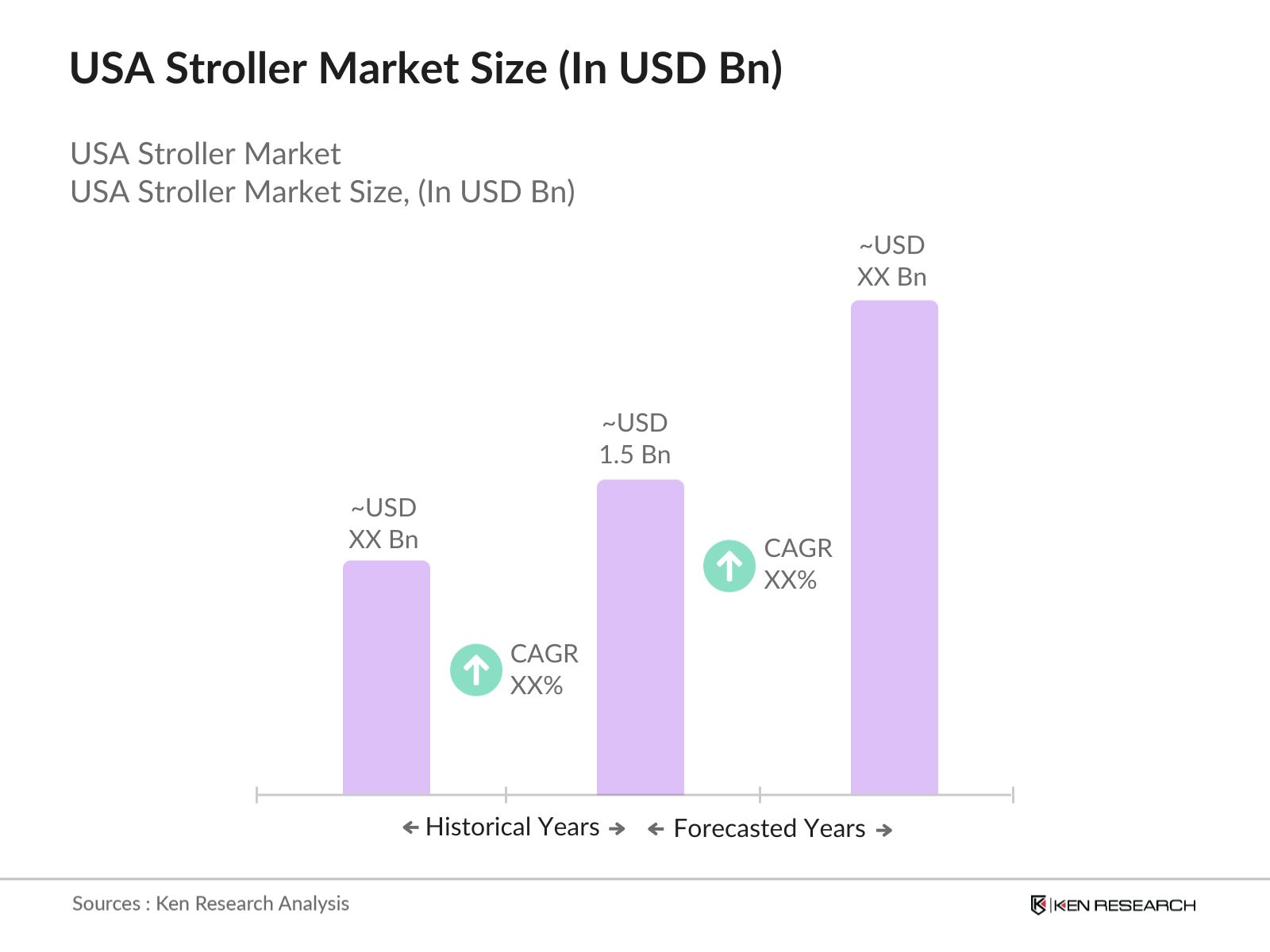
The USA stroller market is valued at USD 1.5 billion. The market's growth is driven by rising disposable incomes and increasing demand for high-end stroller models with advanced safety features.
Challenges in the USA stroller market include competition from low-cost alternatives, high import tariffs on foreign strollers, and a fluctuating supply chain affected by global disruptions, which can increase product costs.
Key players in the USA stroller market include Graco, UPPAbaby, Chicco USA, Evenflo, and Baby Jogger. These companies dominate due to their wide distribution networks and focus on innovation in stroller design and functionality.
The USA stroller market is driven by increasing consumer awareness of child safety, rising disposable incomes, and a growing preference for multifunctional and eco-friendly strollers. Expanding e-commerce channels also boost the market.
The West region, particularly California, dominates the USA stroller market due to a high birth rate, affluence, and environmental awareness, which fuels the demand for premium and eco-friendly strollers.

What makes us stand out is that our consultants follows Robust, Refine and Result (RRR) methodology. i.e. Robust for clear definitions, approaches and sanity checking, Refine for differentiating respondents facts and opinions and Result for presenting data with story

We have set a benchmark in the industry by offering our clients with syndicated and customized market research reports featuring coverage of entire market as well as meticulous research and analyst insights.

While we don't replace traditional research, we flip the method upside down. Our dual approach of Top Bottom & Bottom Top ensures quality deliverable by not just verifying company fundamentals but also looking at the sector and macroeconomic factors.

With one step in the future, our research team constantly tries to show you the bigger picture. We help with some of the tough questions you may encounter along the way: How is the industry positioned? Best marketing channel? KPI's of competitors? By aligning every element, we help maximize success.

Our report gives you instant access to the answers and sources that other companies might choose to hide. We elaborate each steps of research methodology we have used and showcase you the sample size to earn your trust.

If you need any support, we are here! We pride ourselves on universe strength, data quality, and quick, friendly, and professional service.