















USA Tequila Market Outlook to 2030
Region:North America
Author(s):Meenakshi Bisht
Product Code:KROD7064
December 2024
96
About the Report
USA Tequila Market Overview
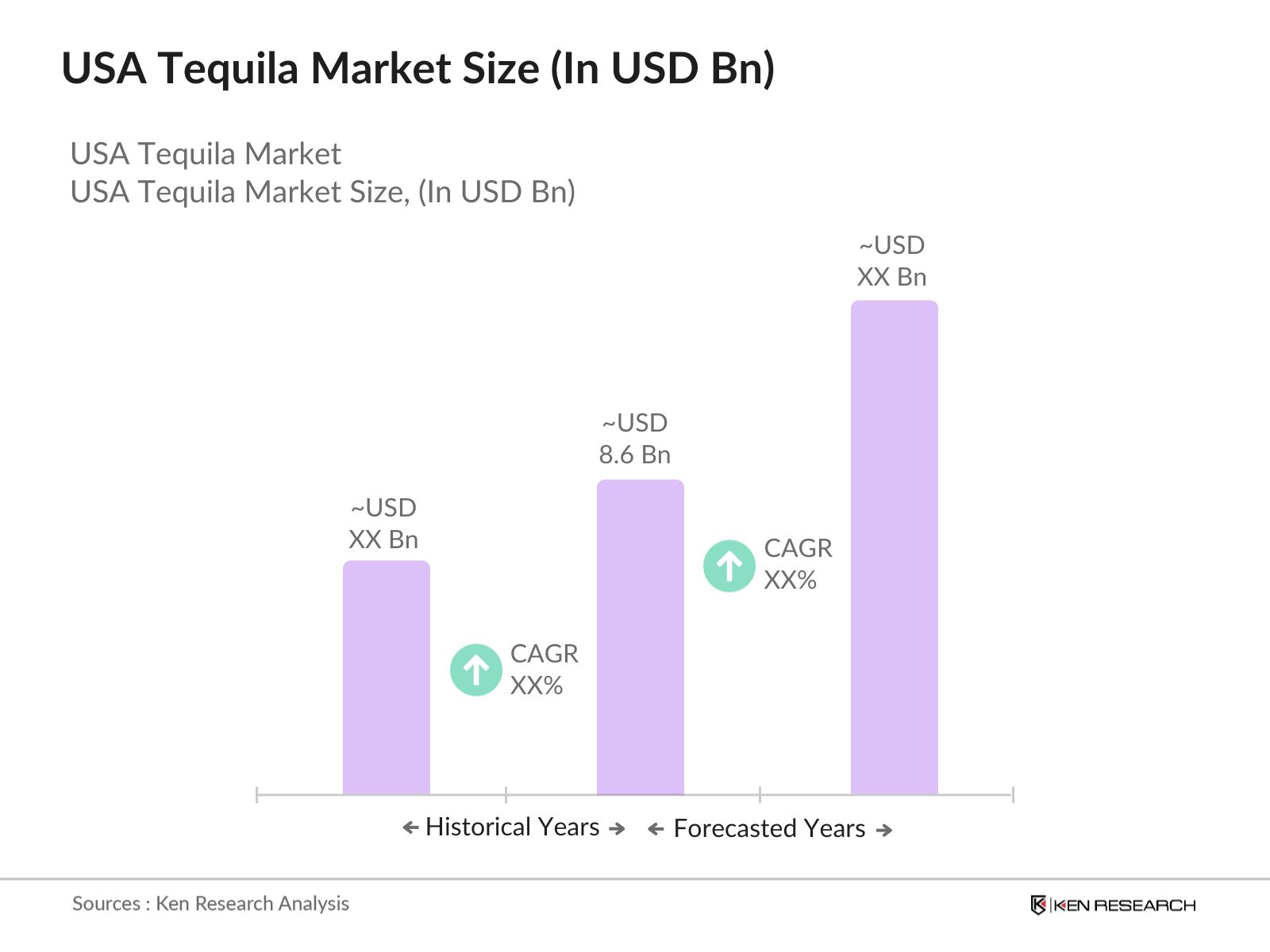
- The USA Tequila market is valued at USD 8.6 billion, driven by increasing consumer demand for premium alcoholic beverages. Over the past five years, the market has witnessed substantial growth due to a rise in tequila-based cocktails and the growing popularity of tequila among younger demographics. The trend toward premiumization and the expansion of tequila into new flavors and organic options have also spurred growth, as more consumers are looking for unique, higher-end spirits. This has led to increased production and distribution across both traditional and emerging markets.
- Major cities like Los Angeles, Miami, and New York dominate the USA Tequila market due to their large populations and vibrant nightlife scenes, which fuel higher demand for premium spirits. California, Texas, and Florida are key regions for tequila sales, given their proximity to Mexico and their sizable Hispanic populations, which have historically contributed to tequila consumption. These regions have seen higher tequila consumption compared to other states, making them dominant players in the market.
- Tequila imports into the U.S. are subject to regulations from both the Food and Drug Administration (FDA) and the Alcohol and Tobacco Tax and Trade Bureau (TTB). These regulations cover labeling, alcohol content, and safety standards. In 2023, stricter regulations were introduced, requiring more detailed labeling and compliance checks on imported tequila. These regulations are designed to ensure product quality and safety for U.S. consumers.
USA Tequila Market Segmentation
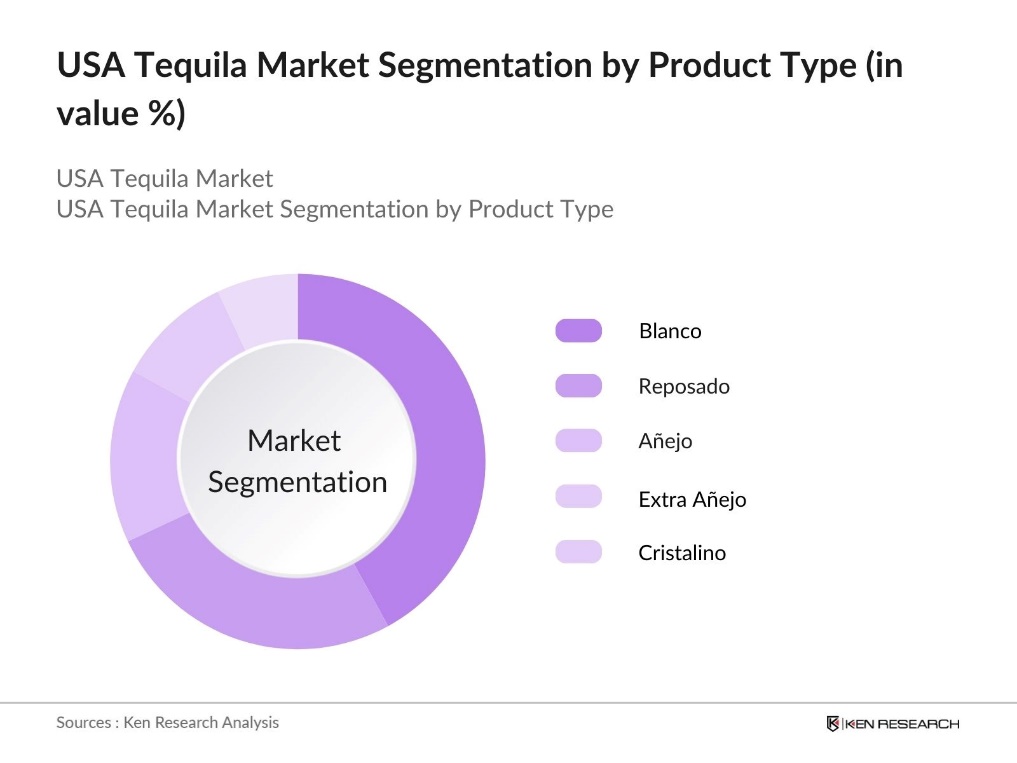
By Product Type: The USA Tequila market is segmented by product type into Blanco, Reposado, Aejo, Extra Aejo, and Cristalino. Blanco tequila has maintained a dominant market share due to its versatility in cocktail making and its fresh, unaged flavor profile, which appeals to both new and seasoned tequila drinkers. Blanco is widely used in popular cocktails like margaritas and tequila sours, contributing to its continued demand.
By Distribution Channel: The tequila market is also segmented by distribution channels into Off-trade (Supermarkets, Liquor Stores), On-trade (Bars, Restaurants, Nightclubs), and E-commerce. Off-trade distribution holds the largest market share, with supermarkets and liquor stores leading sales due to their accessibility and wide variety of products. Consumers prefer purchasing tequila from retail outlets because of the convenience and range of pricing options available.

USA Tequila Market Competitive Landscape
The market is highly competitive, with key global and local brands vying for market share. The market is characterized by consolidation, with top brands controlling a significant portion of sales. International companies like Jos Cuervo and Patrn lead the market, while celebrity-endorsed brands such as Casamigos and Teremana have gained significant traction in recent years. This consolidation highlights the influence of key players in shaping consumer trends and product innovations within the market.
|
Company |
Establishment Year |
Headquarters |
Product Portfolio Focus |
Distribution Reach |
Brand Endorsements |
Innovation in Flavors |
Premiumization Strategy |
|
Jos Cuervo |
1795 |
Tequila, Mexico |
|||||
|
Patrn Spirits |
1989 |
Las Vegas, USA |
|||||
|
Casamigos |
2013 |
California, USA |
|||||
|
Don Julio |
1942 |
Jalisco, Mexico |
|||||
|
Teremana |
2020 |
California, USA |
USA Tequila Industry Analysis
Growth Drivers
- Shifting Consumer Preferences: The U.S. has seen a notable shift in consumer preferences, with tequila consumption surging. This growing demand has been driven by millennials and younger generations seeking diverse drinking experiences. For instance, production of 100% Blue Agave Tequila increased from 25.1 million liters to 228.3 million liters recently, highlighting a ninefold rise. Macroeconomic data shows steady income growth, fueling higher spending on premium alcohol in 2024.
- Premiumization of Spirits: The premiumization trend is significantly impacting the U.S. tequila market. Consumers are willing to spend more on higher-quality spirits, contributing to the increased demand for premium and super-premium tequila. The high-end tequila market grew, reflecting consumers appetite for premium experiences. With U.S. GDP growth expected at around 2.7% in 2024, disposable income remains strong, enabling more spending on luxury items, including premium spirits like tequila.
- Growth in Craft Tequila Production: The craft tequila segment is witnessing rapid growth in the U.S., with small-batch distilleries producing unique varieties. Craft distilleries are benefiting from consumer interest in artisanal production methods, as tequila enthusiasts seek out more personalized and high-quality products. The industry is tapping into the broader craft alcohol movement, which has seen increased demand for handcrafted spirits. This growth is driven by the desire for authenticity, quality, and unique flavor profiles, leading to a rise in the number of craft distilleries and expanding production capacity to meet consumer demand.
Market Challenges
- Agave Shortages and Pricing Volatility: The tequila industry is facing challenges due to agave shortages, leading to instability in raw material supply. Agave, which takes several years to mature, creates a bottleneck in production when demand for tequila increases rapidly. This shortage is compounded by rising costs associated with labor and transportation, further complicating the situation for producers. As a result, many tequila manufacturers are struggling to keep up with growing market demand, making it difficult to maintain consistent production levels.
- Stringent Import Regulations: The U.S. tequila market encounters obstacles in the form of regulatory restrictions, especially concerning tequila imports from Mexico. Tequila must adhere to specific Mexican standards under the Denomination of Origin to be eligible for export. In addition, U.S. regulations, managed by the Alcohol and Tobacco Tax and Trade Bureau (TTB), enforce strict guidelines regarding labeling and production standards. These regulations sometimes lead to delays in the import process, disrupting supply chains and affecting the availability of tequila in the U.S. market.
USA Tequila Market Future Outlook
Over the next five years, the USA Tequila market is expected to continue growing due to the increasing trend toward premiumization and the rising popularity of craft and organic tequilas. As consumers continue to explore higher-end spirits, brands that focus on sustainable production and innovative flavor profiles will likely experience the most significant growth. Additionally, the expansion of tequila into non-traditional markets, including ready-to-drink cocktails, will further drive market demand.
Market Opportunities
- Expansion of Ready-to-Drink (RTD) Tequila-based Cocktails: The ready-to-drink (RTD) tequila-based cocktail market is expanding as consumers increasingly seek convenience in their beverage choices. Tequila-based RTD cocktails, such as pre-mixed margaritas and palomas, have gained popularity due to their ease of use and alignment with fast-paced lifestyles. As more brands enter the market with innovative tequila-based offerings, the RTD segment is positioned for further growth, attracting a broad consumer base that values convenience and variety in their alcohol consumption.
- Innovation in Tequila Varieties: Tequila varieties like Blanco, Aejo, Reposado, and Extra Aejo are gaining significant traction in the U.S. market. The increased interest in aged spirits, particularly Aejo and Extra Aejo, is contributing to the growth of premium and super-premium tequila categories. Consumers are exploring different flavor profiles, leading to greater demand for diverse tequila offerings. As brands continue to innovate and introduce new varieties, this diversity is expected to keep driving interest and growth in the U.S. tequila market.
Scope of the Report
|
Product Type |
Blanco Reposado Aejo Extra Aejo Cristalino |
|
Distribution Channel |
Off-trade (Supermarkets, Liquor Stores) On-trade (Bars, Restaurants, Nightclubs) E-commerce |
|
Price Range |
Premium Tequila Super-Premium Tequila Ultra-Premium Tequila |
|
Application |
Shots, Cocktails, Mixers |
|
Region |
West Coast Midwest East Coast Southern |
Products
Key Target Audience
Tequila Manufacturers
Alcohol Distributors
Event Management Companies
Supermarkets and Liquor Stores
E-commerce Platforms
Government and Regulatory Bodies (Alcohol and Tobacco Tax and Trade Bureau)
Investors and venture capital Firms
Banks and Financial Institutions
Companies
Players Mentioned in the Report
Jos Cuervo
Patrn Spirits
Casamigos
Don Julio
Teremana
El Jimador
1800 Tequila
Herradura
Clase Azul
Avin
Table of Contents
1. USA Tequila Market Overview
1.1. Definition and Scope
1.2. Market Taxonomy
1.3. Market Growth Rate (Year-on-Year)
1.4. Market Segmentation Overview
2. USA Tequila Market Size (In USD Bn)
2.1. Historical Market Size
2.2. Year-On-Year Growth Analysis
2.3. Key Market Developments and Milestones
3. USA Tequila Market Analysis
3.1. Growth Drivers (Consumption Trends, Premiumization, Growing Hispanic Population)
3.1.1. Shifting Consumer Preferences
3.1.2. Premiumization of Spirits
3.1.3. Growth in Craft Tequila Production
3.1.4. Increase in Cocktails and Mixology Culture
3.2. Market Challenges (Raw Material Shortages, Regulatory Restrictions)
3.2.1. Agave Shortages and Pricing Volatility
3.2.2. Stringent Import Regulations
3.2.3. Increasing Production Costs
3.2.4. Sustainability Issues in Agave Farming
3.3. Opportunities (Emerging Markets, New Flavored Tequilas)
3.3.1. Expansion of Ready-to-Drink (RTD) Tequila-based Cocktails
3.3.2. Innovation in Tequila Varieties (Blanco, Aejo, Reposado, Extra Aejo)
3.3.3. Growing Popularity of Organic Tequila
3.3.4. Growth in Export Markets
3.4. Trends (Sustainable Packaging, Organic and Eco-friendly Tequila Production)
3.4.1. Adoption of Sustainable Agave Farming
3.4.2. Increased Demand for Organic Tequilas
3.4.3. Focus on Zero-Waste Tequila Production
3.4.4. Celebrity-Endorsed Tequila Brands
3.5. Government Regulations (Import Taxes, Certification Processes)
3.5.1. FDA and Alcohol and Tobacco Tax and Trade Bureau (TTB) Regulations
3.5.2. Compliance with Mexican Regulations (Denomination of Origin)
3.5.3. Environmental Regulations on Tequila Production
3.5.4. Health and Safety Certifications for Distilleries
3.6. SWOT Analysis
3.7. Stakeholder Ecosystem (Tequila Producers, Distributors, Retailers, Consumers)
3.8. Porters Five Forces
3.9. Competition Ecosystem
4. USA Tequila Market Segmentation
4.1. By Product Type (In Value %)
4.1.1. Blanco
4.1.2. Reposado
4.1.3. Aejo
4.1.4. Extra Aejo
4.1.5. Cristalino
4.2. By Distribution Channel (In Value %)
4.2.1. Off-trade (Supermarkets, Liquor Stores)
4.2.2. On-trade (Bars, Restaurants, Nightclubs)
4.2.3. E-commerce
4.3. By Price Range (In Value %)
4.3.1. Premium Tequila
4.3.2. Super-Premium Tequila
4.3.3. Ultra-Premium Tequila
4.4. By Application (In Value %)
4.4.1. Shots
4.4.2. Cocktails
4.4.3. Mixers
4.5. By Region (In Value %) (California, Texas, Florida, New York)
4.5.1. West Coast
4.5.2. Midwest
4.5.3. East Coast
4.5.4. Southern US
5. USA Tequila Market Competitive Analysis
5.1. Detailed Profiles of Major Competitors (In Value %)
5.1.1. Jose Cuervo
5.1.2. Patrn Spirits
5.1.3. Tequila Sauza
5.1.4. Don Julio
5.1.5. 1800 Tequila
5.1.6. El Jimador
5.1.7. Casamigos
5.1.8. Herradura
5.1.9. Clase Azul
5.1.10. Avin
5.1.11. Teremana
5.1.12. Espolon
5.1.13. Olmeca
5.1.14. Cabo Wabo
5.1.15. Hornitos
5.2. Cross Comparison Parameters (Headquarters, Inception Year, Revenue, Employee Strength, Market Share, Distribution Channels, Key Product Launches, Strategic Partnerships)
5.3. Market Share Analysis
5.4. Strategic Initiatives
5.5. Mergers and Acquisitions
5.6. Investment Analysis
5.7. Venture Capital Funding
5.8. Government Grants
5.9. Private Equity Investments
6. USA Tequila Market Regulatory Framework
6.1. Environmental and Sustainability Regulations
6.2. Certification Processes (Denomination of Origin, Organic Certifications)
6.3. FDA Labeling and Advertising Regulations
7. USA Tequila Market Future Size (In USD Bn)
7.1. Future Market Size Projections
7.2. Key Factors Driving Future Market Growth
8. USA Tequila Market Future Segmentation
8.1. By Product Type (In Value %) (Blanco, Reposado, Aejo, Extra Aejo, Cristalino)
8.2. By Distribution Channel (In Value %) (Off-trade, On-trade, E-commerce)
8.3. By Price Range (In Value %) (Premium, Super-Premium, Ultra-Premium)
8.4. By Application (In Value %) (Shots, Cocktails, Mixers)
8.5. By Region (In Value %) (West Coast, Midwest, East Coast, Southern US)
9. USA Tequila Market Analysts' Recommendations
9.1. TAM/SAM/SOM Analysis
9.2. Customer Cohort Analysis
9.3. Marketing Initiatives
9.4. White Space Opportunity Analysis
Disclaimer Contact UsResearch Methodology
Step 1: Identification of Key Variables
In the initial phase, we created a comprehensive ecosystem map, identifying all stakeholders in the USA Tequila Market. This was based on extensive desk research, leveraging secondary data from proprietary databases and industry reports. Key variables influencing market dynamics were identified, including consumer preferences and distribution channels.
Step 2: Market Analysis and Construction
Next, we compiled and analyzed historical data on tequila consumption trends, sales growth, and key market drivers. We assessed retail sales data, segment penetration rates, and the revenue generated by leading brands. This provided insight into market performance and allowed for a robust assessment of the competitive landscape.
Step 3: Hypothesis Validation and Expert Consultation
We validated our market hypotheses by conducting CATIs with industry experts, including tequila producers and distributors. This step provided insights into operational challenges, market opportunities, and product innovations, which were crucial for refining our analysis.
Step 4: Research Synthesis and Final Output
Finally, we engaged with key tequila brands to validate the data obtained from secondary sources. These interactions provided detailed insights into consumer preferences, product sales, and emerging trends, ensuring a comprehensive and accurate market analysis.
Frequently Asked Questions
01. How big is the USA Tequila Market?
The USA Tequila Market is valued at USD 8.6 billion, driven by the rising demand for premium tequila and its increasing use in cocktails. Major regions like California, Texas, and Florida contribute significantly to this growth.
02. What are the challenges in the USA Tequila Market?
Challenges in the USA Tequila market include agave shortages, rising production costs, and strict import regulations. These factors create supply chain issues that impact the availability and pricing of tequila.
03. Who are the major players in the USA Tequila Market?
Key players in the USA Tequila Market include Jos Cuervo, Patrn Spirits, Casamigos, Don Julio, and Teremana. These companies dominate the market due to their extensive product portfolios, premiumization strategies, and strong distribution networks.
04. What are the growth drivers of the USA Tequila Market?
The USA Tequila Market growth drivers include the trend toward premiumization, the rising popularity of craft and organic tequilas, and the increasing use of tequila in cocktails. Celebrity-endorsed brands have also contributed to the markets rapid expansion.
Why Buy From Us?

What makes us stand out is that our consultants follows Robust, Refine and Result (RRR) methodology. i.e. Robust for clear definitions, approaches and sanity checking, Refine for differentiating respondents facts and opinions and Result for presenting data with story

We have set a benchmark in the industry by offering our clients with syndicated and customized market research reports featuring coverage of entire market as well as meticulous research and analyst insights.

While we don't replace traditional research, we flip the method upside down. Our dual approach of Top Bottom & Bottom Top ensures quality deliverable by not just verifying company fundamentals but also looking at the sector and macroeconomic factors.

With one step in the future, our research team constantly tries to show you the bigger picture. We help with some of the tough questions you may encounter along the way: How is the industry positioned? Best marketing channel? KPI's of competitors? By aligning every element, we help maximize success.

Our report gives you instant access to the answers and sources that other companies might choose to hide. We elaborate each steps of research methodology we have used and showcase you the sample size to earn your trust.

If you need any support, we are here! We pride ourselves on universe strength, data quality, and quick, friendly, and professional service.