















USA Therapeutic Bed Market Outlook to 2030
Region:North America
Author(s):Meenakshi Bisht
Product Code:KROD9308
December 2024
81
About the Report
USA Therapeutic Bed Market Overview
- The USA Therapeutic Bed Market, valued at USD 0.7 billion, is driven by the rising demand for advanced therapeutic solutions in healthcare. This demand is largely fueled by the increasing prevalence of chronic diseases, especially among the aging population, which has led to an increase in the number of bedridden patients. In addition, the growing focus on improving patient outcomes, driven by both technological advancements and government regulations, has also contributed to the market's growth.
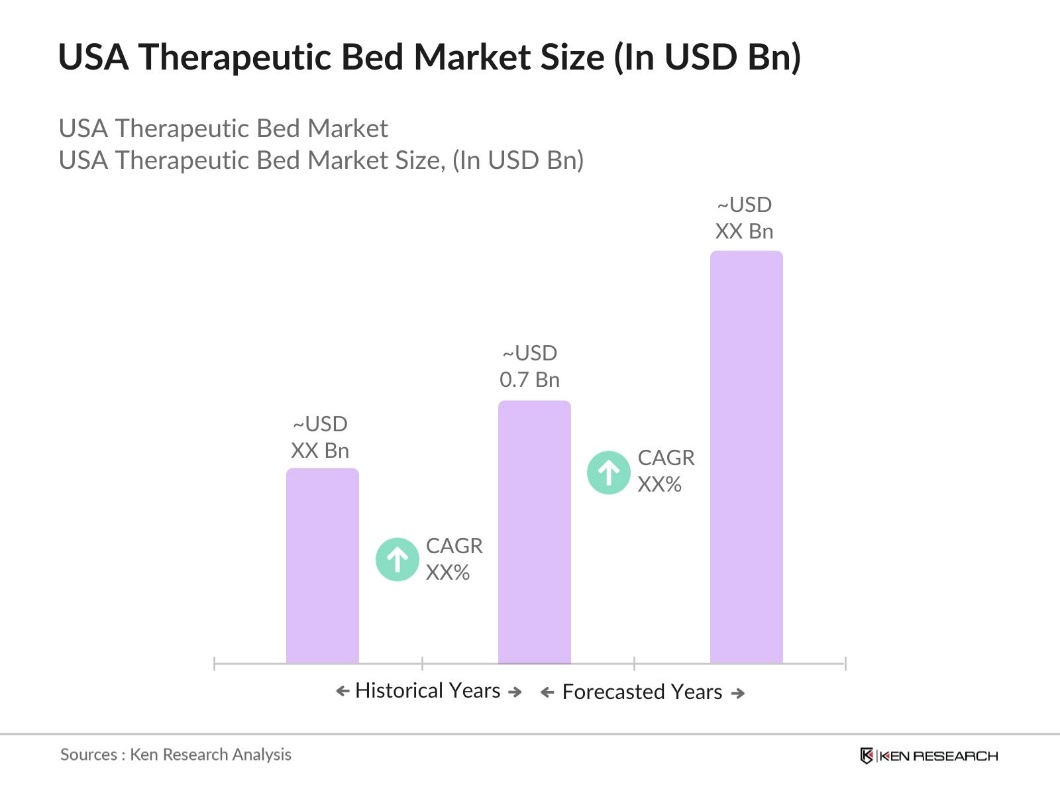
- The USA therapeutic bed market is dominated by key states like California, Texas, and New York. These states have a concentration of advanced healthcare facilities, a higher population density, and substantial healthcare expenditures. The dominance of these regions is also attributed to the presence of leading healthcare institutions and an aging population that requires specialized therapeutic care.
- The Joint Commission establishes National Patient Safety Goals to improve patient safety in healthcare settings. In 2022, these guidelines included specific standards for hospital bed safety to prevent falls and entrapment. Compliance with these guidelines is essential for healthcare facilities to maintain accreditation. Manufacturers must design therapeutic beds that meet or exceed these safety standards, incorporating features like adjustable side rails and alarms.
USA Therapeutic Bed Market Segmentation
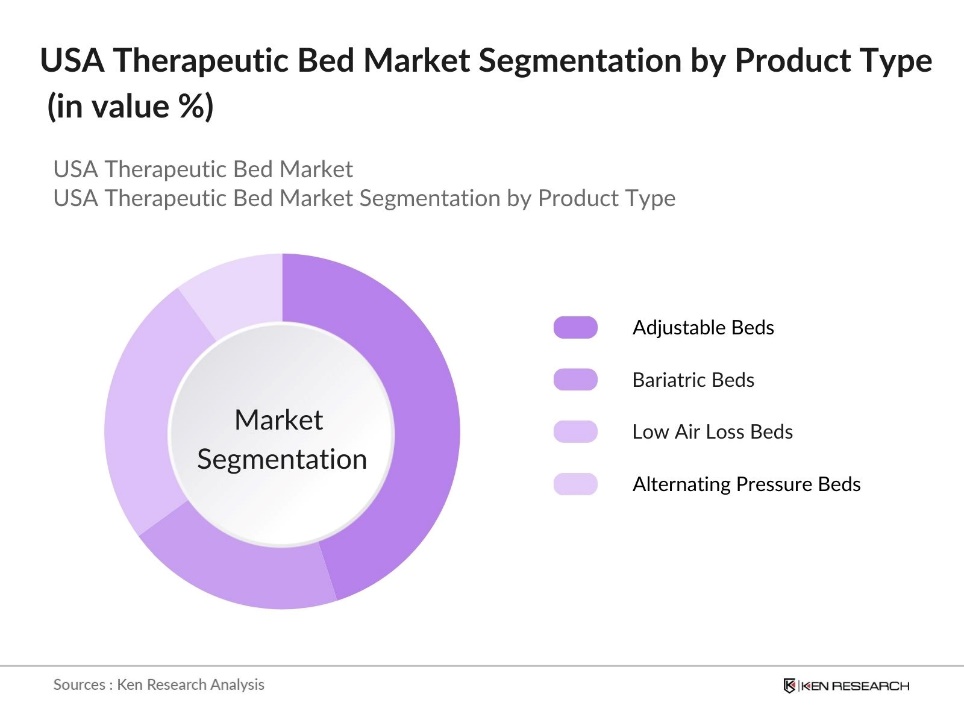
By Product Type: The USA therapeutic bed market is segmented by product type into adjustable beds, bariatric beds, low air loss beds, and alternating pressure beds. Adjustable beds currently hold the dominant market share due to their widespread use in hospitals and home care settings. These beds provide enhanced flexibility and ease of use, making them ideal for both patients and caregivers. Adjustable beds are particularly popular in long-term care facilities due to their ability to reduce patient movement, preventing pressure ulcers and other bed-related complications.
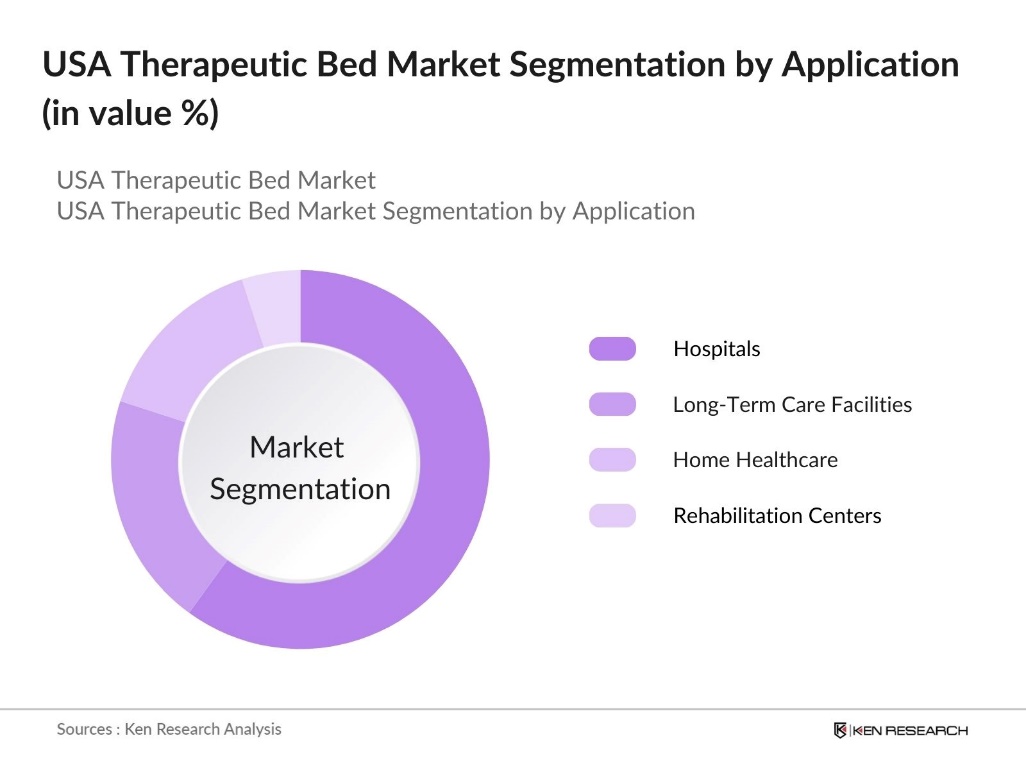
By Application: The USA therapeutic bed market is also segmented by application into hospitals, long-term care facilities, home healthcare, and rehabilitation centers. Hospitals dominate the application segment, holding the largest market share, due to the high patient turnover and the critical need for therapeutic solutions that improve patient care and outcomes. Hospitals invest heavily in therapeutic beds to accommodate patients with severe conditions, including post-surgical recovery and chronic illnesses, which require continuous monitoring and specialized care.
USA Therapeutic Bed Market Competitive Landscape
The market is highly consolidated, with key players like Hill-Rom Holdings, Inc., Stryker Corporation, and Invacare Corporation leading the competition. These companies have established strong footholds through innovative product offerings, extensive distribution networks, and strategic partnerships with healthcare providers. The competitive intensity is further driven by continuous product development, such as smart bed solutions, aimed at improving patient care outcomes.
|
Company |
Establishment Year |
Headquarters |
Product Portfolio |
Technological Innovations |
Key Partnerships |
Revenue (USD Bn) |
Global Reach |
Patient Outcome Focus |
|
Hill-Rom Holdings, Inc. |
1929 |
Chicago, IL |
||||||
|
Stryker Corporation |
1941 |
Kalamazoo, MI |
||||||
|
Invacare Corporation |
1979 |
Elyria, OH |
||||||
|
Medline Industries, Inc. |
1966 |
Northfield, IL |
||||||
|
ArjoHuntleigh |
1957 |
Addison, IL |
USA Therapeutic Bed Industry Analysis
Growth Drivers
- Aging Population (Geriatric Care): The United States is witnessing a significant increase in its elderly population. According to the U.S. Census Bureau, as of 2022, there are approximately 58 million people aged 65 and older in the country. This number is projected to rise due to the aging Baby Boomer generation. The elderly population often requires specialized medical care, including therapeutic beds designed for geriatric patients. The increase in age-related health issues such as mobility impairments and chronic illnesses necessitates advanced bed solutions to enhance patient care and comfort.
- Increasing Prevalence of Chronic Diseases (Bedridden Patients): Chronic diseases are on the rise in the United States, contributing to a higher number of bedridden patients. The Centers for Disease Control and Prevention (CDC) reports that as of 2022, about 6 in 10 adults in the U.S. have a chronic disease, and 4 in 10 have two or more. Conditions such as heart disease, stroke, cancer, and diabetes often result in prolonged hospital stays and increased need for therapeutic beds. These beds play a crucial role in patient recovery and comfort by preventing pressure ulcers and facilitating mobility.
- Technological Advancements (Smart Beds, Pressure Management Systems): Technological advancements are driving the therapeutic bed market, particularly through the integration of smart technology and advanced pressure management systems. Smart beds equipped with sensors monitor patient movements and vitals, automatically adjusting to prevent issues like bedsores. These innovations enhance patient care, improve comfort, and reduce manual interventions, making them essential in healthcare facilities for better outcomes and operational efficiency. Smart beds are increasingly becoming a standard in modern healthcare.
Market Challenges
- High Costs of Therapeutic Beds (Affordability Constraints): Therapeutic beds are often expensive due to their advanced technology and features, presenting affordability challenges for smaller healthcare providers and patients in need of home care. The initial cost, combined with maintenance expenses, can deter widespread adoption, especially in underfunded institutions. These affordability constraints limit market penetration, encouraging manufacturers to explore more cost-effective solutions that maintain quality while remaining accessible to a broader range of consumers.
- Insurance Reimbursement Issues (Limited Coverage): Insurance reimbursement policies present obstacles to acquiring therapeutic beds, as coverage is often restricted to basic models. Advanced features like pressure ulcer prevention or smart technology are frequently excluded, leading to higher out-of-pocket expenses for patients. Limited insurance coverage affects purchasing decisions for healthcare facilities and individual consumers, posing a challenge to market growth and access to advanced therapeutic solutions
USA Therapeutic Bed Market Future Outlook
Over the next few years, the USA therapeutic bed market is expected to experience steady growth, driven by the increasing need for advanced medical technologies and home care solutions. The aging population and the growing prevalence of chronic illnesses such as obesity, diabetes, and cardiovascular diseases will continue to fuel the demand for therapeutic beds. In addition, technological advancements, such as the integration of IoT in therapeutic beds, will offer improved patient monitoring and healthcare management, further supporting the market's expansion.
Market Opportunities
- Telehealth Integration (Remote Patient Monitoring): The integration of telehealth with therapeutic beds offers promising opportunities for improving patient care. Therapeutic beds equipped with remote monitoring features allow healthcare providers to track key health metrics such as weight, movement, and vital signs in real-time. This capability enhances patient care by enabling continuous monitoring, especially for those in remote or underserved areas. The trend toward digitalization and remote healthcare management aligns well with this integration, supporting more efficient and proactive patient care.
- Expansion into Rural Areas (Addressing Underserved Populations): Rural areas present a significant opportunity for the therapeutic bed market, as they are often underserved with limited access to advanced medical equipment. By expanding distribution channels and offering affordable therapeutic bed solutions, manufacturers can help bridge the healthcare gap in these regions. Addressing the needs of rural populations creates an opportunity for market growth, improving access to care and contributing to better health outcomes in these communities.
Scope of the Report
|
Product Type |
Adjustable Beds Bariatric Beds Low Air Loss Beds Alternating Pressure Beds |
|
Application |
Hospitals Long-Term Care Facilities Home Healthcare Rehabilitation Centers |
|
End-User |
Acute Care Hospitals Ambulatory Surgical Centers Hospice Care |
|
Distribution Channel |
Direct Sales Distributors and Dealers Online Retail |
|
Region |
North-East USA Midwest USA Southern USA Western USA |
Products
Key Target Audience
Medical Furniture Manufacturers
Insurance Companies
Medical Device Manufactures
Government and Regulatory Bodies (e.g., FDA, Medicare, Medicaid)
Investors and venture capital Firms
Banks and Financial Institutions
Companies
Players Mentioned in the Report
Hill-Rom Holdings, Inc.
Stryker Corporation
Invacare Corporation
Medline Industries, Inc.
ArjoHuntleigh
Paramount Bed Holdings Co., Ltd.
LINET Group SE
Joerns Healthcare
Drive DeVilbiss Healthcare
Apex Medical Corporation
Table of Contents
1. USA Therapeutic Bed Market Overview
1.1 Definition and Scope
1.2 Market Taxonomy
1.3 Market Growth Rate (Therapeutic bed demand growth, healthcare spending)
1.4 Market Segmentation Overview
2. USA Therapeutic Bed Market Size (In USD Bn)
2.1 Historical Market Size
2.2 Year-On-Year Growth Analysis
2.3 Key Market Developments and Milestones (Regulatory approvals, major innovations)
3. USA Therapeutic Bed Market Analysis
3.1 Growth Drivers
3.1.1 Aging Population (Geriatric care)
3.1.2 Increasing Prevalence of Chronic Diseases (Bedridden patients)
3.1.3 Technological Advancements (Smart beds, pressure management systems)
3.1.4 Growth in Home Healthcare Services (At-home therapeutic care)
3.2 Market Challenges
3.2.1 High Costs of Therapeutic Beds (Affordability constraints)
3.2.2 Insurance Reimbursement Issues (Limited coverage)
3.2.3 Competitive Pricing Pressures (Price wars among key players)
3.3 Opportunities
3.3.1 Telehealth Integration (Remote patient monitoring)
3.3.2 Expansion into Rural Areas (Addressing underserved populations)
3.3.3 Growing Demand for Customization (Bespoke therapeutic solutions)
3.4 Trends
3.4.1 Adoption of Pressure Redistribution Technology (Enhanced comfort, reduced bedsores)
3.4.2 IoT Integration (Smart therapeutic beds)
3.4.3 Increased Focus on Home Care (Growing homecare services for patients)
3.5 Government Regulations
3.5.1 FDA Approval Standards (Device classification and compliance)
3.5.2 Medicare and Medicaid Reimbursement Policies
3.5.3 Hospital Bed Safety Guidelines (National Patient Safety Goals)
3.6 SWOT Analysis
3.7 Stakeholder Ecosystem (Hospitals, nursing homes, manufacturers, and caregivers)
3.8 Porters Five Forces (Competition intensity, bargaining power of buyers)
3.9 Competitive Ecosystem (Key competitors, market shares)
4. USA Therapeutic Bed Market Segmentation
4.1 By Product Type (In Value %)
4.1.1 Adjustable Beds
4.1.2 Bariatric Beds
4.1.3 Low Air Loss Beds
4.1.4 Alternating Pressure Beds
4.2 By Application (In Value %)
4.2.1 Hospitals
4.2.2 Long-Term Care Facilities
4.2.3 Home Healthcare
4.2.4 Rehabilitation Centers
4.3 By End-User (In Value %)
4.3.1 Acute Care Hospitals
4.3.2 Ambulatory Surgical Centers
4.3.3 Hospice Care
4.4 By Distribution Channel (In Value %)
4.4.1 Direct Sales
4.4.2 Distributors and Dealers
4.4.3 Online Retail
4.5 By Region (In Value %)
4.5.1 North-East USA
4.5.2 Midwest USA
4.5.3 Southern USA
4.5.4 Western USA
5. USA Therapeutic Bed Market Competitive Analysis
5.1 Detailed Profiles of Major Companies
5.1.1 Hill-Rom Holdings, Inc.
5.1.2 Stryker Corporation
5.1.3 Invacare Corporation
5.1.4 Medline Industries, Inc.
5.1.5 ArjoHuntleigh
5.1.6 Getinge Group
5.1.7 Paramount Bed Holdings Co., Ltd.
5.1.8 LINET Group SE
5.1.9 Joerns Healthcare
5.1.10 Drive DeVilbiss Healthcare
5.1.11 Apex Medical Corporation
5.1.12 GF Health Products, Inc.
5.1.13 Span America Medical Systems, Inc.
5.1.14 Transfer Master Products, Inc.
5.1.15 NOA Medical Industries, Inc.
5.2 Cross Comparison Parameters (Headquarters, Product Portfolio, Annual Revenue, Global Presence, Recent Innovations, Patient Satisfaction Rating, Hospital Contracts, Partnerships)
5.3 Market Share Analysis
5.4 Strategic Initiatives (New product launches, partnerships, market expansion)
5.5 Mergers And Acquisitions
5.6 Investment Analysis
5.7 Venture Capital Funding
5.8 Government Grants and Funding (For therapeutic bed innovation)
5.9 Private Equity Investments
6. USA Therapeutic Bed Market Regulatory Framework
6.1 Certification Requirements (FDA, CE Marking)
6.2 Patient Safety Regulations (Bed safety standards)
6.3 Reimbursement Guidelines (Medicare and Medicaid)
6.4 Quality Control Standards
7. USA Therapeutic Bed Future Market Size (In USD Bn)
7.1 Future Market Size Projections
7.2 Key Factors Driving Future Market Growth (Chronic disease prevalence, home healthcare expansion)
8. USA Therapeutic Bed Future Market Segmentation
8.1 By Product Type (In Value %)
8.2 By Application (In Value %)
8.3 By End-User (In Value %)
8.4 By Distribution Channel (In Value %)
8.5 By Region (In Value %)
9. USA Therapeutic Bed Market Analysts Recommendations
9.1 TAM/SAM/SOM Analysis
9.2 Customer Cohort Analysis (Hospitals, nursing homes, individual patients)
9.3 Marketing Initiatives (Targeted promotions for healthcare institutions)
9.4 White Space Opportunity Analysis (Niche segments like pediatric beds)
Disclaimer Contact UsResearch Methodology
Step 1: Identification of Key Variables
The initial phase involves identifying key stakeholders in the USA therapeutic bed market, including hospitals, healthcare providers, and product manufacturers. This process is supported by extensive secondary research to map out the ecosystem and key market variables, such as product types, application areas, and distribution channels.
Step 2: Market Analysis and Construction
In this step, historical market data for the USA therapeutic bed market is compiled and analyzed. This includes assessing market penetration, consumer preferences, and the sales performance of various therapeutic bed types across key regions. The resulting analysis will help determine the overall market size and segmentation.
Step 3: Hypothesis Validation and Expert Consultation
Key market hypotheses are developed and validated through interviews with industry experts, including healthcare providers and therapeutic bed manufacturers. These consultations provide critical insights into the operational and financial aspects of the market, helping refine the data and validate the findings.
Step 4: Research Synthesis and Final Output
The final stage involves synthesizing all collected data and producing the final report. This includes verifying insights from manufacturers, integrating them into the bottom-up approach, and ensuring the accuracy of the market segmentation and future outlook.
Frequently Asked Questions
01. How big is the USA Therapeutic Bed Market?
The USA Therapeutic Bed Market is valued at USD 0.7 billion, driven by increased demand for advanced healthcare solutions, particularly among the aging population and patients with chronic illnesses.
02. What are the challenges in the USA Therapeutic Bed Market?
Challenges in the USA therapeutic bed market include high costs of therapeutic beds, limited insurance reimbursement, and competitive pressures from key players offering low-cost alternatives.
03. Who are the major players in the USA Therapeutic Bed Market?
Key players in the USA Therapeutic Bed Market include Hill-Rom Holdings, Inc., Stryker Corporation, Invacare Corporation, Medline Industries, Inc., and ArjoHuntleigh. These companies dominate due to their innovative product offerings and strong healthcare partnerships.
04. What are the growth drivers of the USA Therapeutic Bed Market?
The USA Therapeutic Bed Market is propelled by an aging population, increasing prevalence of chronic diseases, and technological advancements in smart bed solutions that enhance patient care and monitoring.
Why Buy From Us?

What makes us stand out is that our consultants follows Robust, Refine and Result (RRR) methodology. i.e. Robust for clear definitions, approaches and sanity checking, Refine for differentiating respondents facts and opinions and Result for presenting data with story

We have set a benchmark in the industry by offering our clients with syndicated and customized market research reports featuring coverage of entire market as well as meticulous research and analyst insights.

While we don't replace traditional research, we flip the method upside down. Our dual approach of Top Bottom & Bottom Top ensures quality deliverable by not just verifying company fundamentals but also looking at the sector and macroeconomic factors.

With one step in the future, our research team constantly tries to show you the bigger picture. We help with some of the tough questions you may encounter along the way: How is the industry positioned? Best marketing channel? KPI's of competitors? By aligning every element, we help maximize success.

Our report gives you instant access to the answers and sources that other companies might choose to hide. We elaborate each steps of research methodology we have used and showcase you the sample size to earn your trust.

If you need any support, we are here! We pride ourselves on universe strength, data quality, and quick, friendly, and professional service.