
USA Toys Market Outlook to 2030
Region:United States
Author(s):Abhinav kumar
Product Code:KROD8984
Region:United States
Author(s):Abhinav kumar
Product Code:KROD8984
December 2024
91
Listen to the audio summary
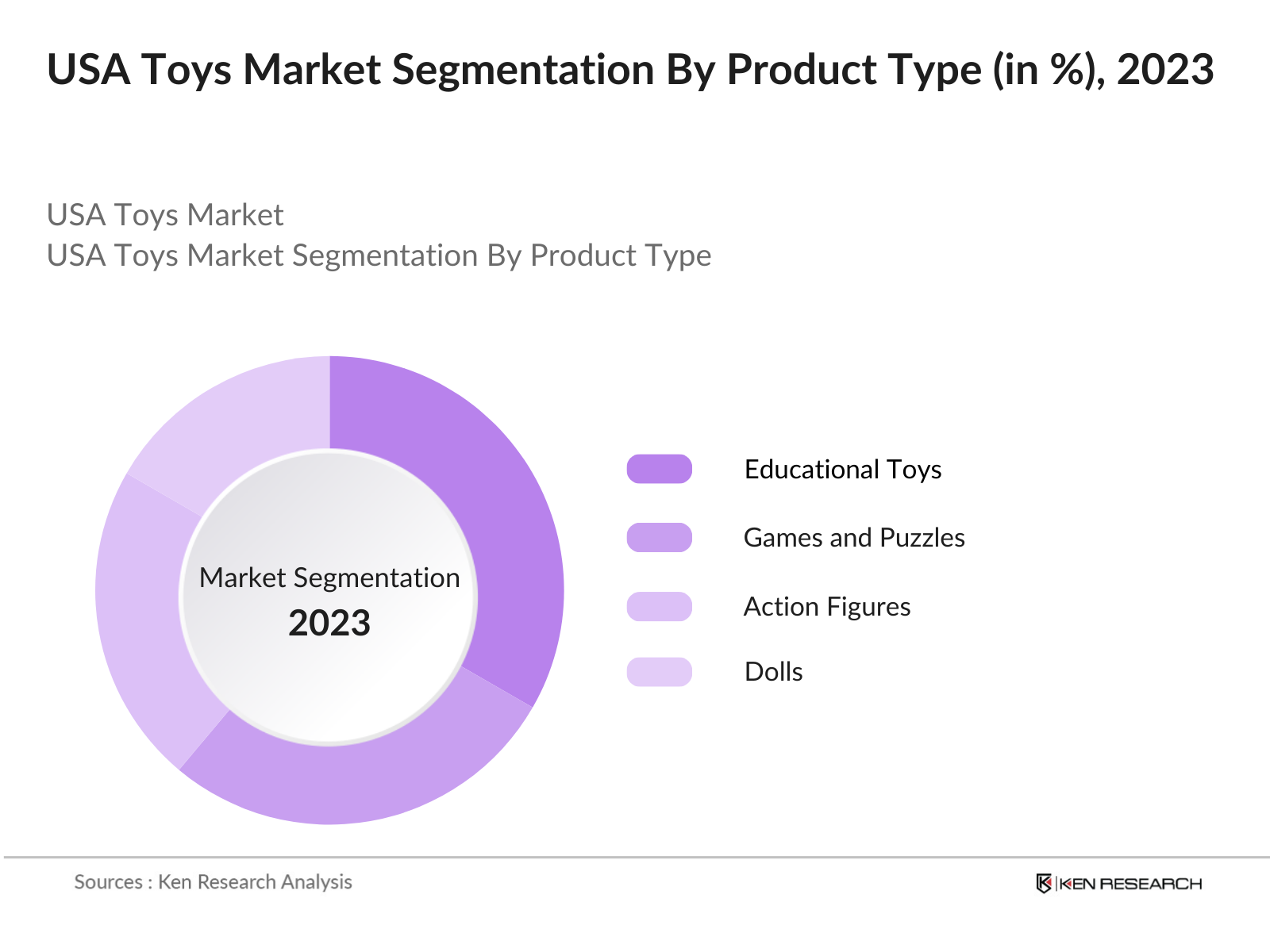
By Product Type: The USA Toys Market is segmented by product type into action figures, educational toys, dolls, games and puzzles, and outdoor toys. Recently, educational toys hold a dominant market share in the product type segment, as parents increasingly prioritize toys that foster cognitive development and problem-solving skills in children. Brands like LEGO and VTech have reinforced this segment's popularity by offering a variety of educational and STEM-focused products that engage children in learning through play.
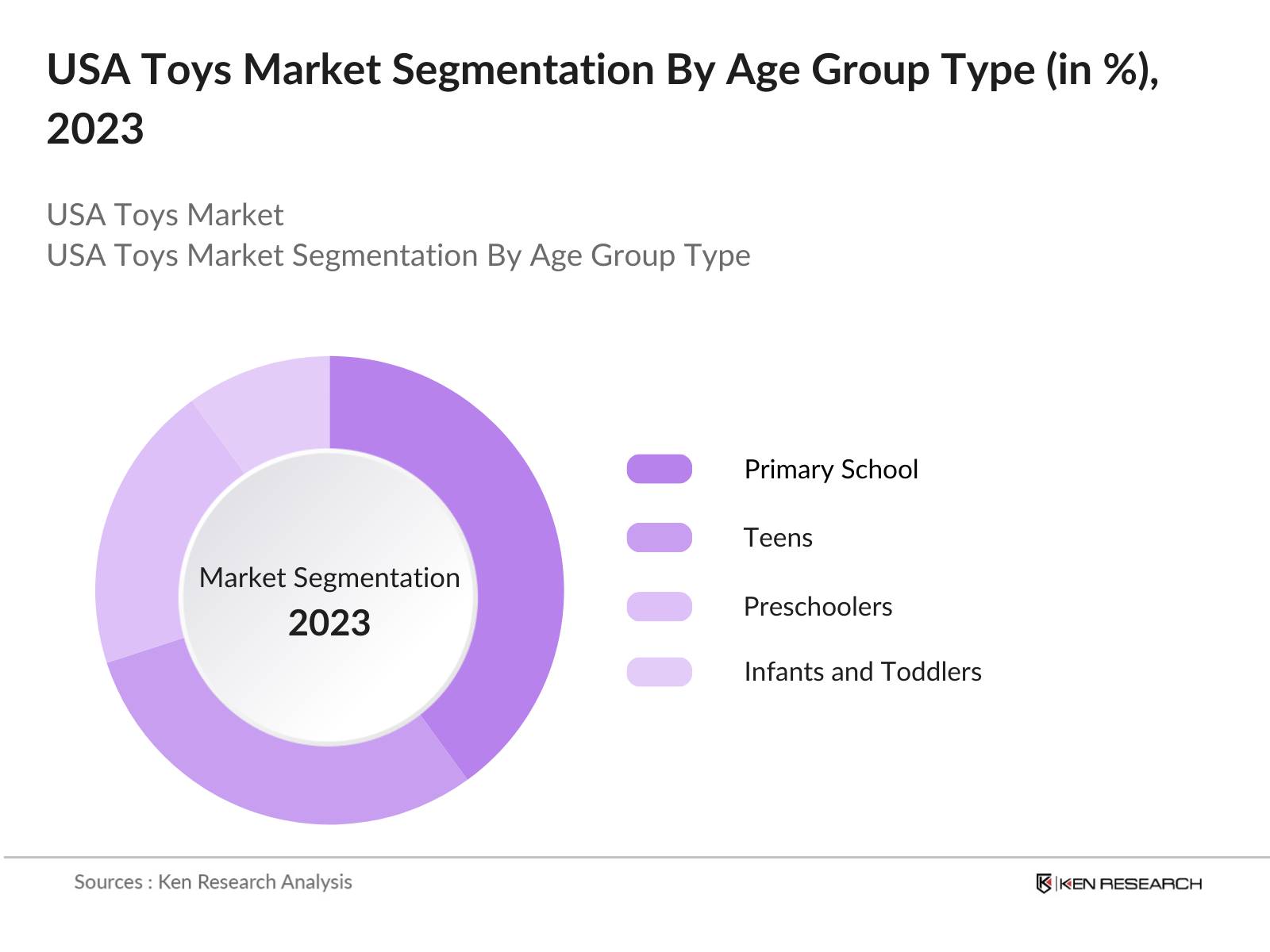
By Age Group: The USA Toys Market is also segmented by age group into infants and toddlers, preschoolers, primary school children, and teens. Toys for primary school children are currently the leading sub-segment in this category, as children in this age group show strong engagement with toys that promote creativity and social interaction. Brands such as Hasbro and Mattel cater to this age group with products that encourage play-based learning and social skills, which has led to sustained demand within this age demographic.
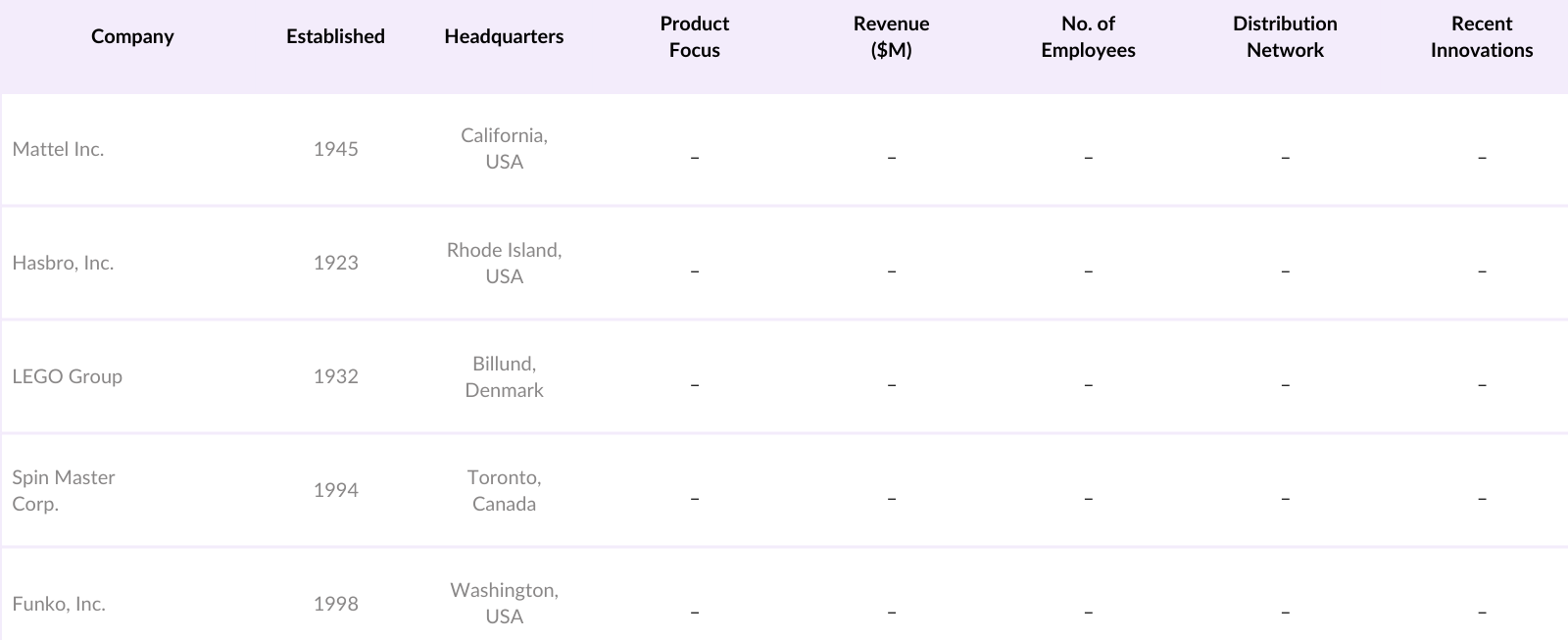
The USA Toys Market is characterized by a mix of established global players and emerging brands that focus on niche categories. Market leaders include well-known companies such as Mattel, Hasbro, and LEGO, whose longstanding market presence and diversified product portfolios allow them to maintain a competitive edge. The competition is intensified by continual product innovations and high brand loyalty among consumers.
The USA Toys Market is anticipated to experience steady growth in the coming years, driven by technological advancements in interactive and smart toys, rising consumer interest in sustainable materials, and increased spending on educational toys. Market players are expected to expand their product lines to cater to a diverse demographic, including teens and adults, as interest in collectibles and board games remains strong. The shift toward eco-friendly and sustainable toy production also presents growth opportunities, as consumers increasingly seek environmentally responsible products.
|
Product Type |
Action Figures Dolls and Plush Toys Educational and STEM Toys Electronic and Interactive Toys Games and Puzzles |
|
Age Group |
Infant and Toddler (0-2 years) Preschool (3-5 years) Primary School (6-12 years) Teens and Preteens (13+ years) |
|
Sales Channel |
Online Retail Offline Retail Specialty Stores Hypermarkets and Supermarkets |
|
Material Type |
Plastic Wood Fabric Others |
|
Region |
Northeast Midwest South West |
1.1 Definition and Scope
1.2 Market Taxonomy
1.3 Market Dynamics (Consumer Preferences, Technological Influence)
1.4 Market Segmentation Overview
2.1 Historical Market Size
2.2 Year-on-Year Growth Analysis
2.3 Key Market Developments and Milestones (Product Innovations, Retail Expansion)
3.1 Growth Drivers
3.1.1 Brand Loyalty and Product Recognition
3.1.2 Demand for STEM and Educational Toys
3.1.3 Seasonal Demand Trends
3.1.4 Influence of Online Retail
3.2 Market Challenges
3.2.1 Safety and Regulatory Compliance Costs
3.2.2 Rising Competition from Digital Entertainment
3.2.3 Product Counterfeiting
3.2.4 Price Sensitivity of Consumers
3.3 Opportunities
3.3.1 Sustainability in Toys
3.3.2 Expansion in Specialty Toy Markets
3.3.3 Growth in Subscription-based Toy Services
3.3.4 Regional Brand Collaborations
3.4 Trends
3.4.1 Adoption of Eco-Friendly Materials
3.4.2 Growth of Interactive and AI Toys
3.4.3 Increase in Customization and Personalization
3.4.4 Rise in Collectibles and Limited Edition Toys
3.5 Government Regulations
3.5.1 Safety Standards for Childrens Products
3.5.2 Import Regulations and Tariffs
3.5.3 Environmental Regulations on Materials
3.5.4 Labor and Manufacturing Standards
3.6 SWOT Analysis
3.7 Stakeholder Ecosystem (Manufacturers, Retailers, Distributors)
3.8 Porters Five Forces Analysis
3.9 Competitive Ecosystem
4.1 By Product Type (in Value %)
4.1.1 Action Figures
4.1.2 Dolls and Plush Toys
4.1.3 Educational and STEM Toys
4.1.4 Electronic and Interactive Toys
4.1.5 Games and Puzzles
4.2 By Age Group (in Value %)
4.2.1 Infant and Toddler (0-2 years)
4.2.2 Preschool (3-5 years)
4.2.3 Primary School (6-12 years)
4.2.4 Teens and Preteens (13+ years)
4.3 By Sales Channel (in Value %)
4.3.1 Online Retail
4.3.2 Offline Retail
4.3.3 Specialty Stores
4.3.4 Hypermarkets and Supermarkets
4.4 By Material Type (in Value %)
4.4.1 Plastic
4.4.2 Wood
4.4.3 Fabric
4.4.4 Others (Eco-friendly materials)
4.5 By Region (in Value %)
4.5.1 Northeast
4.5.2 Midwest
4.5.3 South
4.5.4 West
5.1 Detailed Profiles of Major Companies
5.1.1 Mattel Inc.
5.1.2 Hasbro, Inc.
5.1.3 LEGO Group
5.1.4 Spin Master Corp.
5.1.5 Bandai Namco Holdings
5.1.6 VTech Holdings Ltd.
5.1.7 Funko, Inc.
5.1.8 Jakks Pacific, Inc.
5.1.9 MGA Entertainment
5.1.10 Ravensburger AG
5.1.11 TOMY Company, Ltd.
5.1.12 Basic Fun!
5.1.13 Melissa & Doug
5.1.14 Playmobil
5.1.15 Fisher-Price
5.2 Cross-Comparison Parameters
5.3 Market Share Analysis
5.4 Strategic Initiatives
5.5 Mergers and Acquisitions
5.6 Investment Analysis
5.7 Venture Capital Funding
5.8 Government Grants
5.9 Private Equity Investments
6.1 Safety Compliance Standards (ASTM, CPSIA)
6.2 Import and Export Regulations
6.3 Certification Processes
6.4 Environmental Standards on Manufacturing
7.1 Market Projections
7.2 Key Factors Driving Future Growth
8.1 By Product Type
8.2 By Age Group
8.3 By Sales Channel
8.4 By Material Type
8.5 By Region
9.1 TAM/SAM/SOM Analysis
9.2 Customer Cohort Analysis
9.3 Marketing Initiatives
9.4 White Space Opportunity Analysis
Disclaimer Contact UsThis stage involves mapping the entire USA Toys Market ecosystem, identifying major stakeholders, and understanding the demand dynamics and regulatory environment. Secondary databases and proprietary industry reports are leveraged to define critical variables, such as consumer trends and purchasing behavior.
This phase entails compiling historical data for market sizing and segmentation analysis. The research focuses on toy categories, age-specific preferences, and sales channel distribution, which helps determine the market share and growth rate of various segments.
A structured approach is taken to validate market hypotheses by conducting interviews with industry experts and key executives from leading toy manufacturers. This qualitative insight complements quantitative data, ensuring that the analysis reflects accurate and recent market trends.
The final stage involves synthesizing the collected data to form a comprehensive report, incorporating insights from manufacturers, retailers, and distributors. The analysis is verified for accuracy through a bottom-up approach, enabling a detailed and reliable assessment of the USA Toys Market.
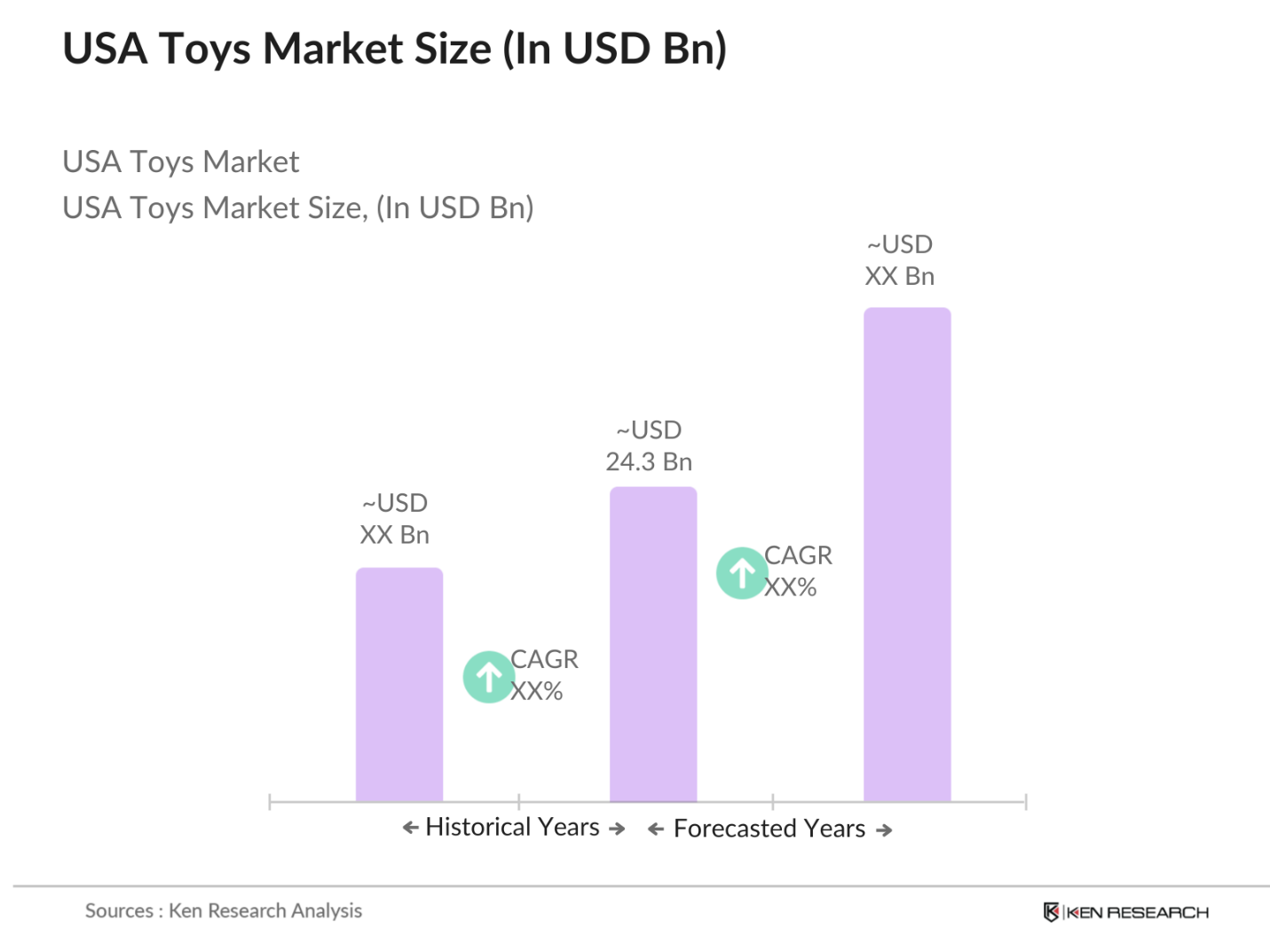
The USA Toys Market is valued at USD 24.3 billion, driven by rising consumer interest in educational and STEM toys, as well as collectible figures that cater to older demographics.
Key drivers include increased consumer demand for educational toys, advancements in interactive technologies, and the influence of digital media on childrens preferences.
Prominent companies include Mattel, Hasbro, LEGO Group, Spin Master, and Funko. These players dominate due to their extensive product lines, global reach, and strong brand loyalty.
Challenges include regulatory compliance with safety standards, competition from digital entertainment options, and the need for eco-friendly production practices.

What makes us stand out is that our consultants follows Robust, Refine and Result (RRR) methodology. i.e. Robust for clear definitions, approaches and sanity checking, Refine for differentiating respondents facts and opinions and Result for presenting data with story

We have set a benchmark in the industry by offering our clients with syndicated and customized market research reports featuring coverage of entire market as well as meticulous research and analyst insights.

While we don't replace traditional research, we flip the method upside down. Our dual approach of Top Bottom & Bottom Top ensures quality deliverable by not just verifying company fundamentals but also looking at the sector and macroeconomic factors.

With one step in the future, our research team constantly tries to show you the bigger picture. We help with some of the tough questions you may encounter along the way: How is the industry positioned? Best marketing channel? KPI's of competitors? By aligning every element, we help maximize success.

Our report gives you instant access to the answers and sources that other companies might choose to hide. We elaborate each steps of research methodology we have used and showcase you the sample size to earn your trust.

If you need any support, we are here! We pride ourselves on universe strength, data quality, and quick, friendly, and professional service.