















USA Translation Devices Market Outlook to 2030
Region:North America
Author(s):Shreya
Product Code:KROD9350
December 2024
85
About the Report
USA Translation Devices Market Overview
- The USA Translation Devices market, valued at USD 380 million, is primarily driven by technological advancements and a growing demand for real-time translation across diverse sectors, including tourism, healthcare, and corporate environments. The increasing adoption of AI and machine learning in translation devices has enhanced language accuracy, further propelling market growth. The availability of smart, portable translation devices that cater to varied user needs also supports their expanding usage.
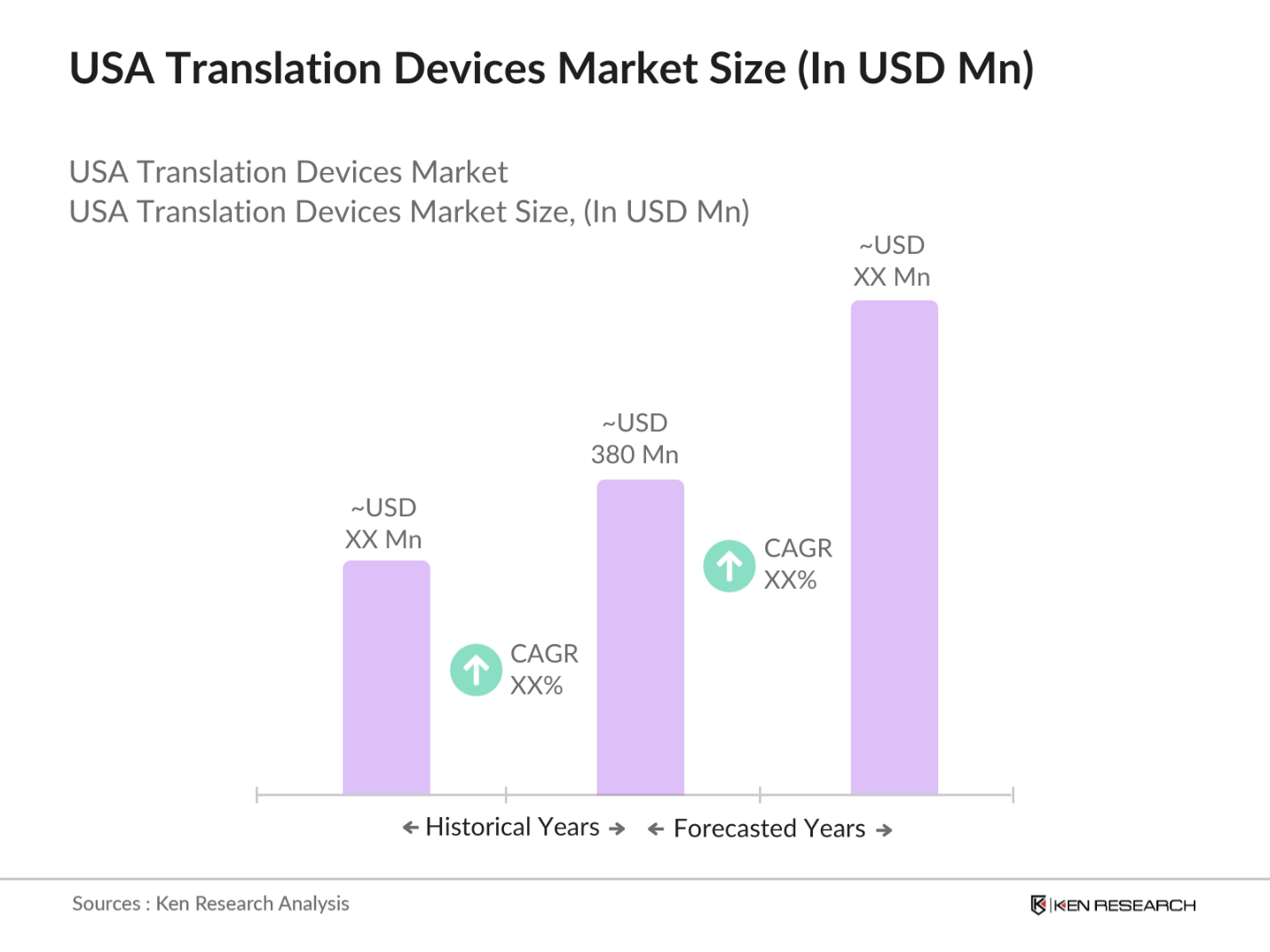
- In the USA, cities with a high influx of international tourists and multicultural hubs, such as New York, Los Angeles, and Miami, dominate the translation devices market. These regions serve as entry points for foreign visitors and have established multilingual communities, increasing the need for effective language translation tools. Furthermore, major metropolitan areas witness heightened demand due to their diverse corporate ecosystems that require translation solutions for global business interactions.
- The FCC enforces standards on electronic devices to ensure they meet safety and functionality criteria. Translation devices fall under FCC Part 15 regulations for electronic communication devices, requiring adherence to specific technical standards. The FCC reported issuing over 100 device compliance violations in 2023, underscoring the importance of regulatory compliance for market entry.
USA Translation Devices Market Segmentation
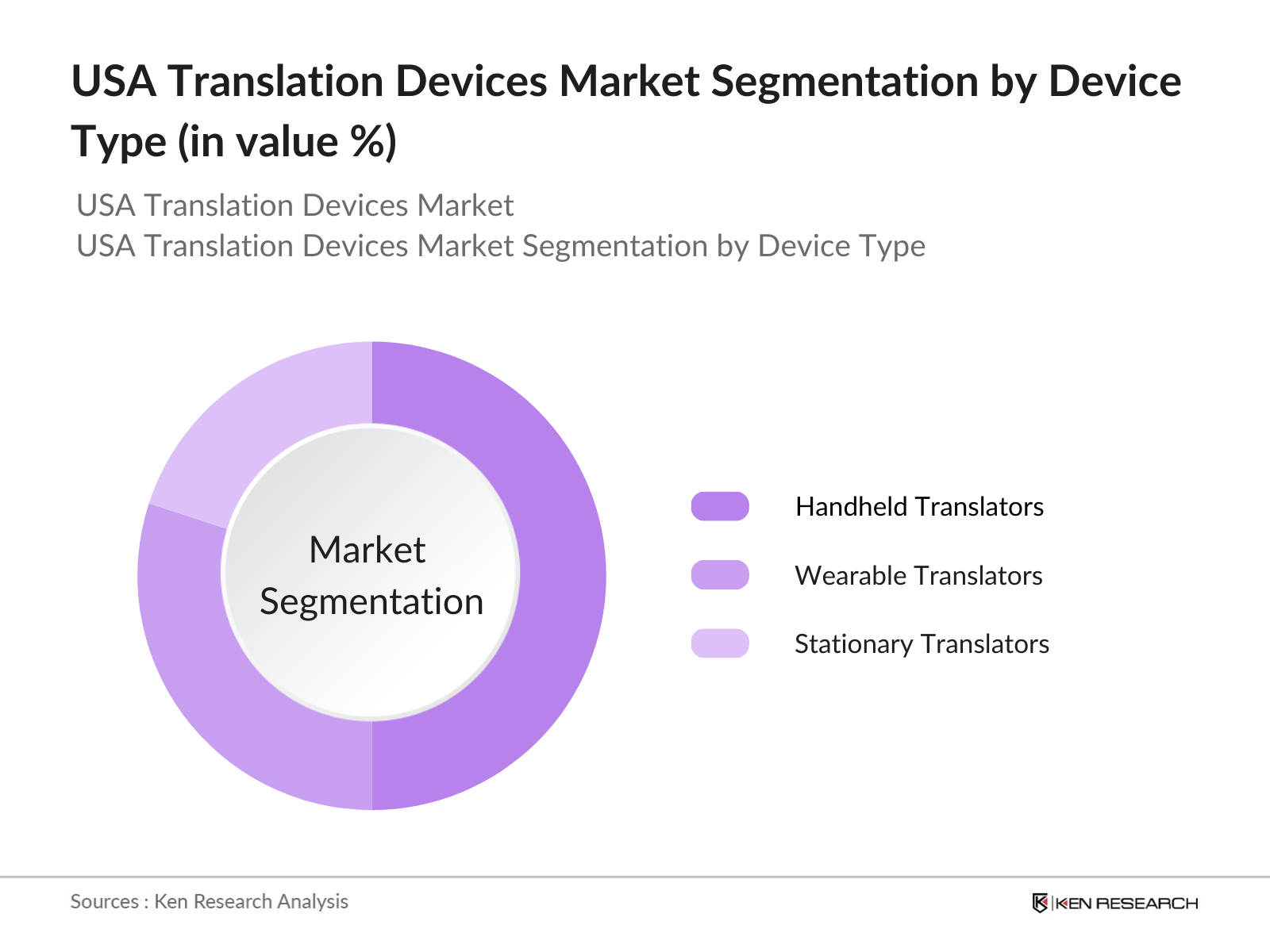
By Device Type: The USA Translation Devices market is segmented by device type into handheld translators, wearable translators, and stationary translators. Handheld translators currently hold a dominant market share within the device type segmentation. This prominence is attributed to their affordability, portability, and ease of use, making them a preferred choice for both individual travelers and business professionals. Handheld translators also feature extensive language support and real-time translation, which are critical in catering to the diverse language needs of users.
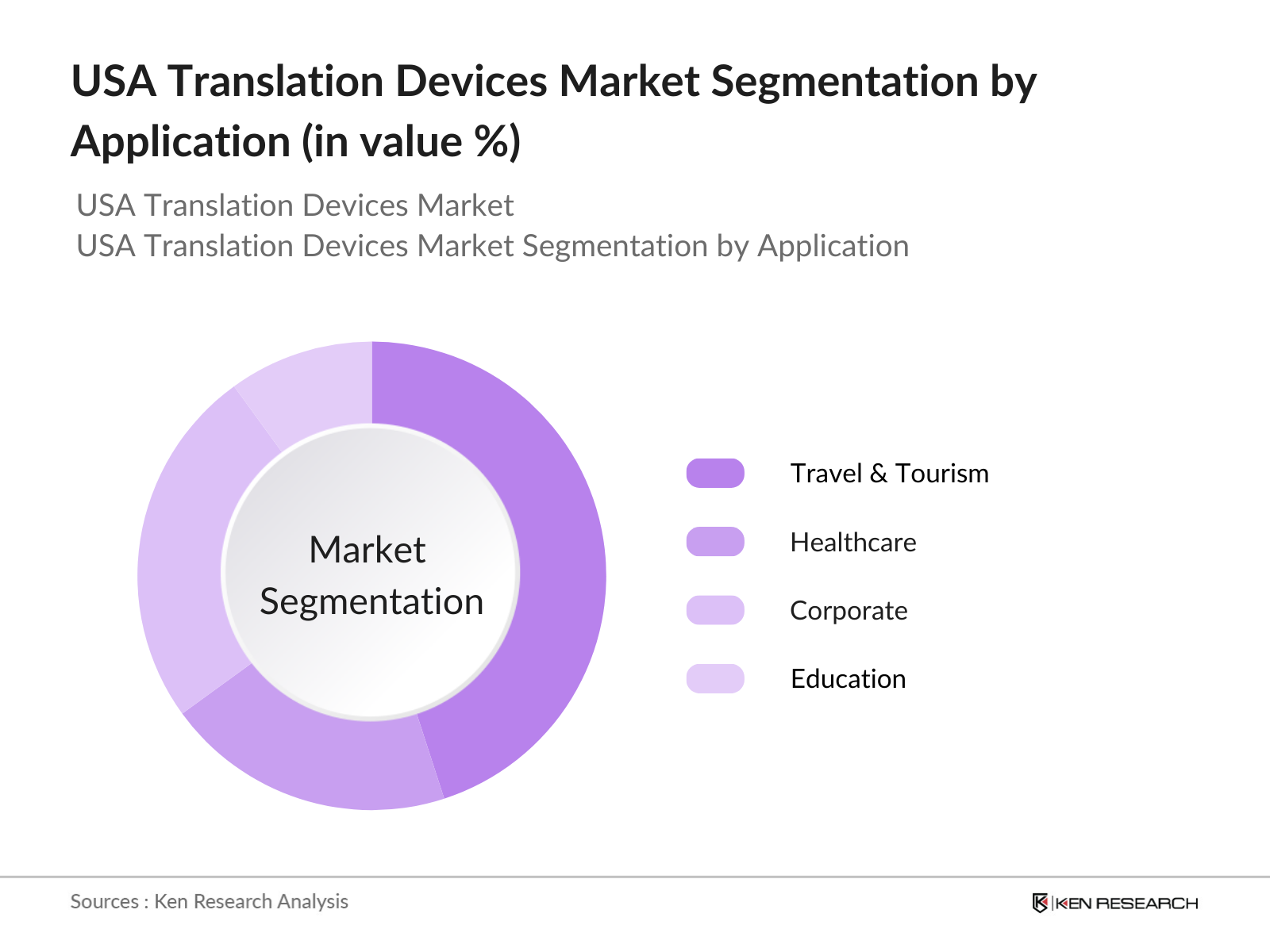
By Application: The market is segmented by application into travel & tourism, healthcare, corporate, and education. Travel & tourism is the leading sub-segment in terms of market share, as translation devices are essential for tourists seeking convenient communication in foreign environments. With the USA being a top tourist destination, translation devices are widely used in various tourist services, including transportation, hotels, and tour agencies, ensuring smoother interactions for visitors.
USA Translation Devices Competitive Landscape
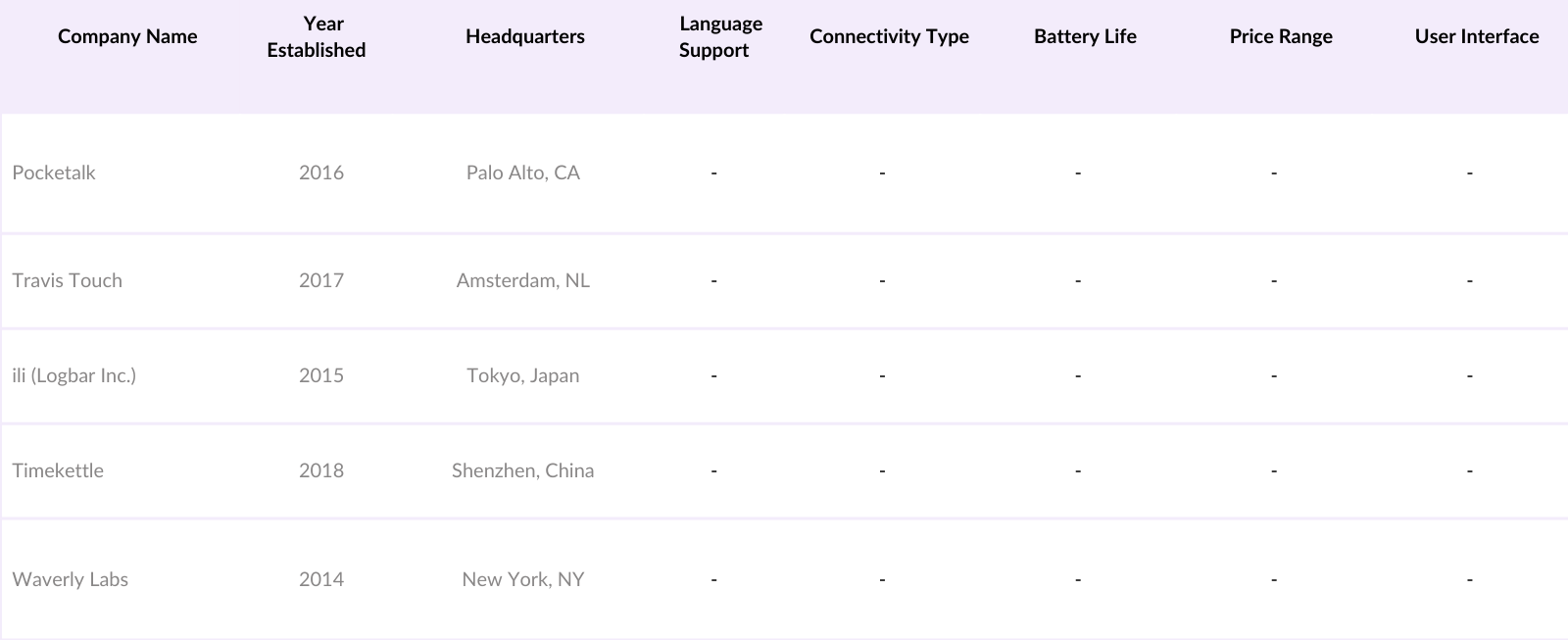
The USA Translation Devices market is led by a mix of established brands and innovative entrants, each contributing to the market's competitive dynamics. Major players focus on enhancing product features, improving language support, and advancing AI-driven translation accuracy to cater to the diverse needs of consumers.
USA Translation Devices Market Analysis
Growth Drivers
Rising Global Tourism: The surge in U.S. tourism is driving demand for translation devices. According to the U.S. National Travel and Tourism Office, international arrivals exceeded 50 million in 2023, emphasizing the increasing need for efficient language translation tools in airports, hotels, and tourist destinations. The sector is further boosted by data from the World Bank, highlighting the U.S.'s robust foreign visitor expenditure, amounting to over $200 billion annually. These numbers underscore the demand for real-time, accurate communication to enhance visitor experience and convenience.
Increasing Demand in Corporate Sector: The U.S. corporate sectors adoption of translation devices reflects the growing global workforce and remote collaboration needs. As per the Bureau of Economic Analysis (BEA), foreign direct investment in U.S. businesses reached nearly $4.8 trillion, illustrating extensive global collaboration. With over 47 million non-English speakers in the U.S., as per the U.S. Census Bureau, companies require devices for seamless communication in multinational meetings, events, and presentations, enhancing cross-border project efficiency. Source Source
Technological Advancements in AI: Recent advances in AI are transforming translation devices, enhancing both translation speed and accuracy. According to the National Institute of Standards and Technology (NIST), investment in AI development across industries, including language processing, exceeded $10 billion in 2023. The U.S. government also allocated $2 billion to AI and machine learning research, emphasizing the focus on refining language models, which are crucial for improving device accuracy in translating complex phrases and dialects.
Market Challenges
High Device Cost: High costs associated with translation devices remain a market barrier. The average cost for a high-quality translation device range from $150 to $500, according to Consumer Price Index data by the Bureau of Labor Statistics. This price range can be prohibitive for small businesses and individual users. Moreover, with household income averages at $74,580 in the U.S. (U.S. Census Bureau), purchasing these devices may seem less feasible, especially for low to mid-income households. Source Source
Language Accuracy Issues: Ensuring precise language translation, especially with complex or rare dialects, remains a technical challenge. The National Institute of Standards and Technology (NIST) has identified a 3-5% error margin in real-time language processing AI models, affecting device reliability. This challenge is amplified in regions with strong accents or unique cultural dialects, creating a gap in meeting diverse language needs accurately.
Asia Pacific Card and Board Games Market Future Outlook
Over the next five years, the USA Translation Devices market is expected to witness substantial growth, driven by increasing globalization, technological advancements in AI-based translation accuracy, and a growing need for efficient multilingual communication.
Future Market Opportunities
Expanding Application in Healthcare: The healthcare sector increasingly adopts translation devices to bridge communication gaps with non-English-speaking patients. According to the U.S. Department of Health and Human Services, over 25 million U.S. residents have limited English proficiency, necessitating real-time communication aids for medical staff. By facilitating accurate translations during consultations, these devices improve patient outcomes and reduce miscommunication-related risks.
Integration with Smart Devices: The integration of translation tools with smart devices such as smartphones, wearables, and AR/VR is expanding market potential. According to the Consumer Technology Association, over 275 million U.S. residents use smartphones, enabling seamless access to translation capabilities. This trend is supported by innovations in voice-activated devices, enhancing user convenience and increasing demand for translation functions in day-to-day interactions.
Scope of the Report
|
Device Type |
Handheld Translators |
|
Wearable Translators |
|
|
Stationary Translators |
|
|
Application |
Travel & Tourism |
|
Healthcare |
|
|
Corporate |
|
|
Education |
|
|
Connectivity |
Offline |
|
Online |
|
|
Hybrid |
|
|
End-User |
Individual |
|
Enterprise |
|
|
Government |
|
|
Region |
Northeast |
|
Midwest |
|
|
South |
|
|
West |
Products
Key Target Audience
Translation Device Manufacturers
Travel & Tourism Operators
Healthcare Providers and Medical Facilities
Corporate Communication Solutions Providers
Educational Institutions (for language training programs)
Investors and Venture Capitalist Firms
Government and Regulatory Bodies (e.g., FCC)
AI and Machine Learning Technology Providers
Companies
Players Mentioned in the Report
Pocketalk
Travis Touch
ili (Logbar Inc.)
CheetahTALK
Langogo
Vasco Electronics
Birgus
Waverly Labs
WT2 Language Translator Earbuds
Timekettle
JoneR Voice Translator
Zoyuzan
Pulomi Easy Trans
Fujitsu
Lingmo International
Table of Contents
1 USA Translation Devices Market Overview
1.1 Definition and Scope
1.2 Market Taxonomy
1.3 Market Growth Rate
1.4 Market Segmentation Overview
2 USA Translation Devices Market Size (In USD Mn)
2.1 Historical Market Size
2.2 Year-On-Year Growth Analysis
2.3 Key Market Developments and Milestones
3 USA Translation Devices Market Analysis
3.1 Growth Drivers
3.1.1 Rising Global Tourism
3.1.2 Increasing Demand in Corporate Sector
3.1.3 Technological Advancements in AI
3.1.4 Growing Need for Real-Time Communication
3.2 Market Challenges
3.2.1 High Device Cost
3.2.2 Language Accuracy Issues
3.2.3 Privacy Concerns
3.3 Opportunities
3.3.1 Expanding Application in Healthcare
3.3.2 Integration with Smart Devices
3.3.3 Localization for Niche Languages
3.4 Trends
3.4.1 Integration with AR and VR
3.4.2 Voice-Activated Translation Features
3.4.3 Enhanced Machine Learning Models
3.5 Regulatory Landscape
3.5.1 FCC Regulations on Device Standards
3.5.2 GDPR Compliance for Data Privacy
3.5.3 Export Compliance for Translation Technology
3.6 SWOT Analysis
3.7 Stakeholder Ecosystem
3.8 Porters Five Forces Analysis
3.9 Competition Ecosystem
4 USA Translation Devices Market Segmentation
4.1 By Device Type (In Value %)
4.1.1 Handheld Translators
4.1.2 Wearable Translators
4.1.3 Stationary Translators
4.2 By Application (In Value %)
4.2.1 Travel & Tourism
4.2.2 Healthcare
4.2.3 Corporate
4.2.4 Education
4.3 By Connectivity (In Value %)
4.3.1 Offline
4.3.2 Online
4.3.3 Hybrid
4.4 By End-User (In Value %)
4.4.1 Individual
4.4.2 Enterprise
4.4.3 Government
4.5 By Region (In Value %)
4.5.1 Northeast
4.5.2 Midwest
4.5.3 South
4.5.4 West
5 USA Translation Devices Market Competitive Analysis
5.1 Detailed Profiles of Major Companies
5.1.1 Pocketalk
5.1.2 Travis Touch
5.1.3 ili (Logbar Inc.)
5.1.4 CheetahTALK
5.1.5 Langogo
5.1.6 Vasco Electronics
5.1.7 Birgus
5.1.8 Waverly Labs
5.1.9 WT2 Language Translator Earbuds
5.1.10 Timekettle
5.1.11 JoneR Voice Translator
5.1.12 Zoyuzan
5.1.13 Pulomi Easy Trans
5.1.14 Fujitsu
5.1.15 Lingmo International
5.2 Cross Comparison Parameters (Language Support, Device Range, Battery Life, Connectivity Type, Translation Speed, User Interface, Durability, Customer Support)
5.3 Market Share Analysis
5.4 Strategic Initiatives
5.5 Mergers and Acquisitions
5.6 Investment Analysis
5.7 Venture Capital Funding
5.8 Government Grants
5.9 Private Equity Investments
6 USA Translation Devices Market Regulatory Framework
6.1 Device Import Regulations
6.2 Compliance with Language Translation Accuracy Standards
6.3 Certification Processes
6.4 Consumer Protection Standards
7 USA Translation Devices Future Market Size (In USD Mn)
7.1 Future Market Size Projections
7.2 Key Factors Driving Future Market Growth
8 USA Translation Devices Future Market Segmentation
8.1 By Device Type (In Value %)
8.2 By Application (In Value %)
8.3 By Connectivity (In Value %)
8.4 By End-User (In Value %)
8.5 By Region (In Value %)
9 USA Translation Devices Market Analysts Recommendations
9.1 Total Addressable Market (TAM), Serviceable Addressable Market (SAM), and Serviceable Obtainable Market (SOM) Analysis
9.2 Customer Cohort Analysis
9.3 Marketing Initiatives
9.4 White Space Opportunity Analysis
Disclaimer Contact UsResearch Methodology
Step 1: Identification of Key Variables
The initial step involved constructing a comprehensive ecosystem map covering all primary stakeholders in the USA Translation Devices market. This phase relied on extensive desk research, leveraging secondary and proprietary databases to gather data on market influencers. The goal was to outline critical variables impacting market dynamics, including language coverage, device portability, and technology integration.
Step 2: Market Analysis and Construction
In this stage, we gathered and analyzed historical data relevant to the USA Translation Devices market, assessing device usage rates, the diversity of supported languages, and consumer demographics. Additionally, a review of product quality metrics was conducted to confirm the reliability and consistency of market revenue projections.
Step 3: Hypothesis Validation and Expert Consultation
We formulated market hypotheses and validated them through CATI (Computer-Assisted Telephone Interviewing) with industry experts representing translation device manufacturers and distributors. Insights from these consultations were instrumental in refining data points and verifying revenue projections based on operational knowledge from industry stakeholders.
Step 4: Research Synthesis and Final Output
The final phase included direct engagement with translation device companies to gather detailed insights into product segmentation, user satisfaction, and demand trends. These interactions provided valuable qualitative data to support quantitative analysis, ensuring a comprehensive and validated understanding of the USA Translation Devices market.
Frequently Asked Questions
01. How big is the USA Translation Devices market?
The USA Translation Devices market is valued at USD 380 million, largely fueled by advancements in AI-driven translation accuracy and the need for seamless communication in multilingual settings across tourism and corporate sectors.
02. What are the challenges in the USA Translation Devices market?
Challenges in the USA Translation Devices market include high device costs, concerns regarding translation accuracy for niche languages, and the need to comply with data privacy regulations, such as those enforced by the FCC and GDPR, particularly for connected translation devices.
03. Who are the major players in the USA Translation Devices market?
Key players in this USA Translation Devices market include Pocketalk, Travis Touch, ili (Logbar Inc.), Waverly Labs, and Timekettle, each offering distinctive device features to address various translation needs and use cases.
04. What are the growth drivers of the USA Translation Devices market?
Primary drivers in the USA Translation Devices market include the growing influx of international tourists, rising demand for real-time translation solutions in healthcare and corporate environments, and advancements in AI and machine learning enhancing translation accuracy.
Why Buy From Us?

What makes us stand out is that our consultants follows Robust, Refine and Result (RRR) methodology. i.e. Robust for clear definitions, approaches and sanity checking, Refine for differentiating respondents facts and opinions and Result for presenting data with story

We have set a benchmark in the industry by offering our clients with syndicated and customized market research reports featuring coverage of entire market as well as meticulous research and analyst insights.

While we don't replace traditional research, we flip the method upside down. Our dual approach of Top Bottom & Bottom Top ensures quality deliverable by not just verifying company fundamentals but also looking at the sector and macroeconomic factors.

With one step in the future, our research team constantly tries to show you the bigger picture. We help with some of the tough questions you may encounter along the way: How is the industry positioned? Best marketing channel? KPI's of competitors? By aligning every element, we help maximize success.

Our report gives you instant access to the answers and sources that other companies might choose to hide. We elaborate each steps of research methodology we have used and showcase you the sample size to earn your trust.

If you need any support, we are here! We pride ourselves on universe strength, data quality, and quick, friendly, and professional service.