















USA Turboprop Engine Market Outlook to 2030
Region:North America
Author(s):Yogita Sahu
Product Code:KROD9360
December 2024
88
About the Report
USA Turboprop Engine Market Overview
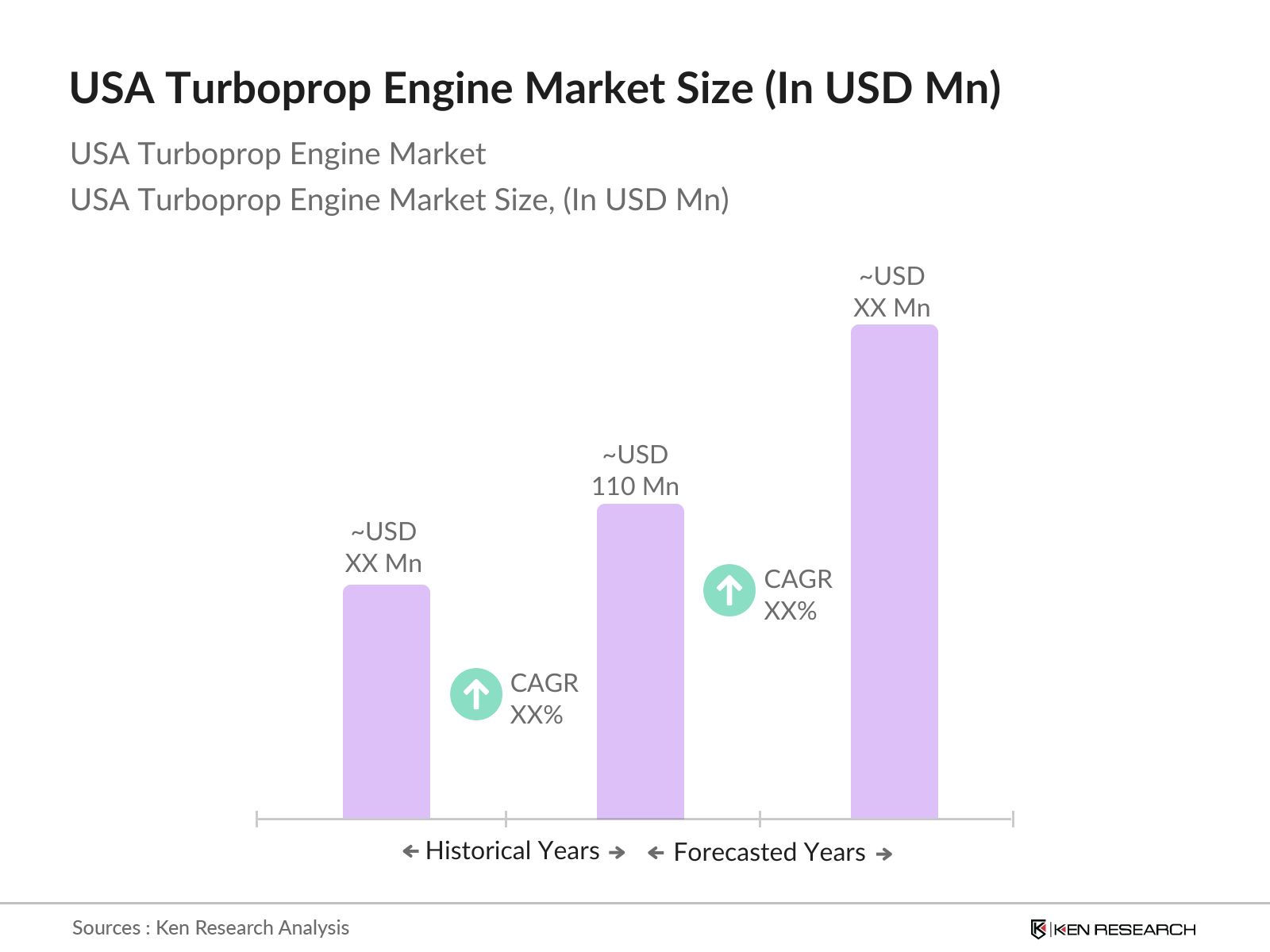
- The USA Turboprop Engine market is valued at USD 110 million, with growth propelled by increasing demand for fuel-efficient regional aircraft engines and government incentives for domestic manufacturing. Rising interest in regional connectivity and advancements in turboprop technologies are also significant contributors to the market's growth.
- Dominant regions within the USA, such as Texas and California, lead the market due to the presence of major aerospace hubs and favorable government initiatives that encourage aerospace research and development. The availability of skilled labor and well-established infrastructure in these regions also supports their leadership in the turboprop engine market.
- The Federal Aviation Administration (FAA) has mandated a 25% reduction in turboprop engine pollutants by 2025 compared to the baseline levels of 2020. This regulation is part of a larger governmental push to enhance the environmental performance of the aviation sector. Manufacturers are compelled to invest in advanced research and development to meet these stringent standards, focusing on innovations in engine efficiency and emissions reduction technologies. The impact of this regulation extends beyond compliance, influencing long-term strategic decisions in engine design and fleet management practices.
USA Turboprop Engine Market Segmentation
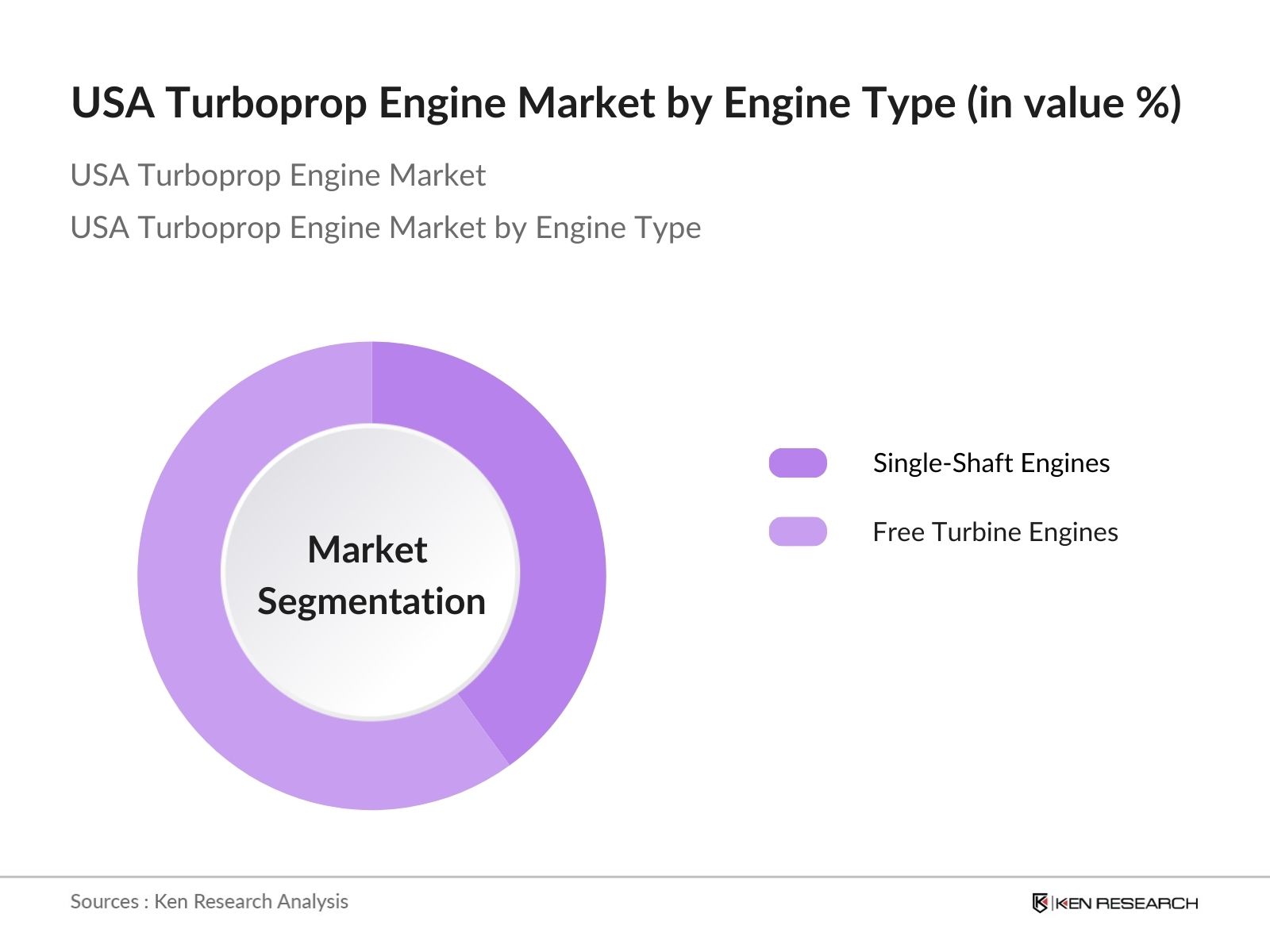
By Engine Type: The market is segmented by engine type into Single-Shaft Engines and Free Turbine Engines. Free Turbine Engines currently dominate due to their flexibility and efficiency, particularly in regional flights where frequent changes in power demand are common. This adaptability makes Free Turbine Engines a preferred choice among operators seeking cost-efficient solutions for shorter routes.
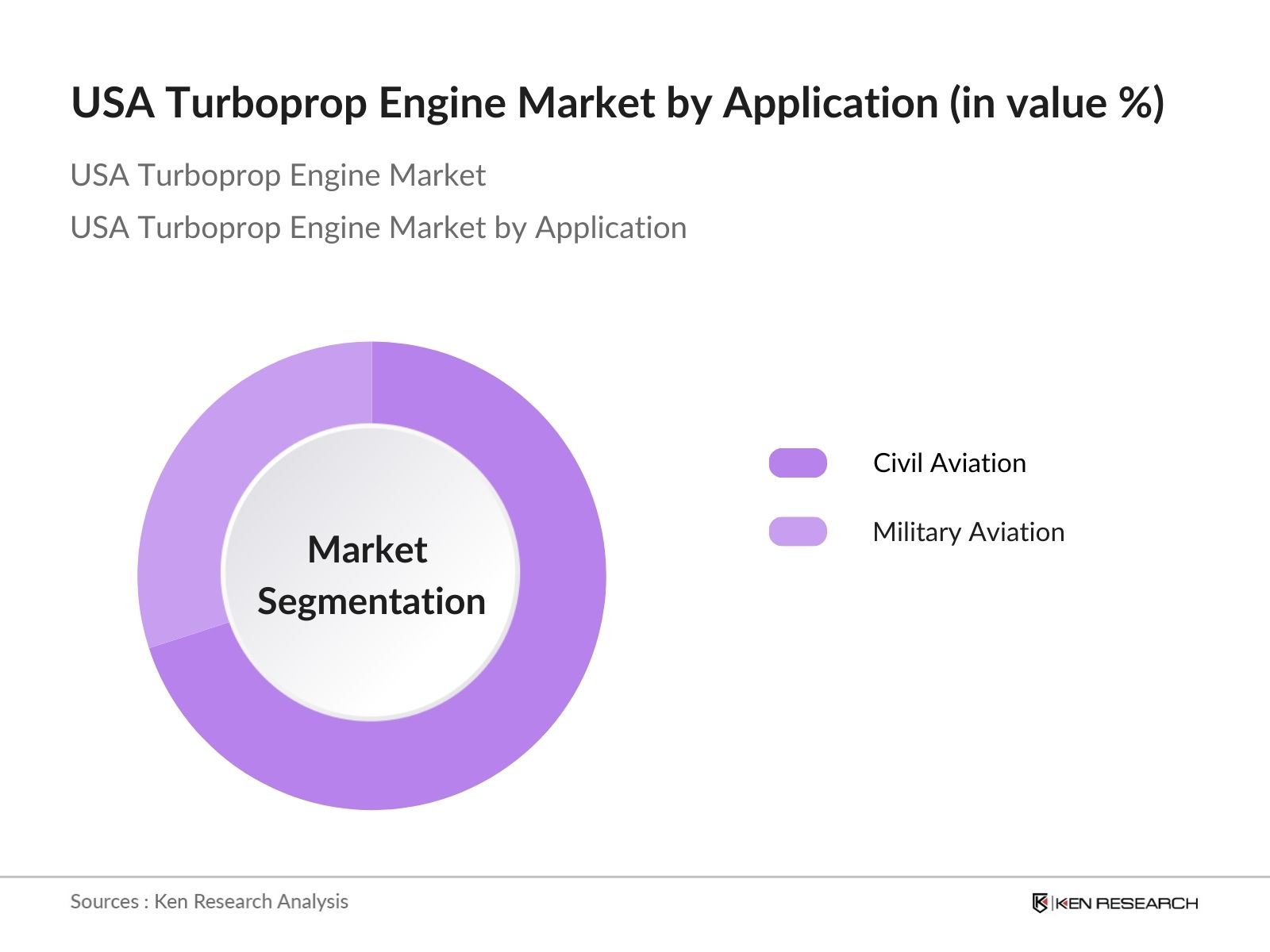
By Application: The market is further segmented by application into Civil Aviation and Military Aviation. Civil Aviation holds a larger market share, driven by the growing demand for regional and charter flights within the United States. The civil aviation segment benefits from the increasing need for affordable and efficient short-haul flights, aligning with turboprop engines cost-effective operation.
USA Turboprop Engine Market Competitive Landscape
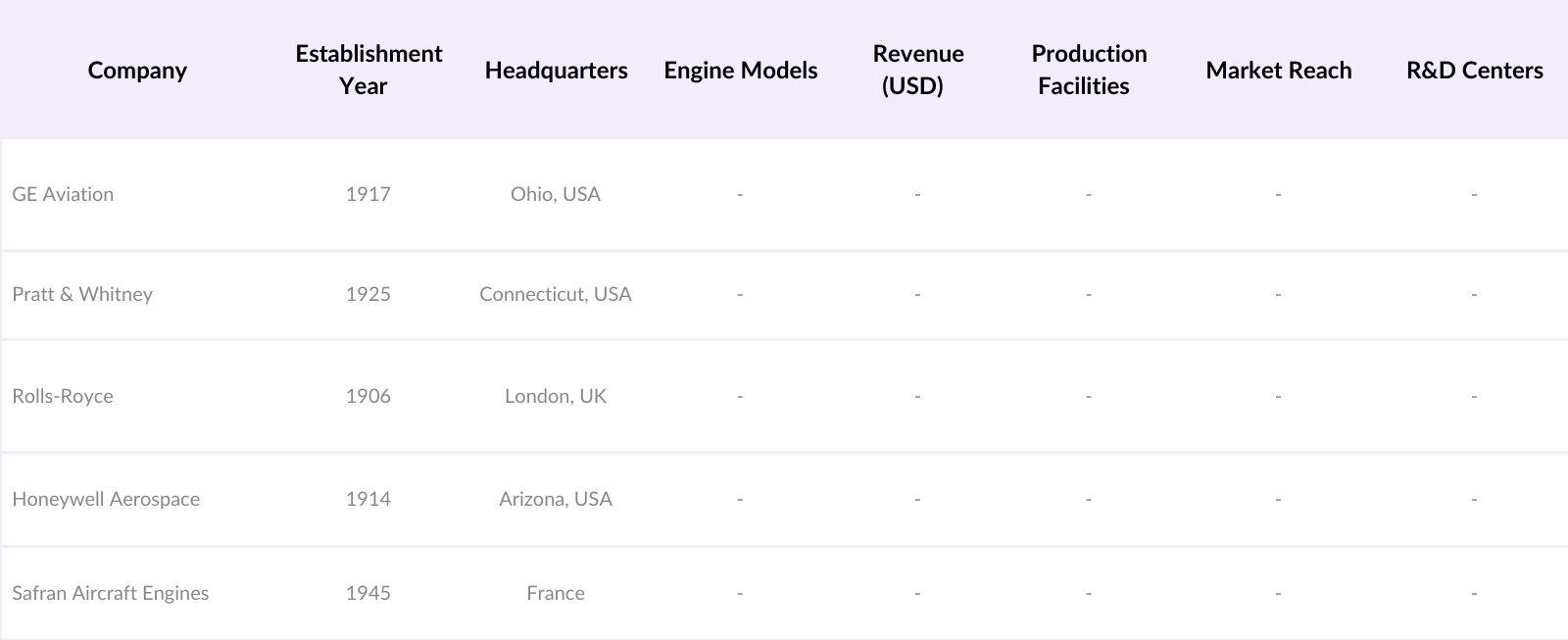
The USA Turboprop Engine market is dominated by key industry players with established infrastructure and innovative portfolios. These companies leverage extensive R&D capabilities, providing the latest engine technologies optimized for fuel efficiency and reliability.
USA Turboprop Engine Market Analysis
Market Growth Drivers
- Fuel Efficiency Advantage: Turboprop engines offer significant fuel efficiency compared to jet engines, making them ideal for short to medium-haul flights. The U.S. Department of Energy reports that turboprops are about 30% more fuel-efficient on routes under 1,000 kilometers, providing a strong incentive for airlines to invest in these engines. This efficiency is paramount as fuel costs represent about 30-40% of airline operational costs.
- Rising Demand in Regional Aviation: The Federal Aviation Administration (FAA) has highlighted a surge in regional flight connectivity, with a 20% increase in regional airline traffic since 2020. Turboprops, due to their cost-effectiveness on shorter routes, have seen a heightened demand in this sector. This growth is supported by the expansion of regional airports and services, especially in under-served areas.
- Fleet Modernization Initiatives: Major U.S. carriers are actively modernizing their fleets to comply with newer environmental standards and improve operational efficiency. The FAA's recent reports suggest that over 50% of regional aircraft scheduled for upgrades by 2025 will switch to more efficient turboprop engines as part of this initiative.
Market Challenges
- High Development Costs: The cost of developing new turboprop engines can exceed $1 billion, as advanced materials and technologies drive prices up. The U.S. Bureau of Economic Analysis indicates that aerospace R&D spending has doubled in the past five years, emphasizing the financial barriers to entry and innovation in this market.
- Stringent Emission Regulations: The Environmental Protection Agency (EPA) has implemented stringent emission standards, requiring turboprop engines to reduce NOx emissions by 20% from the levels recorded in 2020. Meeting these standards necessitates significant investment in new technologies, which can be a substantial challenge for manufacturers.
USA Turboprop Engine Market Future Outlook
Over the next five years, the USA Turboprop Engine market is anticipated to grow, driven by advancements in engine efficiency and increasing preference for regional connectivity. The market is also expected to benefit from government funding in R&D, particularly for sustainable aviation technologies, positioning turboprop engines as key players in the eco-friendly aviation landscape.
Opportunities
- Technological Advancements: Advances in aerodynamics and engine design have enabled turboprop engines to achieve up to 40% better fuel efficiency compared to five years ago. This improvement is pivotal as airlines look to reduce operational costs and adhere to environmental regulations.
- Expansion into Emerging Flight Routes: The expansion of air services to rural and remote areas has opened new routes predominantly serviced by turboprops due to their efficiency and shorter runway requirements. The Department of Aviation forecasts a 30% increase in new routes in these regions by 2025.
Scope of the Report
|
Engine Type |
Single-Shaft Engines, Free Turbine Engines |
|
Power Range |
Below 1000 SHP, 1000-2000 SHP, Above 2000 SHP |
|
Application |
Civil Aviation, Military Aviation |
|
Component |
Compressor, Turbine, Combustor, Accessory Gearbox |
|
End-User |
Commercial Operators, Private Charter Services |
Products
Key Target Audience
Commercial Airlines
Private Charter Services
Aerospace Manufacturing Companies
Military Procurement Agencies (DoD)
Banks and Financial Institutions
Investor and Venture Capitalist Firms
Government and Regulatory Bodies (FAA, EPA)
Turboprop Maintenance Service Providers
Aviation Training Institutions
Companies
Players Mentioned in the Report
GE Aviation
Pratt & Whitney
Rolls-Royce
Honeywell Aerospace
Safran Aircraft Engines
Textron Inc.
AVIC International
ITP Aero
Motor Sich
Klimov
Table of Contents
1. USA Turboprop Engine Market Overview
1.1 Definition and Scope
1.2 Market Taxonomy
1.3 Market Dynamics Overview
1.4 Market Segmentation Overview
2. USA Turboprop Engine Market Size (In USD Bn)
2.1 Historical Market Size
2.2 Year-on-Year Growth Analysis
2.3 Key Market Milestones and Developments
3. USA Turboprop Engine Market Analysis
3.1 Growth Drivers
3.1.1 Fuel Efficiency Advantage
3.1.2 Rising Demand in Regional Aviation
3.1.3 Governmental Support for Domestic Manufacturing
3.1.4 Fleet Modernization Initiatives
3.2 Market Challenges
3.2.1 High Development Costs
3.2.2 Stringent Emission Regulations
3.2.3 Limited Infrastructure for Turboprop Maintenance
3.3 Opportunities
3.3.1 Technological Advancements (increased fuel efficiency)
3.3.2 Expansion into Emerging Flight Routes
3.3.3 Hybrid Turboprop Engine Development
3.4 Trends
3.4.1 Adoption of Digital Twins for Maintenance
3.4.2 Increasing Preference for Regional Connectivity
3.4.3 Integration of AI in Engine Design
3.5 Regulatory Environment
3.5.1 FAA Emission Compliance
3.5.2 Clean Aviation Funding Initiatives
3.5.3 Noise Pollution Standards
4. USA Turboprop Engine Market Segmentation
4.1 By Engine Type (In Value %)
4.1.1 Single-Shaft Engines
4.1.2 Free Turbine Engines
4.2 By Power Range (In Value %)
4.2.1 Below 1000 SHP
4.2.2 1000-2000 SHP
4.2.3 Above 2000 SHP
4.3 By Application (In Value %)
4.3.1 Civil Aviation
4.3.2 Military Aviation
4.4 By Component (In Value %)
4.4.1 Compressor
4.4.2 Turbine
4.4.3 Combustor
4.4.4 Accessory Gearbox
4.5 By End-User (In Value %)
4.5.1 Commercial Operators
4.5.2 Private Charter Services
5. USA Turboprop Engine Market Competitive Analysis
5.1 Detailed Profiles of Major Competitors
5.1.1 GE Aviation
5.1.2 Pratt & Whitney
5.1.3 Rolls-Royce Holdings PLC
5.1.4 Honeywell Aerospace
5.1.5 Safran Aircraft Engines
5.1.6 Textron Inc.
5.1.7 ITP Aero
5.1.8 AVIC International Holding Corporation
5.1.9 Motor Sich
5.1.10 Klimov
5.1.11 Lycoming Engines
5.1.12 Austro Engine GmbH
5.1.13 MTU Aero Engines AG
5.1.14 HAL (Hindustan Aeronautics Limited)
5.1.15 Airmotive Engineering
5.2 Cross Comparison Parameters (Employee Count, Headquarters, Revenue, Production Capacity, Market Reach, R&D Spending, Engine Models, Environmental Certifications)
5.3 Market Share Analysis
5.4 Strategic Initiatives and Innovations
5.5 Mergers and Acquisitions
5.6 Investment Analysis
5.7 Venture Capital Involvement
5.8 Government and Private Funding
6. USA Turboprop Engine Market Regulatory Framework
6.1 Emission Standards Compliance
6.2 Certification Processes for Turboprop Engines
6.3 FAA and ICAO Standards for Turboprop Engines
7. USA Turboprop Engine Future Market Size (In USD Bn)
7.1 Projected Market Size
7.2 Key Factors Impacting Future Market Demand
8. USA Turboprop Engine Future Market Segmentation
8.1 By Engine Type (In Value %)
8.2 By Power Range (In Value %)
8.3 By Application (In Value %)
8.4 By Component (In Value %)
8.5 By End-User (In Value %)
9. USA Turboprop Engine Market Analysts Recommendations
9.1 Total Addressable Market Analysis (TAM)
9.2 Serviceable Addressable Market (SAM)
9.3 White Space Opportunity Analysis
9.4 Key Marketing Initiatives for Operators
Disclaimer Contact UsResearch Methodology
Step 1: Identification of Key Variables
The research begins with mapping the USA Turboprop Engine Markets ecosystem, including primary stakeholders, using robust secondary research and industry databases. This step aims to identify market variables influencing turboprop engine adoption.
Step 2: Market Analysis and Data Compilation
Historical data and usage trends in the turboprop engine market are analyzed, including adoption rates and revenue trends among various applications, to generate reliable market insights.
Step 3: Hypothesis Validation and Expert Consultations
Market hypotheses are validated through structured interviews with industry experts across major companies, providing first-hand operational and financial insights to support the analysis.
Step 4: Research Synthesis and Final Output
Direct feedback from manufacturers and airlines is integrated to validate and finalize the data, ensuring the reports insights reflect a comprehensive, reliable view of the USA Turboprop Engine Market.
Frequently Asked Questions
How big is the USA Turboprop Engine Market?
The USA Turboprop Engine Market was valued at USD 110 million, driven by rising demand for regional aircraft and efficiency-focused engine technologies.
What are the challenges in the USA Turboprop Engine Market?
Key challenges include stringent emission regulations, high development costs, and limited maintenance infrastructure for turboprop engines.
Who are the major players in the USA Turboprop Engine Market?
Leading players include GE Aviation, Pratt & Whitney, Rolls-Royce, Honeywell Aerospace, and Safran Aircraft Engines, supported by strong R&D and innovation capacities.
What drives growth in the USA Turboprop Engine Market?
Growth is fueled by increased regional connectivity, government support for domestic production, and the cost-effectiveness of turboprop engines for short-haul routes.
Why Buy From Us?

What makes us stand out is that our consultants follows Robust, Refine and Result (RRR) methodology. i.e. Robust for clear definitions, approaches and sanity checking, Refine for differentiating respondents facts and opinions and Result for presenting data with story

We have set a benchmark in the industry by offering our clients with syndicated and customized market research reports featuring coverage of entire market as well as meticulous research and analyst insights.

While we don't replace traditional research, we flip the method upside down. Our dual approach of Top Bottom & Bottom Top ensures quality deliverable by not just verifying company fundamentals but also looking at the sector and macroeconomic factors.

With one step in the future, our research team constantly tries to show you the bigger picture. We help with some of the tough questions you may encounter along the way: How is the industry positioned? Best marketing channel? KPI's of competitors? By aligning every element, we help maximize success.

Our report gives you instant access to the answers and sources that other companies might choose to hide. We elaborate each steps of research methodology we have used and showcase you the sample size to earn your trust.

If you need any support, we are here! We pride ourselves on universe strength, data quality, and quick, friendly, and professional service.