
USA Unmanned Ground Vehicle (UGV) Market Outlook to 2030
Region:North America
Author(s):Shreya Garg
Product Code:KROD3049
Region:North America
Author(s):Shreya Garg
Product Code:KROD3049
November 2024
99
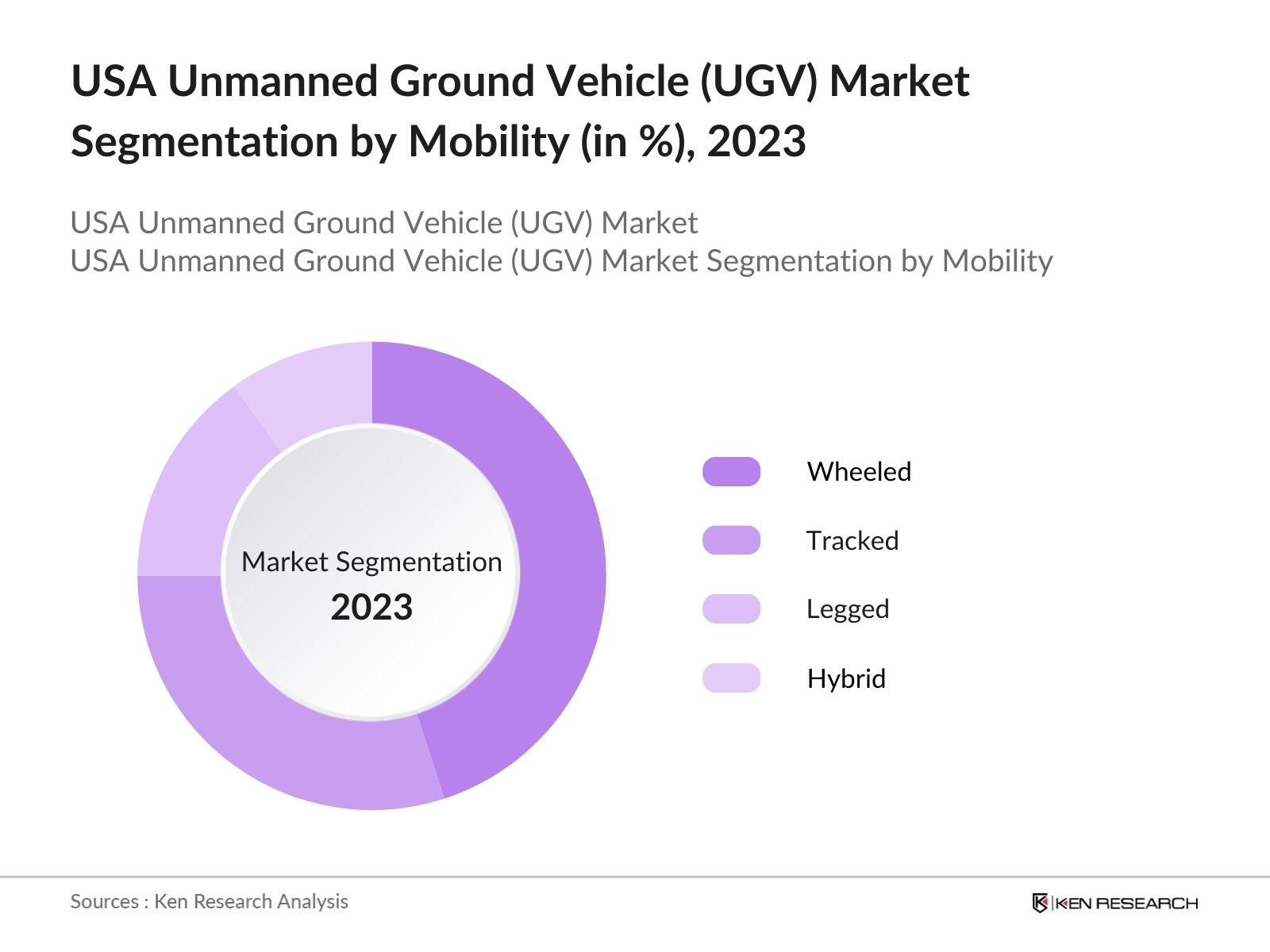
By Mobility: The market is segmented by mobility into wheeled, tracked, legged, and hybrid UGVs. Wheeled UGVs currently dominate the market due to their adaptability in a wide range of terrains, cost-efficiency, and ease of maintenance. Their applications in industries like defense, agriculture, and logistics are extensive. Wheeled UGVs are favored in the defense sector for patrol and logistics tasks, where reliability and speed are essential. Additionally, wheeled UGVs have a strong presence in the agricultural industry, where they are used for tasks such as soil analysis and crop monitoring.
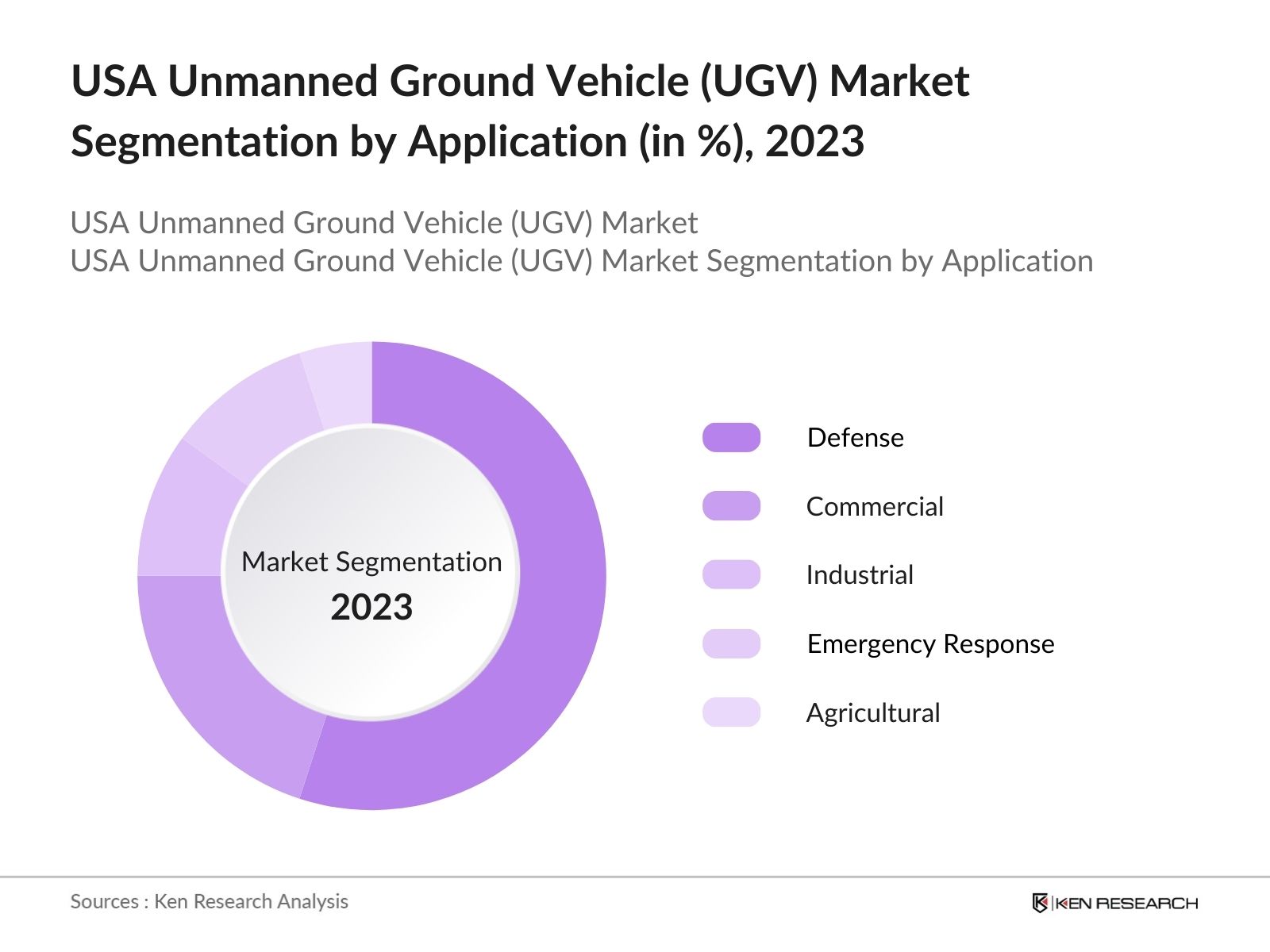
By Application: The market is also segmented by application into defense, commercial, industrial, emergency response, and agricultural UGVs. Defense UGVs are the dominant sub-segment due to the increasing focus on automation in military operations. UGVs in defense are used for a wide array of purposes including reconnaissance, logistics, and explosive ordinance disposal. Government investment in modernizing military technology and enhancing defense capabilities has propelled the growth of this segment. Additionally, emergency response UGVs have grown in significance due to their usage in disaster and rescue operations, where human intervention is either dangerous or impractical.
 USA Unmanned Ground Vehicle (UGV) Market Competitive Landscape
The market is dominated by several key players who focus on cutting-edge technology and maintaining strong partnerships with defense contractors. The landscape is competitive, with significant investments in R&D and innovation. Companies like Lockheed Martin and Northrop Grumman have solidified their positions through strategic defense contracts and large-scale government projects, while newer entrants like Clearpath Robotics are pushing the boundaries in industrial and commercial UGV applications.
|
Over the coming years, the USA UGV market is expected to grow significantly, driven by advancements in autonomous systems, artificial intelligence, and an increasing number of UGV applications in both defense and civilian sectors. The defense industry will continue to dominate, but there is growing interest in commercial applications, particularly in logistics and agriculture. The rise of automation and smart technologies will likely encourage further adoption of UGVs, with particular emphasis on reducing operational costs and improving safety in hazardous environments.
|
By Mobility |
Wheeled Tracked Legged Hybrid |
|
By Application |
Defense Commercial Industrial Emergency Response Agricultural |
|
By Payload Type |
Sensors Cameras Manipulators Others |
|
By Operation Mode |
Teleoperated Autonomous Semi-autonomous |
|
By End-User |
Military Civil Commercial |
1.1. Definition and Scope
1.2. Market Taxonomy
1.3. Market Growth Rate
1.4. Market Segmentation Overview
2.1. Historical Market Size
2.2. Year-On-Year Growth Analysis
2.3. Key Market Developments and Milestones
3.1. Growth Drivers (Technological Innovation, Defense Modernization, Autonomous Navigation Capabilities)
3.1.1. Increased Adoption in Military Applications
3.1.2. Technological Advancements in AI and Machine Learning
3.1.3. Rising Demand for Disaster Response
3.1.4. Government and Military Investments
3.2. Market Challenges (Operational Limitations, Cost Constraints, Regulatory Issues)
3.2.1. High Development Costs
3.2.2. Technical Challenges in Remote Operations
3.2.3. Regulatory Hurdles and Safety Concerns
3.3. Opportunities (Dual-Use Technologies, Commercial Integration)
3.3.1. Expansion in Civilian Applications (Mining, Agriculture, etc.)
3.3.2. Collaboration with Autonomous Vehicle Technologies
3.3.3. Potential for Customizable and Modular UGV Platforms
3.4. Trends (AI Integration, Fleet Management, Robotics-as-a-Service)
3.4.1. Increasing Use of AI and Robotics
3.4.2. UGVs in Border Security and Surveillance
3.4.3. Adoption of UGVs in Hazardous Industrial Applications
3.5. Government Regulation (DoD Standards, Safety Protocols, Certification Requirements)
3.5.1. Federal Investment in Defense UGV Technologies
3.5.2. Safety and Certification Standards
3.5.3. Public-Private Partnerships for Innovation
4.1. By Mobility (In Value %)
4.1.1. Wheeled
4.1.2. Tracked
4.1.3. Legged
4.1.4. Hybrid
4.2. By Application (In Value %)
4.2.1. Defense
4.2.2. Commercial
4.2.3. Industrial
4.2.4. Emergency Response
4.2.5. Agricultural
4.3. By Payload Type (In Value %)
4.3.1. Sensors
4.3.2. Cameras
4.3.3. Manipulators
4.3.4. Others
4.4. By Operation Mode (In Value %)
4.4.1. Teleoperated
4.4.2. Autonomous
4.4.3. Semi-autonomous
4.5. By End-User (In Value %)
4.5.1. Military
4.5.2. Civil
4.5.3. Commercial
5.1 Detailed Profiles of Major Companies
5.1.1. Lockheed Martin Corporation
5.1.2. Northrop Grumman Corporation
5.1.3. QinetiQ Group
5.1.4. General Dynamics Mission Systems
5.1.5. iRobot Corporation
5.1.6. FLIR Systems, Inc.
5.1.7. BAE Systems
5.1.8. AeroVironment, Inc.
5.1.9. Clearpath Robotics
5.1.10. Thales Group
5.1.11. Rheinmetall AG
5.1.12. G-NIUS Unmanned Ground Systems
5.1.13. Oshkosh Corporation
5.1.14. Kongsberg Gruppen
5.1.15. Milrem Robotics
5.2. Cross Comparison Parameters (R&D Spending, Product Portfolio, Defense Contracts, Strategic Alliances)
5.3. Market Share Analysis
5.4. Strategic Initiatives
5.5. Mergers and Acquisitions
5.6. Investment Analysis
5.7. Venture Capital Funding
5.8. Government Grants
5.9. Private Equity Investments
6.1. Defense Acquisition Standards
6.2. Safety and Compliance Regulations
6.3. Certification Processes
7.1. Future Market Size Projections
7.2. Key Factors Driving Future Market Growth
8.1. By Mobility (In Value %)
8.2. By Application (In Value %)
8.3. By Payload Type (In Value %)
8.4. By Operation Mode (In Value %)
8.5. By End-User (In Value %)
9.1. TAM/SAM/SOM Analysis
9.2. Customer Cohort Analysis
9.3. Marketing Initiatives
9.4. White Space Opportunity Analysis
The first step includes mapping out key stakeholders and identifying the main influencers in the USA UGV market. Extensive desk research and analysis of proprietary databases are employed to understand the core dynamics, including technological advancements and regulatory frameworks.
In this phase, historical data related to UGV deployment in sectors such as defense and agriculture is evaluated. Market penetration, key revenue drivers, and operational data are compiled to assess growth trajectories across the sub-segments.
Using interviews and consultations with industry experts, the research team validates the hypotheses on market drivers, challenges, and opportunities. These insights contribute to refining the data and ensuring accuracy.
The final output incorporates data from both bottom-up and top-down research approaches, combining direct interviews and secondary data to offer a holistic view of the market.
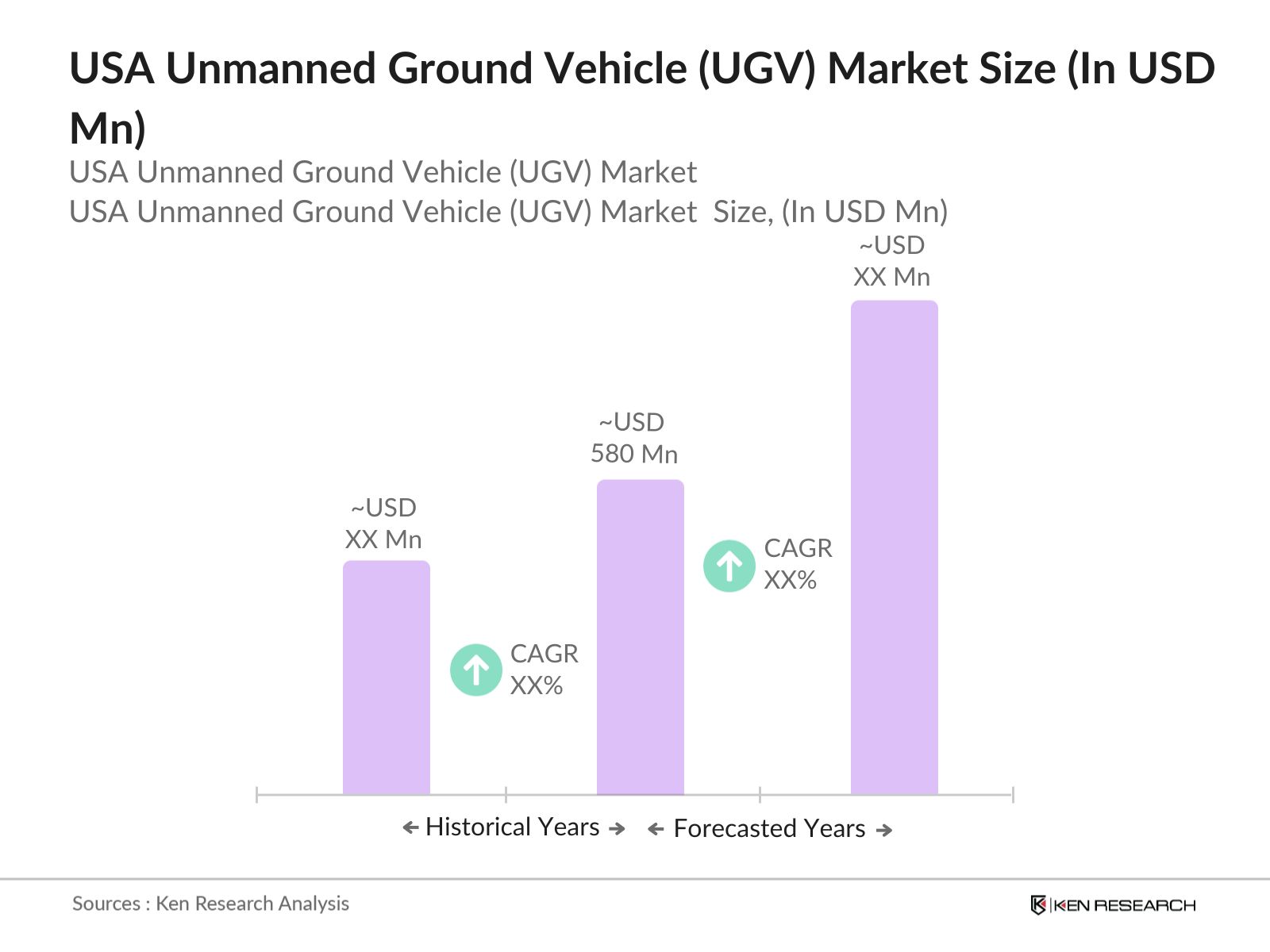
The USA Unmanned Ground Vehicle market is valued at USD 580 million, driven by rising investments in defense, technological innovation, and expanded applications in industrial and agricultural sectors.
Key challenges in the USA UGV market include high initial development costs, technical complexities in autonomous navigation, and stringent regulatory requirements for safety and defense contracts.
Major players in the USA UGV market include Lockheed Martin, Northrop Grumman, General Dynamics, Clearpath Robotics, and FLIR Systems, who dominate due to their defense contracts and innovation capabilities.
The primary drivers include advancements in AI and autonomous navigation technologies, rising defense investments, and growing applications in industrial automation, agriculture, and emergency response.
California, Virginia, and Texas lead the market due to their technological ecosystems, proximity to military bases, and adoption of UGVs in industrial sectors like agriculture and logistics.

What makes us stand out is that our consultants follows Robust, Refine and Result (RRR) methodology. i.e. Robust for clear definitions, approaches and sanity checking, Refine for differentiating respondents facts and opinions and Result for presenting data with story

We have set a benchmark in the industry by offering our clients with syndicated and customized market research reports featuring coverage of entire market as well as meticulous research and analyst insights.

While we don't replace traditional research, we flip the method upside down. Our dual approach of Top Bottom & Bottom Top ensures quality deliverable by not just verifying company fundamentals but also looking at the sector and macroeconomic factors.

With one step in the future, our research team constantly tries to show you the bigger picture. We help with some of the tough questions you may encounter along the way: How is the industry positioned? Best marketing channel? KPI's of competitors? By aligning every element, we help maximize success.

Our report gives you instant access to the answers and sources that other companies might choose to hide. We elaborate each steps of research methodology we have used and showcase you the sample size to earn your trust.

If you need any support, we are here! We pride ourselves on universe strength, data quality, and quick, friendly, and professional service.