
USA UPF Sun Protective Clothing Market Outlook to 2030
Region:North America
Author(s):Yogita Sahu
Product Code:KROD4216
October 2024
92
About the Report
USA UPF Sun Protective Clothing Market Overview
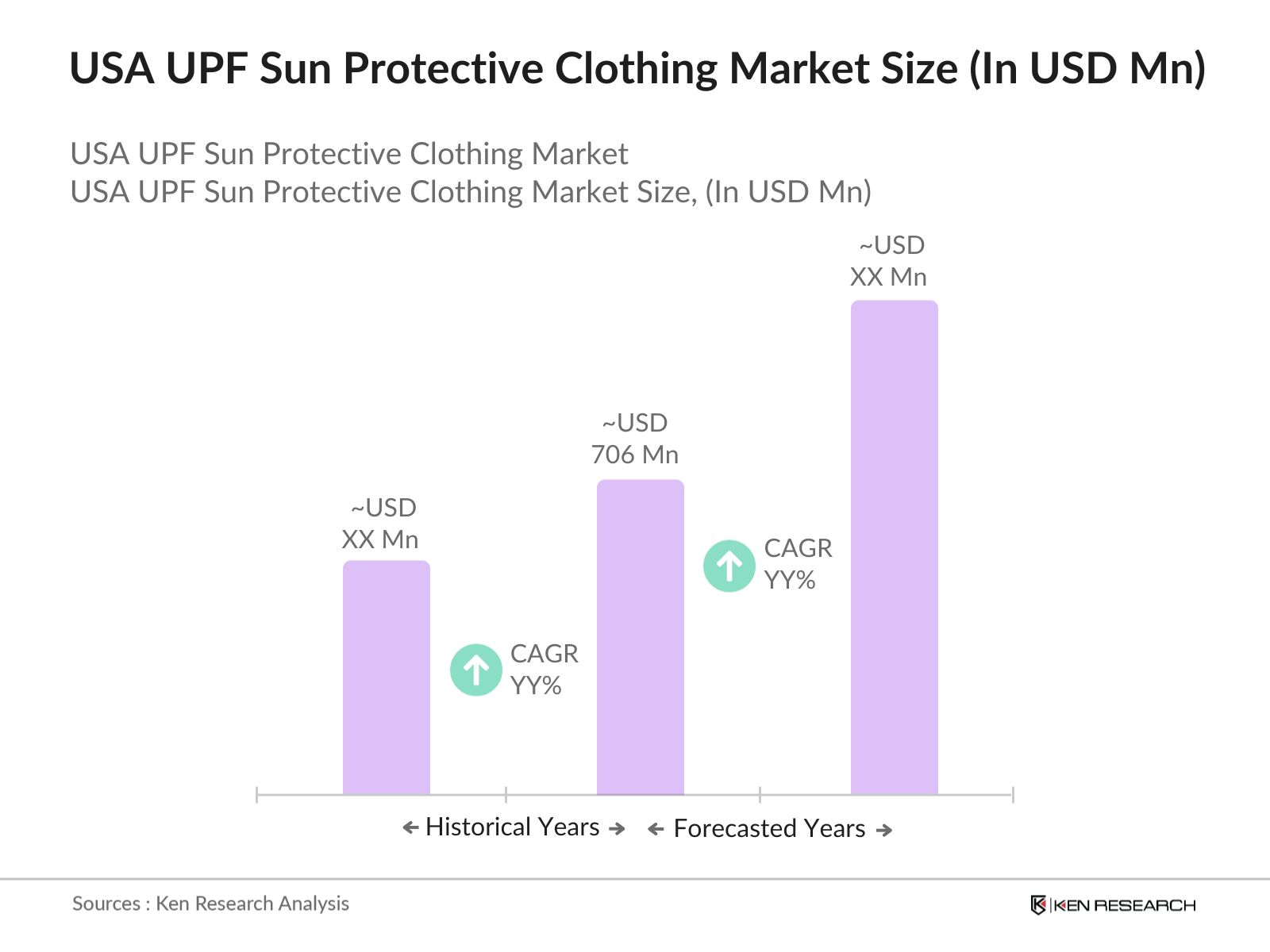
- The USA UPF (Ultraviolet Protection Factor) sun protective clothing market is valued at USD 706 million based on a five-year historical analysis. The growth of this market is driven by increasing consumer awareness regarding the harmful effects of UV radiation and skin cancer risks, which is fueling demand for clothing with built-in sun protection.
- The dominant regions in this market are California and Florida due to their high UV index, outdoor lifestyle, and larger population engaged in beach activities and outdoor sports. These states experience long periods of sunlight exposure throughout the year, leading to increased awareness and demand for UPF clothing.
- The Occupational Safety and Health Administration (OSHA) has established guidelines for employers to protect outdoor workers from harmful UV exposure. In 2024, OSHA reported that 9,000 workplace violations involved inadequate sun protection measures, highlighting the growing emphasis on employee safety. These guidelines have led to increased adoption of UPF sun protective clothing in industries like agriculture and construction, where UV exposure is prevalent.
USA UPF Sun Protective Clothing Market Segmentation
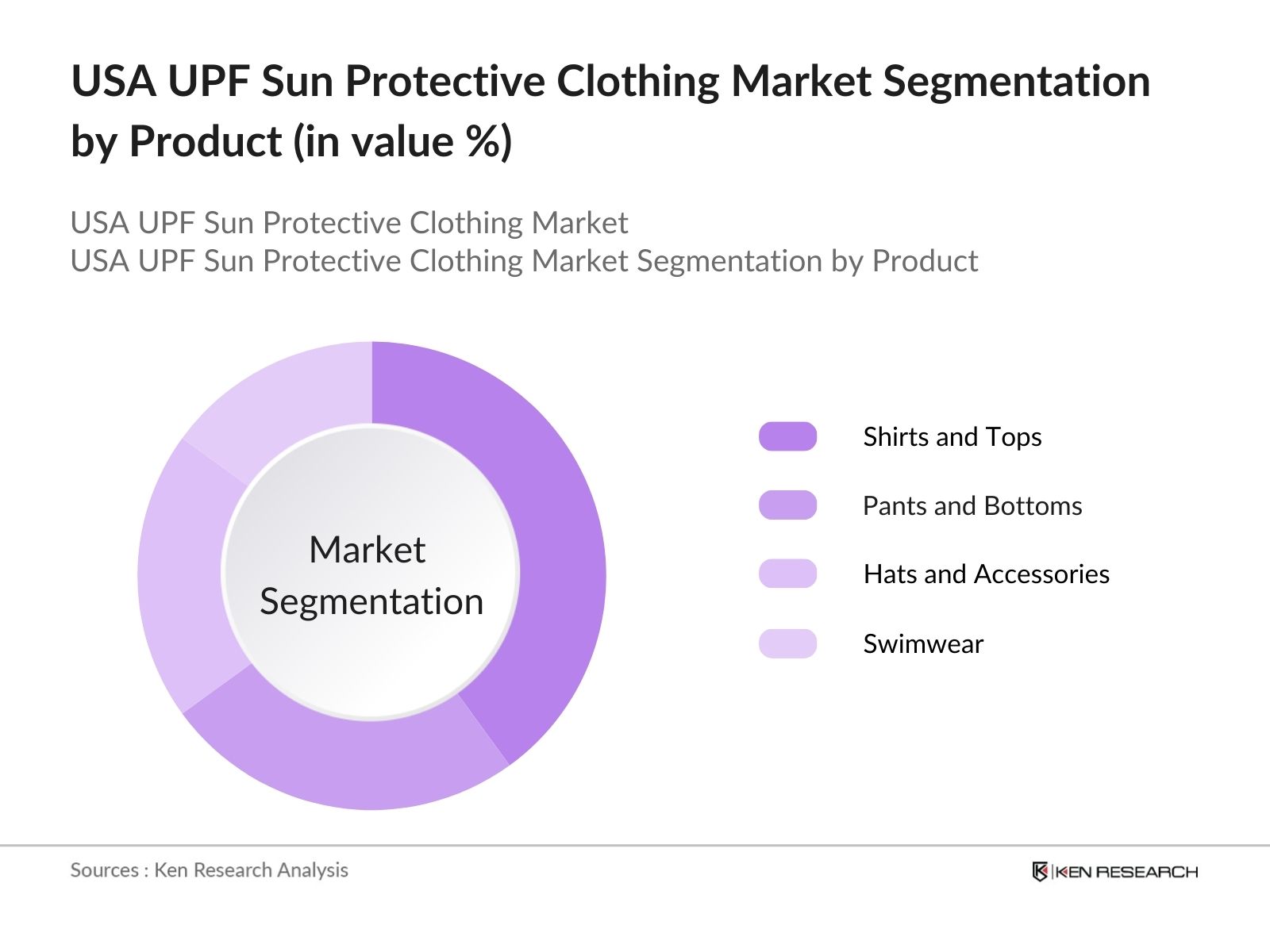
By Product Type: The market is segmented by product type into shirts and tops, pants and bottoms, hats and accessories, and swimwear. Shirts and tops have captured the dominant market share under the product type segment due to their versatility and frequent use across various outdoor activities such as hiking, sports, and casual wear. This sub-segments popularity is attributed to the ease of integrating UPF technology into everyday clothing that consumers can wear for protection without compromising on style or comfort.
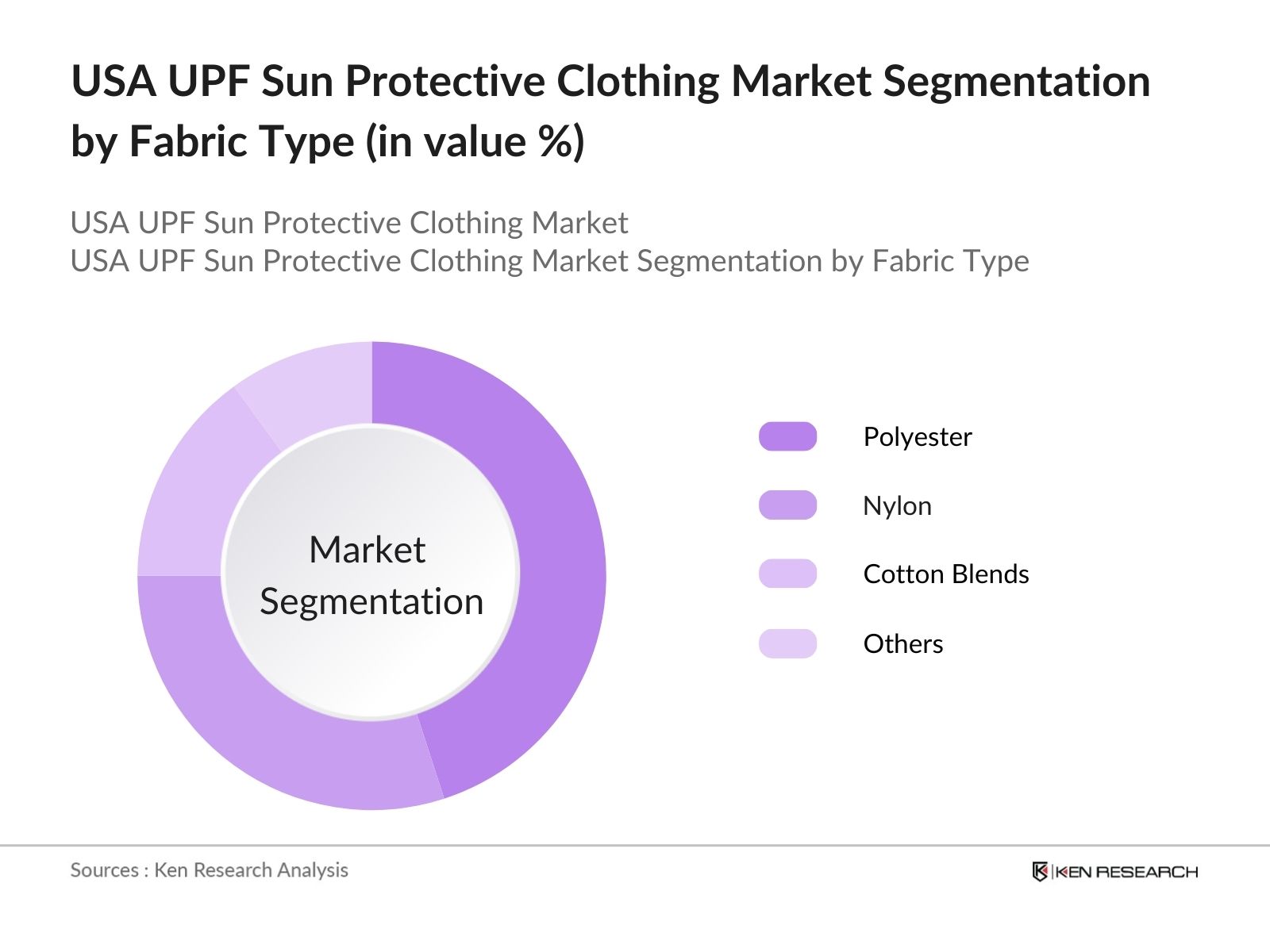
By Fabric Type: The market is further segmented by fabric type into polyester, nylon, cotton blends, and others. Polyester has emerged as the leading fabric type in the UPF sun protective clothing market, largely due to its natural resistance to UV rays and durability. Polyester fabrics are preferred because they allow manufacturers to enhance UPF protection without sacrificing breathability or comfort, making them an ideal choice for a wide range of sun-protective apparel, including sportswear and swimwear.
USA UPF Sun Protective Market Competitive Landscape
The market is dominated by a few major players that have established strong brand identities and extensive distribution networks. Companies like Columbia Sportswear and Coolibar have built their reputation by focusing on high-quality sun protective apparel, while Patagonia and REI Co-op are recognized for integrating sustainability into their product lines.
|
Company |
Establishment Year |
Headquarters |
Key Product Lines |
Sustainability Initiatives |
Online Presence |
Distribution Network |
Key Collaborations |
|
Columbia Sportswear |
1938 |
Portland, OR |
|||||
|
Coolibar |
2001 |
Minneapolis, MN |
|||||
|
L.L. Bean |
1912 |
Freeport, ME |
|||||
|
Patagonia |
1973 |
Ventura, CA |
|||||
|
UV Skinz |
2005 |
Sonora, CA |
USA UPF Sun Protective Clothing Market Analysis
Market Growth Drivers
- Increasing Incidence of Skin Cancer: The rising number of skin cancer cases in the USA is a growth driver for the UPF sun protective clothing market. In 2024, 200,340 new melanoma caseswill be diagnosed in the U.S., with8,290 expected deaths. Additionally, over9,500 Americans are diagnosed daily, underscoring the urgent need for effective sun protection solutions. This alarming figure has prompted heightened consumer awareness and government-backed health campaigns that encourage the adoption of UV-protective measures such as UPF clothing.
- Government Health Campaigns: Government health campaigns aimed at raising awareness about UV radiation and its harmful effects have contributed to the growth of the UPF sun protective clothing market. Initiatives led by the Centers for Disease Control and Prevention (CDC) and the U.S. Department of Health and Human Services (HHS) have led to increased public awareness. The annual medical costs for treating skin cancer amount to $8.9 billion.
- Expansion of Outdoor Workforces: The growing number of outdoor workers in industries such as construction, agriculture, and transportation has led to increased demand for UPF sun protective clothing. According to the U.S. Bureau of Labor Statistics, there were more than 10 million outdoor laborers in 2023 who were regularly exposed to the suns harmful UV rays. The Occupational Safety and Health Administration (OSHA) has emphasized the need for protective gear, further driving demand for UPF clothing in these sectors.
Market Challenges
- High Production Costs: The cost of manufacturing UPF sun protective clothing remains high due to the advanced technologies and materials required to produce effective UV-blocking fabrics. The U.S. textile industry reported in 2023 that the average cost of producing UPF-rated garments is nearly 40% higher than standard apparel due to specialized fabric treatments and certifications. These high production costs are often passed on to consumers, making UPF clothing less affordable for a large portion of the population.
- Regulatory Hurdles: The stringent regulatory requirements for UPF certification in the USA present a challenge for manufacturers. The U.S. Federal Trade Commission (FTC) mandates strict testing procedures for clothing to be marketed as sun protective, which adds to the time and cost of bringing new products to market. In 2023, it was reported that nearly 20% of UPF clothing manufacturers experienced delays due to regulatory compliance issues, slowing down market growth.
USA UPF Sun Protective Clothing Market Future Outlook
Over the next five years, the USA UPF sun protective clothing industry is expected to grow, driven by rising consumer awareness of the dangers of UV exposure and the continued integration of sun-protection into everyday fashion. Advances in fabric technology, including more breathable and lightweight UPF-rated materials, are expected to further boost the market.
Future Market Opportunities
- Adoption of Smart Textiles: In the next five years, smart textiles with integrated UV monitoring will gain traction in the market. These garments will feature sensors that detect UV levels and provide real-time feedback to the wearer. The U.S. Department of Energys 2024 report predicts that the integration of such technology will become more widespread as wearable technology continues to evolve.
- Increased Focus on Sustainability: The market will see a shift toward more sustainable materials, driven by growing consumer demand for eco-friendly products. By 2025, most major manufacturers are expected to incorporate recycled fabrics and low-impact dyes into their UPF-rated clothing lines. The U.S. Environmental Protection Agency has emphasized the importance of reducing textile waste, which will drive innovation in sustainable UPF clothing.
Scope of the Report
|
Product Type |
Shirts and Tops |
|
Pants and Bottoms |
|
|
Hats and Accessories |
|
|
Swimwear |
|
|
Fabric Type |
Polyester |
|
Nylon |
|
|
Cotton Blends |
|
|
Others |
|
|
Distribution Channel |
Online Stores |
|
Offline Stores (Retail, Specialty Stores) |
|
|
End-User |
Men |
|
Women |
|
|
Kids |
|
|
Region |
North |
|
East |
|
|
West |
|
|
South |
Products
Key Target Audience Organizations and Entities Who Can Benefit by Subscribing This Report:
Apparel Manufacturers
Outdoor Sports Companies
Government and Regulatory Bodies (FDA, ASTM)
Investments and Venture Capitalist Firms
Banks and Financial Institutions
Private Equity Firms
Companies
Players Mentioned in the Report:
Columbia Sportswear
Coolibar
L.L. Bean
Patagonia
UV Skinz
Solbari
REI Co-op
ONeill
Roxy
Lands End
Quiksilver
Athleta
Under Armour
Tasc Performance
Sunprecautions
Table of Contents
1. USA UPF Sun Protective Clothing Market Overview
1.1 Definition and Scope
1.2 Market Taxonomy
1.3 Market Growth Rate
1.4 Market Segmentation Overview
2. USA UPF Sun Protective Clothing Market Size (In USD Mn)
2.1 Historical Market Size
2.2 Year-on-Year Growth Analysis
2.3 Key Market Developments and Milestones
3. USA UPF Sun Protective Clothing Market Analysis
3.1 Growth Drivers
3.1.1 Increasing Skin Cancer Awareness
3.1.2 Growing Outdoor Recreational Activities
3.1.3 Rising Demand for Health-Conscious Apparel
3.1.4 Favorable Government Guidelines on UV Protection
3.2 Market Challenges
3.2.1 High Cost of UPF Clothing
3.2.2 Limited Consumer Awareness
3.2.3 Availability of Low-Cost Alternatives
3.3 Opportunities
3.3.1 Technological Advancements in Fabric Materials
3.3.2 Increasing E-commerce Penetration
3.3.3 Expansion into New Demographics (e.g., Sports, Childrens Wear)
3.4 Trends
3.4.1 Integration of Sustainable Materials
3.4.2 Multi-functional UPF Clothing (Moisture-Wicking, Cooling)
3.4.3 Collaborations Between Apparel Brands and Dermatologists
3.5 Government Regulations
3.5.1 FDA Guidelines on UV Protective Clothing
3.5.2 ASTM Standards for Sun Protective Fabrics
3.5.3 Certification Requirements (UPF Rating Standards)
3.6 SWOT Analysis
3.7 Stakeholder Ecosystem
3.8 Porters Five Forces
3.9 Competition Ecosystem
4. USA UPF Sun Protective Clothing Market Segmentation
4.1 By Product Type (In Value %)
4.1.1 Shirts and Tops
4.1.2 Pants and Bottoms
4.1.3 Hats and Accessories
4.1.4 Swimwear
4.2 By Fabric Type (In Value %)
4.2.1 Polyester
4.2.2 Nylon
4.2.3 Cotton Blends
4.2.4 Others
4.3 By Distribution Channel (In Value %)
4.3.1 Online Stores
4.3.2 Offline Stores (Retail, Specialty Stores)
4.4 By End-User (In Value %)
4.4.1 Men
4.4.2 Women
4.4.3 Kids
4.5 By Region (In Value %)
4.5.1 North
4.5.2 East
4.5.3 West
4.5.4 South
5. USA UPF Sun Protective Clothing Market Competitive Analysis
5.1 Detailed Profiles of Major Companies
5.1.1 Columbia Sportswear
5.1.2 Coolibar
5.1.3 L.L. Bean
5.1.4 Athleta
5.1.5 Patagonia
5.1.6 Under Armour
5.1.7 UV Skinz
5.1.8 Solbari
5.1.9 REI Co-op
5.1.10 ONeill
5.1.11 Roxy
5.1.12 Lands End
5.1.13 Quiksilver
5.1.14 Tasc Performance
5.1.15 Sunprecautions
5.2 Cross Comparison Parameters (No. of Employees, Headquarters, UPF Product Lines, Revenue, Distribution Reach, Sustainable Practices, Certification Standards, Online Presence)
5.3 Market Share Analysis
5.4 Strategic Initiatives
5.5 Mergers and Acquisitions
5.6 Investment Analysis
5.7 Venture Capital Funding
5.8 Government Grants
5.9 Private Equity Investments
6. USA UPF Sun Protective Clothing Market Regulatory Framework
6.1 UV Protection Standards (UPF Ratings)
6.2 Compliance Requirements
6.3 Certification Processes
7. USA UPF Sun Protective Clothing Future Market Size (In USD Mn)
7.1 Future Market Size Projections
7.2 Key Factors Driving Future Market Growth
8. USA UPF Sun Protective Clothing Future Market Segmentation
8.1 By Product Type (In Value %)
8.2 By Fabric Type (In Value %)
8.3 By Distribution Channel (In Value %)
8.4 By End-User (In Value %)
8.5 By Region (In Value %)
9. USA UPF Sun Protective Clothing Market Analysts' Recommendations
9.1 TAM/SAM/SOM Analysis
9.2 Customer Cohort Analysis
9.3 Marketing Initiatives
9.4 White Space Opportunity Analysis
Research Methodology
Step 1: Identification of Key Variables
The first step involves mapping out the key stakeholders within the USA UPF sun protective clothing market, which include manufacturers, retailers, and consumers. This is achieved through extensive desk research, using both public and proprietary databases to collect critical industry data and identify factors influencing the market.
Step 2: Market Analysis and Construction
Next, we compile historical data on the USA UPF sun protective clothing market to assess penetration rates and revenue generation across different product types and distribution channels. The data gathered is cross-referenced with industry benchmarks to ensure accuracy in market projections.
Step 3: Hypothesis Validation and Expert Consultation
Industry hypotheses regarding market trends and consumer preferences are developed and validated through interviews with professionals in the apparel and dermatology industries. This qualitative data complements our quantitative analysis and offers insights into future market growth.
Step 4: Research Synthesis and Final Output
The final step involves synthesizing all the collected data into a coherent analysis of the UPF sun protective clothing market. This includes reviewing product segments, consumer behavior, and fabric innovations to ensure a comprehensive understanding of the markets current state and its future direction.
Frequently Asked Questions
01. How big is the USA UPF Sun Protective Clothing Market?
The USA UPF sun protective clothing market is valued at USD 706 million, driven by the increasing awareness of skin cancer prevention and consumer demand for sun-safe outdoor apparel.
02. What are the challenges in the USA UPF Sun Protective Clothing Market?
Challenges in the USA UPF sun protective clothing market include the high cost of UPF-rated fabrics, limited consumer awareness in certain regions, and competition from low-cost, non-UPF alternatives.
03. Who are the major players in the USA UPF Sun Protective Clothing Market?
Key players in the USA UPF sun protective clothing market include Columbia Sportswear, Coolibar, Patagonia, UV Skinz, and L.L. Bean, which dominate the market due to their established brands, extensive distribution networks, and focus on sustainable production.
04. What are the growth drivers of the USA UPF Sun Protective Clothing Market?
The USA UPF sun protective clothing market is driven by rising concerns about UV radiation, increased outdoor activity participation, and growing consumer preference for functional, health-conscious clothing. Additionally, innovations in fabric technology are boosting product offerings.
05. What are the trends in the USA UPF Sun Protective Clothing Market?
Emerging trends in the USA UPF sun protective clothing market include the use of sustainable materials in sun protective clothing, the integration of multi-functional features such as moisture-wicking and cooling technologies, and collaborations between apparel companies and medical organizations focused on UV protection awareness.
Why Buy From Us?

What makes us stand out is that our consultants follows Robust, Refine and Result (RRR) methodology. i.e. Robust for clear definitions, approaches and sanity checking, Refine for differentiating respondents facts and opinions and Result for presenting data with story

We have set a benchmark in the industry by offering our clients with syndicated and customized market research reports featuring coverage of entire market as well as meticulous research and analyst insights.

While we don't replace traditional research, we flip the method upside down. Our dual approach of Top Bottom & Bottom Top ensures quality deliverable by not just verifying company fundamentals but also looking at the sector and macroeconomic factors.

With one step in the future, our research team constantly tries to show you the bigger picture. We help with some of the tough questions you may encounter along the way: How is the industry positioned? Best marketing channel? KPI's of competitors? By aligning every element, we help maximize success.

Our report gives you instant access to the answers and sources that other companies might choose to hide. We elaborate each steps of research methodology we have used and showcase you the sample size to earn your trust.

If you need any support, we are here! We pride ourselves on universe strength, data quality, and quick, friendly, and professional service.