
USA Used Car Market Outlook to 2030
Region:North America
Author(s):Shubham
Product Code:KROD5475
November 2024
86
About the Report
USA Used Car Market Overview
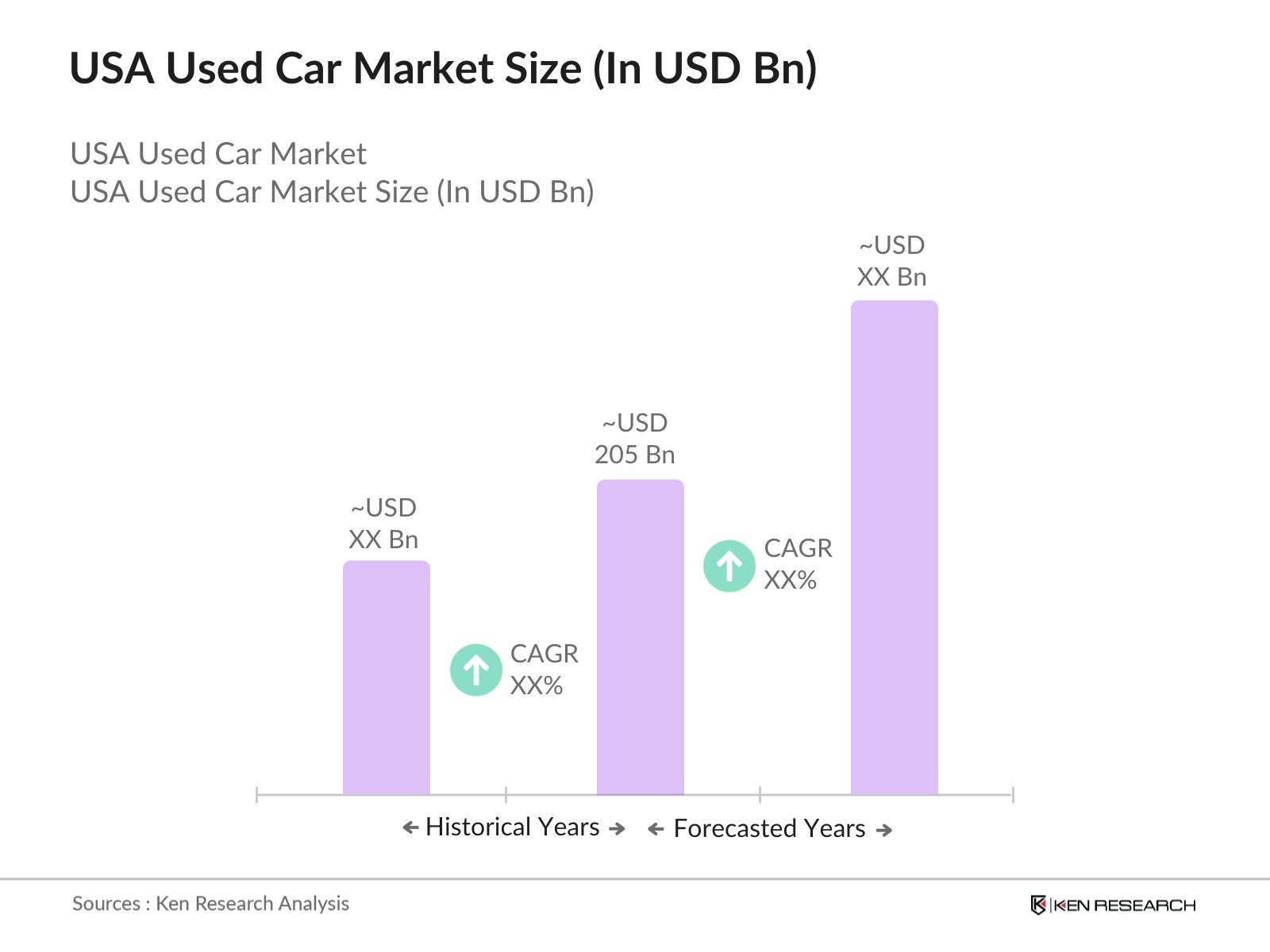
- The USA used car market is valued at USD 205 billion, primarily driven by the increasing costs of new vehicles and the affordability of used cars. The expansion of online platforms such as Carvana and Vroom has made purchasing used cars more convenient, contributing to the growth of the market. Additionally, the rising popularity of certified pre-owned (CPO) vehicles and the availability of financing options have further fueled market growth. This market is seeing a steady influx of consumers, especially as inflation pressures continue to affect disposable incomes.
- Major urban areas like California, Texas, and Florida dominate the USA used car market. These regions have large populations, a high density of commuters, and well-established automotive industries. Additionally, the widespread availability of dealerships, combined with a strong online sales infrastructure, contributes to the market's dominance in these areas. For instance, California, with its large economy and progressive environmental policies, is a leader in the sale of used electric and hybrid vehicles, further increasing its market prominence.
- The U.S. used car market is significantly influenced by federal fuel economy standards, primarily set by the EPA and the National Highway Traffic Safety Administration (NHTSA). The Corporate Average Fuel Economy (CAFE) standards mandate that automakers meet specific fuel efficiency requirements, which affect the demand for fuel-efficient used vehicles. In 2023, vehicles with better fuel economy were highly sought after, as rising fuel costs and stricter emissions regulations pushed consumers towards more efficient models.
USA Used Car Market Segmentation
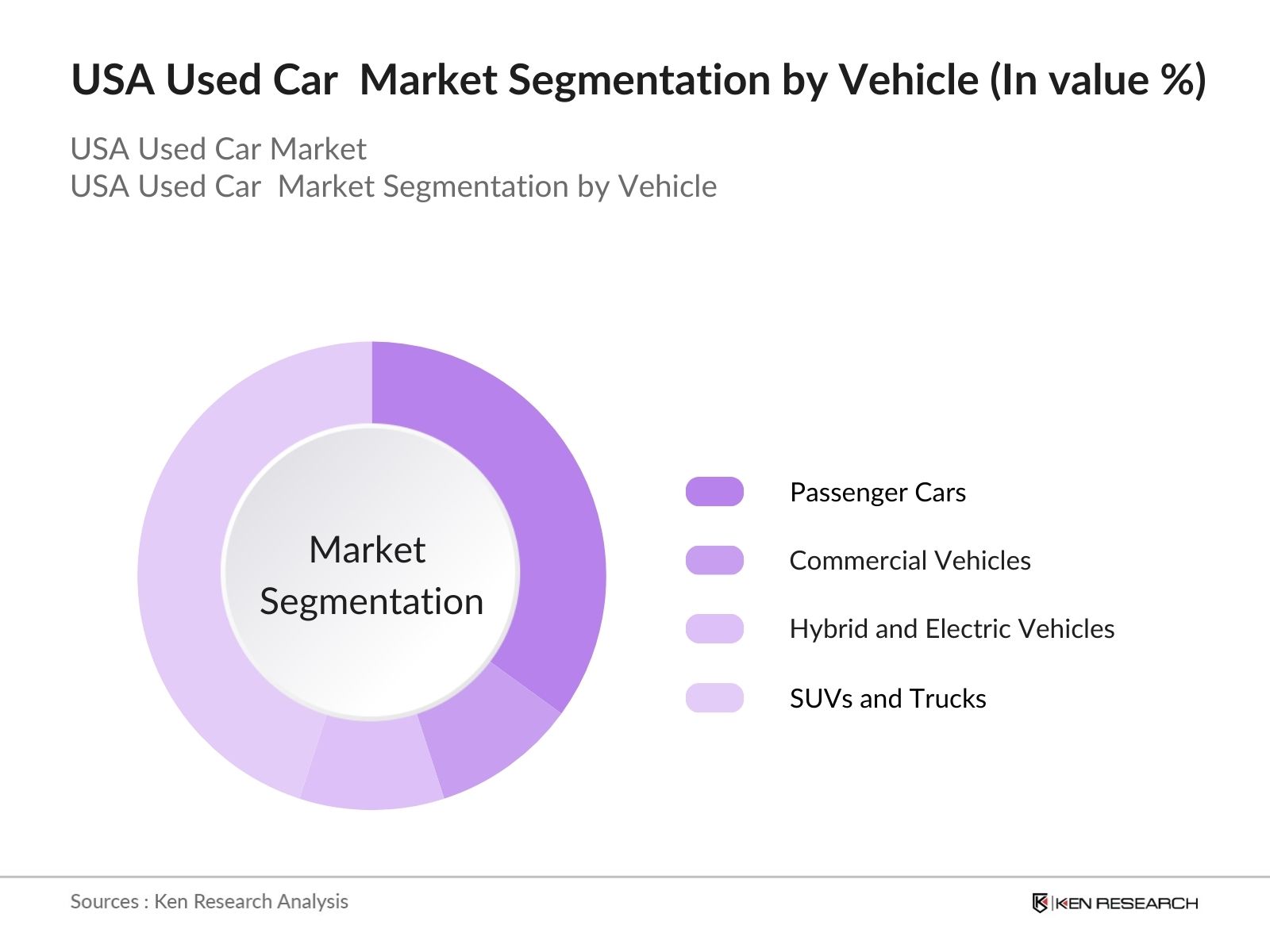
- By Vehicle Type: The market is segmented by vehicle type into passenger cars, commercial vehicles, hybrid and electric vehicles, and SUVs/trucks. SUVs and trucks hold a dominant market share, accounting for 45% of the total market in 2023. This dominance is due to the growing consumer preference for larger, more durable vehicles, especially in suburban and rural areas. Additionally, SUVs and trucks are known for retaining their value better than smaller cars, making them attractive options in the used vehicle market.
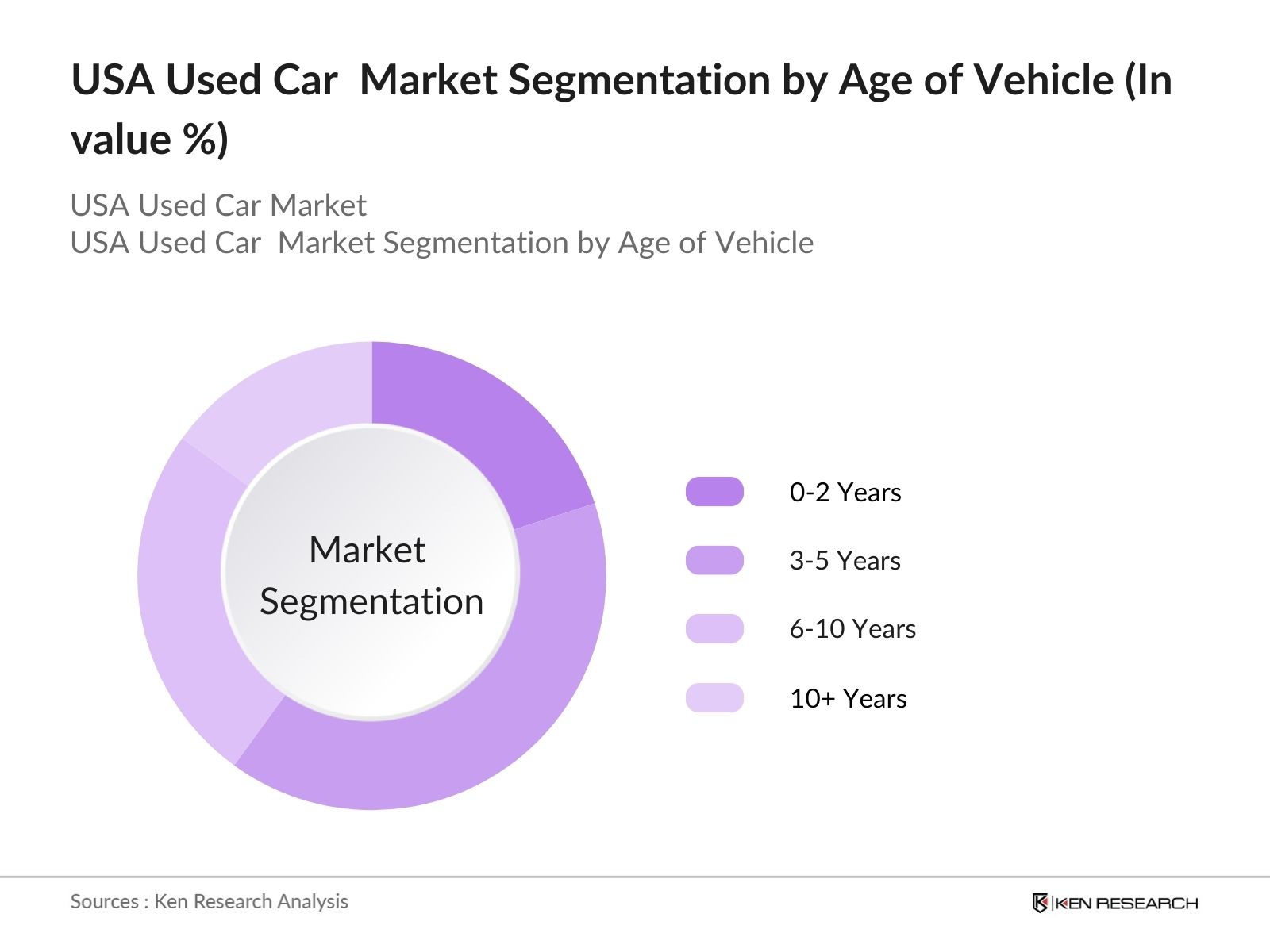
- By Age of Vehicle: The market is also segmented by the age of vehicles into 0-2 years, 3-5 years, 6-10 years, and 10+ years. Vehicles aged 3-5 years are dominating the market with a 40% share in 2023. This age range strikes an optimal balance between affordability and condition, with most vehicles in this category still under manufacturer warranties. Consumers in this segment benefit from lower depreciation costs, while still getting relatively newer vehicles with modern features.
USA Used Car Market Competitive Landscape
The USA used car market is highly competitive, dominated by large dealership networks and growing online platforms. These key players leverage advanced technology, large inventories, and consumer trust to maintain their competitive edge. Online sales channels, especially those integrated with advanced customer support and return policies, are becoming crucial differentiators in the market. 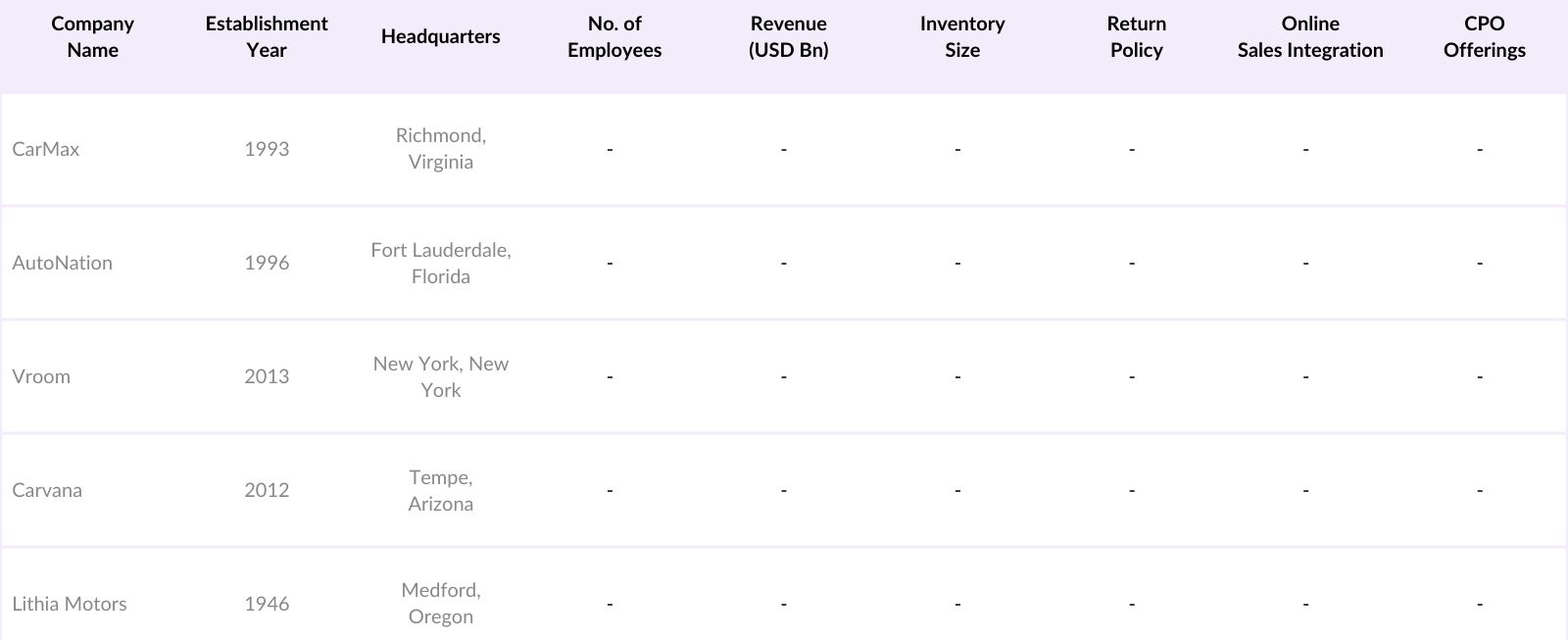
USA Used Car Market Analysis
Growth Drivers
- Affordability Over New Vehicles: In the United States, the average price of a new vehicle has risen to USD 48,000 as of 2023, while the median household income remains around USD 70,000. The affordability gap has led to a significant increase in demand for used cars, which offer a more budget-friendly option, with average prices for used vehicles hovering around USD 26,000. This price difference makes used cars accessible to a larger portion of the population. Additionally, financing for used vehicles has become easier, with loan terms extending up to 84 months, further driving demand.
- Shift Towards E-commerce Car Sales Platforms: The shift towards e-commerce in car sales has revolutionized the used car market. In 2023, it was reported that over 40% of used car buyers in the U.S. initiated or completed their purchases online, driven by companies like Carvana and Vroom. These platforms have capitalized on digital trends and consumer preference for convenience, providing a wider selection of vehicles and transparency through detailed listings, history reports, and 360-degree virtual tours. The surge in online used car transactions has eliminated geographical barriers, further expanding market reach.
- Preference for Certified Pre-Owned Vehicles: Certified Pre-Owned (CPO) vehicles have gained immense popularity, accounting for 2.6 million units sold in 2023, which is an increase of 6.6% compared to the previous year. Consumers are increasingly opting for CPO vehicles due to the extended warranties, multi-point inspections, and assurance of quality provided by manufacturers. The shift towards these vehicles is primarily due to their lower depreciation rates compared to new cars and the growing trust in manufacturer-backed programs. The average price of CPO vehicles, approximately $33,000, reflects their higher perceived value among buyers, making them an attractive option.
Challenges
- Price Volatility in the Secondary Market: One of the key challenges in the U.S. used car market is the inconsistency in pricing standards. Unlike new vehicles, used car prices can vary widely based on location, condition, mileage, and seller practices. In 2023, the price variance for similar models of used cars was reported to be as high as $5,000 between different states and sellers. This lack of standardized pricing creates confusion for consumers and makes the purchasing process less transparent. Moreover, the absence of universal guidelines for vehicle valuation has hindered trust in the market.
- Impact of Fuel Economy Policies: Fluctuating fuel prices and evolving fuel economy standards have affected consumer preferences in the used car market. The U.S. Environmental Protection Agency's (EPA) Corporate Average Fuel Economy (CAFE) standards mandate that vehicles meet specific fuel efficiency targets, which have indirectly influenced the market for fuel-efficient used cars. As fuel prices remain volatileaveraging $3.80 per gallon in 2023demand for fuel-efficient and hybrid vehicles has increased, while older, less fuel-efficient models have seen reduced interest. This dynamic poses challenges for dealers in managing inventory and aligning with consumer demand.
USA Used Car Market Future Outlook
The USA used car market is expected to witness steady growth, driven by increasing consumer preference for affordable mobility solutions and the expanding role of online platforms. Technological advancements in vehicle assessment and pricing transparency will further enhance consumer confidence in purchasing used cars. Additionally, the growing demand for hybrid and electric used vehicles is likely to shape the future of the market, as more consumers prioritize fuel efficiency and sustainability.
Future Market Opportunities
- Advancements in Vehicle Certification and Inspection Technologies: Technological advancements in vehicle inspection and certification processes are transforming the used car market. In 2023, AI-driven tools such as machine learning algorithms and computer vision systems have been increasingly adopted by dealerships and platforms to conduct thorough inspections, ensuring accurate condition assessments and reducing human error. These technologies can scan for hidden damage, assess wear and tear, and even predict future maintenance needs, providing greater transparency for buyers and sellers alike. This innovation is expected to enhance consumer trust and reduce post-purchase issues, boosting market credibility.
- AI-based Price Comparison and Condition Assessment: AI-powered platforms have gained traction in offering automated price comparisons and condition assessments for used cars. In 2023, companies like Kelley Blue Book and Carfax integrated AI tools that analyze millions of data points, including previous sales, mileage, and accident history, to provide real-time pricing evaluations. These technologies allow consumers to make more informed decisions, streamlining the purchasing process. Additionally, AI-based condition assessments ensure that sellers provide accurate descriptions, increasing buyer confidence in online purchases. This technological shift presents an opportunity to standardize pricing and vehicle evaluations across the market.
Scope of the Report
Market Scope Table
|
By Vehicle Type |
Passenger Cars Commercial Vehicles Hybrid and Electric Vehicles SUVs and Trucks |
|
By Age of Vehicle |
0-2 Years 3-5 Years 6-10 Years 10+ Years |
|
By Sales Channel |
Dealerships Online Platforms Private Sales C2C Platforms |
|
By Price Range |
Under $10,000 $10,000 - $20,000 $20,000 - $30,000 Above $30,000 |
|
By Region |
Northeast Midwest South West |
Products
Key Target Audience
Automotive Dealerships
Online Car Retail Platforms
Automotive Manufacturers
Automotive Parts Suppliers
Government Agencies (National Highway Traffic Safety Administration, Environmental Protection Agency)
Investors and Venture Capitalist Firms
Banks and Financial Institutions
Logistics and Fleet Management Companies
Companies
Players Mentioned in the Report
CarMax
AutoNation
Vroom
Carvana
Lithia Motors
Penske Automotive Group
Sonic Automotive
Group 1 Automotive
Hertz Car Sales
Enterprise Car Sales
TrueCar
Autotrader
Edmunds
Copart
Manheim Auctions
Table of Contents
1. USA Used Car Market Overview
1.1 Definition and Scope
1.2 Market Taxonomy
1.3 Market Growth Rate
1.4 Market Segmentation Overview
2. USA Used Car Market Size (In USD Mn)
2.1 Historical Market Size
2.2 Year-On-Year Growth Analysis
2.3 Key Market Developments and Milestones
3. USA Used Car Market Analysis
3.1 Growth Drivers (Specific factors such as rising demand for affordable mobility, increasing vehicle lifespans, and online used car platforms)
3.1.1 Affordability over new vehicles
3.1.2 Shift towards e-commerce car sales platforms
3.1.3 Preference for certified pre-owned vehicles
3.1.4 Expanding financial options for used car purchases
3.2 Market Challenges (Key barriers such as lack of transparency, inconsistent regulations, and fluctuating demand based on fuel prices)
3.2.1 Inconsistent pricing standards
3.2.2 Unregulated vehicle quality
3.2.3 Impact of fuel economy policies
3.3 Opportunities (Key growth areas such as digital transformation in sales and AI-based vehicle evaluations)
3.3.1 Expansion into rural and suburban regions
3.3.2 Advancements in vehicle certification and inspection technologies
3.3.3 AI-based price comparison and condition assessment
3.4 Trends (Consumer behaviors such as shift towards SUVs and hybrid used vehicles)
3.4.1 Growing preference for SUVs and trucks
3.4.2 Increased demand for eco-friendly and hybrid cars
3.4.3 Rise in subscription-based vehicle models
3.5 Government Regulations (Key regulations impacting the market, such as EPA emissions standards, state-specific vehicle sales taxes)
3.5.1 EPA and NHTSA fuel economy standards
3.5.2 Regulations on imported used cars
3.5.3 State-wise variations in vehicle registration and inspection laws
3.5.4 Federal tax credits for used electric vehicles
4. USA Used Car Market Segmentation
4.1 By Vehicle Type (In Value %)
4.1.1 Passenger Cars
4.1.2 Commercial Vehicles
4.1.3 Hybrid and Electric Vehicles
4.1.4 SUVs and Trucks
4.2 By Age of Vehicle (In Value %)
4.2.1 0-2 Years
4.2.2 3-5 Years
4.2.3 6-10 Years
4.2.4 10+ Years
4.3 By Sales Channel (In Value %)
4.3.1 Dealerships
4.3.2 Online Platforms
4.3.3 Private Sales
4.3.4 C2C Platforms
4.4 By Price Range (In Value %)
4.4.1 Under $10,000
4.4.2 $10,000 - $20,000
4.4.3 $20,000 - $30,000
4.4.4 Above $30,000
4.5 By Region (In Value %)
4.5.1 Northeast
4.5.2 Midwest
4.5.3 South
4.5.4 West
5. USA Used Car Market Competitive Analysis
5.1 Detailed Profiles of Major Companies
5.1.1 CarMax
5.1.2 AutoNation
5.1.3 Vroom
5.1.4 Carvana
5.1.5 Penske Automotive Group
5.1.6 Sonic Automotive
5.1.7 Lithia Motors
5.1.8 Group 1 Automotive
5.1.9 Hertz Car Sales
5.1.10 Enterprise Car Sales
5.1.11 TrueCar
5.1.12 Autotrader
5.1.13 Edmunds
5.1.14 Copart
5.1.15 Manheim Auctions
5.2 Cross Comparison Parameters (Sales Volume, Inventory Size, Online Platform Integration, Revenue from Online Sales, No. of Dealerships, Market Share, Consumer Ratings, Return Policies)
5.3 Market Share Analysis
5.4 Strategic Initiatives
5.5 Mergers and Acquisitions
5.6 Investment Analysis
5.7 Government and Private Grants
5.8 Technological Advancements in E-commerce Platforms
6. USA Used Car Market Regulatory Framework
6.1 Vehicle Emission Standards
6.2 Registration and Inspection Policies
6.3 Consumer Protection Laws in Used Vehicle Sales
6.4 State-Level Taxation and Incentives for Used Car Buyers
7. USA Used Car Future Market Size (In USD Mn)
7.1 Future Market Size Projections
7.2 Key Factors Driving Future Market Growth
8. USA Used Car Future Market Segmentation
8.1 By Vehicle Type (In Value %)
8.2 By Sales Channel (In Value %)
8.3 By Age of Vehicle (In Value %)
8.4 By Price Range (In Value %)
8.5 By Region (In Value %)
9. USA Used Car Market Analysts Recommendations
9.1 TAM/SAM/SOM Analysis
9.2 Customer Cohort Analysis
9.3 White Space Opportunity Analysis
9.4 Marketing Initiatives for Online Sales
DisclaimerContact Us
Research Methodology
Step 1: Identification of Key Variables
In the initial phase, key variables influencing the USA used car market were identified through extensive desk research. These variables include consumer demand, dealership network strength, and online platform penetration.
Step 2: Market Analysis and Construction
Historical data on used car sales, pricing trends, and consumer preferences were analyzed to construct a detailed market overview. This step also involved assessing the role of online sales platforms and CPO vehicle programs in driving market growth.
Step 3: Hypothesis Validation and Expert Consultation
Market hypotheses were validated through interviews with industry experts, including dealership owners, automotive manufacturers, and online platform operators. These consultations provided valuable insights into operational challenges and future market trends.
Step 4: Research Synthesis and Final Output
In the final phase, insights from primary and secondary research were synthesized to produce a comprehensive market outlook. The final output includes detailed forecasts, segmentation analysis, and competitive landscape insights.
Frequently Asked Questions
How big is the USA Used Car Market?
The USA used car market is valued at USD 205 billion, driven by the rising cost of new vehicles and the increasing availability of certified pre-owned (CPO) cars.
What are the key challenges in the USA Used Car Market?
Key challenges include price volatility in the secondary market and the lack of transparency regarding vehicle history and condition. These factors can create uncertainty for both buyers and sellers.
Who are the major players in the USA Used Car Market?
Key players include CarMax, AutoNation, Vroom, Carvana, and Lithia Motors, who dominate the market due to their extensive inventories, strong online presence, and customer trust.
What are the growth drivers of the USA Used Car Market?
Growth drivers include the increasing affordability of used cars, the expansion of online sales platforms, and the rising demand for certified pre-owned vehicles.
Why Buy From Us?

What makes us stand out is that our consultants follows Robust, Refine and Result (RRR) methodology. i.e. Robust for clear definitions, approaches and sanity checking, Refine for differentiating respondents facts and opinions and Result for presenting data with story

We have set a benchmark in the industry by offering our clients with syndicated and customized market research reports featuring coverage of entire market as well as meticulous research and analyst insights.

While we don't replace traditional research, we flip the method upside down. Our dual approach of Top Bottom & Bottom Top ensures quality deliverable by not just verifying company fundamentals but also looking at the sector and macroeconomic factors.

With one step in the future, our research team constantly tries to show you the bigger picture. We help with some of the tough questions you may encounter along the way: How is the industry positioned? Best marketing channel? KPI's of competitors? By aligning every element, we help maximize success.

Our report gives you instant access to the answers and sources that other companies might choose to hide. We elaborate each steps of research methodology we have used and showcase you the sample size to earn your trust.

If you need any support, we are here! We pride ourselves on universe strength, data quality, and quick, friendly, and professional service.