















USA Vertical Farming Market Outlook to 2030
Region:North America
Author(s):Mukul Soni
Product Code:KROD1526
December 2024
93
About the Report
USA Vertical Farming Market Overview
- The USA vertical farming market was valued at USD 3.21 billion in 2023, driven by the increasing demand for sustainable agricultural practices and fresh, locally sourced produce. Vertical farming offers a solution to the challenges of traditional agriculture, such as limited arable land and water scarcity. The growth of urban populations and the rising awareness of food security further propel the market.
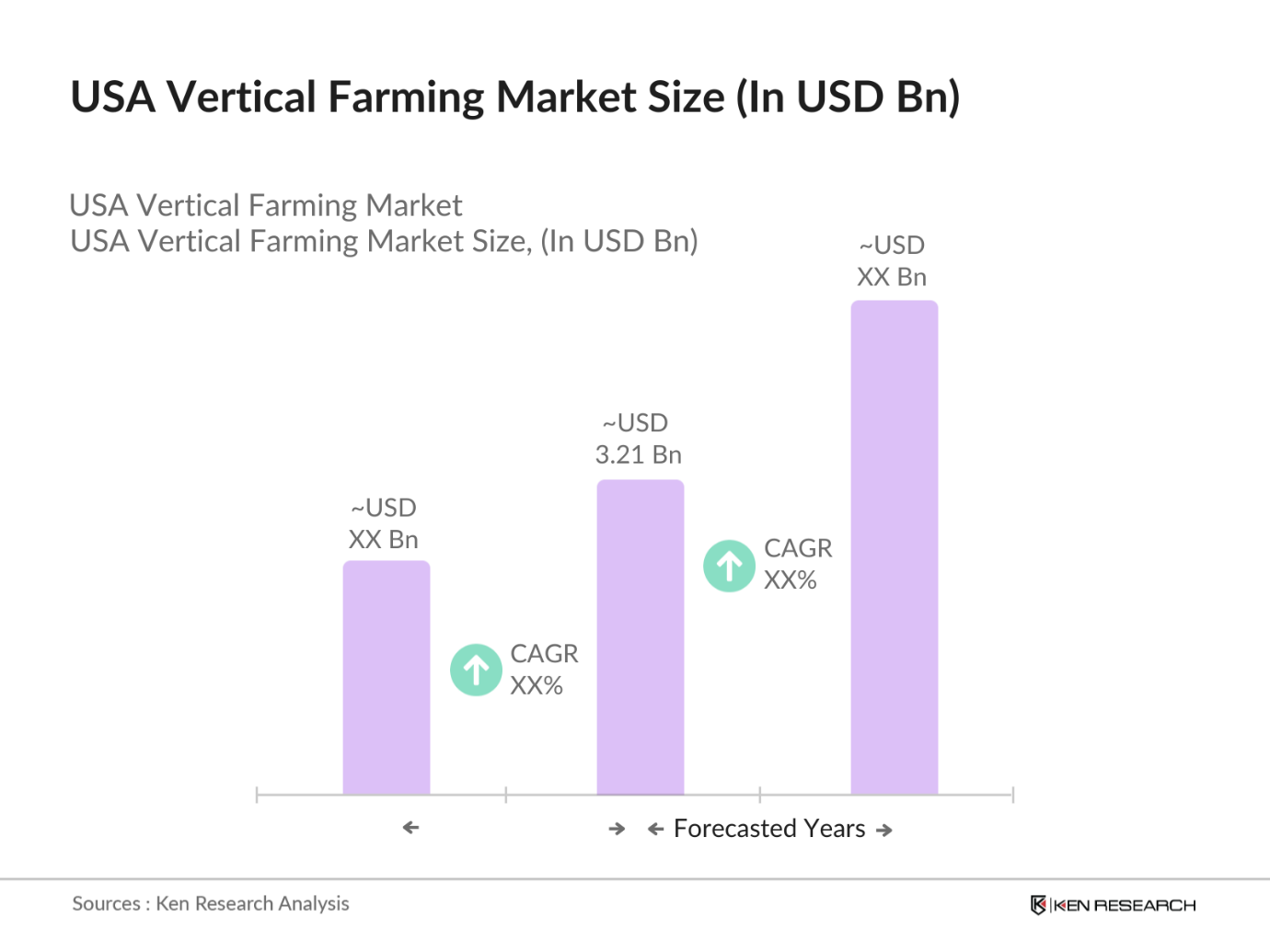
- Key players in the USA vertical farming market include AeroFarms, Plenty Unlimited Inc., Bowery Farming, Freight Farms, and Gotham Greens. These companies dominate the market due to their innovative technologies, extensive production facilities, and strong distribution networks that cater to urban populations across the country.
- New York City, San Francisco, and Chicago are dominant cities in the vertical farming market. These cities lead due to their large urban populations, high demand for locally grown produce, and the presence of innovative vertical farming companies. New York City, for example, is home to AeroFarms and Bowery Farming, which have established significant operations within the city. These urban centers also benefit from strong local government support for sustainable food systems
- In 2023, Plenty Unlimited Inc. announced a new partnership with Walmart to supply fresh produce from its vertical farms to stores across the USA. This partnership marks a significant expansion of vertical farming's reach into mainstream retail. Additionally, AeroFarms completed its merger with Spring Valley Acquisition Corp, a move that brought in USD 1.2 billion in capital to expand its operations and develop new vertical farming technologies
USA Vertical Farming Market Segmentation
The USA vertical farming market can be segmented based on several factors:
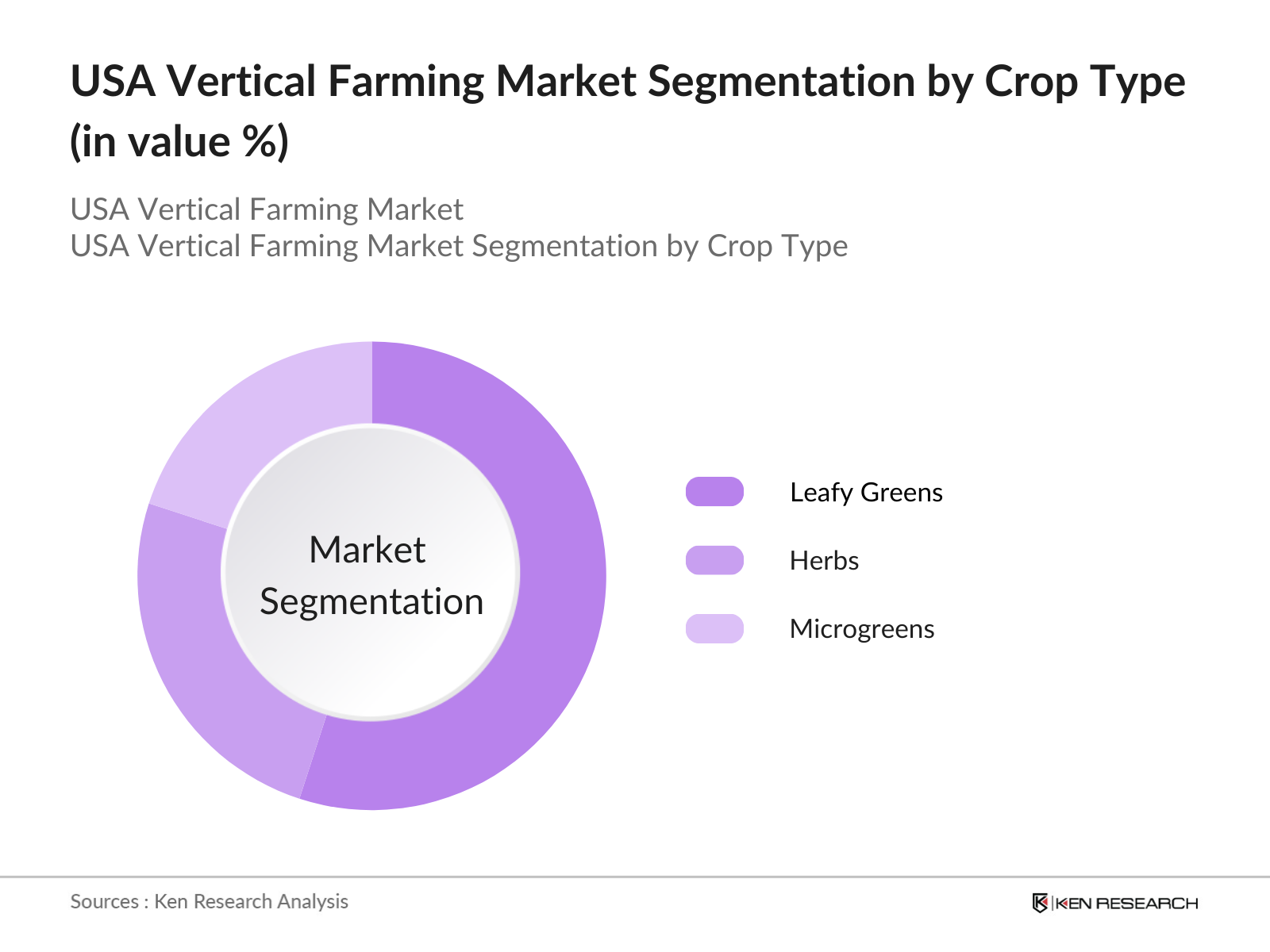
- By Crop Type: The USA vertical farming market is segmented by crop type into leafy greens, herbs, microgreens, and other crops. In 2023, leafy greens dominated the market. Leafy greens' dominance is driven by their short growth cycle, high yield, and significant consumer demand for fresh, locally sourced salad ingredients.
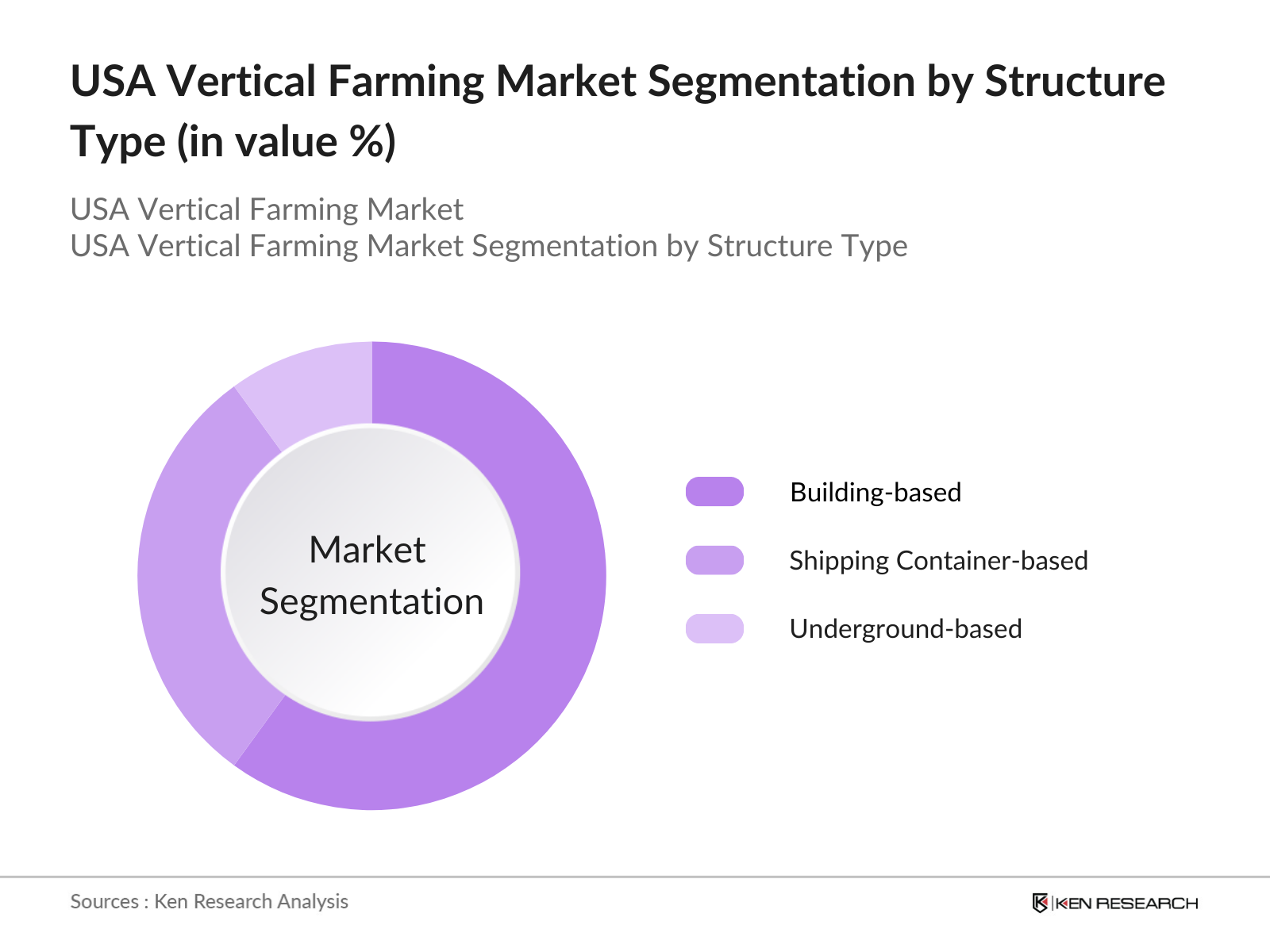
- By Structure Type: The USA vertical farming market is segmented by structure type into building-based, shipping container-based, and underground-based. In 2023, building-based vertical farms dominated the market, commanding a significant percentage of the market share, driven by their scalability and ability to integrate seamlessly with urban infrastructure.
- By Region: The USA vertical farming market is segmented by region into North, South, East, and West. In 2023, the North region dominated due to its concentration of major vertical farming companies and strong consumer demand for locally grown produce. The region's robust infrastructure and government support for urban agriculture further contribute to its dominance.
USA Vertical Farming Market Competitive Landscape
|
Company Name |
Establishment Year |
Headquarters |
|
AeroFarms |
2004 |
Newark, NJ |
|
Plenty Unlimited Inc. |
2013 |
San Francisco, CA |
|
Bowery Farming |
2015 |
New York, NY |
|
Freight Farms |
2010 |
Boston, MA |
|
Gotham Greens |
2011 |
Brooklyn, NY |
- Bowery Farming Expands Product Line (2023): In 2023, Bowery Farming expanded its product line to include vertically farmed strawberries, catering to the growing demand for fresh, locally sourced fruits. The strawberries, grown in Bowery's New Jersey facility, are now available in select grocery stores across the Northeast USA.
- Gotham Greens Expands into New Markets (2023): Gotham Greens expanded its operations into new markets in 2023 by opening two new facilities in the Midwest, increasing its production capacity by 30%. These facilities will serve major metropolitan areas, providing fresh produce to local grocery stores and restaurants.
USA Vertical Farming Industry Analysis
USA Vertical Farming Market Growth Drivers
- Rising Consumer Demand for Fresh Produce: The USA vertical farming market is driven by the increasing consumer demand for fresh, pesticide-free produce. Urban populations, particularly in major cities like New York and San Francisco, are prioritizing health and sustainability, leading to higher demand for locally grown vegetables. The farm-to-table movement has further amplified this trend, with consumers seeking fresh produce that is both nutritious and environmentally friendly.
- Technological Advancements in Controlled Environment Agriculture: The market is experiencing significant growth due to advancements in Controlled Environment Agriculture (CEA) technologies, which allow for precise control of environmental factors such as light, temperature, and humidity. These technologies have enabled vertical farms to produce higher yields with fewer resources, making them more competitive with traditional agriculture. The adoption of automation and AI-driven systems has also streamlined operations, reducing labor costs and increasing scalability.
- Increased Corporate Investment in Sustainable Agriculture: Major corporations are investing heavily in vertical farming as part of their sustainability initiatives. Companies like Walmart and Amazon have partnered with vertical farming companies to source fresh produce for their stores, aligning with consumer demand for sustainable and locally grown foods. These investments are driving the growth of the vertical farming market, as they provide the necessary capital for expansion and innovation.
USA Vertical Farming Market Challenges
- Energy Consumption: Vertical farms consume a considerable amount of energy due to the need for artificial lighting and climate control systems. As of 2023, energy costs accounted for up to 50% of the operational expenses for a typical vertical farm. While advances in LED technology have reduced energy consumption, the overall sustainability of vertical farming is still a concern. Balancing energy usage with sustainability goals remains a significant challenge for the industry.
- Limited Crop Variety: The vertical farming market in the USA is primarily focused on leafy greens, herbs, and microgreens, which limits the variety of crops that can be efficiently grown. Crops such as grains, root vegetables, and fruit-bearing plants are more challenging to cultivate in vertical farms due to their size, weight, and specific growing conditions. This limitation restricts the diversity of products that vertical farms can offer, making it difficult for them to compete with traditional agriculture in terms of crop variety.
USA Vertical Farming Market Government Initiatives
- USDA Urban Agriculture and Innovative Production Grants (2023): In 2023, the USDA launched a grant program under the Urban Agriculture and Innovative Production Grants, providing USD 7.5 million to support the development of urban farming projects, including vertical farming. This initiative aims to promote sustainable agriculture practices and improve food security in urban areas by offering financial assistance to urban farmers.
- Government Support for Sustainable Agriculture and Vertical Farming: Government programs focused on sustainable agriculture significantly aid the growth of vertical farming through tax incentives and subsidies that encourage adoption of these practices. These initiatives promote green agriculture, enhancing food security and fostering innovation in the sector. Government support is crucial for the expansion of vertical farming in the U.S., as it provides financial incentives for farmers to embrace this innovative approach to crop production.
USA Vertical Farming Market Future Outlook
The USA vertical farming market is expected to grow significantly by 2028, driven by technological advancements, increased consumer demand for fresh produce, and strong government support for sustainable agriculture. As urban populations continue to rise, the demand for locally sourced, pesticide-free food will increase, further propelling the growth of vertical farming.
Future Market Trends
- Diversification of Crop Offerings: Over the next five years, vertical farms in the USA are expected to diversify their crop offerings beyond leafy greens and herbs. Advances in hydroponics and aeroponics will enable the cultivation of a broader range of crops, including fruits, vegetables, and grains, making vertical farming more competitive with traditional agriculture.
- Integration of Renewable Energy: As the vertical farming industry grows, there will be an increasing focus on integrating renewable energy sources, such as solar and wind power, into vertical farm operations. This shift will help reduce the high energy costs associated with artificial lighting and climate control systems, making vertical farming more sustainable and economically viable. The use of renewable energy will also align with the industry's broader goals of reducing its environmental impact.
Scope of the Report
|
By Crop Type |
Leafy Greens Herbs Microgreens Other Crops |
|
By Structure Type: |
Building-based Shipping Container-based Underground-based |
|
By Region |
North South East West |
Products
Key Target Audience Organizations and Entities who can benefit by Subscribing to This Report:
Agricultural Technology Providers
Urban Farming Enterprises
Supermarkets and Grocery Chains
Food and Beverage Companies
Government and Regulatory Bodies (USDA, EPA)
Investments and Venture Capitalist Firms
Vertical Farming Equipment Manufacturers
Real Estate Developers and Urban Planners
Time Period Captured in the Report:
Historical Period: 2018-2023
Base Year: 2023
Forecast Period: 2023-2028
Companies
Players Mentioned in the Report:
AeroFarms
Plenty Unlimited Inc.
Bowery Farming
Freight Farms
Gotham Greens
BrightFarms
Green Sense Farms
Local Roots Farms
Iron Ox
Vertical Harvest
Crop One Holdings
Upward Farms
Fifth Season
Urban Crop Solutions
Infarm
Table of Contents
1. USA Vertical Farming Market Overview
1.1. Definition and Scope
1.2. Market Taxonomy
1.3. Market Growth Rate
1.4. Market Segmentation Overview
2. USA Vertical Farming Market Size (in USD Bn), 2018-2023
2.1. Historical Market Size
2.2. Year-on-Year Growth Analysis
2.3. Key Market Developments and Milestones
3. USA Vertical Farming Market Analysis
3.1. Growth Drivers
3.1.1. Rising Consumer Demand for Fresh Produce
3.1.2. Technological Advancements in Controlled Environment Agriculture
3.1.3. Increased Corporate Investment in Sustainable Agriculture
3.2. Restraints
3.2.1. High Initial Capital Investment
3.2.2. Energy Consumption
3.2.3. Limited Crop Variety
3.3. Opportunities
3.3.1. Expansion into New Crops and Products
3.3.2. Integration of Renewable Energy Sources
3.3.3. Scaling of Vertical Farming Operations
3.4. Trends
3.4.1. Diversification of Crop Offerings
3.4.2. Integration of Automation and AI
3.4.3. Expansion of Vertical Farming into New Regions
3.5. Government Regulation
3.5.1. USDA Urban Agriculture and Innovative Production Grants
3.5.2. Farm Bill Provisions for Vertical Farming
3.5.3. EPA Sustainable Agriculture Initiative
3.6. SWOT Analysis
3.7. Stake Ecosystem
3.8. Competition Ecosystem
4. USA Vertical Farming Market Segmentation, 2023
4.1. By Crop Type (in Value %)
4.1.1. Leafy Greens
4.1.2. Herbs
4.1.3. Microgreens
4.1.4. Other Crops
4.2. By Structure Type (in Value %)
4.2.1. Building-Based
4.2.2. Shipping Container-Based
4.2.3. Underground-Based
4.3. By Region (in Value %)
4.3.1. North
4.3.2. South
4.3.3. East
4.3.4. West
5. USA Vertical Farming Market Cross Comparison
5.1 Detailed Profiles of Major Companies
5.1.1. AeroFarms
5.1.2. Plenty Unlimited Inc.
5.1.3. Bowery Farming
5.1.4. Freight Farms
5.1.5. Gotham Greens
5.1.6. BrightFarms
5.1.7. Green Sense Farms
5.1.8. Local Roots Farms
5.1.9. Iron Ox
5.1.10. Vertical Harvest
5.1.11. Crop One Holdings
5.1.12. Upward Farms
5.1.13. Fifth Season
5.1.14. Urban Crop Solutions
5.1.15. Infarm
5.2 Cross Comparison Parameters (No. of Employees, Headquarters, Inception Year, Revenue)
6. USA Vertical Farming Market Competitive Landscape
6.1. Market Share Analysis
6.2. Strategic Initiatives
6.3. Mergers and Acquisitions
6.4. Investment Analysis
6.4.1. Venture Capital Funding
6.4.2. Government Grants
6.4.3. Private Equity Investments
7. USA Vertical Farming Market Regulatory Framework
7.1. Environmental Standards
7.2. Compliance Requirements
7.3. Certification Processes
8. USA Vertical Farming Future Market Size (in USD Bn), 2023-2028
8.1. Future Market Size Projections
8.2. Key Factors Driving Future Market Growth
9. USA Vertical Farming Future Market Segmentation, 2028
9.1. By Crop Type (in Value %)
9.2. By Structure Type (in Value %)
9.3. By Region (in Value %)
10. USA Vertical Farming Market Analysts Recommendations
10.1. TAM/SAM/SOM Analysis
10.2. Customer Cohort Analysis
10.3. Marketing Initiatives
10.4. White Space Opportunity Analysis
Disclaimer Contact UsResearch Methodology
Step 1: Identifying Key Variables
Ecosystem creation for all the major entities involved in the USA Vertical Farming Market, including key players, market segments, and distribution channels. This step involves referring to multiple secondary and proprietary databases to perform desk research and gather industry-level information. The data sources include government publications, industry reports, company filings, and financial reports to ensure a comprehensive understanding of the market dynamics.
Step 2: Market Building
Collating statistics on the USA Vertical Farming Market over the years, including market size, growth rates, and key financial metrics. This step involves analyzing the penetration of vertical farming technologies, the ratio of service providers, and the contribution of various segments to the overall market. The research team also reviews service quality statistics to compute revenue generated in the market, ensuring accuracy behind the data points shared.
Step 3: Validating and Finalizing
Building market hypotheses and conducting Computer-Assisted Telephone Interviews (CATIs) with industry experts from various vertical farming companies. This step aims to validate the collected statistics and seek operational and financial information directly from company representatives. The validation process ensures that the data reflects the current market conditions and aligns with industry expectations.
Step 4: Research Output
The research team approaches multiple vertical farming companies, equipment manufacturers, and distributors to understand the nature of product segments, sales patterns, consumer preferences, and other relevant parameters. This information supports the validation of statistics derived through a bottom-up approach from market participants, ensuring that the final research output is accurate, reliable, and comprehensive.
Frequently Asked Questions
01 How big is the USA Vertical Farming Market?
The USA vertical farming market was valued at USD 3.21 billion in 2023, driven by the increasing demand for sustainable agricultural practices and fresh, locally sourced produce. Vertical farming offers a solution to the challenges of traditional agriculture, such as limited arable land and water scarcity. The growth of urban populations and the rising awareness of food security further propel the market.
02 What are the challenges in the USA Vertical Farming Market?
Challenges in the USA vertical farming market include high initial capital investment, significant energy consumption, and limited crop variety. These factors pose barriers to scalability and profitability, particularly for small and medium-sized enterprises.
03 Who are the major players in the USA Vertical Farming Market?
Key players in the USA vertical farming market include AeroFarms, Plenty Unlimited Inc., Bowery Farming, Freight Farms, and Gotham Greens. These companies lead the market through innovation, extensive production facilities, and strong partnerships with major retailers.
04. What are the growth drivers of the USA Vertical Farming Market?
The USA vertical farming market is driven by the rising consumer demand for fresh, locally sourced produce, technological advancements in controlled environment agriculture, and increasing investments in sustainable agriculture by major corporations.
Why Buy From Us?

What makes us stand out is that our consultants follows Robust, Refine and Result (RRR) methodology. i.e. Robust for clear definitions, approaches and sanity checking, Refine for differentiating respondents facts and opinions and Result for presenting data with story

We have set a benchmark in the industry by offering our clients with syndicated and customized market research reports featuring coverage of entire market as well as meticulous research and analyst insights.

While we don't replace traditional research, we flip the method upside down. Our dual approach of Top Bottom & Bottom Top ensures quality deliverable by not just verifying company fundamentals but also looking at the sector and macroeconomic factors.

With one step in the future, our research team constantly tries to show you the bigger picture. We help with some of the tough questions you may encounter along the way: How is the industry positioned? Best marketing channel? KPI's of competitors? By aligning every element, we help maximize success.

Our report gives you instant access to the answers and sources that other companies might choose to hide. We elaborate each steps of research methodology we have used and showcase you the sample size to earn your trust.

If you need any support, we are here! We pride ourselves on universe strength, data quality, and quick, friendly, and professional service.