
USA Water Treatment Market Outlook to 2030
Region:United States
Author(s):Mukul
Product Code:KROD7802
Region:United States
Author(s):Mukul
Product Code:KROD7802
October 2024
85
The USA Water Treatment market is dominated by both global and domestic players. Major companies have established strong distribution channels and robust research and development departments to innovate and meet the rising demand for clean water solutions. These players also benefit from strategic collaborations with governments and environmental agencies to meet regulatory standards and increase the efficiency of water treatment processes.
|
Company Name |
Establishment Year |
Headquarters |
Manufacturing Capacity |
No. of Employees |
Revenue |
Geographic Presence |
Technological Innovations |
Market Share |
Export Capability |
|
Veolia North America |
1853 |
Boston, USA |
|||||||
|
Suez Water Technologies |
1834 |
Paris, France |
|||||||
|
Xylem Inc. |
2011 |
Rye Brook, USA |
|||||||
|
Pentair Plc |
1966 |
London, UK |
|||||||
|
Evoqua Water Technologies |
1913 |
Pittsburgh, USA |
Growth Drivers
Market Restraints
Over the next five years, the USA Water Treatment market is expected to show significant growth driven by government mandates on water quality, rising awareness of water conservation, and the need for sustainable treatment technologies. Urbanization and industrial expansion are likely to fuel demand for advanced water treatment solutions across residential, industrial, and municipal sectors. Additionally, technological advancements, such as AI-powered smart water management systems, are poised to optimize water treatment efficiency.
Market Opportunities
|
Segments |
Sub-Segments |
|
By Technology |
Membrane Filtration |
|
Activated Carbon Filtration |
|
|
Ion Exchange |
|
|
UV Filtration |
|
|
Reverse Osmosis |
|
|
By End-User |
Municipal |
|
Industrial |
|
|
Residential |
|
|
Commercial |
|
|
By Process |
Primary Treatment |
|
Secondary Treatment |
|
|
Tertiary Treatment |
|
|
By Application |
Potable Water Treatment |
|
Wastewater Treatment |
|
|
Desalination |
|
|
Groundwater Treatment |
|
|
By Region |
North-East |
|
Mid-West |
|
|
South |
|
|
West |
1.1 Definition and Scope
1.2 Market Taxonomy
1.3 Market Growth Rate (including key macroeconomic indicators)
1.4 Market Segmentation Overview
2.1 Historical Market Size
2.2 Year-On-Year Growth Analysis (market expansion metrics and regulatory compliance effects)
2.3 Key Market Developments and Milestones (key projects, investments, regulatory approvals)
3.1 Growth Drivers
3.1.1 Government Regulations and Environmental Standards
3.1.2 Increasing Industrial Wastewater
3.1.3 Growing Water Scarcity and Reuse Initiatives
3.1.4 Technological Advancements (including sustainable technologies)
3.2 Market Challenges
3.2.1 High Initial Capital Investment
3.2.2 Aging Infrastructure and Replacement Costs
3.2.3 Complexity in Wastewater Treatment
3.3 Opportunities
3.3.1 Growth in Residential and Commercial Applications
3.3.2 Public-Private Partnerships in Infrastructure Development
3.3.3 Increasing Adoption of Advanced Filtration Technologies
3.4 Trends
3.4.1 Digitalization and Smart Water Treatment Systems
3.4.2 Increasing Use of Membrane Filtration Technology
3.4.3 Integration with Industrial IoT
3.5 Government Regulation
3.5.1 Safe Drinking Water Act (SDWA) Regulations
3.5.2 National Pollutant Discharge Elimination System (NPDES) Compliance
3.5.3 Clean Water Act (CWA) Requirements
3.5.4 State-Level Water Quality Standards
3.6 SWOT Analysis
Strengths, Weaknesses, Opportunities, and Threats
3.7 Stakeholder Ecosystem
Key Stakeholders and Roles in the Market
3.8 Porters Five Forces
Analysis of Competitive Forces Impacting the Market
3.9 Competition Ecosystem
Overview of Major Competitors and Market Fragmentation
4.1 By Technology (In Value %)
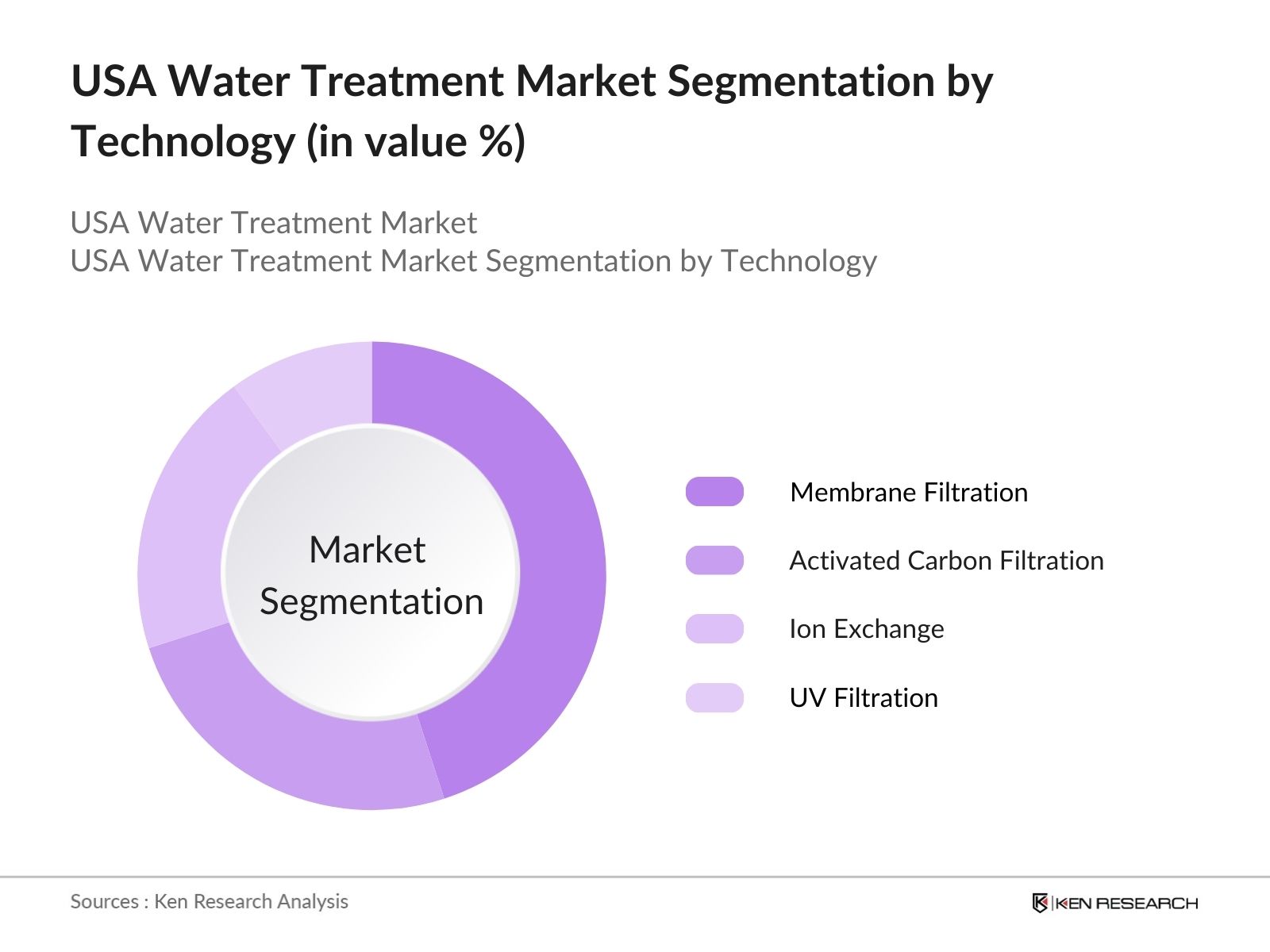
4.1.1 Membrane Filtration
4.1.2 Activated Carbon Filtration
4.1.3 Ion Exchange
4.1.4 UV Filtration
4.1.5 Reverse Osmosis
4.2 By End-User (In Value %)
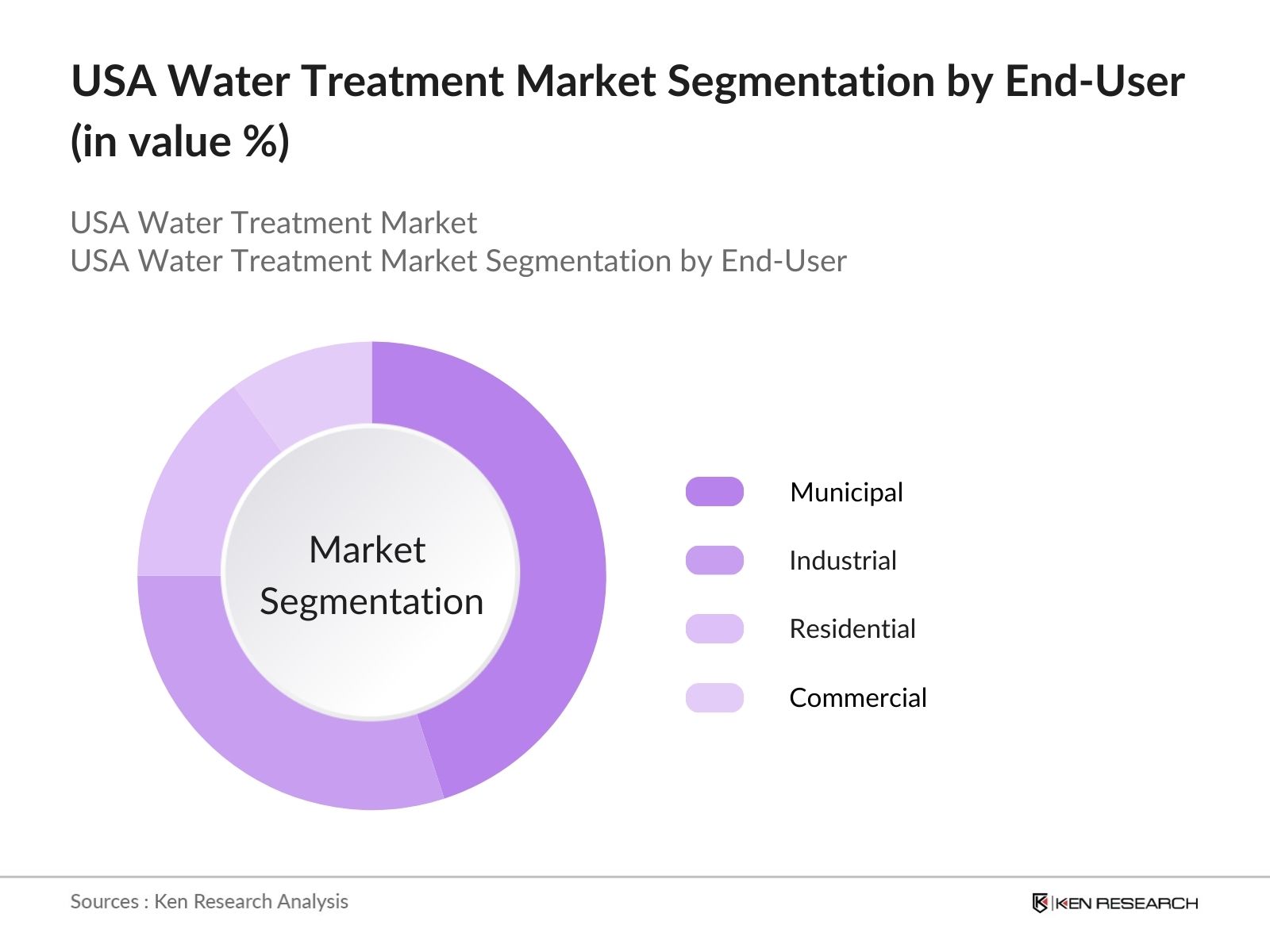
4.2.1 Municipal
4.2.2 Industrial
4.2.3 Residential
4.2.4 Commercial
4.3 By Process (In Value %)
4.3.1 Primary Treatment
4.3.2 Secondary Treatment
4.3.3 Tertiary Treatment
4.4 By Application (In Value %)
4.4.1 Potable Water Treatment
4.4.2 Wastewater Treatment
4.4.3 Desalination
4.4.4 Groundwater Treatment
4.5 By Region (In Value %)
4.5.1 North-East
4.5.2 Mid-West
4.5.3 South
4.5.4 West
5.1 Detailed Profiles of Major Companies
5.1.1 Veolia North America
5.1.2 Suez Water Technologies
5.1.3 Xylem Inc.
5.1.4 Pentair Plc
5.1.5 Evoqua Water Technologies
5.1.6 Ecolab
5.1.7 Danaher Corporation
5.1.8 A.O. Smith Corporation
5.1.9 Culligan International
5.1.10 General Electric Water
5.1.11 3M Purification
5.1.12 Kemira Oyj
5.1.13 Aquatech International
5.1.14 Kurita Water Industries
5.1.15 American Water
5.2 Cross Comparison Parameters (No. of Employees, Headquarters, Revenue, Operating Segments, Regional Presence, Key Technologies, Environmental Impact Initiatives, Investment in R&D)
5.3 Market Share Analysis
5.4 Strategic Initiatives
5.5 Mergers and Acquisitions
5.6 Investment Analysis
5.7 Venture Capital Funding
5.8 Government Grants
5.9 Private Equity Investments
6.1 Water Quality Standards
6.2 Compliance with EPA Regulations
6.3 Certification Processes
7.1 Future Market Size Projections
7.2 Key Factors Driving Future Market Growth
8.1 By Technology (In Value %)
8.2 By End-User (In Value %)
8.3 By Process (In Value %)
8.4 By Application (In Value %)
8.5 By Region (In Value %)
9.1 TAM/SAM/SOM Analysis
9.2 Customer Cohort Analysis
9.3 Marketing Initiatives
9.4 White Space Opportunity Analysis
The initial phase involves constructing a detailed ecosystem map for the USA Water Treatment market. This map includes government regulations, key market participants, and critical water usage segments. Extensive desk research, using secondary sources and proprietary databases, helps identify key variables driving the market, such as water scarcity, population growth, and industrial pollution.
Historical data is compiled from credible sources such as the US Environmental Protection Agency and the World Bank. This data is analyzed to assess market trends, customer segmentation, and revenue generation. Service quality metrics and technological advancements are also evaluated to ensure the accuracy of revenue and demand estimates.
Key market hypotheses are validated through interviews with industry experts, including representatives from municipal water agencies and water treatment technology providers. These insights provide real-time data on operational challenges and future growth areas.
A bottom-up approach is used to gather detailed insights from water treatment equipment manufacturers, distributors, and service providers. This final phase validates the accuracy of projections, market segmentation, and trends to deliver a comprehensive market report.
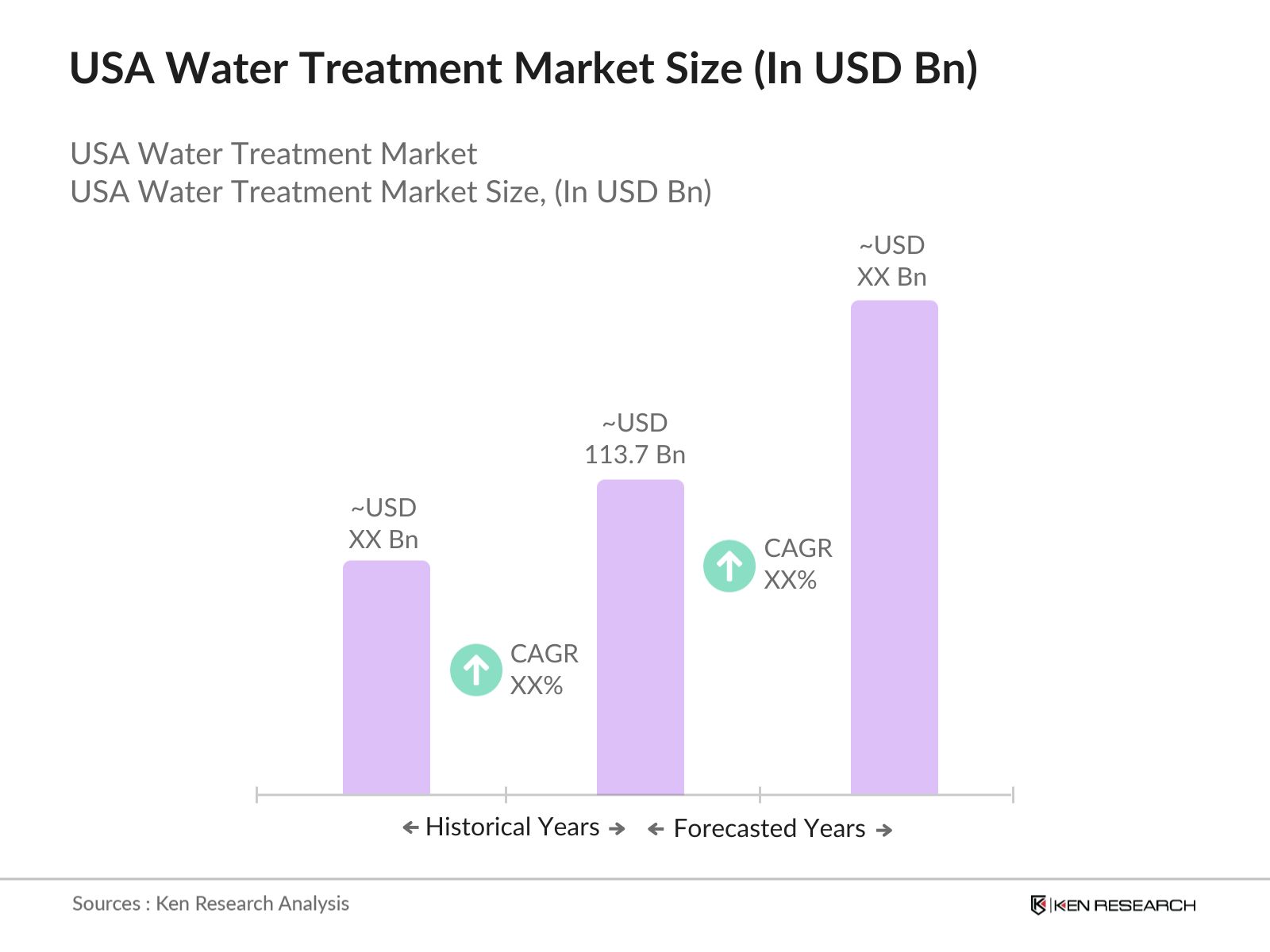
The USA Water Treatment market is valued at USD 113.7 billion, driven by increasing regulatory requirements for safe drinking water, industrial water reuse initiatives, and technological advancements in water treatment processes.
Key challenges include aging water infrastructure, high capital costs for implementing advanced treatment technologies, and stringent compliance requirements that drive up operational expenses for both public and private water entities.
Leading players in the market include Veolia North America, Suez Water Technologies, Xylem Inc., Pentair Plc, and Evoqua Water Technologies. These companies dominate due to their advanced technologies, extensive market presence, and strategic public-private partnerships.
The market is propelled by rising water scarcity, government mandates for clean water, and advancements in membrane filtration and digital water management solutions. Increasing demand for potable water treatment and wastewater recycling also drives market growth.

What makes us stand out is that our consultants follows Robust, Refine and Result (RRR) methodology. i.e. Robust for clear definitions, approaches and sanity checking, Refine for differentiating respondents facts and opinions and Result for presenting data with story

We have set a benchmark in the industry by offering our clients with syndicated and customized market research reports featuring coverage of entire market as well as meticulous research and analyst insights.

While we don't replace traditional research, we flip the method upside down. Our dual approach of Top Bottom & Bottom Top ensures quality deliverable by not just verifying company fundamentals but also looking at the sector and macroeconomic factors.

With one step in the future, our research team constantly tries to show you the bigger picture. We help with some of the tough questions you may encounter along the way: How is the industry positioned? Best marketing channel? KPI's of competitors? By aligning every element, we help maximize success.

Our report gives you instant access to the answers and sources that other companies might choose to hide. We elaborate each steps of research methodology we have used and showcase you the sample size to earn your trust.

If you need any support, we are here! We pride ourselves on universe strength, data quality, and quick, friendly, and professional service.