















USA Wave and Tidal Energy Market Outlook to 2030
Region:North America
Author(s):Yogita Sahu
Product Code:KROD4777
December 2024
91
About the Report
USA Wave and Tidal Energy Market Overview
- The U.S. wave and tidal energy market is valued at USD 134 million, supported by the growing demand for renewable energy sources to reduce carbon emissions and enhance energy security. This market is driven by the governments increased investment in alternative energy sources, combined with technological advancements in wave energy conversion and tidal stream turbines. Significant funding from both public and private sectors has further propelled the development of coastal projects aimed at harnessing ocean energy to meet rising energy demands.
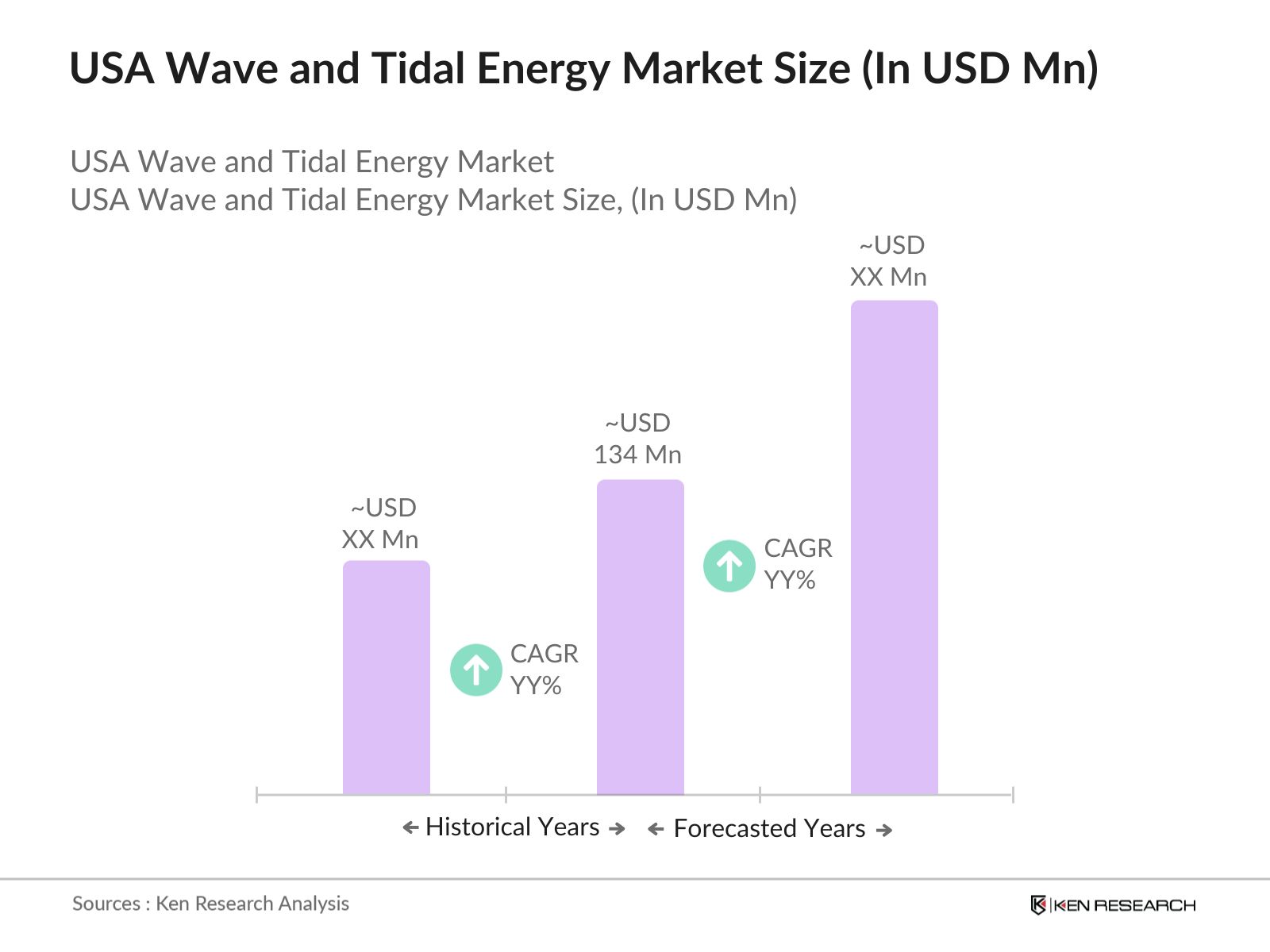
- California, Oregon, and Washington on the Pacific Coast lead in wave and tidal energy projects, owing to favorable coastal conditions and a strong commitment to renewable energy. The strategic locations of these states enable efficient energy production from ocean currents, while progressive state policies and investments in clean energy further support the expansion of wave and tidal projects.
- The U.S. Department of Energy (DOE) has established the Marine Energy Program, with a budget allocation of USD 370 million in 2024. This program funds R&D, pilot projects, and the commercialization of marine energy technologies, including wave and tidal energy. The initiative aims to establish the U.S. as a global leader in marine energy by fostering innovation and creating a framework for reliable and scalable energy systems.
USA Wave and Tidal Energy Market Segmentation
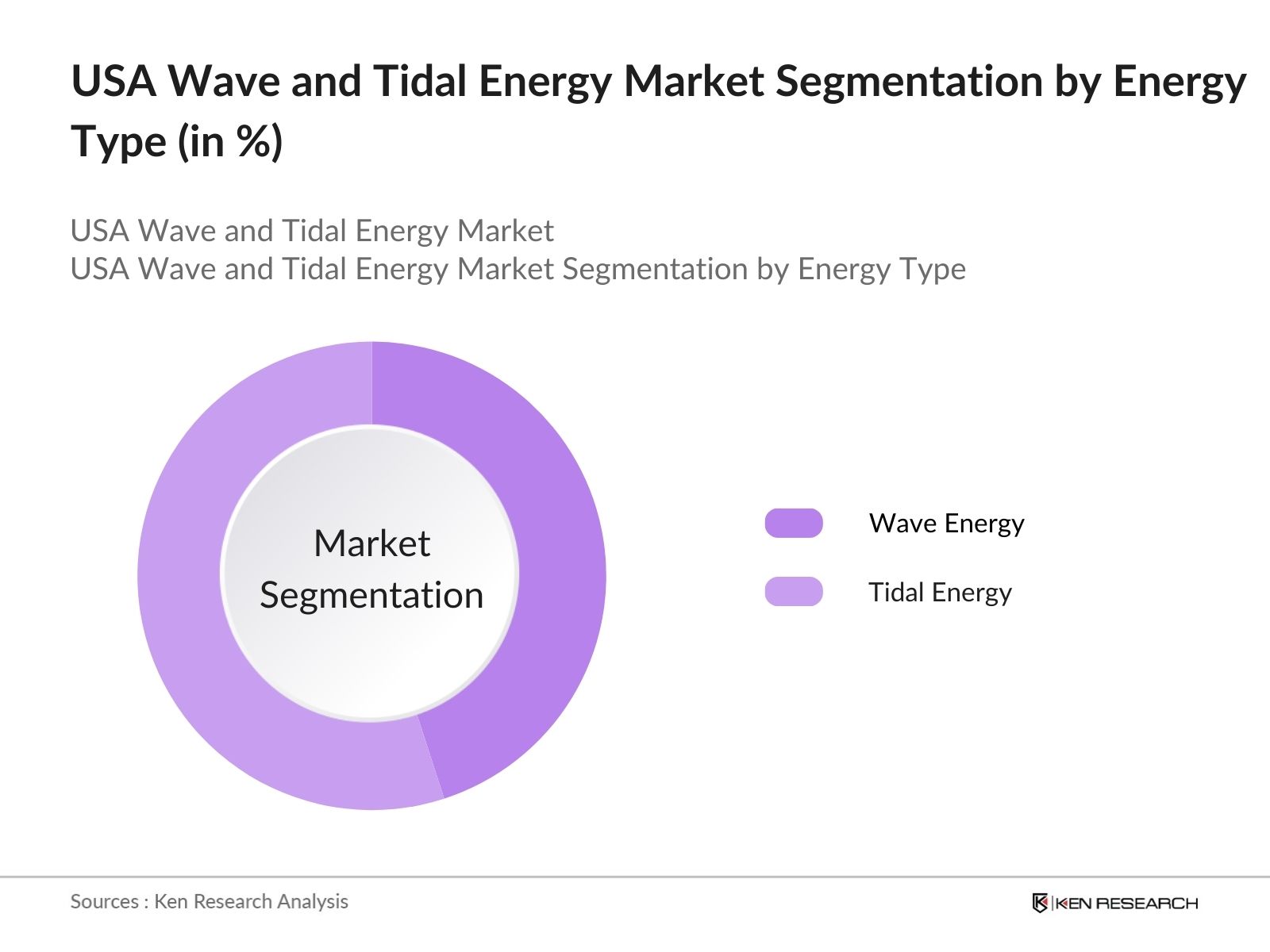
By Energy Type: The market is segmented by energy type into wave energy and tidal energy. Tidal energy holds a dominant market share within this segment, attributed to the relatively stable and predictable nature of tidal currents, which offers a more reliable energy source. Tidal stream generators are especially popular in regions with strong tidal movements, making them a preferred choice for utility-scale projects. The efficiency and reliability of tidal energy generation are driving its strong market position.
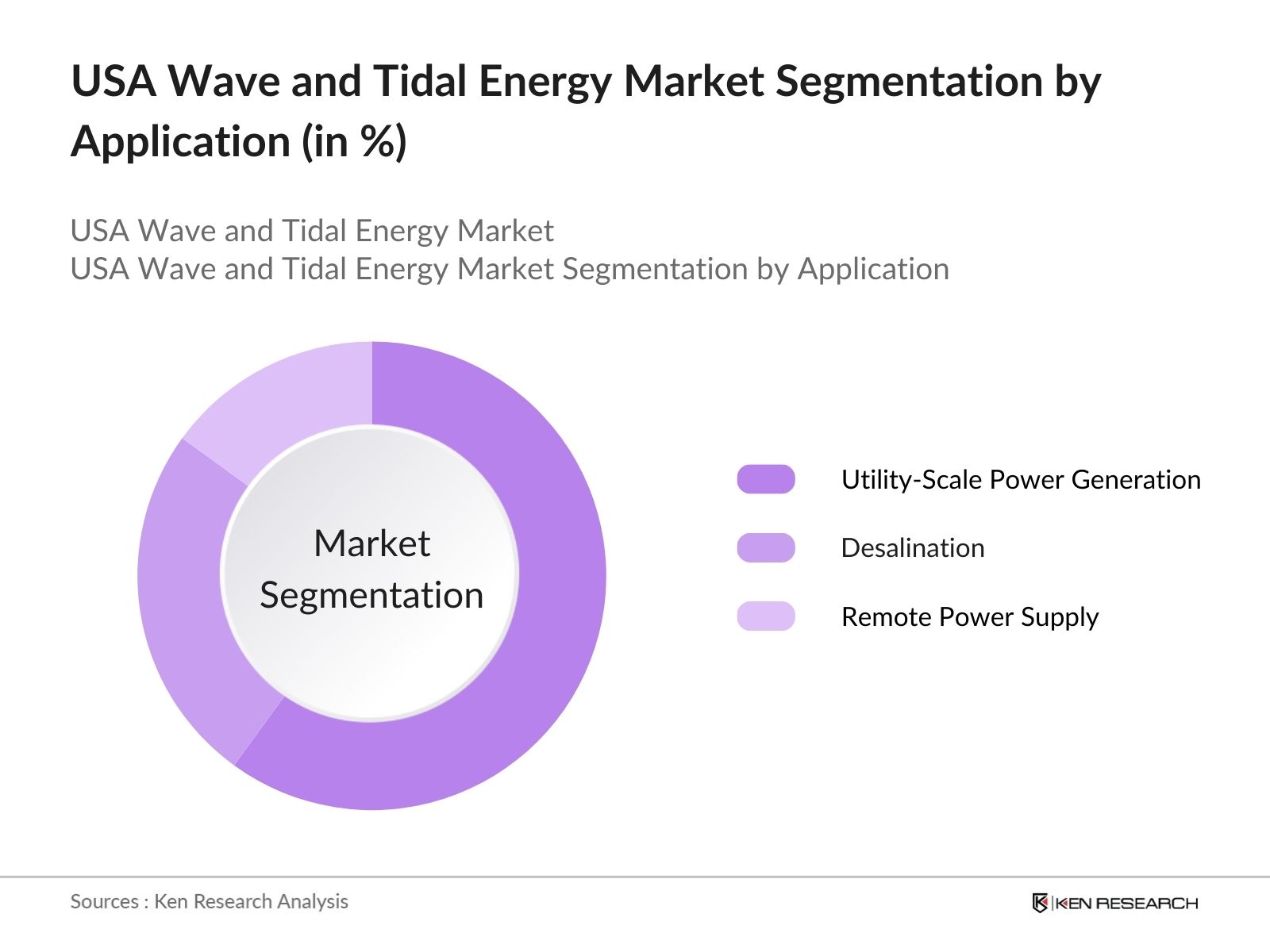
By Application: In the market, applications are segmented into utility-scale power generation, desalination, and remote power supply. Utility-scale power generation is the leading segment, driven by increased demand for large-scale renewable energy solutions to support grid power. Utility companies and energy operators are increasingly adopting wave and tidal energy technologies to complement their renewable energy portfolios, as they provide a consistent and sustainable energy source capable of meeting large energy requirements.
USA Wave and Tidal Energy Market Competitive Landscape
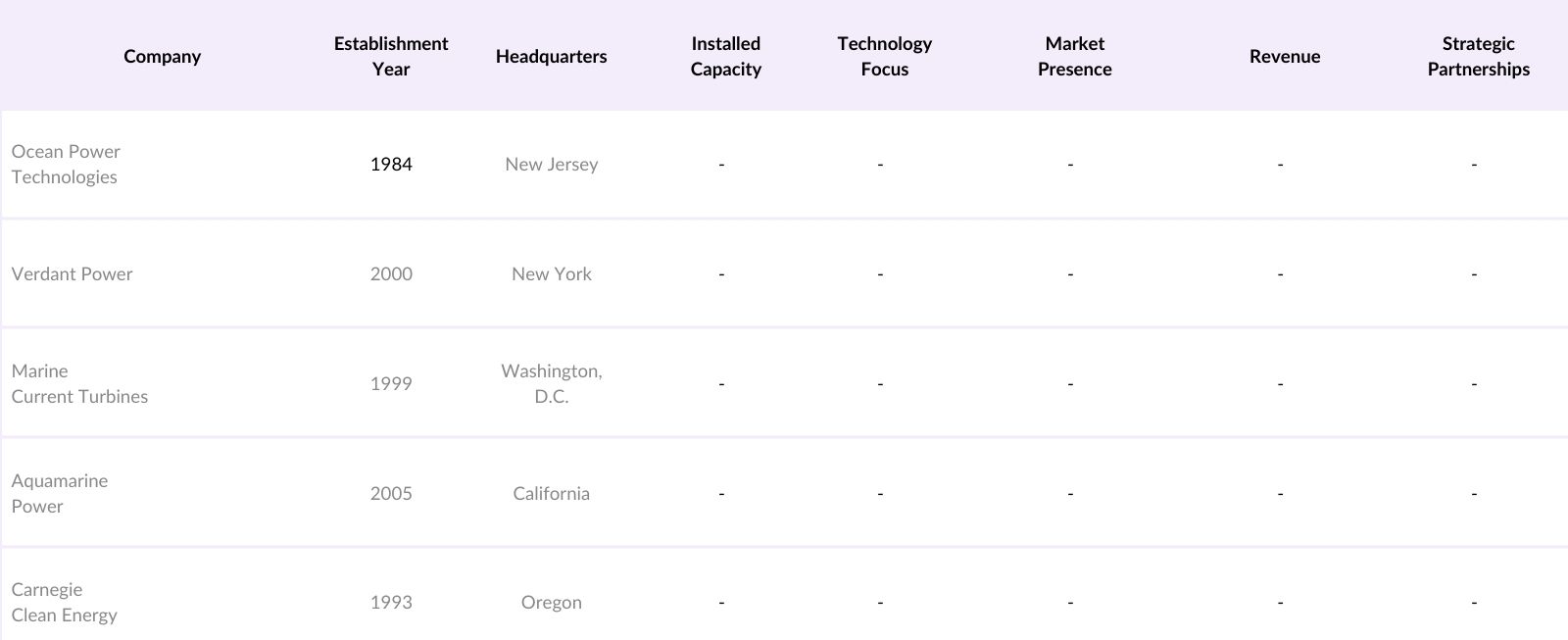
The market is dominated by a few key players with robust portfolios in renewable energy technology and infrastructure. These companies hold strong market positions due to their continuous innovation and investments in wave and tidal energy projects.
USA Wave and Tidal Energy Market Analysis
Market Growth Drivers
- Government Funding for Renewable Energy Initiatives: In 2024, the U.S. government allocated USD 85 billion towards renewable energy initiatives, with a major portion earmarked for advancing wave and tidal energy projects. This funding supports research, development, and deployment of wave energy converters and tidal turbines, helping to address technical and cost barriers.
- Increasing Demand for Clean Energy in Coastal States: Coastal states like California, Oregon, and New York have shown demand for clean energy sources to support large-scale energy requirements in their densely populated regions. In 2024, these states collectively required over 1,500 terawatt-hours (TWh) of electricity, with wave and tidal energy being explored to satisfy part of this demand.
- Technology Partnerships with International Leaders: The U.S. has formed multiple technology partnerships with countries like the United Kingdom and Canada, known for their expertise in tidal and wave energy. As of 2024, these collaborations include investments worth over USD 2.2 billion for cross-border projects and technology transfer, facilitating the development of high-efficiency marine energy solutions.
Market Challenges
- Environmental Impact on Marine Ecosystems: Wave and tidal energy systems can disturb marine ecosystems by altering currents and impacting local biodiversity. In recent studies by the U.S. Environmental Protection Agency, it was estimated that some installations might disrupt habitats of over 50,000 marine species in U.S. waters, including endangered species.
- Technical Challenges in Scaling and Efficiency: As of 2024, the efficiency of wave and tidal energy converters remains a challenge, with conversion rates currently limited to around 2030%. Scaling the technology to meet large energy demands requires overcoming barriers such as energy loss, corrosion, and component wear due to harsh marine conditions.
USA Wave and Tidal Energy Market Future Outlook
Over the next five years, the U.S. wave and tidal energy industry is expected to experience substantial growth, propelled by advancements in energy storage technologies and increased federal support for renewable energy.
Future Market Opportunities
- Increased Deployment in Coastal States: Over the next five years, wave and tidal energy installations are projected to grow substantially, especially in states like California, Washington, and Alaska, with a cumulative capacity expected to reach 15 terawatt-hours by 2029. This trend aligns with state-specific renewable energy targets, which aim to source up to 40% of their energy needs from renewables, including ocean energy.
- Technological Advances in Energy Conversion Efficiency: By 2029, advancements in energy conversion technology are anticipated to enhance the efficiency of wave and tidal systems to over 40 terawatt-hours of generation annually. Research backed by DOE grants and private sector investments will likely result in the development of more resilient and efficient energy converters, reducing overall energy loss and improving scalability.
Scope of the Report
|
By Energy Type |
Wave Energy |
|
By Application |
Utility Scale Power Generation |
|
By Technology |
Oscillating Water Columns |
|
By Deployment Type |
Onshore |
|
By Region |
Pacific Coast |
Products
Key Target Audience Organizations and Entities Who Can Benefit by Subscribing This Report:
Utility Companies
Coastal Energy Development Agencies
Renewable Energy Investment Firms
Federal Energy Regulatory Commission (FERC)
Department of Energy (DOE)
Private Equity Firms Focused on Clean Energy
Government and Regulatory Bodies (NOAA)
Investor and Venture Capitalist Firms
Companies
Players Mentioned in the Report:
Ocean Power Technologies
Verdant Power
Marine Current Turbines
Aquamarine Power
Carnegie Clean Energy
Atlantis Resources Ltd.
Minesto AB
Marine Power Systems
Orbital Marine Power
Nova Innovation
Table of Contents
1. U.S. Wave and Tidal Energy Market Overview
1.1. Definition and Scope
1.2. Market Taxonomy
1.3. Market Growth Rate
1.4. Market Segmentation Overview
2. U.S. Wave and Tidal Energy Market Size (In USD Mn)
2.1. Historical Market Size
2.2. Year-On-Year Growth Analysis
2.3. Key Market Developments and Milestones
3. U.S. Wave and Tidal Energy Market Analysis
3.1. Growth Drivers
3.1.1. Government Renewable Energy Initiatives
3.1.2. Increasing Demand for Clean Energy
3.1.3. Technological Advancements in Energy Conversion
3.1.4. Rising Investment in Coastal Infrastructure
3.2. Market Challenges
3.2.1. High Initial Capital Expenditure
3.2.2. Environmental Impact Regulations
3.2.3. Limited Availability of Suitable Sites
3.2.4. Challenges in Energy Transmission Infrastructure
3.3. Opportunities
3.3.1. Expansion of Offshore Projects
3.3.2. Public-Private Partnerships
3.3.3. Innovations in Energy Storage Solutions
3.3.4. Growth of Blue Economy Initiatives
3.4. Trends
3.4.1. Shift Towards Hybrid Renewable Energy Systems
3.4.2. Integration with Smart Grid Infrastructure
3.4.3. Use of AI and Machine Learning in Predictive Maintenance
3.4.4. Increasing Deployment of Floating Tidal Turbines
3.5. Government Regulation
3.5.1. Renewable Energy Subsidy Programs
3.5.2. Environmental Compliance Mandates
3.5.3. Offshore Leasing Policies
3.5.4. Coastal and Marine Spatial Planning
3.6. SWOT Analysis
3.7. Stake Ecosystem
3.8. Porters Five Forces Analysis
3.9. Competition Ecosystem
4. U.S. Wave and Tidal Energy Market Segmentation
4.1. By Energy Type (In Value %)
4.1.1. Wave Energy
4.1.2. Tidal Energy
4.2. By Application (In Value %)
4.2.1. Utility Scale Power Generation
4.2.2. Desalination
4.2.3. Remote Power Supply
4.3. By Technology (In Value %)
4.3.1. Oscillating Water Columns
4.3.2. Point Absorbers
4.3.3. Attenuators
4.3.4. Tidal Stream Generators
4.4. By Deployment Type (In Value %)
4.4.1. Onshore
4.4.2. Nearshore
4.4.3. Offshore
4.5. By Region (In Value %)
4.5.1. Pacific Coast
4.5.2. Atlantic Coast
4.5.3. Gulf of Mexico
4.5.4. Alaska
5. U.S. Wave and Tidal Energy Market Competitive Analysis
5.1 Detailed Profiles of Major Companies
5.1.1. Ocean Power Technologies
5.1.2. Verdant Power
5.1.3. Marine Current Turbines
5.1.4. Aquamarine Power
5.1.5. Carnegie Clean Energy
5.1.6. Atlantis Resources Ltd.
5.1.7. Minesto AB
5.1.8. Marine Power Systems
5.1.9. Orbital Marine Power
5.1.10. Nova Innovation
5.1.11. OpenHydro
5.1.12. Wave Swell Energy Ltd.
5.1.13. Eco Wave Power
5.1.14. Ocean Energy Ltd.
5.1.15. Seabased AB
5.2 Cross Comparison Parameters (Revenue, Operational Scale, Installed Capacity, Technology Focus, Market Presence, Strategic Partnerships, Sustainability Initiatives, Cost Competitiveness)
5.3. Market Share Analysis
5.4. Strategic Initiatives
5.5. Mergers and Acquisitions
5.6. Investment Analysis
5.7. Venture Capital Funding
5.8. Government Grants
5.9. Private Equity Investments
6. U.S. Wave and Tidal Energy Market Regulatory Framework
6.1. Federal Energy Regulatory Commission (FERC) Guidelines
6.2. National Oceanic and Atmospheric Administration (NOAA) Regulations
6.3. Coastal Zone Management Act Compliance
6.4. Marine and Coastal Protection Protocols
7. U.S. Wave and Tidal Energy Future Market Size (In USD Mn)
7.1. Future Market Size Projections
7.2. Key Factors Driving Future Market Growth
8. U.S. Wave and Tidal Energy Future Market Segmentation
8.1. By Energy Type (In Value %)
8.2. By Application (In Value %)
8.3. By Technology (In Value %)
8.4. By Deployment Type (In Value %)
8.5. By Region (In Value %)
9. U.S. Wave and Tidal Energy Market Analysts Recommendations
9.1. TAM/SAM/SOM Analysis
9.2. Cost-Benefit Analysis
9.3. Marketing and Branding Strategy
9.4. Strategic Partnerships and Joint Ventures
9.5. White Space Opportunity Analysis
Research Methodology
Step 1: Identification of Key Variables
The initial phase identifies the key variables influencing the U.S. wave and tidal energy market through comprehensive desk research and consultation with stakeholders. This includes establishing the technological, regulatory, and environmental factors affecting market growth.
Step 2: Market Analysis and Construction
In this phase, we compile historical data on energy production, project installations, and regional adoption of wave and tidal energy. The market analysis further examines the technology adoption rates across major regions, aiding in reliable revenue projections.
Step 3: Hypothesis Validation and Expert Consultation
Hypotheses regarding market growth, investment trends, and technological adoption are developed and validated through in-depth interviews with industry experts. The consultation provides valuable insights into operational and financial trends within the industry.
Step 4: Research Synthesis and Final Output
In the final phase, detailed insights on market dynamics are synthesized from both bottom-up and top-down approaches, ensuring the report provides an accurate and comprehensive analysis of the U.S. wave and tidal energy market.
Frequently Asked Questions
1. How big is the U.S. Wave and Tidal Energy Market?
The U.S. wave and tidal energy market is valued at USD 134 million, supported by growing investments in renewable energy infrastructure and the increasing focus on reducing carbon emissions.
2. What are the challenges in the U.S. Wave and Tidal Energy Market?
Challenges in the U.S. wave and tidal energy market include high initial capital costs, regulatory hurdles, and limited coastal areas suitable for large-scale wave and tidal installations, which can restrict market expansion.
3. Who are the major players in the U.S. Wave and Tidal Energy Market?
Major players in the U.S. wave and tidal energy market include Ocean Power Technologies, Verdant Power, and Marine Current Turbines, among others. These companies dominate due to their technological advancements and strategic partnerships in the renewable energy sector.
4. What are the growth drivers of the U.S. Wave and Tidal Energy Market?
Key growth drivers in the U.S. wave and tidal energy market include government incentives for clean energy, advancements in tidal and wave technology, and the rising demand for sustainable energy solutions.
Why Buy From Us?

What makes us stand out is that our consultants follows Robust, Refine and Result (RRR) methodology. i.e. Robust for clear definitions, approaches and sanity checking, Refine for differentiating respondents facts and opinions and Result for presenting data with story

We have set a benchmark in the industry by offering our clients with syndicated and customized market research reports featuring coverage of entire market as well as meticulous research and analyst insights.

While we don't replace traditional research, we flip the method upside down. Our dual approach of Top Bottom & Bottom Top ensures quality deliverable by not just verifying company fundamentals but also looking at the sector and macroeconomic factors.

With one step in the future, our research team constantly tries to show you the bigger picture. We help with some of the tough questions you may encounter along the way: How is the industry positioned? Best marketing channel? KPI's of competitors? By aligning every element, we help maximize success.

Our report gives you instant access to the answers and sources that other companies might choose to hide. We elaborate each steps of research methodology we have used and showcase you the sample size to earn your trust.

If you need any support, we are here! We pride ourselves on universe strength, data quality, and quick, friendly, and professional service.