
USA Wearable Medical Devices Market Outlook to 2030
Region:United States
Author(s):Meenakshi Bisht
Product Code:KROD4569
Region:United States
Author(s):Meenakshi Bisht
Product Code:KROD4569
December 2024
94
Listen to the audio summary
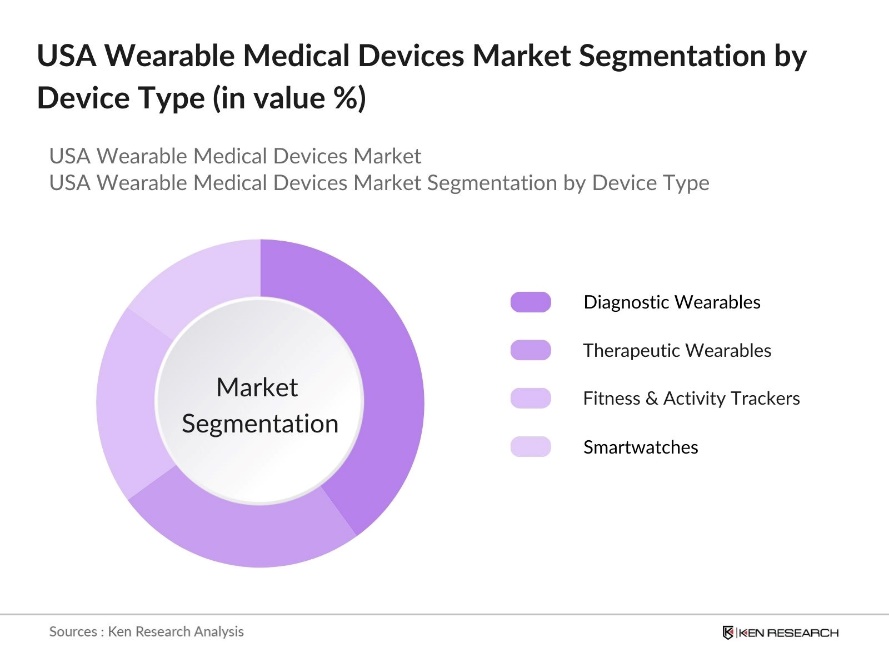
By Device Type: The USA wearable medical devices market is segmented by device type into diagnostic wearables, therapeutic wearables, fitness & activity trackers, and smartwatches. Diagnostic wearables, such as blood glucose monitors and heart rate monitors, hold a dominant share due to the rising demand for continuous monitoring among patients with chronic conditions like diabetes and heart disease. These devices provide real-time insights into vital health metrics, enabling early diagnosis and proactive treatment, which has been a significant driver for their adoption in both healthcare settings and at-home care.
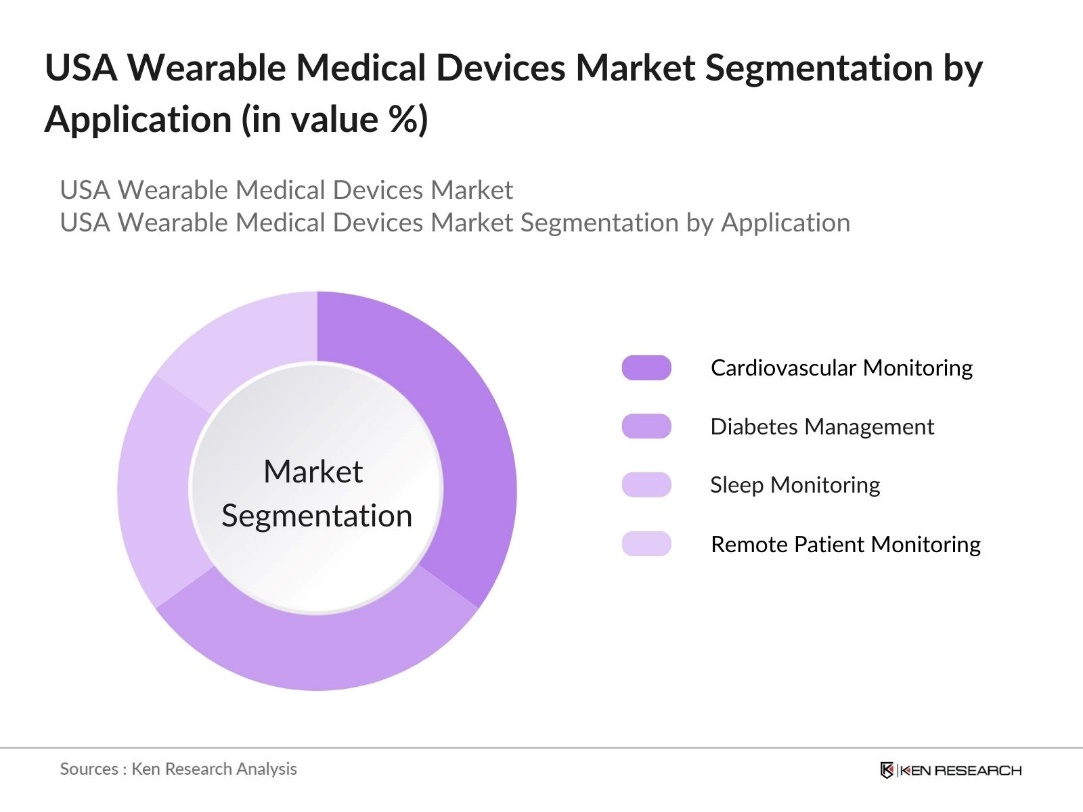
By Application: The USA wearable medical devices market is segmented by application into cardiovascular monitoring, diabetes management, sleep monitoring, and remote patient monitoring. Cardiovascular monitoring dominates the market share, driven by the rising prevalence of cardiovascular diseases in the USA. According to the CDC, heart disease remains a leading cause of death, which has heightened the focus on real-time monitoring of heart activity through wearable devices like ECG monitors. These wearables not only help in tracking heart health but also in reducing hospital readmissions and improving patient outcomes through early intervention.
The market is dominated by a few key players with strong brand presence and a solid foothold in the digital health ecosystem. Companies like Apple, Fitbit (Google LLC), Garmin Ltd., and Medtronic are leading in the development of innovative health monitoring solutions. The consolidation of these companies reflects their focus on expanding product portfolios and incorporating advanced technologies like artificial intelligence (AI) and machine learning into their devices to provide more accurate and efficient health data monitoring.
|
Company Name |
Establishment Year |
Headquarters |
R&D Investment |
Product Portfolio |
Global Reach |
Innovation Index |
Number of Patents |
Partnerships & Collaborations |
|
Apple Inc. |
1976 |
Cupertino, CA |
||||||
|
Fitbit (Google LLC) |
2007 |
San Francisco, CA |
||||||
|
Garmin Ltd. |
1989 |
Olathe, KS |
||||||
|
Medtronic Plc |
1949 |
Minneapolis, MN |
||||||
|
Abbott Laboratories |
1888 |
Abbott Park, IL |
Over the next few years, the USA wearable medical devices market is expected to experience considerable growth, driven by increased government initiatives to promote digital health, rapid technological advancements, and growing consumer preference for non-invasive health monitoring solutions. The increasing integration of wearables with telemedicine platforms and healthcare systems is expected to revolutionize the remote patient monitoring ecosystem, further propelling the market forward.
|
Device Type |
Diagnostic Wearables (Heart Rate Monitors, Glucose Monitors) Therapeutic Wearables (Insulin Pumps, Neuromodulation Devices) Smartwatches |
|
Application |
Cardiovascular Monitoring Diabetes Management Sleep Monitoring Remote Patient Monitoring |
|
Technology |
Sensors (Biosensors, Accelerometers) Wearable Data Analytics Platforms Cloud Computing Data Integration |
|
End User |
Hospitals & Clinics Home Healthcare Fitness & Sports Organizations Ambulatory Care Centers |
|
Region |
North East West South |
1.1. Definition and Scope
1.2. Market Taxonomy (Device Types, Use Cases, Technology, End-Users)
1.3. Market Growth Rate (Factors Influencing Adoption: Aging Population, Chronic Disease Prevalence, Healthcare Costs)
1.4. Market Segmentation Overview (Device Types, Applications, Regions)
2.1. Historical Market Size
2.2. Year-On-Year Growth Analysis
2.3. Key Market Developments and Milestones (Technological Innovation, Regulatory Approvals, Strategic Partnerships)
3.1. Growth Drivers
3.1.1. Rise in Geriatric Population
3.1.2. Increasing Prevalence of Chronic Diseases (Diabetes, Cardiovascular Diseases)
3.1.3. Advancements in Wearable Technology
3.1.4. Increasing Consumer Awareness & Preference for Preventive Healthcare
3.1.5. Integration of AI and IoT in Wearable Devices
3.2. Market Challenges
3.2.1. High Cost of Wearable Devices
3.2.2. Data Security and Privacy Concerns
3.2.3. Regulatory Compliance (FDA Regulations, Data Protection Laws)
3.2.4. Battery Life and Device Durability Issues
3.3. Opportunities
3.3.1. Growth of Remote Patient Monitoring Systems
3.3.2. Adoption in Fitness and Sports Industries
3.3.3. Expansion of Wearable Medical Devices into Emerging Markets
3.3.4. Integration with Telemedicine Solutions
3.4. Trends
3.4.1. Increasing Adoption of Wearable Medical Devices for Home Healthcare
3.4.2. Miniaturization and Design Innovations in Wearable Devices
3.4.3. Wearable Device Integration with Cloud-based Data Platforms
3.4.4. Rising Adoption of Smart Wearable Patches (Glucose Monitoring, ECG Patches)
3.5. Government Regulation
3.5.1. FDA Guidelines on Medical Devices
3.5.2. Medicare Reimbursement Policies for Wearable Devices
3.5.3. U.S. Health Insurance Portability and Accountability Act (HIPAA) Compliance
3.5.4. Initiatives Supporting Digital Health Technologies
3.6. SWOT Analysis
3.7. Stake Ecosystem
3.8. Porters Five Forces Analysis
3.9. Competitive Landscape
4.1. By Device Type (In Value %)
4.1.1. Diagnostic Wearables (Heart Rate Monitors, Blood Pressure Monitors, Glucose Monitors)
4.1.2. Therapeutic Wearables (Insulin Pumps, Pain Management Devices, Neuromodulation Devices)
4.1.3. Fitness & Activity Trackers
4.1.4. Smartwatches
4.2. By Application (In Value %)
4.2.1. Cardiovascular Monitoring
4.2.2. Diabetes Management
4.2.3. Sleep Monitoring
4.2.4. Remote Patient Monitoring
4.3. By Technology (In Value %)
4.3.1. Sensors (Biosensors, Accelerometers, Gyroscopes)
4.3.2. Wearable Data Analytics Platforms
4.3.3. Cloud Computing and Data Integration
4.4. By End User (In Value %)
4.4.1. Hospitals & Clinics
4.4.2. Home Healthcare
4.4.3. Fitness & Sports Organizations
4.4.4. Ambulatory Care Centers
4.5. By Region (In Value %)
4.5.1. North
4.5.2. East
4.5.3. West
4.5.4. South
5.1. Detailed Profiles of Major Companies
5.1.1. Apple Inc.
5.1.2. Fitbit (Google LLC)
5.1.3. Garmin Ltd.
5.1.4. Medtronic Plc
5.1.5. Philips Healthcare
5.1.6. Abbott Laboratories
5.1.7. Omron Corporation
5.1.8. Biotronik SE & Co. KG
5.1.9. Boston Scientific Corporation
5.1.10. BioTelemetry, Inc.
5.1.11. Dexcom, Inc.
5.1.12. iRhythm Technologies, Inc.
5.1.13. Masimo Corporation
5.1.14. Livongo Health, Inc.
5.1.15. NeuroMetrix, Inc.
5.2. Cross Comparison Parameters (Revenue, No. of Employees, Headquarters, Product Portfolio, R&D Investment, Innovation Index, Global Reach, Market Share)
5.3. Market Share Analysis
5.4. Strategic Initiatives
5.5. Mergers and Acquisitions
5.6. Investment Analysis
5.7. Venture Capital Funding
5.8. Government Grants
5.9. Private Equity Investments
6.1. FDA Device Classification and Approval Pathways
6.2. Data Privacy & Security Regulations (HIPAA, GDPR Compliance)
6.3. Reimbursement Framework and CPT Codes
6.4. Certification Processes for Wearable Medical Devices
7.1. Future Market Size Projections
7.2. Key Factors Driving Future Market Growth (Technological Advancements, Increasing Healthcare Spending, Shift Towards Preventive Healthcare)
8.1. By Device Type (In Value %)
8.2. By Application (In Value %)
8.3. By Technology (In Value %)
8.4. By End User (In Value %)
8.5. By Region (In Value %)
9.1. Total Addressable Market (TAM) / Serviceable Available Market (SAM) / Serviceable Obtainable Market (SOM) Analysis
9.2. Customer Cohort Analysis
9.3. Marketing Initiatives
9.4. White Space Opportunity Analysis
The initial phase focuses on mapping the ecosystem of the USA wearable medical devices market. This includes stakeholders like device manufacturers, healthcare providers, regulatory bodies, and end-users. Extensive desk research, involving secondary data and proprietary databases, will be used to pinpoint the variables driving the market, such as regulatory policies and healthcare trends.
This step involves gathering and analyzing historical data related to device sales, healthcare infrastructure, and adoption rates across various segments. By examining revenue streams, user demographics, and adoption patterns, we will construct a comprehensive view of the current state of the market.
Market hypotheses are developed based on preliminary findings and validated through consultations with industry professionals via interviews and surveys. These experts provide insights into the operational, financial, and technological aspects of the wearable medical devices market.
The final stage involves synthesizing all gathered data and expert feedback to deliver a detailed, accurate, and validated report. The findings are cross-verified with top-tier manufacturers and healthcare providers to ensure comprehensive coverage and relevance to the market.
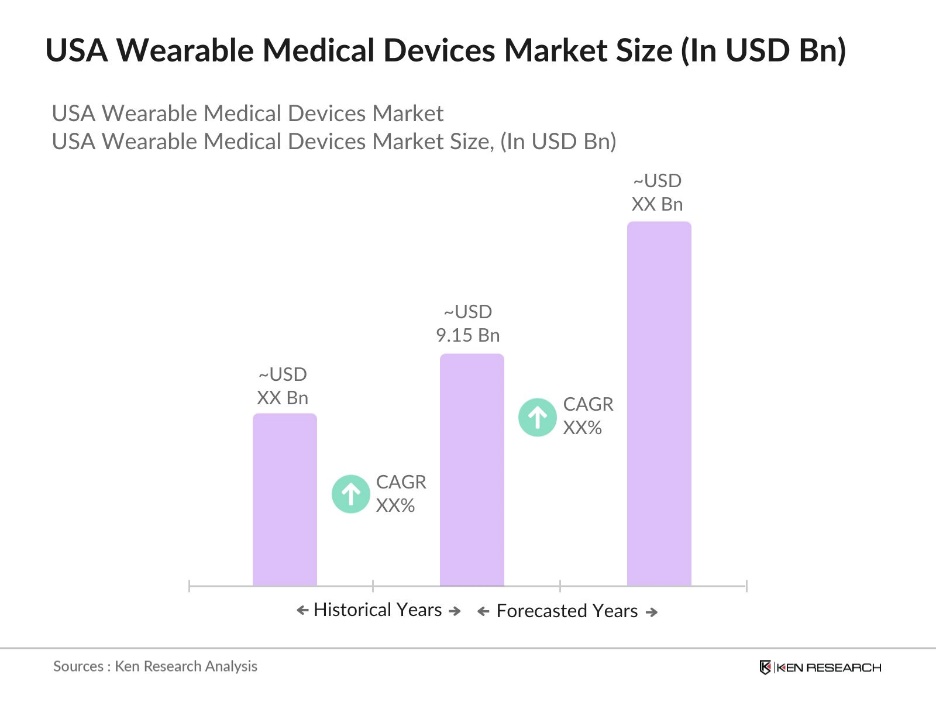
The USA Wearable Medical Devices Market is valued at USD 9.15 billion, driven by advancements in technology, increasing healthcare costs, and growing consumer awareness regarding preventive health monitoring.
The major challenges in USA Wearable Medical Devices Market include high device costs, data security and privacy concerns, and regulatory hurdles related to device approval and compliance with data protection laws like HIPAA.
Key players in the USA Wearable Medical Devices Market include Apple Inc., Fitbit (Google LLC), Garmin Ltd., Medtronic Plc, and Abbott Laboratories. These companies lead the market due to their extensive product portfolios, technological innovation, and strong partnerships within the healthcare ecosystem.
The USA Wearable Medical Devices Market is driven by rising healthcare costs, the increasing prevalence of chronic diseases, technological advancements in wearable health solutions, and growing consumer awareness of the benefits of preventive healthcare.

What makes us stand out is that our consultants follows Robust, Refine and Result (RRR) methodology. i.e. Robust for clear definitions, approaches and sanity checking, Refine for differentiating respondents facts and opinions and Result for presenting data with story

We have set a benchmark in the industry by offering our clients with syndicated and customized market research reports featuring coverage of entire market as well as meticulous research and analyst insights.

While we don't replace traditional research, we flip the method upside down. Our dual approach of Top Bottom & Bottom Top ensures quality deliverable by not just verifying company fundamentals but also looking at the sector and macroeconomic factors.

With one step in the future, our research team constantly tries to show you the bigger picture. We help with some of the tough questions you may encounter along the way: How is the industry positioned? Best marketing channel? KPI's of competitors? By aligning every element, we help maximize success.

Our report gives you instant access to the answers and sources that other companies might choose to hide. We elaborate each steps of research methodology we have used and showcase you the sample size to earn your trust.

If you need any support, we are here! We pride ourselves on universe strength, data quality, and quick, friendly, and professional service.