
USA Windows Market Outlook 2030
Region:North America
Author(s):Shivani Mehra
Product Code:KROD3357
December 2024
100
About the Report
USA Windows Market Overview
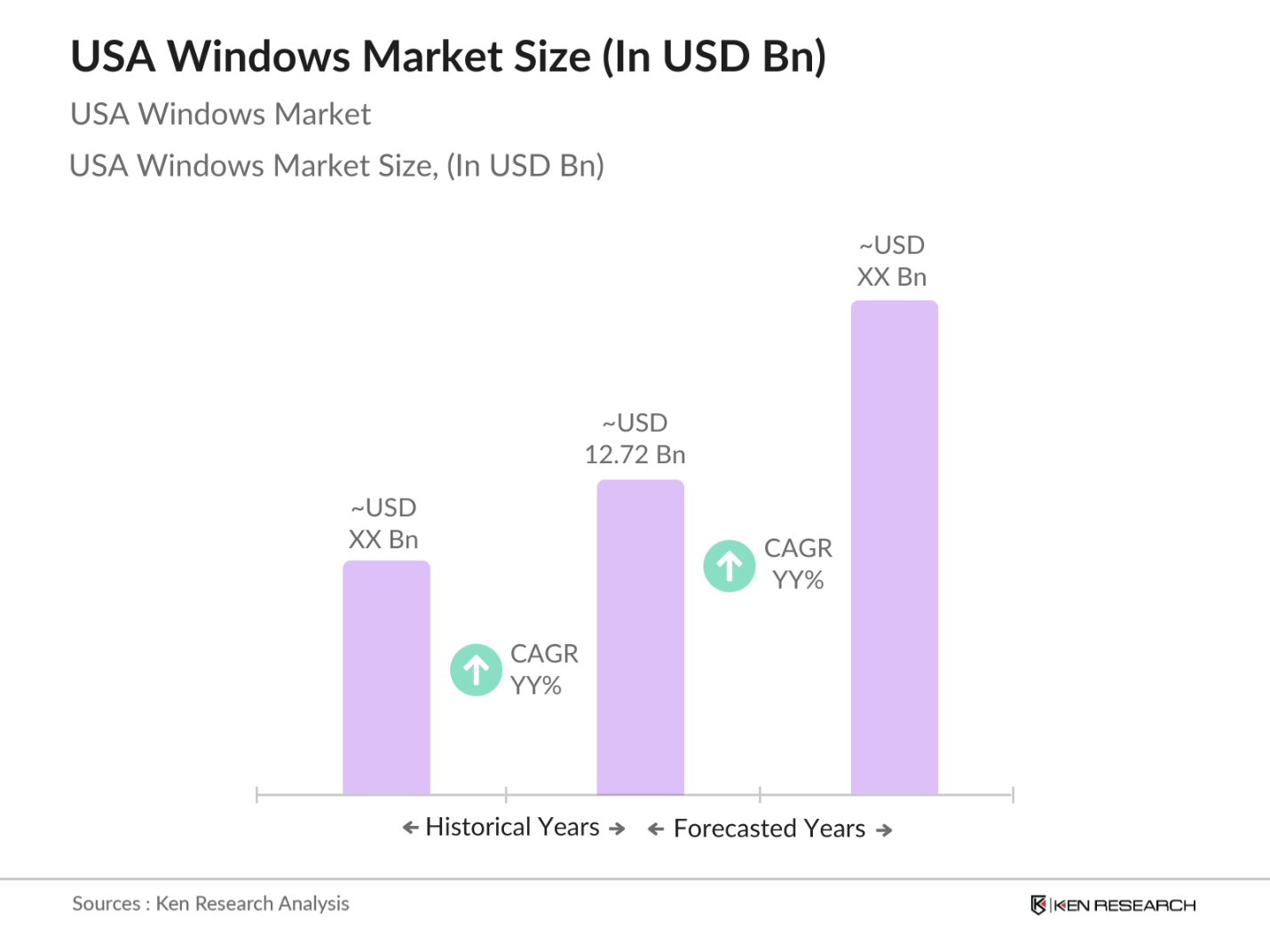
- The USA windows market is valued at USD 12.72 billion, driven by increasing demand for energy-efficient solutions and advancements in window technologies such as smart glass. The market's growth is largely attributed to the rise in residential and commercial construction projects, as well as retrofitting and renovation activities. Consumers are increasingly focused on sustainability, driving demand for eco-friendly window materials, which contributes to the expanding market size. Additionally, government regulations, like the Energy Star certification, further incentivize energy-efficient installations, making it a key driver of market growth.
- Dominant regions in the USA windows market include major metropolitan areas like New York, Los Angeles, and Chicago, where construction activity is high, coupled with stringent building codes favoring energy-efficient windows. These regions dominate due to their substantial real estate markets, which constantly push for innovation and compliance with green building standards. Moreover, in states like California, energy efficiency regulations play a pivotal role in the windows market, making them leading regions.
- The U.S. Department of Energys Energy Star program has established strict criteria for windows to achieve certification, focusing on thermal performance, solar heat gain, and visible transmittance. The program provides rebates of up to $500 for homeowners who install certified windows, further driving demand for energy-efficient options. The certification has become a benchmark for quality in the U.S. windows market, ensuring that certified products meet the highest energy efficiency standards.
USA Windows Market Segmentation
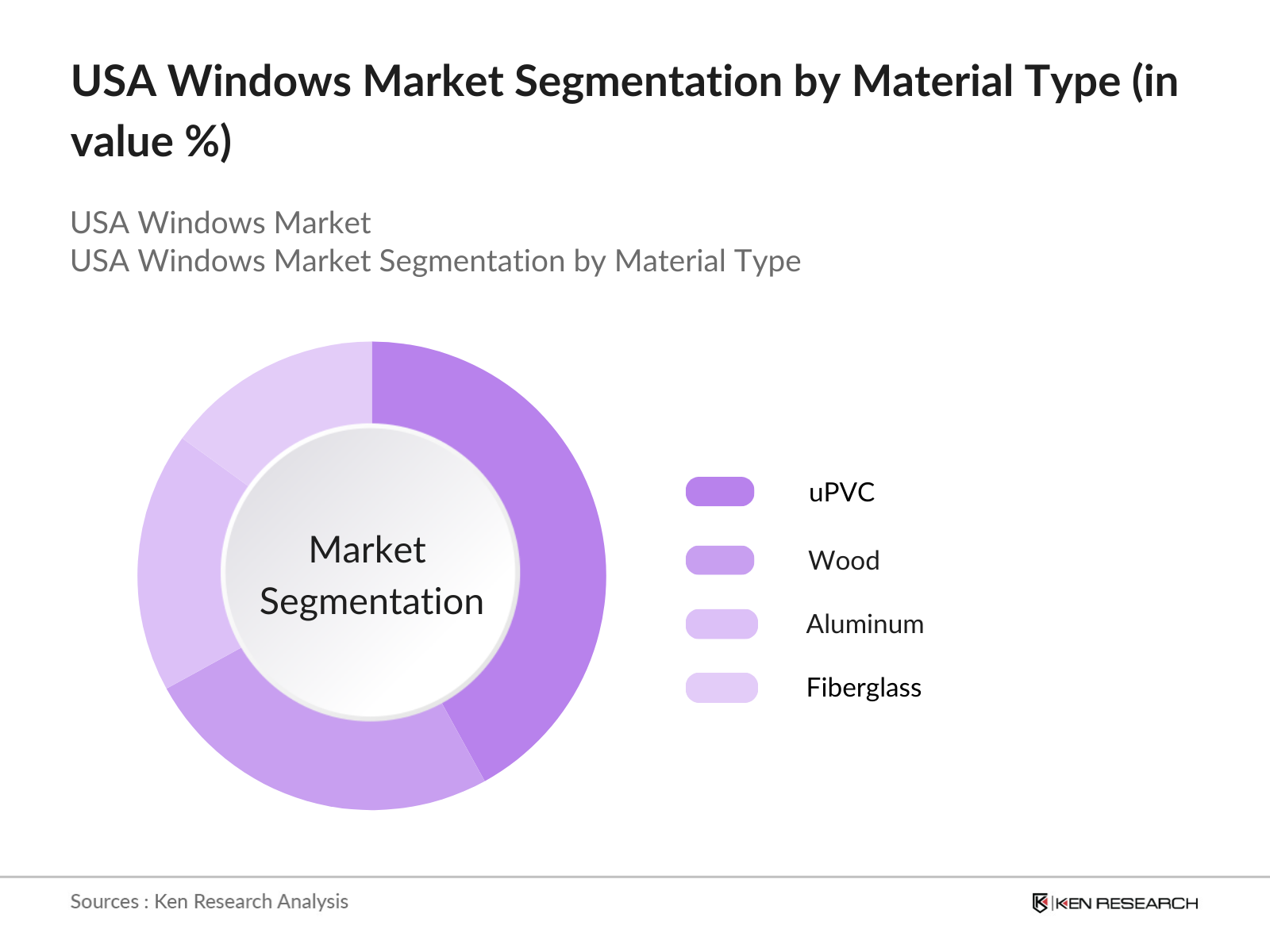
- By Material Type: The USA windows market is segmented by material type into uPVC, wood, aluminum, and fiberglass. uPVC windows currently hold a dominant market share due to their durability, low maintenance costs, and energy efficiency. Consumers, especially in residential sectors, prefer uPVC over traditional materials like wood because of its cost-effectiveness and the growing emphasis on reducing energy consumption. Furthermore, uPVC windows are resistant to corrosion and have high insulation properties, making them ideal for energy-conscious buyers and large-scale construction projects.
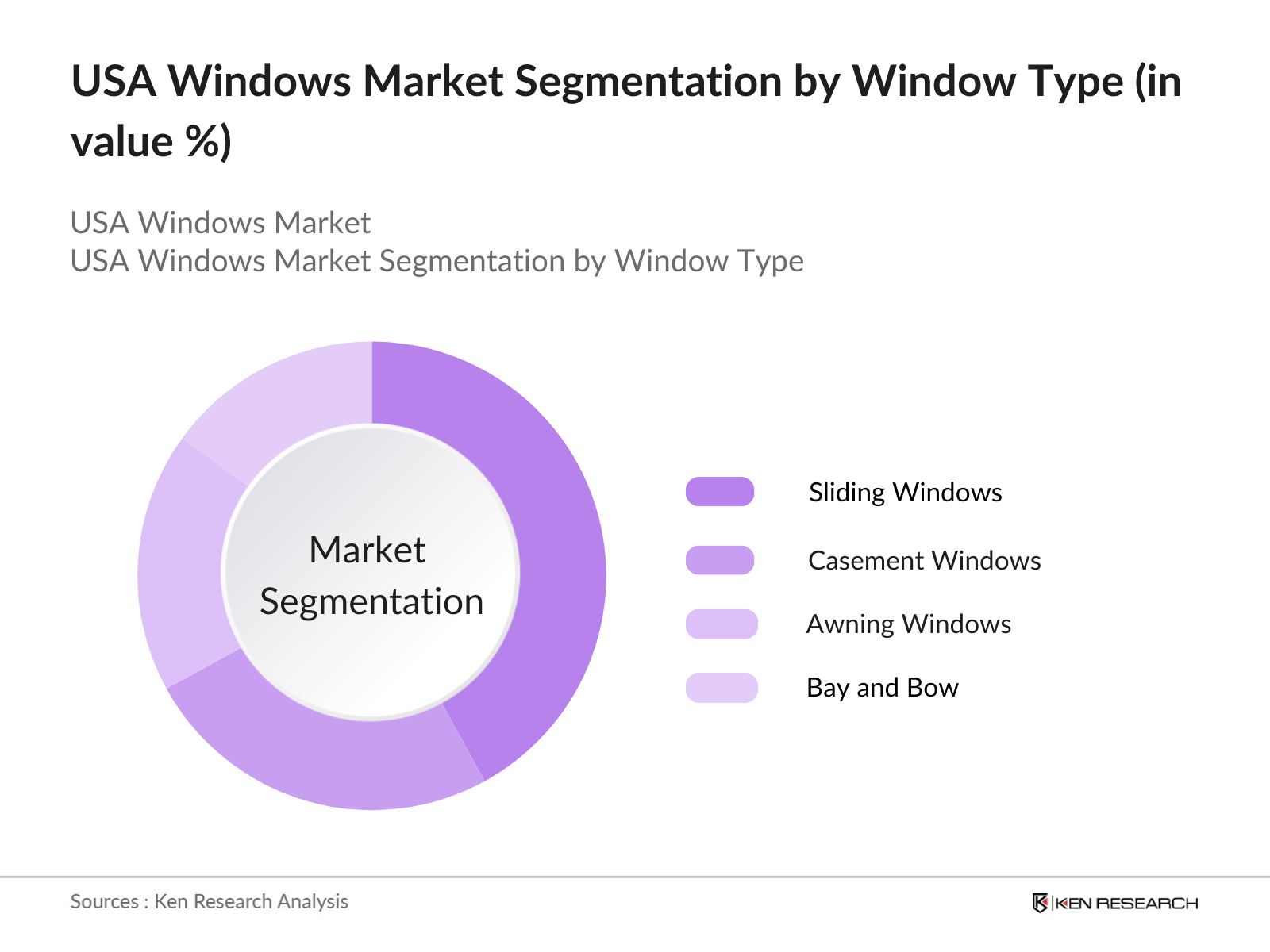
- By Window Type: The USA windows market is segmented by window type into sliding windows, casement windows, awning windows, and bay and bow windows. Sliding windows currently hold a dominant market share due to their space-saving design, ease of operation, and versatility across various architectural styles. These windows are particularly favored in residential and commercial projects in urban areas where maximizing space is a priority. Additionally, sliding windows offer better natural lighting and ventilation, making them a popular choice for homeowners and developers focusing on energy efficiency and modern design trends.
USA Windows Market Competitive Landscape
The USA windows market is dominated by key manufacturers that hold a significant share due to their innovation, quality, and extensive distribution networks. Companies like Andersen Corporation and Pella Corporation lead the market through the development of energy-efficient and technologically advanced products. The market is highly competitive with both local and global players making strategic partnerships and acquisitions to expand their market presence.
|
Company |
Establishment Year |
Headquarters |
Revenue (USD) |
No. of Employees |
R&D Investment (USD) |
Product Range |
Strategic Partnerships |
|
Andersen Corporation |
1903 |
Bayport, Minnesota |
- | - | - | - | - |
|
Pella Corporation |
1925 |
Pella, Iowa |
- | - | - | - | - |
|
Marvin Windows and Doors |
1912 |
Warroad, Minnesota |
- | - | - | - | - |
|
JELD-WEN Holding, Inc. |
1960 |
Charlotte, North Carolina |
- | - | - | - | - |
|
Ply Gem Holdings, Inc. |
1946 |
Cary, North Carolina |
- | - | - | - | - |
USA Windows Market Analysis
Market Growth Analysis
- Energy Efficiency Regulations: Energy efficiency regulations in the USA, such as the Energy Star Certification and ASHRAE (American Society of Heating, Refrigerating and Air-Conditioning Engineers) standards, have significantly impacted the demand for energy-efficient windows. These standards promote technologies like low-E coatings, which enhance thermal performance. The U.S. government has committed substantial funding through tax incentives and rebates to encourage the adoption of energy-efficient windows. This regulatory push is driving the adoption of windows that reduce energy consumption, helping to meet national energy efficiency targets for the future.
- Increasing Adoption of Smart Windows: The USA is witnessing rapid adoption of smart windows, which can adjust their transparency based on external environmental conditions. Smart windows, utilizing technologies like electrochromic glass, are seeing increased implementation in commercial sectors, with over 1.3 million square feet of such glass installed in major U.S. cities as of 2024. The integration of smart windows with building management systems (BMS) is enhancing operational efficiency in high-rise commercial buildings.
- Growth in Residential & Commercial Construction: The USAs residential construction market has seen steady growth, with 1.4 million new homes constructed in 2023, according to the U.S. Census Bureau. Windows are a crucial part of this construction boom, with over 100 million windows installed in new homes in the past year. The commercial construction sector also added 0.9 million square feet of office space in 2023, creating demand for high-performance, energy-efficient windows. These construction activities, combined with evolving building codes focused on sustainability, have boosted the demand for advanced window systems across the USA.
Market Challenges
- High Installation and Maintenance Costs: The initial installation cost of energy-efficient windows, especially smart windows, is significantly higher than conventional windows. On average, the cost of installing a smart window in the USA ranges from $50 to $150 per square foot, which is two to three times higher than traditional windows. This pricing barrier has limited the widespread adoption of advanced window technologies, particularly in the residential sector.
- Stringent Environmental Regulations: Environmental regulations, such as the U.S. Environmental Protection Agencys (EPA) guidelines on reducing volatile organic compound (VOC) emissions, have imposed strict controls on the materials used in window manufacturing. Compliance with these regulations has led to increased production costs, as manufacturers invest in cleaner, more expensive materials and processes. The window industry in the USA spent over $500 million in 2023 on regulatory compliance, significantly impacting profitability.
USA Windows Market Future Outlook
Over the next five years, the USA windows market is projected to grow significantly, driven by continued innovation in energy-efficient technologies and increased consumer demand for smart home integration. Government incentives and regulations aimed at improving energy efficiency standards in buildings will further propel market growth. Additionally, advancements in materials such as low-emissivity (Low-E) glass and triple glazing technologies will be pivotal in boosting the market.
Market Opportunities:
- Integration with Smart Home Ecosystems: As the smart home market in the USA grows, with over 75 million connected homes expected by the end of 2024, windows are increasingly being integrated into smart home ecosystems. Smart windows, equipped with sensors and AI capabilities, can automatically adjust based on indoor and outdoor conditions, and are being linked with home automation systems like Amazon Alexa and Google Home. These integrations are transforming the way homeowners interact with their environment, contributing to energy savings and improving indoor comfort. This trend is expected to grow further with advancements in IoT and AI technologies.
- Adoption of Triple and Quadruple Glazing: Triple and quadruple glazing technologies are gaining popularity in the U.S. windows market due to their superior insulation properties. These advanced glazing systems significantly reduce heating and cooling energy consumption, making them ideal for energy-efficient buildings. Increasing adoption of these technologies is seen, especially in colder states like Minnesota and North Dakota, where meeting strict energy efficiency codes is critical. These glazing technologies are becoming essential for buildings aiming to adhere to stringent energy efficiency standards.
Scope of the Report
|
By Material Type |
uPVC Wood Aluminum Fiberglass |
|
By Application |
Residential Commercial Industrial |
|
By Window Type |
Sliding Casement Awning Bay and Bow |
|
By Glazing Type |
Single Double Triple and Quadruple |
|
By Region |
North-East Midwest West Coast Southern States |
Products
Key Target Audience
Residential Real Estate Developers
Commercial Building Contractors
Window and Door Manufacturers
Energy-Efficiency Solution Providers
Smart Home Technology Companies
Investment and Venture Capitalist Firms
Government and Regulatory Bodies (U.S. Department of Energy, Environmental Protection Agency)
Construction Equipment Distributors
Companies
Players Mentioned in the report
Andersen Corporation
Pella Corporation
Marvin Windows and Doors
JELD-WEN Holding, Inc.
Ply Gem Holdings, Inc.
Masco Corporation
Milgard Manufacturing, Inc.
Harvey Building Products
YKK AP America, Inc.
Atrium Windows and Doors
Simonton Windows & Doors
Kolbe Windows & Doors
Weather Shield Manufacturing, Inc.
Crystal Window & Door Systems
Champion Windows Manufacturing, Inc.
Table of Contents
1. USA Windows Market Overview
1.1. Definition and Scope
1.2. Market Taxonomy
1.3. Market Growth Rate
1.4. Market Segmentation Overview
2. USA Windows Market Size (In USD Bn)
2.1. Historical Market Size
2.2. Year-On-Year Growth Analysis
2.3. Key Market Developments and Milestones
3. USA Windows Market Analysis
3.1. Growth Drivers
3.1.1. Energy Efficiency Regulations
3.1.2. Increasing Adoption of Smart Windows
3.1.3. Growth in Residential & Commercial Construction
3.2. Market Challenges
3.2.1. High Installation and Maintenance Costs
3.2.2. Fluctuations in Raw Material Prices
3.2.3. Stringent Environmental Regulations
3.3. Opportunities
3.3.1. Rise in Demand for Sustainable Building Materials
3.3.2. Advancements in Smart Glass Technology
3.3.3. Growth in Retrofit Projects
3.4. Trends
3.4.1. Integration with Smart Home Ecosystems
3.4.2. Increasing Use of Recycled Materials in Window Production
3.4.3. Adoption of Triple and Quadruple Glazing
3.5. Government Regulations
3.5.1. Energy Star Certification for Windows
3.5.2. Building Energy Efficiency Standards (ASHRAE, IECC)
3.5.3. Local Incentives for Energy-Efficient Windows
3.6. SWOT Analysis
3.7. Porters Five Forces Analysis
3.8. Industry Ecosystem
4. USA Windows Market Segmentation
4.1. By Material Type (In Value %)
4.1.1. PVC
4.1.2. Wood
4.1.3. Aluminum
4.1.4. Fiberglass
4.2. By Application (In Value %)
4.2.1. Residential
4.2.2. Commercial
4.2.3. Industrial
4.3. By Window Type (In Value %)
4.3.1. Sliding Windows
4.3.2. Casement Windows
4.3.3. Awning Windows
4.3.4. Bay and Bow Windows
4.4. By Glazing Type (In Value %)
4.4.1. Single Glazed
4.4.2. Double Glazed
4.4.3. Triple and Quadruple Glazed
4.5. By Region (In Value %)
4.5.1. Northeast
4.5.2. Midwest
4.5.3. South
4.5.4. West
5. USA Windows Market Competitive Analysis
5.1 Detailed Profiles of Major Companies
5.1.1. Andersen Corporation
5.1.2. Pella Corporation
5.1.3. Marvin Windows and Doors
5.1.4. JELD-WEN Holding, Inc.
5.1.5. Ply Gem Holdings, Inc.
5.1.6. Masco Corporation
5.1.7. Milgard Manufacturing, Inc.
5.1.8. Harvey Building Products
5.1.9. YKK AP America, Inc.
5.1.10. Atrium Windows and Doors
5.1.11. Simonton Windows & Doors
5.1.12. Kolbe Windows & Doors
5.1.13. Weather Shield Manufacturing, Inc.
5.1.14. Crystal Window & Door Systems
5.1.15. Champion Windows Manufacturing, Inc.
5.2 Cross Comparison Parameters
5.3 Market Share Analysis
5.4 Strategic Initiatives
5.5 Mergers and Acquisitions
5.6 Investment Analysis
5.7 Venture Capital Funding
5.8 Private Equity Investments
6. USA Windows Market Regulatory Framework
6.1 Energy Efficiency Standards
6.2 Compliance with Environmental Regulations
6.3 Building Codes and Certifications
7. USA Windows Market Future Size (In USD Bn)
7.1 Future Market Size Projections
7.2 Key Factors Driving Future Market Growth
8. USA Windows Market Future Segmentation
8.1 By Material Type (In Value %)
8.2 By Application (In Value %)
8.3 By Window Type (In Value %)
8.4 By Glazing Type (In Value %)
8.5 By Region (In Value %)
9. USA Windows Market Analysts Recommendations
9.1 TAM/SAM/SOM Analysis
9.2 Customer Cohort Analysis
9.3 Strategic Marketing Initiatives
9.4 White Space Opportunity Analysis
Disclaimer Contact UsResearch Methodology
Step 1: Identification of Key Variables
The first step in the research process was mapping out the entire ecosystem of the USA windows market. This was done through extensive desk research, using secondary databases to gather critical information on market participants and trends. Our objective was to isolate key factors influencing the market, such as material costs, technological advancements, and government regulations.
Step 2: Market Analysis and Construction
In this phase, we analyzed historical data to assess trends in market growth, pricing, and technological adoption in the USA windows market. Market penetration was also reviewed, with special attention to product categories like energy-efficient windows and smart glass. This analysis provided a foundation for evaluating revenue models and market forecasts.
Step 3: Hypothesis Validation and Expert Consultation
To validate market hypotheses, consultations with industry professionals were conducted using Computer-Assisted Telephone Interviews (CATIs). These discussions helped in corroborating market findings, especially in terms of product innovation and material preferences. Insights from industry experts also helped refine data accuracy.
Step 4: Research Synthesis and Final Output
The final stage involved synthesizing insights gathered from market participants and verifying data through interviews with major manufacturers. This ensured that the analysis was comprehensive and that key variables were accurately represented. The final output provides a well-rounded understanding of the USA windows market, from trends to competitive dynamics.
Frequently Asked Questions
01. How big is the USA Windows Market?
The USA windows market is valued at USD 12.72 billion in 2023, driven by the growing adoption of energy-efficient solutions and advancements in window technologies.
02. What are the key growth drivers for the USA Windows Market?
The primary growth drivers include rising demand for energy-efficient windows, advancements in smart home technologies, and government regulations promoting sustainable building materials.
03. What challenges exist in the USA Windows Market?
Challenges include high installation costs, raw material price fluctuations, and stringent environmental regulations that increase compliance costs for manufacturers.
04. Who are the major players in the USA Windows Market?
Key players include Andersen Corporation, Pella Corporation, Marvin Windows and Doors, JELD-WEN Holding, Inc., and Ply Gem Holdings, Inc. These companies dominate through innovation and extensive distribution networks.
05. What are the future trends in the USA Windows Market?
Future trends include increased adoption of smart windows, integration with home automation systems, and advancements in eco-friendly window materials, such as recycled uPVC and low-emissivity glass.
Why Buy From Us?

What makes us stand out is that our consultants follows Robust, Refine and Result (RRR) methodology. i.e. Robust for clear definitions, approaches and sanity checking, Refine for differentiating respondents facts and opinions and Result for presenting data with story

We have set a benchmark in the industry by offering our clients with syndicated and customized market research reports featuring coverage of entire market as well as meticulous research and analyst insights.

While we don't replace traditional research, we flip the method upside down. Our dual approach of Top Bottom & Bottom Top ensures quality deliverable by not just verifying company fundamentals but also looking at the sector and macroeconomic factors.

With one step in the future, our research team constantly tries to show you the bigger picture. We help with some of the tough questions you may encounter along the way: How is the industry positioned? Best marketing channel? KPI's of competitors? By aligning every element, we help maximize success.

Our report gives you instant access to the answers and sources that other companies might choose to hide. We elaborate each steps of research methodology we have used and showcase you the sample size to earn your trust.

If you need any support, we are here! We pride ourselves on universe strength, data quality, and quick, friendly, and professional service.