CHAPTER 1 - MARKET SUMMARY
Market Overview
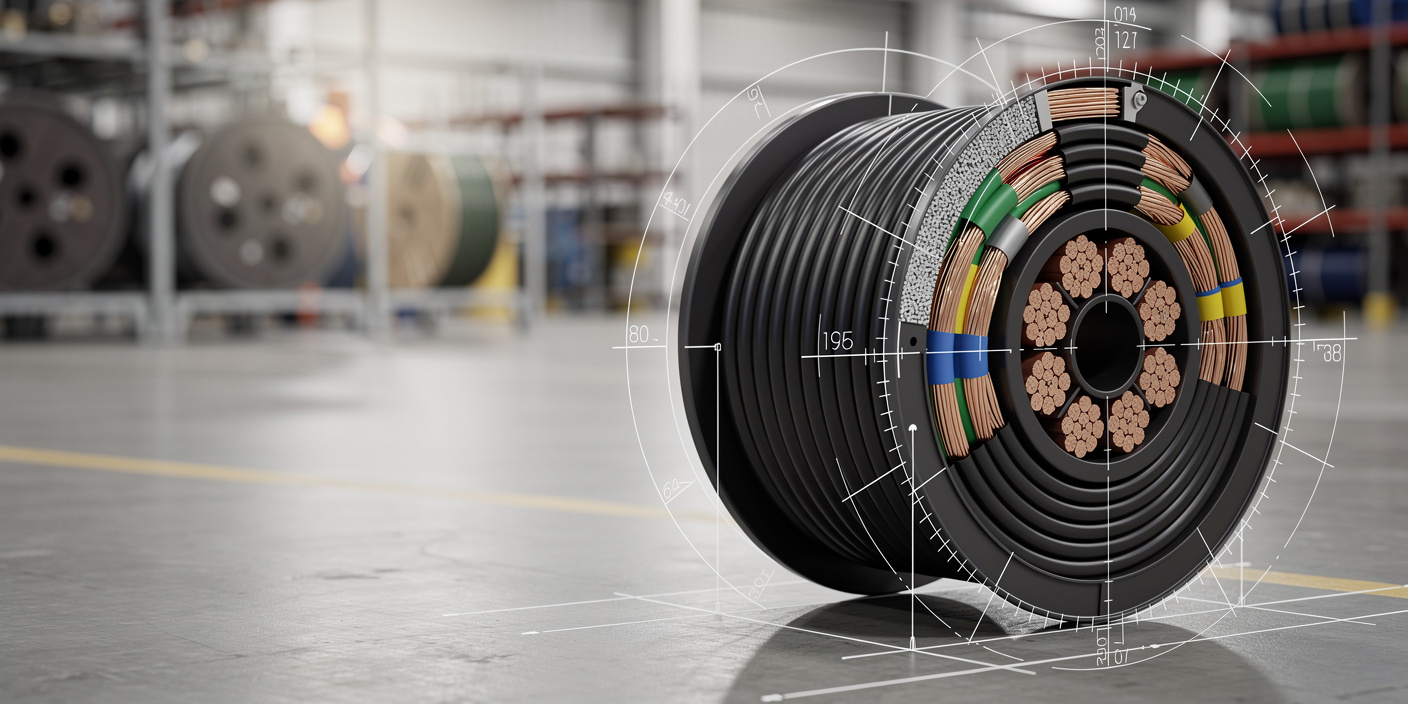
The USA Wires and Cables Market operates through metal procurement, conductor drawing, stranding, insulation, testing, distribution, and project installation. Demand is anchored in replacement cycles and new capacity rather than discretionary consumption. U.S. electricity use increased by an average 2.1% annually during 2021-2025, while data center servers represented about 7% of commercial-sector electricity use in 2025, raising demand for power, control, and high-speed data cabling.
The South is the dominant operating region because Texas, Georgia, the Carolinas, and Gulf Coast states combine manufacturing plants, utility load growth, data centers, petrochemicals, and large construction pipelines. EIA expected ERCOT electricity demand to increase 7% in 2025 and 14% in 2026. This concentration improves plant utilization and distributor density, but also exposes suppliers to regional permitting, storm resilience, and skilled-installation constraints.
Market Value
USD 33.49 billion
2025
Dominant Region
South
2025
Dominant Segment
Power Cables
fastest growing, 2026-2031
Total Number of Players
306
Future Outlook
The USA Wires and Cables Market is projected to expand from USD 33.49 billion in 2025 to USD 47.24 billion by 2031. Historical growth averaged 7.0% during 2020-2025, reflecting post-pandemic construction recovery, elevated copper pricing, utility capital expenditure, broadband deployment, and expanding data center electrical loads. The forecast moderates to a 5.9% CAGR during 2026-2031 as market growth becomes more volume-led and project-qualified capacity catches up with demand. Power transmission, distribution, building wire, fiber optic cable, and industrial specialty products remain the principal revenue pools, while commodity-linked pricing continues to influence annual reported value.
Forecast performance depends on transmission awards, utility distribution upgrades, BEAD-funded fiber construction, data center campus commissioning, and industrial reshoring. Shipment volume is expected to rise from 3.05 million metric tonnes in 2025 to 3.78 million metric tonnes in 2031, a 3.7% CAGR, while average realized value increases from USD 10.98 per kilogram to USD 12.49 per kilogram. This mix indicates that advanced insulation systems, high-voltage designs, fiber-rich products, and specification-led specialty cables will capture a disproportionate share of incremental profit. The strongest positions will combine domestic metal access, qualification records, engineering support, and distributor or EPC relationships.
5.9%
Forecast CAGR
$47,237 Mn
2030 Projection
Base Year
2025
Historical Period
2020-2025
Forecast Period
2026-2031
Historical CAGR
7.0%
CHAPTER 2 - SCOPE OF REPORT
Scope of the Market
CHAPTER 3 - Key Stakeholders
Key Target Audience
Key stakeholders who can leverage from this market analysis for investment, strategy, and operational planning.
Market sizing and trajectory
Policy and compliance mapping
Trade exposure indicators
Segment structure and levers
Competitive landscape shortlist
CEO-grade risk priorities
CHAPTER 4 - Market Size & Growth
Market Size, Growth Forecast and Trends
This section evaluates the historical market size, analyzes year-over-year growth dynamics, and presents forecast projections supported by market performance indicators and demand-side drivers.
Historical & Projected Market Size ($ Million)
Year-over-Year Growth Rate (%)
Market Value vs Volume Growth (%)
Historical Market Performance (2020-2025)
Historical performance was strongest in 2021, when market value increased 13.1% as construction restarted, copper prices rose, and deferred utility and industrial projects resumed. Growth moderated to 1.8% in 2023, the period trough, as residential construction weakened and customers reduced high-cost inventories. The 2024-2025 recovery restored annual growth above 5%, supported by data center electrical infrastructure, utility hardening, broadband projects, and nonresidential construction. Shipment volume increased from 2.47 million metric tonnes in 2020 to 3.05 million metric tonnes in 2025, while average realized value rose from USD 9.66 to USD 10.98 per kilogram.
Forecast Market Outlook (2026-2031)
Forecast growth accelerates gradually from 5.6% in 2026 to 6.1% in 2031 as utility procurement, grid expansion, broadband execution, and advanced cable specifications create a more durable order base. The market reaches USD 47.24 billion in 2031, with shipment volume of 3.78 million metric tonnes. Fiber, fire-resistant, low-smoke, high-voltage, and sensor-enabled products increase from 21.5% of market value in 2025 to 28.4% in 2031. This mix shift supports pricing above volume growth and directs incremental margin toward manufacturers with testing capability, qualification records, domestic content, and project engineering support.
CHAPTER 5 - Market Data
Market Breakdown
The market combines commodity-sensitive conductor economics with specification-led demand from utilities, buildings, data centers, telecom networks, vehicles, and industrial systems. For CEOs and investors, the central issue is whether volume growth, advanced-product mix, and domestic manufacturing capacity can offset metal volatility and project-cycle risk.
Year | Market Size (USD Mn) | YoY Growth (%) | Shipment Volume (000 Metric Tonnes) | Average Selling Price (USD/kg) | Fiber and Advanced Cable Mix (%) | Period |
|---|---|---|---|---|---|---|
| 2020 | $23,870 Mn | +- | 2,470 | 9.66 | Forecast | |
| 2021 | $27,000 Mn | +13.1% | 2,660 | 10.15 | Forecast | |
| 2022 | $29,550 Mn | +9.4% | 2,815 | 10.50 | Forecast | |
| 2023 | $30,080 Mn | +1.8% | 2,845 | 10.57 | Forecast | |
| 2024 | $31,780 Mn | +5.7% | 2,940 | 10.81 | Forecast | |
| 2025 | $33,490 Mn | +5.4% | 3,050 | 10.98 | Forecast | |
| 2026 | $35,365 Mn | +5.6% | 3,148 | 11.23 | Forecast | |
| 2027 | $37,416 Mn | +5.8% | 3,255 | 11.49 | Forecast | |
| 2028 | $39,624 Mn | +5.9% | 3,372 | 11.75 | Forecast | |
| 2029 | $42,001 Mn | +6.0% | 3,500 | 12.00 | Forecast | |
| 2030 | $44,521 Mn | +6.0% | 3,636 | 12.24 | Forecast | |
| 2031 | $47,237 Mn | +6.1% | 3,781 | 12.49 | Forecast |
Shipment Volume
3,148 thousand metric tonnes, 2026, United States. Volume growth indicates stronger physical conductor demand rather than price-only expansion. DOE plans to support 7,500 miles of new transmission lines and a 16% increase in long-distance transmission capacity by 2030.
Average Selling Price
USD 11.23 per kilogram, 2026, United States. Pricing reflects metal pass-through, engineering complexity, qualification costs, and product mix. A 50% tariff on specified semi-finished copper products and copper-intensive derivatives took effect on August 1, 2025.
Fiber and Advanced Cable Mix
22.5%, 2026, United States. A higher advanced-product mix improves differentiation and reduces pure commodity exposure. The federal BEAD program provides USD 42.45 billion for high-speed internet infrastructure and targets roughly 7 million unserved homes and businesses.
CHAPTER 6 - Segmentation
Market Segmentation Framework
Comprehensive analysis across key dimensions providing insights into market structure, customer requirements, technical specifications, and distribution patterns.
No of Segments
7
Dominant Segment
Product Type
Fastest Growing Segment
Technology
Product Type
End-Use Industry
Application
Customer Type
Sales Channel
Technology
Geography
Key Segmentation Takeaways
Comprehensive analysis across all extracted segmentation dimensions providing insights into market structure, customer requirements, technical specifications, and distribution patterns.
Product Type
Product configuration is the primary revenue-allocation lens because metal content, insulation system, voltage rating, testing requirements, and route to market differ materially. Power Cables form the dominant Level-2 pool, supported by utility transmission, distribution reinforcement, renewable interconnection, and high-load facilities. Building Wire remains highly distributor-dependent, while Communication and Data Cables offer stronger technology differentiation and faster design cycles.
Technology
Technology is the fastest-growing segmentation dimension because utilities, data centers, transport systems, and regulated buildings require higher performance per installed meter. Fiber Optic Transmission and Smart and Sensor-Embedded Cables lead growth, while Fire-Resistant and Low-Smoke Systems gain from safety specifications. Manufacturers with materials science, testing laboratories, digital monitoring capability, and application engineering are positioned to capture premium project margins.
CHAPTER 7 - Regional Analysis
Regional Analysis
The United States ranks first among selected adjacent and economically comparable wire and cable markets, supported by its larger power system, construction base, broadband program, data center pipeline, and domestic manufacturing footprint. Its 2025 market size is more than six times Canada and nearly eight times Mexico, creating scale advantages in plant utilization, distribution density, engineering services, and project qualification.
Focus Country Ranking
1st
Focus Country Market Size
USD 33.49 Bn (2025)
USA CAGR (2026-2031)
5.9%
Focus Country Ranking
1st
Focus Country Market Size
USD 33.49 Bn (2025)
USA CAGR (2026-2031)
5.9%
Regional Analysis (Current Year)
Market Position
The United States ranks 1st with USD 33.49 billion in 2025, reflecting national electricity use above 4,200 TWh and the deepest utility, construction, telecom, and data center demand pool among peers.
Growth Advantage
The U.S. forecast CAGR of 5.9% exceeds Canada at 4.3%, Germany at 4.6%, and Japan at 3.8%, but trails Mexico at 6.4% because Mexico starts from a smaller nearshoring-led base.
Competitive Strengths
Competitive advantages include USD 42.45 billion of BEAD funding, a planned 7,500 miles of new transmission, and more than 1,300 GW of installed power capacity, supporting broad and specification-intensive cable demand.
CHAPTER 8 - INDUSTRY ANALYSIS
Growth Drivers, Market Challenges & Market Opportunities
Comprehensive analysis of key factors shaping the USA Wires and Cables Market, including growth catalysts, operational challenges, and emerging opportunities across production, distribution, and customer segments.
Growth Drivers
Grid Modernization and Electricity Load Growth
- DOE plans to expand long-distance transmission capacity by 16% (by 2030, United States) and support 7,500 miles of new lines, creating multi-year demand for overhead conductors, high-voltage cable, accessories, and installation services. Utilities and qualified cable manufacturers capture the principal value.
- Active generation and storage interconnection queues exceeded 2,060 GW (end-2025, United States), indicating a large pipeline of projects requiring network studies, upgrades, and new cable infrastructure. Transmission owners, EPC firms, and suppliers with utility approvals benefit from conversion of the backlog into construction.
- DOE announced USD 1.9 billion (2026, United States) for critical grid infrastructure, supporting resilience upgrades and demand growth. The spending raises addressable demand for medium-voltage, high-voltage, fire-resistant, and monitoring-enabled cable systems while favoring suppliers that meet domestic-content and qualification requirements.
Data Center and Broadband Infrastructure Expansion
- The BEAD program provides USD 42.45 billion (authorized funding, United States) for high-speed internet infrastructure. Fiber manufacturers, rural network contractors, distributors, and engineering firms gain from last-mile, middle-mile, and backbone projects where cable length and installation complexity drive revenue.
- Roughly 7 million locations (2024, United States) lacked access to high-speed internet, sustaining a measurable deployment gap. Suppliers that package fiber cable, closures, connectivity, and field support can increase wallet share, while state execution schedules determine the pace of revenue recognition.
- Data center employment increased from 306,000 to 501,000 workers (2016-2023, United States), signaling rapid facility and ecosystem expansion. Cable demand extends beyond fiber into busway connections, medium-voltage feeders, grounding, control systems, and fire-rated circuits, benefiting manufacturers with data-center-specific product portfolios.
Construction, Manufacturing, and Mobility Electrification
- Residential permits were running near 1.40 million units (June 2025, United States), creating a recurring base for branch-circuit wire, service-entrance cable, fire-alarm systems, and structured cabling. Electrical distributors and contractor-focused manufacturers capture value through local inventory and cut-length services.
- A federal loan of USD 362 million (2024, United States) supported a Texas plant designed to supply wiring for approximately 2.7 million EVs annually. Localization expands demand for high-voltage vehicle cable, flexible circuits, connectors, and automated inspection systems.
- Electricity-intensive industrial investment and factory automation increase demand for instrumentation, control, robotics, and industrial Ethernet cabling. EIA expected the manufacturing activity index to increase 1.5% (2026, United States), supporting incremental replacement and expansion spending by OEMs and system integrators.
Market Challenges
Metal Cost Volatility and Trade Exposure
- The tariff applies to specified semi-finished copper products and copper-intensive derivatives, including wires and cables, creating asymmetric exposure by product composition and country of origin. Manufacturers must update pass-through clauses and customs classifications to protect margins and avoid delayed quotations.
- U.S. wire and cable pricing remains sensitive to copper, aluminum, polymers, freight, and energy. A USD 1.51 per kilogram increase (2020-2025, market ASP) illustrates how metal cycles can inflate reported value without equivalent volume growth, complicating inventory decisions and customer negotiations.
- Domestic copper supply is strategically constrained, and USGS designated copper a critical mineral in 2025 (United States). Cable producers with rod mills, recycling access, and long-term cathode arrangements have a lower risk profile than firms relying on spot imports or narrow supplier bases.
Permitting and Project Conversion Delays
- Interconnection withdrawal rates remained near 80% (study period, United States), meaning a large project queue does not translate directly into cable revenue. Suppliers should probability-weight pipeline opportunities and avoid adding dedicated capacity based only on announced generation volumes.
- Major transmission projects can require 10 years or more (planning through construction, United States), creating timing mismatches between factory investment and customer awards. Contracted backlogs, framework agreements, and diversified end-market exposure reduce utilization risk.
- FERC may take up to one year after a complete application (federal permit process, United States) to act on certain transmission permits, while state and local reviews remain additional. Cable suppliers must account for schedule extensions, escalation clauses, and storage requirements in project economics.
Qualification, Labor, and Capacity Bottlenecks
- Utility, transit, nuclear, aerospace, and life-safety applications require lengthy qualification, type testing, and traceability. A failed approval can exclude a plant from multi-year tenders, making laboratory capability and quality systems more commercially important than nominal production capacity.
- Federal construction rules require 65% domestic component cost (2024-2028, covered products) and 75% from 2029 for many Buy American applications. Suppliers must document origin, bill-of-material cost, and exceptions, increasing compliance overhead and reducing flexibility during shortages.
- Installation quality remains a bottleneck because cable pulling, termination, splicing, and testing require specialized labor. Emergency technical teams handling more than 15 job-site requests monthly (reported case, United States) illustrate the value of field support and the cost of installation errors.
Market Opportunities
High-Voltage, Underground, and Resilient Grid Systems
- USD 1.5 billion (2024, United States) of federal support was announced for four transmission projects, demonstrating monetizable demand for high-voltage conductors, accessories, monitoring, installation, and maintenance. Suppliers can pursue bundled project solutions rather than commodity cable-only contracts.
- Utilities, EPC contractors, cable manufacturers, accessory suppliers, and specialty installers benefit as resilience and undergrounding raise value per route-mile. Investors should favor businesses with high-voltage testing, long production lengths, engineering design, and project-risk controls rather than general-purpose capacity.
- Opportunity realization requires faster permitting, firm utility procurement schedules, and domestic-content compliance. FERC transmission planning can look 10-15 years forward (planning horizon, United States), so suppliers need staged capital plans aligned with awarded projects and qualified demand.
Fiber-Rich Data Center and Broadband Cabling
- The monetizable angle includes fiber cable, ribbon systems, closures, connectivity, pre-terminated assemblies, installation support, and maintenance. Amphenol expected the acquired CCS business to generate USD 4.1 billion in 2026 sales, demonstrating the scale of connectivity profit pools.
- Manufacturers, distributors, contractors, cloud providers, and rural network operators benefit from integrated supply. The strongest economics arise where suppliers combine cable with connectivity and engineering, reducing field labor and installation risk for high-density networks.
- Execution requires state award completion, workforce availability, standardized designs, and reliable domestic supply. NTIA had approved 48 initial proposals by September 2024, showing progress but also the administrative sequencing that determines shipment timing.
Domestic Manufacturing, Recycling, and Localization
- The investment thesis is based on tariff avoidance, shorter lead times, domestic-content qualification, and reduced freight exposure. A Texas copper-wire facility planned 3,000 metric tonnes of annual capacity by 2028, illustrating how localization can convert trade barriers into customer access.
- Domestic manufacturers, recyclers, metal processors, utilities, and federal-project contractors benefit. Recycled copper can reduce primary-metal dependence while preserving conductivity, and one North American mill targeted an increase from 14% to 20% recycled content.
- Opportunity realization requires scrap collection, contamination control, traceability, long-term cathode contracts, and customer acceptance of recycled content. The 2025 policy directed 25% of high-quality U.S. copper scrap toward domestic sale, supporting local feedstock availability.
CHAPTER 9 - Competitive Landscape
Competitive Landscape Overview
The market is moderately concentrated, with the top ten suppliers representing an estimated 62.0% of 2025 revenue. Entry barriers include metal procurement scale, continuous-processing assets, utility and safety qualifications, national distribution, project engineering, working capital, and customer-specific approvals.
Market Share Distribution
Top 5 Players
Market Dynamics
8 new entrants in the past 5 years, indicating strong market attractiveness and growth potential.
Company Name | Market Share | Headquarters | Founding Year | Core Market Focus |
|---|---|---|---|---|
Southwire Company, LLC | 17.5% | Carrollton, Georgia, United States | 1950 | Building wire, utility cable, industrial cable, tools and field services |
Prysmian Group | 15.0% | Milan, Italy | 1872 | Power transmission, building wire, telecom cable, industrial and specialty systems |
Amphenol Corporation | 7.5% | Wallingford, Connecticut, United States | 1932 | Fiber optic connectivity, broadband cable, data center and communications systems |
Marmon Electrical | 5.0% | Chicago, Illinois, United States | 1953 | Specialty wire and cable for industrial, transit, energy, aerospace and harsh environments |
Belden Inc. | 4.2% | St. Louis, Missouri, United States | 1902 | Industrial Ethernet, data, control, broadcast and automation cabling |
Corning Incorporated | 3.8% | Corning, New York, United States | 1851 | Optical fiber, fiber cable and connectivity for carrier and enterprise networks |
Nexans S.A. | 3.2% | Paris, France | 2000 | Utility power cable, industrial cable, building solutions and electrification systems |
AFL | 2.5% | Duncan, South Carolina, United States | 1984 | Fiber optic cable, accessories, network services and utility communications |
Superior Essex Inc. | 2.0% | Atlanta, Georgia, United States | 1954 | Magnet wire, communications cable and engineered conductor solutions |
LS Cable & System Ltd. | 1.3% | Anyang, South Korea | 1962 | Power, submarine, industrial, renewable and communications cable systems |
Cross Comparison Parameters
The report provides detailed cross-comparison of key players across 10 performance parameters to identify competitive strengths and weaknesses.
Qualified Production Capacity
Order Backlog Conversion
North American Revenue Growth
Adjusted EBITDA Margin
Analysis Covered
Market Share Analysis:
Quantifies player concentration across power, building, fiber, and specialty cables.
Cross Comparison Matrix:
Benchmarks capacity, backlog, revenue growth, margins, technology, and domestic footprint.
SWOT Analysis:
Assesses scale advantages, qualification depth, metal exposure, and channel dependence.
Pricing Strategy Analysis:
Compares metal pass-through, project premiums, distributor discounts, and escalation mechanisms.
Company Profiles:
Reviews ownership, portfolio focus, manufacturing presence, acquisitions, and strategic priorities.
CHAPTER 10 - REPORT TOC
Market Report Structure
Comprehensive coverage across three strategic phases — Market Assessment, Go-To-Market Strategy, and Survey — delivering end-to-end insights from market analysis and execution roadmap to customer demand validation.
Market Assessment Phase
Supply-side and competitive intelligence covering market sizing, segmentation, competitive dynamics, regulatory landscape, and future forecasts.
Go-To-Market Strategy Phase
15 chapters
Entry strategy evaluation, execution roadmap, partner recommendations, and profitability outlook.
Survey Phase
8 chapters
Demand-side primary research conducted through structured interviews and online surveys with end users across priority metros and Tier 2/3 cities to capture consumption behavior, unmet needs, and purchase drivers.
Complete Report Coverage
201+ detailed sections covering every aspect of the market
143
Assessment Sections
58
Strategy Sections
CHAPTER 11 - Our Approach
Research Methodology
Desk Research
- Mapped U.S. cable manufacturing classifications
- Reviewed utility transmission investment pipelines
- Assessed broadband funding execution schedules
- Analyzed copper trade and pricing
Primary Research
- Interviewed cable plant operations directors
- Consulted utility procurement category managers
- Engaged electrical distribution branch leaders
- Validated demand with EPC executives
Validation and Triangulation
- Cross-checked 420 respondent observations
- Reconciled value, volume, and pricing
- Benchmarked company and end-market demand
- Tested forecast scenarios and sensitivities
CHAPTER 12 - FAQ
FAQs
Still have questions?
Our research team is here to help you find the right solution
CHAPTER 13 - Related Research
Explore Related Reports
Expand your market intelligence with complementary research across regions and adjacent markets.
Regional/Country ReportsRelated market analysis across key regions
Related market analysis across key regions
No regional reports found.
Adjacent ReportsRelated markets and complementary research
Related markets and complementary research
No adjacent reports found.
500+
Market Research Reports
50+
Countries Covered
15+
Industry Verticals