
USA Wooden Fence Market Outlook to 2030
Region:United States
Author(s):Shreya Garg
Product Code:KROD4228
Region:United States
Author(s):Shreya Garg
Product Code:KROD4228
November 2024
97
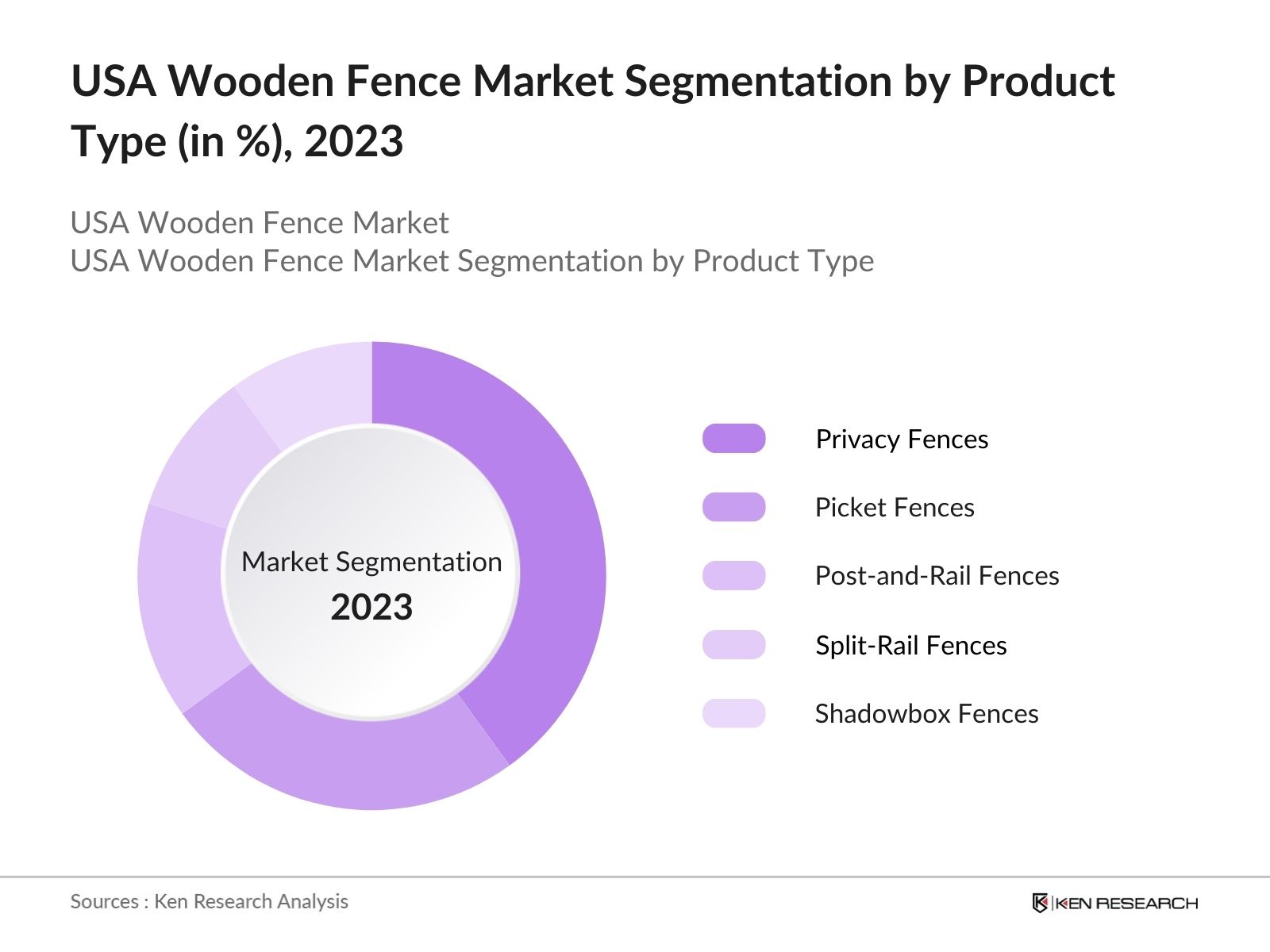
By Product Type: The market is segmented by product type into privacy fences, picket fences, post-and-rail fences, split-rail fences, and shadowbox fences. Among these, privacy fences dominate the market share due to their widespread use in residential areas, where homeowners value the added security and seclusion they offer. Privacy fences also provide a noise barrier and protection from external views, making them a popular choice in urbanized areas. Additionally, customization options and eco-friendly materials are driving growth in this segment.
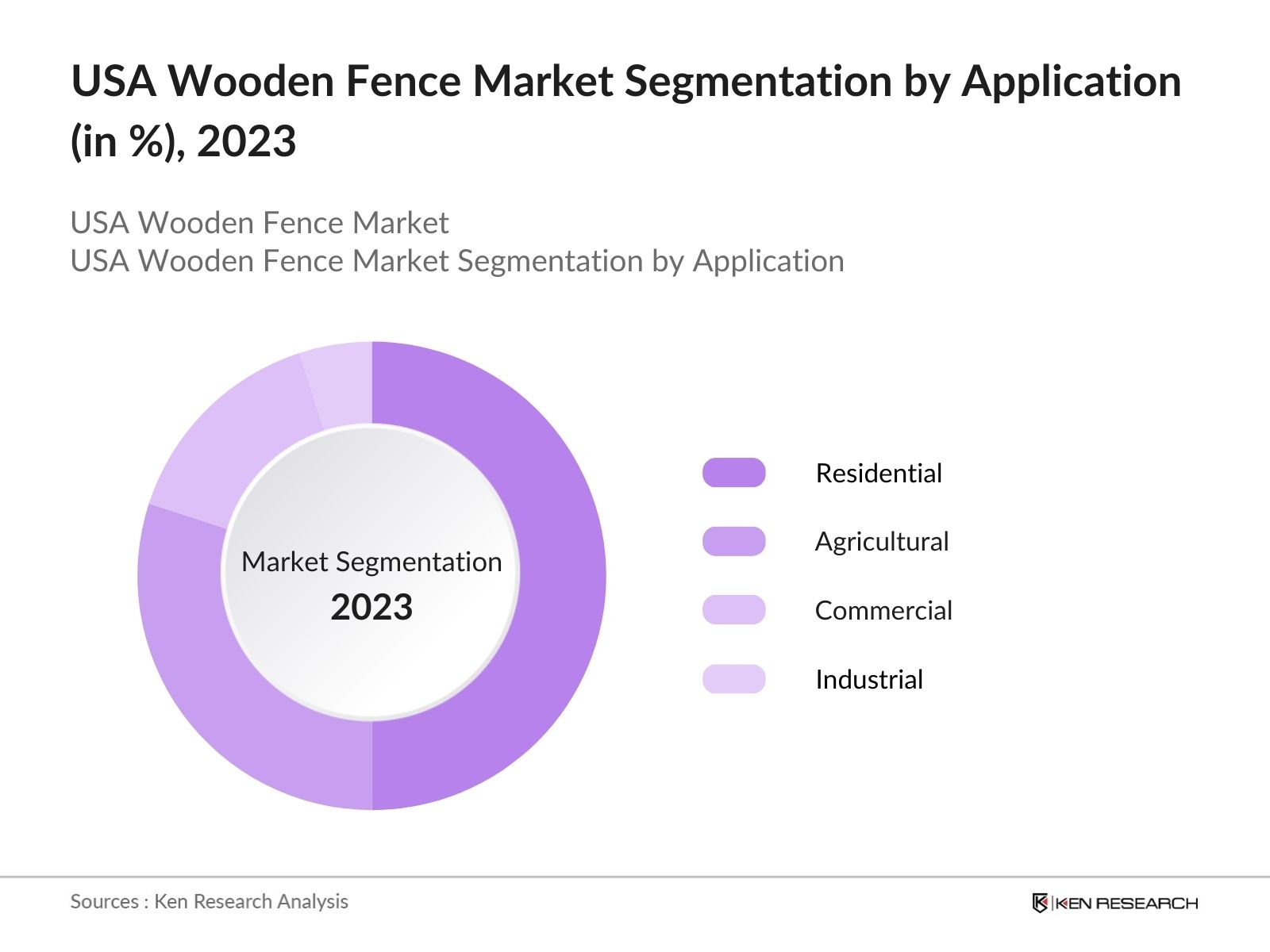
By Application: The market is further segmented by application into residential, agricultural, commercial, and industrial segments. The residential segment commands the largest market share due to increasing urbanization and a growing focus on home renovation projects. Homeowners frequently opt for wooden fencing for its aesthetic appeal, durability, and ability to enhance property value. The demand for residential fences continues to rise in suburban areas, where large outdoor spaces are common.
The USA wooden fence market is dominated by key players that offer a wide range of products and services tailored to various sectors. These companies maintain their competitive edge by investing in sustainable wood sourcing, advanced wood treatment technologies, and strong distribution networks across the United States. The market is moderately consolidated, with both large and small manufacturers competing in terms of quality, durability, and customer service. These companies have a significant influence on market trends and pricing, setting the tone for product innovation and customization.
|
Company |
Establishment Year |
Headquarters |
Number of Employees |
Annual Revenue (USD) |
Market Specialization |
Material Sourcing |
Sustainability Certifications |
Geographical Presence |
R&D Investment |
|---|---|---|---|---|---|---|---|---|---|
|
YellaWood |
1970 |
Alabama, USA |
|||||||
|
Universal Forest Products |
1955 |
Michigan, USA |
|||||||
|
Lowes Companies Inc. |
1946 |
North Carolina, USA |
|||||||
|
Seegars Fence Company |
1949 |
North Carolina, USA |
|||||||
|
Alta Forest Products |
1960 |
Washington, USA |
Over the next five years, the USA wooden fence market is expected to experience steady growth driven by several factors. Increased investments in residential construction, along with growing consumer interest in sustainable materials, will continue to propel the market. Technological advancements in wood treatment methods, which increase the lifespan and durability of wooden fences, are also anticipated to further support market expansion. The rise in urbanization, coupled with the trend of home renovation projects, will likely increase the demand for wooden fencing across both residential and commercial sectors.
|
By Product Type |
Privacy Fences Picket Fences Post-and-Rail Fences Split-Rail Fences Shadowbox Fences |
|
By Material Type |
Cedar Redwood Pine Pressure-Treated Wood Composite Wood |
|
By Application |
Residential Commercial Agricultural Industrial |
|
By Distribution Channel |
Offline (Home Improvement Stores, Specialty Retailers) Online (E-commerce Platforms) |
|
By Region |
Northeast Midwest Southern Western |
1.1. Definition and Scope
1.2. Market Taxonomy
1.3. Key Materials Used in Wooden Fencing (Lumber, Cedar, Redwood, Pine, Pressure-Treated Wood)
1.4. Market Segmentation Overview
2.1. Historical Market Size
2.2. Year-on-Year Growth Analysis
2.3. Key Market Developments and Milestones
3.1. Growth Drivers
3.1.1. Increasing Housing Developments (Residential Construction Rates)
3.1.2. Rising Preference for Aesthetic Appeal in Landscaping (Home Renovation Projects)
3.1.3. Expanding Agricultural Sector (Farm Boundary Fencing Needs)
3.1.4. Sustainability Preferences (Eco-friendly Materials in Wooden Fencing)
3.2. Market Challenges
3.2.1. High Maintenance Costs (Wooden Fences Vulnerability to Rot and Termites)
3.2.2. Availability of Low-Cost Alternatives (Vinyl, Chain Link, Metal Fences)
3.2.3. Deforestation Concerns (Supply of Sustainable Wood)
3.2.4. Labor Shortage in the Construction Industry
3.3. Opportunities
3.3.1. Increased Adoption of Customizable Fencing Solutions (Customization Options for Homeowners)
3.3.2. Government Incentives for Sustainable Construction Materials (Tax Breaks for Sustainable Wood)
3.3.3. Innovations in Wood Treatment Technologies (Improved Durability)
3.4. Trends
3.4.1. Rising Use of Eco-Certified Wood Products (FSC and PEFC Certified Materials)
3.4.2. Shift Towards DIY Installation Kits (Ease of Use for Homeowners)
3.4.3. Increased Demand for Privacy and Security Features in Residential Areas
3.5. Government Regulation
3.5.1. Building Codes for Fencing (State and Federal Zoning Regulations)
3.5.2. Environmental Protection Regulations (Sustainable Wood Sourcing)
3.5.3. Property Boundary Laws (Legal Guidelines for Fence Installation)
3.6. SWOT Analysis
3.7. Stakeholder Ecosystem (Manufacturers, Retailers, Builders, Property Developers)
3.8. Porters Five Forces
3.9. Competition Ecosystem
4.1. By Product Type (In Value %)
4.1.1. Privacy Fences
4.1.2. Picket Fences
4.1.3. Post-and-Rail Fences
4.1.4. Split-Rail Fences
4.1.5. Shadowbox Fences
4.2. By Material Type (In Value %)
4.2.1. Cedar
4.2.2. Redwood
4.2.3. Pine
4.2.4. Pressure-Treated Wood
4.2.5. Composite Wood
4.3. By Application (In Value %)
4.3.1. Residential
4.3.2. Commercial
4.3.3. Agricultural
4.3.4. Industrial
4.4. By Distribution Channel (In Value %)
4.4.1. Offline (Home Improvement Stores, Specialty Retailers)
4.4.2. Online (E-commerce Platforms)
4.5. By Region (In Value %)
4.5.1. Northeast
4.5.2. Midwest
4.5.3. Southern
4.5.4. Western
5.1. Detailed Profiles of Major Companies
5.1.1. ActiveYards
5.1.2. Seegars Fence Company
5.1.3. CertainTeed
5.1.4. Long Fence
5.1.5. Superior Fence & Rail
5.1.6. Home Depot
5.1.7. Lowes Companies Inc.
5.1.8. Viking Fence
5.1.9. YellaWood
5.1.10. Nationwide Fence Supply
5.1.11. Viking Fence Company
5.1.12. Red Cedar Fence Company
5.1.13. Universal Forest Products
5.1.14. United States Fence Inc.
5.1.15. Alta Forest Products
5.2. Cross Comparison Parameters (Number of Employees, Revenue, Headquarters, Market Share, Supply Chain Strength, Product Range, Certifications, Material Sourcing)
5.3. Market Share Analysis
5.4. Strategic Initiatives
5.5. Mergers and Acquisitions
5.6. Investment Analysis
5.7. Government Grants for Sustainability
5.8. Venture Capital and Private Equity Funding
6.1. Environmental Regulations for Wood Procurement
6.2. Construction Zoning Laws and Permits
6.3. Occupational Safety Standards for Fence Installation
7.1. Future Market Size Projections
7.2. Key Factors Driving Future Growth
8.1. By Product Type (In Value %)
8.2. By Material Type (In Value %)
8.3. By Application (In Value %)
8.4. By Distribution Channel (In Value %)
8.5. By Region (In Value %)
9.1. TAM/SAM/SOM Analysis
9.2. Customer Cohort Analysis
9.3. Marketing Initiatives
9.4. White Space Opportunity Analysis
The first step involves mapping the key stakeholders in the USA Wooden Fence Market, including manufacturers, suppliers, retailers, and end-users. Extensive desk research is conducted to gather relevant industry-level information from credible sources such as industry reports, government publications, and proprietary databases.
Historical data is compiled and analyzed to understand market trends and dynamics. The analysis covers market penetration, sales volume, and material preferences. Data on wood procurement, supply chain dynamics, and customer preferences is also assessed to provide a comprehensive market overview.
To validate the collected data, in-depth interviews with industry experts, including fence manufacturers and suppliers, are conducted. These consultations provide real-time insights into market dynamics, product innovations, and consumer preferences. These discussions help in refining the research findings.
The final stage involves synthesizing the collected data to provide a complete and accurate analysis of the USA Wooden Fence Market. This involves collaboration with manufacturers to cross-verify product segmentation, pricing strategies, and distribution channels. The synthesis ensures that the final output is both comprehensive and validated.
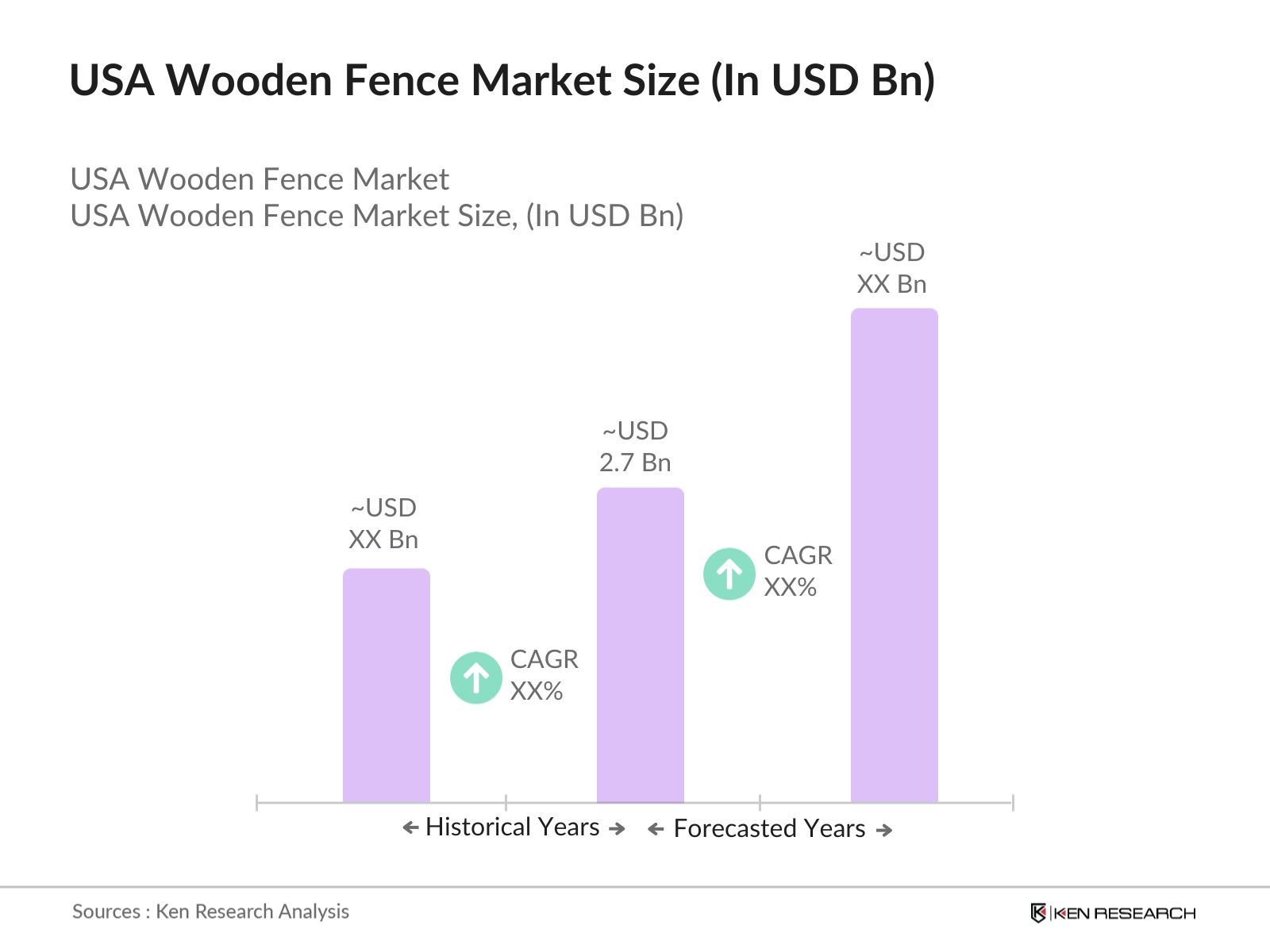
The USA wooden fence market is valued at USD 2.7 billion, driven by strong demand from residential and agricultural sectors, as well as the growing emphasis on sustainable materials for construction.
Challenges in the USA wooden fence market include the high maintenance costs of wooden fences, competition from low-cost alternatives like vinyl and metal, and concerns over deforestation and sustainable wood sourcing.
Key players in the USA wooden fence market include YellaWood, Universal Forest Products, Lowes Companies Inc., Seegars Fence Company, and Alta Forest Products. These companies dominate the market due to their extensive distribution networks, product variety, and commitment to sustainability.
The USA wooden fence market is driven by factors such as increased residential construction, demand for privacy and security solutions in urban areas, and the growing popularity of home improvement projects. Additionally, the use of eco-certified wood products is contributing to market growth.
Privacy fences dominate the USA wooden fence market due to their widespread use in residential areas. They offer homeowners enhanced security, privacy, and aesthetic appeal, making them a popular choice in both suburban and urban locations.

What makes us stand out is that our consultants follows Robust, Refine and Result (RRR) methodology. i.e. Robust for clear definitions, approaches and sanity checking, Refine for differentiating respondents facts and opinions and Result for presenting data with story

We have set a benchmark in the industry by offering our clients with syndicated and customized market research reports featuring coverage of entire market as well as meticulous research and analyst insights.

While we don't replace traditional research, we flip the method upside down. Our dual approach of Top Bottom & Bottom Top ensures quality deliverable by not just verifying company fundamentals but also looking at the sector and macroeconomic factors.

With one step in the future, our research team constantly tries to show you the bigger picture. We help with some of the tough questions you may encounter along the way: How is the industry positioned? Best marketing channel? KPI's of competitors? By aligning every element, we help maximize success.

Our report gives you instant access to the answers and sources that other companies might choose to hide. We elaborate each steps of research methodology we have used and showcase you the sample size to earn your trust.

If you need any support, we are here! We pride ourselves on universe strength, data quality, and quick, friendly, and professional service.