
Vietnam Beauty Products Market Outlook to 2030
Region:Asia
Author(s):Sanjna
Product Code:KROD3545
November 2024
97
About the Report
Vietnam Beauty Products Market Overview
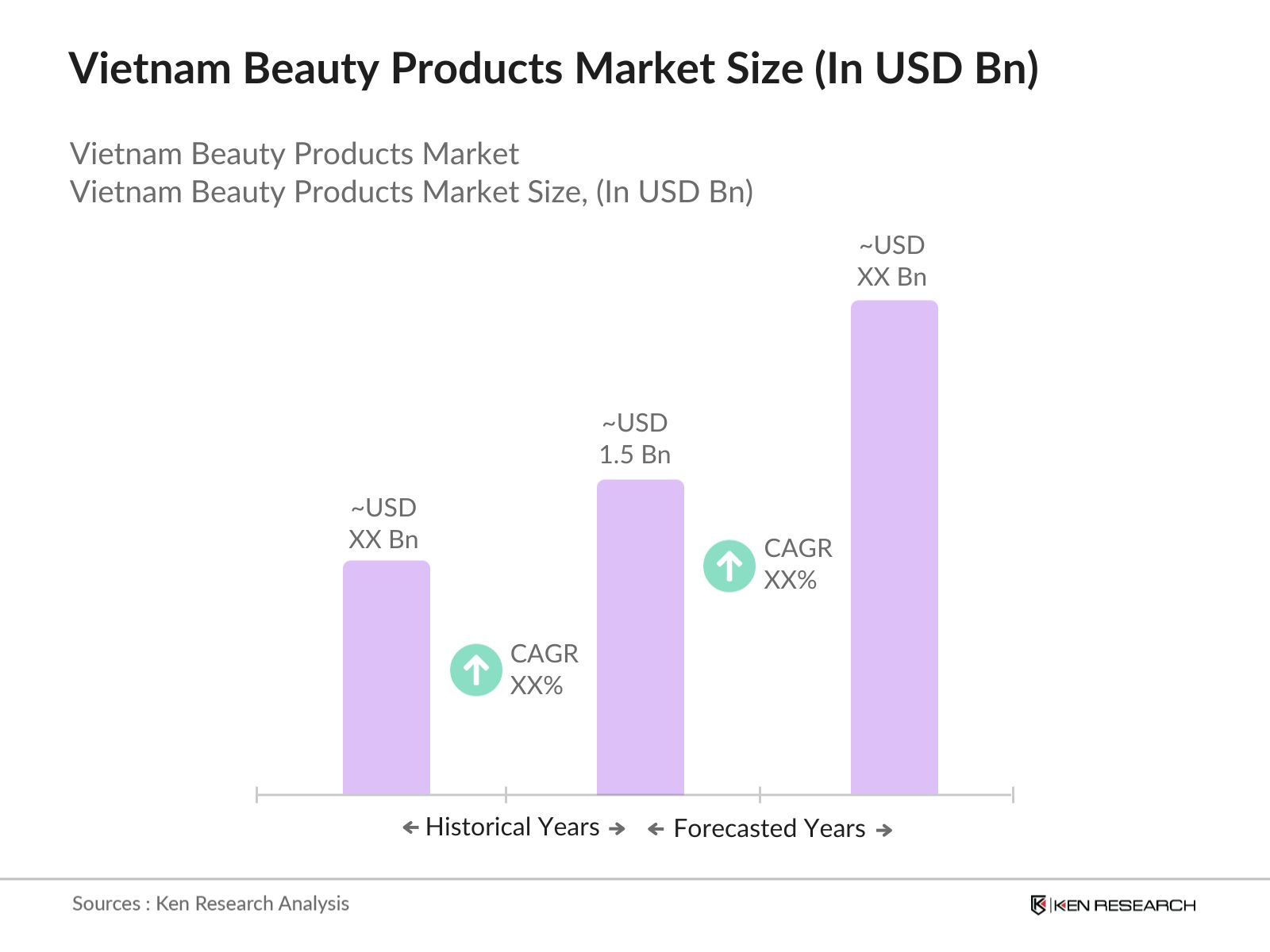
- Vietnam Beauty Products Market is valued at USD 1.5 billion, driven by a strong consumer base that is increasingly inclined toward self-care and personal grooming. The rising disposable income among the middle-class population and the growing influence of Western beauty trends have significantly propelled the demand for various beauty products. The proliferation of e-commerce platforms has further accelerated product accessibility, contributing to market expansion. Urbanization, along with evolving beauty standards and increased social media usage, has played a crucial role in boosting the sales of beauty products across the country.
- Hanoi and Ho Chi Minh City dominate the beauty products market in Vietnam due to their larger, more affluent populations and more developed retail infrastructure. These cities are hubs for international beauty brands and local businesses, providing a broad array of beauty products. Moreover, the higher standard of living and greater exposure to global beauty trends in these cities encourage consumers to spend more on premium beauty products, making them key contributors to market growth.
- As a member of the ASEAN region, Vietnam adheres to the ASEAN Cosmetic Directive, which establishes uniform regulations for cosmetic safety and ingredient usage. All products sold in Vietnam must comply with these regional guidelines, which include strict safety and labeling requirements. In 2024, the Vietnamese government conducted over 500 audits of beauty brands to ensure compliance with the directive. This regulatory framework is designed to protect consumers from harmful products while facilitating trade within the ASEAN region, ensuring market transparency and safety.
Vietnam Beauty Products Market Segmentation
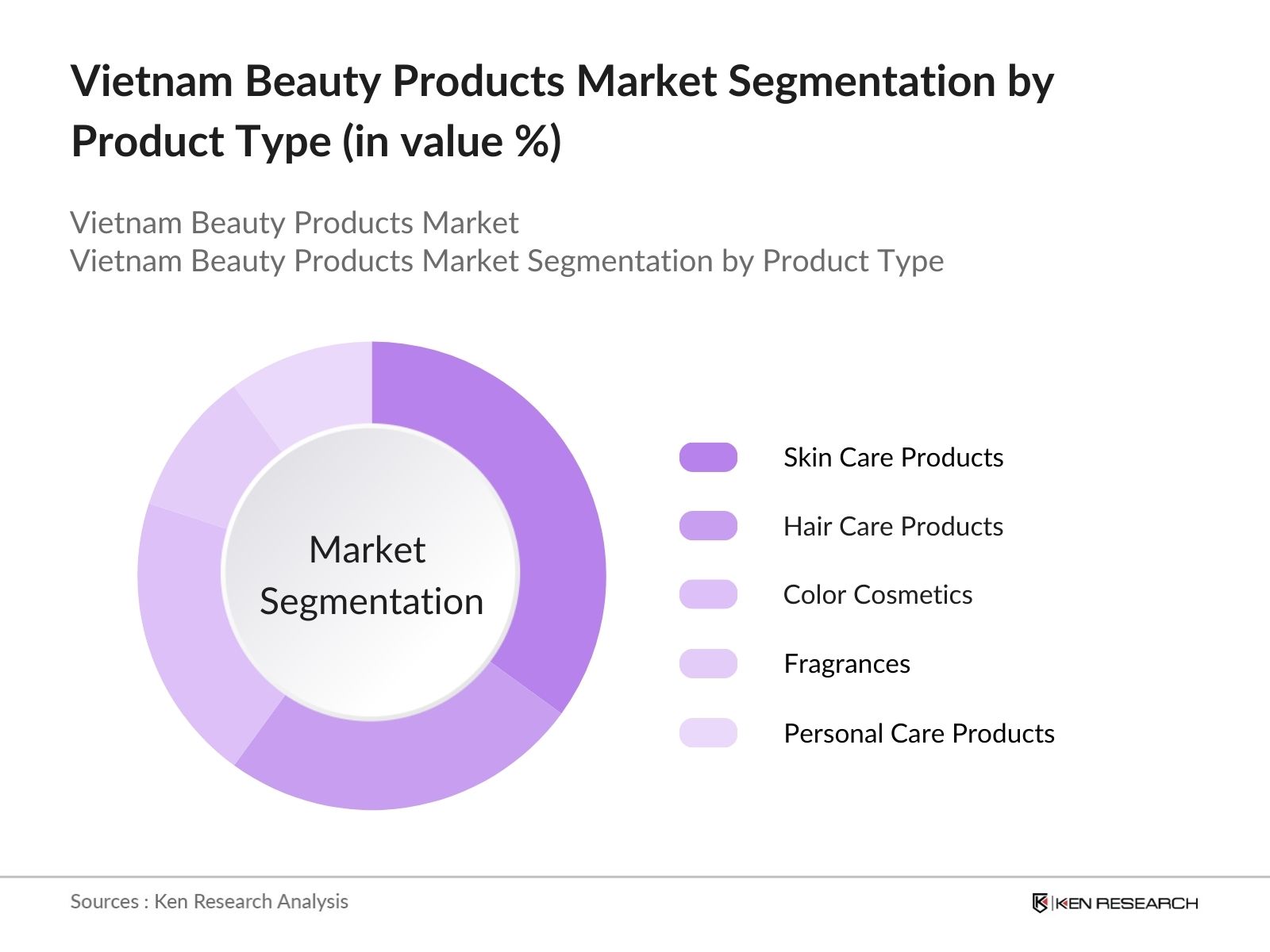
By Product Type: The Vietnam Beauty Products market is segmented by product type into skin care products, hair care products, color cosmetics, fragrances, and personal care products. Among these, skin care products hold a dominant share due to the increasing awareness of skin health and the growing trend toward preventative care. Consumers are becoming more concerned about the effects of pollution, climate, and aging on their skin, driving the demand for high-quality skin care solutions such as moisturizers, anti-aging creams, and sunscreens.
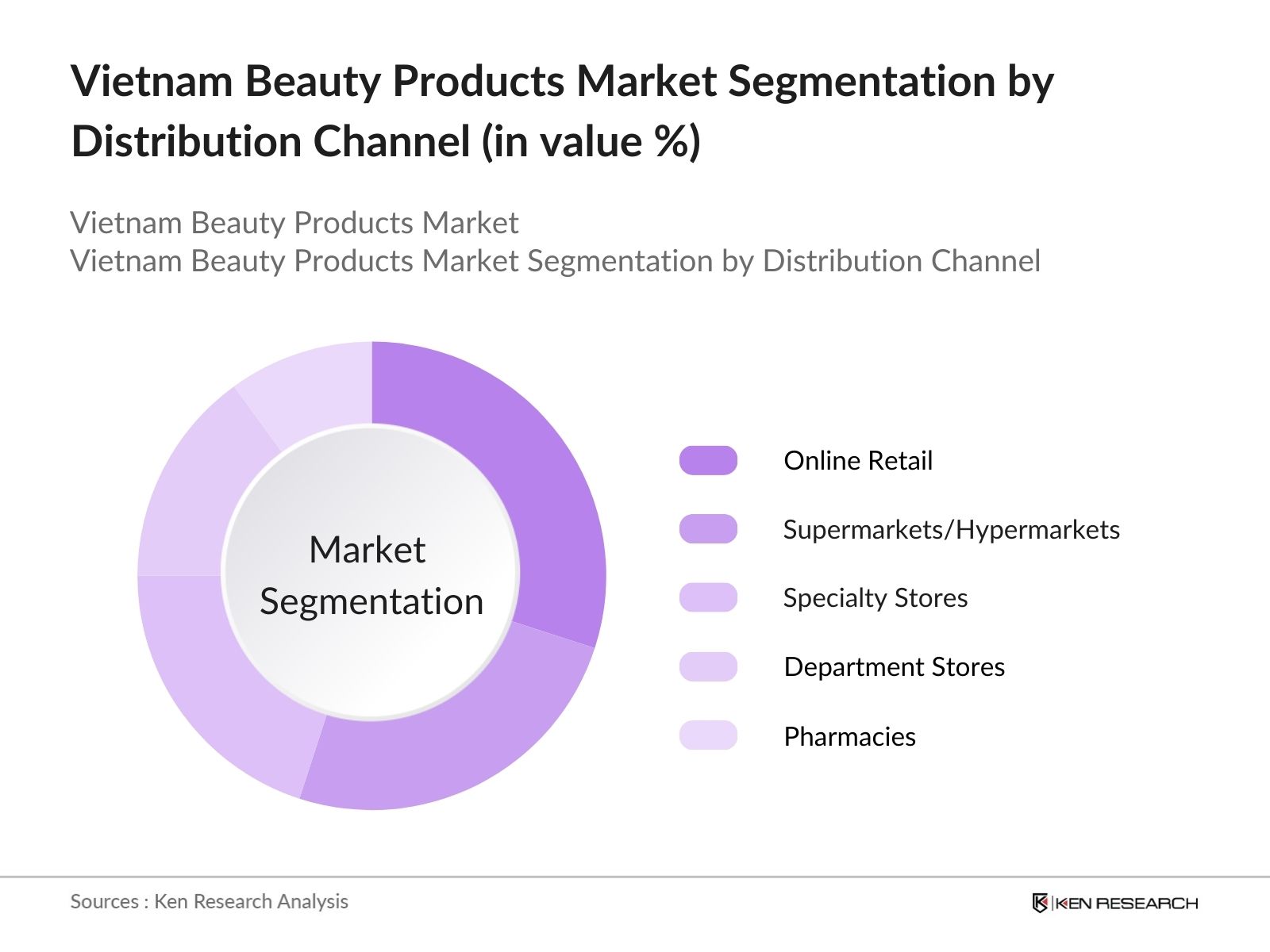
By Distribution Channel: The Vietnam Beauty Products market is also segmented by distribution channel into online retail, supermarkets/hypermarkets, specialty stores, department stores, and pharmacies. Online retail is emerging as a dominant distribution channel, driven by the convenience of e-commerce, competitive pricing, and the broad selection of products available. The increasing penetration of smartphones and the internet, coupled with promotional campaigns and discounts, has encouraged more consumers to shop online for their beauty needs.
Vietnam Beauty Products Market Competitive Landscape
The Vietnam Beauty Products market is dominated by both international and local players. Global companies have established strong footholds, while local manufacturers cater to the demand for natural and herbal beauty products that resonate with Vietnamese consumers. This competitive environment fosters innovation, with brands leveraging technology, personalization, and sustainable practices to stay ahead.
|
Company |
Established |
Headquarters |
Product Range |
Distribution Network |
R&D Initiatives |
Advertising Spend |
Sustainability Practices |
Consumer Engagement Strategies |
|
L'Oral Group |
1909 |
Paris, France |
- |
- |
- |
- |
- |
- |
|
Unilever Vietnam |
1930 |
London, UK |
- |
- |
- |
- |
- |
- |
|
Shiseido Vietnam |
1872 |
Tokyo, Japan |
- |
- |
- |
- |
- |
- |
|
AmorePacific Corporation |
1945 |
Seoul, South Korea |
- |
- |
- |
- |
- |
- |
|
Beiersdorf AG |
1882 |
Hamburg, Germany |
- |
- |
- |
- |
- |
- |
Vietnam Beauty Products Market Analysis
Growth Drivers
- Rising Consumer Income: According to the World Bank data, Vietnam's GNI per capita, PPP (current international $) was reported at $14,400 in 2023. The World Bank classifies Vietnam as a lower-middle income economy with a GNI per capita of $4,180 in 2023. As the economy continues to grow, consumer expenditure on non-essential goods like cosmetics is expanding, with Vietnamese households increasingly prioritizing personal grooming and beauty products due to higher discretionary income.
- Influence of Social Media & Beauty Trends: As of 2022, Vietnam had 78.59% of its population using the internet, which equates to around 78 million people. Social media platforms such as Facebook, Instagram, and TikTok play a pivotal role in shaping beauty preferences, with influencers driving demand for trending products, particularly K-Beauty and J-Beauty items. This digital penetration has fueled the popularity of new beauty routines and products, encouraging consumer experimentation with different brands.
- Urbanization and Lifestyle Changes: In 2023, 39.4% of Vietnams population resides in urban areas, marking a continuous shift from rural to urban living. This urbanization has significantly altered consumer behavior, with more city dwellers demanding convenient and high-quality beauty products to complement their fast-paced lifestyles. The growing presence of beauty retail outlets in urban centers such as Ho Chi Minh City and Hanoi has enhanced product accessibility.
Challenges
- Counterfeit Products: The prevalence of counterfeit beauty products is a significant issue in Vietnam, with government agencies reporting seizures of over 1,000 counterfeit cosmetic products daily in 2023. This has negatively impacted consumer trust and poses challenges for legitimate brands. The widespread availability of fake beauty products, especially through unregulated e-commerce channels, creates a risk for consumers.
- Regulatory and Compliance Issues: Vietnams regulatory environment for cosmetics is governed by the Ministry of Health, which requires all products to meet ASEAN Cosmetic Directive standards. However, compliance remains challenging for smaller beauty brands due to stringent requirements for product safety and ingredient disclosures. The growing focus on consumer protection has led to stricter enforcement of these regulations, making it essential for brands to adhere to compliance to maintain consumer trust.
Vietnam Beauty Products Future Market Outlook
Over the next five years, the Vietnam Beauty Products market is expected to witness significant growth. This expansion will be driven by rising consumer spending, the increasing popularity of organic and natural products, and the strong growth of e-commerce platforms. Additionally, innovations in beauty technology and the integration of augmented reality into online retail experiences will enhance consumer engagement, boosting product sales. The market is also likely to benefit from the growing awareness of sustainable and cruelty-free beauty solutions, which is expected to shape future demand trends.
Market Opportunities
- Growth of Organic and Sustainable Beauty Products: The demand for organic and eco-friendly beauty products has surged in Vietnam, driven by environmental awareness and health-conscious consumers. In 2024, over 30% of Vietnamese consumers expressed a preference for beauty products with natural ingredients, according to a survey by the Vietnam Ministry of Industry and Trade. This trend presents a significant growth opportunity for brands that focus on organic formulations, sustainable packaging, and cruelty-free production methods. International and local brands are increasingly investing in sustainable beauty, aiming to capture the growing segment of environmentally-conscious consumers.
- Personalization and AI-Driven Beauty Solutions: Personalization is becoming a key differentiator in the Vietnamese beauty market. With the growth of AI-driven beauty solutions, brands are offering personalized skincare recommendations based on individual consumer needs. Beauty brands in Vietnam are using AI technology to customize products and virtual try-ons, enhancing customer engagement. This technology-driven shift allows consumers to receive tailored beauty solutions, encouraging higher product satisfaction and loyalty.
Scope of the Report
|
Segment |
Sub-Segments |
|
By Product Type |
Skin Care Products |
|
Hair Care Products |
|
|
Color Cosmetics |
|
|
Fragrances |
|
|
Personal Care Products |
|
|
By Distribution Channel |
Online Retail |
|
Supermarkets/Hypermarkets |
|
|
Specialty Stores |
|
|
Department Stores |
|
|
Pharmacies |
|
|
By End User |
Women |
|
Men |
|
|
Teenagers |
|
|
By Ingredient Type |
Natural/Organic |
|
Synthetic |
|
|
Halal |
|
|
By Region |
North Vietnam |
|
Central Vietnam |
|
|
South Vietnam |
Products
Key Target Audience
Cosmetic Manufacturers
Luxury Beauty Brands
E-commerce Platforms
Private Label Beauty Product Manufacturers
Beauty Subscription Box Companies
Packaging Companies
Investors and Venture Capitalist Firms
Government and Regulatory Bodies (Ministry of Health, Ministry of Trade and Industry)
Companies
Major Players
L'Oral Group
Unilever Vietnam
Shiseido Vietnam
Este Lauder Companies
AmorePacific Corporation
Beiersdorf AG
Procter & Gamble Vietnam
Johnson & Johnson Vietnam
Avon Products Inc.
Kao Corporation
The Face Shop (LG Household & Healthcare)
Oriflame Cosmetics
Rohto-Mentholatum Vietnam
Saigon Cosmetics Corporation (SCC)
Biona Cosmetics
Table of Contents
1. Vietnam Beauty Products Market Overview
1.1. Definition and Scope
1.2. Market Taxonomy
1.3. Market Growth Rate
1.4. Market Segmentation Overview
2. Vietnam Beauty Products Market Size (In USD Bn)
2.1. Historical Market Size
2.2. Year-On-Year Growth Analysis
2.3. Key Market Developments and Milestones
3. Vietnam Beauty Products Market Analysis
3.1. Growth Drivers
3.1.1. Rising Consumer Income
3.1.2. Influence of Social Media & Beauty Trends
3.1.3. Urbanization and Lifestyle Changes
3.2. Market Challenges
3.2.1. Counterfeit Products
3.2.2. Regulatory and Compliance Issues
3.3. Opportunities
3.3.1. Growth of Organic and Sustainable Beauty Products
3.3.2. Personalization and AI-Driven Beauty Solutions
3.4. Trends
3.4.1. Rising Preference for Premium Products
3.4.2. E-commerce Growth and Digital Penetration
3.4.3. Demand for Natural and Cruelty-Free Products
3.5. Regulatory Framework
3.5.1. ASEAN Cosmetic Directive
3.5.2. Government Audits and Compliance Enforcement
3.6. SWOT Analysis
3.7. Stake Ecosystem
3.8. Porter’s Five Forces
3.9. Competition Ecosystem
4. Vietnam Beauty Products Market Segmentation
4.1. By Product Type (In Value %)
4.1.1. Skin Care Products
4.1.2. Hair Care Products
4.1.3. Color Cosmetics
4.1.4. Fragrances
4.1.5. Personal Care Products
4.2. By Distribution Channel (In Value %)
4.2.1. Online Retail
4.2.2. Supermarkets/Hypermarkets
4.2.3. Specialty Stores
4.2.4. Department Stores
4.2.5. Pharmacies
4.3. By End User (In Value %)
4.3.1. Women
4.3.2. Men
4.3.3. Teenagers
4.4. By Ingredient Type (In Value %)
4.4.1. Natural/Organic
4.4.2. Synthetic
4.4.3. Halal
4.5. By Region (In Value %)
4.5.1. North Vietnam
4.5.2. Central Vietnam
4.5.3. South Vietnam
5. Vietnam Beauty Products Market Competitive Landscape
5.1. Detailed Profiles of Major Companies
5.1.1. L'Oréal Group
5.1.2. Unilever Vietnam
5.1.3. Shiseido Vietnam
5.1.4. AmorePacific Corporation
5.1.5. Beiersdorf AG
5.2. Cross Comparison Parameters (No. of Employees, Headquarters, Inception Year, Revenue)
5.3. Market Share Analysis
5.4. Strategic Initiatives
5.5. Mergers and Acquisitions
5.6. Investment Analysis
5.7. Venture Capital Funding
5.8. Advertising Spend Analysis
5.9. Sustainability Practices
6. Vietnam Beauty Products Future Market Size (In USD Bn)
6.1. Future Market Size Projections
6.2. Key Factors Driving Future Market Growth
7. Vietnam Beauty Products Future Market Segmentation
7.1. By Product Type (In Value %)
7.2. By Distribution Channel (In Value %)
7.3. By End User (In Value %)
7.4. By Ingredient Type (In Value %)
7.5. By Region (In Value %)
8. Vietnam Beauty Products Market Analysts’ Recommendations
8.1. TAM/SAM/SOM Analysis
8.2. Customer Cohort Analysis
8.3. Marketing Initiatives
8.4. White Space Opportunity Analysis
Disclaimer
Contact Us
Research Methodology
Step 1: Identification of Key Variables
This initial phase involves mapping the entire beauty products ecosystem in Vietnam, identifying all major stakeholders, from manufacturers to retailers. Secondary data sources such as industry reports, government publications, and proprietary databases are utilized to define the core variables driving market dynamics.
Step 2: Market Analysis and Construction
In this stage, historical data on the Vietnam Beauty Products market is gathered and analyzed. Market penetration, growth trends, and consumer behavior are assessed, helping to establish reliable revenue estimates. Service quality metrics are also evaluated to ensure data reliability.
Step 3: Hypothesis Validation and Expert Consultation
Market hypotheses are validated through direct interviews with industry experts from leading beauty brands and retailers in Vietnam. These consultations offer deep insights into operational practices, product preferences, and competitive strategies, contributing to the refinement of market data.
Step 4: Research Synthesis and Final Output
The final phase involves synthesizing the data gathered from previous steps, along with detailed inputs from industry players, to develop a comprehensive, validated report on the Vietnam Beauty Products market.
Frequently Asked Questions
1. How big is the Vietnam Beauty Products Market?
The Vietnam Beauty Products market is valued at USD 1.5 billion, driven by rising disposable income, the proliferation of e-commerce, and increasing demand for premium and natural beauty products.
2. What are the challenges in the Vietnam Beauty Products Market?
Key challenges include the influx of counterfeit products, regulatory hurdles, and high competition among local and global brands. The lack of stringent regulatory oversight on product safety also poses challenges for manufacturers and consumers alike.
3. Who are the major players in the Vietnam Beauty Products Market?
Major players in the market include L'Oral Group, Unilever Vietnam, Shiseido Vietnam, AmorePacific Corporation, and Beiersdorf AG. These companies dominate the market due to their strong distribution networks, established brand presence, and wide product portfolios.
4. What are the growth drivers of the Vietnam Beauty Products Market?
The market is driven by rising consumer income, increasing internet penetration, the growing popularity of online shopping, and the influence of global beauty trends. Additionally, the shift toward organic and vegan products is further accelerating market growth.
Why Buy From Us?

What makes us stand out is that our consultants follows Robust, Refine and Result (RRR) methodology. i.e. Robust for clear definitions, approaches and sanity checking, Refine for differentiating respondents facts and opinions and Result for presenting data with story

We have set a benchmark in the industry by offering our clients with syndicated and customized market research reports featuring coverage of entire market as well as meticulous research and analyst insights.

While we don't replace traditional research, we flip the method upside down. Our dual approach of Top Bottom & Bottom Top ensures quality deliverable by not just verifying company fundamentals but also looking at the sector and macroeconomic factors.

With one step in the future, our research team constantly tries to show you the bigger picture. We help with some of the tough questions you may encounter along the way: How is the industry positioned? Best marketing channel? KPI's of competitors? By aligning every element, we help maximize success.

Our report gives you instant access to the answers and sources that other companies might choose to hide. We elaborate each steps of research methodology we have used and showcase you the sample size to earn your trust.

If you need any support, we are here! We pride ourselves on universe strength, data quality, and quick, friendly, and professional service.