















Vietnam Car Rentals Market Outlook to 2030
Region:Asia
Author(s):Yogita Sahu
Product Code:KROD9007
December 2024
88
About the Report
Vietnam Car Rentals Market Overview
- The Vietnam car rental market, valued at USD 900 million, is driven by an influx of business travelers and rising domestic tourism. With increased demand from both leisure and business travelers, car rental companies are expanding their services across key cities. Additionally, the market's growth is supported by Vietnam's expanding infrastructure, including the improvement of airport services.
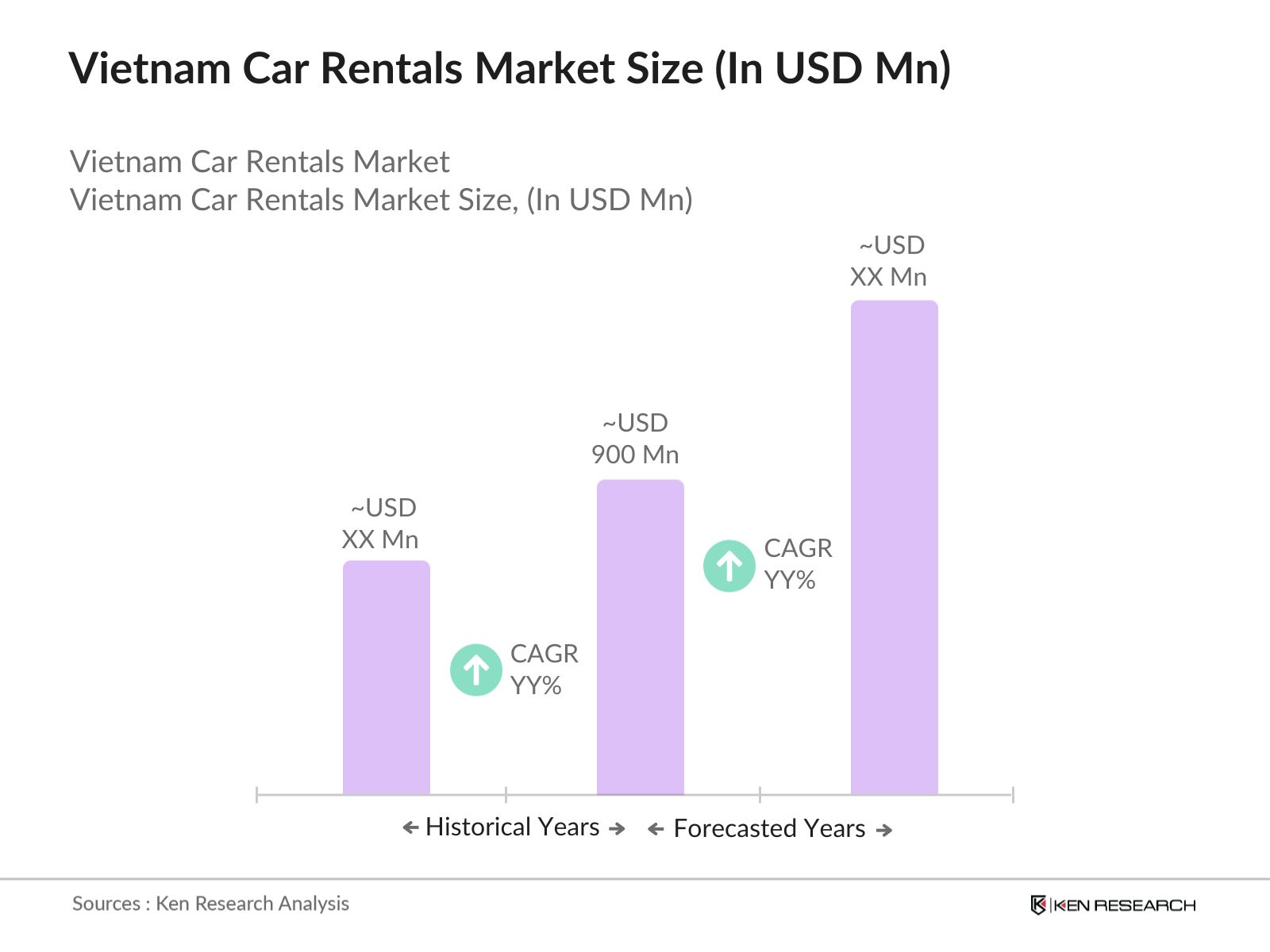
- The dominant cities in Vietnam's car rental market are Hanoi and Ho Chi Minh City. These cities attract a large number of tourists and business professionals due to their status as economic and cultural hubs. Hanoi, being the capital, and Ho Chi Minh City, the largest economic center, see higher demand for rental services due to their large populations, business centers, and international airports.
- In 2024, the Vietnamese government continues to implement its "Tourism Development Strategy 2030," which aims to make Vietnam a leading tourist destination in Southeast Asia. Part of this strategy includes enhancing transportation infrastructure, which directly benefits the car rental market. The government has allocated over $10 billion toward developing tourism-related transport networks, which will increase accessibility and further drive demand for car rentals in key tourist areas.
Vietnam Car Rentals Market Segmentation
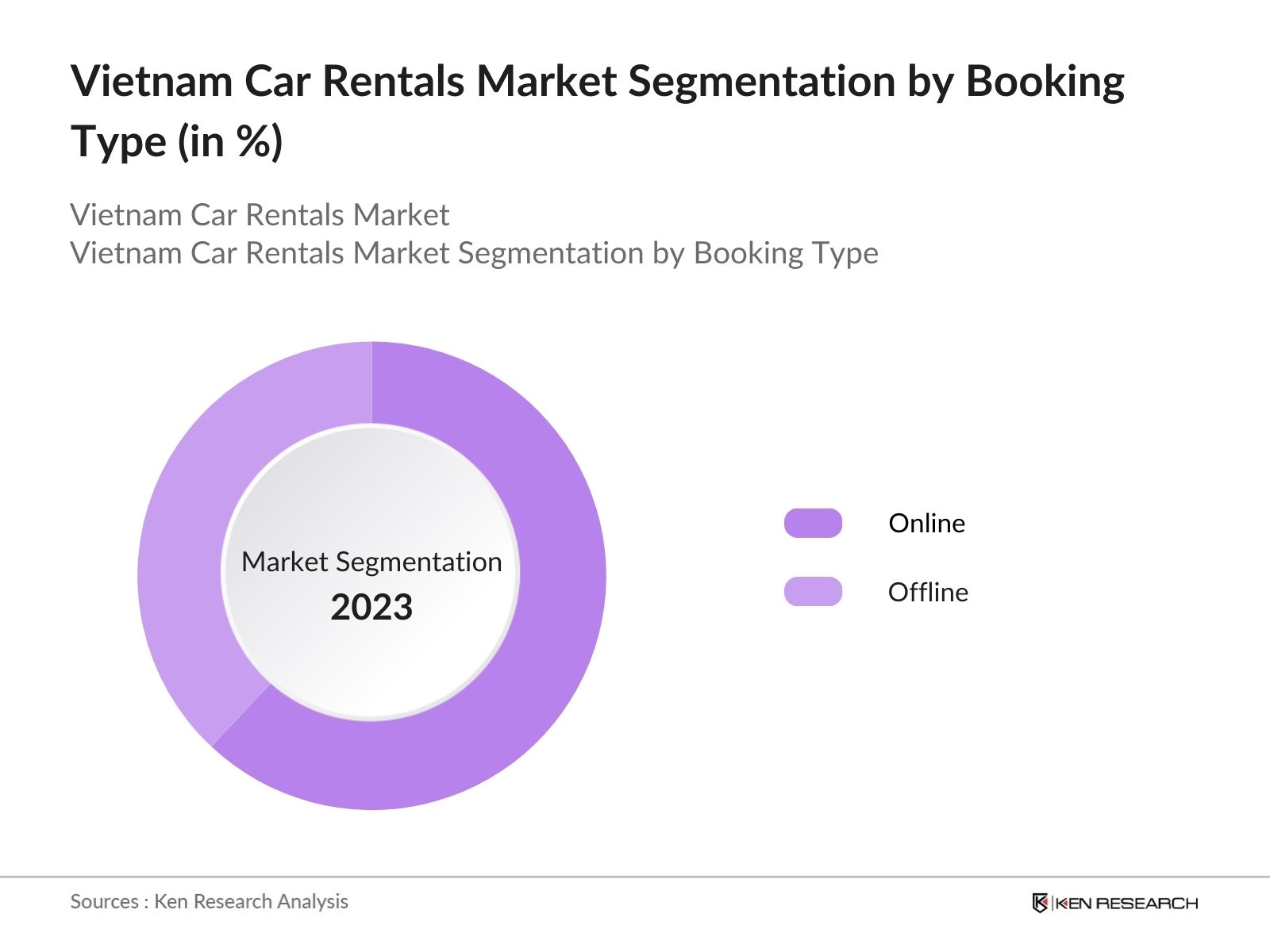
By Booking Type: The market is segmented by booking type into online and offline categories. The online segment dominates due to the increasing internet penetration and the rise in smartphone usage across the country. Online platforms like Grab, Hertz, and local companies have significantly simplified the booking process, providing users with easy access to services.
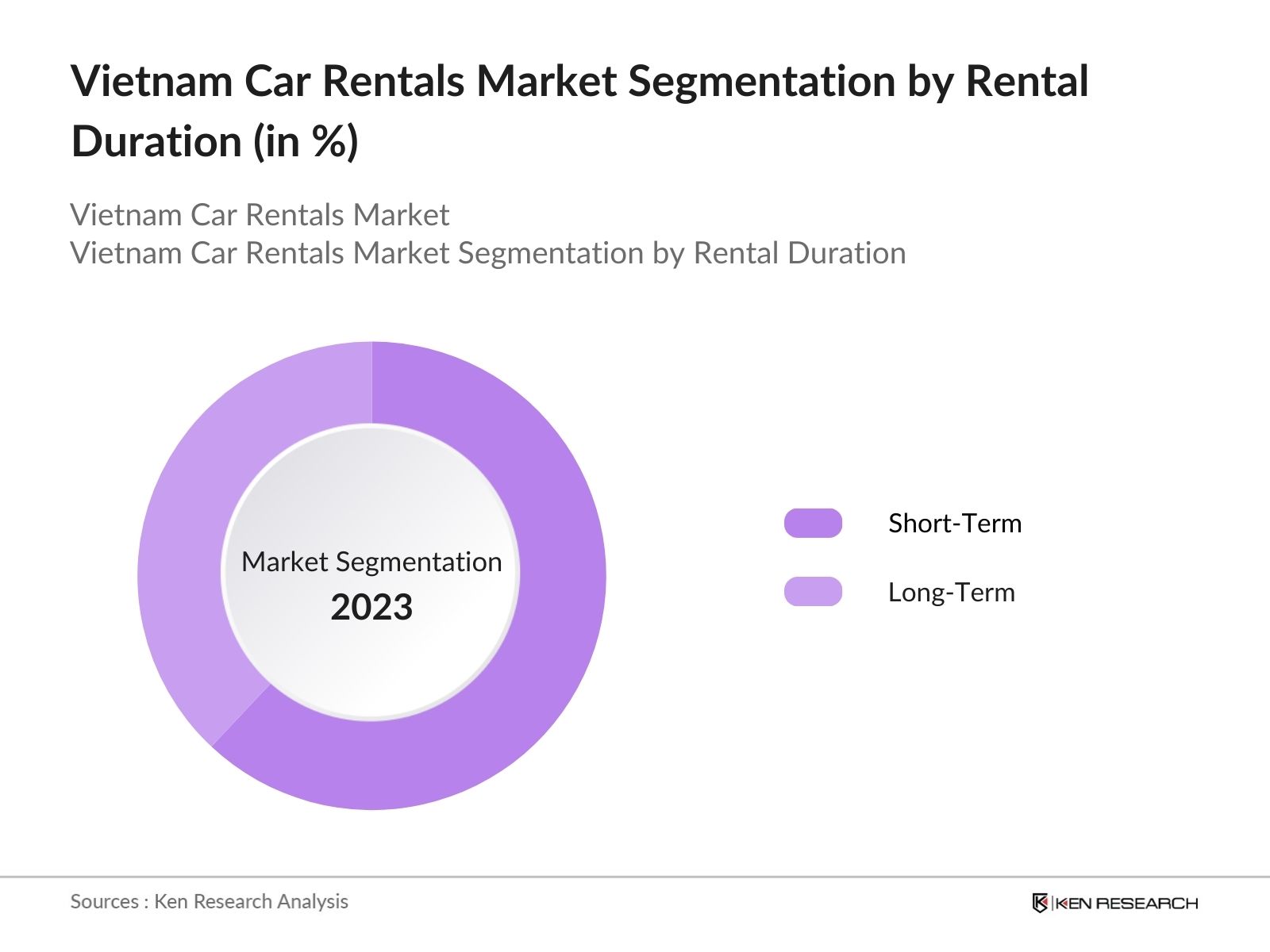
By Rental Duration: The market is also segmented by rental duration into short-term and long-term rentals. Short-term rentals dominate the market, particularly among tourists and business travelers who require vehicles for a few days. The demand for short-term rentals is boosted by the growing tourism sector and an increasing preference for short, flexible rental periods, especially for leisure purposes.
Vietnam Car Rentals Market Competitive Landscape
The market is fragmented, with several players contributing to the competitive landscape. Major global brands like Avis and Hertz compete alongside local companies like Vinasun and Mai Linh. Companies compete on the basis of service quality, fleet size, mobile application offerings, and pricing strategies.
|
Company Name |
Establishment Year |
Headquarters |
Fleet Size |
No. of Locations |
Average Rental Length (Days) |
Main Focus (Tourism/Business) |
Online Presence |
|
Avis Budget Group |
1946 |
New Jersey, USA |
|||||
|
Hertz Corporation |
1918 |
Estero, USA |
|||||
|
Vinasun Corporation |
2003 |
Ho Chi Minh, VN |
|||||
|
Mai Linh Group |
1993 |
Ho Chi Minh, VN |
|||||
|
Enterprise Holdings |
1957 |
Missouri, USA |
Vietnam Car Rentals Market Analysis
Market Growth Drivers
- Increasing Domestic Tourism: Vietnam's domestic tourism sector has been on the rise, driven by the government's focus on boosting internal travel. In 2024, the country is expecting over 120 million domestic tourists, which has directly led to a surge in demand for car rental services as more Vietnamese citizens seek flexible travel options. This growing preference for private vehicle rentals for intra-city and inter-city travel supports the car rental industry in both metropolitan and rural regions.
- Expanding Infrastructure Development: In 2024, Vietnam is set to invest over $8 billion in infrastructure projects, including highways and urban road expansions. The governments "Eastern North-South Expressway" is under development, expected to educe travel time across provinces and increase demand for long-distance vehicle rentals.
- Booming Corporate Travel Sector: Corporate travel in Vietnam is expected to rebound in 2024, with over 3 million business trips planned domestically, fueled by the expansion of sectors like manufacturing, technology, and services. As companies continue to expand operations across multiple regions in Vietnam, corporate demand for car rentals has also risen.
Market Challenges
- Limited Digital Infrastructure: While the car rental market in Vietnam is growing, digital infrastructure to support car rentalsespecially through online booking platformsremains underdeveloped. In 2024, less than 40% of car rental companies have fully optimized their online platforms for seamless customer experiences. This creates a gap in customer acquisition and service efficiency, particularly as tech-savvy consumers prefer digital solutions for booking services.
- Traffic Congestion in Major Cities: In 2024, major cities like Ho Chi Minh City and Hanoi continue to grapple with severe traffic congestion, with an estimated 10 million vehicles on the road in these cities combined, as per local transport departments. This makes driving in urban areas less appealing for tourists and corporate travelers alike. The congested road conditions often lead to reduced interest in car rentals, especially for self-driving options, impacting the sectors overall growth potential.
Vietnam Car Rentals Market Future Outlook
Over the next five years, the Vietnam car rental industry is expected to experience rapid growth, fueled by the expansion of tourism and business travel, as well as continued investments in infrastructure.
Future Market Opportunities
- Growth in Digital and App-Based Car Rentals: The future of market will see substantial growth in digital and app-based services. By 2029, over 70% of car rental bookings will be made through digital platforms, driven by an increased preference for convenient and tech-savvy solutions among younger travelers. This shift will be supported by the rise of integrated travel apps, which will allow users to seamlessly book rentals, accommodation, and other travel services on a single platform.
- Expansion into Corporate Long-Term Rentals: Over the next five years, corporate long-term rentals will become a dominant segment in the market. With over 5,000 new businesses expected to establish in Vietnam annually, companies will increasingly opt for long-term vehicle leasing instead of outright purchases. This trend will be driven by cost-efficiency, with businesses favoring flexible leasing options to meet their transportation needs without the burden of vehicle ownership.
Scope of the Report
|
Booking Type |
Online Offline |
|
Rental Duration |
Short-Term Long-Term |
|
Application Type |
Tourism Business/Commuting |
|
Region |
North East West South |
|
Car Type |
Hatchback Sedan SUV |
Products
Key Target Audience Organizations and Entities Who Can Benefit by Subscribing This Report:
Investor and Venture Capitalist Firms
Government and Regulatory Bodies (Ministry of Transport, Vietnam Tourism Board)
Automobile Manufacturers
Fleet Management Companies
Banks and Financial Institution
Ride-Hailing Platforms
Companies
Players Mentioned in the Report:
Avis Budget Group
Hertz Corporation
Vinasun Corporation
Mai Linh Group
Enterprise Holdings
VN Rent A Car
Grab Holdings Inc.
PT Gojek
Zoomcar
Eco Rent A Car
Table of Contents
Vietnam Car Rentals Market Overview
1.1. Definition and Scope
1.2. Market Taxonomy
1.3. Market Growth Rate
1.4. Market Segmentation Overview
Vietnam Car Rentals Market Size (In USD Million)
2.1. Historical Market Size
2.2. Year-On-Year Growth Analysis
2.3. Key Market Developments and Milestones
Vietnam Car Rentals Market Dynamics
3.1. Growth Drivers
3.1.1. Rise in Domestic Tourism
3.1.2. Expansion in Business Travel Demand
3.1.3. Increasing Air Travel Infrastructure
3.1.4. Shift to Online and Mobile Bookings
3.2. Market Challenges
3.2.1. High Deposit Fees
3.2.2. Legal & Contractual Hassles
3.2.3. Competition from Ride-Hailing Services
3.2.4. Increasing Costs of Vehicle Maintenance
3.3. Opportunities
3.3.1. Expansion in Electric Vehicle (EV) Fleet
3.3.2. Growth in Chauffeur-Driven Services
3.3.3. Adoption of Mobile Applications for Bookings
3.3.4. Rise of International Tourism
3.4. Trends
3.4.1. Introduction of EV Rentals
3.4.2. Demand for Short-Term Rentals in Urban Areas
3.4.3. Increasing Fleet Utilization Rates
Vietnam Car Rentals Market Segmentation
4.1. By Booking Type (In Value)
4.1.1. Online
4.1.2. Offline
4.2. By Rental Duration (In Value)
4.2.1. Short-Term Rentals
4.2.2. Long-Term Rentals
4.3. By Application Type (In Value)
4.3.1. Tourism
4.3.2. Business/Commuting
4.4. By Region (In Value)
4.4.1. North
4.4.2. East
4.4.3. South
4.4.4. West
4.5. By Car Type (In Value)
4.5.1. Hatchback
4.5.2. Sedan
4.5.3. SUV
Vietnam Car Rentals Market Competitive Analysis
5.1. Detailed Profiles of Major Companies
5.1.1. Enterprise Holdings
5.1.2. Avis Budget Group
5.1.3. Hertz Corporation
5.1.4. Vinasun Corporation
5.1.5. Mai Linh Group
5.1.6. Grab Holdings Inc.
5.1.7. VN Rent A Car
5.1.8. PT Gojek
5.1.9. Zoomcar
5.1.10. Eco Rent A Car
5.1.11. Saigon Car Rental
5.1.12. Vietnam Drive
5.1.13. Thanh Cong Car Rental
5.1.14. Expats Car Hire
5.1.15. Luxury Car Rentals Vietnam
5.2. Cross Comparison Parameters (Fleet Size, Average Rental Length, Utilization Rate, Revenue)
5.3. Market Share Analysis
5.4. Strategic Initiatives
5.5. Mergers and Acquisitions
Vietnam Car Rentals Regulatory Framework
6.1. Licensing and Legal Requirements
6.2. Insurance Policies and Coverage
6.3. Emission Standards for Rental Fleets
Vietnam Car Rentals Future Market Segmentation
7.1 By Booking Type
7.2 By Car Type
7.3 By Application Type
7.4 By Rental Duration
7.5 BY Region
Vietnam Car Rentals Future Market Size (In USD Million)
8.1. Future Market Size Projections
8.2. Key Factors Driving Future Market Growth
Vietnam Car Rentals Market Analysts' Recommendations
9.1. TAM/SAM/SOM Analysis
9.2. Customer Segmentation Strategies
9.3. Investment Opportunities in EV Fleet Expansion
9.4. White Space Opportunity Analysis
Disclaimer
Contact Us
Research Methodology
Step 1: Identification of Key Variables
The research began with an in-depth desk study to map the Vietnam car rental market, focusing on stakeholders such as rental companies, transportation agencies, and automobile manufacturers. Key variables included booking preferences, fleet sizes, and regional distribution.
Step 2: Market Analysis and Construction
A comprehensive review of historical data was conducted to establish trends in rental duration and fleet utilization. Key performance indicators were assessed to ensure the reliability of market forecasts.
Step 3: Hypothesis Validation and Expert Consultation
Key assumptions about market growth were validated through interviews with rental company executives and transportation experts, who provided insights into consumer behavior and fleet management strategies.
Step 4: Research Synthesis and Final Output
The final step involved integrating data from primary and secondary research, ensuring accurate forecasts for the Vietnam car rental market. The insights from rental companies helped refine the revenue projections and market share estimates.
Frequently Asked Questions
01. How big is the Vietnam Car Rentals Market?
The Vietnam car rental market was valued at USD 900 million, driven by the rapid expansion of tourism and business travel in the country.
02. What are the challenges in the Vietnam Car Rentals Market?
Challenges in the Vietnam car rental market include high deposit fees, contractual complexities, and competition from ride-hailing services like Grab and Gojek, which offer alternative transportation solutions.
03. Who are the major players in the Vietnam Car Rentals Market?
Key players in the Vietnam car rental market include global brands like Avis Budget Group and Hertz Corporation, along with local companies like Vinasun Corporation and Mai Linh Group.
04. What are the growth drivers of the Vietnam Car Rentals Market?
Growth in the Vietnam car rental market is propelled by the increase in domestic and international tourism, the expansion of business travel, and the digitalization of booking processes.
05. What are the future trends in the Vietnam Car Rentals Market?
Future trends in the Vietnam car rental market include the adoption of electric vehicles, the rise in chauffeur-driven services, and the continued integration of mobile applications for booking and fleet management.
Why Buy From Us?

What makes us stand out is that our consultants follows Robust, Refine and Result (RRR) methodology. i.e. Robust for clear definitions, approaches and sanity checking, Refine for differentiating respondents facts and opinions and Result for presenting data with story

We have set a benchmark in the industry by offering our clients with syndicated and customized market research reports featuring coverage of entire market as well as meticulous research and analyst insights.

While we don't replace traditional research, we flip the method upside down. Our dual approach of Top Bottom & Bottom Top ensures quality deliverable by not just verifying company fundamentals but also looking at the sector and macroeconomic factors.

With one step in the future, our research team constantly tries to show you the bigger picture. We help with some of the tough questions you may encounter along the way: How is the industry positioned? Best marketing channel? KPI's of competitors? By aligning every element, we help maximize success.

Our report gives you instant access to the answers and sources that other companies might choose to hide. We elaborate each steps of research methodology we have used and showcase you the sample size to earn your trust.

If you need any support, we are here! We pride ourselves on universe strength, data quality, and quick, friendly, and professional service.