
Vietnam Crop Protection Chemicals Market Outlook to 2030
Region:Vietnam
Author(s):Sanjeev
Product Code:KROD8679
Region:Vietnam
Author(s):Sanjeev
Product Code:KROD8679
December 2024
98
Listen to the audio summary
By Product Type: The market is segmented by product type into herbicides, insecticides, fungicides, biopesticides, and plant growth regulators. Herbicides currently dominate the market in this segment due to the vast paddy fields that require effective weed control for high rice production. The consistent demand for herbicides in managing the weed problem across large areas of cultivation, particularly in rice and coffee farms, has made it the leading product type in the market.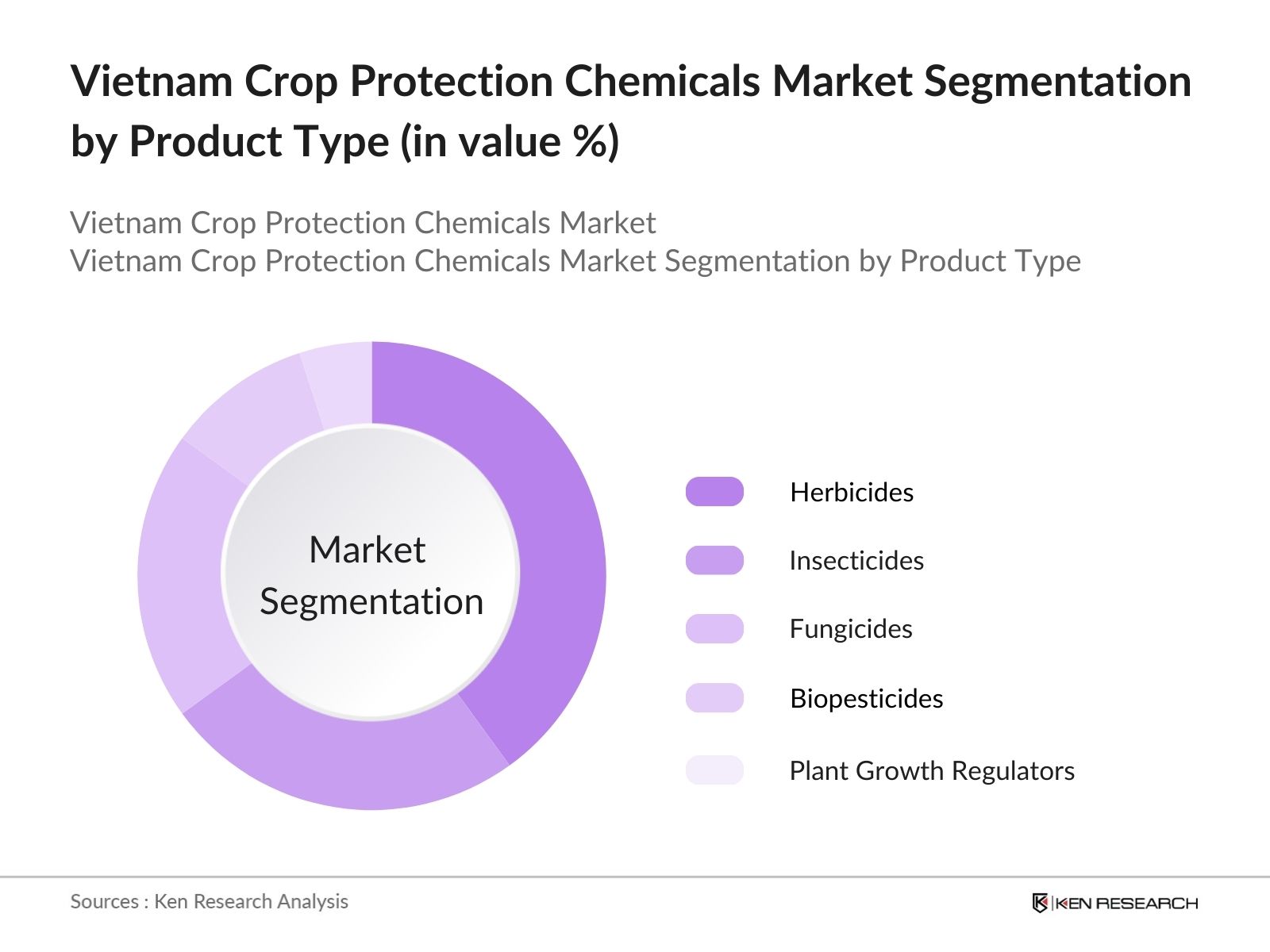
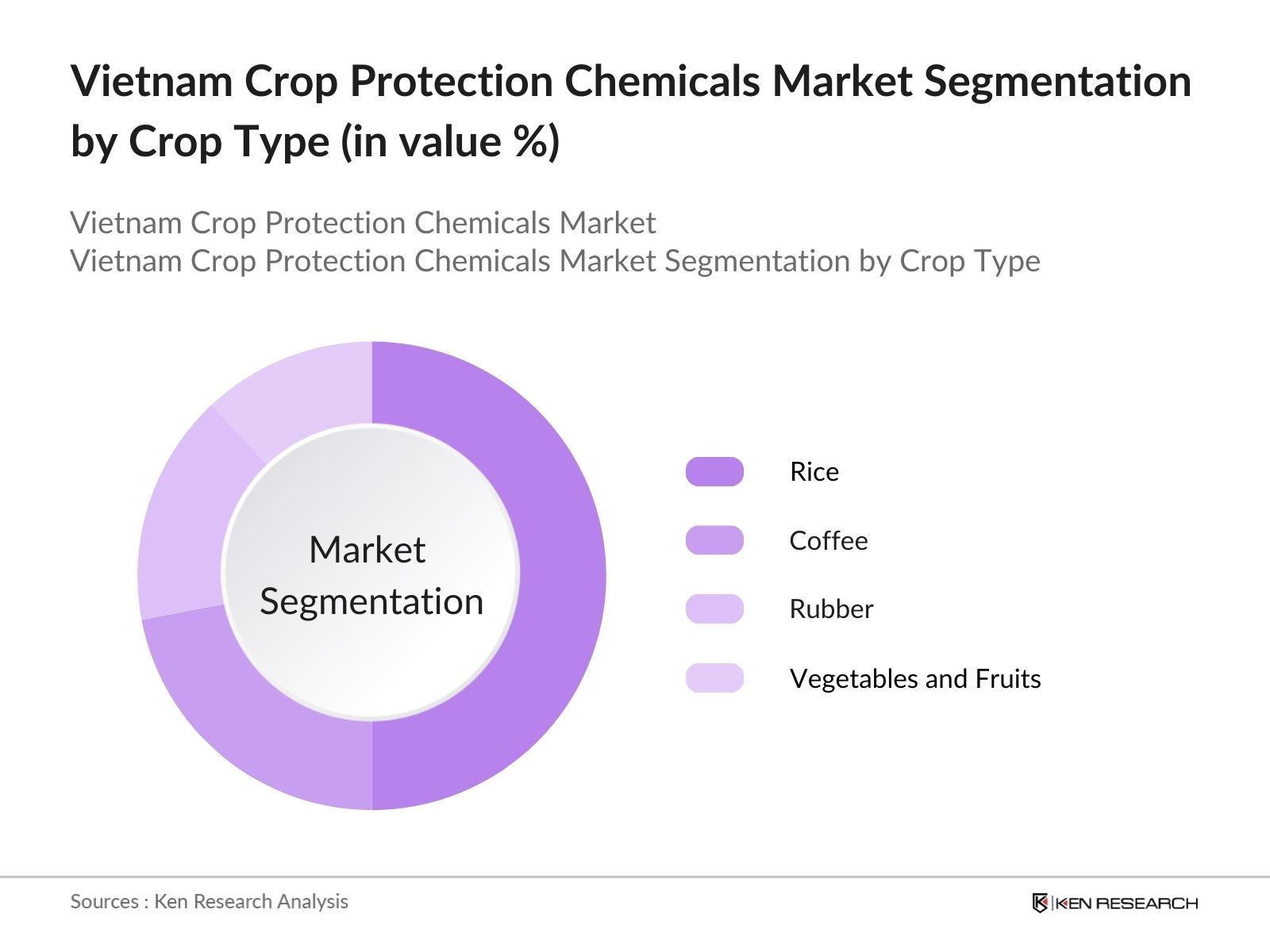
By Crop Type: The Vietnam crop protection chemicals market is segmented by crop type into rice, coffee, rubber, vegetables and fruits, and others (including cashew, pepper, and tea). Rice dominates the crop type segment, given its importance as the staple food and export product of Vietnam. The need for high productivity, better quality crops, and increasing pest and disease outbreaks has led to a high demand for crop protection chemicals in rice cultivation. The governments support for maintaining Vietnams position as one of the largest global rice exporters has also strengthened this segment.
The Vietnam Crop Protection Chemicals Market is highly competitive, with a mix of local and international players. Global giants such as Bayer CropScience AG, Syngenta AG, and BASF SE dominate the market alongside local firms that cater to region-specific demands. These companies are investing heavily in research and development to introduce more effective and sustainable crop protection solutions, such as bio-based products. The market is also witnessing several mergers, acquisitions, and strategic partnerships, further consolidating the market share among the top players.
|
Company |
Establishment Year |
Headquarters |
Revenue |
Market Share |
Distribution Network |
R&D Investment |
Sustainability Initiatives |
Product Range |
Local Partnerships |
|
Bayer CropScience AG |
1863 |
Germany |
|||||||
|
Syngenta AG |
2000 |
Switzerland |
|||||||
|
BASF SE |
1865 |
Germany |
|||||||
|
Corteva Agriscience |
2019 |
USA |
|||||||
|
Nufarm Limited |
1916 |
Australia |
Over the next five years, the Vietnam Crop Protection Chemicals Market is expected to grow significantly due to the rising demand for higher agricultural productivity and the need for sustainable farming practices. Government policies aimed at reducing post-harvest losses, increasing crop yields, and promoting eco-friendly agricultural inputs will drive the adoption of innovative crop protection chemicals. The shift toward bio-based chemicals and integrated pest management (IPM) solutions, coupled with advanced technologies such as precision farming, is expected to shape the market's future landscape.
The markets potential will also be influenced by increasing collaborations between local and international players, further improving the availability and accessibility of advanced crop protection products. This will enhance the resilience of the agricultural sector against pests, diseases, and the unpredictable impacts of climate change.
|
By Product Type |
Herbicides Insecticides Fungicides Biopesticides Plant Growth Regulators |
|
By Crop Type |
Rice, Coffee Rubber Vegetables and Fruits |
|
By Application Method |
Foliar Spray Seed Treatment Soil Treatment Post-Harvest Treatment |
|
By Origin |
Synthetic Chemicals Bio-based Chemicals |
|
By Region |
North East West South |
1.1. Definition and Scope
1.2. Market Taxonomy
1.3. Market Growth Rate
1.4. Market Segmentation Overview
2.1. Historical Market Size
2.2. Year-on-Year Growth Analysis
2.3. Key Market Developments and Milestones
3.1. Growth Drivers
3.1.1. Rising Agricultural Production (Rice, Coffee, Rubber)
3.1.2. Government Initiatives on Food Security
3.1.3. Increasing Adoption of Sustainable Agricultural Practices
3.1.4. Technological Advancements in Agrochemicals
3.2. Market Challenges
3.2.1. Regulatory Constraints (Pesticide Usage Regulations, Bans on Certain Chemicals)
3.2.2. High Research and Development Costs
3.2.3. Impact of Climate Change (Unpredictable Monsoons, Flooding)
3.3. Opportunities
3.3.1. Growth in Organic Farming
3.3.2. Expansion of Export Markets for Agricultural Products
3.3.3. Emerging Bio-based Crop Protection Solutions
3.4. Trends
3.4.1. Shift Towards Biopesticides and Bioherbicides
3.4.2. Precision Farming Integration
3.4.3. Partnerships between Agrochemical Companies and Tech Firms
3.5. Government Regulation
3.5.1. Ministry of Agriculture and Rural Development (MARD) Guidelines
3.5.2. Pesticide Regulation and Licensing Procedures
3.5.3. National Programs for Sustainable Agriculture (VN-SAP)
3.6. SWOT Analysis
3.7. Stakeholder Ecosystem (Local Distributors, Farmers, Government Bodies)
3.8. Porters Five Forces Analysis
3.9. Competitive Ecosystem
4.1. By Product Type (In Value %)
4.1.1. Herbicides
4.1.2. Insecticides
4.1.3. Fungicides
4.1.4. Biopesticides
4.1.5. Plant Growth Regulators
4.2. By Crop Type (In Value %)
4.2.1. Rice
4.2.2. Coffee
4.2.3. Rubber
4.2.4. Vegetables and Fruits
4.2.5. Others (Cashew, Pepper, Tea)
4.3. By Application Method (In Value %)
4.3.1. Foliar Spray
4.3.2. Seed Treatment
4.3.3. Soil Treatment
4.3.4. Post-Harvest Treatment
4.4. By Origin (In Value %)
4.4.1. Synthetic Chemicals
4.4.2. Bio-based Chemicals
4.5. By Region (In Value %)
4.5.1. North
4.5.2. East
4.5.3. West
4.5.4. South
5.1. Detailed Profiles of Major Companies
5.1.1. Syngenta AG
5.1.2. Bayer CropScience AG
5.1.3. BASF SE
5.1.4. Corteva Agriscience
5.1.5. Sumitomo Chemical Co. Ltd.
5.1.6. Nufarm Limited
5.1.7. FMC Corporation
5.1.8. UPL Limited
5.1.9. Adama Agricultural Solutions
5.1.10. Nihon Nohyaku Co., Ltd.
5.1.11. Albaugh LLC
5.1.12. Marrone Bio Innovations
5.1.13. DuPont
5.1.14. PI Industries Ltd.
5.1.15. Mitsui Chemicals Agro, Inc.
5.2. Cross Comparison Parameters (Market Share, Innovation Index, Production Volume, Sustainability Initiatives, Pricing Strategy, Distribution Network, Local Presence, Growth Rate)
5.3. Market Share Analysis
5.4. Strategic Initiatives
5.5. Mergers and Acquisitions
5.6. Investment Analysis
5.7. Government Grants and Support
5.8. Private Equity Investments
6.1. National Regulations and Guidelines for Pesticides
6.2. Import and Export Regulations (Chemical Imports and Exports)
6.3. Certification Requirements for Crop Protection Products
6.4. Compliance with International Agricultural Standards (GAP, HACCP, Codex)
7.1. Future Market Size Projections
7.2. Key Factors Driving Future Market Growth
8.1. By Product Type (In Value %)
8.2. By Crop Type (In Value %)
8.3. By Application Method (In Value %)
8.4. By Origin (In Value %)
8.5. By Region (In Value %)
9.1. TAM/SAM/SOM Analysis
9.2. Consumer Insights and Segmentation Analysis
9.3. Strategic Marketing and Business Initiatives
9.4. White Space Opportunity Analysis
The initial phase involves constructing an ecosystem map encompassing all major stakeholders within the Vietnam Crop Protection Chemicals Market. This step is underpinned by extensive desk research, utilizing a combination of secondary and proprietary databases to gather comprehensive industry-level information. The primary objective is to identify and define the critical variables that influence market dynamics.
In this phase, we compile and analyze historical data pertaining to the Vietnam Crop Protection Chemicals Market. This includes assessing market penetration, the ratio of manufacturers to distributors, and revenue generation. An evaluation of product quality statistics is conducted to ensure the reliability and accuracy of revenue estimates.
Market hypotheses are developed and subsequently validated through interviews with industry experts. These consultations provide valuable operational and financial insights directly from practitioners, which are instrumental in refining and corroborating the market data.
The final phase involves engagement with major crop protection chemical manufacturers to acquire detailed insights into product segments, sales performance, and other pertinent factors. This interaction verifies and complements the statistics derived from the bottom-up approach, ensuring a comprehensive and accurate analysis of the market.
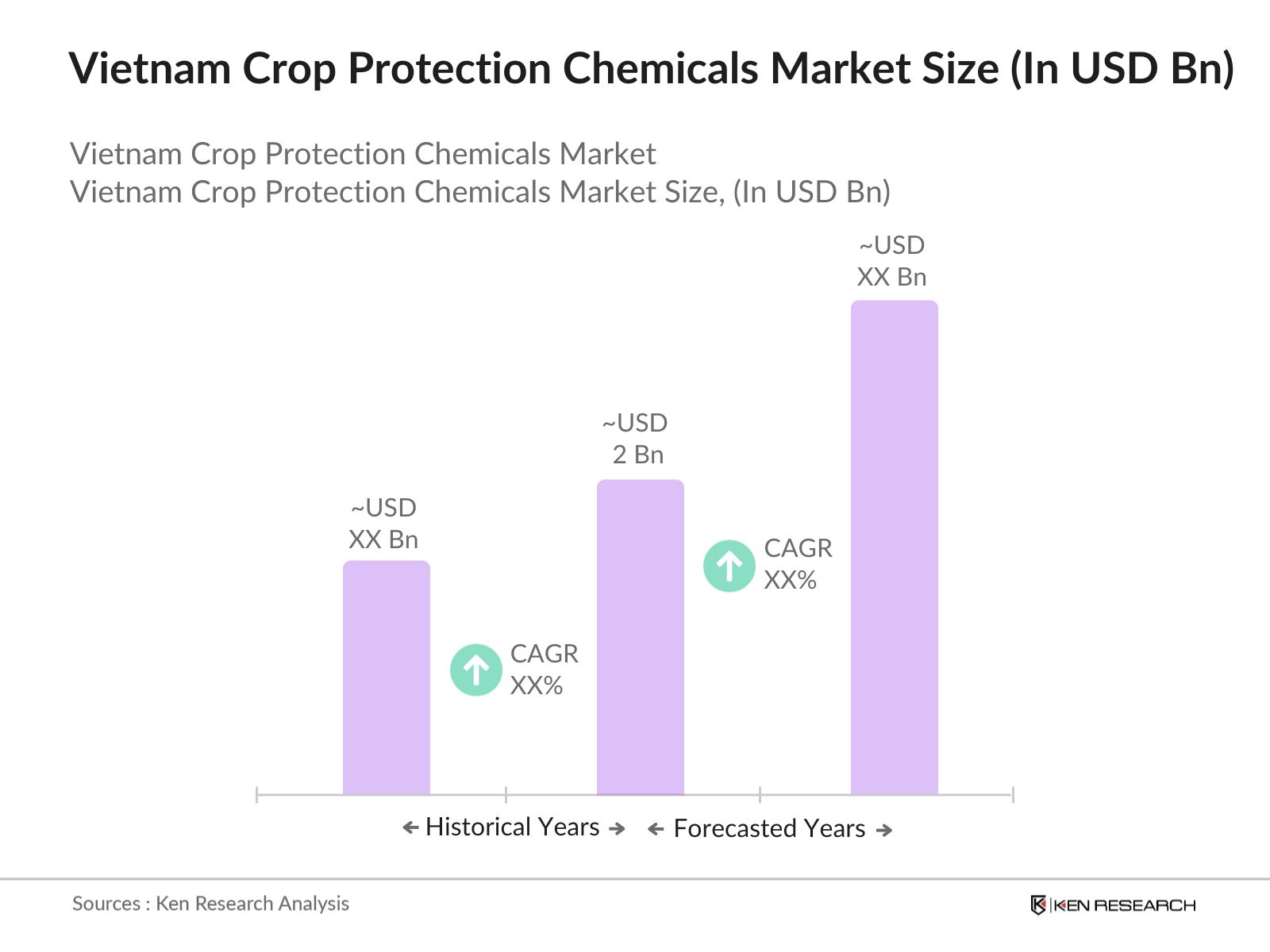
The Vietnam Crop Protection Chemicals Market is valued at USD 2 billion. This growth is driven by the rising demand for crop protection products to combat pest infestations and improve agricultural productivity.
Major challenges include stringent government regulations on chemical usage, the rising costs of research and development, and the increasing need for sustainable and bio-based products to reduce environmental impact.
Key players in the market include Bayer CropScience AG, Syngenta AG, BASF SE, Corteva Agriscience, and Nufarm Limited. These companies dominate due to their global presence, extensive product portfolios, and strong distribution networks.
The market is driven by factors such as rising agricultural production, increasing pest and disease outbreaks, government initiatives for food security, and the growing adoption of sustainable farming practices.
Notable trends include the shift toward bio-based crop protection solutions, increasing use of precision farming techniques, and collaborations between local and international chemical manufacturers to promote innovation and sustainability.

What makes us stand out is that our consultants follows Robust, Refine and Result (RRR) methodology. i.e. Robust for clear definitions, approaches and sanity checking, Refine for differentiating respondents facts and opinions and Result for presenting data with story

We have set a benchmark in the industry by offering our clients with syndicated and customized market research reports featuring coverage of entire market as well as meticulous research and analyst insights.

While we don't replace traditional research, we flip the method upside down. Our dual approach of Top Bottom & Bottom Top ensures quality deliverable by not just verifying company fundamentals but also looking at the sector and macroeconomic factors.

With one step in the future, our research team constantly tries to show you the bigger picture. We help with some of the tough questions you may encounter along the way: How is the industry positioned? Best marketing channel? KPI's of competitors? By aligning every element, we help maximize success.

Our report gives you instant access to the answers and sources that other companies might choose to hide. We elaborate each steps of research methodology we have used and showcase you the sample size to earn your trust.

If you need any support, we are here! We pride ourselves on universe strength, data quality, and quick, friendly, and professional service.