
Vietnam Freight and Logistics Market Outlook to 2030
Region:Vietnam
Author(s):Yogita Sahu
Product Code:KROD7864
Region:Vietnam
Author(s):Yogita Sahu
Product Code:KROD7864
November 2024
81
Listen to the audio summary
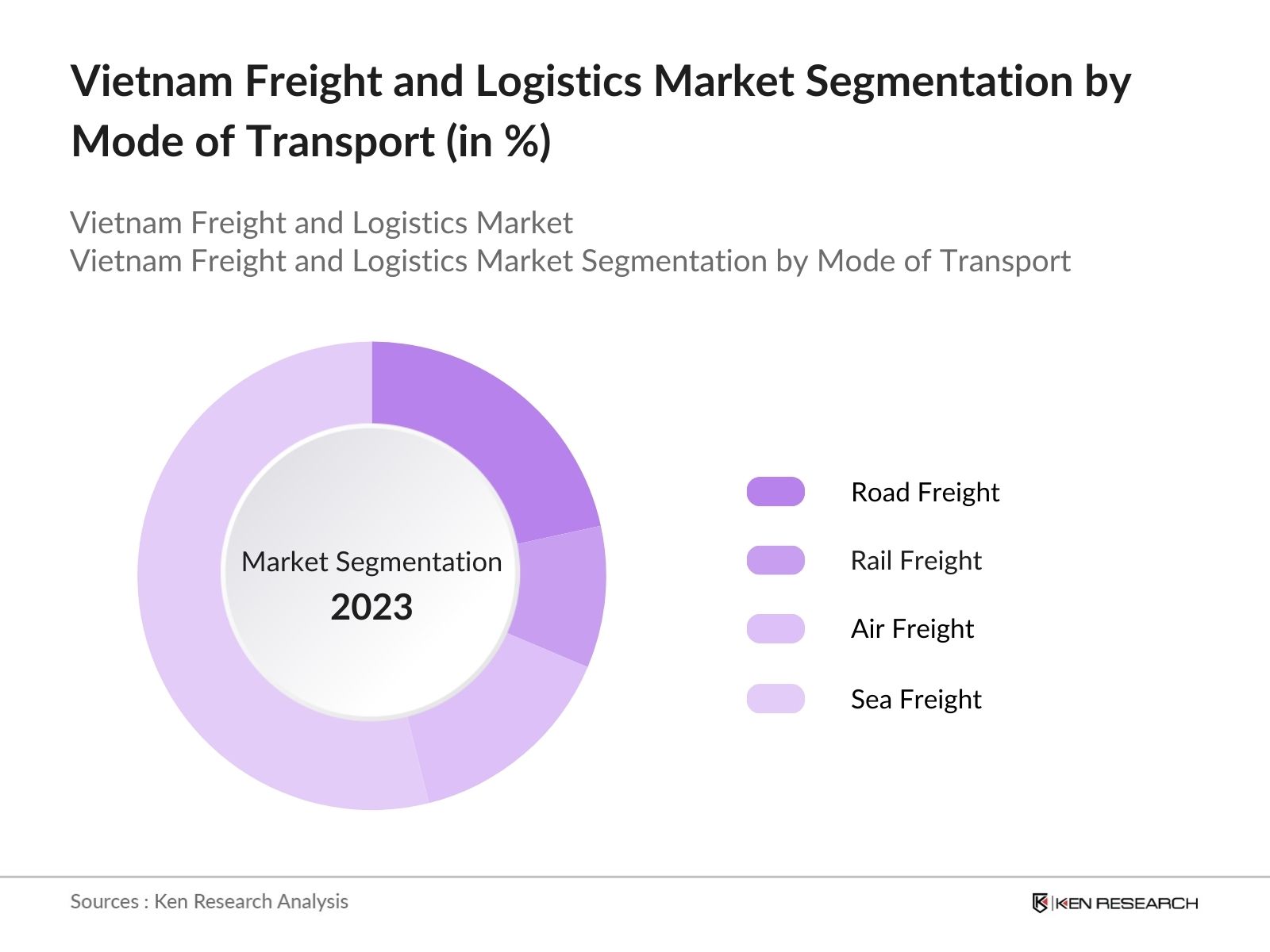
By Mode of Transport: The market is segmented by mode of transport into road freight, rail freight, air freight, and sea freight. Among these, sea freight holds the largest share, driven by Vietnam's extensive coastline and its strategic importance for international trade. The presence of major ports such as Hai Phong and Tan Cang-Cat Lai Port in Ho Chi Minh City allows sea freight to dominate the logistics market, handling the bulk of imports and exports. Sea freight's dominance is further reinforced by increasing investments in port infrastructure to accommodate larger vessels and improve handling efficiency.
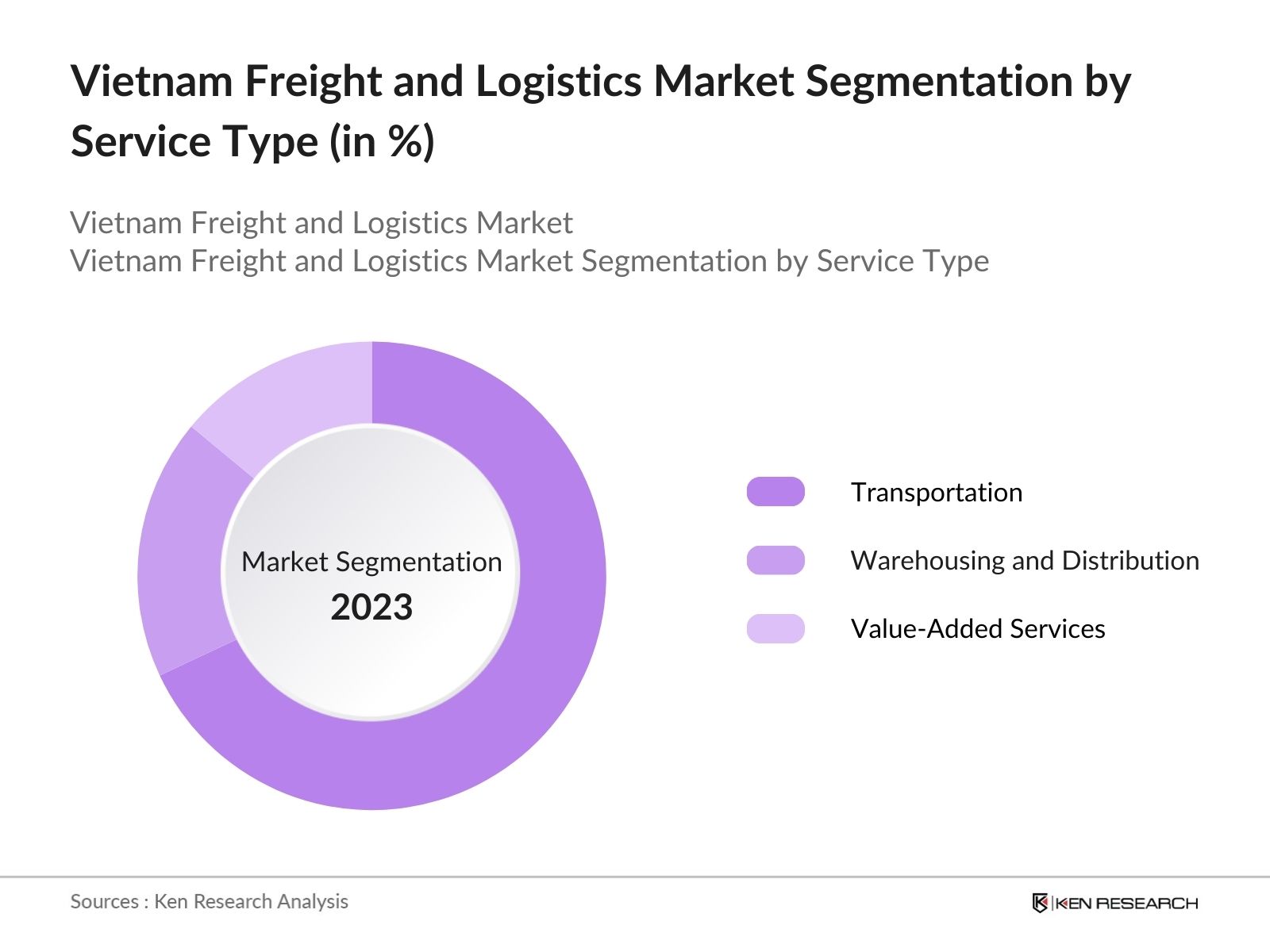
By Service Type: The market is segmented by service type into transportation, warehousing and distribution, and value-added services such as customs clearance and packaging. Transportation services dominate the market, accounting for the largest share due to the high demand for efficient and cost-effective goods movement. The rapid expansion of the e-commerce sector, manufacturing, and cross-border trade in Vietnam has accelerated the need for reliable transportation services. Companies continue to focus on expanding their fleet sizes, enhancing their supply chain capabilities, and integrating technology to optimize operations, which has further solidified transportation as the leading service type in the logistics industry.
The market is characterized by a mix of local and global players, with a few large companies dominating the market. Key players like Gemadept Corporation and Transimex Corporation lead the market due to their extensive logistics networks and investments in technology to enhance operational efficiency.
|
Company Name |
Establishment Year |
Headquarters |
Fleet Size |
Technology Integration |
Revenue |
No. of Employees |
Service Coverage |
Operational Reach |
|
Gemadept Corporation |
1990 |
Ho Chi Minh City |
||||||
|
Transimex Corporation |
1983 |
Ho Chi Minh City |
||||||
|
DHL Vietnam |
1969 |
Bonn, Germany |
||||||
|
FedEx Vietnam |
1971 |
Memphis, USA |
||||||
|
Saigon Newport Corporation |
1989 |
Ho Chi Minh City |
Over the next five years, the Vietnam Freight and Logistics industry is expected to experience growth driven by increasing international trade, the rise of the e-commerce sector, and government initiatives to enhance logistics infrastructure.
|
By Mode of Transport |
Road Freight Rail Freight Air Freight Sea Freight |
|
By Service Type |
Transportation Warehousing and Distribution Value-Added Services (Customs Clearance, Packaging) |
|
By End-User Industry |
Manufacturing Retail and FMCG Healthcare and Pharmaceuticals Chemicals |
|
By Region |
North East West South |
|
By Logistics Providers |
First-Party Logistics (1PL) Second-Party Logistics (2PL) Third-Party Logistics (3PL) Fourth-Party Logistics (4PL) |
1.1. Definition and Scope
1.2. Market Taxonomy
1.3. Market Growth Rate
1.4. Market Segmentation Overview
2.1. Historical Market Size
2.2. Year-On-Year Growth Analysis
2.3. Key Market Developments and Milestones
3.1. Growth Drivers
3.1.1. Trade Liberalization and Free Trade Agreements
3.1.2. Infrastructure Investments
3.1.3. Rising E-commerce Demand
3.1.4. Government Support for Logistics and Transportation Development
3.2. Market Challenges
3.2.1. Fragmented Supply Chain
3.2.2. High Operational Costs
3.2.3. Regulatory Bottlenecks
3.2.4. Limited Skilled Workforce
3.3. Opportunities
3.3.1. Integration of Digital Solutions in Freight Management
3.3.2. Expansion of Cold Chain Logistics
3.3.3. Increasing Investment in Green Logistics
3.3.4. Cross-Border Trade Expansion
3.4. Trends
3.4.1. Automation in Warehousing and Transportation
3.4.2. Expansion of Last-Mile Delivery Services
3.4.3. Integration of Blockchain for Transparency
3.4.4. Rising Focus on Sustainable Logistics
3.5. Government Regulation
3.5.1. National Logistics Development Plan
3.5.2. Regulatory Reforms in Trade Facilitation
3.5.3. Public-Private Partnerships for Infrastructure Development
3.5.4. Compliance to ASEAN Trade Facilitation Framework
3.6. SWOT Analysis
3.7. Stake Ecosystem
3.8. Porters Five Forces Analysis
3.9. Competition Ecosystem
4.1. By Mode of Transport (In Value %)
4.1.1. Road Freight
4.1.2. Rail Freight
4.1.3. Air Freight
4.1.4. Sea Freight
4.2. By Service Type (In Value %)
4.2.1. Transportation
4.2.2. Warehousing and Distribution
4.2.3. Value-Added Services (Customs Clearance, Packaging)
4.3. By End-User Industry (In Value %)
4.3.1. Manufacturing
4.3.2. Retail and FMCG
4.3.3. Healthcare and Pharmaceuticals
4.3.4. Chemicals
4.4. By Region (In Value %)
4.4.1. North
4.4.2. West
4.4.3. South
4.4.4. East
4.5. By Logistics Providers (In Value %)
4.5.1. First-Party Logistics (1PL)
4.5.2. Second-Party Logistics (2PL)
4.5.3. Third-Party Logistics (3PL)
4.5.4. Fourth-Party Logistics (4PL)
5.1. Detailed Profiles of Major Companies
5.1.1. Gemadept Corporation
5.1.2. Vietnam Airlines Cargo
5.1.3. Transimex Corporation
5.1.4. ITL Corporation
5.1.5. Saigon Newport Corporation
5.1.6. DHL Vietnam
5.1.7. FedEx Vietnam
5.1.8. Viettel Post
5.1.9. Kerry Logistics Vietnam
5.1.10. Nippon Express Vietnam
5.1.11. DB Schenker Vietnam
5.1.12. Yusen Logistics Vietnam
5.1.13. Kuehne + Nagel Vietnam
5.1.14. APL Logistics Vietnam
5.1.15. CJ Logistics Vietnam
5.2. Cross Comparison Parameters (No. of Employees, Headquarters, Revenue, Market Share, Fleet Size, Operational Reach, Technological Integration, Service Offerings)
5.3. Market Share Analysis
5.4. Strategic Initiatives
5.5. Mergers and Acquisitions
5.6. Investment Analysis
5.7. Venture Capital Funding
5.8. Government Grants
5.9. Private Equity Investments
6.1. Trade and Customs Regulations
6.2. Environmental Standards for Logistics Operations
6.3. Certification Processes for Freight and Logistics Providers
7.1. Future Market Size Projections
7.2. Key Factors Driving Future Market Growth
8.1. By Mode of Transport (In Value %)
8.2. By Service Type (In Value %)
8.3. By End-User Industry (In Value %)
8.4. By Region (In Value %)
8.5. By Logistics Providers (In Value %)
9.1. TAM/SAM/SOM Analysis
9.2. Customer Cohort Analysis
9.3. Marketing Initiatives
9.4. White Space Opportunity Analysis
The initial phase focuses on mapping the entire Vietnam Freight and Logistics ecosystem, identifying key stakeholders such as logistics service providers, freight forwarders, and government bodies. Extensive secondary research was conducted to gather information on market drivers, challenges, and trends, helping to identify the critical variables impacting the market.
This phase involved analyzing historical data, such as market size and transportation demand, for a comprehensive understanding of the market landscape. The assessment of different modes of transport, service types, and logistics providers was crucial to construct an accurate picture of the market's current state.
Key market hypotheses were developed based on historical data and trends and validated through expert consultations with industry professionals. These interviews provided insights into operational and financial dynamics, which further enriched the research findings and improved data accuracy.
The final phase integrated insights from leading logistics companies, which were cross-verified through multiple approaches. This allowed for the creation of a comprehensive market report that encompasses both quantitative and qualitative insights into the Vietnam Freight and Logistics market.
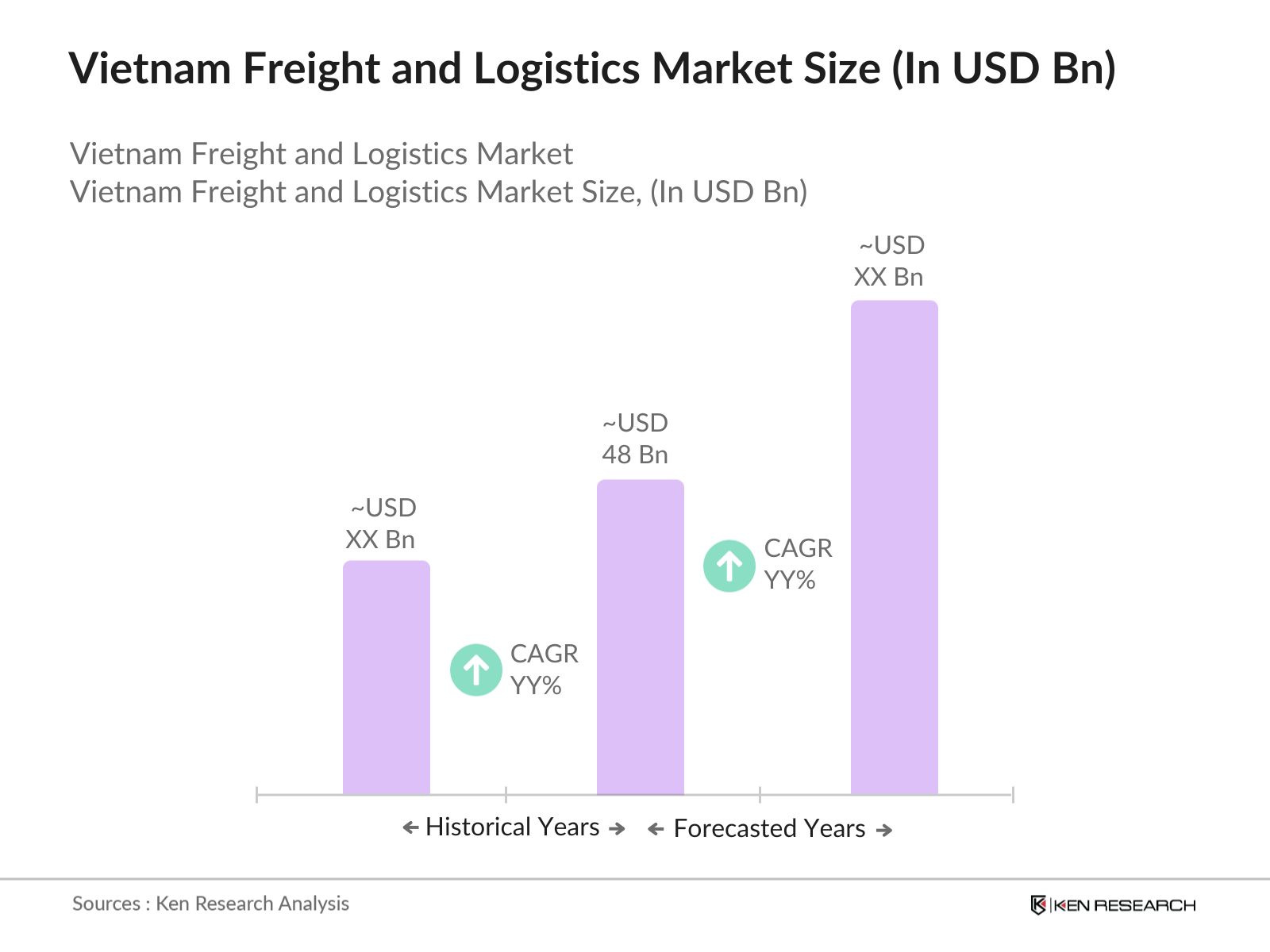
The Vietnam Freight and Logistics market is valued at USD 48 billion, driven by increasing infrastructure investments, booming e-commerce, and its strategic role in international trade routes.
Challenges in the Vietnam Freight and Logistics market include a fragmented supply chain, high operational costs, regulatory hurdles, and a lack of skilled workforce, which continue to hamper the industry's overall efficiency.
Key players in the Vietnam Freight and Logistics market include Gemadept Corporation, Transimex Corporation, DHL Vietnam, FedEx Vietnam, and ITL Corporation, all of which dominate due to their extensive networks and technological integration.
Growth drivers in the Vietnam Freight and Logistics market include trade liberalization, infrastructure investments, rising e-commerce demand, and government support for logistics and transportation infrastructure.
The Vietnam Freight and Logistics market is expected to experience growth, driven by enhanced port facilities, the expansion of road and rail networks, and the adoption of new technologies to optimize supply chains.

What makes us stand out is that our consultants follows Robust, Refine and Result (RRR) methodology. i.e. Robust for clear definitions, approaches and sanity checking, Refine for differentiating respondents facts and opinions and Result for presenting data with story

We have set a benchmark in the industry by offering our clients with syndicated and customized market research reports featuring coverage of entire market as well as meticulous research and analyst insights.

While we don't replace traditional research, we flip the method upside down. Our dual approach of Top Bottom & Bottom Top ensures quality deliverable by not just verifying company fundamentals but also looking at the sector and macroeconomic factors.

With one step in the future, our research team constantly tries to show you the bigger picture. We help with some of the tough questions you may encounter along the way: How is the industry positioned? Best marketing channel? KPI's of competitors? By aligning every element, we help maximize success.

Our report gives you instant access to the answers and sources that other companies might choose to hide. We elaborate each steps of research methodology we have used and showcase you the sample size to earn your trust.

If you need any support, we are here! We pride ourselves on universe strength, data quality, and quick, friendly, and professional service.