
Vietnam Home Improvement Market Outlook to 2030
Region:Vietnam
Author(s):Shubham Kashyap
Product Code:KROD4019
Region:Vietnam
Author(s):Shubham Kashyap
Product Code:KROD4019
December 2024
97
The Vietnam Home Improvement Market is highly competitive, with both local and international players vying for market share. Domestic companies such as Hoa Phat Group and Eurowindow dominate the furniture and construction materials segments, while international brands like IKEA and Home Depot have established strong presences, particularly in the DIY and home dcor segments. The market is characterized by a growing emphasis on quality, innovation, and sustainability, with companies increasingly adopting eco-friendly practices and materials. Strategic initiatives such as partnerships with local distributors and investment in digital transformation are helping companies strengthen their positions in the Vietnamese home improvement market.
|
Company Name |
Establishment Year |
Headquarters |
Key Products |
Revenue |
R&D Investments |
Market Reach |
Sustainability Initiatives |
Export Markets |
Certifications |
|
Hoa Phat Group |
1992 |
Hanoi, Vietnam |
|||||||
|
Eurowindow |
2002 |
Hanoi, Vietnam |
|||||||
|
IKEA |
1943 |
Sweden |
|||||||
|
Home Depot |
1978 |
Georgia, USA |
|||||||
|
Dulux (AkzoNobel) |
1969 |
Amsterdam, Netherlands |
Growth Drivers
Market Challenges
The Vietnam Home Improvement Market is expected to continue its upward trajectory, driven by ongoing urbanization, rising disposable incomes, and a growing preference for modern, functional living spaces. The market is projected to grow remarkably with both construction materials and furniture segments seeing growth.
The adoption of smart home technologies is also expected to shape the future of the market, with consumers increasingly seeking tech-enabled solutions for their homes. Companies are likely to invest in product innovation and sustainable practices to meet evolving consumer preferences.
Future Market Opportunities
|
By Product Type |
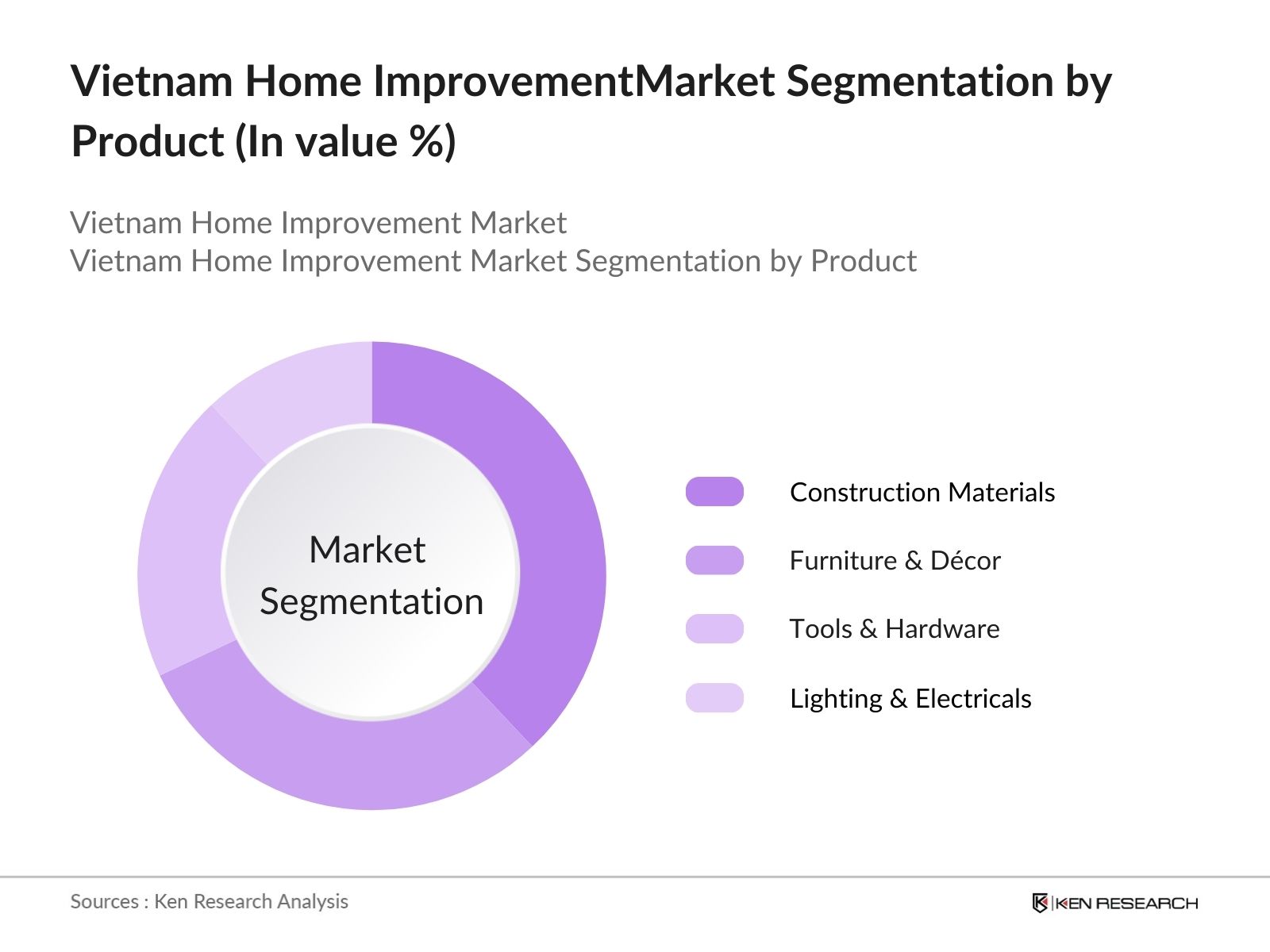
Construction Materials Furniture & Dcor Tools & Hardware Lighting & Electricals |
|
By Application |
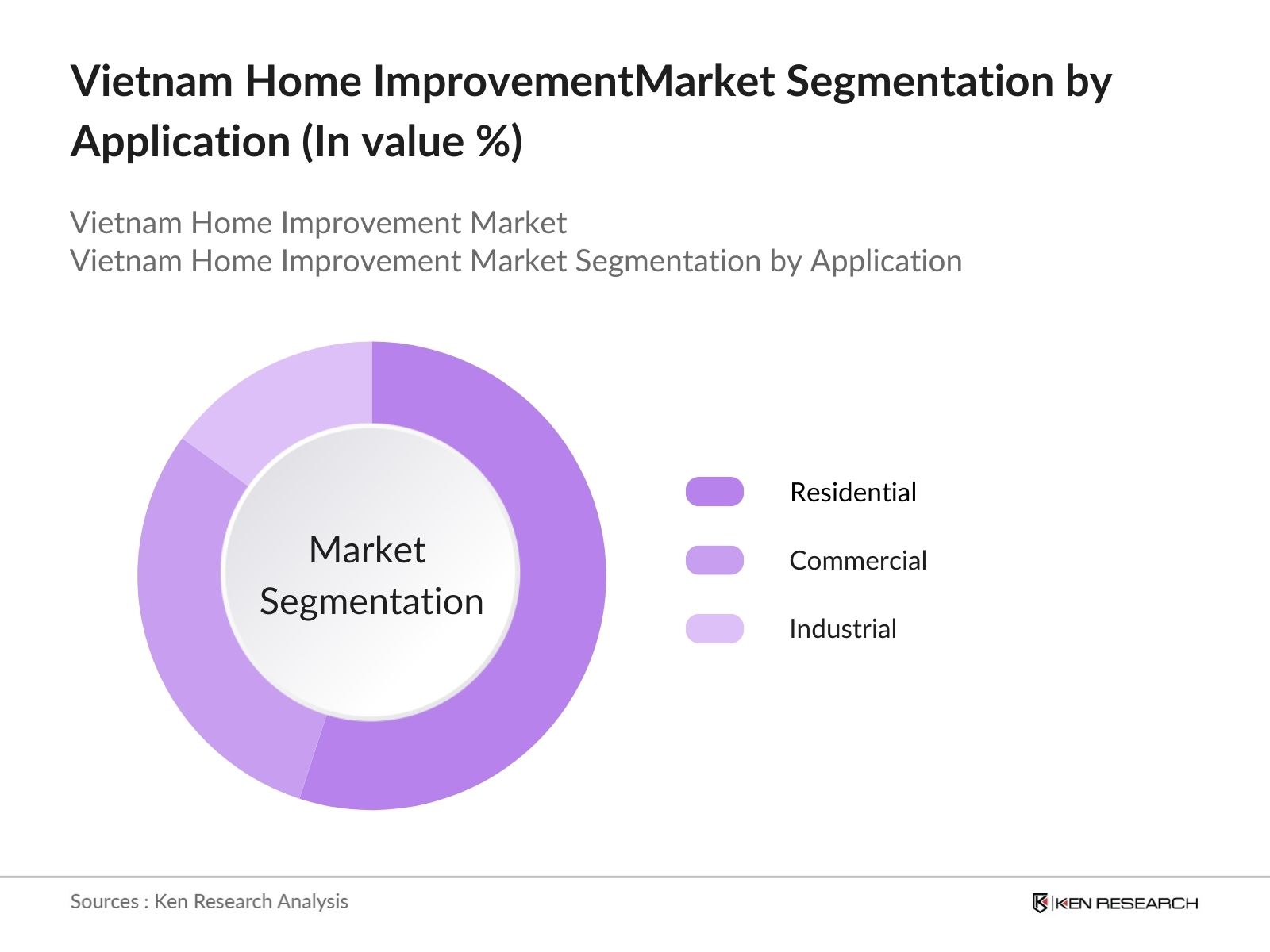
Residential Commercial Industrial |
|
By Distribution Channel |
Offline Retail Online Retail |
|
By Technology |
Smart Home Integration Modular Construction |
|
By Region |
Northern Vietnam Central Vietnam Southern Vietnam |
1.1. Definition and Scope
1.2. Market Taxonomy
1.3. Market Growth Rate
1.4. Market Segmentation Overview
2.1. Historical Market Size
2.2. Year-on-Year Growth Analysis
2.3. Key Market Developments and Milestones
3.1. Growth Drivers (Urbanization, Rising Disposable Income, Technological Advancements)
3.1.1. Urbanization and Rising Residential Developments
3.1.2. Increased Consumer Spending on Home Renovation
3.1.3. Technological Advancements in Construction Materials
3.1.4. Integration of Smart Home Technologies
3.2. Market Challenges (Material Cost Fluctuations, Labor Shortages, Environmental Regulations)
3.2.1. Fluctuating Raw Material Prices
3.2.2. Shortage of Skilled Workforce in Renovation Projects
3.2.3. Environmental Regulations on Construction Materials
3.3. Opportunities (E-Commerce Growth, Sustainable Building Solutions)
3.3.1. Expansion of E-Commerce Platforms for Home Improvement Products
3.3.2. Rising Demand for Sustainable and Eco-friendly Materials
3.3.3. Growing Popularity of DIY Home Improvement Solutions
3.4. Trends (Minimalistic Designs, Smart Home Integration, Modular Construction)
3.4.1. Increasing Adoption of Minimalistic and Space-saving Designs
3.4.2. Integration of Smart Home Devices into Renovation Projects
3.4.3. Modular Construction and Prefabrication Techniques
3.5. Government Regulations (Housing Development Initiatives, Construction Standards)
3.5.1. National Housing Development Policies
3.5.2. Construction Standards and Environmental Compliance
3.5.3. Tax Incentives for Green Construction Projects
3.6. SWOT Analysis
3.7. Stakeholder Ecosystem (Developers, Contractors, Suppliers)
3.8. Porters Five Forces Analysis
3.9. Competition Ecosystem (Market Fragmentation, Key Players Competitive Strategies)
4.1. By Product Type (In Value %)
4.1.1. Construction Materials (Bricks, Cement, Paints, Tiles)
4.1.2. Furniture & Dcor (Living Room Furniture, Bedroom Furniture, Kitchen Cabinets)
4.1.3. Tools & Hardware (Hand Tools, Power Tools, DIY Kits)
4.1.4. Lighting & Electricals (LEDs, Smart Lighting, Electrical Fixtures)
4.2. By Application (In Value %)
4.2.1. Residential (Single-family Homes, Apartments)
4.2.2. Commercial (Retail Spaces, Office Buildings)
4.2.3. Industrial (Warehouses, Factories)
4.3. By Distribution Channel (In Value %)
4.3.1. Offline Retail (Hardware Stores, Specialty Stores, Showrooms)
4.3.2. Online Retail (E-commerce Platforms, Company Websites)
4.4. By Technology (In Value %)
4.4.1. Smart Home Integration (Smart Security, Smart Thermostats, Automated Lighting)
4.4.2. Modular Construction (Prefabricated Walls, Prefab Interiors)
4.5. By Region (In Value %)
4.5.1. Northern Vietnam (Hanoi, Haiphong)
4.5.2. Central Vietnam (Da Nang, Hue)
4.5.3. Southern Vietnam (Ho Chi Minh City, Can Tho)
5.1. Detailed Profiles of Major Companies
5.1.1. Hoa Phat Group
5.1.2. Eurowindow
5.1.3. IKEA
5.1.4. Home Depot
5.1.5. TOTO Vietnam
5.1.6. SCG Vietnam
5.1.7. Dulux Vietnam (AkzoNobel)
5.1.8. Kingspan Insulation Vietnam
5.1.9. Vietceramics
5.1.10. Hafele Vietnam
5.1.11. Jotun Vietnam
5.1.12. Nippon Paint Vietnam
5.1.13. Lixil Vietnam
5.1.14. Unilever Vietnam (Home Care Products)
5.1.15. Rinnai Vietnam
5.2. Cross Comparison Parameters (Market Share, Revenue, Key Products, Certifications, R&D Investments, Sustainability Initiatives, Regional Presence, Export Markets)
5.3. Market Share Analysis
5.4. Strategic Initiatives (Partnerships, New Product Launches, Technological Innovation)
5.5. Mergers and Acquisitions
5.6. Investment Analysis
5.7. Government Grants and Support
5.8. Venture Capital Funding
5.9. Private Equity Investments
6.1. Building Codes and Compliance Standards
6.2. Environmental Regulations for Construction Materials
6.3. Energy Efficiency Standards for Buildings
7.1. Future Market Size Projections
7.2. Key Factors Driving Future Market Growth
8.1. By Product Type (In Value %)
8.2. By Application (In Value %)
8.3. By Distribution Channel (In Value %)
8.4. By Technology (In Value %)
8.5. By Region (In Value %)
9.1. TAM/SAM/SOM Analysis
9.2. Customer Segmentation Analysis
9.3. Marketing Initiatives
9.4. White Space Opportunity Analysis
The initial phase involves constructing an ecosystem map encompassing all major stakeholders within the Vietnam Home Improvement Market. This step is underpinned by extensive desk research, utilizing a combination of secondary and proprietary databases to gather comprehensive industry-level information. The primary objective is to identify and define the critical variables that influence market dynamics.
In this phase, we will compile and analyze historical data pertaining to the Vietnam Home Improvement Market. This includes assessing market penetration, the ratio of marketplaces to service providers, and the resultant revenue generation. Furthermore, an evaluation of service quality statistics will be conducted to ensure the reliability and accuracy of the revenue estimates.
Market hypotheses will be developed and subsequently validated through computer-assisted telephone interviews (CATIs) with industry experts representing a diverse array of companies. These consultations will provide valuable operational and financial insights directly from industry practitioners, which will be instrumental in refining and corroborating the market data.
The final phase involves direct engagement with multiple home improvement manufacturers to acquire detailed insights into product segments, sales performance, consumer preferences, and other pertinent factors. This interaction will serve to verify and complement the statistics derived from the bottom-up approach, thereby ensuring a comprehensive, accurate, and validated analysis of the Vietnam Home Improvement market.
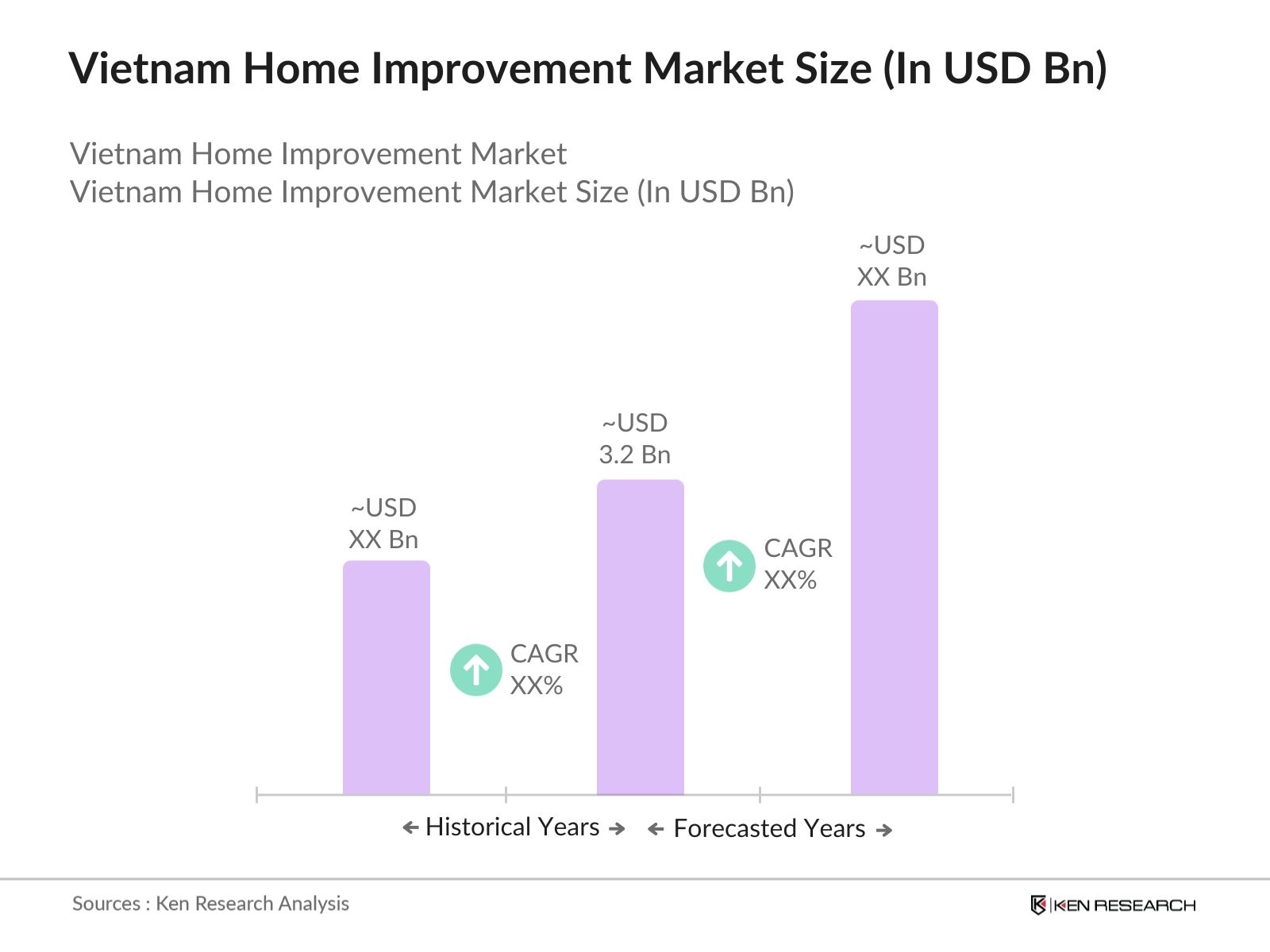
The Vietnam Home Improvement market is valued at USD 3.2 billion, driven by rising consumer demand for renovations, home upgrades, and the adoption of smart home technologies.
Challenges in the Vietnam Home Improvement market include fluctuating material costs, labor shortages, and stringent environmental regulations for construction materials. These issues impact profitability and project timelines.
Key players in the Vietnam Home Improvement market include Hoa Phat Group, Eurowindow, IKEA, Home Depot, and Dulux (AkzoNobel), all of whom dominate due to their extensive product offerings and strong market presence.
The Vietnam Home Improvement market is driven by factors such as urbanization, rising disposable incomes, and the growing popularity of DIY home improvement projects. Sustainable building materials are also seeing increased demand.

What makes us stand out is that our consultants follows Robust, Refine and Result (RRR) methodology. i.e. Robust for clear definitions, approaches and sanity checking, Refine for differentiating respondents facts and opinions and Result for presenting data with story

We have set a benchmark in the industry by offering our clients with syndicated and customized market research reports featuring coverage of entire market as well as meticulous research and analyst insights.

While we don't replace traditional research, we flip the method upside down. Our dual approach of Top Bottom & Bottom Top ensures quality deliverable by not just verifying company fundamentals but also looking at the sector and macroeconomic factors.

With one step in the future, our research team constantly tries to show you the bigger picture. We help with some of the tough questions you may encounter along the way: How is the industry positioned? Best marketing channel? KPI's of competitors? By aligning every element, we help maximize success.

Our report gives you instant access to the answers and sources that other companies might choose to hide. We elaborate each steps of research methodology we have used and showcase you the sample size to earn your trust.

If you need any support, we are here! We pride ourselves on universe strength, data quality, and quick, friendly, and professional service.