
Vietnam Metaverse Market Outlook to 2030
Region:Vietnam
Author(s):Sanjna
Product Code:KROD4352
Region:Vietnam
Author(s):Sanjna
Product Code:KROD4352
November 2024
82
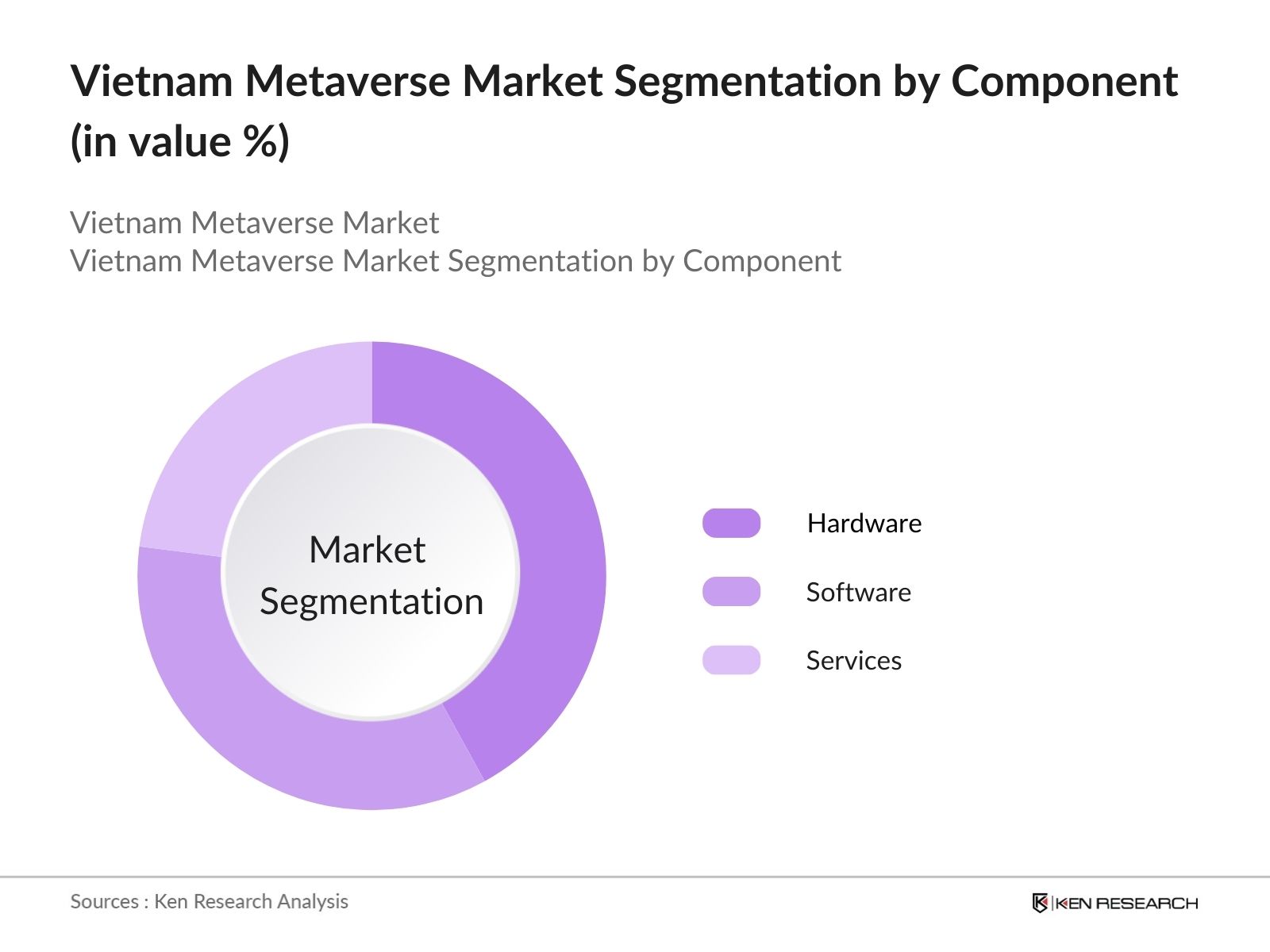
By Component: Vietnams metaverse market is segmented by component into hardware, software, and services. Recently, hardware has had a dominant market share under this segmentation due to the increasing demand for VR/AR devices and headsets. Companies like Facebook (Meta) and HTC are investing heavily in developing advanced VR headsets to enhance user experience in the metaverse. This has accelerated hardware adoption in Vietnam, where gaming and social interaction drive demand. VR/AR headsets are especially popular among younger consumers, contributing to this segment's growth.
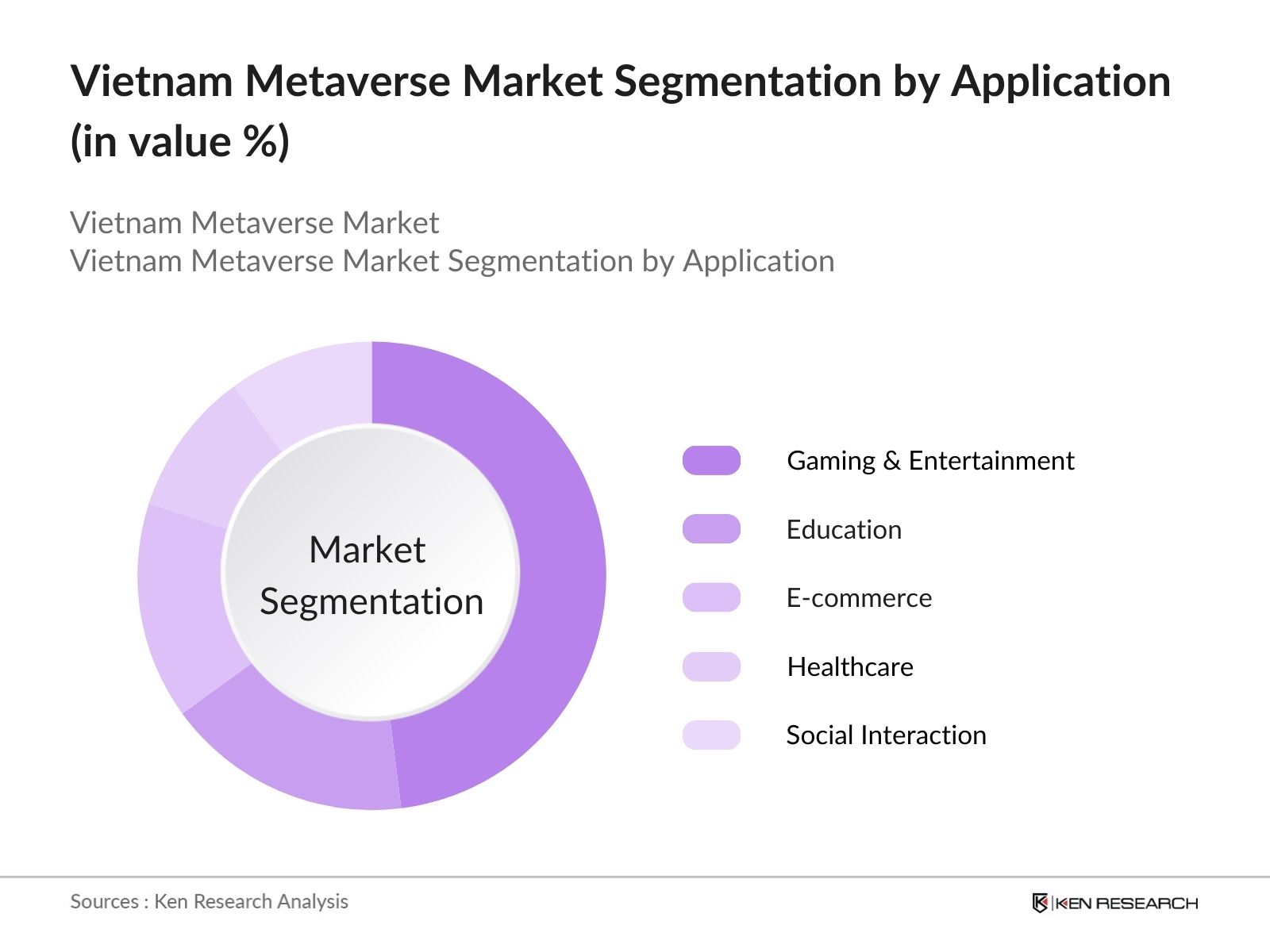
By Application: Vietnams metaverse market is also segmented by application into gaming and entertainment, education, e-commerce, healthcare, and social interaction. The gaming and entertainment sector has emerged as the dominant application due to the growing gaming community in Vietnam, where immersive experiences in virtual worlds are highly sought after. International gaming platforms such as Roblox and Decentraland are popular among Vietnamese users, further solidifying the dominance of this application.
The Vietnam Metaverse market is dominated by several key players, including global giants and regional leaders. These companies play a pivotal role in shaping the landscape by investing in R&D, partnerships, and new product launches. Major players like Meta Platforms and Microsoft leverage their established technologies to enhance user experience in the metaverse. Local startups are also gaining traction by offering niche products and services tailored to Vietnamese consumers.
|
Company Name |
Establishment Year |
Headquarters |
Key Technologies |
Revenue (USD) |
Market Reach |
Partnerships |
Notable Projects |
|
Facebook (Meta) |
2004 |
Menlo Park, USA |
- |
- |
- |
- |
- |
|
Roblox Corporation |
2004 |
San Mateo, USA |
- |
- |
- |
- |
- |
|
Decentraland |
2017 |
Buenos Aires, ARG |
- |
- |
- |
- |
- |
|
Axie Infinity |
2018 |
Ho Chi Minh City |
- |
- |
- |
- |
- |
|
The Sandbox |
2012 |
Hong Kong |
- |
- |
- |
- |
- |
Growth Drivers
Challenges
Over the next five years, the Vietnam Metaverse market is expected to show significant growth driven by increasing investments in immersive technologies, rising internet penetration, and the government's focus on building a robust digital economy. The market's expansion will be fueled by ongoing advancements in virtual reality, augmented reality, and blockchain technologies. As Vietnam continues to digitize, businesses across various sectorsgaming, retail, and healthcarewill increasingly adopt metaverse solutions to enhance user engagement and streamline operations.
Market Opportunities
|
Segment |
Sub-segments |
|
By Component |
Hardware Software Services |
|
By Application |
Gaming and Entertainment Education E-Commerce Healthcare Social Interaction |
|
By End-User |
Individual Consumers Enterprises Educational Institutions Government |
|
By Technology |
Blockchain Artificial Intelligence Augmented Reality Virtual Reality |
|
By Region |
Northern Vietnam Central Vietnam Southern Vietnam |
1.1. Definition and Scope
1.2. Market Taxonomy
1.3. Market Growth Rate
1.4. Market Segmentation Overview
2.1. Historical Market Size
2.2. Year-On-Year Growth Analysis
2.3. Key Market Developments and Milestones
3.1. Growth Drivers
3.1.1. Rising Internet Penetration
3.1.2. Expanding Digital Economy
3.1.3. Government Initiatives for Digital Transformation
3.1.4. Growing Adoption of VR/AR Technologies
3.2. Market Challenges
3.2.1. High Initial Investments
3.2.2. Limited Infrastructure for Metaverse
3.2.3. Regulatory Barriers
3.3. Opportunities
3.3.1. Collaboration Between Gaming and E-Commerce Industries
3.3.2. Increasing Demand for Digital Assets and NFTs
3.3.3. Partnerships with Tech Giants
3.4. Trends
3.4.1. Integration of Blockchain in Virtual Worlds
3.4.2. Rising Popularity of Virtual Real Estate
3.4.3. Immersive Social Experiences
3.5. Government Regulation
3.5.1. Vietnam Digital Transformation Program
3.5.2. Cybersecurity and Privacy Regulations
3.5.3. Digital Payment Policies
3.6. SWOT Analysis
3.7. Stake Ecosystem
3.8. Porters Five Forces
3.9. Competition Ecosystem
4.1. By Component (In Value %)
4.1.1. Hardware (Headsets, VR/AR Devices, Servers)
4.1.2. Software (Gaming Engines, Virtual Platforms, Digital Asset Management)
4.1.3. Services (Consulting, Integration, Maintenance)
4.2. By Application (In Value %)
4.2.1. Gaming and Entertainment
4.2.2. Education
4.2.3. E-Commerce
4.2.4. Healthcare
4.2.5. Social Interaction
4.3. By End-User (In Value %)
4.3.1. Individual Consumers
4.3.2. Enterprises
4.3.3. Educational Institutions
4.3.4. Government
4.4. By Technology (In Value %)
4.4.1. Blockchain
4.4.2. Artificial Intelligence (AI)
4.4.3. Augmented Reality (AR)
4.4.4. Virtual Reality (VR)
4.5. By Region (In Value %)
4.5.1. Northern Vietnam
4.5.2. Central Vietnam
4.5.3. Southern Vietnam
5.1. Detailed Profiles of Major Companies
5.1.1. Facebook (Meta Platforms, Inc.)
5.1.2. Roblox Corporation
5.1.3. Decentraland
5.1.4. Epic Games
5.1.5. Unity Technologies
5.1.6. Microsoft Corporation
5.1.7. NVIDIA Corporation
5.1.8. Tencent Holdings Ltd.
5.1.9. Axie Infinity (Sky Mavis)
5.1.10. The Sandbox (Animoca Brands)
5.1.11. ByteDance (Pico VR)
5.1.12. Sony Corporation
5.1.13. HTC Corporation
5.1.14. Magic Leap, Inc.
5.1.15. Baidu
5.2. Cross Comparison Parameters (Inception Year, Market Share, Revenue, Key Metaverse Investments, Technology Stack, Partnerships, Regional Presence, User Base)
5.3. Market Share Analysis
5.4. Strategic Initiatives
5.5. Mergers and Acquisitions
5.6. Investment Analysis
5.7. Venture Capital Funding
5.8. Government Grants
5.9. Private Equity Investments
6.1. Cybersecurity Laws
6.2. Data Privacy Regulations
6.3. Digital Tax Policies
6.4. Intellectual Property in Virtual Spaces
7.1. Future Market Size Projections
7.2. Key Factors Driving Future Market Growth
8.1. By Component (In Value %)
8.2. By Application (In Value %)
8.3. By End-User (In Value %)
8.4. By Technology (In Value %)
8.5. By Region (In Value %)
9.1. TAM/SAM/SOM Analysis
9.2. Customer Cohort Analysis
9.3. Marketing Initiatives
9.4. White Space Opportunity Analysis
The initial phase involves constructing an ecosystem map encompassing all major stakeholders within the Vietnam Metaverse Market. This step is underpinned by extensive desk research, utilizing a combination of secondary and proprietary databases to gather comprehensive industry-level information. The primary objective is to identify and define the critical variables that influence market dynamics.
In this phase, we will compile and analyze historical data pertaining to the Vietnam Metaverse Market. This includes assessing market penetration, the ratio of users to service providers, and the resultant revenue generation. Furthermore, an evaluation of technology adoption statistics will be conducted to ensure the reliability and accuracy of the revenue estimates.
Market hypotheses will be developed and subsequently validated through computer-assisted telephone interviews (CATIS) with industry experts representing a diverse array of companies. These consultations will provide valuable operational and financial insights directly from industry practitioners, which will be instrumental in refining and corroborating the market data.
The final phase involves direct engagement with multiple metaverse platform providers to acquire detailed insights into product segments, user engagement, monetization models, and other pertinent factors. This interaction will serve to verify and complement the statistics derived from the bottom-up approach, ensuring a comprehensive, accurate, and validated analysis of the Vietnam Metaverse market.
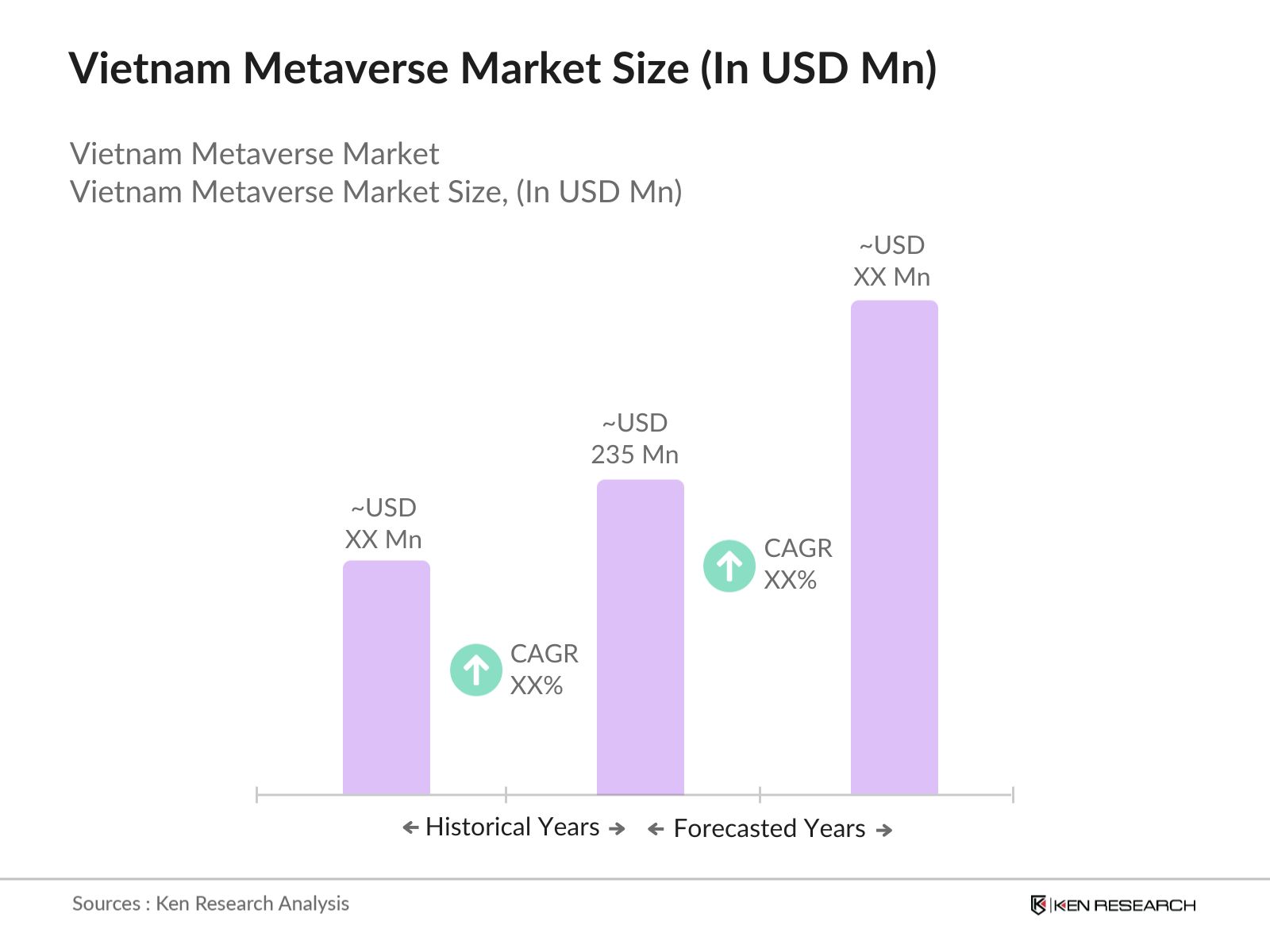
The Vietnam Metaverse market is valued at USD 235 million, driven by the rapid adoption of immersive technologies like VR/AR and the increasing popularity of digital assets such as NFTs.
Challenges include high initial investments in infrastructure, regulatory hurdles related to digital assets, and the need for greater cybersecurity to protect user data in virtual environments.
Key players in the market include Meta Platforms, Roblox Corporation, Axie Infinity (Sky Mavis), Unity Technologies, and Epic Games. These companies dominate due to their innovative products, strong user engagement, and extensive partnerships.
The market is propelled by factors such as rising internet penetration, government support for digital transformation, and the growing demand for immersive entertainment and social interaction experiences.

What makes us stand out is that our consultants follows Robust, Refine and Result (RRR) methodology. i.e. Robust for clear definitions, approaches and sanity checking, Refine for differentiating respondents facts and opinions and Result for presenting data with story

We have set a benchmark in the industry by offering our clients with syndicated and customized market research reports featuring coverage of entire market as well as meticulous research and analyst insights.

While we don't replace traditional research, we flip the method upside down. Our dual approach of Top Bottom & Bottom Top ensures quality deliverable by not just verifying company fundamentals but also looking at the sector and macroeconomic factors.

With one step in the future, our research team constantly tries to show you the bigger picture. We help with some of the tough questions you may encounter along the way: How is the industry positioned? Best marketing channel? KPI's of competitors? By aligning every element, we help maximize success.

Our report gives you instant access to the answers and sources that other companies might choose to hide. We elaborate each steps of research methodology we have used and showcase you the sample size to earn your trust.

If you need any support, we are here! We pride ourselves on universe strength, data quality, and quick, friendly, and professional service.