















Vietnam Pediatric Healthcare Market Outlook to 2030
Region:Asia
Author(s):Shivani
Product Code:KROD10655
November 2024
95
About the Report
Vietnam Pediatric Healthcare Market Overview
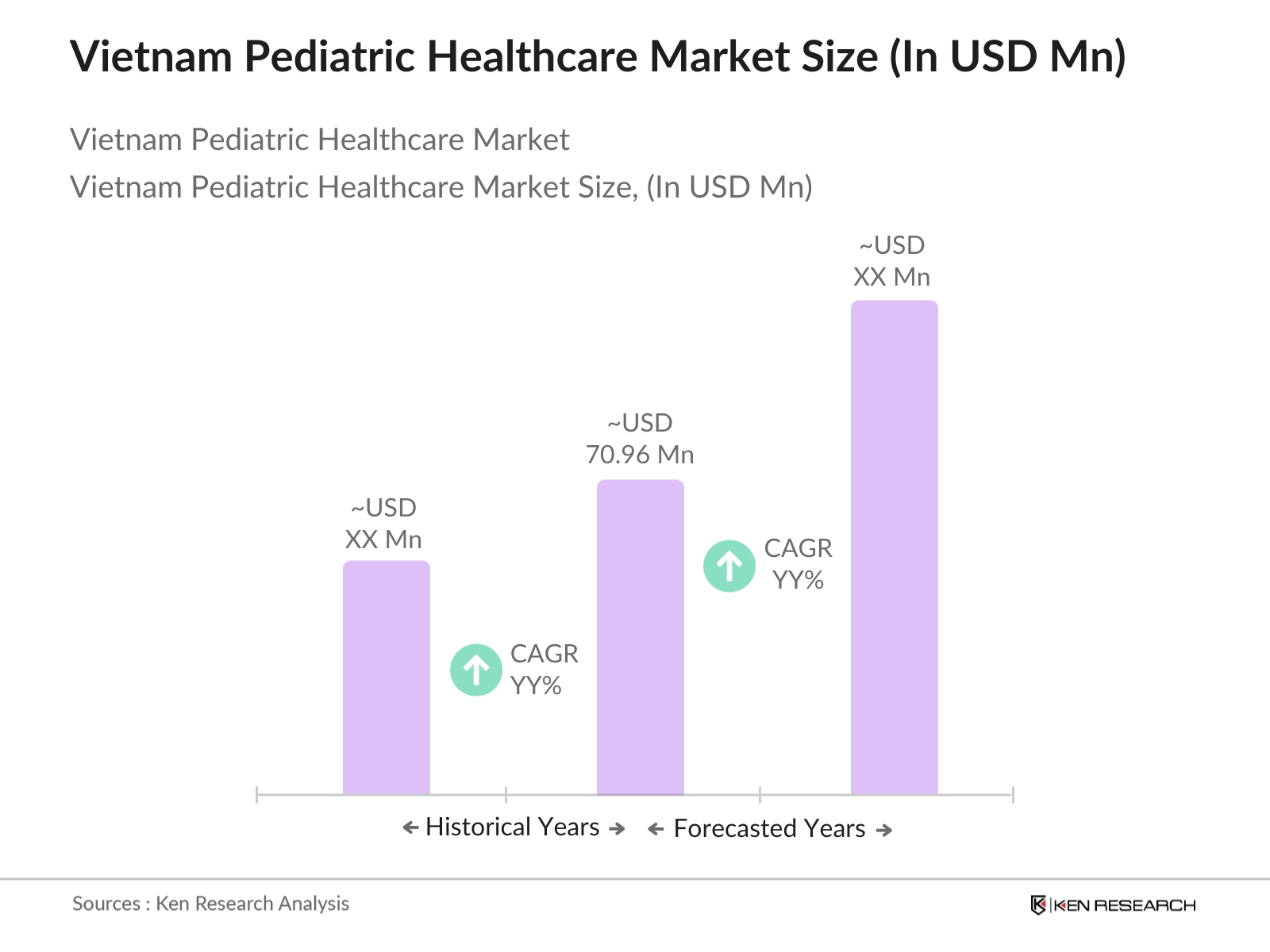
- The Vietnam pediatric healthcare market is valued at USD 70.96 million, driven by increasing investments in the healthcare sector and government policies aimed at improving child healthcare services. With a growing population and rising birth rates, the demand for specialized pediatric care services is at an all-time high. This market is further bolstered by increased health insurance coverage, particularly for children under government-subsidized programs. The government's focus on improving the overall quality of life for children, coupled with investments in healthcare infrastructure, is significantly driving market expansion.
- Ho Chi Minh City and Hanoi dominate the pediatric healthcare market in Vietnam due to their advanced healthcare infrastructure, higher concentration of pediatric hospitals, and the availability of specialized healthcare professionals. These cities are also the primary hubs for medical tourism, with international-standard hospitals offering pediatric care services. The high urbanization rate and better access to healthcare services make them the leading markets, compared to rural regions where healthcare infrastructure is still under development.
- The Vietnamese government has launched the National Child Health Program, which focuses on improving child health through vaccination and disease prevention. In 2023, the program aimed to cover every child under five with essential vaccines. This initiative has also emphasized improving nutritional standards and early screening for pediatric diseases, helping to address malnutrition and developmental delays. The government allocated a significant budget for this initiative, ensuring children receive adequate preventive care and treatment.
Vietnam Pediatric Healthcare Market Segmentation
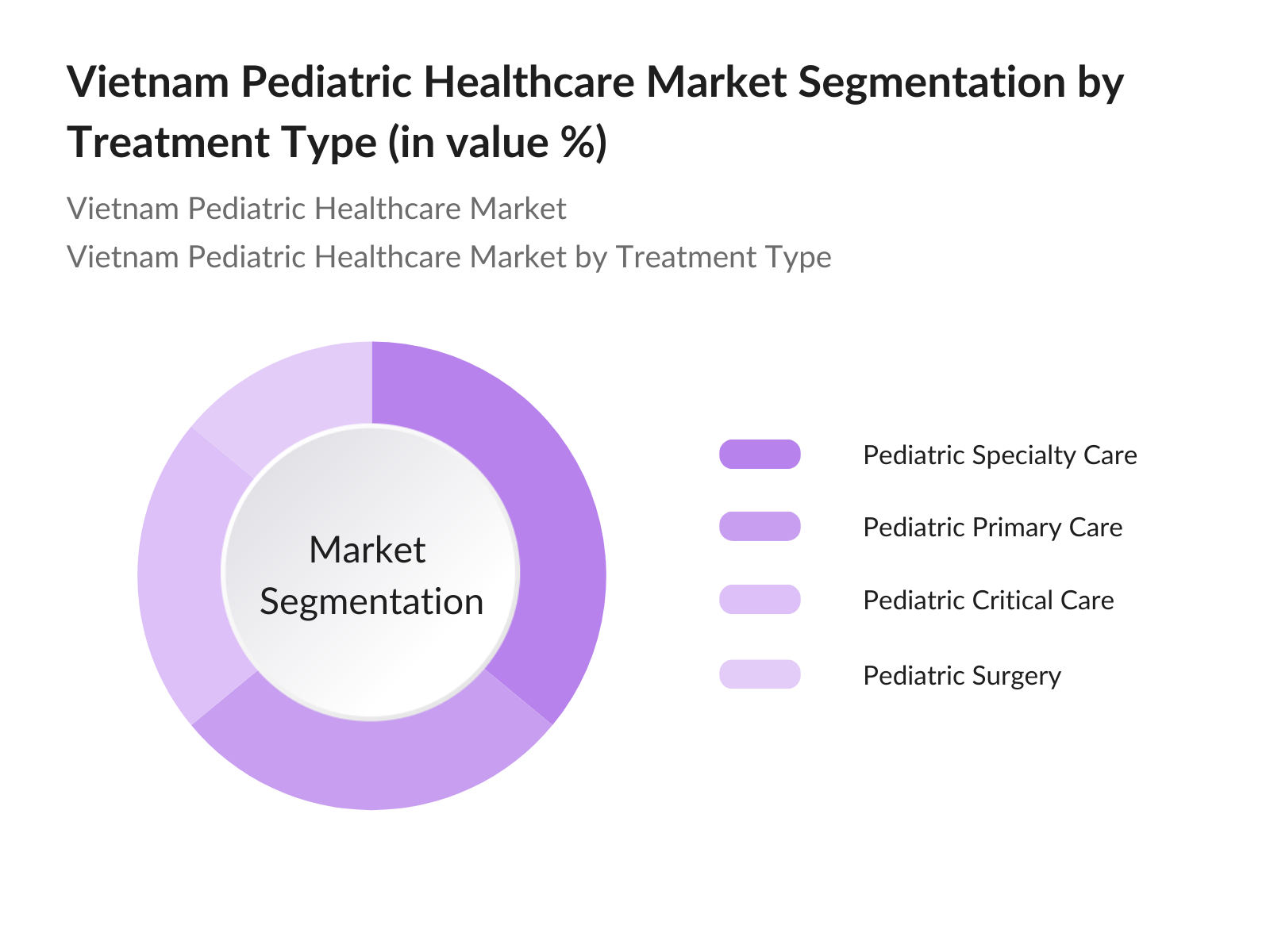
By Treatment Type: The Vietnam pediatric healthcare market is segmented by treatment type into pediatric primary care, pediatric specialty care, pediatric critical care, and pediatric surgery. Among these, pediatric specialty care holds the largest market share. This dominance is attributed to the growing number of children requiring specialized treatments, such as respiratory, cardiac, and neurological care, which are not addressed by primary care services. Moreover, the availability of advanced technology and better-trained specialists in major urban centers further strengthens the demand for specialty care.
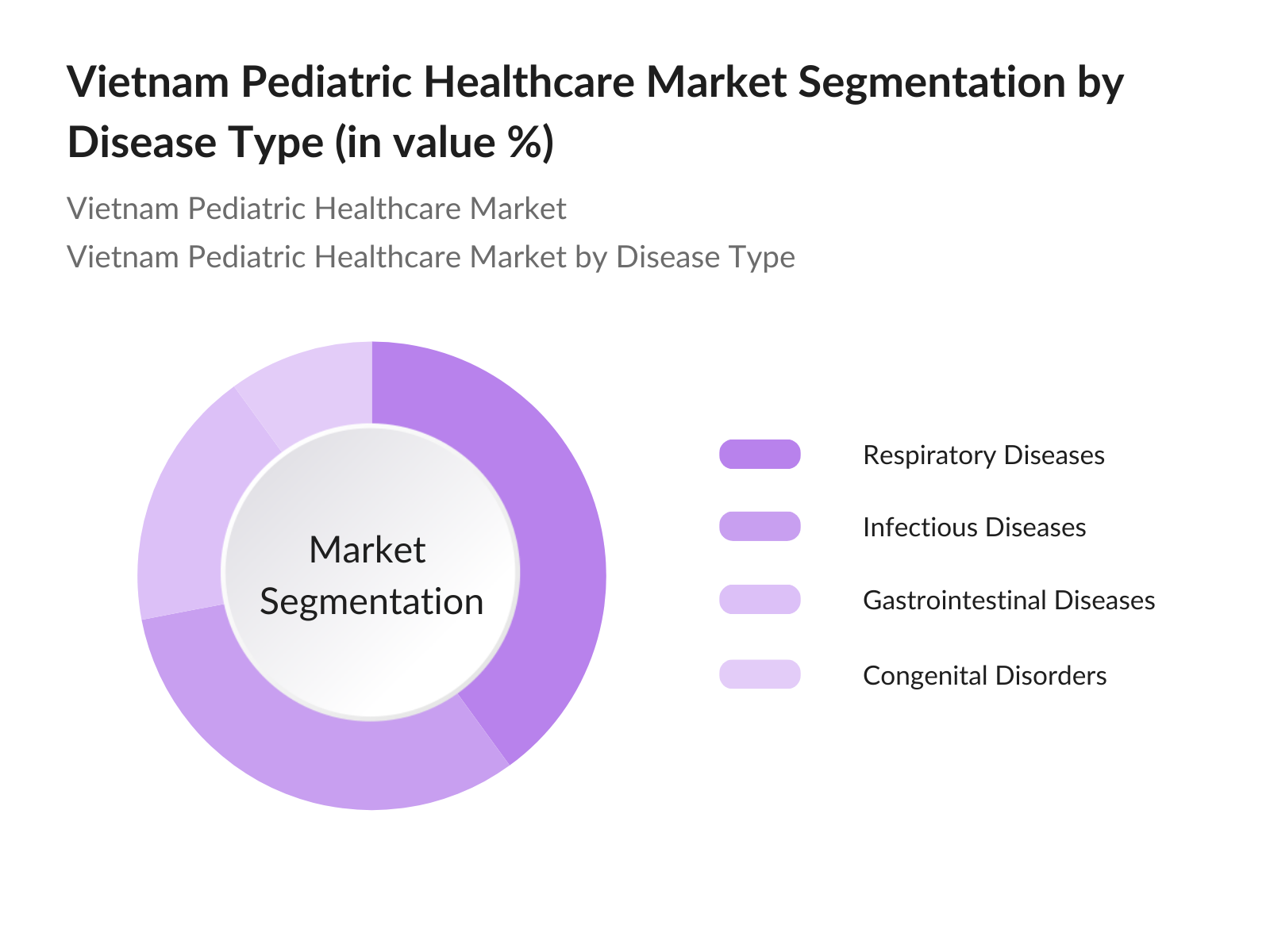
By Disease Type: The market is also segmented by disease type into respiratory diseases, infectious diseases, gastrointestinal diseases, and congenital disorders. Respiratory diseases dominate this segment due to the high prevalence of conditions like asthma and bronchitis among children in urban areas with poor air quality. The Vietnamese government's ongoing efforts to address pediatric respiratory conditions, such as through national vaccination programs, have also contributed to the segment's growth.
Vietnam Pediatric Healthcare Market Competitive Landscape
The Vietnam pediatric healthcare market is dominated by a few major players, including key local hospitals and international healthcare providers that have established their presence in the country. The landscape is characterized by a focus on high-quality care, advanced medical technologies, and significant investments in expanding healthcare services. Major players are also leveraging partnerships with the government to improve pediatric care, particularly in rural areas. This competition among hospitals has led to better service delivery and improved patient outcomes, positioning Vietnam as a key player in pediatric healthcare in Southeast Asia.
|
Company |
Establishment Year |
Headquarters |
Market Focus |
No. of Pediatricians |
Specialization in Pediatrics |
Accreditation |
Annual Revenue (USD) |
Bed Capacity |
|
Vinmec International Hospital |
2012 |
Hanoi |
Multispecialty |
- |
- |
- |
- |
- |
|
Ho Chi Minh City Pediatric Hosp. |
1974 |
Ho Chi Minh City |
Pediatric Critical Care |
- |
- |
- |
- |
- |
|
Hanoi Medical University Hosp. |
2007 |
Hanoi |
Specialty Care |
- |
- |
- |
- |
- |
|
Childrens Hospital 1 |
1970 |
Ho Chi Minh City |
Pediatric Critical Care |
- |
- |
- |
- |
- |
|
FV Hospital |
2003 |
Ho Chi Minh City |
Multispecialty |
- |
- |
- |
- |
- |
Vietnam Pediatric Healthcare Market Analysis
Market Growth Drivers
- Increasing Birth Rate (Pediatric Population): Vietnams birth rate remains steady, contributing to a significant pediatric population. In 2023, the total number of children under 15 years is estimated to be over 26.6 million. This growing pediatric demographic increases the demand for specialized healthcare services. Government efforts to sustain a healthy birth rate, coupled with national population control policies, have created an environment conducive to pediatric healthcare expansion. The high number of annual births, approximately 1.5 million, further fuels the need for pediatric hospitals and medical services.
- Rising Healthcare Expenditure (Government Funding, Insurance Penetration): Vietnam has seen increased healthcare spending, with government expenditure on healthcare rising to USD 17.5 billion in 2023. A significant portion of this is allocated to pediatric care, as the government pushes for better healthcare infrastructure. Public health insurance coverage has also expanded, with a substantial number of children covered under the national health insurance scheme. This improved insurance access has facilitated better healthcare utilization and reduced the financial burden on families seeking pediatric care.
- Expansion of Private Healthcare (New Pediatric Clinics and Hospitals): Private healthcare facilities are expanding rapidly in Vietnam, with 120 new private hospitals established between 2022 and 2024, many of which cater specifically to pediatric care. Private healthcare investments have been boosted by government incentives aimed at promoting private sector involvement in pediatric services. This expansion addresses gaps in public healthcare infrastructure, especially in urban centers like Ho Chi Minh City and Hanoi, where demand for high-quality pediatric services is rising.
Market Challenges:
- High Out-of-Pocket Expenditure (Cost Burden on Families): Despite improvements in insurance coverage, families still face high out-of-pocket healthcare costs, especially for specialized pediatric care. In 2023, out-of-pocket expenditure amounted to USD 8.1 billion. Families often bear the costs for services not covered by public insurance, such as advanced pediatric treatments and specialized consultations, leading to financial strain. These expenses can be significant, particularly for families with children requiring long-term or specialized care.
- Limited Access in Rural Areas (Healthcare Infrastructure): Access to pediatric healthcare remains limited in rural areas, where a large portion of Vietnams population resides. As of 2024, many rural districts still lack specialized pediatric facilities, forcing families to travel long distances to urban centers for care. Healthcare infrastructure in these regions is underdeveloped, with hospitals often lacking the necessary equipment and trained staff to manage pediatric cases effectively. This creates significant challenges for families seeking timely and specialized care for their children in rural Vietnam.
Vietnam Pediatric Healthcare Market Future Outlook
Over the next few years, the Vietnam pediatric healthcare market is expected to experience robust growth due to several factors. Continuous government investments in healthcare infrastructure, increasing insurance penetration, and improvements in healthcare delivery systems are set to drive this growth. Furthermore, innovations in pediatric care, particularly in diagnostic tools and treatments for chronic diseases, will likely contribute to better health outcomes for children. Vietnams increasing focus on healthcare accessibility, especially in rural areas, combined with its expanding medical tourism sector, positions it as a growing hub for pediatric care in the region.
Market Opportunities:
- Digital Health Solutions (Telemedicine, EHR Systems for Pediatrics): The adoption of digital health solutions offers vast opportunities in pediatric healthcare. Electronic health records (EHR) are being implemented in hospitals across urban Vietnam, facilitating better patient management and data accessibility. Additionally, telemedicine platforms are increasingly being used, improving access to healthcare, particularly in rural areas where specialist consultations are limited. These digital solutions enhance the efficiency and reach of pediatric care, providing remote consultations and better continuity of care for children, especially in underserved regions.
- Focus on Preventive Healthcare (Early Screening Programs): Preventive healthcare is becoming a priority in Vietnam, with the government launching national early screening programs for pediatric conditions. In 2023, the Ministry of Health screened 1.2 million newborns for congenital disorders. These programs aim to detect conditions early and provide timely interventions, reducing the burden of pediatric diseases and improving long-term health outcomes.
Scope of the Report
|
By Treatment Type |
Pediatric Primary Care Pediatric Specialty Care Pediatric Critical Care Pediatric Surgery |
|
By Disease Type |
Respiratory Diseases Infectious Diseases Gastrointestinal Diseases Congenital Disorders |
|
By Service Type |
Inpatient Care Outpatient Care Diagnostic Services Therapeutic Services |
|
By Care Setting |
Hospitals Pediatric Clinics Ambulatory Care Centers Homecare |
|
By Region |
North-East Midwest West Coast Southern States |
Products
Key Target Audience
Government and regulatory bodies (Ministry of Health, Vietnam Social Security)
Pediatric hospitals and clinics
Medical device manufacturers
Pharmaceutical companies (specializing in pediatric drugs)
Private health insurance providers
Non-governmental organizations (focused on child health)
Pediatric healthcare training institutions
Investments and venture capitalist firms
Companies
Major Players
Vinmec International Hospital
Ho Chi Minh City Pediatric Hospital
Hanoi Medical University Hospital
Childrens Hospital 1
Childrens Hospital 2
FV Hospital
International SOS Clinic
Binh Dan Hospital
Viet Duc University Hospital
Cho Ray Hospital
Hoan My Medical Corporation
Thu Cuc International General Hospital
Columbia Asia International Hospital
Tam Anh General Hospital
Medic Medical Center
Table of Contents
1. Vietnam Pediatric Healthcare Market Overview
1.1. Definition and Scope
1.2. Market Taxonomy
1.3. Market Growth Rate
1.4. Market Segmentation Overview
2. Vietnam Pediatric Healthcare Market Size (In USD Mn)
2.1. Historical Market Size
2.2. Year-On-Year Growth Analysis
2.3. Key Market Developments and Milestones
3. Vietnam Pediatric Healthcare Market Analysis
3.1. Growth Drivers
3.1.1. Increasing Birth Rate (Pediatric Population)
3.1.2. Rising Healthcare Expenditure (Government Funding, Insurance Penetration)
3.1.3. Expansion of Private Healthcare (New Pediatric Clinics and Hospitals)
3.1.4. Government Initiatives for Child Health (Policy Support, Public Awareness Programs)
3.2. Market Challenges
3.2.1. High Out-of-Pocket Expenditure (Cost Burden on Families)
3.2.2. Limited Access in Rural Areas (Healthcare Infrastructure)
3.2.3. Shortage of Pediatric Specialists (Doctor-to-Patient Ratio)
3.2.4. Regulatory Challenges (Drug Approvals, Medical Device Certification)
3.3. Opportunities
3.3.1. Digital Health Solutions (Telemedicine, EHR Systems for Pediatrics)
3.3.2. Medical Tourism (Cross-Border Pediatric Healthcare Demand)
3.3.3. Innovations in Pediatric Vaccinations (New Vaccine Developments)
3.3.4. Rising Demand for Pediatric Pharmaceuticals (New Drug Approvals, Specialized Formulations)
3.4. Trends
3.4.1. Adoption of AI in Pediatric Diagnostics (Smart Monitoring Solutions)
3.4.2. Focus on Preventive Healthcare (Early Screening Programs)
3.4.3. Growth in Pediatric Nutrition and Wellness Products
3.4.4. Expansion of Pediatric Telemedicine (Remote Consultations)
3.5. Government Regulation
3.5.1. National Child Health Program (Vaccination Targets, Nutritional Programs)
3.5.2. Pediatric Care Standards (Hospital Accreditation, Quality Guidelines)
3.5.3. Healthcare Funding Policies (Government Insurance Programs for Children)
3.5.4. Public-Private Partnerships (Collaborations in Healthcare Infrastructure)
3.6. SWOT Analysis
3.7. Stake Ecosystem (Hospitals, Clinics, Medical Device Providers, Pharmaceuticals)
3.8. Porters Five Forces
3.8.1. Bargaining Power of Suppliers
3.8.2. Bargaining Power of Buyers
3.8.3. Threat of New Entrants
3.8.4. Threat of Substitutes
3.8.5. Industry Rivalry
3.9. Competition Ecosystem
4. Vietnam Pediatric Healthcare Market Segmentation
4.1. By Treatment Type (In Value %)
4.1.1. Pediatric Primary Care
4.1.2. Pediatric Specialty Care
4.1.3. Pediatric Critical Care
4.1.4. Pediatric Surgery
4.2. By Disease Type (In Value %)
4.2.1. Respiratory Diseases
4.2.2. Infectious Diseases
4.2.3. Gastrointestinal Diseases
4.2.4. Congenital Disorders
4.3. By Service Type (In Value %)
4.3.1. Inpatient Care
4.3.2. Outpatient Care
4.3.3. Diagnostic Services
4.3.4. Therapeutic Services
4.4. By Care Setting (In Value %)
4.4.1. Hospitals
4.4.2. Pediatric Clinics
4.4.3. Ambulatory Care Centers
4.4.4. Homecare
4.5. By Region (In Value %)
4.5.1. Northern Vietnam
4.5.2. Central Vietnam
4.5.3. Southern Vietnam
5. Vietnam Pediatric Healthcare Market Competitive Analysis
5.1. Detailed Profiles of Major Companies
5.1.1. Vinmec International Hospital
5.1.2. Ho Chi Minh City Pediatric Hospital
5.1.3. Hanoi Medical University Hospital
5.1.4. Childrens Hospital 1
5.1.5. Childrens Hospital 2
5.1.6. FV Hospital
5.1.7. International SOS Clinic
5.1.8. Binh Dan Hospital
5.1.9. Viet Duc University Hospital
5.1.10. Cho Ray Hospital
5.1.11. Hoan My Medical Corporation
5.1.12. Thu Cuc International General Hospital
5.1.13. Columbia Asia International Hospital
5.1.14. Tam Anh General Hospital
5.1.15. Medic Medical Center
5.2. Cross Comparison Parameters (No. of Employees, Headquarters, Inception Year, Revenue, Bed Capacity, Specialization in Pediatric Care, Number of Pediatricians, Hospital Accreditation)
5.3. Market Share Analysis
5.4. Strategic Initiatives
5.5. Mergers and Acquisitions
5.6. Investment Analysis
5.7. Venture Capital Funding
5.8. Government Grants
5.9. Private Equity Investments
6. Vietnam Pediatric Healthcare Market Regulatory Framework
6.1. Healthcare Infrastructure Standards (Hospital Certification, Licensing)
6.2. Pediatric Care Guidelines (Treatment Protocols, Best Practices)
6.3. Certification Processes (Medical Devices, Pharmaceuticals)
7. Vietnam Pediatric Healthcare Future Market Size (In USD Mn)
7.1. Future Market Size Projections
7.2. Key Factors Driving Future Market Growth
8. Vietnam Pediatric Healthcare Future Market Segmentation
8.1. By Treatment Type (In Value %)
8.2. By Disease Type (In Value %)
8.3. By Service Type (In Value %)
8.4. By Care Setting (In Value %)
8.5. By Region (In Value %)
9. Vietnam Pediatric Healthcare Market Analysts Recommendations
9.1. TAM/SAM/SOM Analysis
9.2. Customer Cohort Analysis
9.3. Marketing Initiatives
9.4. White Space Opportunity Analysis
Disclaimer
Contact Us
Research Methodology
Step 1: Identification of Key Variables
The research begins with the identification of key stakeholders in the Vietnam pediatric healthcare market. We utilize secondary databases, government publications, and industry reports to gather comprehensive information. The primary goal is to map the ecosystem, focusing on healthcare service providers, pediatric equipment suppliers, and government agencies.
Step 2: Market Analysis and Construction
At this stage, historical data on pediatric healthcare trends in Vietnam are analyzed. We evaluate patient demographics, healthcare spending, and the distribution of pediatric care services across urban and rural regions. The data compilation focuses on determining the penetration of pediatric hospitals and the revenue they generate.
Step 3: Hypothesis Validation and Expert Consultation
Market hypotheses are developed regarding the future growth of pediatric healthcare. To validate these hypotheses, we conduct interviews with healthcare professionals, hospital administrators, and government officials. These consultations offer insights into the operational challenges and opportunities in Vietnams pediatric healthcare market.
Step 4: Research Synthesis and Final Output
Finally, insights from market players, including hospitals and pharmaceutical companies, are integrated to complete the analysis. The report undergoes a final review to ensure that all data aligns with real-world market conditions and offers accurate, actionable recommendations for stakeholders in the pediatric healthcare market.
Frequently Asked Questions
01. How big is the Vietnam Pediatric Healthcare Market?
The Vietnam pediatric healthcare market is valued at USD 70.96 million, driven by increased healthcare investments and government support for improving child health services.
02. What are the challenges in the Vietnam Pediatric Healthcare Market?
Key challenges include a shortage of pediatric specialists, underdeveloped healthcare infrastructure in rural areas, and high out-of-pocket healthcare expenses for families.
03. Who are the major players in the Vietnam Pediatric Healthcare Market?
The market is led by major hospitals such as Vinmec International Hospital, Ho Chi Minh City Pediatric Hospital, and Childrens Hospital 1, alongside international players like FV Hospital.
04. What are the growth drivers of the Vietnam Pediatric Healthcare Market?
Key growth drivers include rising birth rates, increased healthcare spending, government initiatives to improve healthcare access, and a growing medical tourism sector focused on pediatric care.
Why Buy From Us?

What makes us stand out is that our consultants follows Robust, Refine and Result (RRR) methodology. i.e. Robust for clear definitions, approaches and sanity checking, Refine for differentiating respondents facts and opinions and Result for presenting data with story

We have set a benchmark in the industry by offering our clients with syndicated and customized market research reports featuring coverage of entire market as well as meticulous research and analyst insights.

While we don't replace traditional research, we flip the method upside down. Our dual approach of Top Bottom & Bottom Top ensures quality deliverable by not just verifying company fundamentals but also looking at the sector and macroeconomic factors.

With one step in the future, our research team constantly tries to show you the bigger picture. We help with some of the tough questions you may encounter along the way: How is the industry positioned? Best marketing channel? KPI's of competitors? By aligning every element, we help maximize success.

Our report gives you instant access to the answers and sources that other companies might choose to hide. We elaborate each steps of research methodology we have used and showcase you the sample size to earn your trust.

If you need any support, we are here! We pride ourselves on universe strength, data quality, and quick, friendly, and professional service.