
Vietnam Satellite IoT Market Outlook to 2030
Region:Vietnam
Author(s):Shambhavi Awasthi
Product Code:KROD4059
Region:Vietnam
Author(s):Shambhavi Awasthi
Product Code:KROD4059
December 2024
96
The Vietnam Satellite IoT market is dominated by a few key players that have established significant influence through extensive satellite fleets, technological capabilities, and strategic partnerships. These companies are driving the market forward by offering innovative IoT connectivity solutions across various sectors.
|
Company Name |
Established Year |
Headquarters |
Satellite Fleet Size |
IoT Connectivity Solutions |
Global Reach |
R&D Investments |
Key Government Contracts |
Market Penetration |
|
Vinasat |
2008 |
Hanoi, Vietnam |
- |
- |
- |
- |
- |
- |
|
Globalstar |
1991 |
Covington, USA |
- |
- |
- |
- |
- |
- |
|
Iridium Communications |
2001 |
McLean, USA |
- |
- |
- |
- |
- |
- |
|
Inmarsat PLC |
1979 |
London, UK |
- |
- |
- |
- |
- |
- |
|
SES S.A. |
1985 |
Betzdorf, Luxembourg |
- |
- |
- |
- |
- |
- |
Growth Drivers
Market Challenges
The Vietnam Satellite IoT market is expected to witness significant growth over the coming years, driven by increased investments in digital infrastructure and the growing adoption of IoT across multiple industries. As sectors like agriculture, energy, and logistics continue to digitize their operations, the demand for low-latency, high-speed satellite IoT connectivity is expected to rise further. The government's emphasis on improving internet access in rural areas and promoting smart city initiatives will also fuel market expansion. Strategic partnerships with international IoT providers are anticipated to accelerate market maturity and innovation.
Market Opportunities
|
Segments |
Sub-segments |
|
Satellite Type |
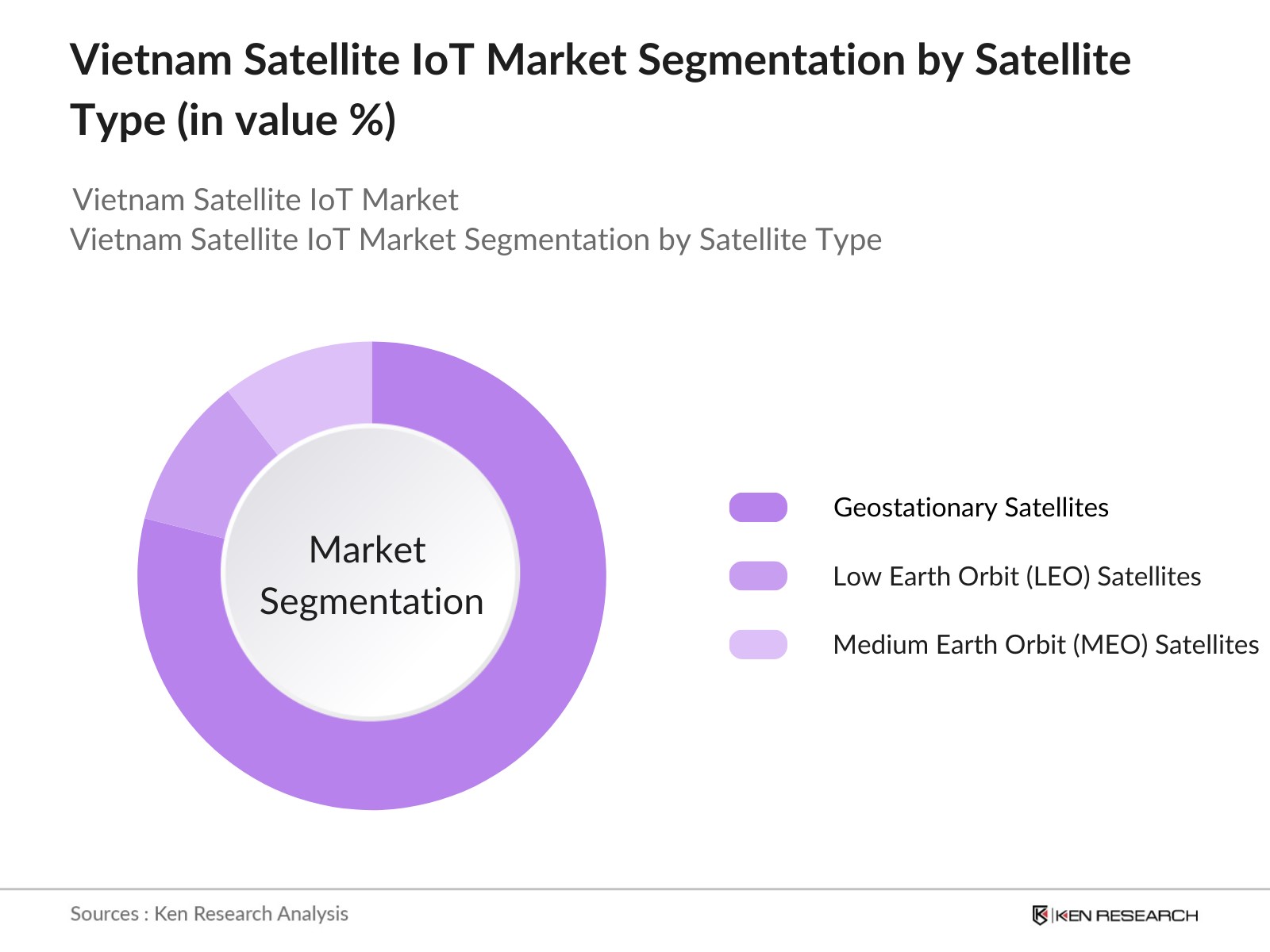
Geostationary (GEO) Medium Earth Orbit (MEO) Low Earth Orbit (LEO) |
|
End-User |
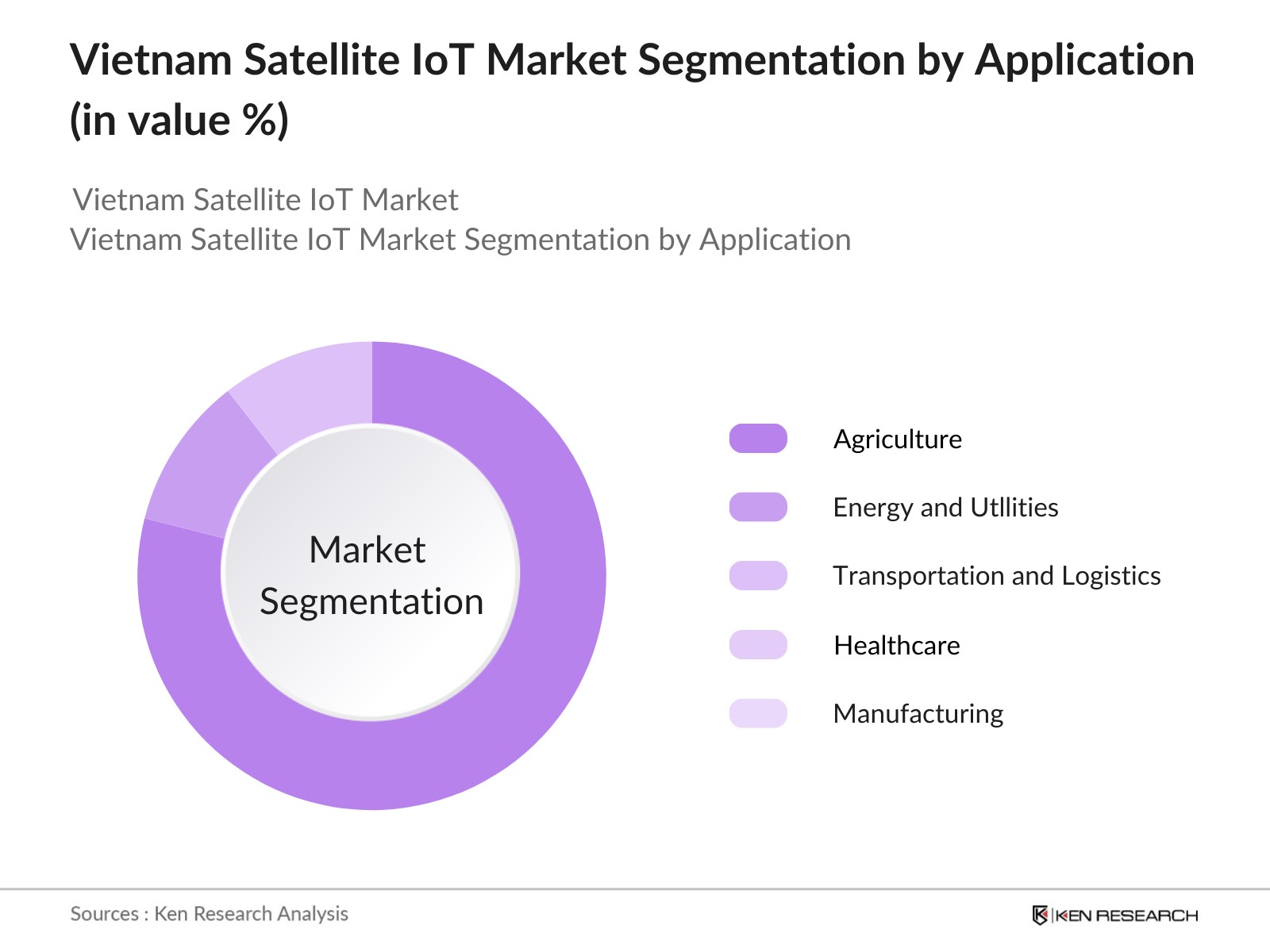
Agriculture Maritime Defense and Security Automotive and Transportation Energy and Utilities |
|
Application |
Asset Tracking Remote Monitoring Fleet Management Environmental Monitoring |
|
Frequency Band |
L-band S-band Ka-band Ku-band |
|
Region |
Northern Vietnam Central Vietnam Southern Vietnam |
1.1. Definition and Scope
1.2. Market Taxonomy
1.3. Market Growth Rate (Satellite connectivity growth, IoT device penetration)
1.4. Market Segmentation Overview (Satellite type, End-user, Application, Frequency band, Region)
2.1. Historical Market Size (Impact of technological advancements, satellite deployment)
2.2. Year-On-Year Growth Analysis
2.3. Key Market Developments and Milestones (Government satellite programs, partnerships)
3.1. Growth Drivers
3.1.1. Expansion of IoT Ecosystem
3.1.2. Growing Demand for Connectivity in Remote Areas
3.1.3. Government Initiatives (National digital transformation, smart city projects)
3.1.4. Rising Adoption of Connected Devices
3.2. Market Challenges
3.2.1. High Infrastructure Costs
3.2.2. Spectrum Allocation and Licensing
3.2.3. Limited Access to Skilled Professionals
3.3. Opportunities
3.3.1. Collaboration Between Telecom and Satellite Operators
3.3.2. Development of Low-Cost Satellites
3.3.3. Growing Investment in 5G-Enabled IoT
3.4. Trends
3.4.1. Emergence of SmallSats and CubeSats for IoT
3.4.2. Integration of Satellite IoT with AI and Machine Learning
3.4.3. Expansion of Maritime and Agriculture IoT Applications
3.5. Government Regulation
3.5.1. National Satellite Program Regulations
3.5.2. Frequency Spectrum Allocation Guidelines
3.5.3. IoT Data Security and Privacy Standards
3.6. SWOT Analysis
3.7. Stakeholder Ecosystem (Satellite providers, IoT solution providers, telecom operators)
3.8. Porters Five Forces Analysis
3.9. Competition Ecosystem (Competitive landscape of satellite IoT providers)
4.1. By Satellite Type (In Value %) 4.1.1. Geostationary (GEO)
4.1.2. Medium Earth Orbit (MEO)
4.1.3. Low Earth Orbit (LEO)
4.2. By End-User (In Value %) 4.2.1. Agriculture
4.2.2. Maritime
4.2.3. Defense and Security
4.2.4. Automotive and Transportation
4.2.5. Energy and Utilities
4.3. By Application (In Value %) 4.3.1. Asset Tracking
4.3.2. Remote Monitoring
4.3.3. Fleet Management
4.3.4. Environmental Monitoring
4.4. By Frequency Band (In Value %) 4.4.1. L-band
4.4.2. S-band
4.4.3. Ka-band
4.4.4. Ku-band
4.5. By Region (In Value %) 4.5.1. Northern Vietnam
4.5.2. Central Vietnam
4.5.3. Southern Vietnam
5.1. Detailed Profiles of Major Companies
5.1.1. Inmarsat
5.1.2. Iridium Communications
5.1.3. SES S.A.
5.1.4. Hughes Network Systems
5.1.5. Globalstar
5.1.6. Thuraya Telecommunications
5.1.7. Astrocast
5.1.8. Kleos Space
5.1.9. Swarm Technologies
5.1.10. Skylo Technologies
5.1.11. Satellogic
5.1.12. Orbcomm Inc.
5.1.13. Kepler Communications
5.1.14. Fleet Space Technologies
5.1.15. Kacific Broadband Satellites Group
5.2. Cross Comparison Parameters (No. of Satellites, Launch Year, Coverage, Revenue, Customer Base, Technology Partnership, Application Focus, Industry Presence)
5.3. Market Share Analysis
5.4. Strategic Initiatives
5.5. Mergers And Acquisitions
5.6. Investment Analysis
5.7. Venture Capital Funding
5.8. Government Grants
5.9. Private Equity Investments
6.1. Satellite Communication Regulations
6.2. Compliance Requirements for IoT Devices
6.3. Certification Processes
7.1. Future Market Size Projections
7.2. Key Factors Driving Future Market Growth
8.1. By Satellite Type (In Value %) 8.2. By End-User (In Value %) 8.3. By Application (In Value %) 8.4. By Frequency Band (In Value %) 8.5. By Region (In Value %)
9.1. TAM/SAM/SOM Analysis
9.2. Customer Cohort Analysis
9.3. Marketing Initiatives
9.4. White Space Opportunity Analysis
The first step involved developing a comprehensive ecosystem map covering the key players, stakeholders, and government policies influencing the Vietnam Satellite IoT Market. Detailed desk research was conducted using proprietary databases and secondary sources to collect industry-level data and identify major variables affecting market growth.
This step involved analyzing historical market data, focusing on service providers, penetration ratios, and revenue generation across key industries. Market performance indicators were collected to ensure accuracy in revenue forecasts and market assessments.
Key market hypotheses were formulated and tested through interviews with industry experts from satellite providers and telecom operators. These discussions provided real-time insights into operational challenges, market opportunities, and financial data.
The final phase of the research process involved synthesizing data from multiple sources, including interviews and secondary databases, to create a validated and reliable analysis of the Vietnam Satellite IoT market. This synthesis ensured a holistic understanding of market trends, challenges, and growth opportunities.
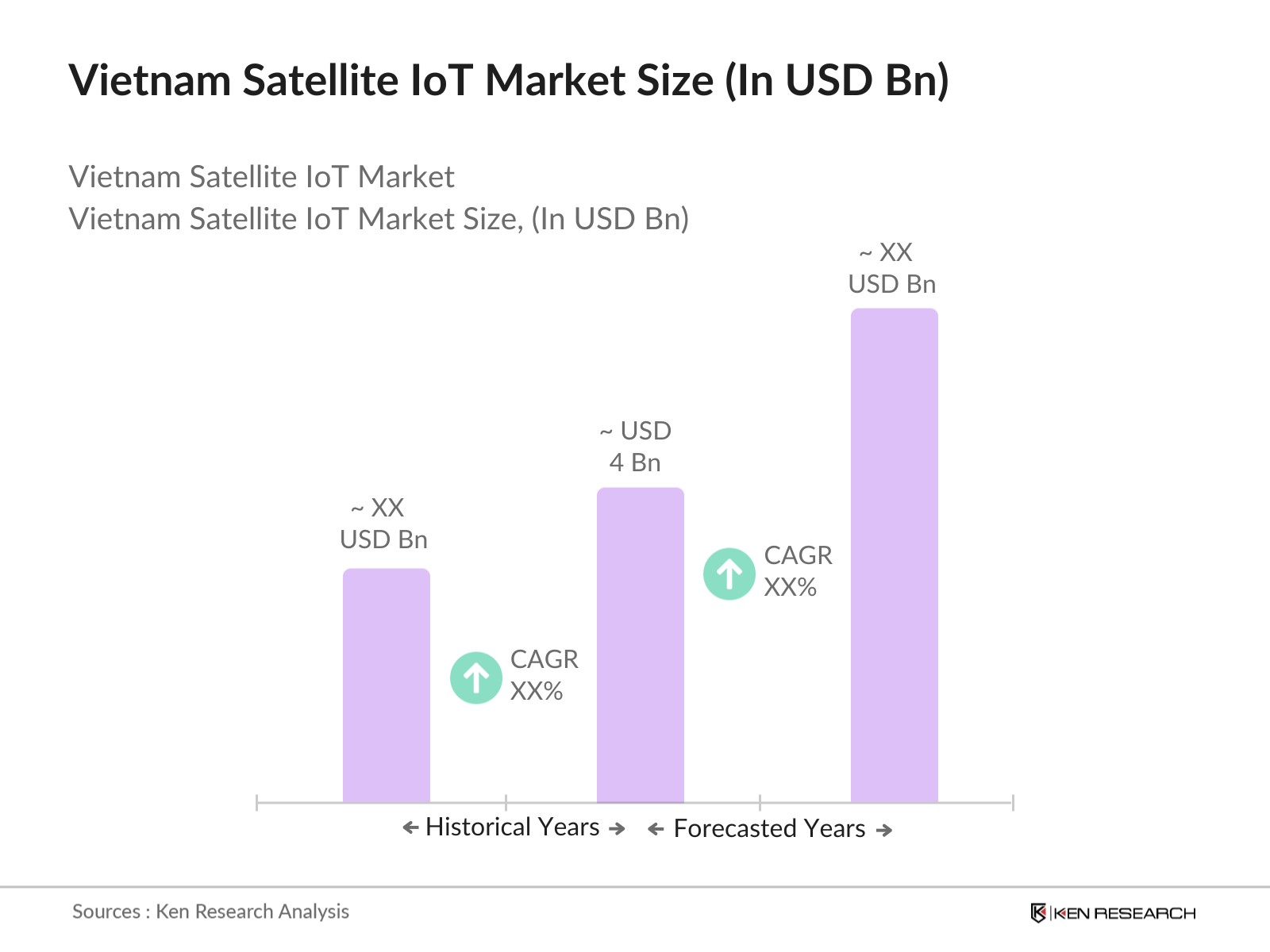
The Vietnam Satellite IoT market was valued at USD 4 billion and is driven by the growing need for connectivity in remote and underserved regions. This demand is further boosted by increasing IoT adoption across sectors like agriculture, energy, and transportation.
Challenges in the market include high infrastructure development costs, regulatory compliance hurdles, and limited coverage in certain rural areas. Addressing these barriers is crucial for improving IoT penetration throughout the country.
Key players in the Vietnam Satellite IoT market include Vinasat, Globalstar, Iridium Communications, SES S.A., and Inmarsat PLC. These companies are leading the market with their extensive satellite fleets and innovative IoT connectivity solutions.
The market is primarily driven by increased demand for IoT solutions in rural and underserved areas, government initiatives for digital transformation, and the rise of smart city projects. Technological advancements in satellite networks are also key drivers.

What makes us stand out is that our consultants follows Robust, Refine and Result (RRR) methodology. i.e. Robust for clear definitions, approaches and sanity checking, Refine for differentiating respondents facts and opinions and Result for presenting data with story

We have set a benchmark in the industry by offering our clients with syndicated and customized market research reports featuring coverage of entire market as well as meticulous research and analyst insights.

While we don't replace traditional research, we flip the method upside down. Our dual approach of Top Bottom & Bottom Top ensures quality deliverable by not just verifying company fundamentals but also looking at the sector and macroeconomic factors.

With one step in the future, our research team constantly tries to show you the bigger picture. We help with some of the tough questions you may encounter along the way: How is the industry positioned? Best marketing channel? KPI's of competitors? By aligning every element, we help maximize success.

Our report gives you instant access to the answers and sources that other companies might choose to hide. We elaborate each steps of research methodology we have used and showcase you the sample size to earn your trust.

If you need any support, we are here! We pride ourselves on universe strength, data quality, and quick, friendly, and professional service.