
Vietnam Scooter Market Outlook to 2030
Region:Asia
Author(s):Meenakshi Bisht
Product Code:KROD2440
December 2024
91
About the Report
Vietnam Scooter Market Overview
- The Vietnam Scooter Market is valued at USD 170 million, based on a five-year historical analysis. This growth is primarily driven by the increasing urbanization, a rising middle-class population with disposable income, and a growing preference for fuel-efficient and affordable transportation options. The rapid expansion of e-scooter adoption is further supported by government policies promoting electric mobility, such as tax incentives and reduced registration fees for electric vehicles. Additionally, scooters have become the preferred mode of transportation in urban areas due to traffic congestion and the need for compact vehicles.
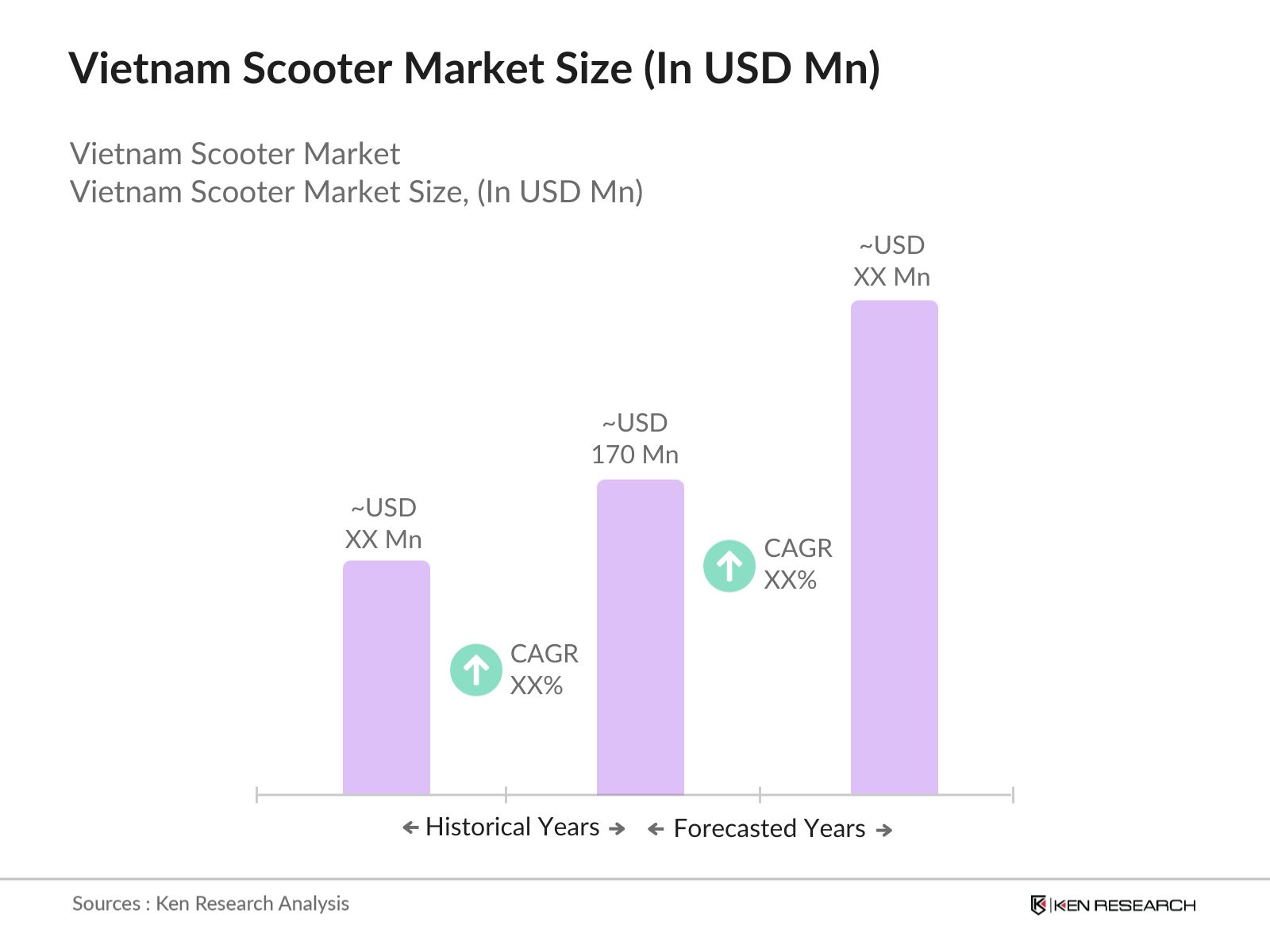
- Dominant cities in the Vietnam scooter market include Hanoi and Ho Chi Minh City. These cities lead the market due to their high population density, leading to greater demand for two-wheelers as an efficient and cost-effective mode of transport. The dominance of these cities is also fueled by the high rate of urbanization, with more citizens moving into metropolitan areas, creating a surge in demand for affordable personal transportation options like scooters.
- The Law on Road Traffic Order and Safety 2024 was passed on June 27, 2024, and will take effect on January 1, 2025. This law includes various measures aimed at improving road safety, but specific details about mandatory ABS for scooters and enhanced lighting systems were not confirmed in the provided sources.
Vietnam Scooter Market Segmentation
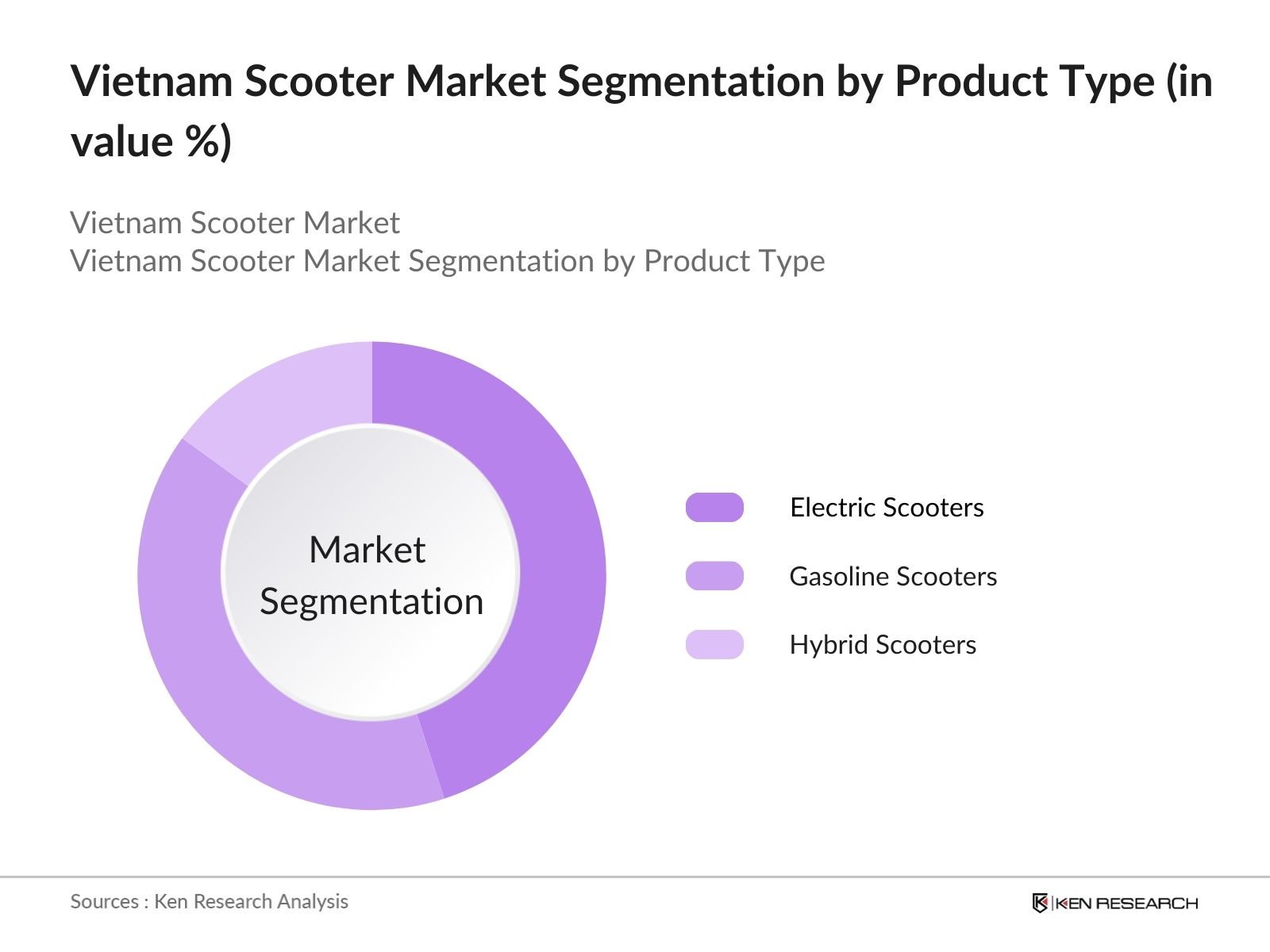
By Product Type: The Vietnam Scooter Market is segmented by product type into electric scooters, gasoline scooters, and hybrid scooters. Among these, electric scooters have gained a dominant market share due to increasing environmental concerns and government policies that promote sustainable transportation. Electric scooters have become popular for their low operating costs and eco-friendly nature, making them an attractive option for both young professionals and students in urban areas. Brands like VinFast have spearheaded the electric scooter market in Vietnam, benefiting from government-backed incentives and an expanding charging infrastructure.
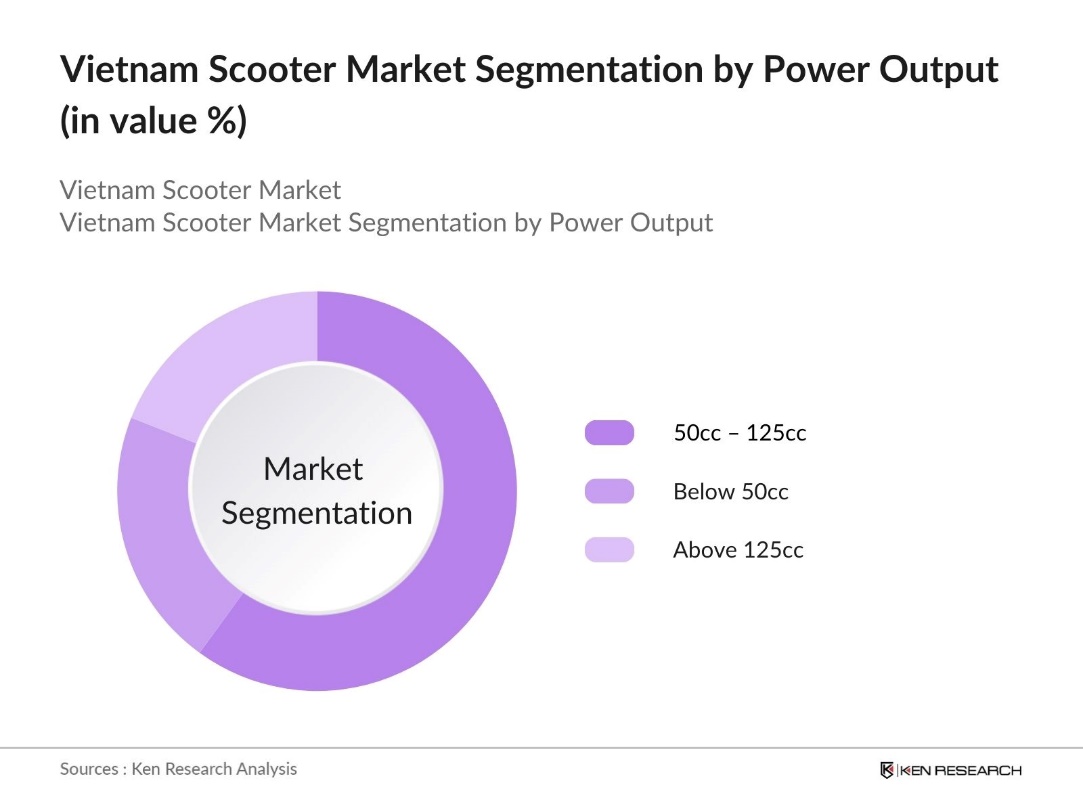
By Power Output: The scooter market is further segmented by power output into below 50cc, 50cc 125cc, and above 125cc categories. The 50cc 125cc segment dominates the market, mainly because it offers a balance between affordability, fuel efficiency, and sufficient power for daily commuting. This range is favored by working professionals and students alike, especially in urban settings where maneuverability and fuel economy are essential. The widespread availability of mid-range scooters at competitive prices from local and international brands has further solidified the dominance of this segment.
Vietnam Scooter Market Competitive Landscape
The Vietnam Scooter Market is dominated by key local and international players. These companies have a significant influence on the market due to their extensive distribution networks, strong brand recognition, and commitment to innovation, particularly in electric scooters. The competitive landscape is characterized by collaborations between local manufacturers and global brands, which enables faster technology transfer and the introduction of new models tailored to local preferences.
|
Company |
Establishment Year |
Headquarters |
Revenue (USD bn) |
Product Range |
Electric Scooter Portfolio |
Brand Loyalty |
Market Penetration |
Innovation Initiatives |
|
|
Honda Motor Co. |
1948 |
Tokyo, Japan |
|||||||
|
Yamaha Motor Co. |
1955 |
Iwata, Japan |
|||||||
|
Piaggio & C. SpA |
1884 |
Pontedera, Italy |
|||||||
|
VinFast |
2017 |
Hanoi, Vietnam |
|||||||
|
Suzuki Motor Corp. |
1909 |
Hamamatsu, Japan |
|||||||
Vietnam Scooter Industry Analysis
Growth Drivers
- Urbanization and Rising Disposable Income: Urbanization in Vietnam is increasing rapidly, with the 39.8 percent of Vietnams population lived in urban centres. This shift is fueling demand for scooters, particularly in urban areas where commuting is crucial. Additionally, the middle class is expanding, with projections indicating that 60% of households will earn over $5,000 annually by 2027, further driving the affordability and purchase of scooters. As more individuals move to cities, the need for personal transportation grows, making scooters a preferred option due to their affordability and convenience.
- Fuel Efficiency and Environmental Benefits: Scooters, especially electric ones, are recognized for their energy efficiency and environmental benefits. Vietnam's transition to electric scooters, such as the Ather 450X, which can provide a True Range of up to 115 km on a single charge, offers significant fuel cost savings compared to gasoline-powered models, which typically achieve only around 40 km/l over five years. Beyond economic advantages, electric scooters also reduce carbon emissions, supporting the country's broader climate strategy that emphasizes lowering fossil fuel dependence and mitigating the impacts of climate change.
- Expansion of E-scooters: The adoption of electric scooters in Vietnam is steadily increasing, driven by government initiatives aimed at promoting electric mobility. These initiatives are fostering a shift toward environmentally friendly transportation options. Electric scooters, offering both cost-effectiveness and fuel efficiency, are becoming a popular alternative to traditional vehicles. As awareness of environmental sustainability grows among consumers, the demand for electric scooters is rising, positioning them as a viable solution for eco-conscious individuals. The government's push for electric vehicle adoption is further encouraging the transition to cleaner, more sustainable transportation modes.
Market Restraints
- Traffic Congestion in Urban Areas: Vietnam's urban centers, particularly cities like Ho Chi Minh and Hanoi, are experiencing increasing traffic congestion. While scooters are more maneuverable than cars, heavy traffic significantly impacts their efficiency as a transportation mode. The growing number of vehicles on the road is making commuting more time-consuming, even for two-wheelers like scooters. To ease this issue, infrastructure development, such as road expansions and the creation of dedicated scooter lanes, is necessary to improve the flow of traffic and support wider adoption of scooters as an efficient mode of transport.
- High Competition from Motorcycles: Motorcycles dominate the two-wheeler market in Vietnam, creating tough competition for scooters. Although scooters, especially electric models, are gaining popularity, traditional motorcycles remain the primary choice for many consumers. This strong market presence makes it challenging for scooter manufacturers to gain a larger market share. To compete effectively, scooters must offer unique advantages, such as environmental benefits and cost savings, to attract buyers and stand out in a crowded market of well-established motorcycle brands.
Vietnam Scooter Market Future Outlook
Over the next five years, the Vietnam Scooter Market is expected to experience significant growth driven by continuous government support for electric vehicles, advancements in battery technology, and increasing consumer awareness of environmental sustainability. The growing middle-class population, along with increasing urbanization, will further drive demand for scooters, particularly in densely populated cities. The expansion of e-scooter infrastructure, including charging stations, will be a pivotal factor in accelerating the adoption of electric scooters in both urban and suburban areas.
Market Opportunities
- Growing Demand for Electric Vehicles: The demand for electric vehicles, including scooters, is increasing rapidly in Vietnam, driven by rising environmental consciousness and supportive government policies. This shift towards electric mobility provides significant growth opportunities for manufacturers as consumers look for eco-friendly alternatives to gasoline-powered scooters. The growing interest in reducing carbon footprints and the appeal of sustainable transportation options are helping to drive the adoption of electric scooters, positioning the market for continued expansion in the coming years.
- Technological Advancements in Battery Technology: Advancements in battery technology are playing a crucial role in enhancing the practicality of electric scooters. Improvements in battery efficiency are reducing charging times and extending the range, making electric scooters more suitable for daily commuting. These advancements also contribute to long-term cost savings, as they minimize the need for frequent battery replacements. As battery technology continues to evolve, it presents a key growth opportunity for the electric scooter market, making these vehicles more appealing to a broader consumer base.
Scope of the Report
|
Product Type |
Electric Scooters Gasoline Scooters Hybrid Scooters |
|
Power Output |
Below 50cc 50cc 125cc Above 125cc |
|
End-User |
Individual/Personal Use Commercial Use |
|
Distribution Channel |
Online Sales Dealership Sales Rental Services |
|
Region |
Northern Eastern Western Southern |
Products
Key Target Audience
Electric Scooter Manufacturers
Battery Manufacturers
Scooter Dealerships and Distributors
Charging Infrastructure Providers
Urban Mobility Service Providers
Investments and Venture Capitalist Firms
Electric Vehicle Component Suppliers
Government and Regulatory Bodies (Vietnam Ministry of Transport, Vietnam Environment Administration)
Companies
Players Mentioned in the Report
Honda Motor Co.
Yamaha Motor Co.
Piaggio & C. SpA
VinFast
Suzuki Motor Corporation
KTM AG
Peugeot Motocycles
Hero MotoCorp
TVS Motor Company
Bajaj Auto
Gogoro Inc.
NIU Technologies
Yadea Group Holdings Ltd.
Ather Energy
Sym Motors
Table of Contents
1. Vietnam Scooter Market Overview
1.1. Definition and Scope
1.2. Market Taxonomy
1.3. Market Growth Rate
1.4. Market Segmentation Overview
2. Vietnam Scooter Market Size (In USD Mn)
2.1. Historical Market Size
2.2. Year-On-Year Growth Analysis
2.3. Key Market Developments and Milestones
3. Vietnam Scooter Market Analysis
3.1. Growth Drivers
3.1.1. Urbanization and Rising Disposable Income
3.1.2. Expansion of E-scooters (Electric Scooter Adoption)
3.1.3. Government Support for Electric Mobility
3.1.4. Fuel Efficiency and Environmental Benefits
3.2. Restraints
3.2.1. Traffic Congestion in Urban Areas
3.2.2. High Competition from Motorcycles
3.2.3. Initial Cost of Electric Scooters
3.2.4. Charging Infrastructure Development
3.3. Opportunities
3.3.1. Growing Demand for Electric Vehicles
3.3.2. Technological Advancements in Battery Technology
3.3.3. Expansion into Rural Markets
3.3.4. Strategic Collaborations with Global Brands
3.4. Trends
3.4.1. Rise in Micro-mobility Solutions
3.4.2. Integration of IoT and Smart Features in Scooters
3.4.3. Preference for Subscription-Based Scooter Sharing Services
3.4.4. Development of Lightweight, Compact Models
3.5. Government Regulation
3.5.1. Electric Vehicle Incentives
3.5.2. Emission Standards
3.5.3. Road Safety Norms
3.5.4. Licensing and Registration Rules
3.6. SWOT Analysis
3.7. Stakeholder Ecosystem (Manufacturers, Distributors, Service Providers, Government Bodies)
3.8. Porters Five Forces Analysis (Buyer Power, Supplier Power, Threat of New Entrants, Competitive Rivalry, Substitutes)
3.9. Competition Ecosystem
4. Vietnam Scooter Market Segmentation
4.1. By Product Type (In Value %)
4.1.1. Electric Scooters
4.1.2. Gasoline Scooters
4.1.3. Hybrid Scooters
4.2. By Power Output (In Value %)
4.2.1. Below 50cc
4.2.2. 50cc 125cc
4.2.3. Above 125cc
4.3. By End-User (In Value %)
4.3.1. Individual/Personal Use
4.3.2. Commercial Use
4.4. By Distribution Channel (In Value %)
4.4.1. Online Sales
4.4.2. Dealership Sales
4.4.3. Rental Services
4.5. By Region (In Value %)
4.5.1. Northern Vietnam
4.5.2. Central Vietnam
4.5.3. Southern Vietnam
5. Vietnam Scooter Market Competitive Analysis
5.1. Detailed Profiles of Major Companies
5.1.1. Honda Motor Co.
5.1.2. Yamaha Motor Co.
5.1.3. Piaggio & C. SpA
5.1.4. Suzuki Motor Corporation
5.1.5. VinFast
5.1.6. KTM AG
5.1.7. Peugeot Motocycles
5.1.8. Sym Motors
5.1.9. Hero MotoCorp
5.1.10. TVS Motor Company
5.1.11. Bajaj Auto
5.1.12. Gogoro Inc.
5.1.13. NIU Technologies
5.1.14. Yadea Group Holdings Ltd.
5.1.15. Ather Energy
5.2. Cross Comparison Parameters (Revenue, Scooter Sales Volume, Market Presence, Brand Popularity, Sustainability Initiatives, Product Portfolio, Distribution Networks, Customer Satisfaction)
5.3. Market Share Analysis
5.4. Strategic Initiatives
5.5. Mergers and Acquisitions
5.6. Investment Analysis
5.7. Private Equity and Venture Capital Funding
6. Vietnam Scooter Market Regulatory Framework
6.1. Vehicle Registration Requirements
6.2. Compliance with Emission Standards
6.3. Safety Regulations
6.4. Certification and Licensing Procedures
7. Vietnam Scooter Market Future Size (In USD Mn)
7.1. Future Market Size Projections
7.2. Key Factors Driving Future Market Growth
8. Vietnam Scooter Market Future Segmentation
8.1. By Product Type (In Value %)
8.2. By Power Output (In Value %)
8.3. By End-User (In Value %)
8.4. By Distribution Channel (In Value %)
8.5. By Region (In Value %)
9. Vietnam Scooter Market Analysts Recommendations
9.1. TAM/SAM/SOM Analysis
9.2. Customer Cohort Analysis
9.3. Marketing Strategies
9.4. White Space Opportunity Analysis
Research Methodology
Step 1: Identification of Key Variables
In the initial phase, we identify all major stakeholders within the Vietnam Scooter Market ecosystem. Using proprietary databases and desk research, the key variables affecting market dynamics, such as consumer demand trends and government regulations, are defined. This is fundamental in understanding the scope of the market and potential growth areas.
Step 2: Market Analysis and Construction
The historical market data for the scooter industry is thoroughly examined. This involves analyzing the penetration of scooters, the ratio of electric versus gasoline models, and revenue generation across different cities. Data from this step helps assess the market's structure and understand performance trends.
Step 3: Hypothesis Validation and Expert Consultation
Market hypotheses, such as the increasing adoption of electric scooters, are validated through expert consultations. These interviews with industry practitioners provide insights into emerging trends, potential challenges, and future growth prospects, ensuring that the data remains accurate and relevant.
Step 4: Research Synthesis and Final Output
The final stage involves synthesizing all data from primary and secondary sources, ensuring that market size, segmentation, and forecasts are robust and accurate. This comprehensive analysis forms the basis of the final report on the Vietnam Scooter Market, offering deep insights for stakeholders.
Frequently Asked Questions
01. How big is the Vietnam Scooter Market?
The Vietnam Scooter Market is valued at approximately USD 170 million, driven by rapid urbanization, increasing disposable incomes, and government initiatives supporting electric mobility.
02. What are the challenges in the Vietnam Scooter Market?
Challenges in the Vietnam Scooter Market include the lack of charging infrastructure for electric scooters, traffic congestion in urban areas, and competition from gasoline motorcycles, which still hold a significant share of the market.
03. Who are the major players in the Vietnam Scooter Market?
Key players in Vietnam Scooter Market include Honda Motor Co., Yamaha Motor Co., Piaggio & C. SpA, VinFast, and Suzuki Motor Corporation. These companies dominate due to their strong brand presence, extensive distribution networks, and innovative product offerings.
04. What are the growth drivers of the Vietnam Scooter Market?
The Vietnam Scooter Market is driven by government incentives for electric vehicles, the rising middle-class population, and the increasing need for fuel-efficient and affordable personal transportation options, especially in urban areas.
Why Buy From Us?

What makes us stand out is that our consultants follows Robust, Refine and Result (RRR) methodology. i.e. Robust for clear definitions, approaches and sanity checking, Refine for differentiating respondents facts and opinions and Result for presenting data with story

We have set a benchmark in the industry by offering our clients with syndicated and customized market research reports featuring coverage of entire market as well as meticulous research and analyst insights.

While we don't replace traditional research, we flip the method upside down. Our dual approach of Top Bottom & Bottom Top ensures quality deliverable by not just verifying company fundamentals but also looking at the sector and macroeconomic factors.

With one step in the future, our research team constantly tries to show you the bigger picture. We help with some of the tough questions you may encounter along the way: How is the industry positioned? Best marketing channel? KPI's of competitors? By aligning every element, we help maximize success.

Our report gives you instant access to the answers and sources that other companies might choose to hide. We elaborate each steps of research methodology we have used and showcase you the sample size to earn your trust.

If you need any support, we are here! We pride ourselves on universe strength, data quality, and quick, friendly, and professional service.