
Vietnam Semiconductor Market Outlook to 2030
Region:Vietnam
Author(s):Shreya
Product Code:KROD3183
Region:Vietnam
Author(s):Shreya
Product Code:KROD3183
October 2024
82

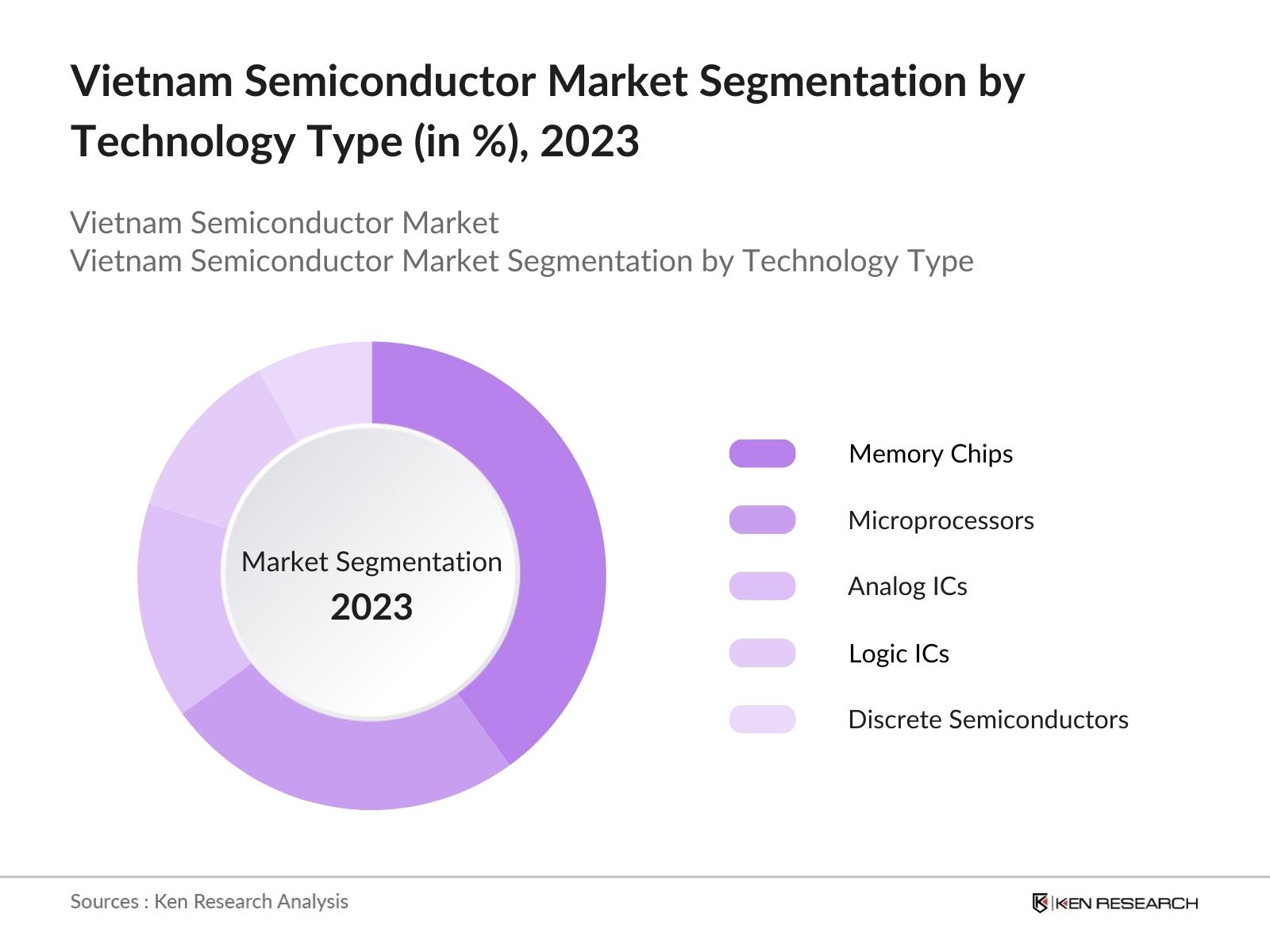
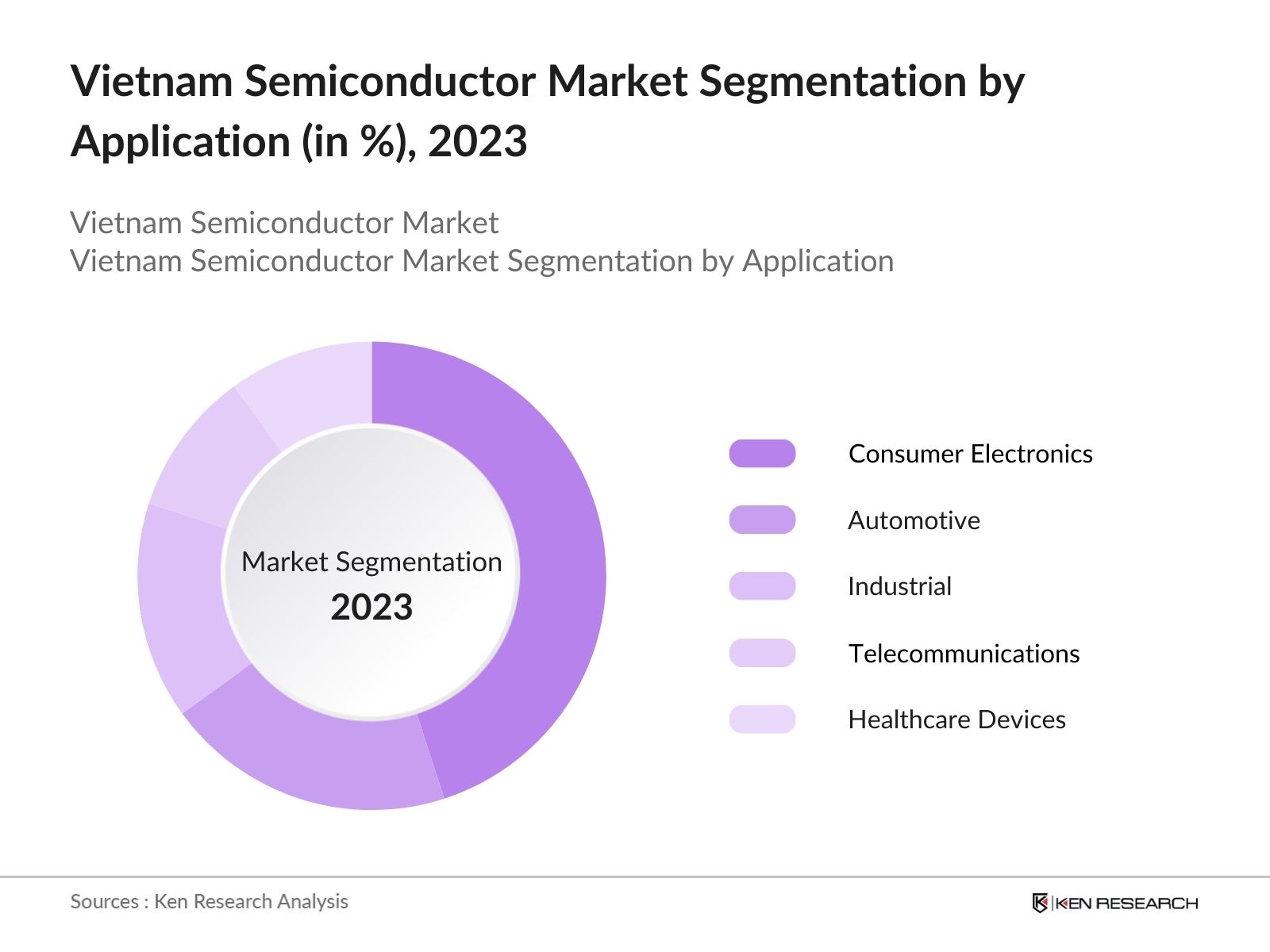
The Vietnam Semiconductor Market is dominated by a few major global and local players, who have established extensive production facilities and have formed strategic partnerships to cater to domestic and international demand. Major companies like Intel Corporation and Samsung Electronics have set up significant manufacturing bases in Vietnam, solidifying their strong presence in the market. These companies benefit from the skilled workforce, government incentives, and Vietnams strategic location within the global supply chain.
|
Company Name |
Establishment Year |
Headquarters |
Revenue (2023) |
R&D Investments (USD Mn) |
Patents Filed |
Local Manufacturing Facilities |
Key Partnerships |
Global Reach |
No. of Employees |
|---|---|---|---|---|---|---|---|---|---|
|
Intel Corporation |
1968 |
Santa Clara, USA |
|||||||
|
Samsung Electronics |
1938 |
Suwon, South Korea |
|||||||
|
Broadcom Inc. |
1961 |
San Jose, USA |
|||||||
|
Texas Instruments Incorporated |
1930 |
Dallas, USA |
|||||||
|
MediaTek Inc. |
1997 |
Hsinchu, Taiwan |
Over the next five years, the Vietnam Semiconductor Market is expected to exhibit growth. This expansion will be driven by continued investments in semiconductor manufacturing infrastructure, rising demand for advanced electronic devices, and Vietnams strategic importance in the global supply chain. With technological advancements in 5G, IoT, and AI, the market will see new opportunities emerge, especially in automotive and industrial applications. Government policies that promote local semiconductor production will further boost the industry.
|
Segment |
Sub-segments |
|---|---|
|
By Technology Type |
Memory Chips |
|
By Application |
Consumer Electronics |
|
By End-User |
OEMs |
|
By Material Type |
Silicon |
|
By Region |
Hanoi |
1.1. Definition and Scope
1.2. Market Taxonomy
1.3. Market Growth Rate (CAGR, production volume, industry investments)
1.4. Market Segmentation Overview (technology type, application, end-user, material type)
2.1. Historical Market Size
2.2. Year-On-Year Growth Analysis (production capacity, export statistics)
2.3. Key Market Developments and Milestones (government policies, foreign investments, partnerships)
3.1. Growth Drivers
3.1.1. Increasing Demand for Consumer Electronics
3.1.2. Expansion of 5G and IoT Infrastructure
3.1.3. Government Incentives for FDI
3.1.4. Development of Vietnams Tech Ecosystem
3.2. Market Challenges
3.2.1. Dependence on Imported Raw Materials
3.2.2. Limited Domestic R&D Capabilities
3.2.3. Skilled Workforce Shortages
3.3. Opportunities
3.3.1. Expansion of Semiconductor Manufacturing Capacity
3.3.2. Rise of AI and Automotive Semiconductor Applications
3.3.3. Strategic Partnerships with Global Players
3.4. Trends
3.4.1. Shift Towards Advanced Packaging Technologies
3.4.2. Adoption of Edge Computing and 5G Semiconductor Chips
3.4.3. Growth in Sustainable Semiconductor Manufacturing Practices
3.5. Government Regulation
3.5.1. Vietnam's National Semiconductor Strategy
3.5.2. Tax Exemptions and Financial Incentives for Manufacturers
3.5.3. Trade Policies Impacting Semiconductor Imports/Exports
3.6. SWOT Analysis
3.7. Stake Ecosystem
3.8. Porters Five Forces
Bargaining Power of Suppliers
Bargaining Power of Buyers
Threat of New Entrants
Threat of Substitutes
Competitive Rivalry
3.9. Competition Ecosystem
4.1. By Technology Type (In Value %)
4.1.1. Memory Chips
4.1.2. Microprocessors
4.1.3. Analog ICs
4.1.4. Logic ICs
4.1.5. Discrete Semiconductors
4.2. By Application (In Value %)
4.2.1. Consumer Electronics
4.2.2. Automotive
4.2.3. Industrial
4.2.4. Telecommunications
4.2.5. Healthcare Devices
4.3. By End-User (In Value %)
4.3.1. OEMs (Original Equipment Manufacturers)
4.3.2. Semiconductor Foundries
4.3.3. Contract Manufacturers
4.4. By Material Type (In Value %)
4.4.1. Silicon
4.4.2. Gallium Arsenide (GaAs)
4.4.3. Silicon Carbide (SiC)
4.4.4. Indium Phosphide (InP)
4.4.5. Gallium Nitride (GaN)
4.5. By Region (In Value %)
4.5.1. Hanoi
4.5.2. Ho Chi Minh City
4.5.3. Da Nang
4.5.4. Northern Industrial Zones
4.5.5. Southern Industrial Zones
5.1. Detailed Profiles of Major Companies
5.1.1. Intel Corporation
5.1.2. Samsung Electronics
5.1.3. Texas Instruments Incorporated
5.1.4. Broadcom Inc.
5.1.5. Taiwan Semiconductor Manufacturing Company (TSMC)
5.1.6. Qualcomm Incorporated
5.1.7. STMicroelectronics
5.1.8. Micron Technology
5.1.9. MediaTek Inc.
5.1.10. Infineon Technologies
5.1.11. Renesas Electronics Corporation
5.1.12. ON Semiconductor
5.1.13. SK Hynix
5.1.14. ROHM Semiconductor
5.1.15. NXP Semiconductors
5.2. Cross Comparison Parameters (Revenue, No. of Patents, Market Share, Production Capacity, R&D Investments, Local Manufacturing Presence, Global Reach, Key Partnerships)
5.3. Market Share Analysis
5.4. Strategic Initiatives
5.5. Mergers and Acquisitions
5.6. Investment Analysis
5.7. Venture Capital Funding
5.8. Government Grants and Subsidies
5.9. Private Equity Investments
6.1. Technology Transfer Regulations
6.2. Import and Export Licensing
6.3. Compliance with Global Environmental Standards
6.4. Local Content Requirements
7.1. Future Market Size Projections
7.2. Key Factors Driving Future Market Growth
8.1. By Technology Type (In Value %)
8.2. By Application (In Value %)
8.3. By End-User (In Value %)
8.4. By Material Type (In Value %)
8.5. By Region (In Value %)
9.1. TAM/SAM/SOM Analysis
9.2. Innovation Roadmap
9.3. White Space Opportunity Analysis
9.4. Strategic Partnership Recommendations
The first phase of research involved creating an ecosystem map for the Vietnam Semiconductor Market, identifying all the critical stakeholders such as semiconductor manufacturers, technology providers, and government agencies. Extensive desk research was conducted, leveraging secondary data from credible sources like company reports and industry publications.
In this stage, historical market data was compiled and analyzed to gauge market penetration and segment performance. Parameters such as production volumes, application growth rates, and revenue generation were examined to understand the markets structural composition and potential.
Market hypotheses were developed based on the initial analysis and subsequently validated through consultations with industry experts. These interviews provided qualitative insights, helping to validate the data and refine market forecasts.
The final phase involved aggregating the collected data, insights, and expert opinions to produce a comprehensive analysis of the Vietnam Semiconductor Market. This phase ensured that all the data points were validated and the final report is accurate and actionable.
The Vietnam semiconductor market was valued at USD 16.6 billion, driven by growing demand in consumer electronics and the expansion of 5G and IoT infrastructure.
Key challenges in the Vietnam semiconductor market include dependence on imported raw materials, limited domestic R&D capabilities, and a shortage of skilled workforce. These challenges limit local innovation and can create supply chain bottlenecks.
Key players in the Vietnam semiconductor market include Intel Corporation, Samsung Electronics, Texas Instruments Incorporated, Broadcom Inc., and MediaTek Inc. These companies have significant manufacturing capacities and strong global partnerships.
The Vietnam semiconductor market is driven by increasing demand for consumer electronics, rising investments from foreign players, and government policies that encourage FDI in the technology sector. The growth of 5G, IoT, and automotive semiconductors further supports market expansion.
Key trends in the Vietnam semiconductor market include the adoption of advanced packaging technologies, increased use of 5G and edge computing chips, and sustainable manufacturing practices. These trends are shaping the future of semiconductor production in Vietnam.

What makes us stand out is that our consultants follows Robust, Refine and Result (RRR) methodology. i.e. Robust for clear definitions, approaches and sanity checking, Refine for differentiating respondents facts and opinions and Result for presenting data with story

We have set a benchmark in the industry by offering our clients with syndicated and customized market research reports featuring coverage of entire market as well as meticulous research and analyst insights.

While we don't replace traditional research, we flip the method upside down. Our dual approach of Top Bottom & Bottom Top ensures quality deliverable by not just verifying company fundamentals but also looking at the sector and macroeconomic factors.

With one step in the future, our research team constantly tries to show you the bigger picture. We help with some of the tough questions you may encounter along the way: How is the industry positioned? Best marketing channel? KPI's of competitors? By aligning every element, we help maximize success.

Our report gives you instant access to the answers and sources that other companies might choose to hide. We elaborate each steps of research methodology we have used and showcase you the sample size to earn your trust.

If you need any support, we are here! We pride ourselves on universe strength, data quality, and quick, friendly, and professional service.