















Vietnam Server Market Outlook to 2030
Region:Asia
Author(s):Abhinav kumar
Product Code:KROD4582
December 2024
83
About the Report
Vietnam Server Market Overview
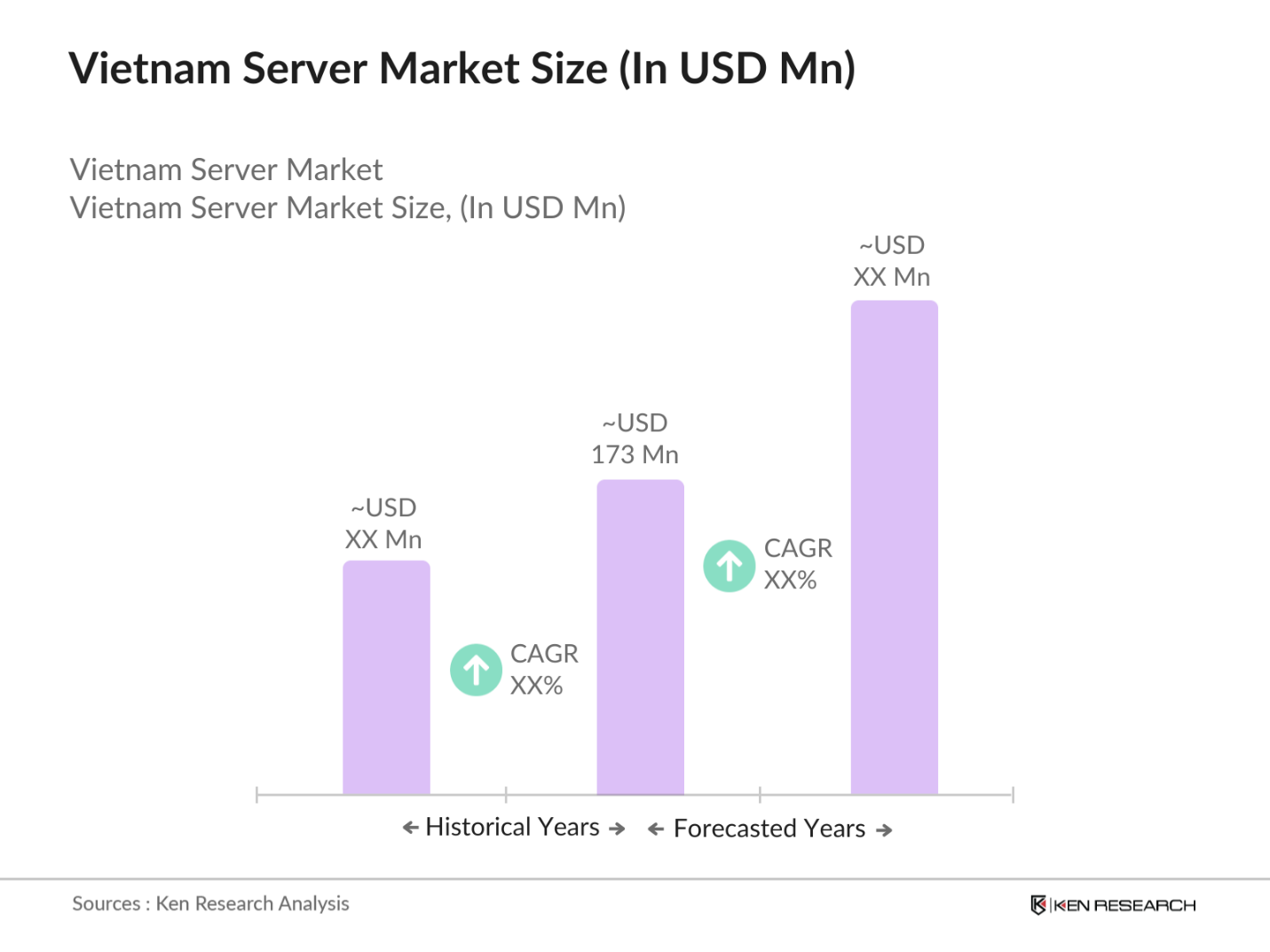
- The Vietnam Server Market is valued at USD 173 million, reflecting robust growth driven by the increasing demand for digital transformation across various sectors. This market expansion is primarily fueled by substantial investments in IT infrastructure and the rising adoption of cloud computing solutions among enterprises seeking to enhance operational efficiency and data management capabilities. The ongoing digitalization initiatives led by both public and private sectors are expected to propel the market further.
- Key cities dominating the Vietnam Server Market include Ho Chi Minh City, Hanoi, and Da Nang. Ho Chi Minh City is a technological hub, attracting numerous IT firms and start-ups, thereby fostering a competitive environment for server solutions. Hanoi, the capital, plays a significant role due to its government initiatives and strategic location, which enhances connectivity and infrastructure development. Da Nang, emerging as a tech-savvy city, benefits from a growing base of tech companies and investment in digital infrastructure, contributing to the market's growth.
- Vietnams National Digital Transformation Strategy, launched in 2020, has significantly impacted the server market. By 2023, the government had invested over USD 1 billion in digital transformation projects aimed at modernizing public services, increasing cloud adoption, and enhancing digital infrastructure. This initiative has spurred demand for domestic server infrastructure to support the digitization of public services, particularly in sectors like healthcare, education, and government administration. The strategy also encourages private sector investment in IT infrastructure, creating a conducive environment for server market expansion.
Vietnam Server Market Segmentation
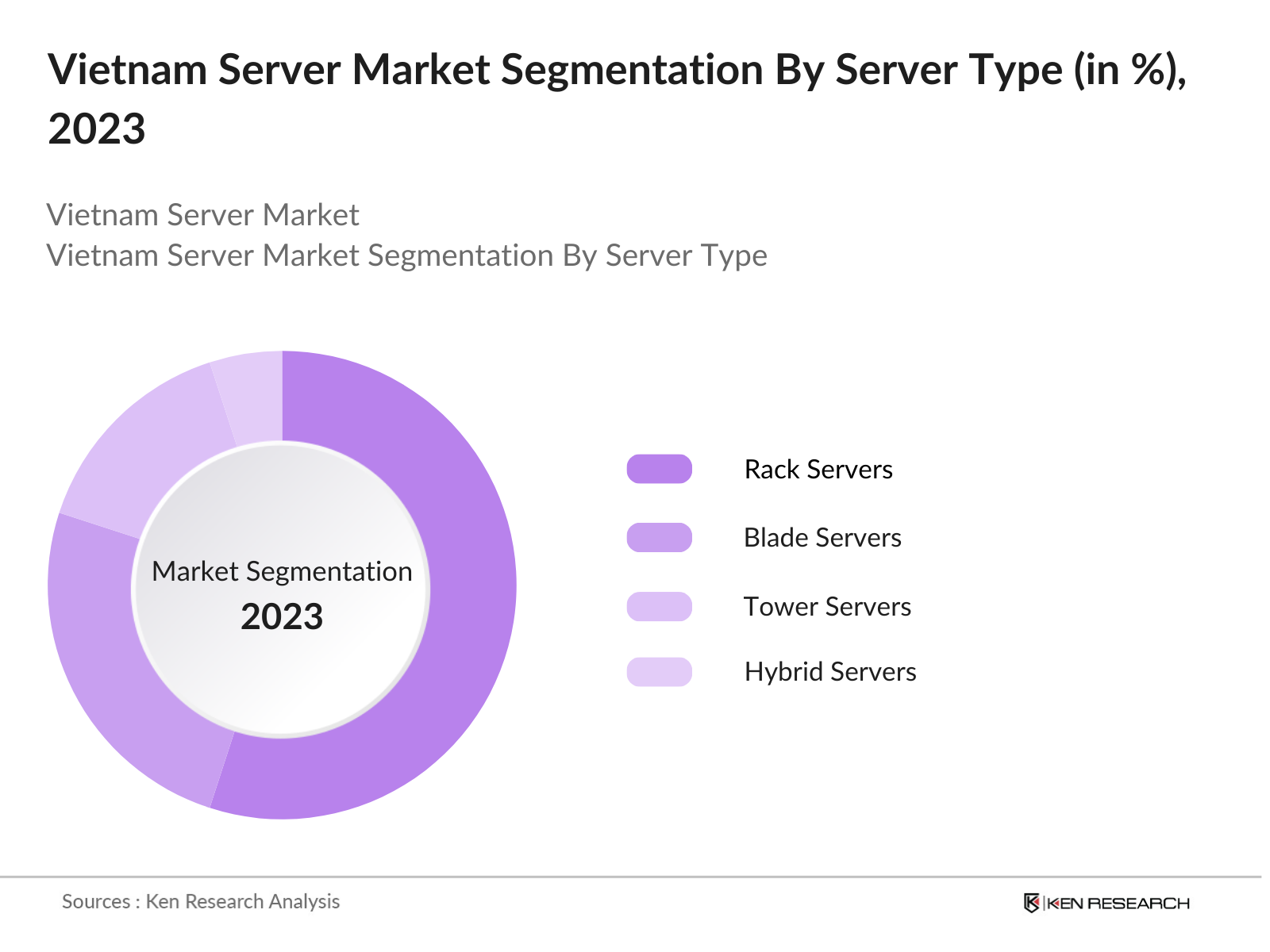
By Server Type: The Vietnam Server Market is segmented by server type into rack servers, blade servers, tower servers, and hybrid servers. Rack servers have a dominant market share due to their space efficiency and scalability, making them the preferred choice for data centers and enterprises looking to optimize their IT footprint. With increasing data volumes and the demand for virtualization, rack servers offer a compact solution that allows businesses to maximize performance while minimizing operational costs.
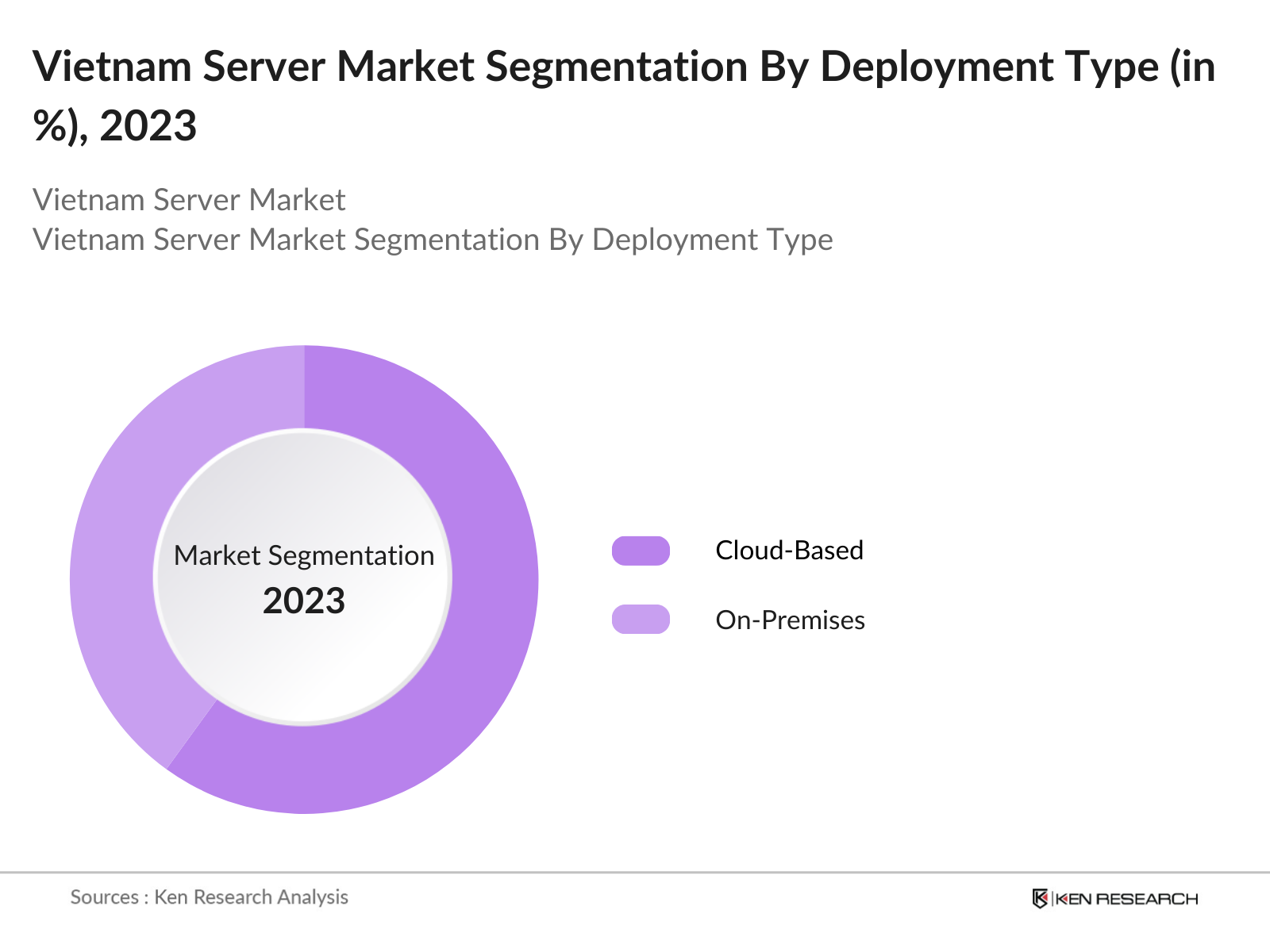
By Deployment Type: The market is also segmented by deployment type into on-premises and cloud-based solutions. Cloud-based deployment is experiencing rapid growth, attributed to the shift toward remote work and the need for scalable IT resources. Companies are increasingly adopting cloud solutions for their flexibility, cost-effectiveness, and ease of management, leading to a significant rise in cloud server deployments in Vietnam.
Vietnam Server Market Competitive Landscape
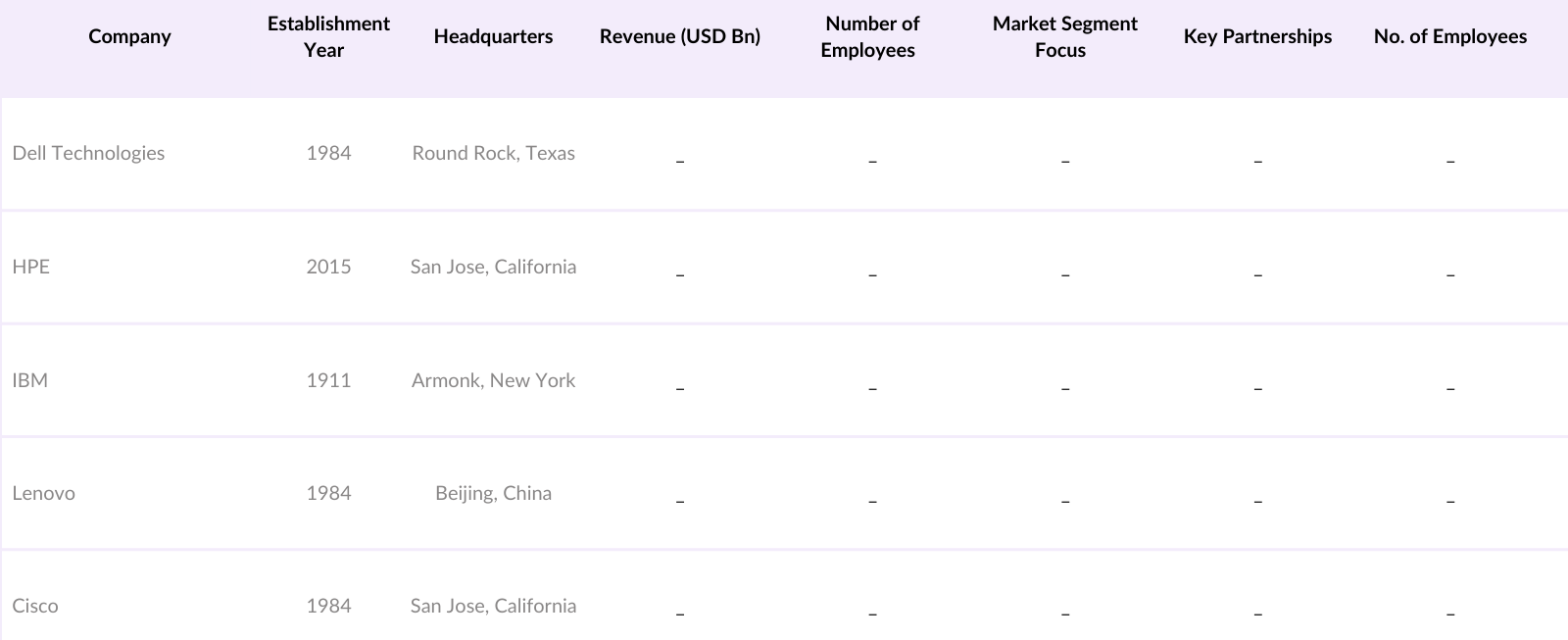
The Vietnam Server Market is dominated by a few major players, including Dell Technologies, HPE, and IBM. This consolidation highlights the significant influence of these key companies, which have established strong brand loyalty and extensive distribution networks. Their ability to innovate and adapt to changing market demands positions them favorably against emerging competitors.
Vietnam Server Industry Analysis
Growth Drivers
- Increasing IT Investments: Vietnams IT sector has experienced robust investment growth in recent years, with total IT spending reaching USD 13.4 billion in 2023. This is driven by both foreign direct investment (FDI) and domestic private sector contributions, particularly in the technology infrastructure segment. For instance, the governments prioritization of tech investments through the National Digital Transformation Program aims to enhance the countrys digital economy, with plans to allocate over USD 5 billion for infrastructure modernization between 2022 and 2025. This financial commitment is attracting major players in the tech sector to invest in local server infrastructure, pushing demand upward.
- Rising Demand for Data Centers: The demand for data centers in Vietnam is rising rapidly due to the increasing need for secure, local data storage. In 2023, the number of operational data centers in Vietnam surpassed 50, with further expansion driven by the governments National Digital Transformation Strategy. According to the World Bank, Vietnams digital economy accounted for approximately 9.5% of its GDP in 2022, and the push toward localizing data storage is expected to bolster server infrastructure growth, especially in urban centers like Ho Chi Minh City and Hanoi. This demand is further augmented by international tech companies establishing regional hubs within the country.
- Growth in Cloud Computing Services: Cloud computing services in Vietnam have seen exponential growth, with major providers such as AWS, Microsoft Azure, and Google Cloud expanding their services in the country. As of 2023, the Vietnamese cloud computing market is supported by more than 600 enterprises providing cloud-related services. A significant driver is the growth in small and medium-sized enterprises (SMEs), with more than 800,000 SMEs transitioning to cloud-based solutions to increase operational efficiency. This has triggered demand for server solutions, as data storage and processing requirements expand, driving a surge in server infrastructure needs.
Market Challenges
- High Infrastructure Costs: Building and maintaining server infrastructure in Vietnam presents a significant financial burden, with upfront costs for constructing a basic data center estimated at over USD 500,000. This challenge is compounded by the high energy costs, as server farms require considerable power, which can account for up to 40% of a data centers operating expenses. The government has attempted to mitigate these expenses by providing subsidies for energy-efficient technology, but the cost of adopting such technology remains high for most enterprises, particularly small and medium-sized businesses. High costs remain a considerable obstacle for widespread server infrastructure development.
- Security Concerns: Cybersecurity remains a critical concern in Vietnam, particularly as the country increases its reliance on digital infrastructure. Vietnam experienced over 10,000 cyberattacks in 2022, and as data generation and storage increase, so too does the risk of exposure to such threats. Data breaches in key sectors, including banking, government services, and healthcare, have highlighted vulnerabilities in Vietnams IT infrastructure. In response, the Vietnamese government has enacted more stringent cybersecurity regulations, but businesses still face significant risks, which slows the adoption of server solutions due to the perceived risks of storing sensitive data locally.
Vietnam Server Market Future Outlook
Over the next five years, the Vietnam Server Market is expected to show significant growth driven by continuous government support for digital infrastructure, advancements in server technologies, and increasing consumer demand for efficient and scalable IT solutions. The market is likely to witness a surge in cloud adoption, as more enterprises transition their workloads to cloud platforms, enhancing overall operational efficiency and agility.
Opportunities
- Emergence of Edge Computing: Edge computing is gaining traction in Vietnam, driven by the need for faster data processing and reduced latency in industries such as telecommunications, manufacturing, and e-commerce. By 2023, approximately 30% of enterprises in Vietnam had started integrating edge computing solutions to optimize their operations. This trend has fueled demand for micro-data centers and localized server infrastructure that can process data closer to the source, creating significant opportunities for server providers to cater to the needs of industries requiring high-speed data handling capabilities. With the continued growth of IoT (Internet of Things) devices, edge computing is poised for further expansion.
- Expansion of E-commerce: Vietnam's e-commerce market continues to grow, with online sales reaching an estimated USD 16 billion in 2023. This rapid expansion is driving demand for robust server infrastructure to handle increased traffic and data processing needs for major platforms like Lazada, Shopee, and Tiki. The governments push to digitize the economy, coupled with rising internet penetration (75% in 2023), has created a fertile ground for e-commerce expansion. The need for secure, scalable, and efficient server solutions is essential to support this growth, offering opportunities for server providers to enter and expand in the Vietnamese market.
Scope of the Report
|
Server Type |
Rack Servers Blade Servers Tower Servers Hybrid Servers |
|
Deployment Type |
On-Premises Cloud-based |
|
|
IT and Telecom BFSI Healthcare Retail |
|
End-User |
SMEs Large Enterprises |
|
Region |
Northern Vietnam Southern Vietnam Central Vietnam |
Products
Key Target Audience Organizations and Entities Who Can Benefit by Subscribing This Report:
Investors and Venture Capitalist Firms
Government and Regulatory Bodies (Ministry of Information and Communications)
IT Infrastructure and Service Companies
Large Enterprises Industries
Small and Medium Enterprises (SMEs) Industries
Cloud Service Companies
System Integration Companies
Technology Start-ups Industries
Companies
Players Mentioned in the Report:
Dell Technologies
HPE (Hewlett Packard Enterprise)
IBM Corporation
Lenovo Group Limited
Cisco Systems
Supermicro Computer, Inc.
Fujitsu
Oracle Corporation
Inspur Electronic International
Huawei Technologies Co., Ltd.
Table of Contents
1. Vietnam Air Quality Monitoring System Market Overview
1.1. Definition and Scope
1.2. Market Taxonomy
1.3. Market Growth Rate
1.4. Market Segmentation Overview
2. Vietnam Air Quality Monitoring System Market Size (In USD Mn)
2.1. Historical Market Size
2.2. Year-On-Year Growth Analysis
2.3. Key Market Developments and Milestones
3. Vietnam Air Quality Monitoring System Market Analysis
3.1. Growth Drivers
3.1.1. Rapid Urbanization
3.1.2. Industrial Expansion
3.1.3. Government Initiatives and Regulations
3.1.4. Rising Public Health Awareness
3.2. Market Challenges
3.2.1. High Implementation Costs
3.2.2. Technical Limitations
3.2.3. Insufficient Skilled Personnel
3.3. Opportunities
3.3.1. Technological Innovations
3.3.2. International Partnerships
3.3.3. Deployment in Rural Areas
3.4. Trends
3.4.1. Integration of IoT Technologies
3.4.2. Alignment with Smart City Initiatives
3.4.3. Adoption of Mobile Monitoring Solutions
3.5. Government Regulations
3.5.1. National Air Quality Management Plan
3.5.2. Emission Reduction Policies
3.5.3. Clean Air Programs
3.5.4. Public-Private Collaboration
3.6. SWOT Analysis
3.7. Stakeholder Ecosystem
3.8. Porter’s Five Forces Analysis
3.9. Competitive Landscape
4. Vietnam Air Quality Monitoring System Market Segmentation
4.1. By Product Type (In Value %)
4.1.1. Indoor Air Quality Monitors
4.1.2. Outdoor Air Quality Monitors
4.2. By Application (In Value %)
4.2.1. Residential
4.2.2. Commercial
4.2.3. Industrial
4.3. By Technology (In Value %)
4.3.1. Continuous Monitoring
4.3.2. Intermittent Monitoring
4.4. By Pollutant Type (In Value %)
4.4.1. Particulate Matter (PM2.5, PM10)
4.4.2. Gaseous Pollutants (NO?, SO?, CO, O?)
4.5. By Region (In Value %)
4.5.1. Red River Delta
4.5.2. Mekong River Delta
4.5.3. Central Highlands
4.5.4. Southeast
4.5.5. Northern Midlands and Mountain Areas
5. Vietnam Air Quality Monitoring System Market Competitive Analysis
5.1. Detailed Profiles of Major Companies
5.1.1. Thermo Fisher Scientific
5.1.2. Siemens AG
5.1.3. HORIBA Ltd.
5.1.4. Teledyne Technologies Incorporated
5.1.5. 3M Company
5.1.6. Aeroqual
5.1.7. Honeywell International Inc.
5.1.8. Emerson Electric Co.
5.1.9. TSI Incorporated
5.1.10. Testo SE & Co. KGaA
5.1.11. Enviro Technology Services
5.1.12. Ecotech Pty Ltd
5.1.13. Opsis AB
5.1.14. Aeroqual Limited
5.1.15. Vaisala Oyj
5.2. Cross Comparison Parameters (Number of Employees, Headquarters Location, Year of Establishment, Annual Revenue, Product Portfolio, Market Presence, R&D Investment, Key Clients)
5.3. Market Share Analysis
5.4. Strategic Initiatives
5.5. Mergers and Acquisitions
5.6. Investment Analysis
5.6.1. Venture Capital Funding
5.6.2. Government Grants
5.6.3. Private Equity Investments
6. Vietnam Air Quality Monitoring System Market Regulatory Framework
6.1. Environmental Standards
6.2. Compliance Requirements
6.3. Certification Processes
7. Vietnam Air Quality Monitoring System Future Market Size (In USD Mn)
7.1. Future Market Size Projections
7.2. Key Factors Driving Future Market Growth
8. Vietnam Air Quality Monitoring System Future Market Segmentation
8.1. By Product Type (In Value %)
8.2. By Application (In Value %)
8.3. By Technology (In Value %)
8.4. By Pollutant Type (In Value %)
8.5. By Region (In Value %)
9. Vietnam Air Quality Monitoring System Market Analysts’ Recommendations
9.1. Total Addressable Market (TAM), Serviceable Available Market (SAM), Serviceable Obtainable Market (SOM) Analysis
9.2. Customer Cohort Analysis
9.3. Marketing Initiatives
9.4. White Space Opportunity Analysis
Disclaimer Contact UsResearch Methodology
Step 1: Identification of Key Variables
The initial phase involves constructing an ecosystem map encompassing all major stakeholders within the Vietnam Server Market. This step is underpinned by extensive desk research, utilizing a combination of secondary and proprietary databases to gather comprehensive industry-level information. The primary objective is to identify and define the critical variables that influence market dynamics.
Step 2: Market Analysis and Construction
In this phase, we compile and analyze historical data pertaining to the Vietnam Server Market. This includes assessing market penetration, the ratio of marketplaces to service providers, and the resultant revenue generation. Furthermore, an evaluation of service quality statistics will be conducted to ensure the reliability and accuracy of the revenue estimates.
Step 3: Hypothesis Validation and Expert Consultation
Market hypotheses will be developed and subsequently validated through computer-assisted telephone interviews (CATIs) with industry experts representing a diverse array of companies. These consultations will provide valuable operational and financial insights directly from industry practitioners, which will be instrumental in refining and corroborating the market data.
Step 4: Research Synthesis and Final Output
The final phase involves direct engagement with multiple server manufacturers to acquire detailed insights into product segments, sales performance, consumer preferences, and other pertinent factors. This interaction will serve to verify and complement the statistics derived from the bottom-up approach, thereby ensuring a comprehensive, accurate, and validated analysis of the Vietnam Server Market.
Frequently Asked Questions
1. How big is the Vietnam Server Market?
The Vietnam Server Market is valued at USD 173 million, driven by substantial investments in IT infrastructure and a growing adoption of cloud computing solutions across various sectors.
2. What are the challenges in the Vietnam Server Market?
Challenges include high infrastructure costs, security concerns related to data management, and a skills gap in the IT workforce, which could hinder the pace of market growth.
3. Who are the major players in the Vietnam Server Market?
Key players include Dell Technologies, HPE, IBM, Lenovo, and Cisco. Their dominance is attributed to strong brand loyalty, extensive distribution networks, and continuous innovation in server technologies.
4. What are the growth drivers of the Vietnam Server Market?
The market is propelled by factors such as increased IT investments, a shift toward cloud computing, and government initiatives supporting digital transformation in various sectors.
Why Buy From Us?

What makes us stand out is that our consultants follows Robust, Refine and Result (RRR) methodology. i.e. Robust for clear definitions, approaches and sanity checking, Refine for differentiating respondents facts and opinions and Result for presenting data with story

We have set a benchmark in the industry by offering our clients with syndicated and customized market research reports featuring coverage of entire market as well as meticulous research and analyst insights.

While we don't replace traditional research, we flip the method upside down. Our dual approach of Top Bottom & Bottom Top ensures quality deliverable by not just verifying company fundamentals but also looking at the sector and macroeconomic factors.

With one step in the future, our research team constantly tries to show you the bigger picture. We help with some of the tough questions you may encounter along the way: How is the industry positioned? Best marketing channel? KPI's of competitors? By aligning every element, we help maximize success.

Our report gives you instant access to the answers and sources that other companies might choose to hide. We elaborate each steps of research methodology we have used and showcase you the sample size to earn your trust.

If you need any support, we are here! We pride ourselves on universe strength, data quality, and quick, friendly, and professional service.