
Vietnam Textiles Market Outlook to 2030
Region:Vietnam
Author(s):Vijay Kumar
Product Code:KROD3880
Region:Vietnam
Author(s):Vijay Kumar
Product Code:KROD3880
December 2024
88
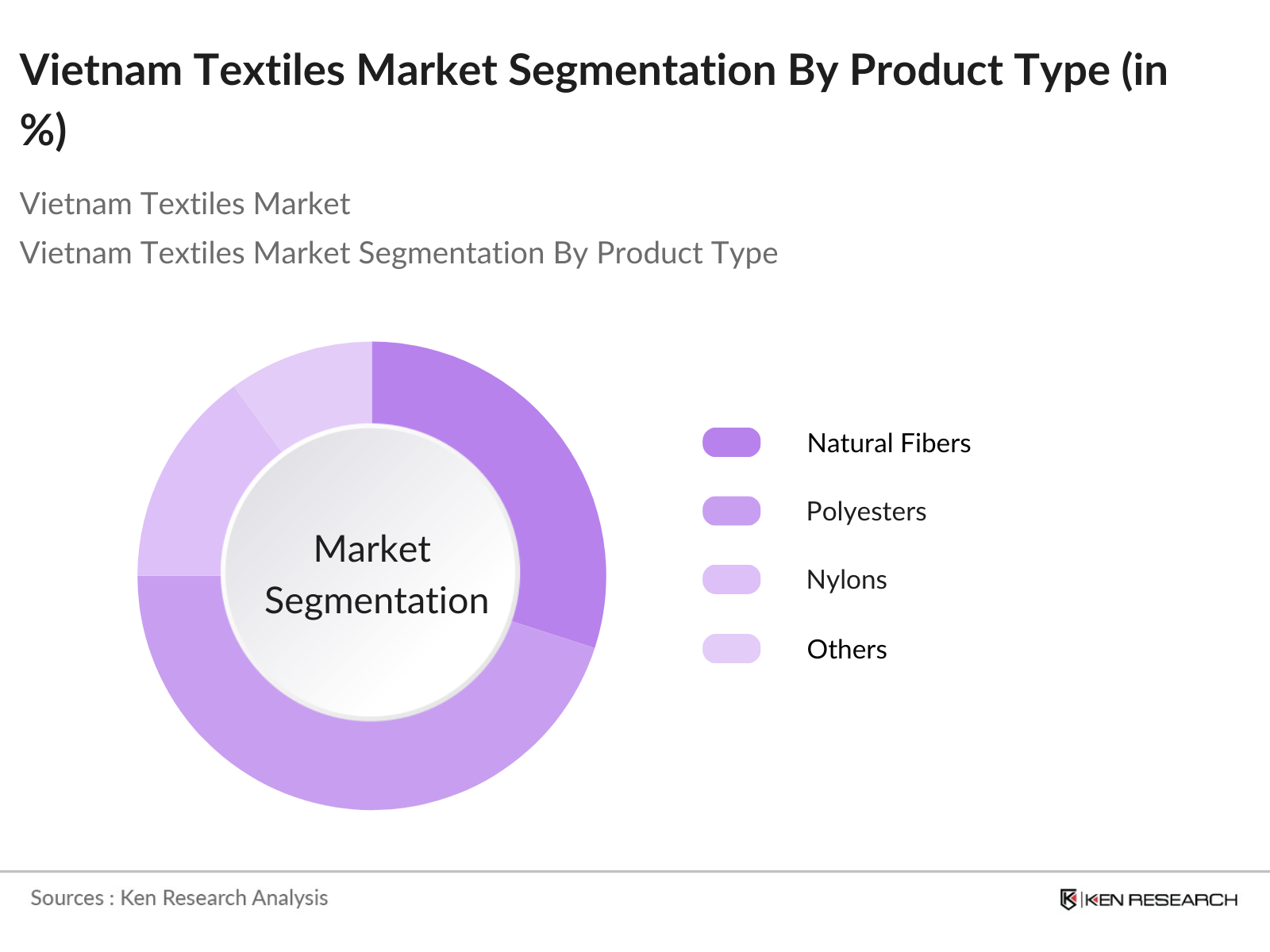
By Product Type: The Vietnam textile market is segmented by product type into natural fibers, polyesters, nylons, and others. Among these, polyesters hold a dominant market share due to their versatility and lower cost of production compared to natural fibers like cotton. The extensive application of polyester in various segments, such as apparel, home textiles, and technical textiles, is also a key contributor to its market dominance. The increased demand for performance textiles and synthetic fibers further boosts the growth of this segment.
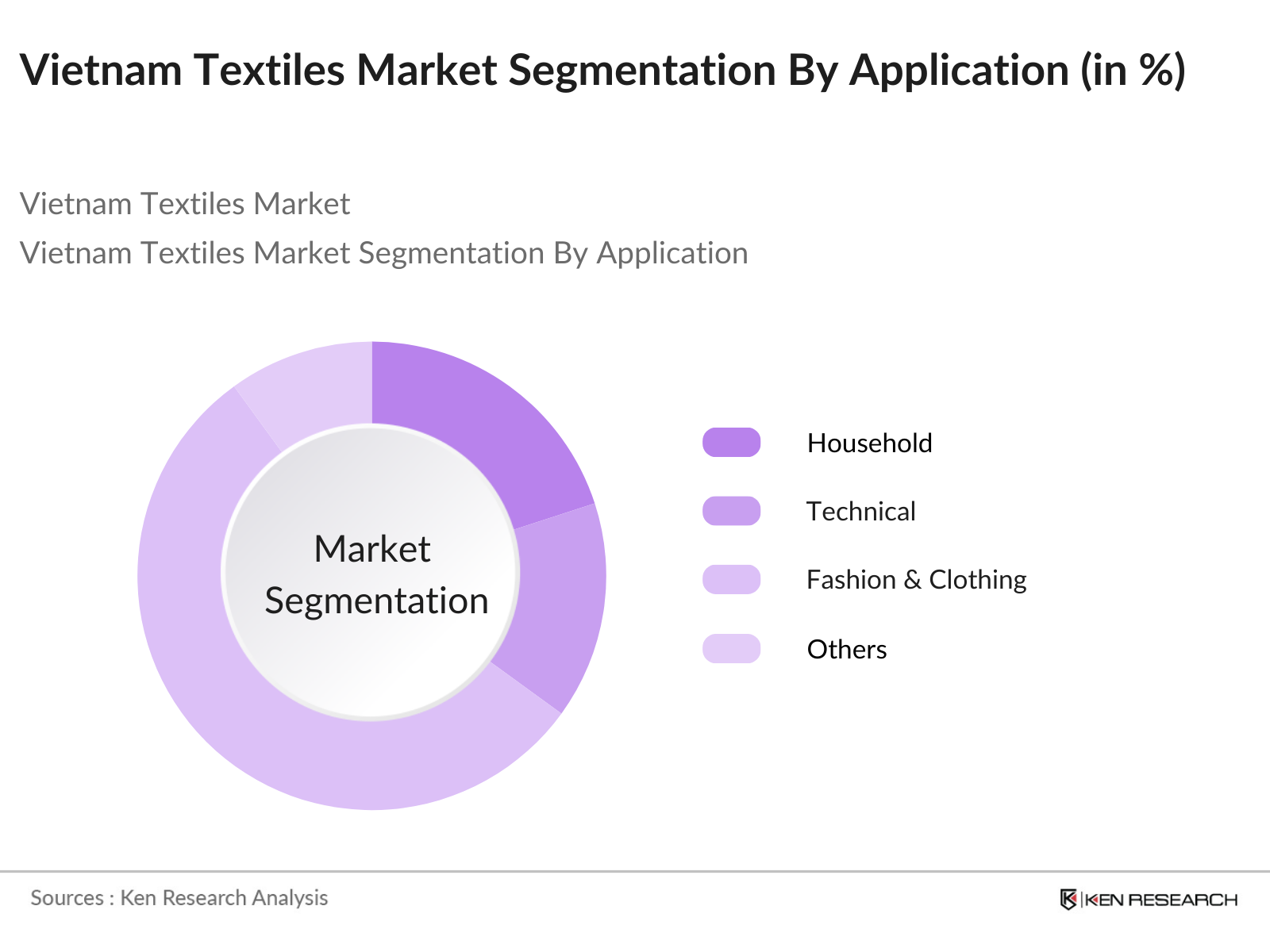
By Application: The Vietnam textile market is categorized by application into household, technical, fashion & clothing, and others. The fashion & clothing segment leads the market share, driven by Vietnams strong export-oriented garment industry. The growth of this segment can be attributed to favorable trade policies, availability of a skilled workforce, and Vietnams reputation as a reliable manufacturing hub for global brands. E-commerce growth and rising domestic consumption are additional factors that bolster this segments position in the market.
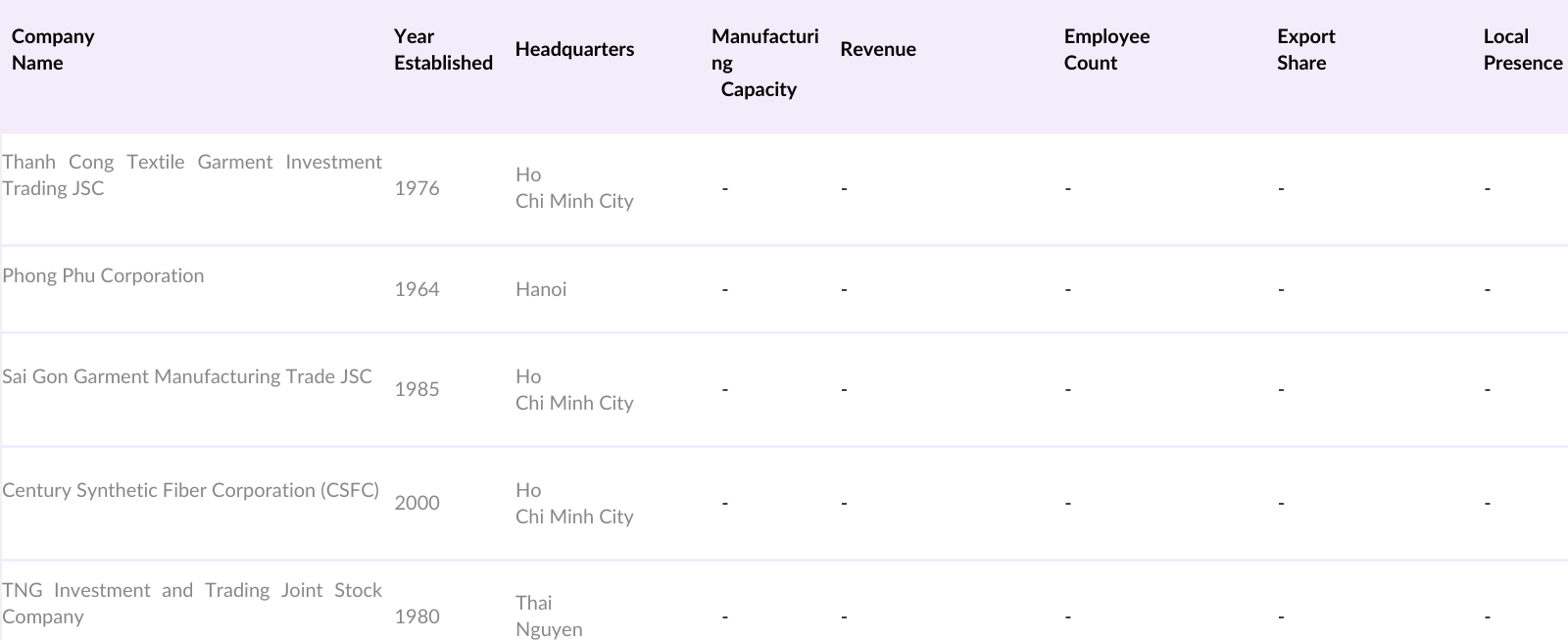
The Vietnam textile market is characterized by a mix of local and international players, with a few key companies dominating the market. This consolidation is supported by the presence of a skilled workforce and the government's support through favorable policies and incentives.
The Vietnam textile market is poised for significant growth in the next five years, supported by continuous investments in technology and sustainability. The industry is likely to benefit from advancements in Industry 4.0 technologies, such as automation and data analytics, which will optimize production processes and enable better resource utilization. Increasing consumer preference for sustainable and eco-friendly textiles is expected to further drive innovation and market expansion. With rising global demand for high-quality textiles and strong government support, Vietnams textile industry is set to maintain its competitive edge in the international market.
|
Product Type |
Apparel Fabrics Home Textiles Industrial Textiles Technical Textiles Eco-Friendly Textiles |
|
By Raw Material Type |
Cotton Polyester Silk Wool Synthetic Fibers |
|
By Application |
Fashion and Apparel Home Dcor and Furnishings Technical Applications Automotive and Aerospace Sportswear and Performance Apparel |
|
By Manufacturing Process |
Weaving Knitting Dyeing and Printing Finishing Yarn Spinning |
|
Region |
Northern Vietnam Central Vietnam Southern Vietnam |
1.1. Definition and Scope
1.2. Market Taxonomy
1.3. Market Growth Rate
1.4. Market Segmentation Overview
2.1. Historical Market Size
2.2. Year-On-Year Growth Analysis
2.3. Market Development Trends
2.4. Key Market Milestones and Developments
3.1. Growth Drivers
3.1.1. Favorable Trade Agreements
3.1.2. Increasing FDI in Textile Sector
3.1.3. Rising Global Demand for Sustainable Textiles
3.1.4. Strong Local Supply Chain Support
3.2. Market Challenges
3.2.1. Environmental Regulations
3.2.2. Fluctuating Raw Material Costs
3.2.3. Competition from Low-Cost Producers
3.2.4. Dependency on Imported Technology
3.3. Opportunities
3.3.1. Growth in E-commerce and Digitalization
3.3.2. Expansion into High-Value Textile Segments
3.3.3. Government Support and Incentives
3.4. Market Trends
3.4.1. Adoption of Sustainable Manufacturing Practices
3.4.2. Investment in R&D for High-Performance Fabrics
3.4.3. Integration of Automation and Smart Technologies
3.5. Government Regulations and Policies
3.5.1. Vietnam Textile & Apparel Association (VITAS) Standards
3.5.2. Environmental and Labor Compliance Policies
3.5.3. National Strategy for Green Growth
3.6. SWOT Analysis
3.7. Stakeholder Ecosystem
3.8. Porters Five Forces Analysis
3.9. Competitive Ecosystem
4.1. By Product Type (In Value %)
4.1.1. Apparel Fabrics
4.1.2. Home Textiles
4.1.3. Industrial Textiles
4.1.4. Technical Textiles
4.1.5. Eco-Friendly Textiles
4.2. By Raw Material Type (In Value %)
4.2.1. Cotton
4.2.2. Polyester
4.2.3. Silk
4.2.4. Wool
4.2.5. Synthetic Fibers
4.3. By Application (In Value %)
4.3.1. Fashion and Apparel
4.3.2. Home Dcor and Furnishings
4.3.3. Technical Applications
4.3.4. Automotive and Aerospace
4.3.5. Sportswear and Performance Apparel
4.4. By Manufacturing Process (In Value %)
4.4.1. Weaving
4.4.2. Knitting
4.4.3. Dyeing and Printing
4.4.4. Finishing
4.4.5. Yarn Spinning
4.5. By Region (In Value %)
4.5.1. Northern Vietnam
4.5.2. Central Vietnam
4.5.3. Southern Vietnam
5.1. Detailed Profiles of Major Companies
5.1.1. Vinatex
5.1.2. Viet Tien Garment Corporation
5.1.3. Garment 10 Corporation JSC
5.1.4. Phong Phu Corporation
5.1.5. Duc Giang Corporation
5.1.6. Nha Be Garment Corporation
5.1.7. TNG Investment and Trading JSC
5.1.8. Garmex Saigon Corporation
5.1.9. Thai Tuan Group Corporation
5.1.10. Nam Dinh Textile & Garment JSC
5.1.11. Thanh Cong Textile Garment Investment Trading JSC
5.1.12. Hoa Tho Textile & Garment JSC
5.1.13. Sai Gon Garment Manufacturing Trading JSC
5.1.14. An Phuoc Garment and Embroidery JSC
5.1.15. Kyungbang Vietnam Co., Ltd.
5.2. Cross Comparison Parameters (Employee Count, Revenue, Manufacturing Capacity, Distribution Network, Export Share, Local vs. Global Production, Production Efficiency, Product Innovation)
5.3. Market Share Analysis
5.4. Strategic Initiatives
5.5. Mergers and Acquisitions
5.6. Investment Analysis
5.7. Venture Capital and Private Equity Investments
5.8. Government Subsidies and Grants
6.1. Compliance Requirements for Textile Manufacturers
6.2. Environmental Standards and Certifications
6.3. Labor Law Compliance and Worker Safety Regulations
6.4. Export and Import Regulations
6.5. Certifications and Licensing Requirements
7.1. Future Market Size Projections
7.2. Key Factors Driving Future Market Growth
8.1. By Product Type (In Value %)
8.2. By Raw Material Type (In Value %)
8.3. By Application (In Value %)
8.4. By Manufacturing Process (In Value %)
8.5. By Region (In Value %)
9.1. TAM/SAM/SOM Analysis
9.2. Customer Cohort Analysis
9.3. Marketing Initiatives and Strategies
9.4. White Space Opportunity Analysis
In the initial phase, we create a comprehensive ecosystem map of all major stakeholders in the Vietnam textile market. This involves extensive desk research, leveraging secondary and proprietary databases to collect industry-specific information. The primary objective is to identify and define critical variables that influence market dynamics.
In this phase, historical data on the Vietnam textile market is compiled and analyzed. This includes assessing market penetration, the ratio of domestic to international suppliers, and overall revenue generation. A detailed evaluation of industry standards is also conducted to ensure accuracy in revenue estimates.
Hypotheses are developed and validated through in-depth consultations with industry experts. These interactions provide valuable insights into the operational and financial aspects of the market, refining our understanding of market dynamics.
The final phase involves synthesizing research findings to provide actionable insights. We engage directly with key textile manufacturers to verify product segments, sales performance, and other relevant data, ensuring a comprehensive and validated analysis of the Vietnam textile market.
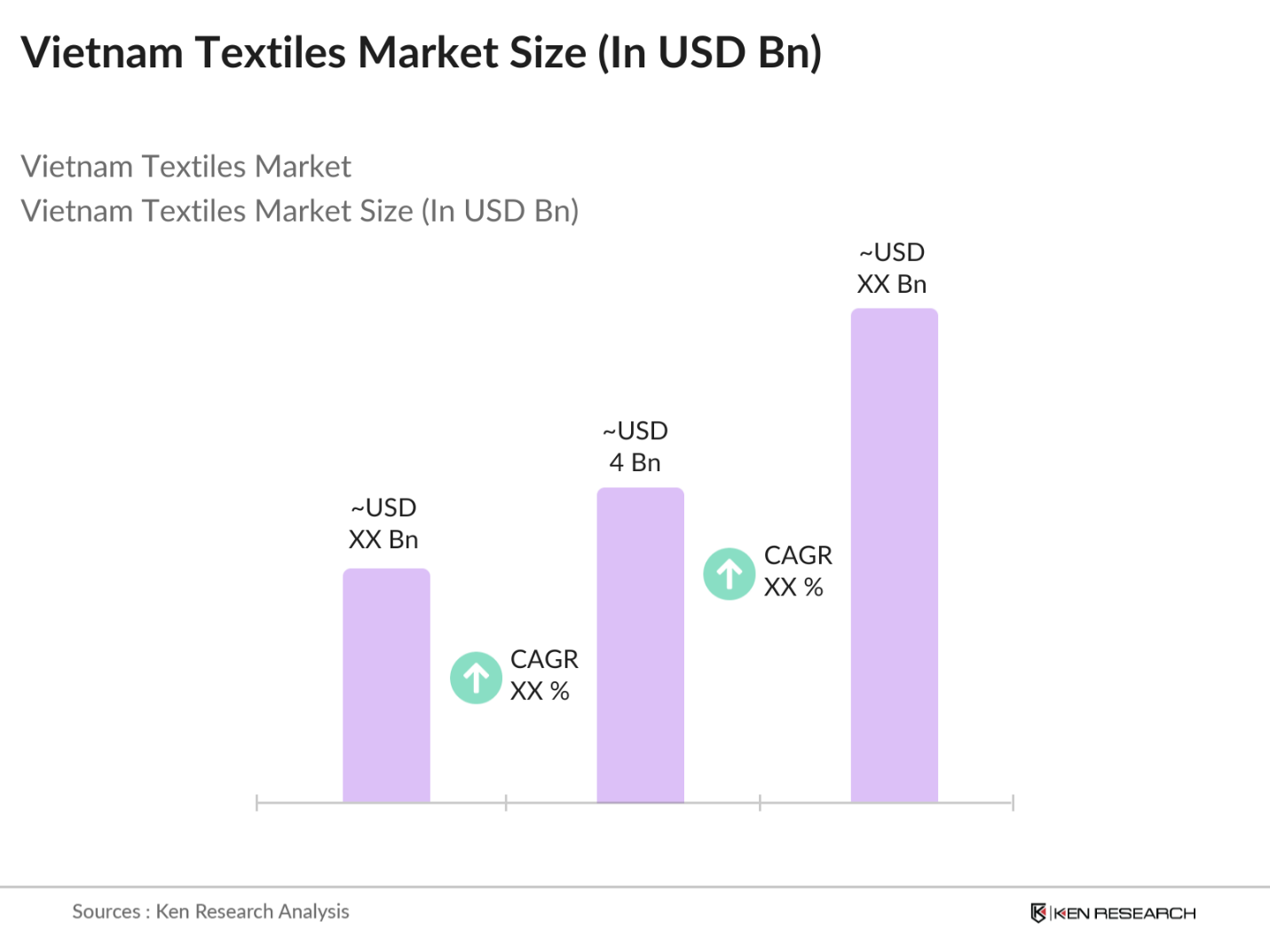
The Vietnam textile market is valued at USD 4 billion, based on a five-year historical analysis. This market's growth is primarily driven by the countrys participation in international trade agreements, which have bolstered export volumes and facilitated access to major global markets.
The Vietnam textile market primary challenges include rising labor costs, competition from other low-cost manufacturing countries, and compliance with international environmental standards.
The Vietnam textile market major players include Thanh Cong Textile Garment Investment Trading JSC, Phong Phu Corporation, and Century Synthetic Fiber Corporation.
The Vietnam textile market growth is propelled by favorable trade agreements, a skilled labor force, and increasing adoption of sustainable manufacturing practices.

What makes us stand out is that our consultants follows Robust, Refine and Result (RRR) methodology. i.e. Robust for clear definitions, approaches and sanity checking, Refine for differentiating respondents facts and opinions and Result for presenting data with story

We have set a benchmark in the industry by offering our clients with syndicated and customized market research reports featuring coverage of entire market as well as meticulous research and analyst insights.

While we don't replace traditional research, we flip the method upside down. Our dual approach of Top Bottom & Bottom Top ensures quality deliverable by not just verifying company fundamentals but also looking at the sector and macroeconomic factors.

With one step in the future, our research team constantly tries to show you the bigger picture. We help with some of the tough questions you may encounter along the way: How is the industry positioned? Best marketing channel? KPI's of competitors? By aligning every element, we help maximize success.

Our report gives you instant access to the answers and sources that other companies might choose to hide. We elaborate each steps of research methodology we have used and showcase you the sample size to earn your trust.

If you need any support, we are here! We pride ourselves on universe strength, data quality, and quick, friendly, and professional service.