About the Report
Base Year 2024Listen to the audio summary
Italy Reverse Logistics Outsourcing Market Overview
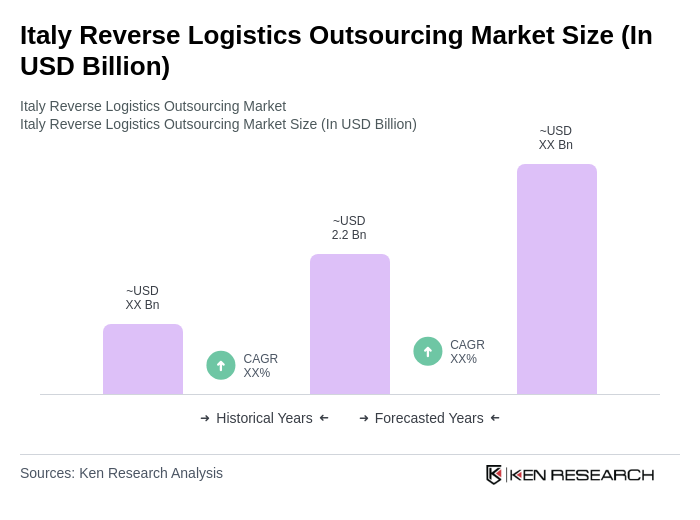
- The Italy Reverse Logistics Outsourcing Market is valued at USD 2.2 billion, based on a five-year historical analysis. This growth is primarily driven by the increasing emphasis on sustainability, the rise of e-commerce, and the need for efficient supply chain management. Companies are increasingly outsourcing reverse logistics to streamline operations and reduce costs, leading to a significant uptick in market demand .
- Key cities such as Milan, Rome, and Turin dominate the market due to their robust industrial base, extensive transportation networks, and proximity to major consumer markets. These urban centers are hubs for logistics and supply chain activities, making them ideal locations for reverse logistics operations, which are essential for managing returns and recycling processes .
- In 2023, the Italian government advanced the implementation of the Circular Economy Package, which mandates that businesses adopt sustainable practices in waste management and recycling. This regulation encourages companies to enhance their reverse logistics capabilities, thereby promoting the efficient recovery of products and materials, ultimately contributing to environmental sustainability .
Italy Reverse Logistics Outsourcing Market Segmentation
By Solution Type:
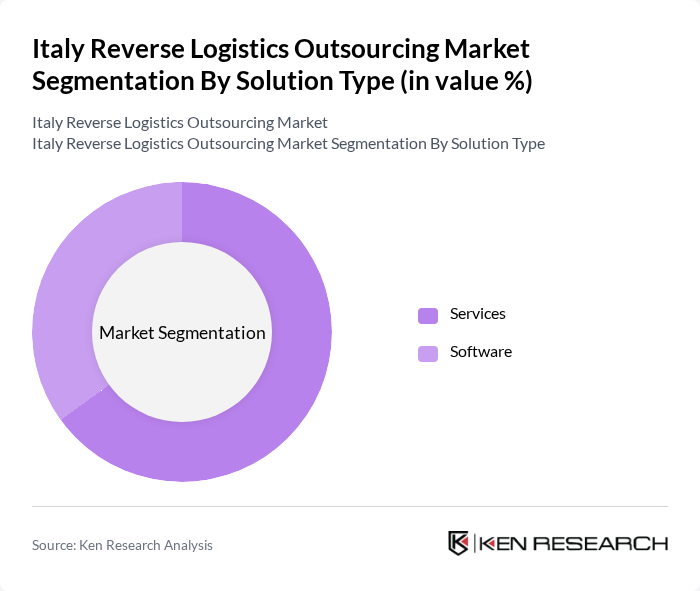
The solution type segmentation includes Services and Software. The Services sub-segment is currently dominating the market due to the increasing demand for comprehensive logistics solutions that encompass transportation, warehousing, and product returns management. Companies are increasingly outsourcing these services to specialized providers to enhance efficiency and reduce operational costs. The Software sub-segment, while growing, is primarily focused on providing technological solutions for tracking and managing returns, which supports the overall logistics process .
By Process Type:
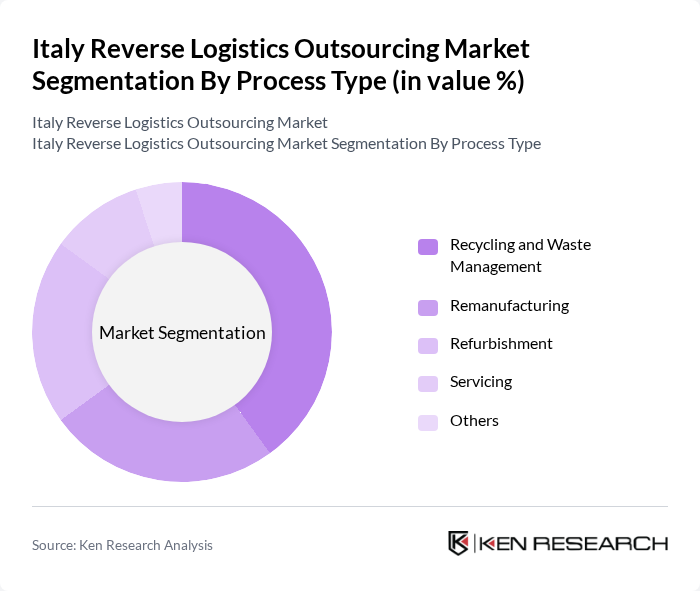
The process type segmentation includes Recycling and Waste Management, Remanufacturing, Refurbishment, Servicing, and Others. Recycling and Waste Management is the leading sub-segment, driven by stringent regulations and growing consumer awareness regarding sustainability. Companies are increasingly focusing on recycling initiatives to minimize waste and recover valuable materials. Remanufacturing and Refurbishment are also gaining traction as businesses seek to extend product life cycles and reduce costs associated with new product manufacturing .
Italy Reverse Logistics Outsourcing Market Competitive Landscape
The Italy Reverse Logistics Outsourcing Market is characterized by a dynamic mix of regional and international players. Leading participants such as DHL Supply Chain, Kuehne + Nagel, Geodis, XPO Logistics, CEVA Logistics, DB Schenker, UPS Supply Chain Solutions, DSV, Rhenus Logistics, GEFCO, Fercam, Arcese, BRT (Bartolini), Poste Italiane, Bolloré Logistics contribute to innovation, geographic expansion, and service delivery in this space.
Italy Reverse Logistics Outsourcing Market Industry Analysis
Growth Drivers
- Increasing E-commerce Activities:The Italian e-commerce sector is projected to reach €54 billion, driven by a 15% annual growth rate. This surge in online shopping necessitates efficient reverse logistics to handle returns, which accounted for approximately 20% of total e-commerce sales. As consumers increasingly prefer online purchases, the demand for streamlined return processes will significantly boost the reverse logistics outsourcing market in Italy.
- Rising Consumer Awareness on Sustainability:A survey indicated that 60% to 70% of Italian consumers prioritize sustainable practices when choosing brands. This growing awareness is pushing companies to adopt eco-friendly reverse logistics solutions, such as recycling and refurbishing returned products. The Italian government aims to reduce waste by 20% in future, further encouraging businesses to invest in sustainable reverse logistics practices to meet consumer expectations and regulatory requirements.
- Technological Advancements in Logistics:The logistics sector in Italy is increasingly adopting technologies like AI and IoT, with investments expected to exceed €5 billion. These advancements enhance tracking, inventory management, and returns processing, making reverse logistics more efficient. Companies leveraging these technologies can reduce operational costs by up to 25%, thereby driving the demand for outsourcing reverse logistics services to specialized providers.
Market Challenges
- High Operational Costs:The average operational cost for reverse logistics in Italy is estimated at €1.6 billion annually, primarily due to transportation and handling expenses. These high costs can deter companies from outsourcing their reverse logistics, as they may prefer to manage returns in-house. Additionally, fluctuating fuel prices and labor costs further exacerbate the financial burden on businesses, limiting their ability to invest in efficient reverse logistics solutions.
- Complexity in Returns Management:Managing returns in Italy involves navigating various regulations and customer expectations, which can complicate the process. A significant share of companies reported difficulties in handling returns efficiently, leading to increased processing times and customer dissatisfaction. This complexity can hinder the growth of the reverse logistics outsourcing market, as businesses may struggle to find reliable partners capable of managing these challenges effectively.
Italy Reverse Logistics Outsourcing Market Future Outlook
The future of the reverse logistics outsourcing market in Italy appears promising, driven by the increasing integration of technology and sustainability initiatives. As e-commerce continues to expand, companies will seek innovative solutions to streamline returns and enhance customer satisfaction. The focus on circular economy practices will further encourage businesses to adopt eco-friendly logistics strategies, creating a competitive landscape that prioritizes efficiency and sustainability in reverse logistics operations.
Market Opportunities
- Growth in Circular Economy Practices:The Italian government aims to promote circular economy initiatives, with a target of increasing recycling rates to 65% in future. This shift presents opportunities for reverse logistics providers to offer services that facilitate product refurbishment and recycling, aligning with regulatory goals and consumer preferences for sustainable practices.
- Expansion of Third-Party Logistics Providers:The number of third-party logistics providers in Italy is expected to grow by 10% in future, driven by the demand for specialized reverse logistics services. This expansion allows businesses to outsource their returns management to experts, improving efficiency and reducing costs while focusing on core operations and customer satisfaction.
Scope of the Report
| Segment | Sub-Segments |
|---|---|
| By Solution Type | Services Software |
| By Process Type | Recycling and Waste Management Remanufacturing Refurbishment Servicing Others |
| By Return Type | Commercial Returns End-of-Life Returns Warranty Returns Recall Returns Others |
| By End-User Industry | Retail & E-commerce Automotive Electronics & Electricals Pharmaceuticals & Healthcare Consumer Goods Others |
| By Region | Northern Italy Central Italy Southern Italy Islands Others |
Key Target Audience
Investors and Venture Capitalist Firms
Government and Regulatory Bodies (e.g., Italian Ministry of Economic Development, Italian Ministry of Environment and Protection of Land and Sea)
Manufacturers and Producers
Distributors and Retailers
Logistics and Supply Chain Management Companies
Waste Management and Recycling Firms
Industry Associations (e.g., Italian Logistics Association)
Financial Institutions
Players Mentioned in the Report:
DHL Supply Chain
Kuehne + Nagel
Geodis
XPO Logistics
CEVA Logistics
DB Schenker
UPS Supply Chain Solutions
DSV
Rhenus Logistics
GEFCO
Fercam
Arcese
BRT (Bartolini)
Poste Italiane
Bollore Logistics
Table of Contents
Market Assessment Phase
1. Executive Summary and Approach
2. Italy Reverse Logistics Outsourcing Market Overview
2.1 Key Insights and Strategic Recommendations
2.2 Italy Reverse Logistics Outsourcing Market Overview
2.3 Definition and Scope
2.4 Evolution of Market Ecosystem
2.5 Timeline of Key Regulatory Milestones
2.6 Value Chain & Stakeholder Mapping
2.7 Business Cycle Analysis
2.8 Policy & Incentive Landscape
3. Italy Reverse Logistics Outsourcing Market Analysis
3.1 Growth Drivers
3.1.1 Increasing E-commerce Activities
3.1.2 Rising Consumer Awareness on Sustainability
3.1.3 Technological Advancements in Logistics
3.1.4 Government Initiatives for Waste Reduction
3.2 Market Challenges
3.2.1 High Operational Costs
3.2.2 Complexity in Returns Management
3.2.3 Lack of Standardization
3.2.4 Limited Awareness Among SMEs
3.3 Market Opportunities
3.3.1 Growth in Circular Economy Practices
3.3.2 Expansion of Third-Party Logistics Providers
3.3.3 Adoption of Advanced Analytics
3.3.4 Increasing Demand for Eco-friendly Solutions
3.4 Market Trends
3.4.1 Integration of AI in Logistics
3.4.2 Rise of Omnichannel Retailing
3.4.3 Focus on Customer Experience in Returns
3.4.4 Growth of Reverse Auctions for Logistics Services
3.5 Government Regulation
3.5.1 Extended Producer Responsibility (EPR)
3.5.2 Waste Management Regulations
3.5.3 Environmental Protection Laws
3.5.4 Incentives for Sustainable Practices
4. SWOT Analysis
5. Stakeholder Analysis
6. Porter's Five Forces Analysis
7. Italy Reverse Logistics Outsourcing Market Market Size, 2019-2024
7.1 By Value
7.2 By Volume
7.3 By Average Selling Price
8. Italy Reverse Logistics Outsourcing Market Segmentation
8.1 By Solution Type
8.1.1 Services
8.1.2 Software
8.2 By Process Type
8.2.1 Recycling and Waste Management
8.2.2 Remanufacturing
8.2.3 Refurbishment
8.2.4 Servicing
8.2.5 Others
8.3 By Return Type
8.3.1 Commercial Returns
8.3.2 End-of-Life Returns
8.3.3 Warranty Returns
8.3.4 Recall Returns
8.3.5 Others
8.4 By End-User Industry
8.4.1 Retail & E-commerce
8.4.2 Automotive
8.4.3 Electronics & Electricals
8.4.4 Pharmaceuticals & Healthcare
8.4.5 Consumer Goods
8.4.6 Others
8.5 By Region
8.5.1 Northern Italy
8.5.2 Central Italy
8.5.3 Southern Italy
8.5.4 Islands
8.5.5 Others
9. Italy Reverse Logistics Outsourcing Market Competitive Analysis
9.1 Market Share of Key Players
9.2 KPIs for Cross Comparison of Key Players
9.2.1 Company Name
9.2.2 Group Size (Large, Medium, or Small as per industry convention)
9.2.3 Annual Revenue from Reverse Logistics (Italy)
9.2.4 Revenue Growth Rate (Reverse Logistics Segment)
9.2.5 Number of Reverse Logistics Facilities in Italy
9.2.6 Average Return Processing Time
9.2.7 Customer Retention Rate
9.2.8 Market Penetration Rate (Italy)
9.2.9 Service Level Agreement (SLA) Compliance Rate
9.2.10 Return Rate Managed
9.2.11 Percentage of Sustainable/Green Returns Processed
9.2.12 Technology Adoption Level (e.g., use of automation, tracking, analytics)
9.3 SWOT Analysis of Top Players
9.4 Pricing Analysis
9.5 List of Major Companies
9.5.1 DHL Supply Chain
9.5.2 Kuehne + Nagel
9.5.3 Geodis
9.5.4 XPO Logistics
9.5.5 CEVA Logistics
9.5.6 DB Schenker
9.5.7 UPS Supply Chain Solutions
9.5.8 DSV
9.5.9 Rhenus Logistics
9.5.10 GEFCO
9.5.11 Fercam
9.5.12 Arcese
9.5.13 BRT (Bartolini)
9.5.14 Poste Italiane
9.5.15 Bolloré Logistics
10. Italy Reverse Logistics Outsourcing Market End-User Analysis
10.1 Procurement Behavior of Key Ministries
10.1.1 Key Procurement Trends
10.1.2 Budget Allocation Insights
10.1.3 Decision-Making Processes
10.1.4 Supplier Selection Criteria
10.2 Corporate Spend on Infrastructure & Energy
10.2.1 Investment Trends
10.2.2 Budget Priorities
10.2.3 Infrastructure Development Plans
10.3 Pain Point Analysis by End-User Category
10.3.1 Common Challenges Faced
10.3.2 Specific Needs by Sector
10.3.3 Solutions Sought
10.4 User Readiness for Adoption
10.4.1 Awareness Levels
10.4.2 Training and Support Needs
10.4.3 Technology Adoption Rates
10.5 Post-Deployment ROI and Use Case Expansion
10.5.1 ROI Measurement Techniques
10.5.2 Case Studies of Successful Implementations
10.5.3 Future Use Case Opportunities
11. Italy Reverse Logistics Outsourcing Market Future Size, 2025-2030
11.1 By Value
11.2 By Volume
11.3 By Average Selling Price
Go-To-Market Strategy Phase
1. Whitespace Analysis + Business Model Canvas
1.1 Market Gaps Identification
1.2 Business Model Components
1.3 Value Proposition Canvas
1.4 Revenue Streams Analysis
1.5 Cost Structure Overview
1.6 Key Partnerships
1.7 Customer Segments
2. Marketing and Positioning Recommendations
2.1 Branding Strategies
2.2 Product USPs
2.3 Target Market Positioning
2.4 Communication Strategies
2.5 Digital Marketing Approaches
3. Distribution Plan
3.1 Urban Retail Strategies
3.2 Rural NGO Tie-ups
3.3 Distribution Channel Optimization
3.4 Logistics Partnerships
4. Channel & Pricing Gaps
4.1 Underserved Routes
4.2 Pricing Bands Analysis
4.3 Competitive Pricing Strategies
5. Unmet Demand & Latent Needs
5.1 Category Gaps
5.2 Consumer Segments Analysis
5.3 Emerging Trends
6. Customer Relationship
6.1 Loyalty Programs
6.2 After-sales Service
6.3 Customer Feedback Mechanisms
7. Value Proposition
7.1 Sustainability Initiatives
7.2 Integrated Supply Chains
7.3 Customer-Centric Solutions
8. Key Activities
8.1 Regulatory Compliance
8.2 Branding Initiatives
8.3 Distribution Setup
9. Entry Strategy Evaluation
9.1 Domestic Market Entry Strategy
9.1.1 Product Mix Considerations
9.1.2 Pricing Band Strategies
9.1.3 Packaging Innovations
9.2 Export Entry Strategy
9.2.1 Target Countries Identification
9.2.2 Compliance Roadmap Development
10. Entry Mode Assessment
10.1 Joint Ventures
10.2 Greenfield Investments
10.3 Mergers & Acquisitions
10.4 Distributor Model Evaluation
11. Capital and Timeline Estimation
11.1 Capital Requirements
11.2 Timelines for Implementation
12. Control vs Risk Trade-Off
12.1 Ownership vs Partnerships
13. Profitability Outlook
13.1 Breakeven Analysis
13.2 Long-term Sustainability Strategies
14. Potential Partner List
14.1 Distributors
14.2 Joint Ventures
14.3 Acquisition Targets
15. Execution Roadmap
15.1 Phased Plan for Market Entry
15.1.1 Market Setup
15.1.2 Market Entry
15.1.3 Growth Acceleration
15.1.4 Scale & Stabilize
15.2 Key Activities and Milestones
15.2.1 Milestone Planning
15.2.2 Activity Tracking
Research Methodology
Phase 1: Approach1
Desk Research
- Analysis of industry reports from logistics associations in Italy
- Review of government publications on waste management and recycling policies
- Examination of academic journals focusing on reverse logistics practices in Europe
Primary Research
- Interviews with logistics managers from major retail chains operating in Italy
- Surveys conducted with reverse logistics service providers and third-party logistics firms
- Focus groups with consumers to understand return behavior and preferences
Validation & Triangulation
- Cross-validation of findings with data from industry conferences and seminars
- Triangulation of insights from primary interviews with secondary data trends
- Sanity checks through expert reviews from logistics and supply chain professionals
Phase 2: Market Size Estimation1
Top-down Assessment
- Estimation of reverse logistics market size based on overall logistics expenditure in Italy
- Segmentation of market size by industry verticals such as retail, electronics, and automotive
- Incorporation of insights from EU regulations promoting circular economy practices
Bottom-up Modeling
- Collection of operational data from leading reverse logistics firms in Italy
- Estimation of costs associated with returns processing and recovery operations
- Calculation of market size based on return volumes and average handling costs
Forecasting & Scenario Analysis
- Development of forecasting models based on historical growth rates and market trends
- Scenario analysis considering potential impacts of economic fluctuations and consumer behavior changes
- Projections of market growth through 2030 under various regulatory and market conditions
Phase 3: CATI Sample Composition1
| Scope Item/Segment | Sample Size | Target Respondent Profiles |
|---|---|---|
| Retail Sector Reverse Logistics | 100 | Logistics Managers, Supply Chain Directors |
| Electronics Returns Management | 70 | Operations Managers, Customer Service Heads |
| Automotive Parts Recovery | 50 | Procurement Officers, Warehouse Managers |
| Textile Recycling Initiatives | 40 | Sustainability Officers, Product Development Managers |
| E-commerce Returns Processes | 60 | eCommerce Managers, Fulfillment Center Supervisors |
Frequently Asked Questions
What is the current value of the Italy Reverse Logistics Outsourcing Market?
The Italy Reverse Logistics Outsourcing Market is valued at approximately USD 2.2 billion, reflecting a significant growth trend driven by sustainability initiatives, the rise of e-commerce, and the need for efficient supply chain management.
What factors are driving the growth of reverse logistics outsourcing in Italy?
Which cities in Italy are the main hubs for reverse logistics operations?
How does the Italian government influence reverse logistics practices?
Other Regional/Country Reports
Indonesia Reverse Logistics Outsourcing Market
Why Buy From Us?

What makes us stand out is that our consultants follow Robust, Refine and Result (RRR) methodology. Robust for clear definitions, approaches and sanity checking, Refine for differentiating respondents' facts and opinions, and Result for presenting data with story.

We have set a benchmark in the industry by offering our clients with syndicated and customized market research reports featuring coverage of entire market as well as meticulous research and analyst insights.

While we don't replace traditional research, we flip the method upside down. Our dual approach of Top Bottom & Bottom Top ensures quality deliverable by not just verifying company fundamentals but also looking at the sector and macroeconomic factors.

With one step in the future, our research team constantly tries to show you the bigger picture. We help with some of the tough questions you may encounter along the way: How is the industry positioned? Best marketing channel? KPI's of competitors? By aligning every element, we help maximize success.

Our report gives you instant access to the answers and sources that other companies might choose to hide. We elaborate each steps of research methodology we have used and showcase you the sample size to earn your trust.

If you need any support, we are here! We pride ourselves on universe strength, data quality, and quick, friendly, and professional service.