About the Report
Base Year 2024Japan Digital Printed Textile Market Overview
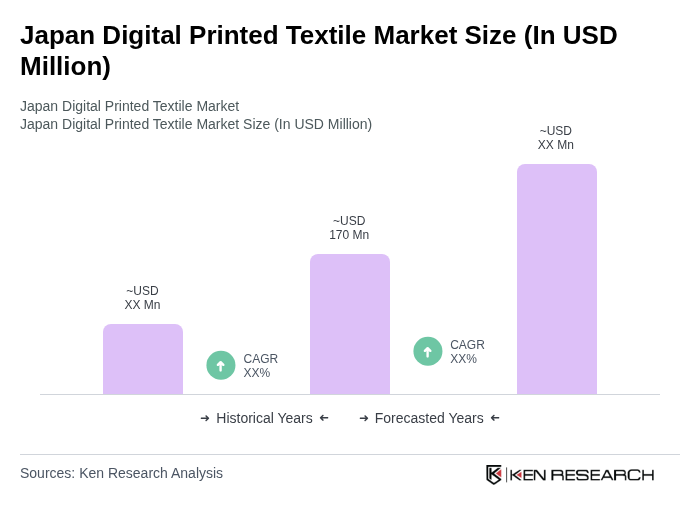
- The Japan Digital Printed Textile Market is valued at USD 170 million, based on a five-year historical analysis. This growth is primarily driven by the increasing demand for customized fabrics, faster production cycles, and eco-friendly printing technologies, alongside advancements in digital printing technologies that enhance production efficiency and reduce waste.
- Key cities such as Tokyo and Osaka dominate the market due to their robust fashion industries, high consumer spending, and a strong presence of textile manufacturers. These urban centers are also hubs for innovation and technology, fostering a conducive environment for digital printing advancements.
- The Act on Promotion of Effective Utilization of Resources, 2000 issued by the Ministry of the Environment requires textile manufacturers to achieve specified recycling rates for apparel waste, with compliance mandates including annual reporting of waste reduction measures and thresholds of 20 percent reduction targets for large-scale producers using digital technologies to minimize water and chemical usage.
Japan Digital Printed Textile Market Segmentation
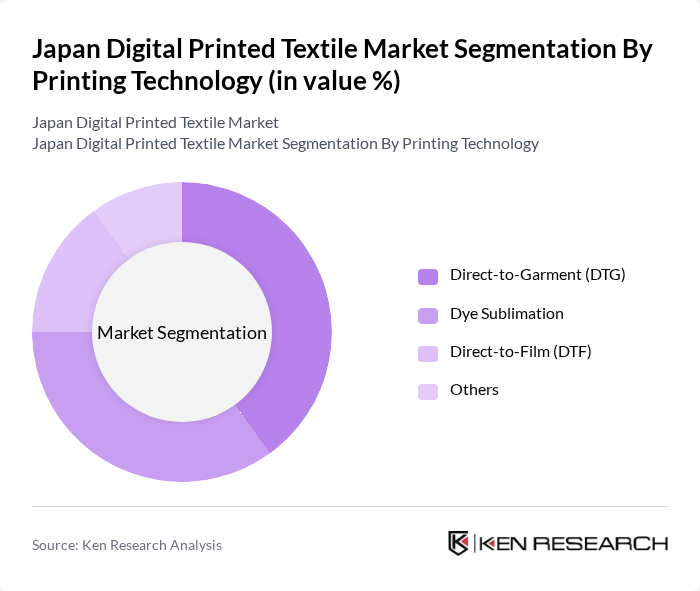
By Printing Technology:The digital printed textile market is segmented into various printing technologies, including Direct-to-Garment (DTG), Dye Sublimation, Direct-to-Film (DTF), and others. Each of these technologies caters to different consumer needs and preferences, influencing their market share. DTG is particularly popular for its ability to produce high-quality prints on demand with minimal waste, while dye sublimation is favored for its vibrant colors and durability.
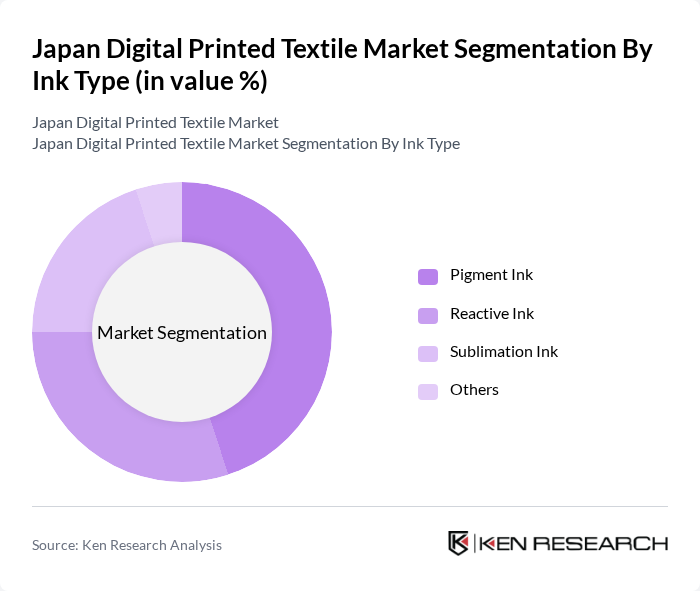
By Ink Type:The market is also segmented by ink type, which includes Pigment Ink, Reactive Ink, Sublimation Ink, and others. Each ink type offers unique properties that cater to specific applications and consumer preferences. Pigment ink is widely used for its versatility and ease of use with natural and recycled polyester blends, while reactive ink is preferred for its vibrant colors and wash durability.
Japan Digital Printed Textile Market Competitive Landscape
The Japan Digital Printed Textile Market is characterized by a dynamic mix of regional and international players. Leading participants such as Epson Corporation, Mimaki Engineering Co., Ltd., Roland DG Corporation, Brother Industries, Ltd., Konica Minolta, Inc., Durst Phototechnik AG, Atexco Co., Ltd., MS Printing Solutions, Kornit Digital Ltd., Sefar AG, J-Teck3, Neenah Coldenhove, Dazian LLC, Printful, TSC Auto ID Technology Co., Ltd. contribute to innovation, geographic expansion, and service delivery in this space.
Japan Digital Printed Textile Market Industry Analysis
Growth Drivers
- Increasing Demand for Customization:The Japanese digital printed textile market is experiencing a surge in demand for customized products, driven by consumer preferences for unique designs. In future, the customization segment is projected to account for approximately ¥180 billion, reflecting a 20% increase from the previous year. This trend is supported by the rise of small-scale fashion brands and individual designers who leverage digital printing technology to offer personalized textiles, catering to niche markets and enhancing customer engagement.
- Advancements in Printing Technology:Technological innovations in digital printing, such as improved ink formulations and faster printing speeds, are propelling market growth. In future, the adoption of advanced digital printers is expected to increase by 30%, with over 1,300 new units installed across Japan. These advancements enable manufacturers to produce high-quality prints with intricate designs, reducing production time and costs, thus attracting more businesses to switch from traditional methods to digital printing.
- Sustainability Trends in Textile Production:The growing emphasis on sustainability is reshaping the Japanese textile industry, with digital printing offering eco-friendly alternatives. In future, the market for sustainable textiles is anticipated to reach ¥250 billion, driven by consumer demand for environmentally responsible products. Digital printing reduces water usage by up to 90% compared to conventional methods, aligning with Japan's commitment to environmental protection and appealing to eco-conscious consumers and brands alike.
Market Challenges
- High Initial Investment Costs:One of the significant barriers to entry in the digital printed textile market is the high initial investment required for advanced printing equipment. In future, the average cost of a high-quality digital printer is estimated at ¥12 million, which can deter small and medium-sized enterprises from entering the market. This financial hurdle limits competition and slows down the overall growth of the digital printing sector in Japan.
- Competition from Traditional Textile Printing:The digital printed textile market faces stiff competition from established traditional printing methods, which are often perceived as more cost-effective. In future, traditional printing methods are expected to maintain a market share of approximately 60%, primarily due to their lower operational costs and established supply chains. This competition poses a challenge for digital printing companies to differentiate their offerings and justify the higher prices associated with digital products.
Japan Digital Printed Textile Market Future Outlook
The future of the Japan digital printed textile market appears promising, driven by technological advancements and shifting consumer preferences. As the demand for customization and sustainable practices continues to rise, companies are likely to invest in innovative printing technologies. Additionally, the integration of smart textiles and on-demand printing solutions will further enhance market dynamics, allowing businesses to respond swiftly to changing trends and consumer needs, thereby fostering growth and competitiveness in the sector.
Market Opportunities
- Expansion into Emerging Markets:Japanese digital printed textile manufacturers have significant opportunities to expand into emerging markets in Southeast Asia. With a projected market growth rate of 15% in these regions, companies can leverage their expertise in digital printing to meet the rising demand for fashionable and affordable textiles, enhancing their global footprint and revenue streams.
- Collaborations with Fashion Designers:Collaborating with fashion designers presents a lucrative opportunity for digital printed textile firms. By partnering with renowned designers, companies can create exclusive collections that appeal to high-end consumers. This strategy not only boosts brand visibility but also taps into the growing luxury market, which is expected to reach ¥350 billion in future, providing substantial revenue potential.
Scope of the Report
| Segment | Sub-Segments |
|---|---|
| By Printing Technology | Direct-to-Garment (DTG) Dye Sublimation Direct-to-Film (DTF) Others |
| By Ink Type | Pigment Ink Reactive Ink Sublimation Ink Others |
| By Application | Clothing and Apparel Home Décor and Furnishings Specialty and Functional Textiles Others |
| By Substrate | Cotton Polyester Blends Others |
| By Region | Kanto Region Kansai/Kinki Region Central/Chubu Region Kyushu-Okinawa Region Others |
Key Target Audience
Investors and Venture Capitalist Firms
Government and Regulatory Bodies (e.g., Ministry of Economy, Trade and Industry)
Manufacturers and Producers
Distributors and Retailers
Textile and Fashion Brands
Technology Providers
Industry Associations (e.g., Japan Textile Federation)
Financial Institutions
Players Mentioned in the Report:
Epson Corporation
Mimaki Engineering Co., Ltd.
Roland DG Corporation
Brother Industries, Ltd.
Konica Minolta, Inc.
Durst Phototechnik AG
Atexco Co., Ltd.
MS Printing Solutions
Kornit Digital Ltd.
Sefar AG
J-Teck3
Neenah Coldenhove
Dazian LLC
Printful
TSC Auto ID Technology Co., Ltd.
Table of Contents
Market Assessment Phase
1. Executive Summary and Approach
2. Japan Digital Printed Textile Market Overview
2.1 Key Insights and Strategic Recommendations
2.2 Japan Digital Printed Textile Market Overview
2.3 Definition and Scope
2.4 Evolution of Market Ecosystem
2.5 Timeline of Key Regulatory Milestones
2.6 Value Chain & Stakeholder Mapping
2.7 Business Cycle Analysis
2.8 Policy & Incentive Landscape
3. Japan Digital Printed Textile Market Analysis
3.1 Growth Drivers
3.1.1 Increasing Demand for Customization
3.1.2 Advancements in Printing Technology
3.1.3 Sustainability Trends in Textile Production
3.1.4 Growth of E-commerce in Fashion
3.2 Market Challenges
3.2.1 High Initial Investment Costs
3.2.2 Competition from Traditional Textile Printing
3.2.3 Regulatory Compliance Issues
3.2.4 Limited Awareness Among End-Users
3.3 Market Opportunities
3.3.1 Expansion into Emerging Markets
3.3.2 Collaborations with Fashion Designers
3.3.3 Development of Eco-Friendly Inks
3.3.4 Integration of Smart Textiles
3.4 Market Trends
3.4.1 Rise of On-Demand Printing
3.4.2 Increased Use of Digital Fabric Printing in Home Décor
3.4.3 Adoption of 3D Printing Technologies
3.4.4 Growth in Digital Textile Printing for Sportswear
3.5 Government Regulation
3.5.1 Environmental Protection Standards
3.5.2 Import Tariffs on Textile Products
3.5.3 Labor Regulations in Textile Manufacturing
3.5.4 Quality Control Regulations for Printed Textiles
4. SWOT Analysis
5. Stakeholder Analysis
6. Porter's Five Forces Analysis
7. Japan Digital Printed Textile Market Market Size, 2019-2024
7.1 By Value
7.2 By Volume
7.3 By Average Selling Price
8. Japan Digital Printed Textile Market Segmentation
8.1 By Printing Technology
8.1.1 Direct-to-Garment (DTG)
8.1.2 Dye Sublimation
8.1.3 Direct-to-Film (DTF)
8.1.4 Others
8.2 By Ink Type
8.2.1 Pigment Ink
8.2.2 Reactive Ink
8.2.3 Sublimation Ink
8.2.4 Others
8.3 By Application
8.3.1 Clothing and Apparel
8.3.2 Home Décor and Furnishings
8.3.3 Specialty and Functional Textiles
8.3.4 Others
8.4 By Substrate
8.4.1 Cotton
8.4.2 Polyester
8.4.3 Blends
8.4.4 Others
8.5 By Region
8.5.1 Kanto Region
8.5.2 Kansai/Kinki Region
8.5.3 Central/Chubu Region
8.5.4 Kyushu-Okinawa Region
8.5.5 Others
9. Japan Digital Printed Textile Market Competitive Analysis
9.1 Market Share of Key Players
9.2 Cross Comparison of Key Players
9.2.1 Revenue Growth (CAGR 2024-2029)
9.2.2 Market Share (%)
9.2.3 EBITDA Margin (%)
9.2.4 Production Capacity (Units/Year)
9.2.5 R&D Investment (% of Revenue)
9.2.6 Customer Acquisition Cost (CAC)
9.2.7 Net Promoter Score (NPS)
9.2.8 Patent Filings (Annual)
9.2.9 Export Revenue (% of Total)
9.2.10 Sustainability Score (ESG Rating)
9.3 SWOT Analysis of Top Players
9.4 Pricing Analysis
9.5 Detailed Profile of Major Companies
9.5.1 Epson Corporation
9.5.2 Mimaki Engineering Co., Ltd.
9.5.3 Roland DG Corporation
9.5.4 Brother Industries, Ltd.
9.5.5 Konica Minolta, Inc.
9.5.6 Durst Phototechnik AG
9.5.7 Atexco Co., Ltd.
9.5.8 MS Printing Solutions
9.5.9 Kornit Digital Ltd.
9.5.10 Sefar AG
9.5.11 J-Teck3
9.5.12 Neenah Coldenhove
9.5.13 Dazian LLC
9.5.14 Printful
9.5.15 TSC Auto ID Technology Co., Ltd.
10. Japan Digital Printed Textile Market End-User Analysis
10.1 Procurement Behavior of Key Ministries
10.1.1 Government Procurement Policies
10.1.2 Budget Allocation for Textiles
10.1.3 Supplier Selection Criteria
10.1.4 Contract Management Practices
10.2 Corporate Spend on Infrastructure & Energy
10.2.1 Investment Trends in Textile Infrastructure
10.2.2 Energy Consumption Patterns
10.2.3 Budgeting for Sustainability Initiatives
10.2.4 Corporate Social Responsibility Spending
10.3 Pain Point Analysis by End-User Category
10.3.1 Quality Control Issues
10.3.2 Supply Chain Disruptions
10.3.3 Cost Management Challenges
10.3.4 Technology Adoption Barriers
10.4 User Readiness for Adoption
10.4.1 Awareness of Digital Printing Benefits
10.4.2 Training and Skill Development Needs
10.4.3 Infrastructure Readiness
10.4.4 Financial Readiness for Investment
10.5 Post-Deployment ROI and Use Case Expansion
10.5.1 Measurement of ROI Metrics
10.5.2 Case Studies of Successful Implementations
10.5.3 Expansion into New Applications
10.5.4 Long-term Sustainability Considerations
11. Japan Digital Printed Textile Market Future Size, 2025-2030
11.1 By Value
11.2 By Volume
11.3 By Average Selling Price
Go-To-Market Strategy Phase
1. Whitespace Analysis + Business Model Canvas
1.1 Market Gaps Identification
1.2 Business Model Development
2. Marketing and Positioning Recommendations
2.1 Branding Strategies
2.2 Product USPs
3. Distribution Plan
3.1 Urban Retail vs Rural NGO Tie-ups
4. Channel & Pricing Gaps
4.1 Underserved Routes
4.2 Pricing Bands
5. Unmet Demand & Latent Needs
5.1 Category Gaps
5.2 Consumer Segments
6. Customer Relationship
6.1 Loyalty Programs
6.2 After-sales Service
7. Value Proposition
7.1 Sustainability
7.2 Integrated Supply Chains
8. Key Activities
8.1 Regulatory Compliance
8.2 Branding
8.3 Distribution Setup
9. Entry Strategy Evaluation
9.1 Domestic Market Entry Strategy
9.1.1 Product Mix
9.1.2 Pricing Band
9.1.3 Packaging
9.2 Export Entry Strategy
9.2.1 Target Countries
9.2.2 Compliance Roadmap
10. Entry Mode Assessment
10.1 JV
10.2 Greenfield
10.3 M&A
10.4 Distributor Model
11. Capital and Timeline Estimation
11.1 Capital Requirements
11.2 Timelines
12. Control vs Risk Trade-Off
12.1 Ownership vs Partnerships
13. Profitability Outlook
13.1 Breakeven Analysis
13.2 Long-term Sustainability
14. Potential Partner List
14.1 Distributors
14.2 JVs
14.3 Acquisition Targets
15. Execution Roadmap
15.1 Phased Plan for Market Entry
15.1.1 Market Setup
15.1.2 Market Entry
15.1.3 Growth Acceleration
15.1.4 Scale & Stabilize
15.2 Key Activities and Milestones
15.2.1 Milestone Planning
15.2.2 Activity Tracking
Research Methodology
Phase 1: Approach1
Desk Research
- Industry reports from textile associations and market research firms
- Government publications on textile production and export statistics
- Academic journals focusing on digital printing technologies and market trends
Primary Research
- Interviews with key stakeholders in textile manufacturing and printing
- Surveys targeting designers and retailers utilizing digital printed textiles
- Field visits to textile production facilities employing digital printing techniques
Validation & Triangulation
- Cross-validation of findings through multiple industry expert interviews
- Triangulation of data from trade publications, market reports, and expert insights
- Sanity checks through feedback from focus groups comprising industry professionals
Phase 2: Market Size Estimation1
Top-down Assessment
- Analysis of Japan's overall textile market size and growth trends
- Segmentation of the digital printed textile market by application and end-user
- Incorporation of macroeconomic factors influencing textile consumption
Bottom-up Modeling
- Estimation of production volumes from leading digital textile printing companies
- Cost analysis based on material inputs and printing technology used
- Revenue projections based on pricing strategies and market demand
Forecasting & Scenario Analysis
- Multi-variable forecasting using historical growth rates and market drivers
- Scenario planning based on technological advancements and consumer preferences
- Development of best-case, worst-case, and most-likely market scenarios through 2030
Phase 3: CATI Sample Composition1
| Scope Item/Segment | Sample Size | Target Respondent Profiles |
|---|---|---|
| Fashion Retailers Using Digital Prints | 120 | Merchandise Managers, Brand Strategists |
| Textile Manufacturers with Digital Printing Capabilities | 100 | Production Managers, Technical Directors |
| Design Firms Specializing in Printed Textiles | 90 | Creative Directors, Lead Designers |
| End-users in Home Décor and Furnishings | 80 | Product Managers, Interior Designers |
| Textile Equipment Suppliers | 70 | Sales Managers, Product Development Engineers |
Frequently Asked Questions
What is the current value of the Japan Digital Printed Textile Market?
The Japan Digital Printed Textile Market is valued at approximately USD 170 million, reflecting a significant growth trend driven by the demand for customized fabrics, faster production cycles, and eco-friendly printing technologies.
Which cities are the main hubs for the Japan Digital Printed Textile Market?
What are the key drivers of growth in the Japan Digital Printed Textile Market?
What challenges does the Japan Digital Printed Textile Market face?
Other Regional/Country Reports
Other Adjacent Reports
Oman Textile Printing Machinery Market
UAE Fashion Apparel Market
Philippines Sustainable Textiles Market
Qatar printing inks market size, share, growth drivers, trends, opportunities & forecast 2025–2030Belgium Custom Fabrics Market
Qatar Dye Sublimation Market
Mexico Garment Manufacturing Market
Qatar Textile Recycling MarketIndia Smart Textiles Market Outlook to 2030Germany On-Demand Printing Market
Why Buy From Us?

What makes us stand out is that our consultants follow Robust, Refine and Result (RRR) methodology. Robust for clear definitions, approaches and sanity checking, Refine for differentiating respondents' facts and opinions, and Result for presenting data with story.

We have set a benchmark in the industry by offering our clients with syndicated and customized market research reports featuring coverage of entire market as well as meticulous research and analyst insights.

While we don't replace traditional research, we flip the method upside down. Our dual approach of Top Bottom & Bottom Top ensures quality deliverable by not just verifying company fundamentals but also looking at the sector and macroeconomic factors.

With one step in the future, our research team constantly tries to show you the bigger picture. We help with some of the tough questions you may encounter along the way: How is the industry positioned? Best marketing channel? KPI's of competitors? By aligning every element, we help maximize success.

Our report gives you instant access to the answers and sources that other companies might choose to hide. We elaborate each steps of research methodology we have used and showcase you the sample size to earn your trust.

If you need any support, we are here! We pride ourselves on universe strength, data quality, and quick, friendly, and professional service.