KSA Fuel Station Market Outlook 2030

Region:Middle East

Author(s):Shivani Mehra

Product Code:KROD2669

Published On

November 2024

Total pages

82

About the Report

KSA Fuel Station Market Overview

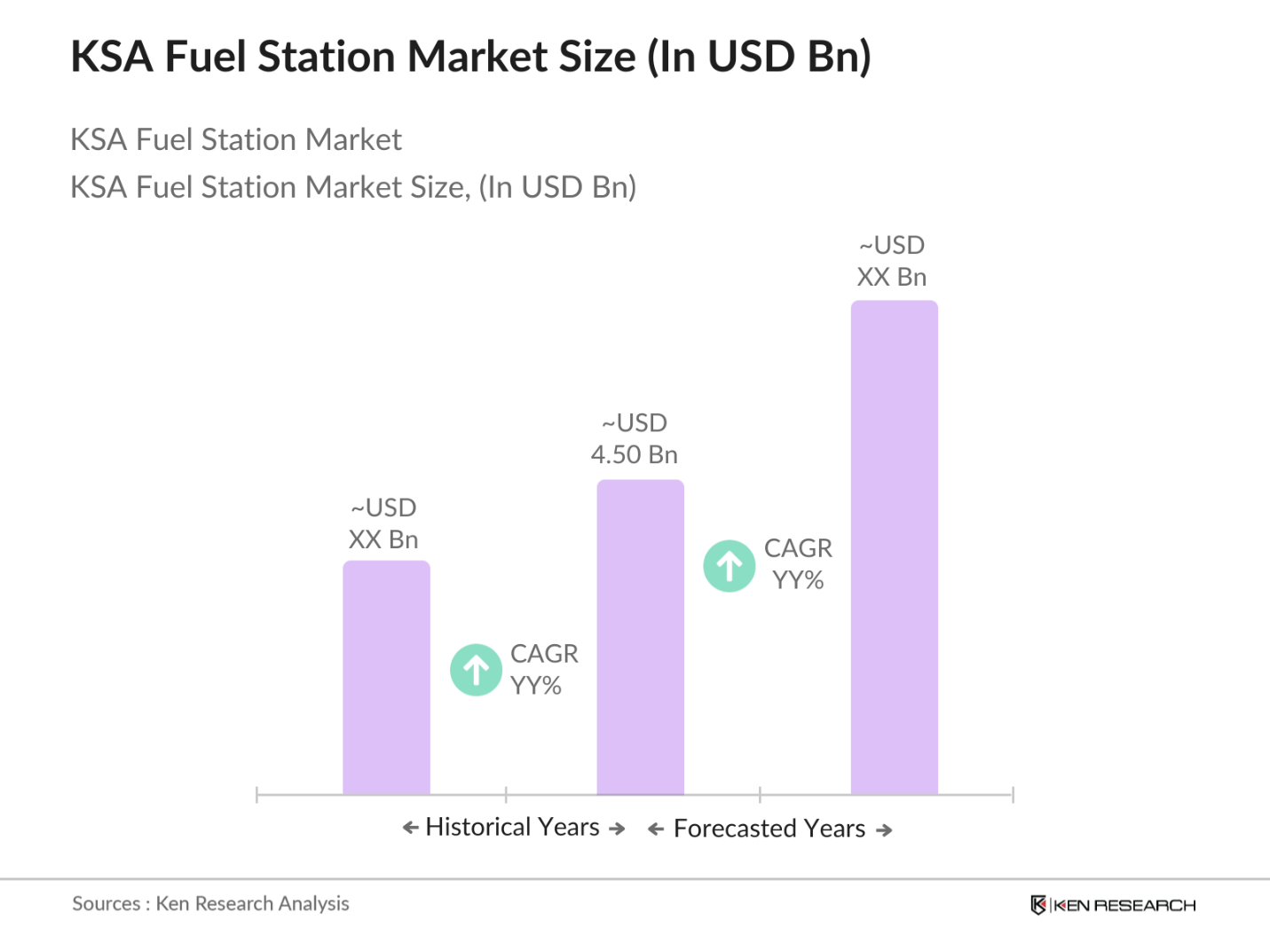
  • The KSA Fuel Station Market is gaining traction, driven by a surge in the adoption of zero-emission vehicles (ZEVs) and efforts to decarbonize the transportation sector. The market is valued at USD 4.50 billion, supported by increasing government initiatives and investments in green hydrogen production and hydrogen refueling infrastructure. Key drivers include advancements in hydrogen production technology, such as electrolysis, which supports sustainability efforts by reducing greenhouse gas emissions. The growing need for sustainable transport alternatives has solidified hydrogen as a viable fuel solution across industries.

market overviews

  • Countries leading the hydrogen fueling station market include Japan, Germany, and South Korea. Japan has emerged as a global leader due to its robust hydrogen policies and infrastructure expansion aligned with its long-term carbon neutrality goals. Germany, with its strong industrial base, is scaling hydrogen refueling infrastructure to meet its ambitious renewable energy targets. is rapidly deploying hydrogen stations to support the adoption of fuel cell electric vehicles (FCEVs), further establishing its dominance in the market.
  • Governments worldwide are providing substantial subsidies and funding to support the development of hydrogen refueling infrastructure. For example, the European Union has committed billions through its Hydrogen Strategy to develop hydrogen refueling stations across member states, with 9 billion allocated in 2023 alone for hydrogen projects. Similarly, Japans Green Growth Strategy provides significant subsidies for the construction of hydrogen fueling stations, aiming for 1,000 operational stations by 2030. These financial incentives reduce the upfront costs for private companies, accelerating the rollout of hydrogen infrastructure.

KSA Fuel Station Market Segmentation

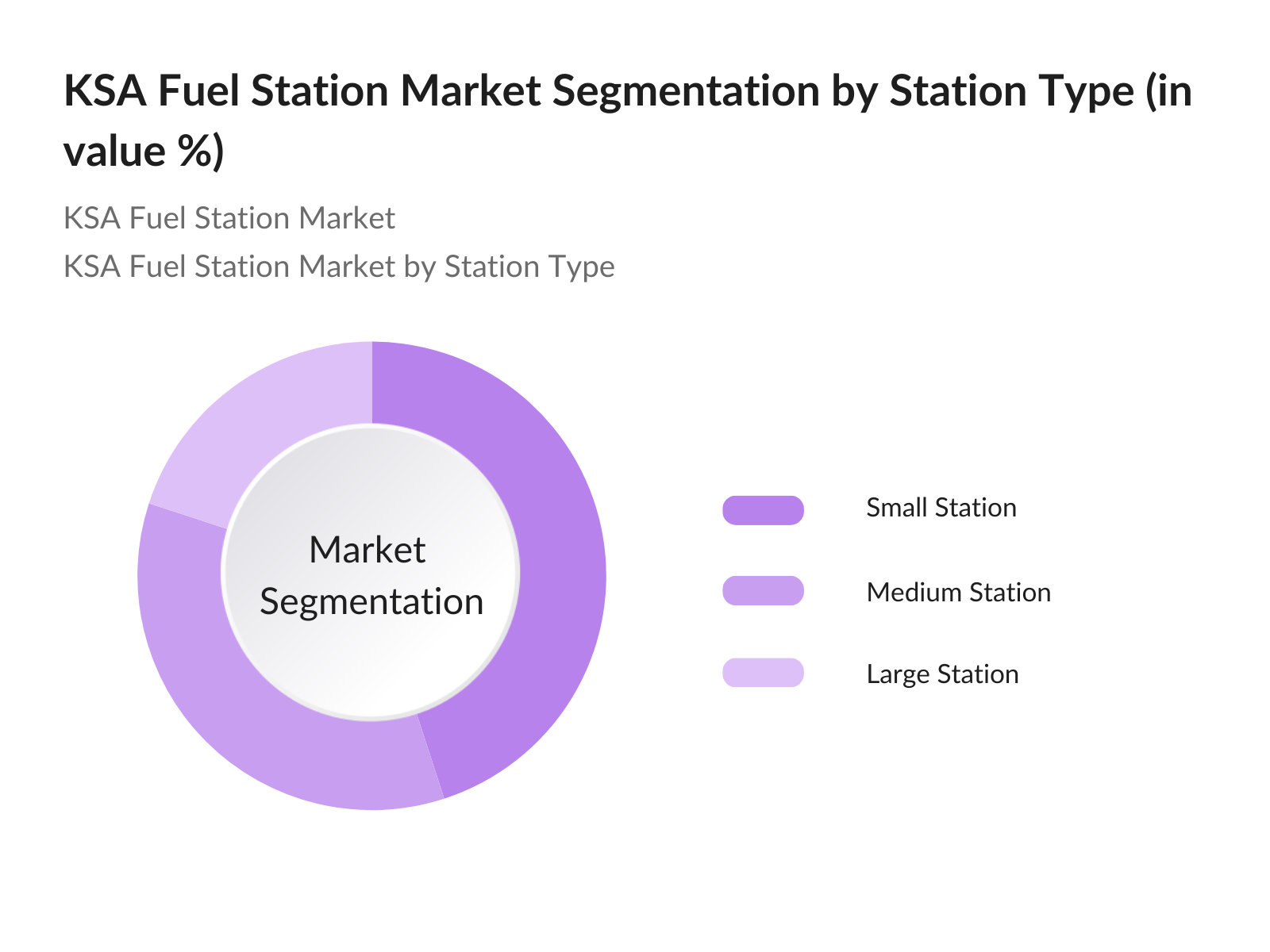
  • By Station Type: The hydrogen fueling station market is segmented into small, medium, and large stations. Small stations dominate the market, particularly in urban areas where the adoption of passenger and light commercial vehicles is higher. These stations cater to ZEVs, which are seeing increased deployment due to climate targets and growing consumer awareness of eco-friendly transport solutions. Medium and large stations, primarily serving heavy-duty vehicles and industrial applications, are growing as infrastructure investments expand to meet rising hydrogen demand.

market overviews

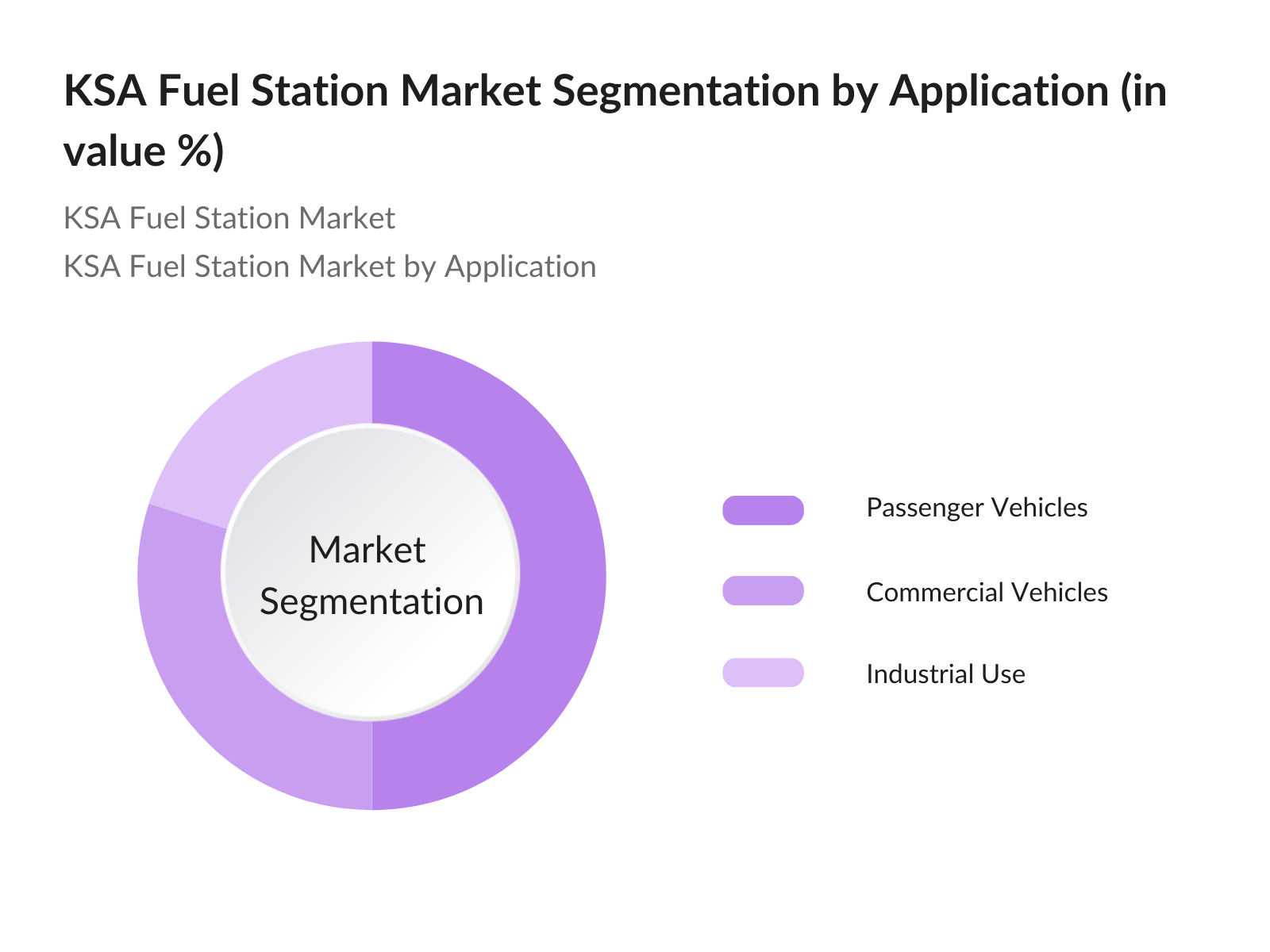
  • By Application: The market is segmented by application into passenger vehicles, commercial vehicles, and industrial use. Passenger vehicles represent the largest market share, driven by increasing ZEV ownership and government incentives aimed at reducing emissions. Commercial vehicles, particularly in the logistics and transport sectors, are also adopting hydrogen as a cleaner alternative to diesel. Industrial applications, such as steelmaking and chemical manufacturing, are emerging segments where hydrogen is being used to replace carbon-intensive processes.

market overviews

KSA Fuel Station Market Competitive Landscape

The KSA Fuel Station Market is competitive, with key players focusing on expanding their infrastructure networks, developing innovative technologies, and forming strategic partnerships. The market is dominated by companies that have extensive experience in industrial gases and energy solutions, such as Air Liquide and Linde PLC. These players are investing heavily in research and development to scale hydrogen production technologies and improve the cost efficiency of hydrogen fueling stations.

Company Name

Establishment Year

Headquarters

Market Parameters

Air Liquide SA

1902

Paris, France

-

Air Products and Chemicals

1940

Pennsylvania, U.S.

-

Linde PLC

1879

Dublin, Ireland

-

Nel ASA

1927

Oslo, Norway

-

Plug Power Inc.

1997

New York, U.S.

-

KSA Fuel Station Industry Analysis

Market Growth Drivers

  • (Zero Emission Vehicle Adoption): The adoption of zero-emission vehicles (ZEVs) is rapidly increasing, with government mandates pushing the transition to cleaner transportation. Countries are implementing ambitious targets to expand hydrogen fueling infrastructure and support the growing demand for hydrogen fuel cell electric vehicles (FCEVs). Various regions are promoting hydrogen mobility through policies and incentives, ensuring that hydrogen refueling stations are established to meet future mobility needs. These initiatives are also aligned with broader green energy and climate goals, reflecting a global shift towards zero-emission transportation solutions.
  • (Technological Advancements in Hydrogen Production): Technological advancements are accelerating the scalability of hydrogen production, especially in electrolyzer technology. In 2023, the United States Department of Energy announced the completion of the largest green hydrogen plant in the world, generating up to 120 tons of hydrogen per day. This reduction in production time and enhancement in energy efficiency is driving the hydrogen fueling station market forward. Innovations in hydrogen storage and distribution technology are also making it more feasible for fueling stations to operate at lower costs.
  • (Government Incentives and Policies): Governments worldwide are offering strong incentives and policy frameworks to accelerate hydrogen infrastructure development. For example, in 2023, Germany provided 9 billion in subsidies for hydrogen-related projects under the National Hydrogen Strategy, while South Koreas hydrogen road map aims to build 310 hydrogen refueling stations by 2025. These government-backed initiatives ensure that hydrogen fueling stations are financially supported and incentivized to expand, particularly as part of broader green energy agendas.

Market Challenges:

  • (High Production Costs): One of the significant challenges in the hydrogen fueling station market is the high cost of hydrogen production, particularly for green hydrogen. Producing hydrogen via electrolysis remains expensive due to the need for substantial electricity from renewable sources. This challenge is compounded by the lack of large-scale hydrogen production facilities that can drive down costs through economies of scale. In many countries, the cost of producing hydrogen far exceeds that of traditional fuels, creating a financial hurdle for widespread adoption in the transportation sector.
  • (Infrastructure Investment Requirements): The hydrogen fueling station market faces infrastructure investment challenges, as developing a widespread refueling network requires significant capital outlay. Establishing a single hydrogen refueling station can cost several million dollars, and the global infrastructure is still underdeveloped compared to other fuels like gasoline or electricity. For example, many countries have fewer than 100 operational hydrogen stations, far below the number required to support the growing fleet of hydrogen-powered vehicles. The need for coordinated government and private sector investment remains a major barrier to accelerating market growth.

KSA Fuel Station Market Future Outlook

Over the next five years, the KSA Fuel Station Market is expected to witness significant growth, driven by continuous government support, advancements in hydrogen production technologies, and rising consumer demand for zero-emission vehicles. As more countries commit to reducing carbon emissions and expanding their renewable energy portfolios, hydrogen fueling infrastructure will continue to play a pivotal role in the transition to clean transportation and industrial decarbonization.

Market Opportunities:

  • International Collaborations and Partnerships: International collaborations and partnerships present significant opportunities for the hydrogen fueling station market. Countries like Japan, Germany, and South Korea are forming alliances to share technology, resources, and infrastructure expertise in hydrogen production and distribution. For instance, Japan and Australia are partnering on a hydrogen supply chain project that focuses on transporting liquefied hydrogen, while the EUs "Hydrogen Valleys" initiative promotes cross-border hydrogen projects. These collaborations can reduce costs, enhance technological innovation, and accelerate the establishment of hydrogen fueling networks globally.
  • Renewable Hydrogen Production: The increasing focus on renewable hydrogen production offers a significant growth opportunity for the hydrogen fueling station market. Green hydrogen, produced using renewable energy sources like wind or solar, is becoming a key component of decarbonization strategies worldwide. In 2023, several countries announced large-scale green hydrogen projects, such as Spain's plan to develop one of the largest hydrogen plants, which will be powered entirely by renewable energy. This shift towards renewable hydrogen production is expected to boost demand for fueling stations, as governments and industries prioritize low-carbon energy solutions.

Scope of the Report

By Station Type

Small

Medium

Large

By Application

Passenger Vehicles

Commercial Vehicles

Industrial Use

By Technology

Electrolysis

Steam Methane Reforming

By Distribution Channel

Fixed Stations

Mobile Stations

By Region

North America

Europe

Asia-Pacific

Middle East & Africa

South America


Products

Key Target Audience

  • Government and Regulatory Bodies (Department of Energy, EU Commission)

  • Automotive Manufacturers

  • Energy and Utility Companies

  • Industrial Gas Producers

  • Investments and Venture Capital Firms

  • Infrastructure Development Companies

  • Hydrogen Technology Providers

  • Public-Private Partnership Entities

Companies

Players mentioned in the report

  • Air Liquide SA

  • Air Products and Chemicals Inc.

  • Linde PLC

  • Nel ASA

  • Plug Power Inc.

  • ITM Power PLC

  • Ballard Power Systems Inc.

  • BP PLC

  • FirstElement Fuel Inc.

  • H2Energy Solutions Ltd

  • FuelCell Energy Inc.

  • Cummins Inc.

  • PDC Machines Inc.

  • Nikola Corp.

  • Shell PLC

Table of Contents

1. KSA Fuel Station Market Overview

1.1. Definition and Scope
1.2. Market Taxonomy
1.3. Market Valuation and Historical Analysis
1.4. Key Market Developments and Milestones

2.KSA Fuel Station Market Size (In USD Billion)

2.1. Historical Market Size
2.2. Year-On-Year Growth Analysis
2.3. Major Trends Impacting Market Growth

3.KSA Fuel Station Market Analysis

3.1. Growth Drivers
3.1.1. Rising Zero-Emission Vehicle (ZEV) Adoption
3.1.2. Technological Advancements in Hydrogen Production
3.1.3. Government Policies and Incentives for Hydrogen Infrastructure
3.2. Market Challenges
3.2.1. High Production Costs of Green Hydrogen
3.2.2. Infrastructure Investment Requirements
3.3. Market Opportunities
3.3.1. International Collaborations and Partnerships
3.3.2. Expansion of Renewable Hydrogen Production
3.4. Future Trends
3.4.1. Scaling Hydrogen Refueling Infrastructure
3.4.2. Innovations in Hydrogen Storage and Distribution

4. KSA Fuel Station Market Segmentation

4.1. By Station Type (In Value %)
4.1.1. Small Stations
4.1.2. Medium Stations
4.1.3. Large Stations
4.2. By Application (In Value %)
4.2.1. Passenger Vehicles
4.2.2. Commercial Vehicles
4.2.3. Industrial Use
4.3. By Technology (In Value %)
4.3.1. Electrolysis
4.3.2. Steam Methane Reforming
4.4. By Distribution Channel (In Value %)
4.4.1. Fixed Stations
4.4.2. Mobile Stations
4.5. By Region (In Value %)
4.5.1. North America
4.5.2. Europe
4.5.3. Asia-Pacific
4.5.4. Middle East & Africa
4.5.5. South America

5. KSA Fuel Station Market Competitive Analysis

5.1. Detailed Profiles of Major Companies
5.1.1. Air Liquide SA
5.1.2. Air Products and Chemicals Inc.
5.1.3. Linde PLC
5.1.4. Nel ASA
5.1.5. Plug Power Inc.
5.2. Cross Comparison Parameters (Headquarters, Revenue, Market Share, Strategic Initiatives)
5.3. Market Share Analysis
5.4. Strategic Initiatives by Key Players
5.5. Mergers and Acquisitions

6. KSA Fuel Station Market Regulatory Framework

6.1. Compliance Standards
6.2. Government Policies Supporting Hydrogen Infrastructure
6.3. Safety Regulations

7. KSA Fuel Station Future Market Size (In USD Billion)

7.1. Future Market Size Projections
7.2. Key Factors Driving Future Market Growth

8. KSA Fuel Station Future Market Segmentation

8.1. By Station Type (In Value %)
8.2. By Application (In Value %)
8.3. By Technology (In Value %)
8.4. By Region (In Value %)

9. KSA Fuel Station Market Analyst’s Recommendations

9.1. TAM/SAM/SOM Analysis
9.2. Market Entry Strategies
9.3. Key Marketing Initiatives
9.4. White Space Opportunity Analysis

Disclaimer

Contact Us

Research Methodology

Step 1: Identification of Key Variables

This stage involved creating a comprehensive market ecosystem map, focusing on the major stakeholders in the hydrogen fueling station market. Desk research was employed using secondary databases to define key variables that influence the market.

Step 2: Market Analysis and Construction

Historical data related to hydrogen station deployment, market penetration, and revenue generation was analyzed. This step also evaluated hydrogen production technologies and their impact on infrastructure expansion.

Step 3: Hypothesis Validation and Expert Consultation

Experts from hydrogen fuel cell companies were consulted through interviews to validate market assumptions and gather insights on operational challenges and growth prospects.

Step 4: Research Synthesis and Final Output

The final phase involved synthesizing data gathered from various stakeholders and refining it to provide a validated report. This stage ensured the accuracy of hydrogen market size projections and future outlook.


Frequently Asked Questions

01. How big is the KSA Fuel Station Market?

The KSA Fuel Station Market was valued at USD 4.50 billion, supported by increasing demand for zero-emission vehicles and green hydrogen production.

02. What are the challenges in the KSA Fuel Station Market?

Challenges include high production costs for hydrogen, safety concerns, and the need for large-scale investments in hydrogen refueling infrastructure.

03. Who are the major players in the KSA Fuel Station Market?

Key players in the market include Air Liquide SA, Air Products and Chemicals Inc., Linde PLC, Nel ASA, and Plug Power Inc., dominating due to their technological advancements and extensive networks.

04. What are the growth drivers of the KSA Fuel Station Market?

The market is driven by government initiatives to promote hydrogen as a clean fuel, advancements in hydrogen production technologies, and increasing consumer demand for sustainable transportation solutions.

Why Buy From Us?

RRR
Refine Robust Result (RRR) Framework

What makes us stand out is that our consultants follows Robust, Refine and Result (RRR) methodology. i.e. Robust for clear definitions, approaches and sanity checking, Refine for differentiating respondents facts and opinions and Result for presenting data with story

Our Reach Is Unmatched

We have set a benchmark in the industry by offering our clients with syndicated and customized market research reports featuring coverage of entire market as well as meticulous research and analyst insights.

Research
Shifting the Research Paradigm

While we don't replace traditional research, we flip the method upside down. Our dual approach of Top Bottom & Bottom Top ensures quality deliverable by not just verifying company fundamentals but also looking at the sector and macroeconomic factors.

Insite
More Insights-Better Decisions

With one step in the future, our research team constantly tries to show you the bigger picture. We help with some of the tough questions you may encounter along the way: How is the industry positioned? Best marketing channel? KPI's of competitors? By aligning every element, we help maximize success.

Trust
Transparency and Trust

Our report gives you instant access to the answers and sources that other companies might choose to hide. We elaborate each steps of research methodology we have used and showcase you the sample size to earn your trust.

support
Round the Clock Support

If you need any support, we are here! We pride ourselves on universe strength, data quality, and quick, friendly, and professional service.

Why Client Choose Us?

400000+ Reports in repository
150+ Consulting project a year
100+ Analysts
8000+ Client Queries in 2022