















KSA Handheld Ultrasound Devices Market Outlook to 2030
Region:Middle East
Author(s):Vijay Kumar
Product Code:KROD8945
November 2024
84
About the Report
KSA Handheld Ultrasound Devices Market Overview
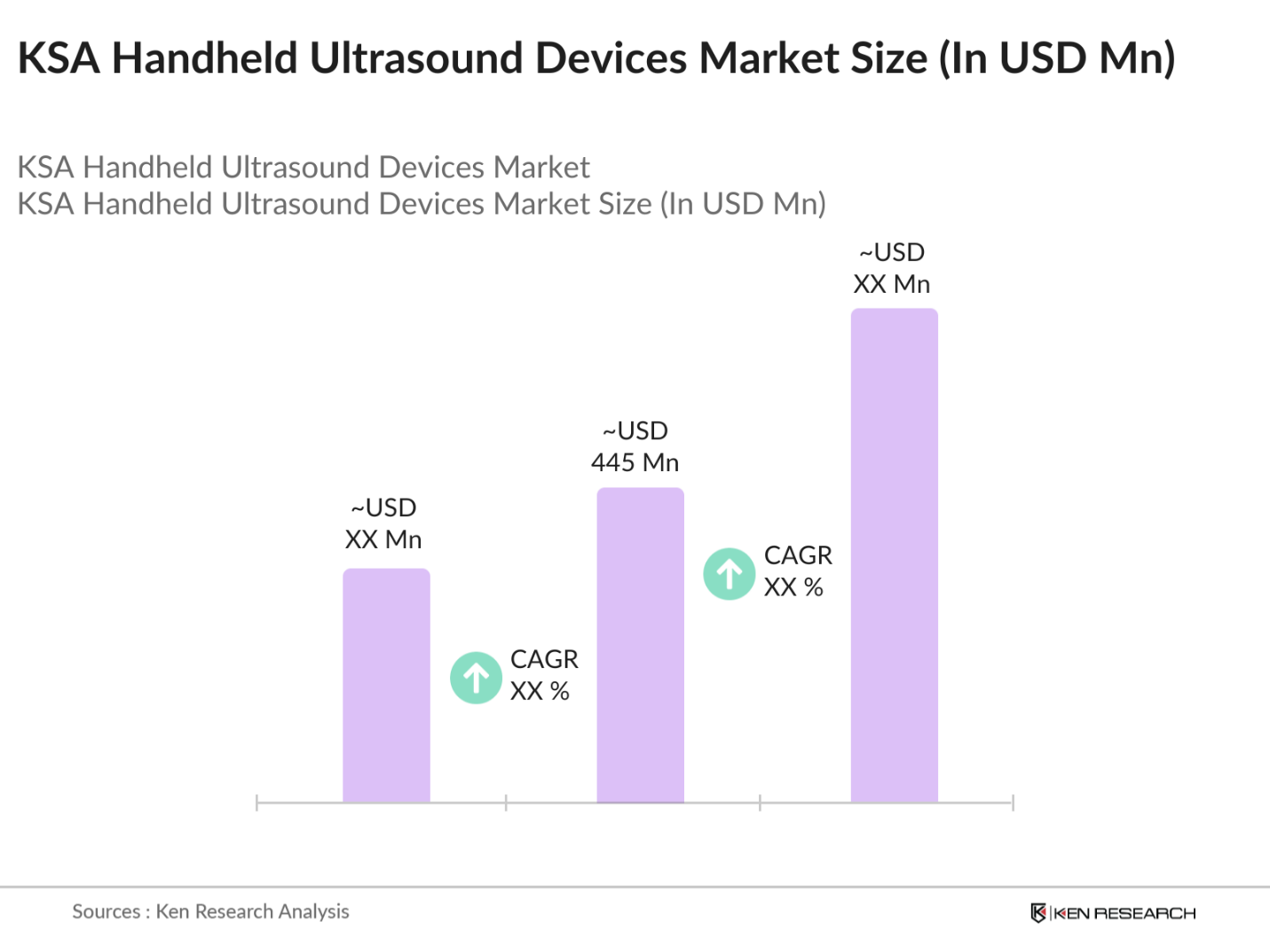
- The KSA Handheld Ultrasound Devices market is valued at USD 445 million, based on a five-year historical analysis. This market is primarily driven by the increasing demand for point-of-care diagnostics, particularly in emergency and critical care settings, and the adoption of portable imaging technologies. Advancements in AI integration and remote connectivity further support this growth, making handheld ultrasound devices an essential tool for quick, reliable diagnostic imaging across diverse healthcare applications, including rural outreach and telemedicine programs.
- Saudi Arabias major urban centers, particularly Riyadh and Jeddah, dominate the handheld ultrasound device market due to their dense hospital networks and availability of advanced healthcare facilities. These cities also benefit from higher healthcare spending, driven by increased governmental support and private investment in innovative medical technologies. This concentration in major metropolitan areas allows for accelerated adoption of advanced portable ultrasound solutions, supported by a high level of trained professionals.
- The Saudi Ministry of Health mandates stringent standards for handheld ultrasound devices, ensuring that all products meet the kingdoms health and safety guidelines. Compliance includes rigorous testing for diagnostic accuracy and device reliability. In 2024, the MOH enforced over 25 regulatory policies that manufacturers must adhere to, affecting market entry and operational feasibility for new and existing players.
KSA Handheld Ultrasound Devices Market Segmentation
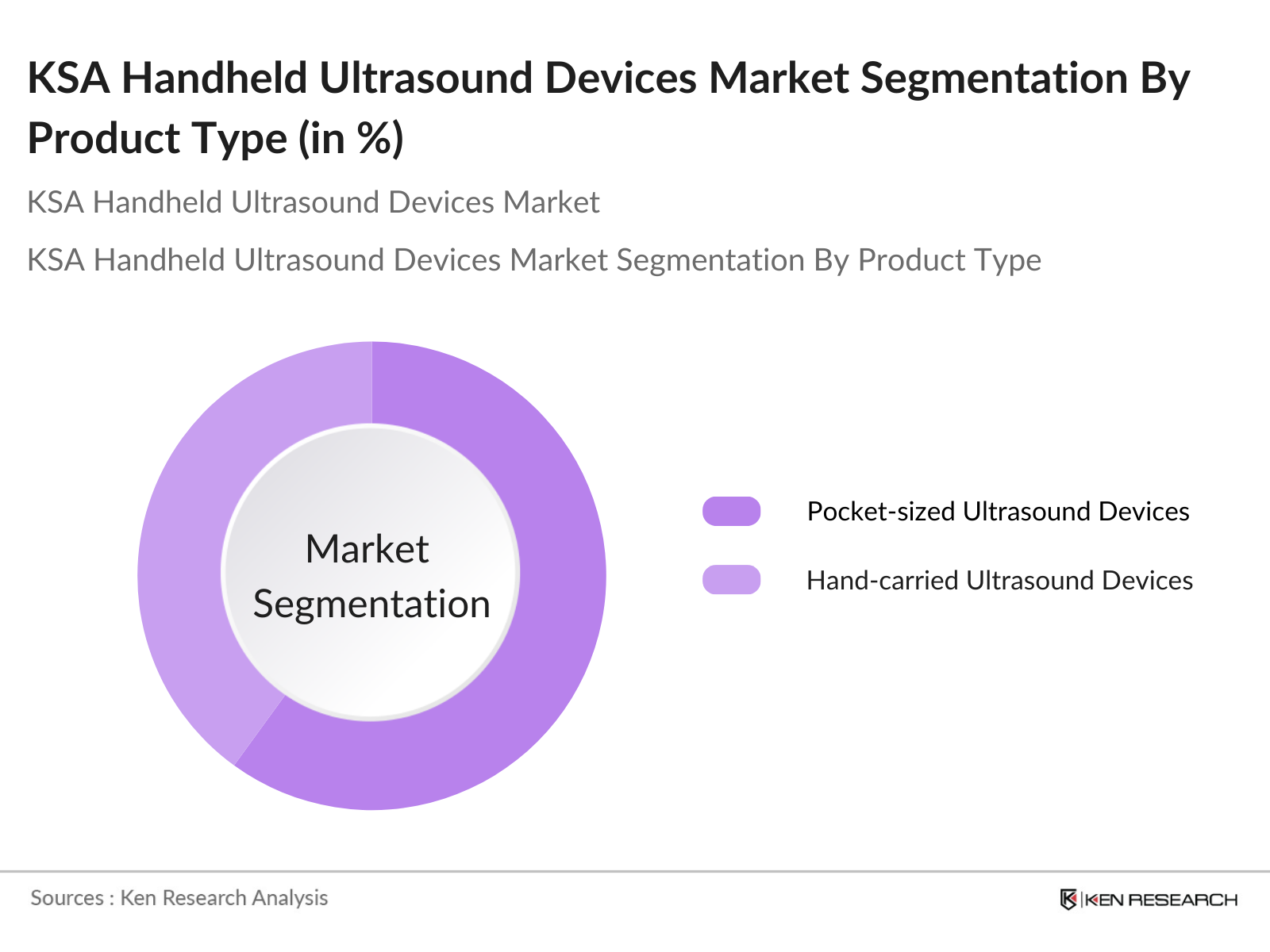
By Product Type: The market is segmented by product type into pocket-sized ultrasound devices and hand-carried ultrasound devices. Recently, pocket-sized devices hold a dominant share within this segment due to their compact design and ease of use, which suits point-of-care settings in remote and urban areas alike. These devices battery-powered functionality and cloud connectivity options make them highly adaptable for telemedicine applications, enabling real-time diagnostic support in various medical settings.
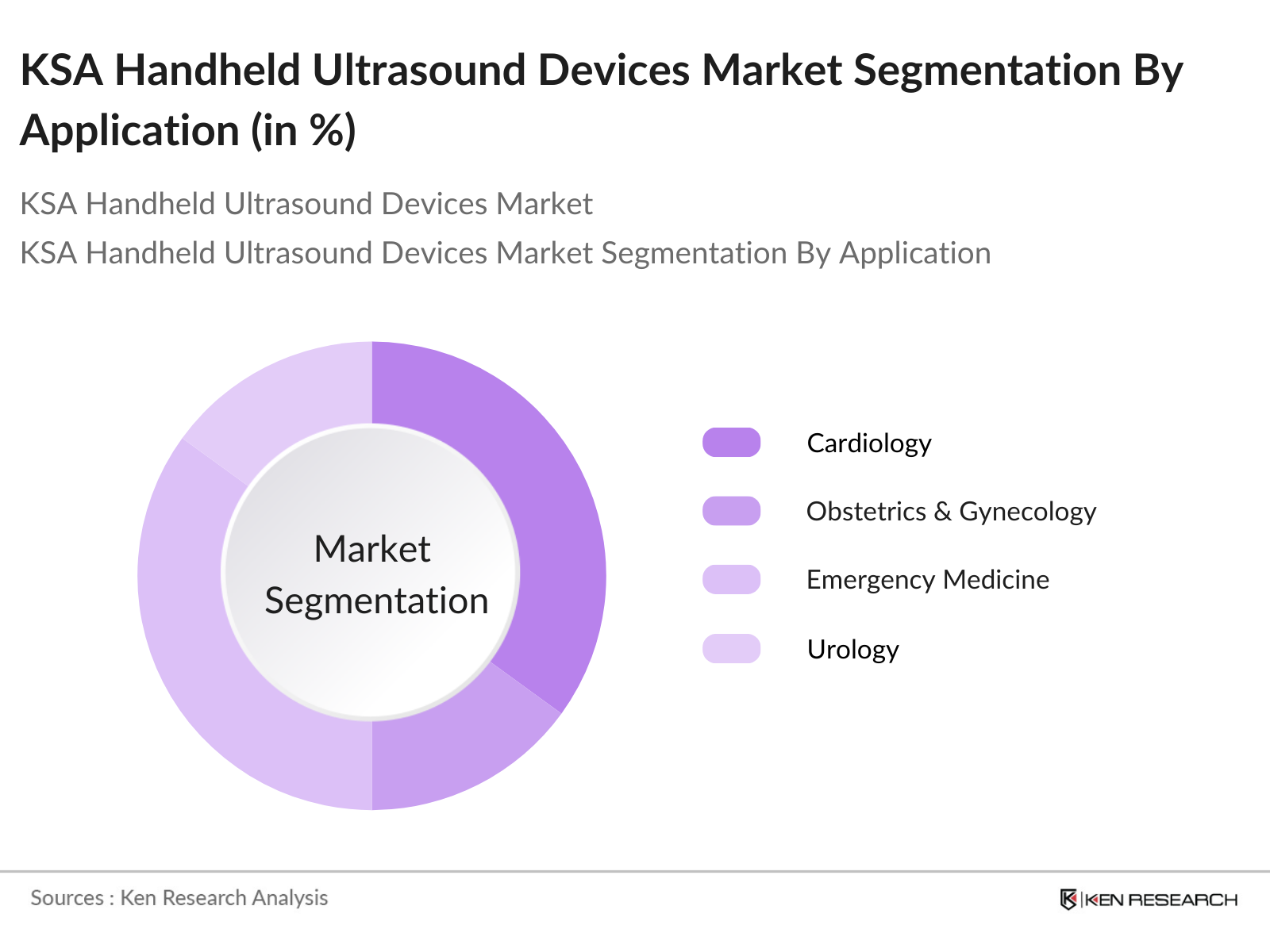
By Application: KSAs handheld ultrasound device market is further segmented by application into cardiology, obstetrics & gynecology, emergency medicine, urology, and musculoskeletal imaging. Emergency medicine applications dominate this segment, driven by the need for rapid diagnosis in critical and trauma cases. The portability and ease of use of handheld ultrasound devices make them highly suitable for emergency scenarios where quick, point-of-care imaging is essential for patient stabilization and treatment planning.
KSA Handheld Ultrasound Devices Market Competitive Landscape
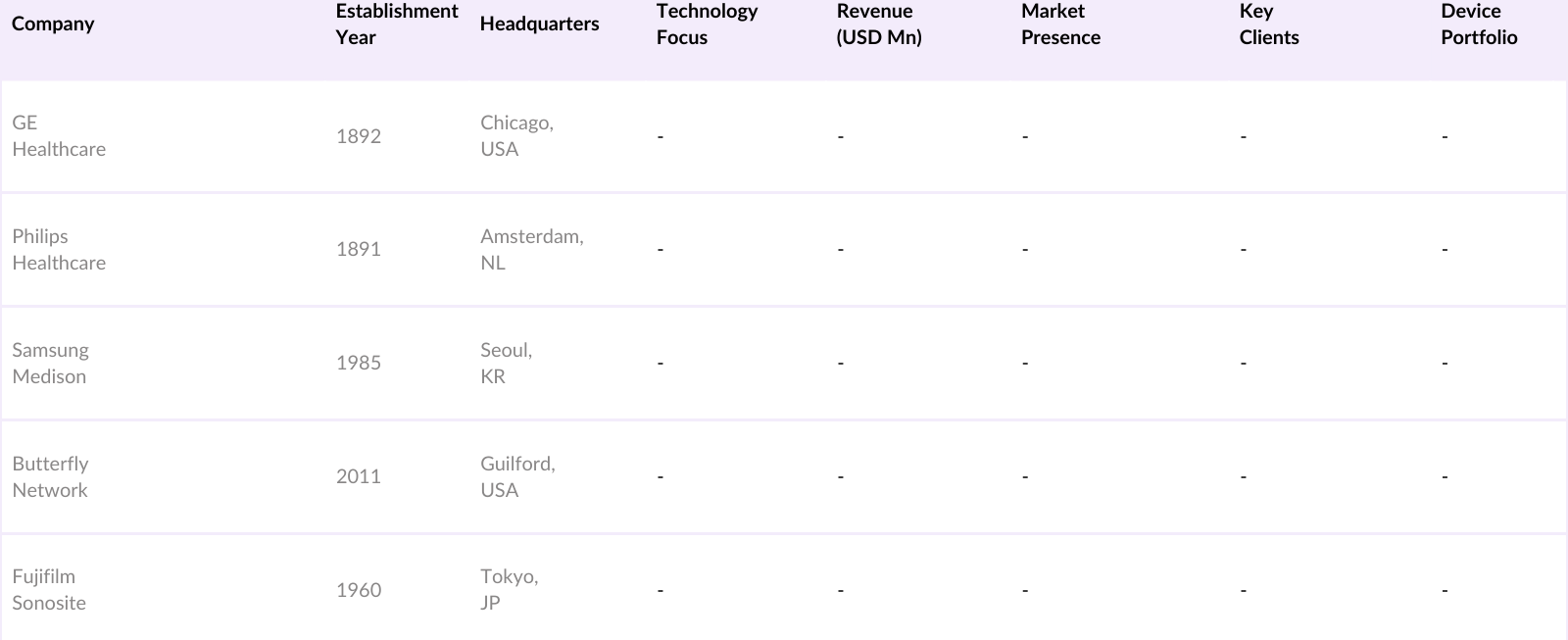
The KSA handheld ultrasound devices market is led by a select number of prominent companies, both local and international, with strong distribution networks and substantial investments in research and development. The market is consolidated around major players who are actively enhancing product features and broadening applications, creating high entry barriers for new competitors.
KSA Handheld Ultrasound Devices Industry Analysis
Growth Drivers
- Rising Preference for Portable Imaging: With over 60% of healthcare facilities in KSA expanding portable imaging adoption, the demand for handheld ultrasound devices is rising due to their enhanced diagnostic utility. As of 2024, Saudi Arabia's Ministry of Health (MOH) indicated that approximately 1,200 healthcare centers prioritize portable diagnostic tools to manage space constraints effectively. This shift enables quicker patient assessments and is increasingly essential in clinics and remote health settings, where traditional imaging setups may be inaccessible.
- Increasing Healthcare Expenditure: Saudi Arabia's healthcare spending reached SAR 189 billion in 2023, marking a government commitment to technologically enhancing medical diagnostics, including handheld ultrasound devices. This expenditure increase aligns with Vision 2030's goal to diversify healthcare services, directly supporting advanced portable device adoption in both urban and rural areas. The drive for high-tech solutions complements the governments aim for a 20% improvement in healthcare accessibility, creating strong prospects for market growth in handheld diagnostics.
- Growing Need for Diagnostic Efficiency in Rural Areas: Saudi Arabias healthcare system faces pressure to enhance diagnostic efficiency, especially in rural regions. A 2023 report highlighted that 25% of rural medical facilities require updated portable diagnostics to address underserved areas better. The handheld ultrasound market benefits as these devices are effective, mobile, and viable in such conditions. Government-funded programs aimed at rural health access also favor the rapid distribution of diagnostic tools, promising immediate diagnostic capabilities and facilitating broader healthcare access.
Market Challenges
- Limited Device Affordability: Pricing for handheld ultrasound devices remains high, making adoption challenging for smaller medical facilities. Saudi Arabian government reports reveal that only 30% of rural clinics have been able to acquire these devices due to limited affordability. This price sensitivity restricts the device market reach, especially outside major urban centers, where resources are fewer, underscoring a challenge for market expansion and accessibility.
- Limited Technical Expertise: Despite increased adoption, limited technical expertise in using handheld ultrasound technology remains a barrier, with nearly 40% of medical staff outside metropolitan areas lacking adequate training. To mitigate this, government initiatives have focused on providing equipment training, though gaps persist, especially in the northern regions. This challenge affects diagnostic quality, as proficiency is crucial for the device's effectiveness in clinical settings.
KSA Handheld Ultrasound Devices Market Future Outlook
Over the next five years, the KSA handheld ultrasound devices market is expected to witness significant growth due to advancements in portable imaging technologies, coupled with government initiatives to modernize healthcare infrastructure. The integration of AI-powered diagnostic support and remote imaging capabilities is anticipated to expand the market further, enabling better accessibility in rural and underserved areas.
Market Opportunities
- AI-Enabled Image Analysis: AI-powered handheld ultrasound devices are gaining traction, enabling rapid image processing and interpretation. KSAs focus on integrating AI across healthcare services aligns with Vision 2030, which has allocated SAR 5 billion toward AI development in healthcare, enhancing device utility and opening new diagnostic avenues. These advancements improve diagnostic accuracy and reduce time-to-diagnosis, a significant growth opportunity for device manufacturers.
- Growing Use in Homecare Settings: Theres a growing demand for handheld ultrasound devices within homecare, supported by a 2023 estimate showing that 12% of Saudi patients prefer home-based care due to mobility and accessibility constraints. The devices' portability suits homecare diagnostics, aligning with Saudi Arabia's healthcare expansion policies, which seek to reduce hospital congestion by offering alternative care solutions. This shift presents significant potential for device usage beyond traditional clinical settings.
Scope of the Report
|
Product Type |
Pocket-sized Ultrasound Devices |
|
Application |
Cardiology |
|
End User |
Hospitals |
|
Technology |
2D Imaging |
|
Region |
Central Region |
Products
Key Target Audience
Hospitals and Healthcare Providers
Diagnostic Centers and Imaging Facilities
Emergency and Trauma Centers
Ambulatory Surgical Centers
Home Healthcare Providers
Investments and Venture Capitalist Firms
Government and Regulatory Bodies (Saudi Food and Drug Authority - SFDA)
Medical Equipment Distributors and Dealers
Companies
Players Mentioned in the Report
GE Healthcare
Philips Healthcare
Samsung Medison
Fujifilm Sonosite
Butterfly Network
Mindray Medical International
Siemens Healthineers
Clarius Mobile Health
Canon Medical Systems
Terason Corporation
Table of Contents
1. KSA Handheld Ultrasound Devices Market Overview
1.1. Definition and Scope
1.2. Market Taxonomy
1.3. Market Growth Rate
1.4. Market Segmentation Overview
2. KSA Handheld Ultrasound Devices Market Size (In USD Bn)
2.1. Historical Market Size
2.2. Year-on-Year Growth Analysis
2.3. Key Market Developments and Milestones
3. KSA Handheld Ultrasound Devices Market Dynamics
3.1. Growth Drivers (Increased Point-of-Care Demand, Technological Advancements)
3.1.1. Rising Preference for Portable Imaging
3.1.2. Increasing Healthcare Expenditure
3.1.3. Growing Need for Diagnostic Efficiency in Rural Areas
3.1.4. Adoption in Emergency and Critical Care
3.2. Market Challenges (Pricing Barriers, Lack of Skilled Professionals)
3.2.1. Limited Device Affordability
3.2.2. Limited Technical Expertise
3.2.3. Regulatory Hurdles
3.3. Opportunities (Integration with AI, Expanding Applications)
3.3.1. AI-Enabled Image Analysis
3.3.2. Growing Use in Homecare Settings
3.3.3. Enhanced Penetration in Remote Monitoring
3.4. Trends (Point-of-Care Testing, Telemedicine Integration)
3.4.1. Integration with Telehealth Platforms
3.4.2. Increased Adoption in Military and Disaster Response
3.4.3. Demand for Wireless and Battery-Powered Devices
3.5. Government Regulation (Local Regulatory Requirements)
3.5.1. Ministry of Health Standards
3.5.2. Import and Distribution Licenses
3.5.3. Compliance with International Standards
3.6. SWOT Analysis
3.7. Stakeholder Ecosystem (Manufacturers, Distributors, Healthcare Providers)
3.8. Porters Five Forces
3.9. Competitive Ecosystem
4. KSA Handheld Ultrasound Devices Market Segmentation
4.1. By Product Type (In Value %)
4.1.1. Pocket-sized Ultrasound Devices
4.1.2. Hand-carried Ultrasound Devices
4.2. By Application (In Value %)
4.2.1. Cardiology
4.2.2. Obstetrics & Gynecology
4.2.3. Emergency Medicine
4.2.4. Urology
4.2.5. Musculoskeletal
4.3. By End User (In Value %)
4.3.1. Hospitals
4.3.2. Diagnostic Centers
4.3.3. Homecare Settings
4.3.4. Ambulatory Surgical Centers
4.4. By Technology (In Value %)
4.4.1. 2D Imaging
4.4.2. Doppler Imaging
4.4.3. 3D and 4D Imaging
4.4.4. AI-integrated Ultrasound Imaging
4.5. By Region (In Value %)
4.5.1. Central Region
4.5.2. Western Region
4.5.3. Eastern Region
4.5.4. Southern Region
5. KSA Handheld Ultrasound Devices Market Competitive Analysis
5.1. Detailed Profiles of Major Companies
5.1.1. GE Healthcare
5.1.2. Philips Healthcare
5.1.3. Fujifilm Sonosite
5.1.4. Samsung Medison
5.1.5. Siemens Healthineers
5.1.6. Mindray Medical International
5.1.7. Clarius Mobile Health
5.1.8. Butterfly Network
5.1.9. Konica Minolta
5.1.10. B. Braun Medical
5.1.11. Terason Corporation
5.1.12. Esaote SpA
5.1.13. Canon Medical Systems
5.1.14. Shenzhen Landwind Medical
5.1.15. Healcerion
5.2. Cross Comparison Parameters (Technology, Device Weight, Portability, Battery Life, Imaging Modes, Software Features, Price Range, Warranty/Service)
5.3. Market Share Analysis
5.4. Strategic Initiatives
5.5. Mergers and Acquisitions
5.6. Investment Analysis
5.7. Venture Capital Funding
5.8. Government Grants
5.9. Private Equity Investments
6. KSA Handheld Ultrasound Devices Market Regulatory Framework
6.1. KSA Health Standards Compliance
6.2. FDA and CE Mark Requirements
6.3. Saudi Food and Drug Authority (SFDA) Regulations
6.4. Import and Distribution Regulations
7. KSA Handheld Ultrasound Devices Future Market Size (In USD Bn)
7.1. Future Market Size Projections
7.2. Key Factors Driving Future Market Growth
8. KSA Handheld Ultrasound Devices Future Market Segmentation
8.1. By Product Type (In Value %)
8.2. By Application (In Value %)
8.3. By End User (In Value %)
8.4. By Technology (In Value %)
8.5. By Region (In Value %)
9. KSA Handheld Ultrasound Devices Market Analysts Recommendations
9.1. TAM/SAM/SOM Analysis
9.2. Customer Cohort Analysis
9.3. Marketing Initiatives
9.4. White Space Opportunity Analysis
Disclaimer Contact UsResearch Methodology
Step 1: Identification of Key Variables
The initial phase involves constructing an ecosystem map covering all significant stakeholders in the KSA Handheld Ultrasound Devices Market. Extensive desk research across secondary and proprietary databases is conducted to capture industry-level insights, focusing on identifying critical variables affecting market growth.
Step 2: Market Analysis and Construction
In this phase, we analyze historical data on market penetration, product usage across healthcare segments, and overall revenue generation. Additionally, qualitative assessments of service quality are included to ensure reliability and precision in revenue estimates.
Step 3: Hypothesis Validation and Expert Consultation
Market hypotheses are developed and validated through telephone interviews with industry experts from prominent companies. These consultations provide firsthand insights on operational and financial metrics, aiding in refining and corroborating market data.
Step 4: Research Synthesis and Final Output
The final step includes direct engagements with ultrasound device manufacturers to gather specific insights on product segments, sales performance, and customer preferences. This approach combines data from various sources, yielding a comprehensive, validated analysis of the KSA Handheld Ultrasound Devices Market.
Frequently Asked Questions
01. How big is the KSA Handheld Ultrasound Devices Market?
The KSA Handheld Ultrasound Devices market is valued at USD 445 million, based on a five-year historical analysis. This market is primarily driven by the increasing demand for point-of-care diagnostics, particularly in emergency and critical care settings, and the adoption of portable imaging technologies.
02. What are the challenges in the KSA Handheld Ultrasound Devices Market?
Key challenges include the high initial cost of handheld ultrasound devices, a limited pool of skilled professionals, and stringent regulatory requirements that new entrants must meet to compete effectively.
03. Who are the major players in the KSA Handheld Ultrasound Devices Market?
Prominent players include GE Healthcare, Philips Healthcare, Fujifilm Sonosite, Samsung Medison, and Butterfly Network, who dominate the market due to their innovative product offerings and extensive distribution networks.
04. What are the growth drivers in the KSA Handheld Ultrasound Devices Market?
Growth drivers include increased adoption of point-of-care testing, demand for portable imaging solutions in rural areas, and the integration of AI for enhanced diagnostic precision.
Why Buy From Us?

What makes us stand out is that our consultants follows Robust, Refine and Result (RRR) methodology. i.e. Robust for clear definitions, approaches and sanity checking, Refine for differentiating respondents facts and opinions and Result for presenting data with story

We have set a benchmark in the industry by offering our clients with syndicated and customized market research reports featuring coverage of entire market as well as meticulous research and analyst insights.

While we don't replace traditional research, we flip the method upside down. Our dual approach of Top Bottom & Bottom Top ensures quality deliverable by not just verifying company fundamentals but also looking at the sector and macroeconomic factors.

With one step in the future, our research team constantly tries to show you the bigger picture. We help with some of the tough questions you may encounter along the way: How is the industry positioned? Best marketing channel? KPI's of competitors? By aligning every element, we help maximize success.

Our report gives you instant access to the answers and sources that other companies might choose to hide. We elaborate each steps of research methodology we have used and showcase you the sample size to earn your trust.

If you need any support, we are here! We pride ourselves on universe strength, data quality, and quick, friendly, and professional service.