
KSA Molecular Diagnostics Market Outlook to 2030
Region:Saudi Arabia
Author(s):Shubham Kashyap
Product Code:KROD3288
Region:Saudi Arabia
Author(s):Shubham Kashyap
Product Code:KROD3288
November 2024
83
The KSA molecular diagnostics market is competitive, with a blend of international players and local companies providing advanced diagnostic solutions. Major companies such as Roche Diagnostics, Abbott Laboratories, and Thermo Fisher Scientific are key market players, offering a wide array of molecular diagnostic tests and instruments. These companies are at the forefront of technological advancements and have established partnerships with local healthcare providers to ensure their products meet the regions healthcare needs.
|
Company Name |
Establishment Year |
Headquarters |
Revenue (2023) |
Employees |
Key Product |
R&D Investment |
Key Clients |
Partnerships |
|
Roche Diagnostics |
1896 |
Switzerland |
||||||
|
Abbott Laboratories |
1888 |
USA |
||||||
|
Thermo Fisher Scientific |
1956 |
USA |
||||||
|
Al Borg Diagnostics |
1999 |
Saudi Arabia |
||||||
|
Almana General Hospital |
1949 |
Saudi Arabia |
Growth Drivers:
Market Challenges:
The KSA molecular diagnostics market is expected to experience continued growth over the forecast period, supported by increasing investments in healthcare infrastructure, the rising prevalence of infectious diseases, and technological advancements in diagnostics. The Saudi government's commitment to enhancing healthcare under Vision 2030 will play a critical role in driving market expansion.
Future Market Opportunities:
|
By Technology |
PCR NGS Isothermal Amplification DNA Microarray Others |
|
By Application |
Infectious Diseases Oncology Genetic Testing Others |
|
By End-User |
Hospitals Diagnostic Laboratories Research Institutes Home Care Settings |
|
By Product Type |
Instruments Kits & Reagents Software |
|
By Region |
Riyadh Jeddah Dammam Makkah Eastern Province |
Major Players in Mentioned in the Report
1.1. Definition and Scope
1.2. Market Taxonomy
1.3. Market Growth Rate (Molecular Testing Adoption, Diagnostic Lab Growth, Healthcare Expenditure)
1.4. Market Segmentation Overview (Applications, Technology, End-User, Testing Type, Region)
2.1. Historical Market Size (Test Volume, Market Revenue, Pricing Trends)
2.2. Year-On-Year Growth Analysis (Healthcare Sector Growth, Test Utilization Rates)
2.3. Key Market Developments and Milestones (Healthcare Policy Changes, New Lab Accreditations, Technological Adoption)
3.1. Growth Drivers
3.1.1. Prevalence of Infectious Diseases (COVID-19, MERS, Tuberculosis)
3.1.2. Technological Advancements (Next-Generation Sequencing, PCR, AI in Diagnostics)
3.1.3. Increasing Focus on Precision Medicine (Genetic Testing, Oncology Diagnostics)
3.1.4. Government Initiatives (Vision 2030, Healthcare Investments, NEOM Healthcare Initiatives)
3.2. Market Challenges
3.2.1. High Costs of Molecular Diagnostic Technologies (PCR, NGS Equipment, Consumables)
3.2.2. Shortage of Skilled Workforce (Laboratory Technicians, Genetic Counselors)
3.2.3. Limited Healthcare Access in Rural Regions (Logistics Challenges, Lab Infrastructure)
3.3. Opportunities
3.3.1. Expansion of Genetic Testing Services (Cancer Genomics, Pre-Natal Screening)
3.3.2. Growth in Point-of-Care Diagnostics (Portable PCR, Rapid Test Kits)
3.3.3. Rise in Public-Private Partnerships (Healthcare Infrastructure, Diagnostics Collaborations)
3.4. Trends
3.4.1. Adoption of Digital Pathology and AI-Based Diagnostics
3.4.2. Growth of Home-Based Testing Solutions (Telemedicine, Home Sample Collection)
3.4.3. Integration of Genomic Data in Electronic Health Records (EHRs)
3.4.4. Increased Government Focus on Diagnostic Self-Sufficiency (Local Production of Diagnostic Equipment)
3.5. Regulatory Framework
3.5.1. Saudi Food and Drug Authority (SFDA) Regulations on Diagnostics
3.5.2. Compliance Requirements for Molecular Diagnostics (International Standards, Accreditation)
3.5.3. Licensing and Certification Processes (Lab Accreditations, Operator Training)
3.6. SWOT Analysis
3.7. Ecosystem and Stakeholder Mapping (Public Hospitals, Private Labs, Equipment Suppliers)
3.8. Porters Five Forces Analysis
3.9. Competitive Landscape
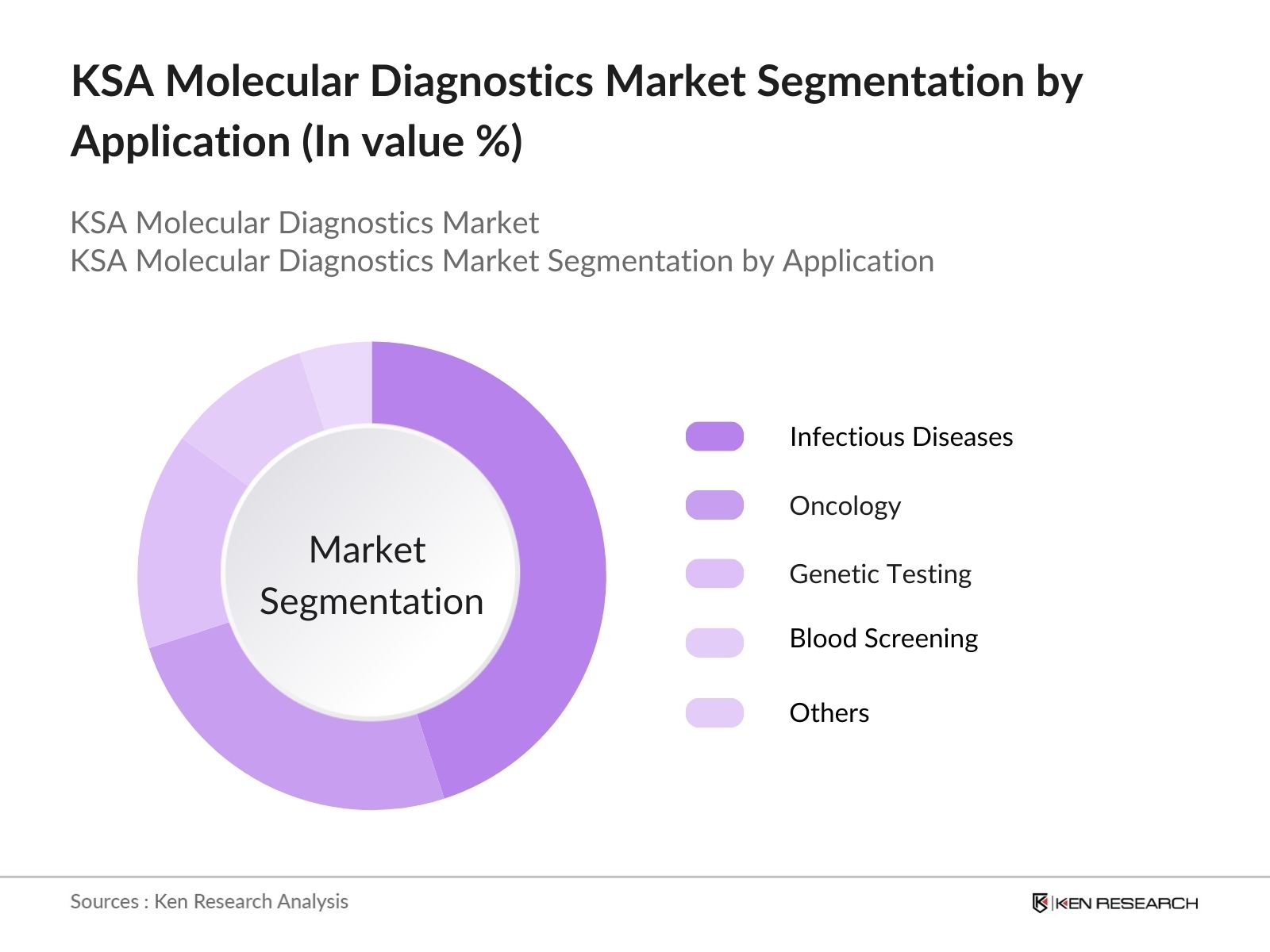
4.1. By Application (In Value %)
4.1.1. Infectious Diseases
4.1.2. Oncology
4.1.3. Genetic Testing
4.1.4. Blood Screening
4.1.5. Others
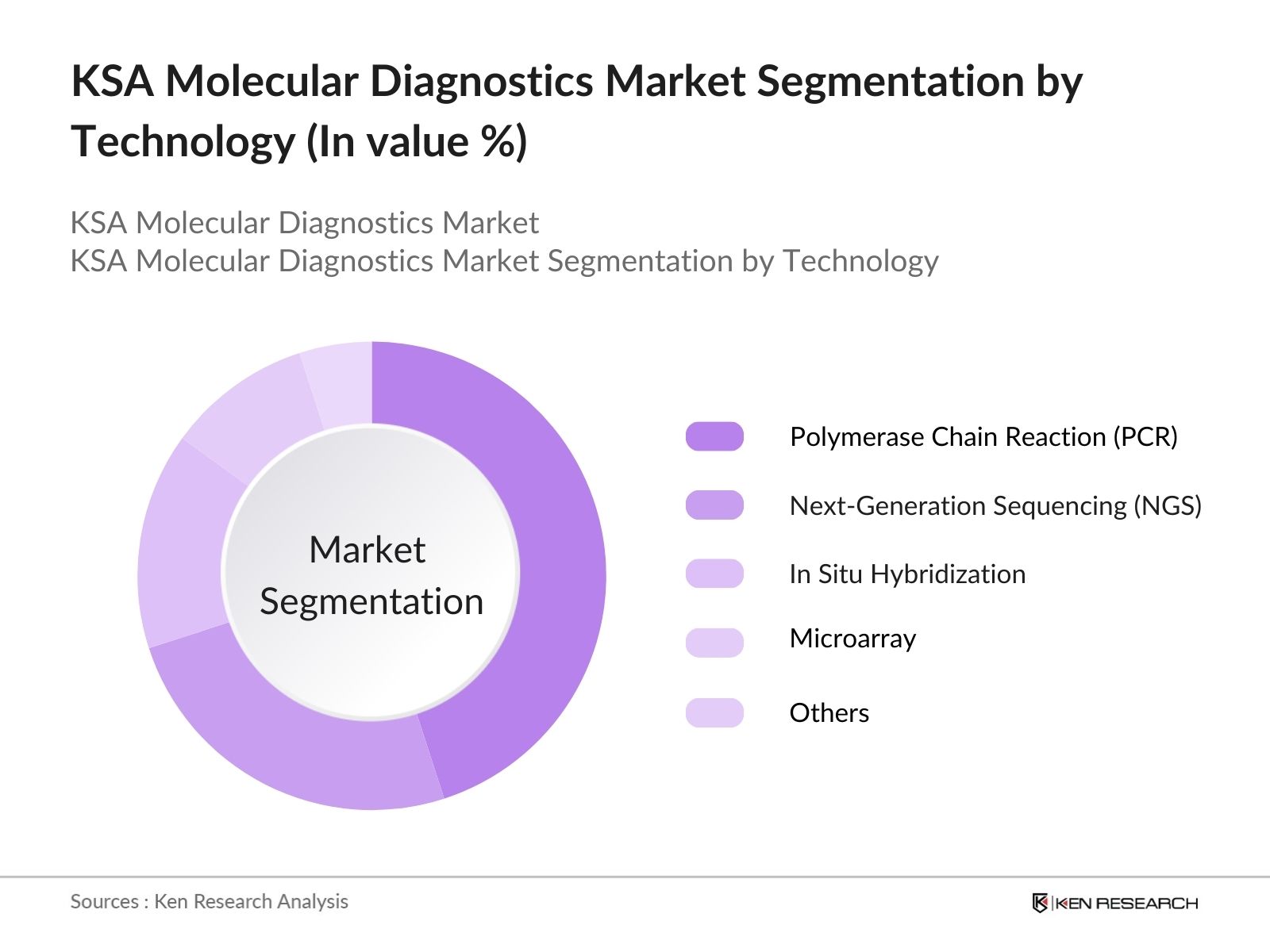
4.2. By Technology (In Value %)
4.2.1. Polymerase Chain Reaction (PCR)
4.2.2. Next-Generation Sequencing (NGS)
4.2.3. In Situ Hybridization
4.2.4. Microarray
4.2.5. Others
4.3. By End-User (In Value %)
4.3.1. Hospitals
4.3.2. Diagnostic Laboratories
4.3.3. Research Institutes
4.3.4. Clinics
4.3.5. Others
4.4. By Testing Type (In Value %)
4.4.1. Centralized Laboratory Testing
4.4.2. Point-of-Care Testing
4.4.3. Home-Based Testing
4.5. By Region (In Value %)
4.5.1. Riyadh
4.5.2. Jeddah
4.5.3. Dammam
4.5.4. Makkah
4.5.5. Eastern Province
5.1. Detailed Profiles of Major Competitors
5.1.1. Roche Diagnostics
5.1.2. Abbott Laboratories
5.1.3. Thermo Fisher Scientific
5.1.4. Qiagen
5.1.5. Agilent Technologies
5.1.6. Danaher Corporation
5.1.7. Illumina, Inc.
5.1.8. Bio-Rad Laboratories
5.1.9. Siemens Healthineers
5.1.10. Al Borg Diagnostics
5.1.11. Almana General Hospital
5.1.12. Genefluidics, Inc.
5.1.13. Cepheid
5.1.14. Beckman Coulter
5.1.15. BioMrieux
5.2. Cross Comparison Parameters (No. of Employees, Headquarters, Revenue, Product Portfolio, Market Share, Strategic Initiatives, Partnerships, R&D Investment)
5.3. Market Share Analysis
5.4. Strategic Initiatives (Partnerships, Mergers & Acquisitions, Collaborations)
5.5. Investment Analysis (Private Equity, Venture Capital, Government Grants)
5.6. R&D Investment Trends
6.1. SFDA Regulations on Molecular Diagnostics
6.2. Healthcare Accreditation Standards (CBAHI, JCI)
6.3. Certification and Licensing Processes
7.1. Future Market Size Projections
7.2. Key Factors Driving Future Growth (Advances in Technology, Increasing Healthcare Investments, Growing Prevalence of Chronic Diseases)
8.1. By Application (In Value %)
8.2. By Technology (In Value %)
8.3. By End-User (In Value %)
8.4. By Testing Type (In Value %)
8.5. By Region (In Value %)
9.1. Market Entry Strategies (Strategic Alliances, Product Launches, Regulatory Approvals)
9.2. White Space Opportunity Analysis
9.3. TAM/SAM/SOM Analysis
9.4. Customer Cohort and Buying Behavior Analysis
The first step involves mapping the KSA Molecular Diagnostics Market's ecosystem, focusing on identifying key players such as hospitals, diagnostic labs, and healthcare providers. Extensive desk research is conducted using secondary data sources to define crucial market variables, including test adoption rates and technological penetration.
Historical market data is gathered to analyze penetration levels of molecular diagnostic tests. We examine the revenue generation of diagnostic companies and hospitals while assessing the integration of molecular technologies within the healthcare system.
Market hypotheses are formulated and validated through consultations with industry experts and stakeholders. These include diagnostic laboratory professionals and technology suppliers, providing insights that are vital for refining the overall analysis of the market.
The final stage involves synthesizing insights from industry leaders and market participants, ensuring that the data is cross-verified through both top-down and bottom-up approaches. This ensures that the report offers comprehensive and accurate market projections and recommendations.
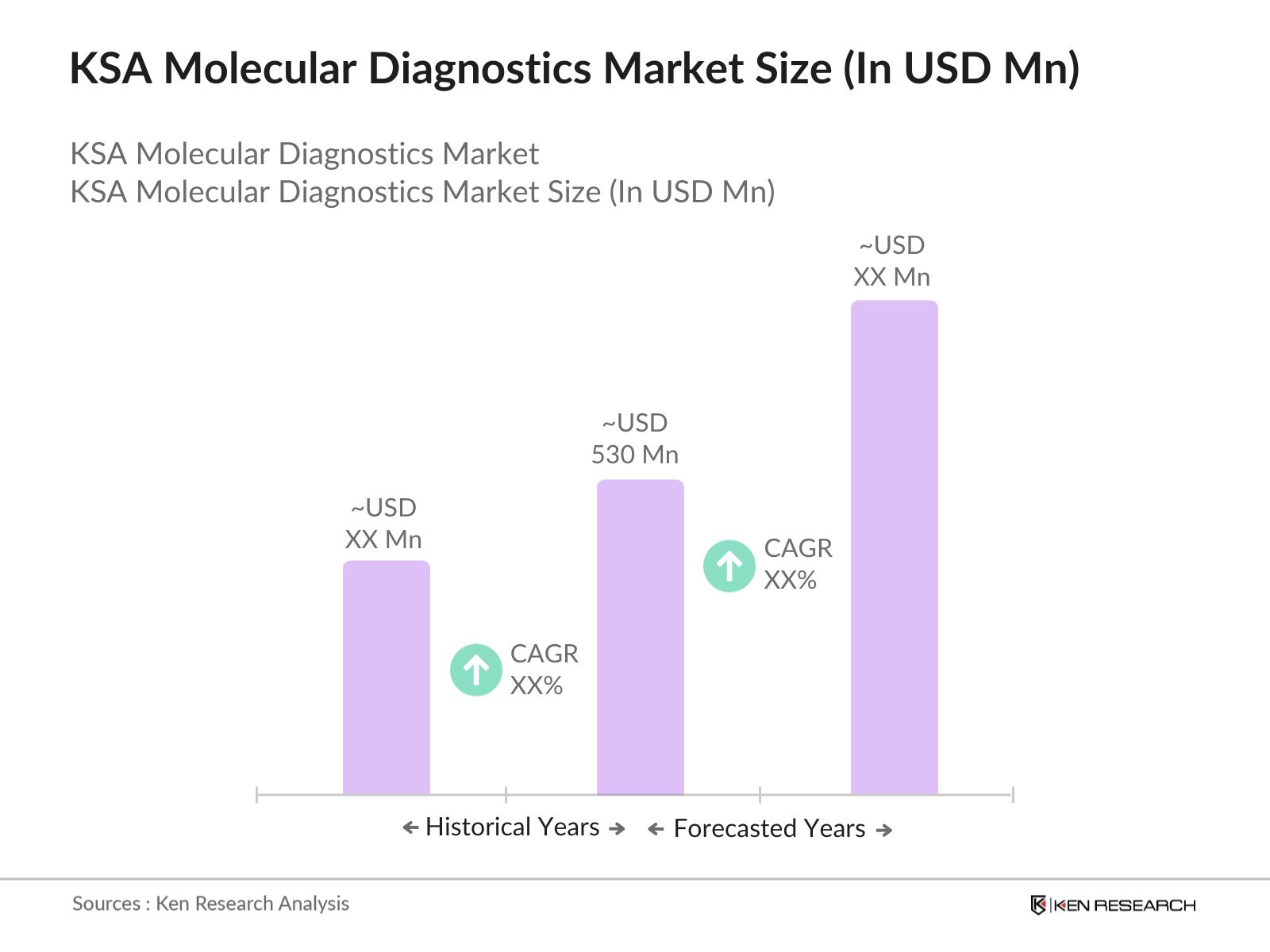
The KSA Molecular Diagnostics Market was valued at USD 530 million, driven by increased healthcare investments and the rising demand for advanced diagnostics in hospitals and laboratories.
Key challenges in the KSA Molecular Diagnostics Market include the high cost of molecular diagnostic equipment and consumables, as well as the shortage of trained professionals capable of operating these advanced technologies.
Key players in the KSA Molecular Diagnostics Market include Roche Diagnostics, Abbott Laboratories, Thermo Fisher Scientific, and local players such as Al Borg Diagnostics, all of whom have significant influence over the market through strategic partnerships and product offerings.
The KSA Molecular Diagnostics market is propelled by the increasing prevalence of infectious diseases, government investments in healthcare infrastructure under Vision 2030, and the adoption of advanced molecular technologies like PCR and NGS.

What makes us stand out is that our consultants follows Robust, Refine and Result (RRR) methodology. i.e. Robust for clear definitions, approaches and sanity checking, Refine for differentiating respondents facts and opinions and Result for presenting data with story

We have set a benchmark in the industry by offering our clients with syndicated and customized market research reports featuring coverage of entire market as well as meticulous research and analyst insights.

While we don't replace traditional research, we flip the method upside down. Our dual approach of Top Bottom & Bottom Top ensures quality deliverable by not just verifying company fundamentals but also looking at the sector and macroeconomic factors.

With one step in the future, our research team constantly tries to show you the bigger picture. We help with some of the tough questions you may encounter along the way: How is the industry positioned? Best marketing channel? KPI's of competitors? By aligning every element, we help maximize success.

Our report gives you instant access to the answers and sources that other companies might choose to hide. We elaborate each steps of research methodology we have used and showcase you the sample size to earn your trust.

If you need any support, we are here! We pride ourselves on universe strength, data quality, and quick, friendly, and professional service.