















KSA Passenger Information System Market Outlook to 2030
Region:Middle East
Author(s):Paribhasha Tiwari
Product Code:KROD2081
December 2024
90
About the Report
KSA Passenger Information System Market Overview
- The Saudi Arabian Passenger Information System (PIS) market reached a valuation of USD 125 Million in 2023. The market has been primarily driven by the expansion of public transportation networks, including rail, bus, and metro systems. With the Kingdoms Vision 2030 initiative promoting massive infrastructure development, particularly in public transport, the PIS market has seen consistent growth. The adoption of smart city technologies and the demand for real-time information to enhance passenger experiences further bolster market demand.
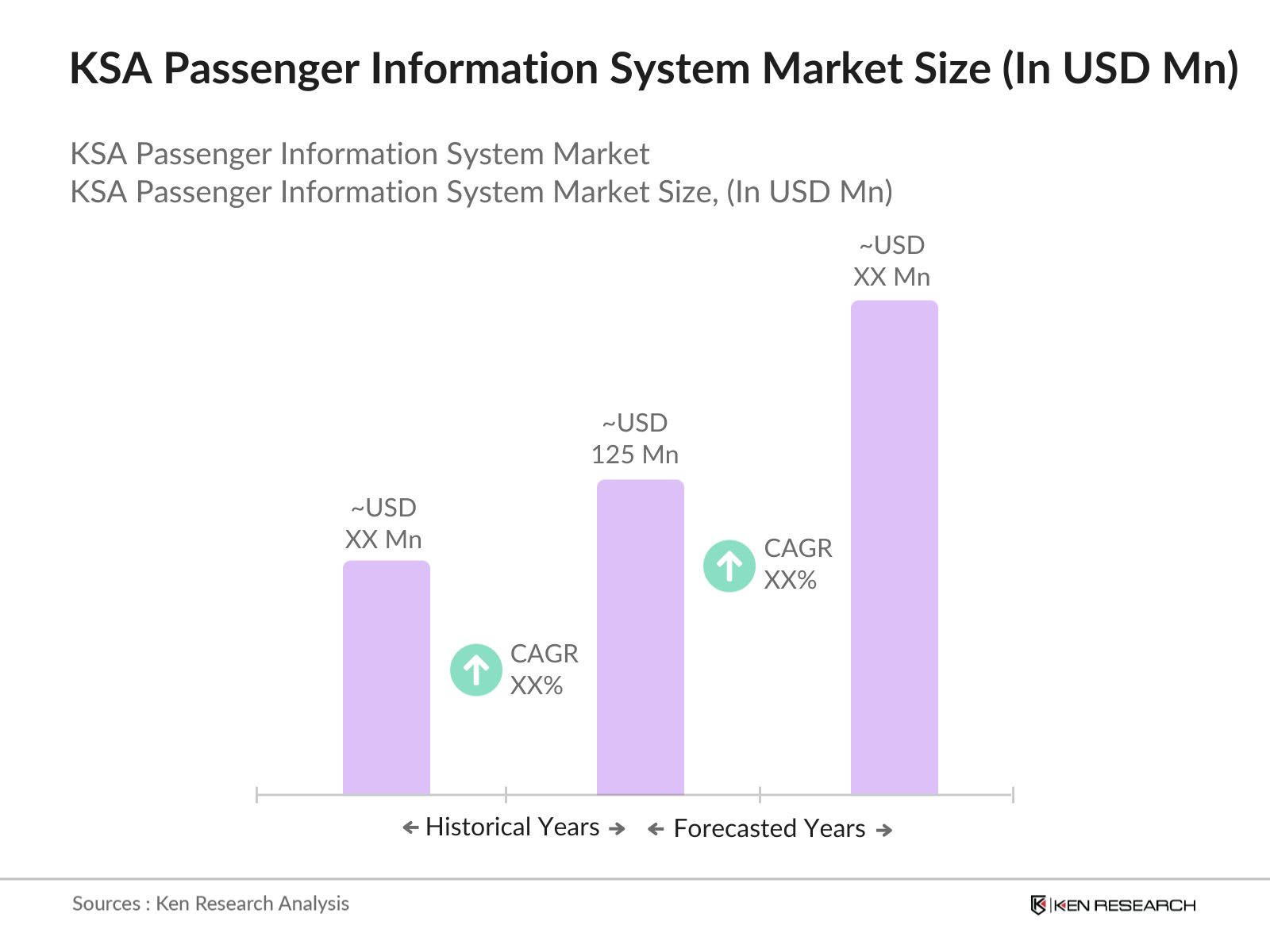
- The key players dominating the KSA PIS market include Thales Group, Alstom, Huawei Technologies, Siemens AG, and Mitsubishi Electric. These companies have a significant presence due to their partnerships with government-backed transportation projects and expertise in delivering smart passenger information solutions. For instance, Thales and Alstom have been involved in providing advanced PIS technologies for the Riyadh Metro Project, one of the largest urban transport projects in the region.
- Thales has significantly expanded its operations in Saudi Arabia, actively supporting Vision 2030. In 2023, the company enhanced its presence in the Passenger Information System (PIS) market by collaborating with Saudi public transportation authorities. Thales played a key role in the Riyadh Metro project by delivering real-time passenger information solutions, helping to modernize the country's transport infrastructure. These systems are critical in managing the increasing passenger traffic and ensuring seamless public transport operations.
- Riyadh and Jeddah are the dominant cities in the KSA PIS market. Riyadh, being the capital and the hub for the Vision 2030 initiative, has seen massive investment in its public transportation infrastructure. The upcoming Riyadh Metro system, which will serve millions of commuters daily, has driven the need for advanced passenger information systems. Jeddah, a key economic center and gateway for pilgrims, has also witnessed significant developments in its transportation network, further contributing to the PIS market growth.
KSA Passenger Information System Market Segmentation
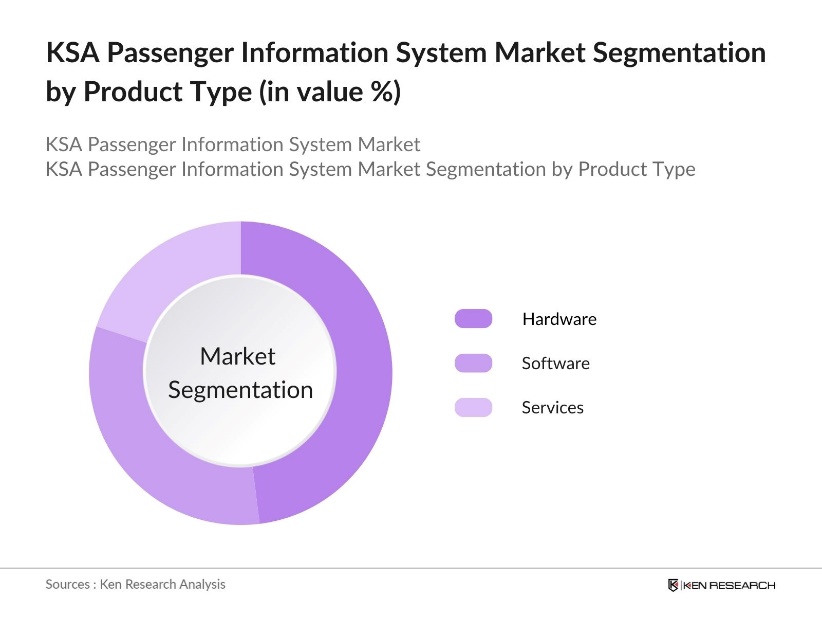
By Product Type: The KSA Passenger Information System market is segmented by product type into hardware, software, and services. In 2023, hardware systems dominated the market. This dominance is attributed to the extensive deployment of display systems, announcement systems, and communication infrastructure in newly built metro and rail stations across Riyadh and Jeddah. Hardware is crucial to ensure real-time information delivery to passengers, especially in large transport hubs, making it the dominant segment.
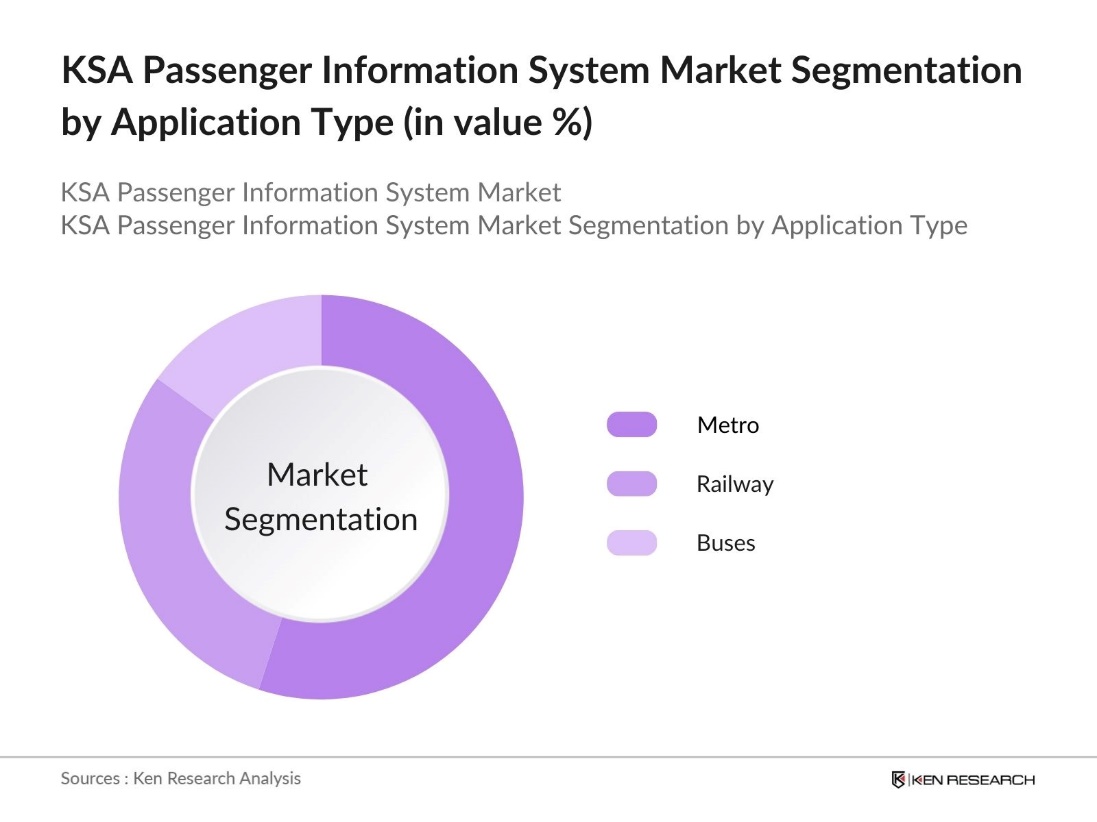
By Application type: By application type, the KSA PIS market is segmented into railways, metro, and buses. In 2023, the metro segment held a dominant market share. The Riyadh Metro project, which has been a key focus of Saudi Arabia's transportation modernization plan, played a pivotal role in this dominance. The need for real-time information updates, integration with smart city infrastructure, and large-scale passenger volumes have pushed the adoption of PIS systems in metro stations.
By Region: The KSA PIS market is segmented regionally into North, South, East West and Central. In 2023, the Central Region had the highest market share, primarily due to the ongoing Riyadh Metro project. The central region has witnessed the largest infrastructure investments, with the government pushing for advanced transportation systems under the Vision 2030 plan. This has driven the demand for PIS solutions, making it the leading segment.
KSA Passenger Information System Market Competitive Landscape
|
Company Name |
Establishment Year |
Headquarters |
|---|---|---|
|
Thales Group |
1893 |
Paris, France |
|
Alstom |
1928 |
Saint-Ouen, France |
|
Siemens AG |
1847 |
Munich, Germany |
|
Huawei Technologies |
1987 |
Shenzhen, China |
|
Mitsubishi Electric |
1921 |
Tokyo, Japan |
- Thales Group: In 2023, Thales signed a two-year contract with the Saudi Railway Company (SAR) to maintain the signalling, telecommunications, and electromechanical systems for the 2,400 km Northern Train project. The project includes the longest railway equipped with the European Train Control System (ETCS) Level 2. Thales also committed to training Saudi teams through a knowledge transfer initiative, supporting the Saudi Railway Polytechnic. This collaboration is part of Saudi Arabias Vision 2030 infrastructure modernization.
- Alstom: In 2022, Alstom expanded its presence in Saudi Arabia by establishing a regional office and launching the HealthHub digital center in Riyadh. This center monitors 748 vehicles, including those from the Riyadh Metro, Jeddah Airport People Mover, and the Haramain High-Speed Train, providing real-time fleet management. The move aligns with Saudi Vision 2030 and enhances Alstom's role in developing smart and sustainable mobility solutions across the Kingdom.
KSA Passenger Information System Market Analysis
KSA Passenger Information System Market Growth Drivers
-
Massive Infrastructure Investments under Vision 2030: Saudi Arabia has committed significant resources to expand its public transportation network as part of Vision 2030, which is expected to generate substantial demand for advanced Passenger Information Systems (PIS). The government allocated over USD 50 billion in 2023 to projects like the Riyadh Metro and the Jeddah-Makkah high-speed rail. These developments require real-time data management systems to ensure smooth operations for millions of passengers, making PIS integral to future infrastructure growth.
-
Expansion of High-Speed Rail Boosting Demand for Passenger Information Systems: The increased use of the Haramain High-Speed Railway necessitates efficient passenger information systems to manage the high influx of passengers, providing real-time updates and enhancing the overall travel experience. This demand boosts the development and adoption of PIS in Saudi Arabias key pilgrimage routes.
- Growing Number of Pilgrims Boosting Transportation Demand: Saudi Arabia attracts millions of pilgrims annually, particularly during Hajj and Umrah seasons. This increase has placed tremendous pressure on the countrys transportation systems, with the need for reliable and efficient passenger information systems becoming more apparent. To accommodate this influx, the government plans to further invest in transport infrastructure in cities like Makkah and Madinah, driving the demand for PIS solutions.
KSA Passenger Information System Market Challenges
- High Initial Investment and Maintenance Costs: Implementing passenger information systems requires a significant upfront investment in both hardware and software. Moreover, maintaining these systems requires continuous upgrades and monitoring, which increases the overall operational costs for transport authorities. These high costs can act as a barrier to market growth, particularly for smaller transportation operators.
- Integration Challenges with Legacy Systems: One of the major challenges facing the KSA PIS market is integrating modern PIS with existing legacy transportation systems. Many public transportation networks in Saudi Arabia, particularly in smaller cities, still rely on outdated infrastructure that is not compatible with the latest PIS technologies. In 2023, the Jeddah transport authority faced significant delays in upgrading its bus network's PIS due to compatibility issues with existing systems, highlighting the need for more seamless integration solutions.
KSA Passenger Information System Market Government Initiatives
- Green Initiative for Sustainable Transport: In 2023, the Saudi government introduced a sustainability-focused initiative aimed at reducing emissions from public transportation. Part of this initiative includes deploying energy-efficient PIS technologies, such as solar-powered digital signage. This move aligns with Saudi Arabias broader environmental goals and encourages the adoption of sustainable passenger information solutions across the country's transportation network.
- Riyadh Metro PIS Implementation: The Riyadh Metro project, set to be completed by the end of 2023, is a significant initiative under Saudi Arabias Vision 2030. It aims to modernize public transportation in the capital by incorporating advanced passenger information systems. These systems will provide real-time data, improve efficiency in commuter travel, and help manage large passenger volumes across the city. This large-scale project will play a crucial role in the Kingdoms efforts to enhance its urban mobility infrastructure.
KSA Passenger Information System Market Future Outlook
Market Trends
- Growing Integration of 5G Technology in PIS Systems: In the future, the integration of 5G technology will significantly enhance the KSA Passenger Information System (PIS) market by enabling faster and more reliable data transmission. With 5G, real-time passenger updates, predictive maintenance, and AI-driven analytics will become more advanced, improving the overall efficiency and responsiveness of public transportation networks.
- Expansion of Autonomous Public Transport Systems: As Saudi Arabia moves towards self-driving cars, PIS will evolve to support seamless communication between autonomous vehicles and public transport systems. These systems will provide real-time updates, optimize traffic management, and enhance passenger experiences by integrating with the Kingdom's broader smart city infrastructure initiatives, aligning with Vision 2030.
Scope of the Report
|
By Product Type |
Hardware Software services |
|
By Application Type |
Railways Metro buses |
|
By Region |
North South East West |
Products
Key Target Audience- Organizations and Entities Who Can Benefit by Subscribing This Report:
Public Transportation Authorities
Metro and Rail Operators
Real Estate Developers
Tech Companies Focusing on Transportation Innovation
Urban Planning and Development Agencies
Public Transportation Equipment Suppliers
Smart City Solution Providers
Investors and Venture Capitalist Firms
Government and Regulatory Bodies (eg. Saudi Ministry of Transport and others)
Companies
Players Mentioned in the Report:
Thales Group
Alstom
Siemens AG
Huawei Technologies
Mitsubishi Electric
Cubic Corporation
Toshiba Infrastructure Systems & Solutions
Indra Sistemas
GE Transportation
Hitachi Ltd.
Kapsch CarrierCom
Advantech
Table of Contents
1. KSA Passenger Information System Market Overview
1.1. Definition and Scope
1.2. Market Taxonomy (by product type, by application, by region)
1.3. Market Growth Rate and Historical Trends
1.4. Market Segmentation Overview (by product type, application, region)
2. KSA Passenger Information System Market Size and Analysis
2.1. Historical Market Size (value in USD)
2.2. Year-on-Year Growth Analysis (financial and operational parameters)
2.3. Key Market Developments and Milestones (infrastructure projects, new PIS installations)
3. KSA Passenger Information System Market Dynamics
3.1. Growth Drivers
3.1.1. Massive Investment in Public Transportation Infrastructure
3.1.2. Expansion of High-Speed Rail Boosting Demand for Passenger Information Systems
3.1.3. Growing Number of Pilgrims Boosting Transportation Demand
3.2. Market Challenges
3.2.1. High Initial Installation and Maintenance Costs
3.2.2. Cybersecurity Threats to Smart Transportation Systems
3.2.3. Integration Challenges with Legacy Systems
3.3. Market Opportunities
3.3.1. Expansion of Smart Cities in Saudi Arabia
3.3.2. Growing Demand for Real-Time Passenger Data
3.3.3. Development of Autonomous Public Transport
3.4. Key Market Trends
3.4.1. Adoption of Cloud-Based PIS Solutions
3.4.2. AI and IoT Integration in Public Transport Systems
3.4.3. Increasing Reliance on Mobile Applications for Passenger Information
3.5. Government Regulations and Standards
3.5.1. National Transportation Strategy and Policy
3.5.2. Saudi Public Transport Authority Guidelines for PIS Implementation
3.5.3. Cybersecurity Regulations in Transportation Systems
3.6. SWOT Analysis (Strengths, Weaknesses, Opportunities, Threats)
3.7. Stakeholder Ecosystem
3.8. Competitive Ecosystem
4. KSA Passenger Information System Market Segmentation
4.1. By Product Type (value in %)
4.1.1. Hardware
4.1.2. Software
4.1.3. Services
4.2. By Application (value in %)
4.2.1. Railways
4.2.2. Metro
4.2.3. Buses
4.3. By Region (value in %)
4.3.1. North
4.3.2. South
4.3.3. East
4.3.4. West
5. KSA Passenger Information System Market Competitive Landscape
5.1. Market Share Analysis (by company)
5.2. Strategic Initiatives and Developments
5.3. Mergers, Acquisitions, and Investments in PIS Technologies
5.4. Detailed Profiles of Major Companies
5.4.1. Thales Group
5.4.2. Alstom
5.4.3. Siemens AG
5.4.4. Huawei Technologies
5.4.5. Mitsubishi Electric
5.4.6. Cubic Corporation
5.4.7. Toshiba Infrastructure Systems & Solutions
5.4.8. GE Transportation
5.4.9. Hitachi Ltd.
5.4.10. Kapsch CarrierCom
5.4.11. Indra Sistemas
5.4.12. Teleste Corporation
5.4.13. Lanner Electronics
5.4.14. Advantech Co., Ltd.
5.4.15. Ansaldo STS
5.5. Cross Comparison Parameters (number of employees, headquarters, inception year, revenue, market presence)
6. KSA Passenger Information System Market Regulatory Framework
6.1. Saudi Transportation Policy for Smart Systems
6.2. PIS Certification and Compliance Requirements
6.3. Data Privacy and Cybersecurity Standards for PIS Systems
6.4. Public-Private Partnerships in Transportation
7. KSA Passenger Information System Market Future Outlook
7.1. Future Market Size Projections (financial outlook to 2028)
7.2. Key Factors Driving Future Growth (macroeconomic indicators and forecasts)
7.3. Opportunities for International Players in the KSA Market
8. KSA Passenger Information System Market Future Segmentation (2028)
8.1. By Product Type (value in %)
8.2. By Application (value in %)
8.3. By Technology (value in %)
8.4. By Region (value in %)
8.5. By Service Type (value in %)
9. KSA Passenger Information System Market Analyst Recommendations
9.1. TAM (Total Addressable Market), SAM (Serviceable Addressable Market), SOM (Serviceable Obtainable Market) Analysis
9.2. Strategic Initiatives for Market Entry
9.3. Customer Cohort and Potential Analysis
9.4. Market Penetration and Expansion Strategies
10. KSA Passenger Information System Market Mergers and Acquisition Activity
10.1. Major Mergers and Acquisitions (2018-2023)
10.2. Investment Opportunities and Private Equity Activity
10.3. Future Projections for M&A in the PIS Market
11. KSA Passenger Information System Market Investment Analysis
11.1. Venture Capital and Government Grants
11.2. Public Sector Investments in PIS Infrastructure
11.3. Private Sector Investments and Partnerships
12. Conclusion and Strategic Insights
12.1. Key Takeaways from the Market
12.2. Competitive Strategies for Market Leaders
12.3. Future Directions and Strategic Recommendations
Research Methodology
Research Methodology
Step 1: Identification of Key Variables
The initial phase focuses on mapping key stakeholders and identifying influential variables within the KSA Passenger Information System market. This step utilizes desk research, drawing from proprietary and secondary databases to establish a comprehensive understanding of market dynamics.
Step 2: Market Analysis and Construction
This phase involves compiling and analyzing historical data on the KSA Passenger Information System market, including assessing transfer of passenger information across various platforms. Additionally, service quality metrics are reviewed to ensure reliable revenue estimations.
Step 3: Hypothesis Validation and Expert Consultation
Hypotheses are developed and validated through industry expert interviews, which provide insights into operational and technological trends. These consultations reinforce market data accuracy and align findings with real-world applications.
Step 4: Research Synthesis and Final Output
The concluding phase engages directly with industry stakeholders to verify and supplement bottom-up data, ensuring a validated, comprehensive analysis of the KSA Passenger Information System market . This step synthesizes data from all phases, resulting in a precise market report.
Frequently Asked Questions
01. How big is the KSA Passenger Information System Market?
The KSA Passenger Information System market was valued at USD 125 Million. The market's growth is primarily driven by investments in public transport infrastructure, particularly metro and railway systems under the Vision 2030 initiative.
02. What are the challenges in the KSA Passenger Information System Market?
Challenges in the KSA Passenger Information System market include high initial installation and maintenance costs, integration issues with legacy systems, and the rising threat of cybersecurity attacks on smart transportation networks.
03. Who are the major players in the KSA Passenger Information System Market?
Major players in the KSA Passenger Information System market include Thales Group, Alstom, Siemens AG, Huawei Technologies, and Mitsubishi Electric. These companies have significant involvement in transportation projects like the Riyadh Metro and other key infrastructure developments.
04. What are the growth drivers of the KSA Passenger Information System Market?
Growth in the KSA Passenger Information System market is driven by massive investment in public transportation infrastructure, expansion of high-speed rail boosting demand for passenger information systems, growing number of pilgrims boosting transportation demand, government initiatives under Vision 2030, the expansion of metro and railway networks, and rising demand for real-time passenger data solutions to enhance commuter experience across major cities like Riyadh and Jeddah.
Why Buy From Us?

What makes us stand out is that our consultants follows Robust, Refine and Result (RRR) methodology. i.e. Robust for clear definitions, approaches and sanity checking, Refine for differentiating respondents facts and opinions and Result for presenting data with story

We have set a benchmark in the industry by offering our clients with syndicated and customized market research reports featuring coverage of entire market as well as meticulous research and analyst insights.

While we don't replace traditional research, we flip the method upside down. Our dual approach of Top Bottom & Bottom Top ensures quality deliverable by not just verifying company fundamentals but also looking at the sector and macroeconomic factors.

With one step in the future, our research team constantly tries to show you the bigger picture. We help with some of the tough questions you may encounter along the way: How is the industry positioned? Best marketing channel? KPI's of competitors? By aligning every element, we help maximize success.

Our report gives you instant access to the answers and sources that other companies might choose to hide. We elaborate each steps of research methodology we have used and showcase you the sample size to earn your trust.

If you need any support, we are here! We pride ourselves on universe strength, data quality, and quick, friendly, and professional service.